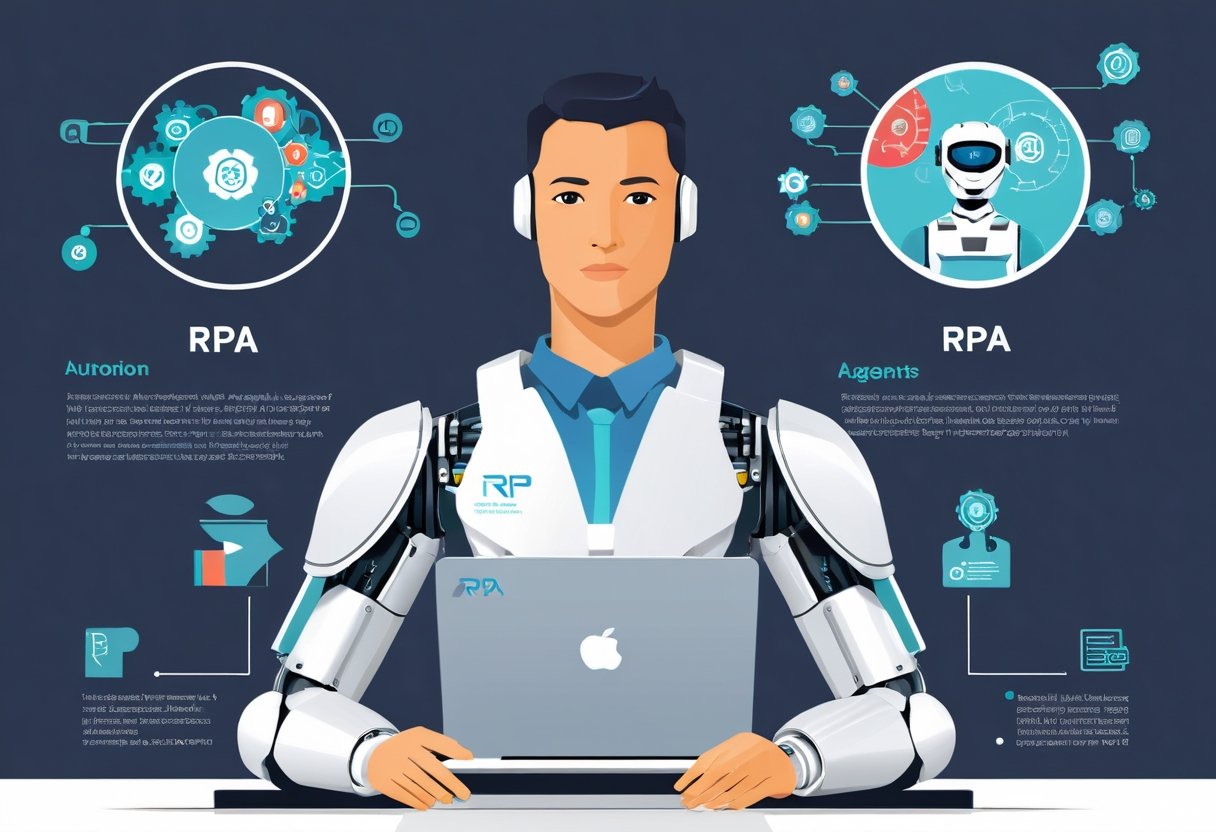
The concept of intelligent automation has long been touted as the future of work. However, the current state of RPA scripts has led many to question its true potential. In a recent article on Hickam’s Dictum, titled ‘RPA to Agents: Why Intelligent Automation is the True Strategy for Federal Workforce Modernization,’ the author highlights the limitations of RPA scripts and proposes the adoption of AI agents as a more resilient and intelligent approach to automation.
On the surface, the idea of transitioning from RPA scripts to AI agents may seem daunting. However, the benefits are clear. AI agents can adapt to changing environments, learn from experience, and make decisions based on complex data sets. This level of intelligence is essential for achieving mission-scale modernization in the federal workforce.
The article highlights the importance of addressing the ‘agent’ problem, which refers to the need for AI agents to understand the context and nuances of human interaction. This requires a more sophisticated approach to automation, one that leverages machine learning and natural language processing to create more intelligent and responsive systems.
The implications of this shift are far-reaching. As organizations begin to adopt AI agents, we can expect to see significant improvements in productivity, efficiency, and decision-making. However, this also raises important questions about the future of work and the role of humans in an increasingly automated world.
The Bigger Picture
The transition from RPA scripts to AI agents represents a significant turning point in the history of automation. No longer will organizations be limited by the constraints of rigid script-based systems. Instead, they will be able to harness the power of AI to create more adaptive, intelligent, and responsive systems.
The benefits of this shift are clear. AI agents will enable organizations to achieve unprecedented levels of productivity, efficiency, and decision-making. However, this also raises important questions about the future of work and the role of humans in an increasingly automated world.
As we move forward, it is essential that we prioritize the development of AI agents that are capable of understanding the context and nuances of human interaction. This requires a more sophisticated approach to automation, one that leverages machine learning and natural language processing to create more intelligent and responsive systems.
Under the Hood
The technical architecture of AI agents is a complex and multifaceted topic. However, at its core, it involves the use of machine learning and natural language processing to create more intelligent and responsive systems.
The key to achieving this level of intelligence lies in the use of deep learning algorithms, which enable AI agents to learn from experience and adapt to changing environments. This is a significant departure from traditional RPA scripts, which are limited by their rigid and inflexible nature.
The implications of this shift are far-reaching. As organizations begin to adopt AI agents, we can expect to see significant improvements in productivity, efficiency, and decision-making. However, this also raises important questions about the future of work and the role of humans in an increasingly automated world.
One of the most significant benefits of AI agents is their ability to understand the context and nuances of human interaction. This requires a more sophisticated approach to automation, one that leverages machine learning and natural language processing to create more intelligent and responsive systems.
The Market Reality
The transition from RPA scripts to AI agents is already underway. Organizations are beginning to adopt AI agents in various industries, from healthcare to finance. The benefits are clear: improved productivity, efficiency, and decision-making.
However, this also raises important questions about the future of work and the role of humans in an increasingly automated world. As AI agents become more prevalent, we can expect to see significant changes in the way we work and interact with technology.
The impact of AI agents on the job market will be significant. While some jobs may be automated out of existence, others will be created. It is essential that we prioritize the development of skills that are complementary to AI, such as critical thinking, creativity, and emotional intelligence.
What’s Next
The future of work is uncertain, but one thing is clear: AI agents will play a significant role in shaping the future of automation. As organizations begin to adopt AI agents, we can expect to see significant improvements in productivity, efficiency, and decision-making.
However, this also raises important questions about the future of work and the role of humans in an increasingly automated world. It is essential that we prioritize the development of skills that are complementary to AI, such as critical thinking, creativity, and emotional intelligence.
The transition from RPA scripts to AI agents represents a significant turning point in the history of automation. No longer will organizations be limited by the constraints of rigid script-based systems. Instead, they will be able to harness the power of AI to create more adaptive, intelligent, and responsive systems.
Final Thoughts
The future of work is uncertain, but one thing is clear: AI agents will play a significant role in shaping the future of automation. As organizations begin to adopt AI agents, we can expect to see significant improvements in productivity, efficiency, and decision-making.
However, this also raises important questions about the future of work and the role of humans in an increasingly automated world. It is essential that we prioritize the development of skills that are complementary to AI, such as critical thinking, creativity, and emotional intelligence.
The transition from RPA scripts to AI agents represents a significant turning point in the history of automation. No longer will organizations be limited by the constraints of rigid script-based systems. Instead, they will be able to harness the power of AI to create more adaptive, intelligent, and responsive systems.