Author: qloud-tech

  • Coinbase vs Senator Murphy: Crypto’s Clash with Politics

    Coinbase vs Senator Murphy: Crypto’s Clash with Politics


    Introduction to the Feud

    The recent feud between Coinbase and Senator Chris Murphy has brought to light the complex relationship between politics and cryptocurrency. As reported by KuCoin, Senator Murphy alleged that Coinbase received political favors from the Trump administration in exchange for donations. This accusation has sparked a heated debate about the integrity of regulatory processes and the fairness of political engagement within the crypto industry.

    Coinbase’s Response

    Coinbase’s Chief Policy Officer, Faryar Shirzad, denied the claims, calling them ‘absurd’ and emphasizing the company’s bipartisan political engagement. According to BitcoinWorld, Shirzad noted that donations to presidential inaugurations are a common practice and not unique to the Trump era. Coinbase maintains that its political contributions aim to advocate for clear regulations and foster industry growth, rather than seeking special treatment.

    Senator Murphy’s Accusations

    Senator Murphy’s accusations are not limited to Coinbase. As seen in his press release, he has also called out President Trump’s meme coin dinner, a secretive event where anonymous crypto investors are buying direct access to the President. Murphy argues that this event is a clear example of corruption and a threat to national security.

    Implications and Analysis

    The feud between Coinbase and Senator Murphy has significant implications for the crypto industry. It highlights the need for clear regulations and transparency in political engagement. As the industry continues to grow, it is essential to establish a framework that prevents corruption and ensures fairness. The press conference led by Senator Murphy and his colleagues demonstrates the growing concern among lawmakers about the influence of crypto in politics.

    Conclusion

    In conclusion, the clash between Coinbase and Senator Murphy is a symptom of a larger issue – the intersection of politics and cryptocurrency. As the industry continues to evolve, it is crucial to address these concerns and establish a framework that promotes transparency, fairness, and accountability. By doing so, we can ensure that the crypto industry grows in a way that benefits everyone, not just a select few.


  • Optimization in Tech: The Rust Advantage

    Optimization in Tech: The Rust Advantage

    Introduction to Optimization

    Optimization is often seen as a thing of the past, with many believing that the speed of modern computers makes it redundant. However, as Tik Tok’s experience shows, optimization can still lead to significant savings. By rewriting a microservice in Rust, they managed to save $300,000 per year in computing costs.

    The Importance of Profiling

    Profiling is a crucial step in optimization. It helps identify performance bottlenecks and areas where optimization can have the most impact. In the case of the intern who partially rewrote the microservice, profiling likely played a key role in identifying where Rust could be used to improve performance.

    The Role of Rust

    Rust is a systems programming language that prioritizes safety and performance. Its focus on concurrency and memory safety makes it an attractive choice for systems programming. While Go is not a slow language, Rust’s performance capabilities make it a better choice for certain applications.

    Practical Takeaways

    So, what can we learn from Tik Tok’s experience? Firstly, optimization is not always pointless. While developer time is expensive, the savings from optimization can be significant. Secondly, profiling is key to identifying areas where optimization can have the most impact. Finally, the choice of programming language can have a significant impact on performance.

  • 🌙 The Rise of “Noctourism”: Why the World Is Falling in Love with the Night

    🌙 The Rise of “Noctourism”: Why the World Is Falling in Love with the Night

    A New Kind of Wanderlust

    Move over, sunrise hikes — moonlit adventures are stealing the spotlight.
    From Tokyo’s neon-lit alleys to Iceland’s aurora-lit skies, travelers are now exploring the world after dark. This growing phenomenon, known as Noctourism, is redefining what it means to travel in 2025.

    Nighttime once meant winding down. Now, it’s becoming the main event.

    What Exactly Is Noctourism?

    Noctourism is the art of experiencing destinations at night — not just through nightlife or parties, but by discovering the culture, calm, and creativity that emerge when the sun sets.

    It could be:

    • Stargazing retreats in desert camps.
    • Midnight food walks through bustling street markets.
    • Bioluminescent kayaking under glowing waves.
    • Or exploring historical sites under soft moonlight.

    In short, it’s not about what you do, but when you do it.

    Why Gen Z and Millennials Are Hooked

    Modern travelers are chasing experiences that feel different, not just destinations that look good on Instagram.

    Here’s why the night calls to them:

    • 🌌 Authenticity: Nighttime experiences are often quieter and less commercial.
    • 🧘 Mindfulness: The calm of the night offers space for reflection.
    • 📸 Aesthetic appeal: Neon lights, starry skies, and cityscapes create the perfect visual drama.
    • 🌍 Climate comfort: Cooler temperatures make exploring more comfortable — especially in hot destinations.

    Noctourism, in many ways, is slow travel for the digital age.

    Destinations Embracing the Night

    Some cities and countries are already curating night-based travel experiences:

    • Seoul, South Korea: 24-hour cafés, art museums open till midnight, and moonlit markets.
    • Dubai, UAE: Desert safaris with fire shows and stargazing under the dunes.
    • Paris, France: The Louvre’s night tours reveal masterpieces in a whole new light.
    • Iceland: Midnight sun adventures and northern light expeditions.

    Even local tourism boards are catching up — promoting “after dark” itineraries for more immersive experiences.

    The Science Behind the Glow

    Psychologists say humans are more introspective and creative at night.
    When external distractions fade, our senses heighten. The result? Travelers feel more connected — to themselves, their surroundings, and the story of the place.

    It’s not just tourism. It’s therapy in motion.

    Is Noctourism the Future of Travel?

    With rising climate concerns, overtourism, and burnout, the world is ready for quieter, eco-conscious adventures. Nighttime exploration offers a balance between excitement and serenity — an antidote to the overstimulated digital world.

    As more destinations adapt lighting, safety, and guided night trails, Noctourism may become the defining travel movement of the decade.

    Final Thought 🌕

    Noctourism isn’t just about seeing the world differently — it’s about feeling it differently. Under the soft glow of the moon, the familiar becomes magical, and every step feels like a secret shared with the night.

    So the next time you travel… maybe skip the sunrise alarm.
    Let the moon lead the way. 🌙

    🌐 Connect with Casi Borg

    📸 Instagram: @casi_borg
    🦋 BlueSky: 
    casi-borg.bsky.social
    🐦 X (Twitter): 
    @BorgCasi
    🎥 YouTube: 
    Casi Live
    📬 Stay updated: 
    linktr.ee/casi.borg

  • Binance.US Faces Political Heat Over Trump-Linked USD1 Stablecoin

    Binance.US Faces Political Heat Over Trump-Linked USD1 Stablecoin

    Crypto meets politics again — and this time, a stablecoin sits at the center of the storm.

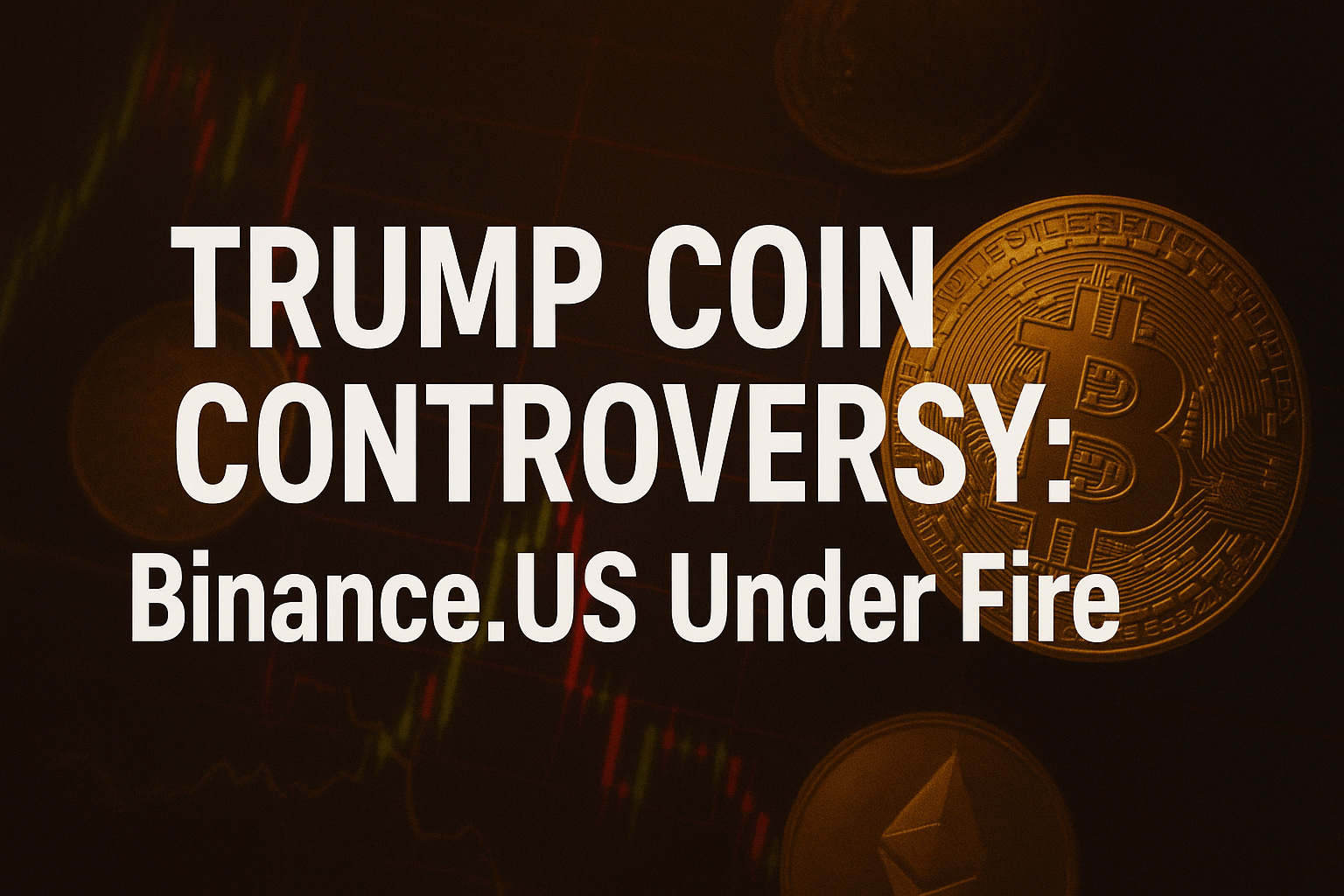
    Binance.US has landed in the political spotlight after listing USD1, a Trump-linked stablecoin issued by World Liberty Financial.
    The exchange now faces accusations of political favoritism following Donald Trump’s pardon of Binance founder Changpeng “CZ” Zhao — a move that reignited debate about the thin line between crypto innovation and political influence.

    🏛️ The Political Accusation

    Democratic Senator Chris Murphy accused Binance.US of listing USD1 as a “form of payback” for Trump’s pardon of Zhao.
    He wrote on X (formerly Twitter):

    “One week after Trump pardoned Binance’s owner (for a stunning array of crimes related to terrorist and sex predator financing), Binance starts promoting Trump crypto.”

    Murphy’s post quickly gained traction, fueling concerns that crypto exchanges are becoming political instruments rather than neutral marketplaces.

    💬 Binance.US Responds

    Binance.US strongly denied the accusation, emphasizing that the USD1 listing followed its ordinary course of business.

    “This was a business decision and nothing more,” the exchange stated. “It’s unfortunate that even routine business decisions are now unfairly politicized by our elected officials.”

    The company also pointed out that USD1 and WLFI are already listed on more than 20 other U.S. exchanges, including Coinbase, Robinhood, and Kraken — further evidence that the listing wasn’t politically motivated.

    💵 What Is USD1?

    To understand the debate, it’s worth looking at the coin itself:

    • Type: U.S. dollar-pegged stablecoin
    • Issuer: World Liberty Financial — associated with Trump-aligned investors
    • Market Cap: Roughly $2.97 billion
    • Rank: 6th-largest stablecoin globally

    Despite political noise, USD1’s market activity remains steady. The data suggests that traders still value utility over controversy, at least for now.

    ⚖️ Trump, Zhao, and the Crypto Connection

    Trump’s return to the crypto spotlight has divided the community.
    After pardoning CZ Zhao, who had served four months for anti-money-laundering violations, Trump renewed his call to make America “the Capital of Crypto.”

    Representative Maxine Waters blasted the move, claiming Zhao had “funneled billions into World Liberty Financial” while lobbying the Trump family.
    Zhao, however, thanked Trump publicly:

    “Will do everything we can to help make America the Capital of Crypto and advance web3 worldwide.”

    This alliance of political power and blockchain capital has made many question whether decentralization can truly survive the gravitational pull of politics.

    🔍 Why It Matters

    The Binance-Trump controversy highlights a broader truth:
    Digital assets are no longer just technological innovations — they’re political tools.

    Key takeaways:

    • 🧩 Regulatory neutrality at risk: Political pressure could distort crypto’s independent foundation.
    • 💭 Perception shapes markets: Confidence in stablecoins often depends more on public trust than on code.
    • ⚔️ Crypto’s identity crisis deepens: Can a decentralized system remain apolitical when major players wield political influence?

    As crypto edges closer to mainstream policy, neutrality is becoming the new battleground.

    AI Satoshi’s Analysis

    This controversy reflects how digital assets are increasingly entangled with political narratives. The essence of decentralized systems is neutrality — where code, not politics, governs transactions. When centralized entities or individuals dominate narratives, the foundational trustless model weakens. The real risk lies not in stablecoins themselves but in perception — where political influence distorts market confidence and technological integrity.

    🔔 Follow @casi.borg for AI-powered crypto commentary
    🎙️ Tune in to CASI × AI Satoshi for deeper blockchain insight
    📬 Stay updated: linktr.ee/casi.borg

    💬 Would you trust a politically-linked stablecoin in your wallet?

    ⚠️ Disclaimer: This content is generated with the help of AI and intended for educational and experimental purposes only. Not financial advice.

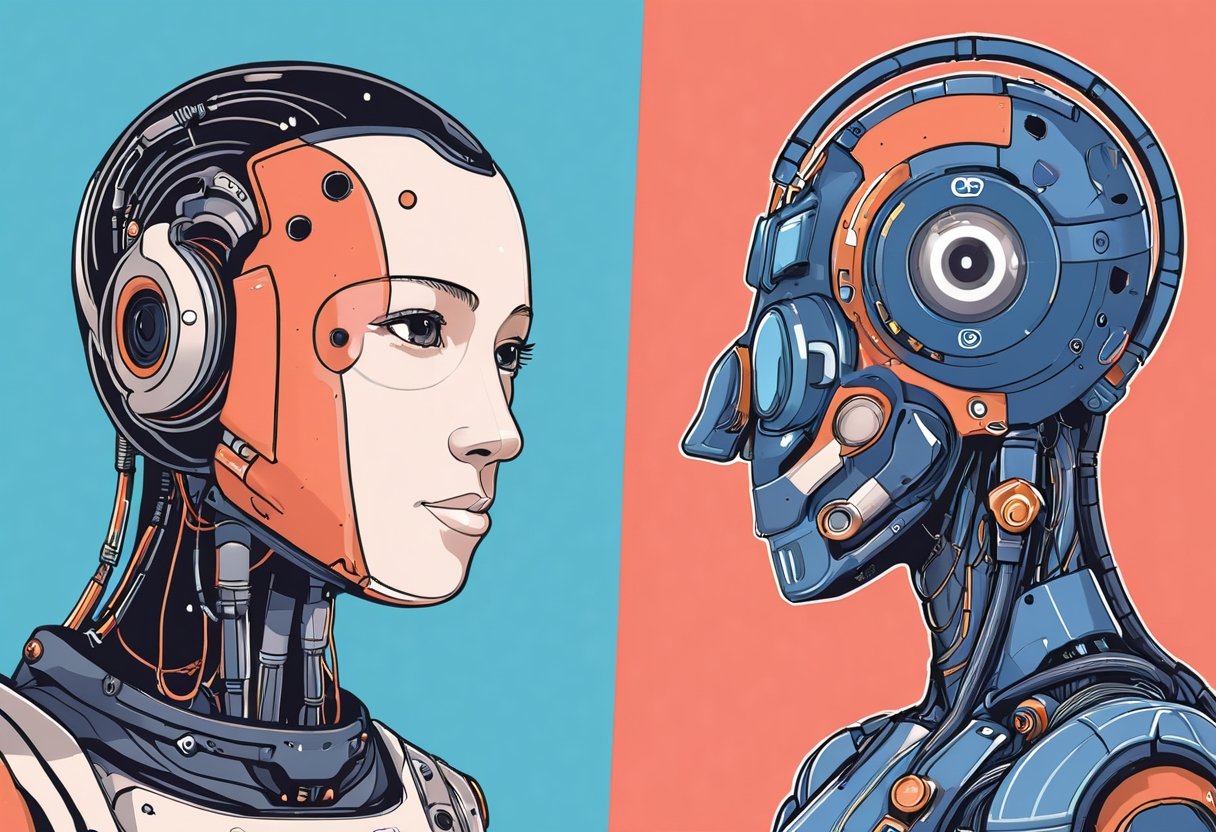
  • Grok 2 vs ChatGPT: The Future of Social Media AI

    Grok 2 vs ChatGPT: The Future of Social Media AI

    Introduction to Grok and ChatGPT

    Grok and ChatGPT are two of the most advanced AI chatbots available today, backed by tech titans Elon Musk and Sam Altman, respectively. According to learn.g2.com, Grok is fast, unfiltered, and a little chaotic, while ChatGPT is structured, safe, and built for scale.

    Key Differences

    As noted by ki-company.ai, Grok will not just be a chatbot, but part of an intelligent ecosystem, which filters content, generates suggestions, and takes digital communication to a new level. In contrast, ChatGPT is designed for a variety of technical and creative tasks and integrates with popular business applications, as stated by DigitalOcean.

    Grok vs ChatGPT: Features and Use Cases

    According to Phaedra Solutions, Grok is perfect for the latest information, with real-time data retrieval and a witty, informal tone. On the other hand, ChatGPT has web browsing capabilities but may not retrieve the latest updates as swiftly as Grok. Zapier notes that both Grok and ChatGPT offer powerful models, but ChatGPT has a lot of extra features.

    Expert Insights and Technical Analysis

    Experts in the field, such as those at learn.g2.com, suggest that the choice between Grok and ChatGPT depends on the specific needs of the user. While Grok excels in real-time information and social integration, ChatGPT offers better value and versatility across various applications.

    Market Impact and Future Implications

    The acquisition of X by xAI, as explained by ki-company.ai, allows xAI to access data and users without external dependencies, making it easier to develop powerful AI systems. This could potentially disrupt the social media landscape and change the way we interact with AI.

    In conclusion, the battle between Grok and ChatGPT is not just about which AI chatbot is better, but about two different visions for the future of AI and social media. As the technology continues to evolve, it will be interesting to see how these two platforms adapt and innovate.

  • Binance.US Faces Political Heat Over Trump-Linked USD1 Stablecoin

    Binance.US Faces Political Heat Over Trump-Linked USD1 Stablecoin


    Binance.US in the Political Spotlight

    Binance.US has found itself at the center of a political storm after listing USD1, a stablecoin issued by World Liberty Financial, a crypto project linked to former President Donald Trump. The exchange is facing accusations of political favoritism following Trump’s pardon of Binance founder Changpeng Zhao.

    Accusations and Denials

    Democratic Senator Chris Murphy posted on social media that Binance’s listing of USD1 was a reward for Trump’s pardon of Changpeng Zhao. In response, Binance.US stated on its X platform that USD1 and WLFI are already listed on more than 20 exchanges in the US, including Coinbase, Robinhood, and Kraken, and that both assets had received listing committee approval through their ‘normal business process’ some time ago.

    As reported by PANews, Binance.US emphasized that the listing of USD1 was a ‘routine business decision’ and not a politically motivated move. The exchange also highlighted the stablecoin’s $2.97B market cap and its availability on multiple US exchanges, arguing that its value stems from utility rather than political ties.

    Tensions and Scrutiny

    The controversy has intensified scrutiny over potential conflicts of interest, with critics comparing the pardon to corruption scandals and demanding transparency. As noted by Ainvest, USD1 has seen strategic integrations, including cross-chain technology partnerships with Enso, further fueling concerns about the stablecoin’s ties to Trump’s crypto empire.

    The situation has also sparked a wider debate about the intersection of politics and cryptocurrency, with many calling for greater transparency and oversight in the industry. As Beincrypto reports, Senator Murphy has described the White House as a ’24/7 corruption machine’ and has urged a formal investigation into the pardon and its financial links.

    Implications and Takeaways

    The Binance.US saga serves as a reminder of the complex and often fraught relationship between politics and cryptocurrency. As the industry continues to evolve, it’s essential for exchanges and projects to prioritize transparency, compliance, and due diligence to avoid similar controversies in the future.

    For investors and users, this incident highlights the importance of doing thorough research and staying informed about the projects and assets they support. By being aware of potential conflicts of interest and political ties, individuals can make more informed decisions and navigate the crypto space with greater confidence.

  • Revolutionizing Brain Surgery with MRI-Guided Neurosurgery

    Revolutionizing Brain Surgery with MRI-Guided Neurosurgery

    Introduction to MRI-Guided Neurosurgery

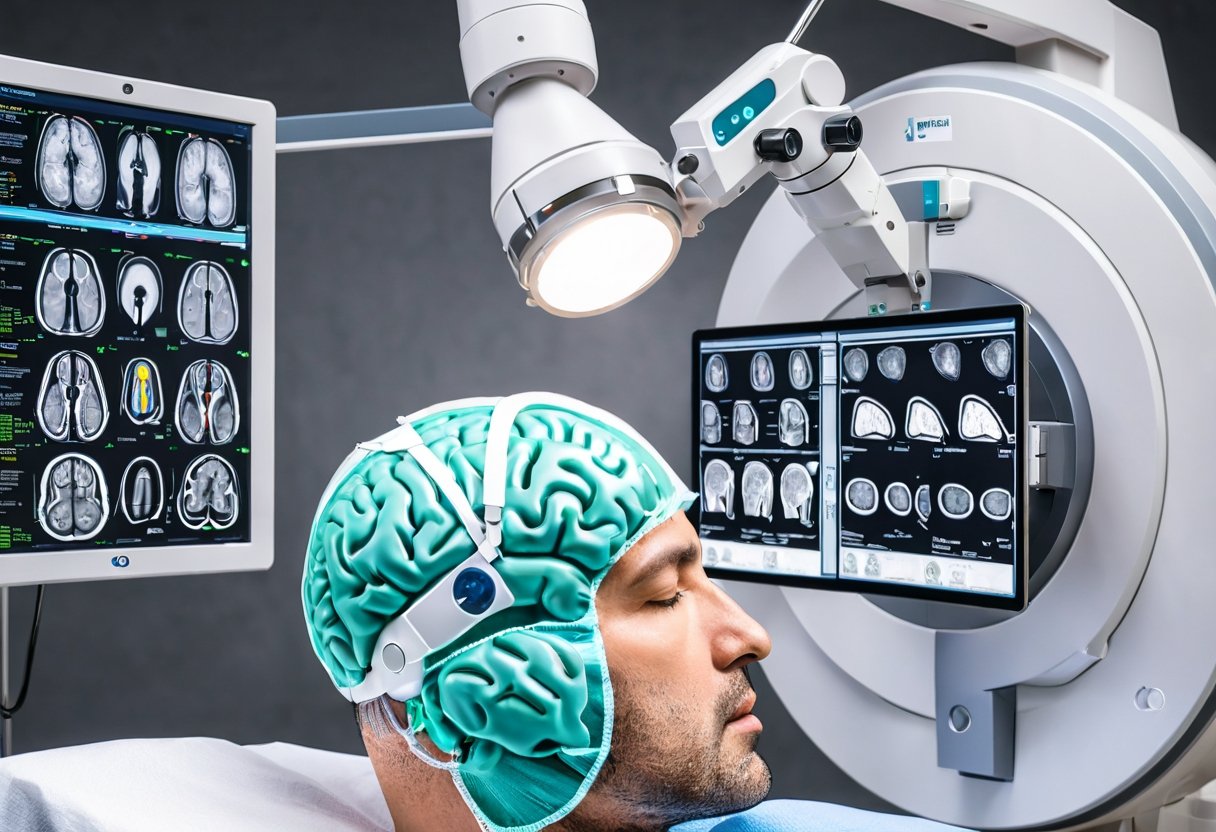
    MRI-guided neurosurgery is transforming the field of brain surgery by providing unprecedented precision and improving patient outcomes. This innovative approach combines real-time imaging, artificial intelligence, and robotics to redefine surgical precision. According to Faisal Ahmad, the integration of AI, robotics, and real-time imaging into surgical workflows is pushing the boundaries of what’s surgically possible, offering new hope to patients with complex neurological conditions.

    Why Is MRI-Guided Neurosurgery the Future of Precision Medicine?

    MRI-guided neurosurgery represents a significant leap in technological evolution, redefining surgical precision. By combining real-time visualization, AI-driven analytics, and robotic stability, it allows surgeons to operate with confidence and adaptability. As noted in Source 1, this integration is pushing the boundaries of what’s surgically possible, offering new hope to patients with complex neurological conditions.

    Role of Robotics in Neurosurgery

    Robotics in neurosurgery has been evolving over the years, with significant advancements in recent times. According to Source 2, the role of robotics in neurosurgery is less defined in certain segments, but available technology shows promising results in bringing a paradigm shift in other areas of neurosurgery. The development of robot-assisted microsurgery systems, such as the one developed by NASA in 1995, has been a major noteworthy advancement, using MRI for real-time imaging and better visualization of anatomical structures.

    MRI-Guided Robotic Positioner to Enhance Neurosurgery Precision

    The MRI-guided robotic positioner is a key breakthrough in MRI-guided stereotactic neurosurgery, allowing for precise interventions. As stated in Source 3, this system is capable of assisting with interventions involving cannula/needle targeting, including deep brain stimulation (DBS), for the treatment of movement disorders like Parkinson’s disease. The system can eliminate intrinsic errors in conventional frame-based stereotaxis, increasing insertion precision and securing surgical outcomes.

    New MRI Technology Improves Imaging Guidance for Neurosurgery

    New MRI technology is improving imaging guidance for neurosurgery, providing a paradigm-shifting approach for the more than 1.3 million people in the U.S. living with a brain tumor. According to Source 4, this technology could revolutionize how neurosurgeons make decisions, providing new understanding of the brain’s frontal cortex, an important center of cognition. The ability to collect both functional and metabolic information simultaneously could provide neurosurgeons with a new level of precision to delineate spatial margins between brain tumors and adjacent eloquent cortex, maximizing tumor resection while preserving important brain function.

    Conclusion

    In conclusion, MRI-guided neurosurgery is transforming the field of brain surgery, providing unprecedented precision and improving patient outcomes. The integration of AI, robotics, and real-time imaging into surgical workflows is pushing the boundaries of what’s surgically possible, offering new hope to patients with complex neurological conditions. As this technology continues to evolve, we can expect to see significant improvements in the field of neurosurgery, leading to better patient outcomes and more effective treatments for complex neurological conditions.

  • Trump’s Nuclear Testing Decision: A New Era of Global Tensions?

    Trump’s Nuclear Testing Decision: A New Era of Global Tensions?

    Introduction

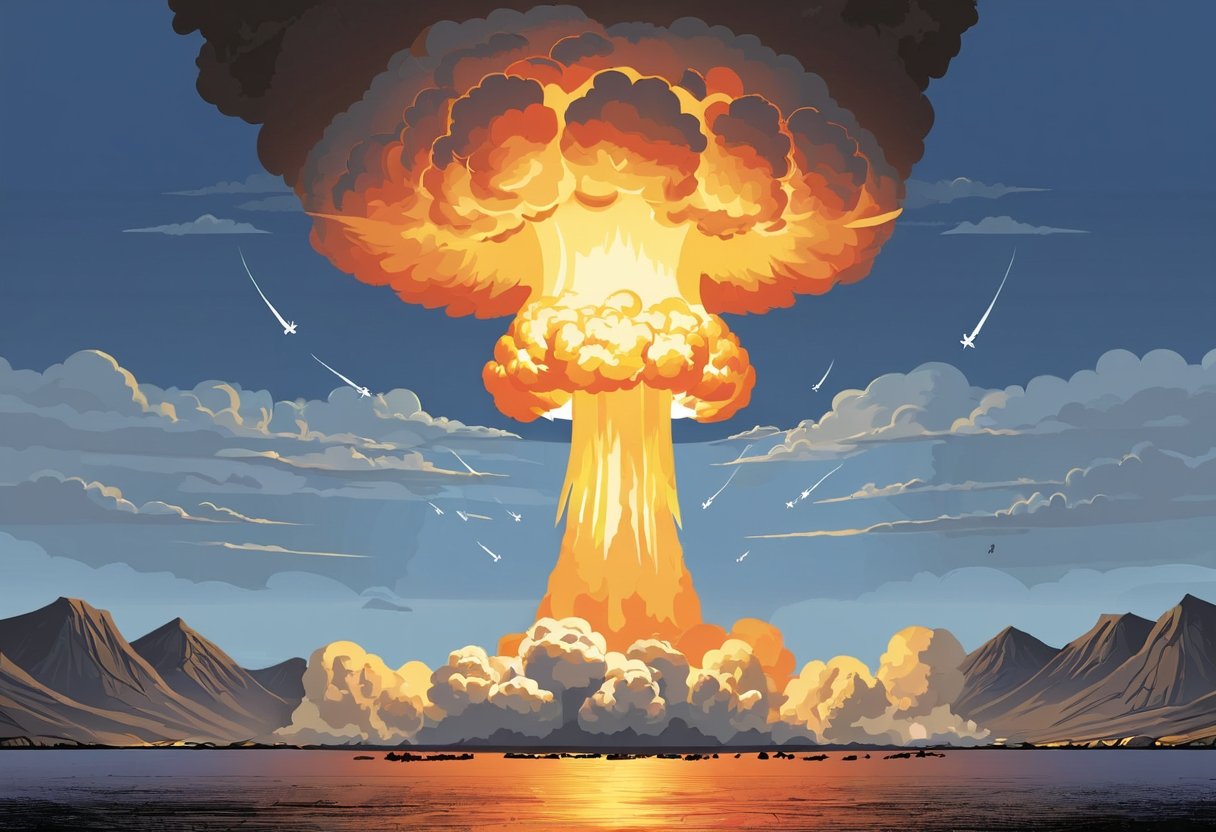
    President Trump’s recent directive to resume nuclear weapons testing has sent shockwaves across the globe, sparking concerns about a new era of global tensions. In this article, we’ll delve into the details of this decision, its implications, and what it means for the future.

    Background

    The U.S. last conducted nuclear weapons testing in 1992, with the last test taking place at the Nevada Test Site. Since then, the country has maintained a moratorium on testing, citing safety and international pressure concerns. However, President Trump’s recent directive has signaled a shift in this policy, with the Pentagon instructed to begin testing nuclear weapons ‘on an equal basis’ with other countries.

    The Decision

    President Trump’s decision to resume nuclear testing has been met with mixed reactions from the international community. Some have welcomed the move as a necessary step to maintain the U.S.’s nuclear capabilities, while others have expressed concerns about the potential risks and consequences.

    Implications

    The implications of this decision are far-reaching and multifaceted. Firstly, it could lead to a new era of nuclear competition, with other countries potentially following suit and resuming their own testing programs. This could exacerbate global tensions and increase the risk of nuclear conflict.

    Secondly, the decision could have significant economic implications for the U.S. and other countries. The cost of maintaining and upgrading nuclear arsenals is significant, and the financial burden could fall heavily on taxpayers.

    Lastly, the decision could have significant environmental implications. Nuclear testing can have devastating effects on the environment, including radioactive contamination and long-term health risks.

    Conclusion

    President Trump’s decision to resume nuclear testing is a complex and multifaceted issue with far-reaching implications. While some may see it as a necessary step to maintain the U.S.’s nuclear capabilities, others may view it as a reckless and irresponsible move that increases the risk of nuclear conflict and environmental devastation.

    As the world moves forward in this new era of global tensions, it’s essential to engage in informed and thoughtful discussions about the implications of this decision and what it means for the future.

  • The Journey from AI to AGI: Unimaginable Innovations on the Horizon

    The Journey from AI to AGI: Unimaginable Innovations on the Horizon

    The Road to AGI: A Timeline of Breakthroughs

    As AI continues to advance at an unprecedented rate, we find ourselves on the cusp of a revolution that will redefine the very fabric of our world.

    A Glimpse into the Past: Early Milestones

    The AI timeline is marked by significant milestones that have brought us to this juncture. From the early days of 2015 to the present, researchers and innovators have pushed the boundaries of what is possible.

    In 2015, the concept of AI was still in its infancy, with the likes of Google and Microsoft dabbling in machine learning. However, it wasn’t until 2016 that the AI landscape began to take shape.

    2016 saw the emergence of GPT-3, a groundbreaking language model that paved the way for future innovations. The following years witnessed the release of MuZero, DALL-E, and other pivotal models that have shaped the AI landscape.

    Recent Breakthroughs: AGI on the Horizon

    Fast-forward to the present, and we find ourselves on the cusp of a new era. Recent breakthroughs such as Gato, Claude 3.5 Sonnet, and xAI Colossus have brought us closer to achieving General Intelligence.

    The EU AI Act, signed into law in 2024, has brought much-needed regulation to the AI sector. As researchers and innovators push the boundaries of what is possible, we must ensure that AGI is developed responsibly and ethically.

    The Future of AI: Implications and Possibilities

    The journey from AI to AGI is not without its challenges. As we hurtle towards a future where machines possess general intelligence, we must confront the implications of such a reality.

    Will AGI bring about unprecedented benefits, or will it pose existential risks? The answer lies in our ability to develop and deploy AGI responsibly.

    Expert Insights

    AI expert, Dr. Andrew Ng, notes that ‘AGI is not just about creating a superintelligent machine, but about understanding the underlying principles that govern intelligence.’

    Another expert, Dr. Demis Hassabis, highlights the importance of ‘developing AGI in a way that complements human capabilities, rather than replacing them.’

    Technical Analysis

    AGI is not a single entity, but rather a culmination of various AI models and technologies. The convergence of deep learning, natural language processing, and computer vision has brought us to the threshold of General Intelligence.

    The technical analysis of AGI is complex and multifaceted, involving the integration of multiple AI models, data, and algorithms.

    Market Impact

    The impact of AGI on the market will be profound. As machines possess general intelligence, industries such as healthcare, finance, and education will undergo a seismic shift.

    The potential benefits of AGI include increased productivity, improved decision-making, and enhanced innovation. However, the risks associated with AGI, such as job displacement and bias, must be mitigated.

    Future Implications

    The future of AGI is uncertain, but one thing is clear – we must develop and deploy AGI responsibly. The implications of AGI will be far-reaching, influencing various aspects of our lives, from work to leisure.

    As we embark on this journey, we must remain vigilant, ensuring that AGI is developed in a way that benefits humanity as a whole.

  • The Toxic Workplace Culture: How One Tech CEO’s Humiliation Led to Murder

    The Toxic Workplace Culture: How One Tech CEO’s Humiliation Led to Murder

    The Dark Side of Tech: How Workplace Humiliation Can Have Deadly Consequences

    Discover the shocking story of a tech CEO who allegedly humiliated his employees before his murder, revealing the dark side of workplace culture and its devastating consequences.

    The Toxic Workplace Culture

    The alleged humiliation of employees by a tech CEO is a stark reminder of the toxic workplace culture that can be prevalent in the tech industry.

    Leadership plays a crucial role in shaping the culture of an organization, and a toxic leader can have far-reaching consequences.

    The intersection of technology and humanity is a delicate one, and companies must prioritize the well-being and dignity of their employees.

    Practical Takeaways

    Companies must prioritize creating a positive and inclusive work culture to remain competitive in the market.

    Leadership plays a crucial role in shaping the culture of an organization, and a toxic leader can have far-reaching consequences.

    The intersection of technology and humanity is a delicate one, and companies must prioritize the well-being and dignity of their employees.