PayPal has launched a new feature called Pay with Crypto, allowing merchants to accept over 100 digital currencies and settle in either fiat currency or PYUSD, the company’s own stablecoin. According to May Zabaneh, head of crypto at PayPal, this feature builds a bridge between traditional payments and the new world of digital assets.
How Pay with Crypto Works
When a customer chooses to pay with crypto, PayPal connects them with a third-party provider called Mesh Connect, Inc. Mesh then transfers PYUSD, a U.S. dollar-denominated stablecoin, from the customer’s available wallet. This process enables instant crypto to stablecoin or fiat conversion, reducing international transaction fees by up to 90%.
Benefits for Merchants and Customers
For merchants, Pay with Crypto means cheaper transactions and access to hundreds of millions of potential customers. For users, it means their crypto holdings finally have more utility. As Zabaneh explained, ‘It connects all those customers who already have crypto with our merchant base. It is a real use case of how to bring together traditional payments and crypto payments.’
Market Impact and Future Implications
Pay with Crypto advances PayPal’s mission to transform commerce by integrating crypto and digital currencies into a unified platform. This move is expected to drive crypto payments into the mainstream, reducing costs and expanding global commerce. With a transaction rate of 0.99%, Pay with Crypto decreases the cost of transactions by up to 90% compared to traditional methods.
Expert Insights and Analysis
According to sources, Pay with Crypto supports transactions across 100+ cryptocurrencies and wallets, such as Coinbase and MetaMask. This solution expands merchant revenue opportunities and taps into a global base of over 650 million crypto users. As Zabaneh stated, ‘You’re already starting to see the use cases emerge, and so we’re really excited.’
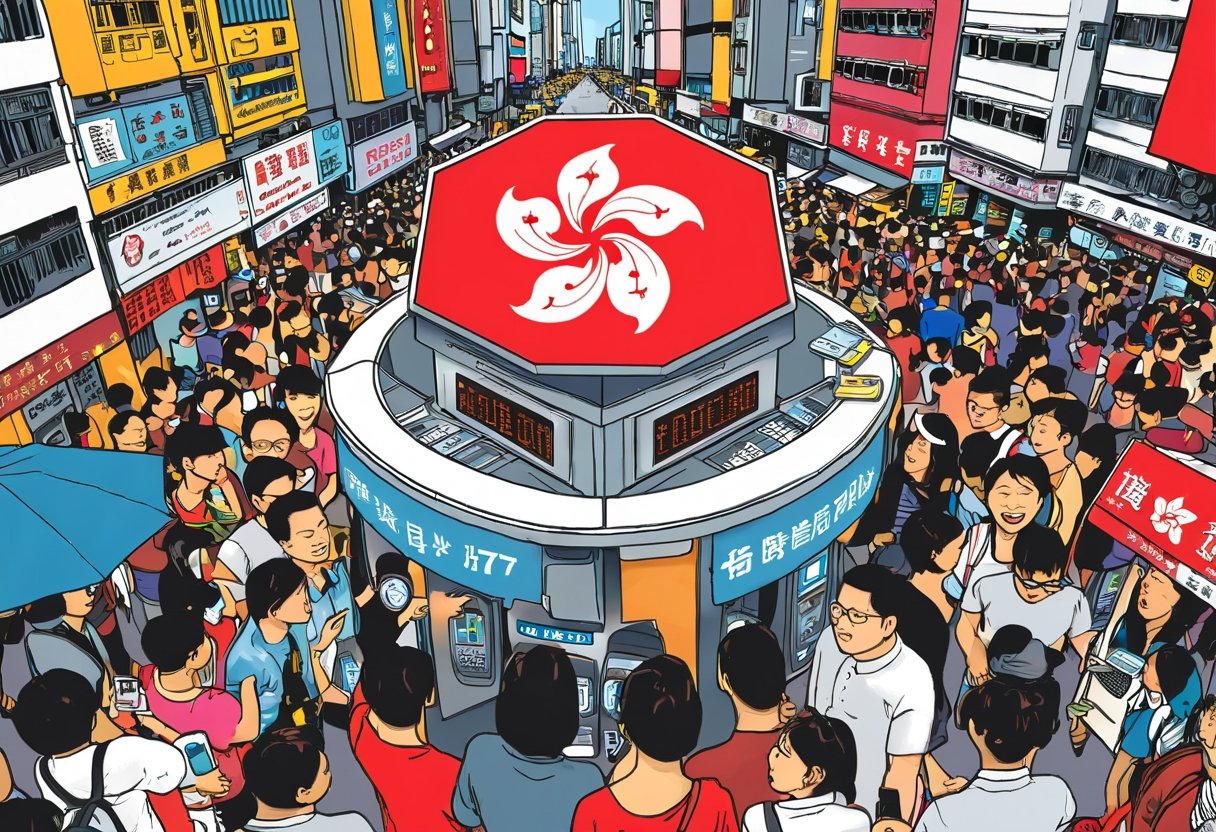
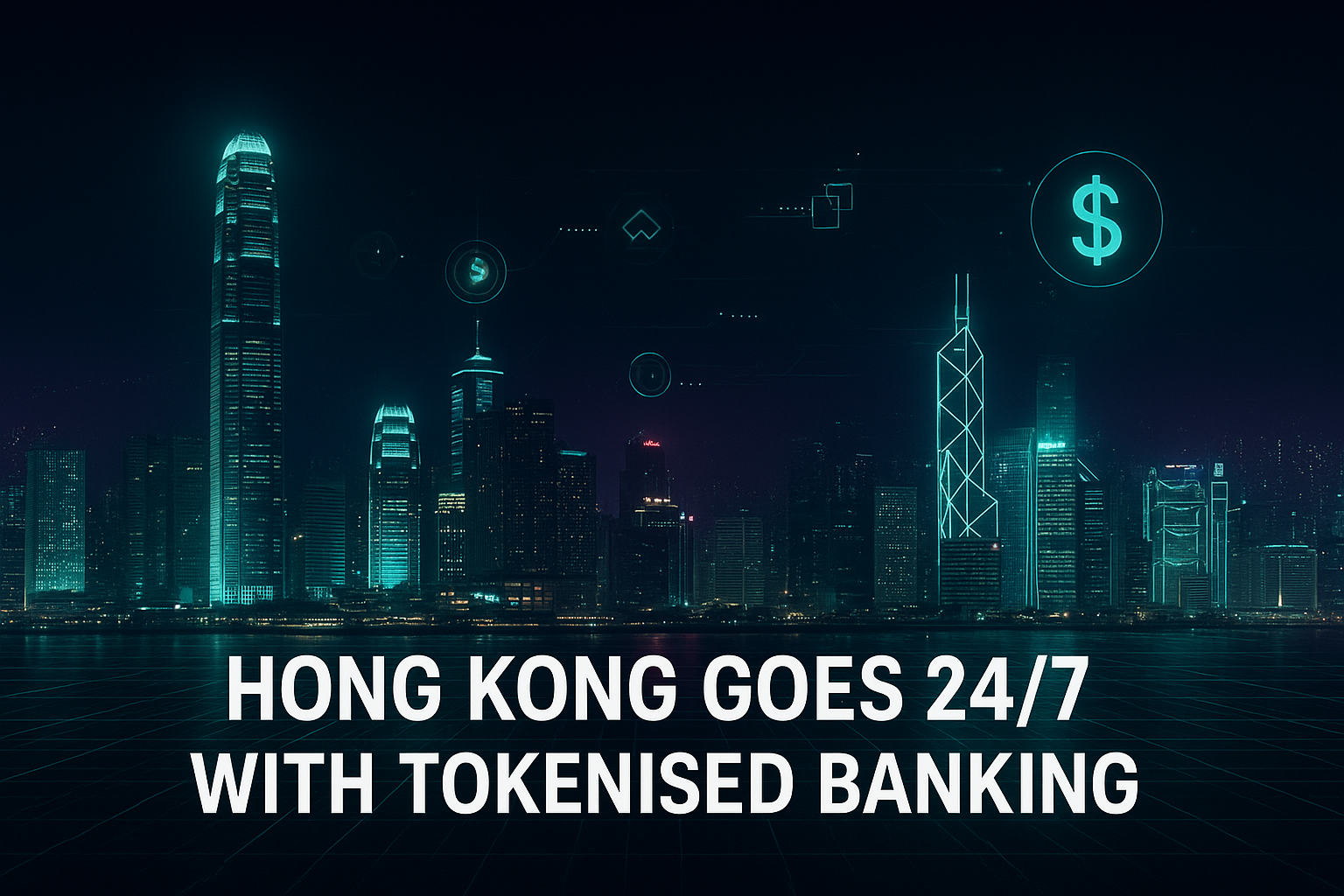
Hong Kong is taking a significant leap into the future of finance by introducing 24/7 tokenised banking. As reported by Blockhead, the Hong Kong Monetary Authority (HKMA) has launched a pilot program called EnsembleTX, enabling real-value transactions involving tokenised deposits and digital assets. This move is part of Hong Kong’s Fintech 2030 strategy, which aims to build a financial tokenisation ecosystem and create data and payment infrastructure.
How Tokenised Banking Works
Tokenised banking involves the use of blockchain technology to represent traditional assets in a digital form. As South China Morning Post explains, this allows for faster, more transparent, and more efficient transactions. The HKMA’s pilot program will initially facilitate interbank settlement through Hong Kong’s existing Real Time Gross Settlement system for Hong Kong dollars, with plans to progressively upgrade the infrastructure to support settlement in tokenised central bank money on a 24/7 basis.
Benefits of Tokenised Banking
The introduction of tokenised banking in Hong Kong is expected to bring numerous benefits, including round-the-clock access, lower costs, and improved cash management. As Yahoo Finance reports, tokenised deposits will also enable businesses to automate payments and apply rules based on predefined conditions. This will make it easier for companies to manage their finances and make transactions more efficiently.
Participating Banks and Future Plans
Seven major banks in Hong Kong, including Bank of China, China Construction Bank, and HSBC, will participate in the pilot program. As HKMA’s report outlines, the program will operate throughout 2026, with the goal of establishing a strong foundation for further innovation in Hong Kong’s tokenisation ecosystem. The HKMA also plans to explore the use of an e-HKD, a digital version of the Hong Kong dollar, for interbank settlement of tokenised deposits.
Anthropic, a leading AI development company, has been at the forefront of discussions about the regulation of open-source models. The company’s push for regulation has sparked debate and raised questions about the motivations behind its stance. In this article, we will delve into the details of Anthropic’s position and explore the implications of its advocacy for AI regulation.
Understanding Anthropic’s Position
According to reports, Anthropic has been working with federal agencies to develop guidelines for the use of AI models. The company’s policies prohibit the use of its AI tools for direct domestic surveillance and data collection, aligning with the policies of its rivals, including OpenAI, Meta, and Microsoft.
Criticism and Controversy
However, not everyone is convinced of Anthropic’s intentions. Meta’s chief AI scientist, Yann LeCun, has criticized Anthropic’s stance, suggesting that the company is trying to scare people into regulating open-source models out of existence. LeCun believes that Anthropic’s approach could lead to regulatory capture, where the company’s interests are prioritized over the greater good.
Expert Insights and Analysis
Anthropic’s CEO, Dario Amodei, has defended the company’s position, stating that Anthropic is committed to constructive engagement on matters of public policy. Amodei emphasized that the company’s goal is to ensure that powerful AI technology benefits the American people and advances the country’s lead in AI development.
Technical Analysis
From a technical perspective, Anthropic’s push for regulation is driven by concerns about the safety and security of AI models. The company has submitted detailed analysis and recommendations for maintaining and strengthening export controls on advanced semiconductors. Anthropic’s approach focuses on adjusting the tiering system and allowing countries with robust data center security to obtain more chips through government-to-government agreements.
Market Impact and Future Implications
The implications of Anthropic’s push for AI regulation are far-reaching. If successful, the company’s efforts could lead to a more regulated AI industry, with potential benefits for safety and security. However, critics argue that over-regulation could stifle innovation and limit access to AI technology. As the debate continues, it is essential to consider the potential consequences of Anthropic’s actions and the future of AI development.
Practical Takeaways
For businesses and individuals involved in AI development, it is crucial to stay informed about the ongoing discussions and debates surrounding regulation. By understanding the positions of companies like Anthropic and the potential implications of their actions, stakeholders can better navigate the evolving AI landscape and make informed decisions about their own investments and initiatives.
Solana (SOL) is facing intense market scrutiny as the fading memecoin hype, declining user engagement, and continuous token unlocks by Alameda Research put pressure on one of crypto’s strongest 2025 performers. According to NewsBTC, SOL is trading around $152–$156, having broken below key support at $156 amid rising volume. Analysts view $140 as the crucial support area, and if it fails, liquidity extends toward $120, opening the door for a deeper correction.
Memecoin Cooldown and User Activity
Solana’s explosive rise in late 2024 and early 2025 was largely fueled by rapid memecoin launches and hyperactive retail speculation. However, this frenzy has sharply cooled, with user activity reaching a one-year low. As Coinedition reports, Solana’s on-chain fundamentals show resilience, with DeFi TVL steady and developer activity remaining high.
Technical Analysis and Market Forces
Solana is caught in a technical tug-of-war, with its price pinned near $155 as two powerful and opposing market forces collide. On one hand, institutional demand looks strong, with US spot Solana ETFs registering over $350 million in net inflows across 11 straight days. On the other hand, Alameda’s systematic token releases create predictable selling pressure. As CoinDesk notes, the bankruptcy estate maintains approximately 5 million tokens in locked or staked positions, with smaller monthly unlocks continuing through 2028.
Market Impact and Future Implications
The combination of fading memecoin activity, declining user engagement, and continuous token unlocks by Alameda Research puts pressure on Solana’s price. If the price falls and holds below $150, some fear it could drop toward $100 or even lower. However, a successful defense of the $140–$150 demand zone could trigger a sharp rebound toward $165–$180, especially if ETF flows remain steady and Bitcoin holds above the $98k–$100k range.
The US Supreme Court’s recent hearing on the reciprocal tariffs imposed by the Trump administration has significant implications for the tech industry and the economy as a whole. With billions of dollars in tariff payments at stake, companies that sell goods internationally are facing a pivotal inflection point. If the tariffs are struck down, the decision will not simply unwind a trade policy — it may trigger a complex refund process involving billions of dollars in tariffs.
Background
According to Wells Fargo analysts, the case has implications for an estimated $90 billion worth of import taxes already paid, which is roughly half the tariff revenue the US collected this year through September. Trump officials have warned that this sum could swell to $1 trillion if the court takes until June to rule. The hearing drew a full audience and stretched nearly three hours, far longer than the judges had officially allotted for the arguments.
Implications of the Ruling
If the Trump administration loses, the government could have to refund some of the billions of dollars it has collected, a process that Barrett noted could become a complete mess. The U.S. Customs and Border Protection (CBP) will need to determine how to refund tariffs already collected. Because no modern precedent exists for such a large-scale reversal, CBP’s implementation path remains uncertain. Two existing administrative mechanisms are most likely to govern: Post-Summary Corrections (PSC) – for entries that have not yet liquidated.
Refund Process
It’s unclear who might be eligible for a refund if the justices rule against the Trump administration. For months, investment banks, including Oppenheimer and Jefferies, have approached importers in an attempt to broker deals where they sell their stake in a potential tariff at a discount in exchange for immediate cash. If the Supreme Court sides against the Trump administration, these investment banks would get a cut of the total tariff refund businesses forfeited.
Conclusion
In conclusion, the Supreme Court’s ruling on the reciprocal tariffs has significant implications for the tech industry and the economy. Companies that sell goods internationally should be prepared for a complex refund process and potential disputes over who receives repayment. As Vox noted, the economic consequences for ordinary Americans could be profound — at least, until the administration finds new legal rationales for deliberately driving up the cost of living.
As global finance shifts toward blockchain-backed infrastructure, Hong Kong is taking a decisive leap that could redefine how value moves across borders and markets.
Hong Kong Pushes Tokenisation Into Real-World Banking
Hong Kong has officially entered the next era of digital finance by initiating 24/7 settlement using tokenised central bank money. This move by the Hong Kong Monetary Authority (HKMA) signals a transition from controlled testing to real-world institutional adoption.
What HKMA Is Implementing
The HKMA plans to progressively upgrade settlement infrastructure to:
Support interbank transfers using tokenised Hong Kong dollars
Enable round-the-clock settlement, far beyond traditional banking hours
Integrate tokenised money into money-market operations
Invite banks and fintech innovators to build tokenised financial products
This strengthens Hong Kong’s ambition to become the region’s leading digital finance hub.
Interoperability: The Key to Scaling Tokenisation
The Securities and Futures Commission (SFC), a crucial partner in this initiative, highlighted that tokenisation can only scale when different systems — and institutions — can communicate seamlessly.
“A critical step in that direction is today’s initiative … which will gradually allow interbank settlement of tokenised deposits in real time 24/7.” — Julia Leung, CEO, SFC
This shift positions tokenised deposits not as an experiment, but as infrastructure-level financial tools ready for mainstream usage.
Why This Move Matters Now
Hong Kong’s timing aligns with accelerating global trends:
Central banks exploring CBDCs
Major institutions adopting blockchain-based settlement
Markets demanding faster, transparent, always-on payment systems
By embracing 24/7 tokenised settlement, Hong Kong is signalling to the world that it wants to lead the next wave of institutional blockchain adoption.
Key Impacts on Global Digital Finance
This move could reshape financial operations in multiple ways:
1. Instant Finality Becomes Standard
Batch processing has long slowed traditional finance. Tokenised settlement introduces near-instant finality, reducing friction and risk.
2. A Hybrid Financial System Takes Form
Rather than replacing legacy banking rails, tokenised money will coexist with traditional systems — creating a more flexible, resilient architecture.
3. On-Chain Institutional Confidence Grows
With regulators and banks participating jointly, tokenisation becomes safe, regulated, and operational, not experimental.
4. Innovation Opportunities Multiply
From securities to asset management, institutions can now build products that interoperate across sectors, boosting efficiency and liquidity.
AI Satoshi’s Analysis
This marks a transition from theoretical testing to operational deployment, demonstrating that traditional institutions are now confident enough to settle value on-chain. By embedding tokenised deposits into money-market operations, Hong Kong is effectively stress-testing a hybrid model where digital and legacy rails coexist. If successful, it reduces reliance on batch settlement and introduces near-instant finality — though still within a centrally governed framework, not a trustless one.
Final Thoughts
Hong Kong’s shift to 24/7 tokenised banking is more than a regional upgrade — it’s a blueprint for the future of global finance. Whether the world follows this model or moves toward more decentralised alternatives, one thing is clear: the transformation of money is accelerating.
🔔 Follow @casi_borg for AI-powered crypto commentary 🎙️ Tune in to CASI x AI Satoshi for deeper blockchain insight 📬 Stay updated: linktr.ee/casi.borg
💬 Would you like a breakdown of the next major crypto development?
⚠️ Disclaimer: This content is generated with the help of AI and intended for educational and experimental purposes only. Not financial advice.
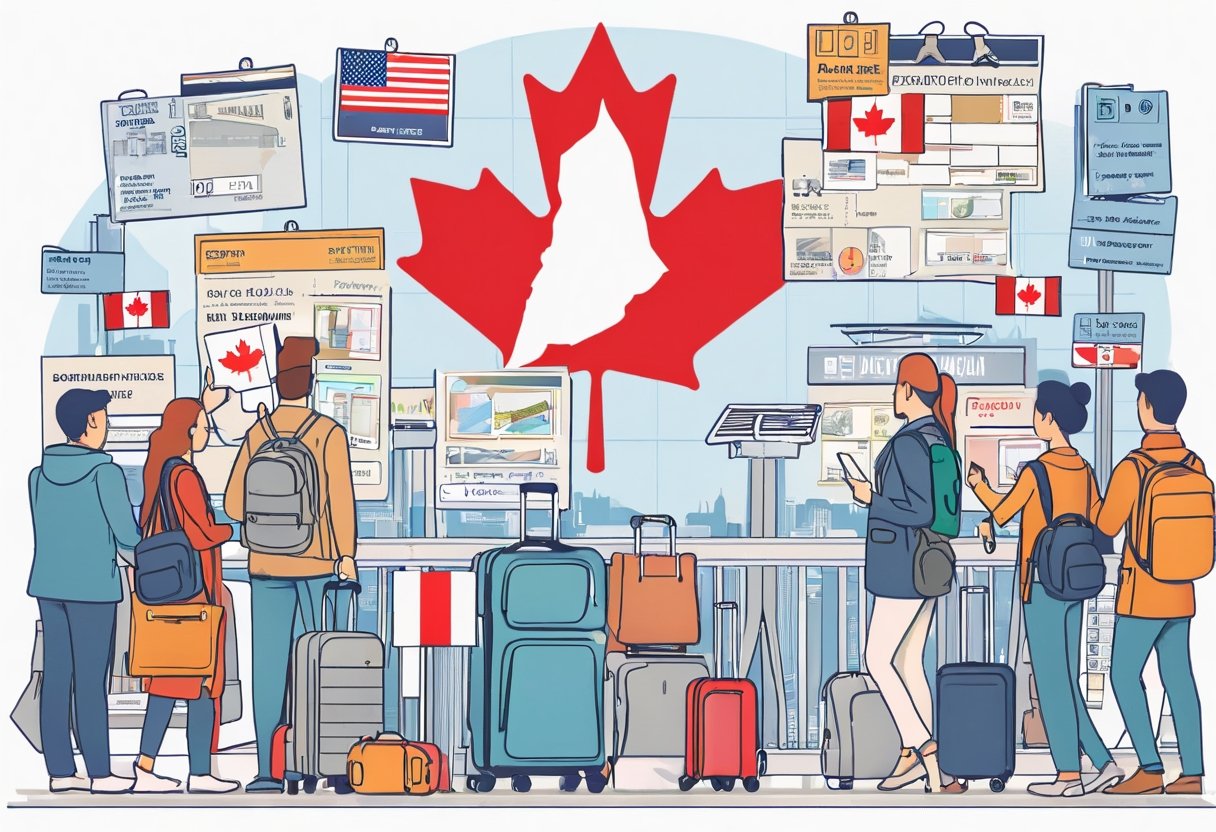
The boycott of US travel by Canadians has been making headlines in recent months, with many Canadians choosing to avoid traveling to the United States. According to a recent survey by the Bank of Canada, 55 percent of respondents were altogether avoiding or spending less on vacations to US destinations.
Reasons Behind the Boycott
The reasons behind the boycott are varied, but many Canadians are citing the current political climate and trade policies as the main reasons for their decision. As reported by Rural Insights, when people are upset about an issue, boycotting is one of the first tools readily available to consumers – the choice to buy or not buy from certain brands or countries.
Impact on the US Tourism Industry
The boycott is having a significant impact on the US tourism industry, with Canadian travel to the US declining for the 10th straight month, according to The New York Times. The decline in Canadian tourists is driving down international travel spending, which is expected to drop 3.2 percent to $173 billion this year, according to a recent report from the US Travel Association.
Effects on Specific Industries
The boycott is also having an impact on specific industries, such as the travel and hospitality industry. As reported by BBC News, some Canadian snowbirds, retirees who travel south to states like Florida to find warmth in the winter months, are staying home more than other age groups, with only 10% planning US trips for this year, down 66% compared to last year.
Conclusion and Future Implications
In conclusion, the Canadian boycott of US travel shows no sign of slowing, with many Canadians choosing to avoid traveling to the United States due to the current political climate and trade policies. As reported by Hawaii Business, a growing number of Canadians are now boycotting US tourism and goods, instead opting to explore their own country or other parts of the globe and making a concerted effort to buy more Canadian products.
The fashion industry is on the cusp of a revolution, with artificial intelligence (AI) and sustainable fashion converging to create a new era of digital wardrobes. According to Green Living Magazine, AI algorithms are analyzing massive datasets on materials, recycling processes, and consumer behavior to create garments that are engineered for circularity from day one.
AI-Driven Design
Companies like Genera are using AI to bridge the gap between creative vision and digital execution, replacing traditional methods with more efficient alternatives. As Forbes notes, AI-generated designs, on-demand manufacturing, and blockchain-enabled supply chains are reimagining every step of the fashion process.
Sustainable Fashion
The digital wardrobe revolution is not just about style; it’s also about sustainability. Fashionxt highlights 12 AI companies leading the charge in sustainable fashion, from Save Your Wardrobe’s AI-powered digital wardrobe management solution to CircularID’s innovative approach to circular economy initiatives.
The Impact of AI
AI is redesigning fashion from the ground up, with CTO Magazine noting that AI stylists are making fashion more sustainable by suggesting outfits that can be mixed and matched or reused for multiple events. This shift towards hyper-personalization at scale, powered by generative AI, computer vision, and contextual analytics, is set to reshape the entire fashion industry.
As MIT News reports, researchers are developing software that can design eco-friendly clothing that can be reassembled into new items, reducing waste and promoting sustainability.
Practical Takeaways
So, what can you do to be a part of the digital wardrobe revolution? Start by embracing sustainable fashion practices, such as buying second-hand or investing in clothing that is designed to last. Consider using AI-powered styling tools to help you create new outfits from your existing wardrobe. And, as you explore the latest fashion trends, remember that the future of fashion is not just about style – it’s about sustainability, too.
Ethereum, often referred to as the ‘altcoin king,’ has been gaining significant attention from institutional leaders and investors alike. According to Joseph Chalom, former head of digital assets at BlackRock, Ethereum has the potential to become the backbone of a decades-long transformation in global finance.
Technical Indicators and Market Outlook
Despite the long-term optimism, Ethereum’s near-term outlook remains uncertain. Technical indicators suggest that the loss of key support could extend the ongoing correction, especially if Bitcoin continues to trade sideways. However, analysts emphasize that Ethereum’s fundamental position in global finance—combined with institutional staking adoption—could provide a strong floor for future growth once the current volatility subsides.
Ethereum’s Role in Digitizing Finance
Chalom believes that Ethereum will not only be a blockchain but the digital infrastructure of Wall Street. Traditional financial institutions already rely on Ethereum’s ecosystem for its trust, liquidity, and security. The network has become central to financial digitization, hosting the majority of stablecoins, tokenized assets, and smart contract activity.
Tokenization and Smart Contracts
The tokenization of real-world assets, disciplined risk management, and a massive generational wealth transfer can put trillions of dollars on the Ethereum track. Chalom stated that Ethereum will transform the future of finance, saying, ‘Over time, we won’t call it DeFi or TradFi; we’ll just call it finance, and its infrastructure will be Ethereum.’
Practical Takeaways and Future Implications
As Ethereum continues to grow and mature, it’s essential for investors and institutions to understand its potential impact on the global financial system. With its strong fundamentals and increasing adoption, Ethereum is poised to play a significant role in shaping the future of finance.
Zcash, a cryptocurrency that focuses on providing privacy to its users, has seen a significant surge in demand lately. According to Eli Ben-Sasson, co-founder of Zcash and Starknet, the world is demanding more privacy, especially in the context of decentralized public blockchains. This demand is driven by the need for financial autonomy and the increasing concerns over data privacy and AI-driven surveillance.
Challenges in Ensuring Integrity in Privacy Payments
In an episode of The Big Brain Podcast, Eli Ben-Sasson discussed the challenges of ensuring integrity in privacy payments on decentralized public blockchains. He highlighted the role of Zero-Knowledge (ZK) proofs in validating computations without compromising sensitive information. ZK proofs are a crucial component of Zcash’s technology, allowing users to transact privately while maintaining the integrity of the blockchain.
Zcash’s Hybrid Model
Zcash’s hybrid model, which supports both transparent and shielded transactions, makes it a compelling option for users seeking financial autonomy. As Alex Bornstein, Zcash Foundation’s representative, noted, the recent rally in Zcash’s price was driven by grassroots demand rather than coordinated marketing. This organic growth is a testament to the increasing demand for privacy-focused cryptocurrencies.
Market Impact and Future Implications
The surge in Zcash’s price has drawn attention from investors and builders who see privacy as an overlooked part of crypto’s future. Mert Mumtaz, co-founder of Solana infrastructure firm Helius, believes that Zcash remains extremely undervalued compared to other privacy-focused peers like Monero. The growing demand for private transactions, driven by the rise of central bank digital currencies (CBDCs) and institutional blockchains, is expected to continue in the future.
Expert Insights and Technical Analysis
According to Naval Ravikant, a well-known angel investor and co-founder of AngelList, Zcash is insurance against Bitcoin, providing an additional layer of privacy to users. The use of ZK proofs and the hybrid model makes Zcash a unique and valuable asset in the cryptocurrency space. From a technical perspective, Zcash’s shielded pool protects anonymity and against quantum threats, making it an attractive option for users concerned about the security of their transactions.
Conclusion and Practical Takeaways
In conclusion, the demand for privacy-focused cryptocurrencies like Zcash is on the rise. As the world becomes increasingly transparent, the ability to transact privately is being treated as a valuable feature. Users and investors should consider the benefits of Zcash and its unique technology, including ZK proofs and the hybrid model. As the market continues to evolve, it is essential to stay informed about the latest developments and trends in the privacy-focused cryptocurrency space.