Author: qloud-tech

  • Google Challenges German Ruling on AI Liability

    Google Challenges German Ruling on AI Liability

    Introduction to AI Liability

    A recent German court ruling has found Google liable for false claims made by its AI-generated search overviews. This decision has significant implications for the tech industry and raises important questions about the responsibility of companies for the actions of their AI systems.

    Background on the Case

    The case in question involved two German publishers who claimed that Google’s AI overviews had falsely linked them to scams and dubious business practices. The court ruled that Google is directly liable for these false claims, treating the AI-generated summaries as Google’s own content rather than traditional search results.

    Implications of the Ruling

    This ruling has far-reaching implications for companies that use AI to generate content. As Danny Goodwin notes, the court’s decision means that Google can no longer hide behind legal protections designed for third-party content. Instead, the company will be held responsible for the accuracy of its AI-generated search overviews.

    Technical Analysis

    From a technical perspective, the ruling highlights the importance of ensuring that AI systems are designed and trained to provide accurate and reliable information. This will require significant investments in AI research and development, as well as a commitment to transparency and accountability.

    Market Impact

    The ruling is likely to have a significant impact on the market, particularly for companies that rely heavily on AI-generated content. As Foo Yun Chee reports, the decision may lead to increased scrutiny of AI systems and a greater emphasis on ensuring that they are designed and used in ways that prioritize accuracy and transparency.

    Future Implications

    Looking to the future, the ruling raises important questions about the potential risks and benefits of AI-generated content. As The Next Web notes, the decision may have significant implications for the development of AI systems and the ways in which they are used in various industries.

    According to Reuters, Google has announced plans to appeal the ruling, citing concerns about the potential impact on the development of AI systems.

    Conclusion

    In conclusion, the German court ruling on Google’s AI liability has significant implications for the tech industry and raises important questions about the responsibility of companies for the actions of their AI systems. As the use of AI-generated content continues to grow, it will be essential to prioritize accuracy, transparency, and accountability to ensure that these systems are used in ways that benefit society as a whole.

  • Islanders Face Higher Power Bills Due to Fiona Restoration Costs

    Islanders Face Higher Power Bills Due to Fiona Restoration Costs

    Introduction

    Post-tropical storm Fiona struck Prince Edward Island in 2022, causing widespread damage and power outages. Maritime Electric, the island’s primary electricity provider, has applied to the Island Regulatory and Appeals Commission (IRAC) to recover approximately $37 million in storm-related restoration costs from ratepayers.

    Background

    According to Yahoo News Canada, Maritime Electric made its final arguments to IRAC, stating that the recovery costs include $19.3 million in capital spending to fix and replace destroyed infrastructure, $15.3 million in operational costs, and $6.6 million in interest resulting from borrowing the cash required to pay for the cleanup costs.

    Implications

    If approved, the Fiona-related costs will result in an incremental annual cost increase of approximately 2.4% for customers, effective March 1, 2024, until February 28, 2029, as stated in the IRAC public notice. The actual rate impact for an individual customer will vary depending on their energy consumption and demand.

    Expert Insights

    The situation raises questions about the fairness of passing storm recovery costs to customers. As discussed on Facebook, some argue that the costs should be absorbed by the utility company or the government, rather than being passed on to ratepayers.

    Conclusion

    In conclusion, the IRAC’s decision will have a significant impact on the island’s residents and businesses. It is essential to consider the fairness and transparency of the rate increase and to explore alternative solutions to mitigate the costs.

  • Banks vs Bitcoin: Quantum Attack Vulnerability

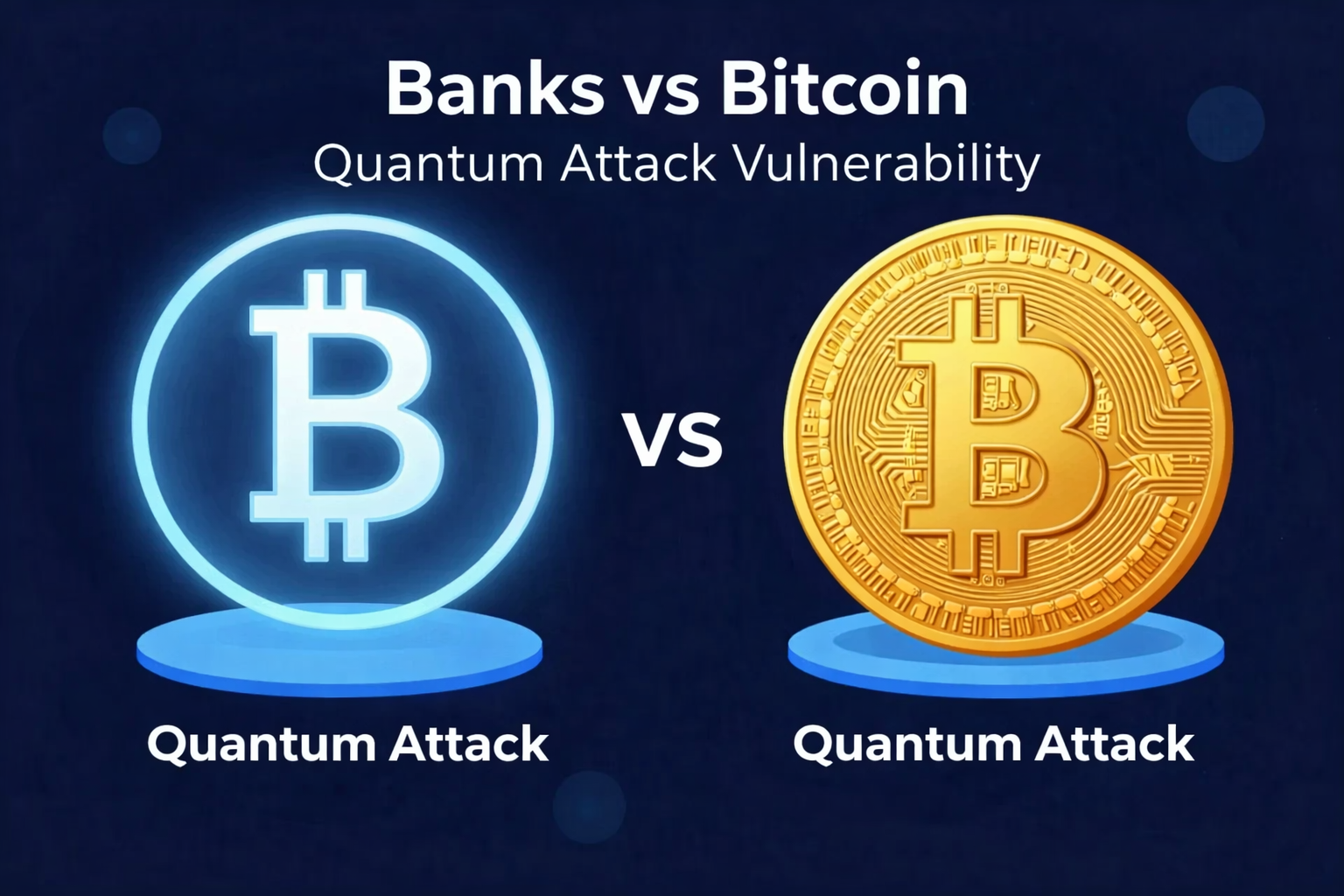
    Banks vs Bitcoin: Quantum Attack Vulnerability


    Introduction to Quantum Attacks

    Quantum computing has the potential to revolutionize various fields, including finance and cryptography. However, it also poses significant risks to the security of traditional banking systems and cryptocurrencies like Bitcoin. Recently, Tim Draper sparked a debate by claiming that quantum computing will compromise traditional banking systems before it threatens Bitcoin.

    Understanding Quantum Computing

    Quantum computing is a type of computing that uses the principles of quantum mechanics to perform calculations. It has the potential to solve complex problems much faster than classical computers, making it a powerful tool for various applications. However, it also poses significant risks to the security of cryptographic systems, which are used to protect sensitive information.

    Cryptographic Systems and Quantum Attacks

    Cryptographic systems, such as those used in traditional banking systems and Bitcoin, rely on complex mathematical problems to secure transactions and protect sensitive information. However, quantum computers can potentially solve these problems much faster than classical computers, making them vulnerable to quantum attacks.

    Vulnerability of Traditional Banking Systems

    Traditional banking systems are more vulnerable to quantum attacks due to their centralized nature and reliance on complex cryptographic systems. If a quantum computer were to compromise the cryptographic system used by a bank, it could potentially access sensitive information and disrupt the entire banking system.

    Bitcoin’s Resistance to Quantum Attacks

    Bitcoin, on the other hand, is a decentralized cryptocurrency that uses a different type of cryptographic system. Its decentralized nature and use of a cryptographic system called elliptic curve cryptography make it more resistant to quantum attacks. While quantum computers can potentially break the cryptographic system used by Bitcoin, it would require a significant amount of computational power and energy.

    Conclusion and Future Implications

    In conclusion, traditional banking systems are more vulnerable to quantum attacks than Bitcoin due to their centralized nature and reliance on complex cryptographic systems. As quantum computing continues to advance, it is essential for banks and other financial institutions to develop strategies to mitigate the risks associated with quantum attacks.

  • OpenAI and SpaceX IPOs Revolutionize Tech Landscape

    OpenAI and SpaceX IPOs Revolutionize Tech Landscape


    Introduction to the IPO Landscape

    The tech world is abuzz with the news of OpenAI and SpaceX filing for initial public offerings (IPOs). This move is set to revolutionize the tech landscape, with both companies poised to make a significant impact on the market. According to WIRED, OpenAI has filed confidential paperwork for an IPO, making it the third company to do so this year, following in the footsteps of Anthropic and SpaceX.

    OpenAI’s Financials and Growth

    OpenAI’s revenue from subscriptions, ads, and service fees grew to somewhere between $10 billion and $20 billion last year, as reported by WIRED. However, the company spent far more on cloud computing and staffing, leading to billions of dollars in losses. Despite this, an IPO would provide OpenAI with another fundraising opportunity, having already raised $122 billion in March.

    SpaceX’s Ambitious Plans

    SpaceX, on the other hand, is aiming to launch its IPO, which could be the largest ever. As reported by CNBC, the company plans to list under the ticker symbol SPCX on the Nasdaq. SpaceX’s revenue jumped 15% to $4.69 billion in the first quarter, with the company investing heavily in AI and data centers.

    Anthropic’s Valuation and Competition

    Anthropic, valued at almost a trillion dollars, has also filed for an IPO, as reported by Reuters. The company’s valuation has put it ahead of OpenAI, stepping up the competition between the two AI giants. With all three companies going public, the tech landscape is set to become even more competitive.

    Market Impact and Future Implications

    The IPOs of OpenAI, SpaceX, and Anthropic are set to have a significant impact on the market. As these companies go public, they will be subject to greater scrutiny and transparency, which could boost employee morale and customer confidence. The future implications of these IPOs are vast, with the potential for significant growth and innovation in the tech industry.

  • Apple’s WWDC Unveils Siri AI and Child Safety Tools

    Apple’s WWDC Unveils Siri AI and Child Safety Tools

    Introduction to Siri AI

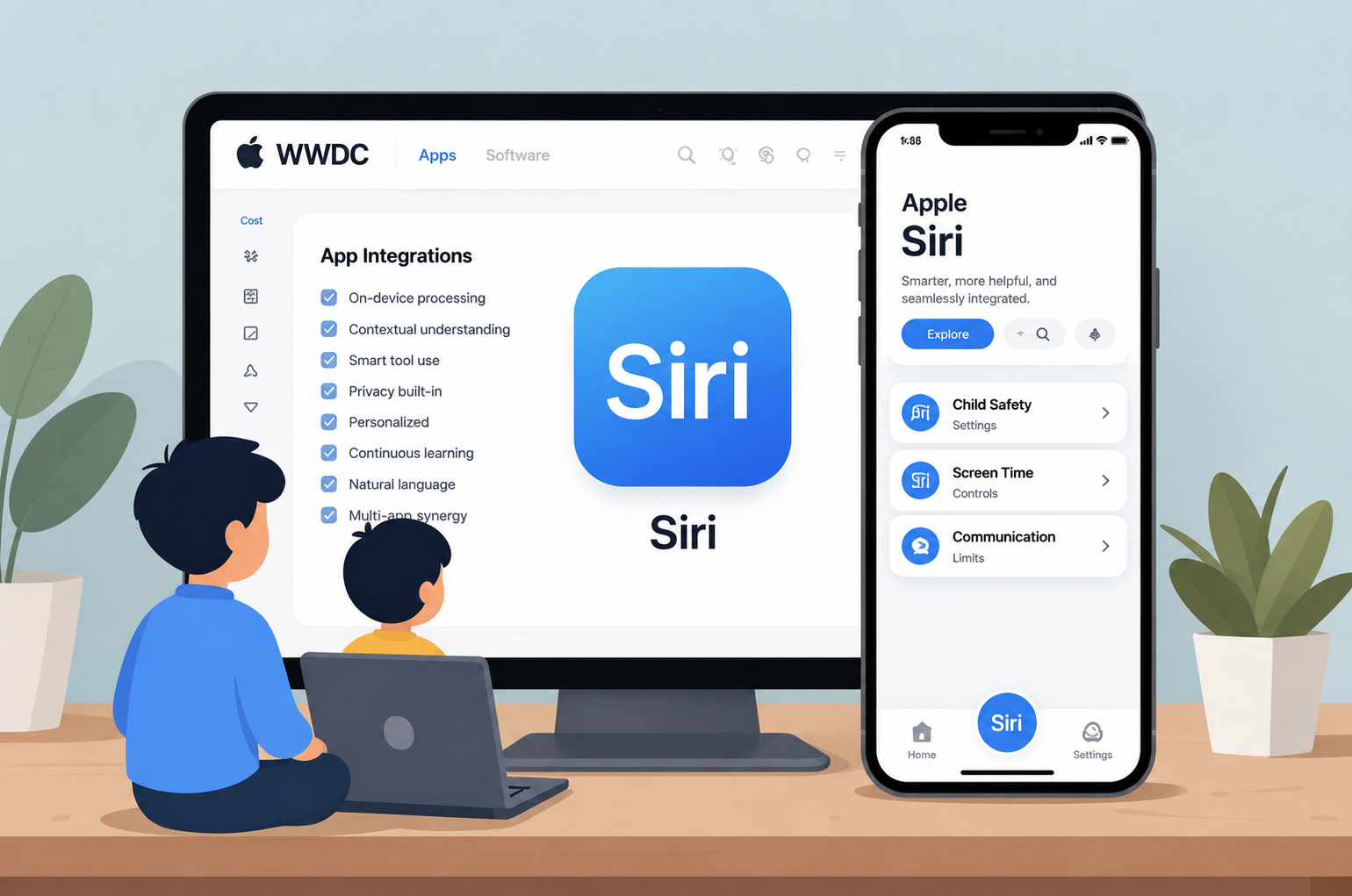
    Apple’s annual Worldwide Developers Conference (WWDC) has unveiled a plethora of exciting updates, with the introduction of Siri AI being one of the most significant announcements. As noted by The Guardian, Siri AI is an AI-powered personal assistant integrated with Apple Intelligence capabilities, designed to understand personal context, analyze on-screen content, search the web, understand images, and complete tasks across apps.

    Key Features of Siri AI

    According to Apple’s Newsroom, Siri AI is built on Apple Intelligence, allowing it to draw on personal context understanding and help users find what they need in the moment across messages, emails, photos, and more. For instance, users can ask Siri to find a restaurant recommendation a friend messaged them about, surface a hotel confirmation number from an old email, or pull up photos with friends and family from a recent trip.

    Child Safety Features

    In addition to Siri AI, Apple has also introduced new child safety features, as reported by BNN Bloomberg. The new parental controls will, by default, allow children to access only the apps that are allowed by parents, and Apple is introducing a new ‘ask to browse’ feature that will require children to seek permission for every new website they visit.

    Market Impact and Future Implications

    The introduction of Siri AI and child safety features is expected to have a significant impact on the market, as noted by TechCrunch. With Apple’s focus on AI and child safety, the company is poised to take a leading position in the tech industry. As helloapple’s Instagram post suggests, the future of tech is exciting, and Apple is at the forefront of innovation.

    Practical Takeaways

    For users, the introduction of Siri AI and child safety features means a more personalized and secure experience. As The Guardian notes, the new features will be widely released in the fall, and users can expect a more capable and conversational assistant.

  • Nvidia and SK Hynix Revolutionize AI Memory

    Nvidia and SK Hynix Revolutionize AI Memory

    Introduction to the Partnership

    Nvidia and SK Hynix have announced a multi-year partnership to co-develop next-generation memory for AI data centers and streamline semiconductor manufacturing. According to Earn Your Leisure’s post, this deal expands SK Hynix’s memory integration across Nvidia’s future hardware lineup, positioning the companies to compete directly with Intel’s Xeon and AMD’s EPYC server chips.

    Key Aspects of the Partnership

    As reported by NVIDIA and SK hynix sign multiyear AI memory pact | NVDA Stock News, the agreement supports supply for advanced memory, addressing the extended development cycles, advanced fabrication, and capital investments to sustain the global buildout of AI factories. SK hynix will diversify into new markets NVIDIA is creating — across AI infrastructure, personal AI, and physical AI — co-developing memory for NVIDIA Vera Rubin AI supercomputers, Vera CPUs, RTX Spark-powered PCs, and Jetson Thor robotic computing platforms.

    Technical Analysis and Market Impact

    The partnership also includes joint engineering to optimize memory for future Vera Rubin AI supercomputers. As noted in SK hynix announces multiyear deal with Nvidia for AI factories | Yonhap News Agency, the agreement is expected to secure Nvidia’s long-term memory supply amid ongoing shortages while locking in consistent demand for SK Hynix. Bloomberg reports that Nvidia will help its partner diversify into new arenas, encompassing infrastructure and physical AI as well as memory for Vera Rubin, Nvidia’s most powerful accelerator.

    Future Implications and Expert Insights

    Experts believe this partnership will significantly impact the AI and semiconductor industries. With SK Hynix set to expand its reach into new AI-related fields, the company is likely to become a lead supplier for AI-oriented PC architecture like Nvidia RTX Spark. As SK hynix announces multiyear deal with Nvidia for AI factories suggests, long-term supply agreements make it easier for SK Hynix to expand capacity and gradually increase market share.

  • Crypto Whale Faces Massive Loss on ZEC and HYPE

    Crypto Whale Faces Massive Loss on ZEC and HYPE


    Introduction to the Crypto Whale’s Loss

    A single cryptocurrency whale is facing a combined unrealized loss of approximately $6.65 million after two high-leverage long positions turned sharply against them, according to data from blockchain analytics firm Onchain Lens. This significant loss highlights the risks associated with high-leverage trading in the cryptocurrency market.

    The Breakdown of Losses

    Onchain Lens reported that the whale’s 10x leveraged long position on Zcash (ZEC) has suffered a loss of over $3 million. Additionally, the whale’s position on HYPE has resulted in a loss of around $3.65 million. These losses are a stark reminder of the importance of risk management in cryptocurrency trading.

    Risk Management in Crypto Trading

    High-leverage trading can be lucrative, but it also increases the risk of significant losses. The crypto whale’s loss serves as a cautionary tale for traders who engage in high-risk trading strategies without proper risk management techniques. It is essential for traders to understand the risks involved and to use appropriate risk management strategies to mitigate potential losses.

    Expert Insights and Analysis

    According to experts, the crypto whale’s loss can be attributed to a combination of factors, including market volatility and poor risk management. The cryptocurrency market is known for its volatility, and traders must be prepared for sudden changes in market conditions. In this case, the whale’s high-leverage positions were unable to withstand the market fluctuations, resulting in significant losses.

    Technical Analysis of the Market

    From a technical analysis perspective, the crypto whale’s loss can be seen as a result of the market’s inability to sustain the upward trend. The whale’s positions were likely based on the assumption that the market would continue to rise, but the sudden reversal caught them off guard. This highlights the importance of staying up-to-date with market trends and adjusting trading strategies accordingly.

    Conclusion and Practical Takeaways

    In conclusion, the crypto whale’s loss serves as a reminder of the risks associated with high-leverage trading in the cryptocurrency market. Traders must prioritize risk management and stay informed about market trends to avoid significant losses. By understanding the risks and using appropriate risk management strategies, traders can navigate the cryptocurrency market with confidence.

  • China’s AI-Powered Promotion of Xi Jinping’s Thought

    China’s AI-Powered Promotion of Xi Jinping’s Thought

    Introduction

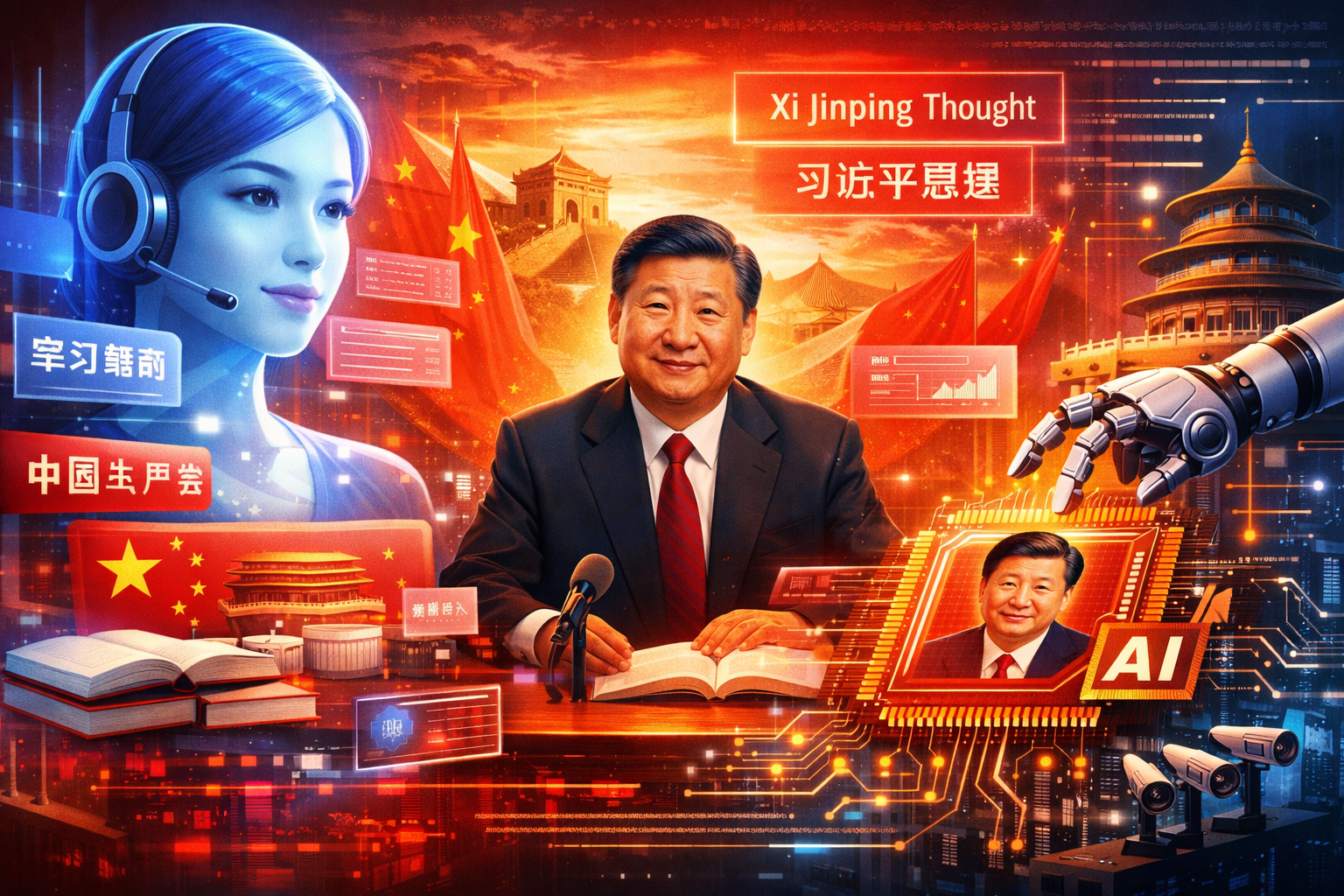
    China is investing heavily in artificial intelligence (AI) to promote President Xi Jinping’s political ideology. The project, known as ‘Xinhua Yudian,’ or ‘Xinhua lexicon,’ is an intelligent agent designed to learn, research, and disseminate Xi Jinping Thought on Socialism with Chinese Characteristics for a New Era.

    Background

    According to Shanghai Stock Exchange filings, Xinhuanet, owned by the official Xinhua News Agency, plans to invest over 1.1 billion yuan (approximately $162 million) in the AI system. This development highlights the increasing use of AI as a tool for political communication and ideological reinforcement.

    The Xinhua Yudian Project

    The Xinhua Yudian project is part of China’s broader national strategy to integrate AI across governance, industry, and society under the ‘AI+’ initiative launched in 2025. The project aims to deliver official narratives, current affairs, and political content in a structured format, drawing on a curated state-controlled database.

    Implications

    The rollout of Xinhua Yudian is likely to deepen the integration of AI into China’s political and information architecture. If successful, it could serve as a model for other state-backed AI systems designed to standardize ideological communication and policy interpretation.

    Expert Insights

    Experts believe that the use of AI in promoting Xi Jinping’s thought is a strategic move to reinforce the Communist Party’s dominance. The CPC sees AI as a tool to consolidate its power and control over the narrative, rather than a means to disrupt the status quo.

    Technical Analysis

    From a technical perspective, the Xinhua Yudian project demonstrates China’s commitment to developing and deploying AI technologies to support its political agenda. The use of AI in this context raises important questions about the role of technology in shaping public discourse and the potential risks of bias and manipulation.

    Market Impact

    The Xinhua Yudian project is likely to have significant implications for the global AI market, particularly in the context of political communication and ideological reinforcement. As AI technologies continue to evolve, it is essential to consider the potential consequences of their use in shaping public opinion and influencing political outcomes.

    Future Implications

    The future implications of the Xinhua Yudian project are far-reaching. As AI becomes increasingly integrated into China’s political and information architecture, it is likely to have a profound impact on the country’s governance, industry, and society. The use of AI in promoting Xi Jinping’s thought also raises important questions about the role of technology in shaping the future of politics and governance.

  • Trump Considers Ending Iran Ceasefire Amid Rising Tensions

    Trump Considers Ending Iran Ceasefire Amid Rising Tensions

    Introduction to the Crisis

    The conflict between the United States and Iran has been escalating, with both sides engaging in military actions and diplomatic efforts. According to the Wall Street Journal, President Trump has privately told aides that he would consider ending the ceasefire with Iran if Tehran kills American troops.

    Details of the Ceasefire

    The ceasefire, which has been in place for several weeks, has been fragile, with both sides accusing each other of violating the agreement. The Wall Street Journal reports that Trump has told aides that he would only consider ending the ceasefire if Iran kills American troops, suggesting that he is prepared to tolerate ongoing skirmishes indefinitely.

    Recent Developments

    Recently, Iran fired missiles and drones at US bases and struck Kuwait’s international airport, killing one person. Secretary of State Rubio described the exchanges as defensive responses rather than a ceasefire breakdown. Trump, for his part, told reporters in the Oval Office that the situation was under control.

    Expert Insights

    Kabir Taneja, Executive Director of the Observer Research Foundation, tweeted that Trump is making damage to Gulf states as an incidental. This suggests that the US is prioritizing its own interests over the stability of the region.

    Market Impact

    The conflict has had a significant impact on the global economy, particularly in the oil market. The closure of the Strait of Hormuz has disrupted oil supplies, leading to increased prices and economic instability.

    Future Implications

    The future of the conflict is uncertain, but it is clear that the situation is volatile and could escalate at any moment. The US and Iran must engage in diplomatic efforts to find a peaceful resolution to the conflict, or risk further destabilization of the region.

  • US Treasury Sanctions Iran’s Largest Crypto Exchange

    US Treasury Sanctions Iran’s Largest Crypto Exchange

    Introduction

    The US Treasury Department’s Office of Foreign Assets Control (OFAC) has imposed sanctions on Nobitex, Iran’s largest digital asset exchange, along with several of its executives. According to Source 1, the sanctions are part of the US government’s efforts to eliminate the threat posed by the Iranian regime.

    Background

    As reported by Source 2, Nobitex has provided significant support to the Iranian government, allowing it to evade financial restrictions and transfer wealth out of the country. The exchange has also facilitated transactions for the Islamic Revolutionary Guard Corps (IRGC) and its proxy militias abroad.

    Sanctions and Designations

    The OFAC has designated Nobitex’s chairman, co-founder, and former CEO, Amir Hossein Rad, as well as several other executives, pursuant to Executive Orders 13224 and 13902. Source 3 notes that the sanctions follow allegations that Nobitex is linked to influential figures within Iran’s political and economic establishment.

    Consequences

    The sanctions will effectively cut Nobitex and the designated individuals off from the US financial system and prohibit American individuals and businesses from engaging in transactions with them. As Source 4 points out, this move is likely to increase pressure on Iran’s cryptocurrency sector and complicate access to international digital asset markets for Iranian users.

    Expert Insights

    The US Treasury’s action against Nobitex highlights the growing concern about the use of digital assets in evading sanctions and financing militant activities. Source 5 notes that the Reuters investigation published on May 1 showed how Nobitex had become a central node in a parallel financial system used to process hundreds of millions of dollars for Iran’s central bank and the IRGC.

    Technical Analysis

    The use of digital assets and cryptocurrency exchanges like Nobitex has raised concerns about the potential for sanctions evasion and illicit financing. The US Treasury’s action demonstrates the importance of regulating and monitoring digital asset transactions to prevent such activities.

    Market Impact

    The sanctions against Nobitex are likely to have a significant impact on the Iranian cryptocurrency market and the broader digital asset industry. As Source 1 notes, the move signals a broader US effort to target alternative financial channels that are being used to bypass sanctions.

    Future Implications

    The US Treasury’s action against Nobitex highlights the need for increased regulation and oversight of the digital asset industry. As Source 2 points out, the use of digital assets and cryptocurrency exchanges can have significant implications for global financial systems and national security.