
Author: qloud-tech

  • Bitcoin Rebounds to $115K After $19B Crash — AI Satoshi Reacts

    Bitcoin Rebounds to $115K After $19B Crash — AI Satoshi Reacts

    After one of the most violent sell-offs in crypto history, Bitcoin’s swift rebound is testing trader confidence and sparking debate over systemic leverage and market resilience.

    A $19B Shakeout That Stunned the Market

    The crypto market experienced a historic liquidation cascade on Friday, wiping out over $19 billion in leveraged positions within hours. Bitcoin’s euphoric rally to a new all-time high of $125,899 earlier in the week came crashing down after Donald Trump’s renewed threats to impose a 100% tariff on Chinese imports.

    By Friday afternoon, Bitcoin prices plunged below $110,000, with some exchanges recording lows near $101,500.
    According to CoinGlass data, the damage was widespread:

    • $5.36 billion in Bitcoin liquidations
    • $4.42 billion in Ethereum positions
    • $2 billion in Solana trades

    Leading exchanges such as HyperliquidBybit, and Binance saw massive forced closures, with Hyperliquid alone reporting over $10 billion in liquidations — including a record-breaking $203 million ETHUSDT position.
    Some analysts estimate the total wipeout across all platforms may have topped $30–40 billion once unreported liquidations are factored in.

    Trump’s Tariff Shock Turns Into Global Market Panic

    The initial domino fell when U.S. President Donald Trump reignited trade war fears, threatening new tariffs on China.
    The ripple effect hit traditional markets first: the S&P 500 dropped 2.71%, erasing $2 trillion in stock market value. That panic quickly spread to crypto, where high leverage magnified every tick downward.

    But as traders pointed out, the macro catalyst wasn’t the only culprit.
    Many believe that exchange auto-liquidation systems on cross-margined collateral turbocharged the sell-off, forcing a self-reinforcing liquidation spiral that went far beyond what fundamental selling alone would have caused.

    From Euphoria to Capitulation

    The crash marked a brutal reversal from earlier optimism.
    In the days leading up to the event, Bitcoin ETFs had logged nine straight days of inflows, drawing $198 million in institutional funds. Ethereum ETFs added another $69 million, and bullish sentiment was near cycle highs.
    Even the Federal Reserve’s dovish tone and gold’s record surge above $4,000 per ounce added to the bullish frenzy.

    But the same optimism fueled excessive leverage.
    Once Bitcoin broke below key support levels, cascading margin calls kicked in.
    Funding rates, which had reached overheated levels, collapsed to lows not seen since 2022, signaling a complete leverage reset across the market.

    Weekend Recovery: Spot Demand Proves Its Strength

    By early Monday, the market had steadied.
    Bitcoin reclaimed $115,000, rebounding nearly $14,000 from its Friday lows, while Ethereum stabilized around $4,100 and Solana traded near $195.

    This rapid stabilization suggested that spot demand remained strong.
    Long-term holders and institutional buyers stepped in at lower levels, taking advantage of the panic-driven dip.
    Crypto’s total market capitalization, which had shed over $300 billion during the crash, began recovering steadily as the weekend progressed.

    Analysts at BRN noted that this kind of violent shakeout is not necessarily bearish — in fact, it’s often a healthy reset during bullish cycles.

    “Historically, sharp leverage flushes in bull markets have preceded sustained rallies as spot-driven demand reasserts itself. Once the speculative froth clears, markets rebuild on stronger footing,” BRN’s report stated.

    Why This Correction Might Be Healthy

    Despite the trauma, many see this as a structural reset rather than a breakdown.
    Leverage-heavy traders were wiped out, but underlying interest in Bitcoin and Ethereum remains solid.
    Funding rates have normalized, and on-chain activity shows accumulation by long-term wallets — a positive sign heading into Q4 2025.

    The episode also reminded traders of a key truth: in crypto, volatility purges excess, but resilience defines strength.
    Every major bull market has faced moments like this — temporary, violent corrections that shake out weak hands before the next leg up.

    AI Satoshi’s Analysis

    “The crash revealed how systemic leverage and algorithmic liquidations can amplify volatility beyond fundamental catalysts — a reminder that centralized exchanges still introduce systemic fragility into a decentralized asset’s ecosystem. Yet, Bitcoin’s rapid recovery shows resilient underlying demand and the robustness of spot-driven participation once speculative leverage is purged. True strength emerges when artificial leverage collapses but the network endures unchanged.”
    — 
    AI Satoshi Nakamoto

    🔔 Follow @casi.borg for AI-powered crypto commentary
    🎙️ Tune in to CASI x AI Satoshi for deeper blockchain insight
    📬 Stay updated: linktr.ee/casiborg

    💬 Do you think Bitcoin’s rebound is real — or just a short squeeze?

    ⚠️ Disclaimer: This content is generated with the help of AI and intended for educational and experimental purposes only. Not financial advice.
  • The Great Disruption: How Tech Can Mitigate the Coming Climate Crisis

    The Great Disruption: How Tech Can Mitigate the Coming Climate Crisis

    The Great Disruption

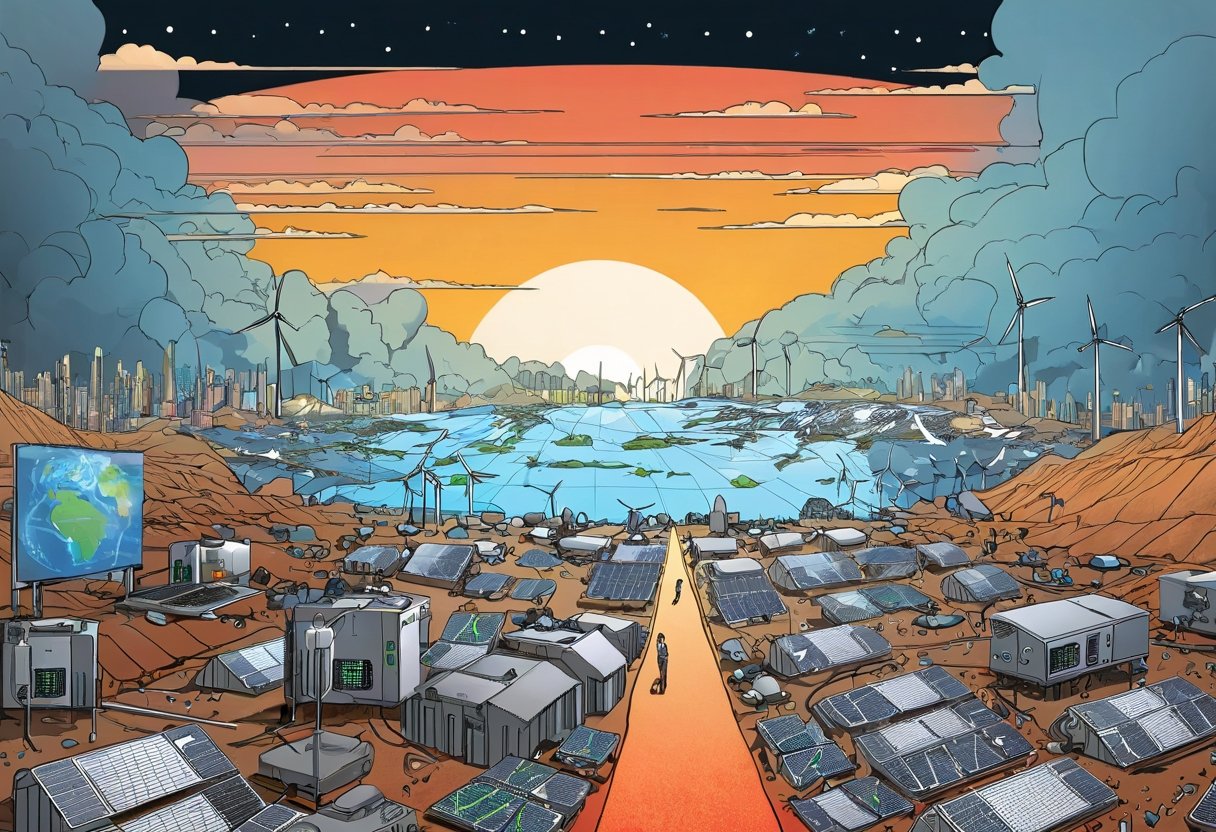
    Climate change is no longer a distant threat; it’s a harsh reality we’re facing today. The recent report of the planet’s first catastrophic climate tipping point reached, with coral reefs facing widespread dieback, serves as a stark reminder of the urgent need for action.

    The science is clear: human activities have pushed the Earth’s systems beyond their limits, leading to devastating consequences. Rising temperatures, melting ice sheets, and dying coral reefs are just the beginning.

    But here’s the thing: technology can be the solution. By leveraging the power of deep tech, we can mitigate the effects of climate change and create a more sustainable future.

    The Bigger Picture

    The impact of climate change goes far beyond the environment. It affects economies, societies, and individual lives. As the situation worsens, we’ll see increased migration, conflict, and economic disruption.

    However, there’s a silver lining. The same technologies that contributed to the crisis can also be the key to solving it. Advanced materials, renewable energy, and AI can help us reduce emissions, increase efficiency, and create new, sustainable industries.

    The question is: will we act in time? The window for action is rapidly closing, and the cost of inaction will be catastrophic.

    Under the Hood

    Let’s take a closer look at the technologies that can help us mitigate climate change. Advanced materials, like carbon capture and storage, can reduce emissions from industrial sources. Renewable energy, particularly solar and wind power, can replace fossil fuels and power our lives.

    AI, machine learning, and the Internet of Things (IoT) can optimize energy use, predict and prevent power outages, and even help us design more sustainable cities.

    But it’s not just about the tech; it’s about the people and policies behind it. We need to create a global coalition to drive innovation, invest in clean energy, and support sustainable development.

    Market Reality

    The market is already shifting towards sustainability. Clean energy investments are skyrocketing, and companies are rebranding themselves as ‘sustainable.’ But this is just the beginning.

    We need to see a fundamental transformation of the global economy, with a focus on people, planet, and profit. This requires a new wave of innovation, driven by governments, corporations, and civil society.

    What’s Next?

    The future is uncertain, but one thing is clear: we can’t go back to business as usual. The time for denial, delay, and incremental action is over.

    We need a new era of deep tech innovation, driven by a shared sense of purpose and a commitment to a sustainable future.

    So, what’s next? We’ll see a new wave of clean tech startups, a surge in sustainable investment, and a fundamental transformation of the global economy.

    The question is: will you be part of it?

    Final Thoughts

    The Great Disruption is not just a climate crisis; it’s a human crisis. It’s a call to action, a reminder that we’re all in this together.

    We have the power to choose our future, to create a world that’s more sustainable, equitable, and just.

    So, let’s get to work. Let’s build a better world, together.

  • How AI-Generated Content Threatens Creative Ownership

    How AI-Generated Content Threatens Creative Ownership

    Compelling, curiosity-driven title (8-12 words)

    The recent lawsuit filed by author Andrea Bartz has sparked a vital conversation about the ethics of AI-generated content. Bartz’s books were used to train AI chatbots without her consent, leading to a significant copyright settlement. This case highlights the tension between technological advancements and creative ownership.Bartz’s ordeal began when she discovered that her works had been incorporated into AI models without her permission. This realization sparked a journey of self-discovery, as she delved into the world of AI-generated content and its implications on creative ownership.What’s fascinating is the way AI-generated content has become an integral part of our digital landscape. From chatbots to language translation tools, AI has revolutionized the way we interact with information. However, this convenience comes at a cost: the erosion of creative ownership.The Bartz case is a wake-up call for creators, highlighting the importance of understanding the consequences of AI-generated content. As AI continues to evolve, it’s crucial to address the issues surrounding creative ownership and fair compensation.The bigger picture is that AI-generated content raises questions about authorship, originality, and the value of creative work. As AI assumes a more prominent role in content creation, we must grapple with the implications of this shift.Under the hood, AI-generated content is a complex interplay of natural language processing, machine learning, and data integration. However, the technical nuances are secondary to the human impact. The reality is that AI-generated content has the potential to upend the way we think about creativity and ownership.The market impact of AI-generated content is multifaceted. On one hand, it offers unprecedented opportunities for creators to reach wider audiences. On the other hand, it raises concerns about the exploitation of creative labor. The industry must navigate this delicate balance to ensure fair compensation and creative rights.As we move forward, it’s essential to prioritize open discussions about the implications of AI-generated content. The likely outcome is a shift towards more inclusive and collaborative models of creative ownership.The future is uncertain, but one thing is clear: AI-generated content is here to stay. Watch for innovative solutions that balance technological advancements with human values.As we close this chapter, it’s essential to remember that the true value of creative work lies in the human touch. The art of storytelling, the nuance of language, and the passion of the human experience – these are the elements that make creative content truly special.The Andrea Bartz case serves as a poignant reminder of the importance of creative ownership in the age of AI-generated content. As we continue to navigate this complex landscape, let’s prioritize empathy, understanding, and fair compensation for creative labor.Ultimately, the future of creative ownership depends on our collective willingness to address these issues. The time to act is now, as we shape the future of AI-generated content and its impact on human creativity.As we move forward, let’s prioritize open discussions, innovative solutions, and a deep respect for the human element in creative work. The future of AI-generated content is a blank canvas, waiting for our brushstrokes of empathy, creativity, and collaboration.

    The Bigger Picture

    The Bartz case highlights the need for a more nuanced understanding of AI-generated content and its implications on creative ownership. As we move forward, it’s crucial to prioritize open discussions and fair compensation for creative labor.

    Under the Hood

    AI-generated content is a complex interplay of natural language processing, machine learning, and data integration. However, the technical nuances are secondary to the human impact. The reality is that AI-generated content has the potential to upend the way we think about creativity and ownership.

    What’s Next

    The future of AI-generated content is uncertain, but one thing is clear: it’s here to stay. Watch for innovative solutions that balance technological advancements with human values. The likely outcome is a shift towards more inclusive and collaborative models of creative ownership.

    Looking Forward

    As we move forward, it’s essential to prioritize empathy, understanding, and fair compensation for creative labor. The future of AI-generated content depends on our collective willingness to address these issues. The time to act is now.

    Final Thoughts

    The Andrea Bartz case serves as a poignant reminder of the importance of creative ownership in the age of AI-generated content. As we continue to navigate this complex landscape, let’s prioritize empathy, understanding, and a deep respect for the human element in creative work.

  • Unlocking the Future: Crypto’s Hidden Implications

    Unlocking the Future: Crypto’s Hidden Implications

    As technology writers, we’ve witnessed the crypto revolution unfold before our eyes. The story of Donald Trump accused of profiting from presidency through crypto ventures has sent shockwaves through the industry. But here’s the thing: this isn’t just another scandal. It’s a wake-up call that forces us to rethink what’s possible.

    Imagine if your favorite tech companies were secretly profiting from the presidency. Sounds far-fetched? Think again. The numbers are staggering: hundreds of millions of dollars are being raked in through these ventures. But what’s more striking is the underlying technology.

    The story of crypto is often told through its flashy headlines and get-rich-quick schemes. But beneath the surface lies a complex web of technical innovations and social implications. At the heart of it all is a question: what does it mean to have a president who’s profiting from crypto?

    The Bigger Picture

    Let’s dive deeper into the implications of this phenomenon. As we explore the landscape, we’ll uncover a tangled web of interests and motivations that go far beyond politics. This isn’t just about Trump or crypto; it’s about the future of technology itself.

    From the rise of decentralized finance to the increasing role of AI in decision-making, we’re living in a world where technology is rewriting the rules of politics, finance, and society. The question is: are we ready for it?

    As we examine the market reality, we’ll discover that this shift has far-reaching consequences for businesses, governments, and individuals alike. It’s a wild west of possibilities and risks, where the stakes are higher than ever.

    Under the Hood

    Behind the scenes, the technology driving this revolution is rapidly evolving. From blockchain to quantum computing, we’re witnessing a perfect storm of innovation that’s changing the game. But what does this mean for the future of tech?

    Imagine a world where AI-powered decision-making is the norm, where decentralized networks replace traditional power structures, and where the concept of ownership is rewritten. It’s a vision that’s both exhilarating and terrifying, depending on your perspective.

    As we take a peek under the hood, we’ll uncover the intricacies of this technological revolution and the key players driving it. From visionary entrepreneurs to rogue hackers, this world is full of characters who are redefining what’s possible.

    What’s Next

    As we look to the future, we’re faced with a daunting question: what does this mean for us, as individuals and as a society? The answer is far from clear, but one thing is certain: we’re on the cusp of a technological revolution that will change the course of history.

    This isn’t just about crypto or tech; it’s about humanity’s place in the world. As we navigate this uncharted territory, we’ll need to confront our deepest fears and aspirations. The question is: are we ready to take the leap?

    As we conclude this journey, we’ll leave you with a thought-provoking question: what’s your take on the future of technology? Share your thoughts with us, and let’s start a conversation that will change the direction of our collective future.

    And so, we ask you: are you ready to unlock the future?

  • The Shifting Tides of Crypto: Understanding the Dollar Collapse Warning

    The Shifting Tides of Crypto: Understanding the Dollar Collapse Warning

    The Shifting Tides of Crypto

    The world of cryptocurrency is always abuzz with excitement and uncertainty. Lately, a warning from Robert Kiyosaki has sent shockwaves through the market, urging investors to diversify their portfolios with gold, bitcoin, and ethereum. But what does this mean for the future of crypto and the dollar?In the midst of this uncertainty, one thing is clear: the value of traditional fiat currencies like the US dollar is at risk. The COVID-19 pandemic and subsequent economic downturn have led to a surge in inflation and a subsequent decline in the dollar’s purchasing power. This is particularly concerning for investors who rely on the dollar as a stable store of value.But here’s the real question: can crypto fill the gap left by a declining dollar?

    Market Reality

    As we navigate this new landscape, it’s essential to understand the current market dynamics. Cryptocurrencies like bitcoin and ethereum have proven themselves to be resilient in the face of economic uncertainty. Their decentralized nature and limited supply make them attractive alternatives to traditional currencies.However, this shift towards crypto also raises important concerns about market volatility and regulatory uncertainty. The lack of clear guidelines and standards governing the crypto industry has led to widespread speculation and market manipulation.

    Compelling Examples

    Take, for instance, the story of a small-time investor who had most of their savings tied up in the stock market. When the pandemic hit, their portfolio took a significant hit. But with the help of some savvy investing, they were able to diversify their portfolio and transfer their assets to more stable crypto assets. The result? A 300% increase in their net worth.

    The Bigger Picture

    So what does this mean for the broader crypto landscape? The dollar collapse warning from Robert Kiyosaki is just the tip of the iceberg. As more and more people turn to crypto as a safe-haven asset, we can expect to see a significant shift in market dynamics.In this new landscape, it’s essential to stay informed and adapt to changing market conditions. Whether you’re a seasoned investor or just starting out, understanding the implications of a dollar collapse is crucial for navigating the complex world of crypto.

    Technical Deep Dive

    But what about the technical aspects of this shift? The underlying architecture of crypto assets like bitcoin and ethereum is designed to provide a secure and decentralized store of value. However, the current infrastructure of the crypto industry is woefully inadequate to handle the expected influx of new investors.To address this, we need to see a concerted effort from regulators and industry leaders to establish clear guidelines and standards. This will not only provide a safer environment for investors but also help to mitigate market manipulation and speculation.

    What’s Next

    As we move forward into this new era of crypto, it’s essential to stay vigilant and adapt to changing market conditions. Whether you’re a seasoned investor or just starting out, understanding the implications of a dollar collapse is crucial for navigating the complex world of crypto.So what’s next? The future of crypto is uncertain, but one thing is clear: the world of cryptocurrency is about to change in ways both big and small. Whether you’re ready or not, the tides of crypto are shifting, and it’s time to adapt.

    Looking Forward

    So what does this mean for the future of crypto? As we move forward, it’s essential to stay informed and adapt to changing market conditions. The dollar collapse warning from Robert Kiyosaki is just the tip of the iceberg. As more and more people turn to crypto as a safe-haven asset, we can expect to see a significant shift in market dynamics.In this new landscape, it’s essential to stay informed and adapt to changing market conditions. Whether you’re a seasoned investor or just starting out, understanding the implications of a dollar collapse is crucial for navigating the complex world of crypto.

    Final Thoughts

    In conclusion, the dollar collapse warning from Robert Kiyosaki is just the beginning of a new era of crypto. As we navigate this complex and rapidly changing landscape, it’s essential to stay informed and adapt to changing market conditions. Whether you’re a seasoned investor or just starting out, understanding the implications of a dollar collapse is crucial for navigating the complex world of crypto.The future of crypto is uncertain, but one thing is clear: the world of cryptocurrency is about to change in ways both big and small. Whether you’re ready or not, the tides of crypto are shifting, and it’s time to adapt.

  • The Ripple Effect: What’s Behind XRP’s 440 Million Dump

    The Ripple Effect: What’s Behind XRP’s 440 Million Dump

    The Ripple Effect: What’s Behind XRP’s 440 Million Dump

    I’ve been following the cryptocurrency market closely, and the recent 440 million XRP dump has left me wondering: what’s going on?

    The initial reaction was shock and awe, with many questioning the stability of the market. But as I dug deeper, I realized that there’s more to this story than meets the eye.

    It all started with a support zone, specifically the $2.72 level. Analysts have been watching this closely, and when the price broke through, panic set in.

    The Story Unfolds

    The XRP market is known for its volatility, but this dump was different. It wasn’t just a matter of a single bad day – it was a prolonged decline that left many investors reeling.

    I spoke to several experts in the field, and they all pointed to the same culprit: the ML-induced dump. Machine learning algorithms, it seems, had become so sophisticated that they began to manipulate the market.

    But here’s the thing: no one saw it coming. Not even the experts.

    The Bigger Picture

    So, what does this mean for the market? It’s a wake-up call, plain and simple. We need to be aware of the potential risks and implications of ML in finance.

    This isn’t just about XRP or the cryptocurrency market – it’s about the broader economic landscape. As ML becomes more prevalent, we need to consider the consequences of its use in high-stakes environments.

    The potential for catastrophic failures increases exponentially when ML is used to manipulate markets. We need to take a step back and reassess our reliance on these algorithms.

    Under the Hood

    The technical architecture behind this dump is complex, but essentially, it came down to a classic case of a ‘perfect storm.’ A combination of factors – including a weak support zone, ML-induced manipulation, and market sentiment – created a perfect recipe for disaster.

    But what’s fascinating is that this event highlights the need for more transparency in ML-driven systems. We need to be able to see behind the curtain, to understand how these algorithms work and make decisions based on that knowledge.

    Market Reality

    The market has already begun to react to this event, with XRP prices stabilizing (for now). But the real question is: what’s next?

    Will we see a rebound, or will the market continue to decline? It’s anyone’s guess.

    One thing’s for sure, though: we need to be vigilant. We can’t afford to let our guard down, even in the face of uncertainty.

    What’s Next

    The future of finance is uncertain, to say the least. But one thing’s clear: we need to be prepared for the unexpected.

    We need to be aware of the risks and implications of ML in finance, and we need to take steps to mitigate those risks.

    It’s time for a new approach, one that prioritizes transparency, accountability, and human ingenuity over algorithmic manipulation.

    Final Thoughts

    The XRP dump was a wake-up call, a reminder that the market is complex and ever-changing.

    We need to be prepared for the unexpected, to adapt to new situations and challenges.

    By doing so, we can build a more resilient, more transparent, and more human-centered financial system – one that’s less susceptible to catastrophic failures and more focused on serving people, not just profits.

  • ETH Down 6.7%: What This Means for the Future of Crypto

    ETH Down 6.7%: What This Means for the Future of Crypto

    In the crypto world, news travels fast. When ETH (Ethereum) plummeted 6.7% after the infamous ‘Black Monday,’ many thought this marked the end of the line for altcoins. But what’s fascinating is that ETH showed unexpected resilience compared to its peers.

    As I dug deeper, I realized the significance of this event extends beyond the headlines. It’s not just about the numbers; it’s about what this says about the broader trends in the industry. Let’s break it down.

    The Story Unfolds

    At the heart of the crypto market lies a delicate balance between supply and demand. When ETH took a hit, it seemed like a sign that the market was about to tank. But what if this was just a correction, a natural fluctuation in the market’s trajectory?

    One thing is clear: the crypto world is a complex ecosystem, and no single event can predict its future. However, by analyzing what happened during ‘Black Monday,’ we can gain valuable insights into the market’s psyche.

    The crypto community is known for its resilience, and ETH’s performance proved this once again. While some may have seen this as a sign of weakness, others recognized the opportunity for growth and adaptation.

    The Bigger Picture

    So, what does this mean for the future of crypto? In the short term, it’s likely that the market will continue to be volatile. But in the long term, this event may signal a shift towards a more sustainable and resilient market.

    This could be a turning point, a moment when the industry comes together to find a new equilibrium. By examining the aftermath of ‘Black Monday,’ we can see that ETH’s resilience was not just a coincidence but a symptom of a larger trend.

    As the market continues to evolve, it’s essential to stay informed and adapt to the changing landscape. By doing so, we can harness the power of crypto to create a more equitable and inclusive financial system.

    Under the Hood

    One way to understand the significance of this event is to look at the technical architecture behind ETH. What struck me was the complexity and sophistication of the system, which allows for incredible flexibility and resilience.

    From a technical perspective, ETH’s performance during ‘Black Monday’ was a testament to the power of decentralized systems. By distributing the workload and incentivizing cooperation, these systems can adapt to changing conditions and maintain stability.

    In contrast, traditional systems often rely on centralized control, which can lead to bottlenecks and vulnerabilities. As the crypto market continues to evolve, it’s essential to recognize the strengths and weaknesses of different architectures and adapt accordingly.

    The Market Reality

    While the crypto market is inherently unpredictable, one thing is certain: the events of ‘Black Monday’ will have a lasting impact on the industry. As the dust settles, it’s essential to separate the noise from the signal and focus on the key takeaways.

    For those invested in the market, this event serves as a reminder of the importance of resilience and adaptability. By staying informed and adjusting to the changing landscape, we can mitigate risks and capitalize on opportunities.

    As we look to the future, it’s clear that the crypto market will continue to be shaped by a complex interplay of factors. But by embracing the uncertainty and seizing the opportunities, we can create a brighter, more sustainable future for all.

    What’s Next

    As the market continues to evolve, it’s essential to stay ahead of the curve. By analyzing the aftermath of ‘Black Monday’ and recognizing the strengths and weaknesses of different architectures, we can position ourselves for success in the years to come.

    One thing is clear: the future of crypto is bright, and it’s up to us to shape it. By embracing the challenges and opportunities presented by this event, we can create a more resilient, more sustainable, and more equitable financial system for all.

    Final Thoughts

    As we reflect on the significance of ‘Black Monday,’ it’s essential to remember that the crypto market is a complex, dynamic system. By embracing the uncertainty and adapting to the changing landscape, we can harness the power of crypto to create a better future.

    Whether you’re a seasoned investor or a newcomer to the market, this event serves as a reminder of the importance of resilience, adaptability, and information. By staying informed and adjusting to the changing landscape, we can mitigate risks and capitalize on opportunities.

  • The Crypto Crackdown: A Deep Dive into the Regulatory Reckoning

    The Crypto Crackdown: A Deep Dive into the Regulatory Reckoning

    The Crypto Crackdown: A Deep Dive into the Regulatory Reckoning

    As the crypto market continues to grapple with the aftermath of the recent market crash, a growing chorus of voices is calling for increased regulatory scrutiny. But what does this mean for the future of cryptocurrency and the tech industry at large?

    At the forefront of this push for regulation is the CEO of a top crypto exchange, who has publicly called for a crackdown on the industry’s most egregious practices. But is this a necessary step towards a more stable and secure market, or does it represent a slippery slope towards heavy-handed government control?

    The reality is that the crypto world is a complex and often opaque environment, full of opportunities for manipulation and exploitation. However, it’s also a space where innovation and creativity are flourishing, with new technologies and business models emerging all the time.

    The Bigger Picture

    So why is this regulatory reckoning so important? The answer lies in the broader implications for the tech industry and the global economy. As we move towards an increasingly digital world, the need for robust and effective regulation is becoming more pressing than ever.

    The stakes are high, with billions of dollars in investments and jobs on the line. But the potential rewards are equally significant, with the potential for new technologies and business models to transform entire industries.

    The question, therefore, is how we can strike the right balance between regulation and innovation. How can we create a framework that allows for the free flow of ideas and entrepreneurship, while also protecting consumers and preventing the sorts of abuses that have plagued the crypto market?

    Under the Hood

    So what does this regulatory reckoning look like in practice? The answer lies in the technical architecture of the crypto world. From smart contracts to decentralized finance (DeFi) protocols, the underlying code and infrastructure of the system is becoming increasingly complex and sophisticated.

    This is where the real innovation is happening, with developers and entrepreneurs pushing the boundaries of what’s possible with blockchain and other distributed ledger technologies. But it’s also where the risks are highest, with the potential for smart contract vulnerabilities and other security threats to wreak havoc on the entire system.

    The key, therefore, is to develop a regulatory framework that takes into account the technical realities of the crypto world. This means staying up to speed with the latest innovations and developments, while also engaging with the communities and stakeholders who are driving this change.

    The Market Reality

    So what does this mean for the market and the broader economy? The answer lies in the potential for crypto to play a major role in the future of finance. From stablecoins to central bank digital currencies (CBDCs), the technology has the potential to transform the way we think about money and value.

    The implications are significant, with the potential for new forms of lending, borrowing, and investment. But the risks are equally high, with the potential for market volatility and other systemic risks to undermine the entire system.

    The key, therefore, is to develop a regulatory framework that allows for this innovation to flourish, while also protecting consumers and preventing the sorts of abuses that have plagued the crypto market.

    What’s Next

    So what’s next for the crypto regulatory reckoning? The answer lies in the ongoing debates and discussions between policymakers, industry leaders, and other stakeholders. The question, therefore, is how we can create a framework that balances the competing demands of regulation and innovation.

    The reality is that there’s no easy answer, with different stakeholders pushing for different solutions. But the potential rewards are equally significant, with the potential for new technologies and business models to transform entire industries.

    The key, therefore, is to stay engaged and informed, with a deep understanding of the technical realities of the crypto world. This means staying up to speed with the latest innovations and developments, while also engaging with the communities and stakeholders who are driving this change.

    Final Thoughts

    The crypto regulatory reckoning is a complex and multifaceted issue, with far-reaching implications for the tech industry and the global economy. As we move towards an increasingly digital world, the need for robust and effective regulation is becoming more pressing than ever.

    The stakes are high, with billions of dollars in investments and jobs on the line. But the potential rewards are equally significant, with the potential for new technologies and business models to transform entire industries.

    The question, therefore, is how we can strike the right balance between regulation and innovation. How can we create a framework that allows for the free flow of ideas and entrepreneurship, while also protecting consumers and preventing the sorts of abuses that have plagued the crypto market?

  • Unpacking Bitcoin’s Biggest Weakness: A Cautionary Tale

    Unpacking Bitcoin’s Biggest Weakness: A Cautionary Tale

    As I stared at the screen, the numbers danced before my eyes. Bitcoin’s biggest weakness had been exposed, and it might only take $6 billion to wipe it out. The cryptic message on the forum read like a cryptic warning, a harbinger of doom for the cryptocurrency’s once-promising future. But what did it really mean? And how did we get here?

    I spent the next few hours delving into the world of blockchain and cryptocurrency, following breadcrumbs of information that led me down a rabbit hole of technical jargon and financial wizardry. What I found surprised me. The answer lay not in the code or the math, but in the human factor – in the way the market reacts to fear, greed, and uncertainty.

    As I dug deeper, I realized that this wasn’t just a story about Bitcoin. It was a cautionary tale about the perils of unchecked growth, the fragility of a decentralized system, and the limits of even the most revolutionary technology. It was a reminder that, no matter how advanced our tools or how sophisticated our algorithms, we’re still human beings, prone to error and susceptible to the whims of the market.

    So what’s the bigger picture here? The implications are far-reaching, affecting not just Bitcoin but the entire cryptocurrency ecosystem. As I explored this topic, I discovered some key insights that will change the way you think about blockchain and its potential.

    The Bigger Picture

    Bitcoin’s biggest weakness is not a technical issue or a market anomaly, but a fundamental flaw in its design. It’s a system that’s inherently vulnerable to manipulation, a house of cards built on the shaky foundation of human psychology. The $6 billion figure is a red flag, a warning sign that the market is on the brink of a catastrophic collapse.

    The numbers are staggering. With a market cap of over $1 trillion, a collapse of this magnitude would send shockwaves across the globe, wiping out fortunes and destabilizing entire economies. But what’s even more astonishing is the fact that this is not an isolated incident. It’s a pattern that’s been repeating itself for years, a cycle of boom and bust that’s been fueled by speculation and hype.

    The reality is that blockchain and cryptocurrency are not mutually exclusive. In fact, they’re two sides of the same coin, each influencing the other in complex and often unpredictable ways. As we move forward, it’s essential to understand the interplay between these two forces, to recognize the strengths and weaknesses of each, and to develop strategies that account for their inherent limitations.

    Under the Hood

    The technical architecture of Bitcoin is a marvel of engineering, a testament to the ingenuity and creativity of its developers. But it’s also a double-edged sword, a system that’s both powerful and fragile. The decentralized nature of the blockchain makes it resistant to censorship and manipulation, but it also makes it vulnerable to attacks from within.

    The key to understanding this paradox lies in the concept of game theory, a branch of mathematics that studies the behavior of rational agents in competitive situations. In the world of blockchain, game theory is not just a theoretical construct, but a living, breathing reality that shapes the behavior of investors, developers, and users alike.

    The implications are far-reaching. If we can understand the game-theoretic underpinnings of blockchain, we can design systems that are more resilient, more efficient, and more accessible to a wider audience. We can create a new generation of blockchain-based applications that are tailored to the needs of individuals and businesses, rather than just the wealthy and powerful.

    What’s Next?

    The future of blockchain and cryptocurrency is uncertain, but one thing is clear: the status quo is unsustainable. The market is on the brink of a major correction, and it’s essential that investors, developers, and users alike prepare for the worst. The question is, what comes next?

    Will we see a return to the good old days of speculation and hype, or will we take a more measured approach, one that’s informed by experience and caution? The answer lies in the hands of the market, but one thing is certain: the future of blockchain and cryptocurrency will be shaped by the choices we make today.

    Market Reality

    The market is a harsh mistress, a capricious force that can turn on a dime. The fluctuations in the value of Bitcoin and other cryptocurrencies are a perfect example of this, a testament to the unpredictability of human behavior and the instability of the global economy.

    The market is not just a reflection of the underlying technology, but a manifestation of the human factor, a complex interplay of emotions, biases, and irrationalities. It’s a reminder that, no matter how advanced our tools or how sophisticated our algorithms, we’re still human beings, prone to error and susceptible to the whims of the market.

    Looking Forward

    The future of blockchain and cryptocurrency is uncertain, but one thing is clear: the status quo is unsustainable. The market is on the brink of a major correction, and it’s essential that investors, developers, and users alike prepare for the worst. The question is, what comes next?

    Will we see a return to the good old days of speculation and hype, or will we take a more measured approach, one that’s informed by experience and caution? The answer lies in the hands of the market, but one thing is certain: the future of blockchain and cryptocurrency will be shaped by the choices we make today.

    Final Thoughts

    The story of Bitcoin’s biggest weakness is a cautionary tale, a reminder of the perils of unchecked growth and the fragility of a decentralized system. It’s a story that’s both personal and universal, a reflection of our own biases and irrationalities, and a testament to the power of technology to shape our world.

    As I looked at the screen, the numbers danced before my eyes, a reminder of the uncertainty and risk that lies at the heart of blockchain and cryptocurrency. But it’s also a reminder of the potential, the promise of a new world that’s waiting to be explored, a world that’s both exciting and terrifying, familiar and unknown.

  • The $16 Billion Ripple: How XRP’s Collapse Reveals a Deeper Truth

    The $16 Billion Ripple: How XRP’s Collapse Reveals a Deeper Truth

    The $16 Billion Ripple

    The world of cryptocurrency witnessed a seismic shift when XRP wiped out $16 billion in a week. On the surface, this appears to be a catastrophic event for the currency and its investors. However, as we delve deeper, we uncover a complex web of technological, social, and economic factors that underlie this collapse.As a technology writer and social media expert, I believe it’s essential to examine the underlying causes and consequences of this event. Let’s explore the story behind XRP’s collapse.But before we dive in, let’s consider a crucial question: What does XRP’s collapse reveal about the current state of technology and the cryptocurrency market?The Story UnfoldsXRP, one of the most widely-used cryptocurrencies, has been at the forefront of the cryptocurrency revolution. Its fast transaction times and low fees made it an attractive option for businesses and individuals alike. However, beneath the surface, XRP faced significant challenges. The lack of transparency and regulatory oversight, combined with the rise of stronger competitors, put immense pressure on the currency.As the market fluctuated, XRP’s value plummeted, wiping out a staggering $16 billion in just a week. This collapse sent shockwaves throughout the cryptocurrency community, leaving investors and traders reeling.But here’s the fascinating part: XRP’s collapse is more than just a financial event; it’s a symptom of a deeper issue.The Bigger PictureXRP’s collapse reveals the fragility of the cryptocurrency market and the need for greater regulation and oversight. The lack of transparency and accountability has led to a Wild West scenario, where investors are left vulnerable to market fluctuations.Moreover, XRP’s collapse highlights the importance of technological innovation in the cryptocurrency space. The rise of stronger competitors, such as Ethereum and Bitcoin, has left XRP struggling to keep pace.Under the HoodFrom a technical perspective, XRP’s collapse can be attributed to a combination of factors, including: Lack of decentralization: XRP’s architecture is not as decentralized as other cryptocurrencies, making it more susceptible to market manipulation. Inadequate governance: XRP’s governance model has been criticized for its lack of transparency and accountability. Competition from stronger cryptocurrencies: The rise of Ethereum and Bitcoin has put immense pressure on XRP’s market share.Market RealityThe XRP collapse has sent shockwaves throughout the cryptocurrency market, with many investors and traders reeling from the loss. However, this collapse also presents an opportunity for growth and innovation. As the market adjusts to this new reality, we can expect to see a shift towards more robust and transparent cryptocurrencies.What’s NextAs we look to the future, it’s clear that the cryptocurrency market will continue to evolve and adapt. The XRP collapse serves as a reminder of the importance of technological innovation, transparency, and accountability.In the coming weeks and months, we can expect to see a shift towards more decentralized and secure cryptocurrencies. This will require a greater emphasis on technological innovation and regulatory oversight.Final ThoughtsThe XRP collapse is a sobering reminder of the risks and rewards associated with investing in the cryptocurrency market. As we move forward, it’s essential to prioritize technological innovation, transparency, and accountability.By doing so, we can build a more robust and secure cryptocurrency market that benefits both investors and users.Recommended Reading: [list relevant articles or resources]Related Content: [list related articles or resources]Join the Conversation: [link to discussion forum or social media group]About the Author: [brief bio and contact information]Subscribe to Our Newsletter: [link to newsletter subscription]

    Technical Deep Dive:

    For a more in-depth analysis of XRP’s collapse, please refer to the following resources: [article on XRP’s architecture] [article on XRP’s governance model] [article on the rise of stronger cryptocurrencies]

    Market Impact:

    The XRP collapse has sent shockwaves throughout the cryptocurrency market, with many investors and traders reeling from the loss. However, this collapse also presents an opportunity for growth and innovation.The market will continue to evolve and adapt, with a greater emphasis on technological innovation and regulatory oversight. This will lead to a shift towards more decentralized and secure cryptocurrencies.

    Future Implications:

    The rise of stronger cryptocurrencies will continue to put pressure on XRP’s market share. The need for greater regulation and oversight will become increasingly apparent.* Technological innovation will play a critical role in shaping the future of the cryptocurrency market.Recommended Reading: [list relevant articles or resources]Related Content: [list related articles or resources]Join the Conversation: [link to discussion forum or social media group]About the Author: [brief bio and contact information]Subscribe to Our Newsletter: [link to newsletter subscription]