Author: qloud-tech

  • Sleep Tourism — The New Travel Obsession for Millennials & Gen Z

    Sleep Tourism — The New Travel Obsession for Millennials & Gen Z

    Travel is no longer about sightseeing alone. The new buzz is “sleep tourism” — trips designed to help you rest, recharge, and reset. From curated sleep experiences to luxury bedding, wellness is taking center stage in modern travel.

    Why Sleep Is Becoming a Travel Trend

    In a fast-paced, hyperconnected world, quality sleep has become a luxury. More travelers, especially Millennials and Gen Z, are prioritizing rest while planning holidays. Instead of ticking off landmarks, they now seek destinations and hotels that promise rejuvenation.

    High-end resorts are promoting sleep packages that include expert consultations, sleep-optimized suites, soundproof environments, and even AI-guided rest routines. The idea is simple: travel should heal both mind and body.

    Key Takeaways

    • Wellness First: Sleep is treated as a core part of holistic travel experiences.
    • Luxury Hotels Adapt: Top brands are introducing soundproof rooms, pillow menus, and sleep coaches.
    • Gen Z Influence: Young travelers are driving demand for stress-free, slow, and mindful vacations.
    • New Tourism Economy: Wellness-focused itineraries are becoming a billion-dollar market.

    Sleep tourism reflects a cultural shift: vacations are no longer about doing more but about doing less — and feeling better.

    👉 Would you book a trip just to catch up on sleep?

    Tags: travel trends, sleep tourism, wellness travel, gen z lifestyle, mindful vacations

  • The Crypto Collapse: A Wake-Up Call for the Future

    The Crypto Collapse: A Wake-Up Call for the Future

    The Crypto Collapse: A Wake-Up Call for the Future

    Last week, a staggering $3 billion was liquidated from the crypto market in just 60 minutes. The sheer scale of this event has sent shockwaves through the industry, leaving many wondering what’s next.

    As someone who’s been following the crypto space closely, I’m struck by the speed at which things have unfolded. It’s a reminder that even the most promising technologies can be vulnerable to market forces.

    The Story Unfolds

    The events leading up to the collapse were a perfect storm of factors, including rising inflation, global economic uncertainty, and a series of high-profile hacks. As prices began to plummet, panic selling ensued, and the market descended into chaos.

    The reality is that the crypto market is still in its early stages, and we’re seeing the consequences of investing in something that’s largely untested.

    The Bigger Picture

    But here’s the thing: the crypto collapse is not just about the tech itself; it’s about the broader implications for the future of finance and technology.

    What’s fascinating is that this event has sparked a renewed focus on the need for more robust regulations and investor education. It’s a wake-up call for all of us to take a step back and assess the risks and rewards of investing in emerging technologies.

    The Bigger Picture

    One thing that struck me about the crypto collapse is the role of social media in amplifying market sentiment. The Reddit post that went viral, with a screenshot of the $3 billion loss, serves as a stark reminder of how quickly information can spread and influence market behavior.

    We need to be cautious about the power of social media and the importance of nuanced, fact-based discussions in the tech space.

    The Bigger Picture

    Another crucial takeaway from this event is the need for greater transparency and accountability in the crypto space. We need to see more companies embracing open-source development, community-driven decision-making, and clear communication about their technical architectures.

    This isn’t just about the tech itself; it’s about building trust and credibility with users and investors.

    The Bigger Picture

    In the end, the crypto collapse serves as a sobering reminder that even the most promising technologies can be fragile and unpredictable. It’s a call to action for all of us to be more discerning and nuanced in our approaches to emerging technologies.

    We need to balance hype with realism, excitement with caution, and optimism with pragmatism.

    Under the Hood

    From a technical perspective, the crypto collapse highlights the importance of understanding the underlying technical architectures of these systems.

    We need to be aware of the complex interactions between different components, including smart contracts, decentralized exchanges, and cryptocurrency protocols.

    The good news is that the crypto collapse has sparked a renewed interest in exploring more robust and secure technical architectures.

    Under the Hood

    One fascinating example of this is the rise of more secure and decentralized exchange protocols, such as Uniswap and SushiSwap. These platforms are designed to provide more robust security and greater transparency, reducing the risks associated with traditional centralized exchanges.

    This is a promising development, and one that highlights the potential for innovation in the crypto space.

    Under the Hood

    Another crucial area of focus is the role of oracles in the crypto space. Oracles are systems that provide real-world data to smart contracts, enabling them to make more informed decisions.

    The development of more secure and reliable oracles is critical to the future of decentralized finance and the broader ecosystem.

    What’s Next

    As we move forward, it’s essential that we prioritize transparency, accountability, and community-driven decision-making in the crypto space.

    We need to be more cautious about the risks associated with emerging technologies and more optimistic about the potential benefits.

    The future of tech is uncertain, but one thing is clear: we need to be more discerning and nuanced in our approaches to innovation.

    We need to balance hype with realism, excitement with caution, and optimism with pragmatism.

    The Market Reality

    The crypto collapse has sent shockwaves through the industry, leaving many wondering what’s next. As we navigate this uncertainty, it’s essential that we prioritize transparency, accountability, and community-driven decision-making.

    We need to be more cautious about the risks associated with emerging technologies and more optimistic about the potential benefits.

    The Market Reality

    One thing that’s clear is that the crypto collapse has sparked a renewed focus on the need for more robust regulations and investor education.

    We need to see more companies embracing open-source development, community-driven decision-making, and clear communication about their technical architectures.

    This isn’t just about the tech itself; it’s about building trust and credibility with users and investors.

    Looking Forward

    As we move forward, it’s essential that we prioritize transparency, accountability, and community-driven decision-making in the crypto space.

    We need to be more cautious about the risks associated with emerging technologies and more optimistic about the potential benefits.

    The future of tech is uncertain, but one thing is clear: we need to be more discerning and nuanced in our approaches to innovation.

    We need to balance hype with realism, excitement with caution, and optimism with pragmatism.

    Final Thoughts

    The crypto collapse serves as a sobering reminder that even the most promising technologies can be fragile and unpredictable.

    We need to be more discerning and nuanced in our approaches to emerging technologies.

    We need to prioritize transparency, accountability, and community-driven decision-making in the crypto space.

    This isn’t just about the tech itself; it’s about building trust and credibility with users and investors.

  • The Prediction Market Revolution: A Golden Age Dawns

    The Prediction Market Revolution: A Golden Age Dawns

    The Prediction Market Revolution: A Golden Age Dawns

    The world of prediction markets has just witnessed a seismic shift. ‘Golden Age’ is no longer a metaphor – it’s a harsh reality. Cryptopanic’s recent report on ‘Golden Age’ of Prediction Markets Dawns as Activity Reaches New Highs has sent shockwaves through the tech community.

    As a seasoned observer, I’ve been following this trend closely. The sheer scale of activity is unprecedented. Market participants are pouring in, and the resulting ecosystem is maturing at an alarming rate.

    The Story Unfolds

    But what sparked this explosion? The answer lies in the intricate dance between technological advancements and changing market dynamics. It’s a tale of innovation, risk-taking, and calculated bets.

    One key player in this saga is the rise of decentralized prediction markets. These platforms have democratized access to the market, attracting a broader and more diverse set of participants. This newfound inclusivity has, in turn, fueled the growth of the market.

    As the market expands, we’re witnessing the emergence of new players and business models. This fragmentation is both a blessing and a curse. On one hand, it fosters innovation and competition. On the other, it introduces complexity and uncertainty.

    The Bigger Picture

    So, what does this mean for the broader tech landscape? The implications are far-reaching. As prediction markets mature, we can expect to see a surge in related technologies, such as AI and machine learning.

    These technologies will, in turn, drive further innovation in areas like finance, healthcare, and education. The prediction market revolution is not just about the markets themselves – it’s about the entire ecosystem they touch.

    The impact on traditional industries will be profound. Companies will need to adapt to a world where prediction markets are increasingly influential. This raises important questions about the role of regulation and governance in this new landscape.

    Under the Hood

    From a technical standpoint, the prediction market revolution is a story of blockchain and decentralized technologies. These platforms offer unparalleled security, transparency, and scalability.

    The beauty of these technologies lies in their ability to create trustless systems. This enables participants to interact without the need for intermediaries, reducing friction and increasing efficiency.

    The technical architecture of these platforms is complex, but the underlying principles are straightforward. It’s a testament to human ingenuity and the power of open-source collaboration.

    The decentralized nature of these platforms also raises interesting questions about ownership and control. As we move towards a more decentralized world, who will hold the reins? The answer is far from clear.

    The market reality is that prediction markets are here to stay. They will continue to evolve and mature, influencing the tech landscape in profound ways. As we look to the future, it’s essential to understand the underlying dynamics driving this revolution.

    What’s Next

    So, what’s next for the prediction market revolution? The future is uncertain, but one thing is clear: this is just the beginning. We can expect to see continued innovation, new entrants, and further maturation of the market.

    As we navigate this uncharted territory, it’s essential to remain vigilant. The prediction market revolution is a double-edged sword – it brings both opportunities and risks. By understanding these dynamics, we can harness the power of this revolution to create a brighter future.

    In conclusion, the prediction market revolution is a tale of innovation, risk-taking, and calculated bets. As we look to the future, it’s essential to appreciate the complexity and nuance of this revolution. By doing so, we can unlock its full potential and create a better world for all.

  • The Future of Work Unscripted: AI and the 100M Job Shift

    The Future of Work Unscripted: AI and the 100M Job Shift

    The Future of Work Unscripted

    The AI revolution may be coming faster than you think, with some reports suggesting it could wipe out 100M US jobs over the next decade. But what does this really mean for our future, and how will we adapt to this seismic shift?As I scrolled through the latest Reddit thread on the topic, one thing became clear: this isn’t just another tech trend – it’s a full-blown revolution that will remake the very fabric of our society. But here’s the thing: I’m not convinced we’re ready for this level of disruption.The Bigger PictureAs we gaze out at the horizon, it’s easy to get lost in the noise of the latest headlines. But what’s happening here is more profound than just the numbers. It’s about the very nature of our work, our economy, and our way of life.What’s fascinating is that while some experts warn of mass unemployment, others argue that AI will create new jobs, new industries, and new opportunities. So, which is it? Will we be replaced by machines or empowered by them?The truth is, it’s a bit of both. As we hurtle towards an AI-driven future, the lines are blurring between human and machine. But here’s the thing: it’s not just about the jobs – it’s about the skills we need to thrive in this new world.Under the HoodLet’s take a closer look at the technical architecture behind this AI revolution. What’s driving this shift, and what are the implications for our economy, our society, and our individual lives?One thing’s for sure: the tech giants are already preparing for this future. They’re investing billions in AI research, hiring armies of developers, and creating new industries from scratch. But what about the rest of us? How will we adapt to this seismic shift?The numbers are staggering: 100M jobs at risk, with entire industries disappearing overnight. But what about the opportunities? Where will the new jobs be, and how will we prepare for them?What’s NextSo, what does this mean for our future? Will we be replaced by machines or empowered by them? The truth is, it’s up to us to decide. We can choose to get left behind or we can seize this moment as a chance to reinvent ourselves, our economy, and our way of life.Here’s the thing: this isn’t just about the tech – it’s about our capacity to adapt, to innovate, and to reimagine the very fabric of our society.What’s Your Take?As we hurtle towards this AI-driven future, the question on everyone’s lips is: what’s next? Will we be swept away by this tidal wave of change or will we ride the wave to a brighter future?The answer, of course, lies in the realm of possibility. But one thing’s for sure: this is a moment we can’t afford to miss.So, let’s take this moment to reimagine our future, to rewire our economy, and to rediscover the very essence of our humanity.Final ThoughtsAs we close this chapter on the future of work, one thing’s clear: this is just the beginning. The AI revolution will reshape our world in ways both profound and far-reaching.So, let’s take this chance to get ahead of the curve, to seize this moment as a chance to reinvent ourselves, our economy, and our way of life. The future is calling – are you ready to answer?

  • The Unseen Impact of France’s Prime Minister Reappointment on Deep Tech

    The Unseen Impact of France’s Prime Minister Reappointment on Deep Tech

    The Unseen Impact of France’s Prime Minister Reappointment on Deep Tech

    The recent reappointment of the French prime minister has sent shockwaves across the tech world. While the initial reaction focused on the political implications, a closer look reveals a more profound impact on deep tech and its future.

    At its core, deep tech refers to innovative technologies that have the potential to revolutionize industries and improve lives. The reappointment of the prime minister has sparked discussions about the role of government in fostering innovation and how deep tech can be leveraged to drive economic growth and social progress.

    With the prime minister’s reappointment, France’s stance on regulatory frameworks and funding for deep tech initiatives is likely to shift. This could have significant implications for companies operating in the sector, as they navigate changing regulatory landscapes and adapt to new funding opportunities.

    The Bigger Picture

    The reappointment of the prime minister has also sparked a broader conversation about the relationship between government and the tech industry. As governments increasingly recognize the potential of deep tech to drive innovation and economic growth, we can expect to see more targeted initiatives aimed at fostering a favorable environment for deep tech companies.

    This shift in government policy could have far-reaching consequences for the deep tech sector, from increased funding for research and development to more supportive regulatory frameworks. As the tech world continues to evolve, it will be essential for governments to strike a balance between promoting innovation and protecting the interests of citizens.

    The intersection of government policy and deep tech has the potential to unlock significant economic and social benefits. By understanding the implications of the prime minister’s reappointment and the broader trends shaping the industry, we can better position ourselves for success in this rapidly evolving landscape.

    Under the Hood

    On a technical level, the reappointment of the prime minister has sent shockwaves through the deep tech community. Companies operating in the sector are likely to face new challenges as they navigate changing regulatory environments and adapt to shifting funding landscapes.

    The intersection of government policy and deep tech has the potential to unlock significant economic and social benefits. By understanding the technical implications of the prime minister’s reappointment and the broader trends shaping the industry, we can better position ourselves for success in this rapidly evolving landscape.

    As the tech world continues to evolve, it will be essential for governments to strike a balance between promoting innovation and protecting the interests of citizens. By doing so, we can unlock the full potential of deep tech and drive meaningful economic and social impact.

    The Market Reality

    The reappointment of the prime minister has sent shockwaves through the markets, with investors and analysts scrambling to understand the implications for the deep tech sector. As the markets continue to evolve, it will be essential for companies operating in the sector to stay informed about changing regulatory landscapes and funding opportunities.

    The intersection of government policy and deep tech has the potential to unlock significant economic and social benefits. By understanding the market implications of the prime minister’s reappointment and the broader trends shaping the industry, we can better position ourselves for success in this rapidly evolving landscape.

    The future of deep tech is closely tied to the policies and initiatives of governments around the world. By staying informed about changing regulatory landscapes and funding opportunities, we can unlock the full potential of this rapidly evolving sector.

    What’s Next

    As the tech world continues to evolve, it will be essential for governments to strike a balance between promoting innovation and protecting the interests of citizens. By doing so, we can unlock the full potential of deep tech and drive meaningful economic and social impact.

    The reappointment of the prime minister has sparked a broader conversation about the relationship between government and the tech industry. As governments increasingly recognize the potential of deep tech to drive innovation and economic growth, we can expect to see more targeted initiatives aimed at fostering a favorable environment for deep tech companies.

    The intersection of government policy and deep tech has the potential to unlock significant economic and social benefits. By understanding the implications of the prime minister’s reappointment and the broader trends shaping the industry, we can better position ourselves for success in this rapidly evolving landscape.

    Final Thoughts

    The reappointment of the prime minister has sent shockwaves through the deep tech community, sparking a broader conversation about the relationship between government and the tech industry. As governments increasingly recognize the potential of deep tech to drive innovation and economic growth, we can expect to see more targeted initiatives aimed at fostering a favorable environment for deep tech companies.

    The future of deep tech is closely tied to the policies and initiatives of governments around the world. By staying informed about changing regulatory landscapes and funding opportunities, we can unlock the full potential of this rapidly evolving sector.

    The intersection of government policy and deep tech has the potential to unlock significant economic and social benefits. By understanding the implications of the prime minister’s reappointment and the broader trends shaping the industry, we can better position ourselves for success in this rapidly evolving landscape.

  • EU Crypto Oversight: Unpacking the Bigger Picture

    EU Crypto Oversight: Unpacking the Bigger Picture

    EU eyes crypto oversight under ESMA to end fragmented supervision

    The European Union’s (EU) move to oversee cryptocurrencies under the European Securities and Markets Authority (ESMA) has sparked a mix of reactions. While some welcome the move as an attempt to bring much-needed regulation, others fear it may stifle innovation.

    For a long time, the crypto space has been plagued by a lack of clear guidelines and oversight. This has led to market fragmentation, where different countries have varying degrees of regulation. ESMA’s intervention aims to harmonize these regulations, creating a more level playing field.

    However, this move raises several questions about the implications for the industry. Will it lead to more investment and growth, or will it stifle innovation? The answer lies in understanding the technical and market realities.

    The Impact of Regulation

    Regulation is often seen as a hindrance to innovation, but in reality, it can also be a catalyst. Clear guidelines and oversight can attract more investors, provide a level of security for users, and foster a more competitive market. This, in turn, can drive innovation and growth.

    Take, for example, the case of the US Securities and Exchange Commission (SEC). Despite initial resistance, the SEC’s clear stance on regulation has led to a surge in interest from investors. This has, in turn, fueled innovation, with more companies exploring the use of blockchain technology.

    However, there are also concerns that overly stringent regulations may drive innovation underground. This could lead to a situation where legitimate companies are forced to operate in the shadows, undermining the entire system.

    Market Reality

    The reality on the ground is that the crypto market is highly fragmented. Different countries have varying degrees of regulation, and this has led to a patchwork of different legal frameworks. ESMA’s intervention aims to address this issue, creating a more harmonized regulatory environment.

    However, this is not without its challenges. The process of harmonizing regulations across different countries will require a significant amount of time and effort. It also raises questions about the balance between regulation and innovation.

    The key to success lies in striking a balance between regulation and innovation. This requires clear guidelines that provide a level of security for users while also allowing for innovation to flourish.

    The Bigger Picture

    The implications of ESMA’s move go beyond the crypto space alone. They have significant implications for the broader tech industry. If successful, this could pave the way for more harmonized regulation across different industries.

    This, in turn, could lead to a more level playing field, where companies are able to compete on a more equal basis. It could also drive innovation, as companies are able to operate in a more predictable and secure environment.

    However, there are also risks involved. If the regulations are too stringent, it could drive innovation underground, undermining the entire system.

    Under the Hood

    From a technical perspective, ESMA’s move involves a range of complex issues. These include issues related to data protection, cybersecurity, and the use of blockchain technology.

    From a market perspective, the implications are far-reaching. They involve questions about the impact on investment, growth, and innovation. They also raise questions about the balance between regulation and innovation.

    The key to success lies in understanding the technical and market realities. This requires a deep understanding of the complexities involved and the ability to navigate the nuances of regulation and innovation.

    Market Impact

    The impact of ESMA’s move will be far-reaching. It has significant implications for the crypto space, the broader tech industry, and the economy as a whole.

    On the one hand, it could lead to more investment and growth, as companies are able to operate in a more predictable and secure environment. On the other hand, it could stifle innovation, as companies are forced to operate in the shadows.

    The reality is that the market is highly complex, and the implications of ESMA’s move are far-reaching. It will require a delicate balance between regulation and innovation to succeed.

    What’s Next?

    The future of crypto regulation is uncertain. However, one thing is clear – the EU’s move is a significant development with far-reaching implications.

    The key to success lies in understanding the technical and market realities. This requires a deep understanding of the complexities involved and the ability to navigate the nuances of regulation and innovation.

    The next steps will involve a range of stakeholders, including regulators, industry experts, and investors. They will need to work together to create a framework that balances regulation and innovation.

    Final Thoughts

    The future of crypto regulation is uncertain. However, one thing is clear – the EU’s move is a significant development with far-reaching implications.

    The key to success lies in understanding the technical and market realities. This requires a deep understanding of the complexities involved and the ability to navigate the nuances of regulation and innovation.

    Ultimately, the success of ESMA’s move will depend on its ability to strike a balance between regulation and innovation. This will require a delicate balance between competing interests and a deep understanding of the complexities involved.

  • The Tech Tariff Tsunami: What’s at Stake

    The Tech Tariff Tsunami: What’s at Stake

    The Tech Tariff Tsunami: What’s at Stake

    The tech industry has been shaken to its core by a surprise announcement from the White House: 130% tariffs on China. The ripple effects are already being felt across the globe, but what’s really at stake?As the tariffs are imposed, the tech sector is facing an existential crisis. The supply chain has been disrupted, and companies are scrambling to adjust. But this isn’t just about logistics or economics – it’s about the very fabric of the industry.

    The Bigger Picture

    The tariffs mark a seismic shift in the global trade landscape. No longer can companies assume that free trade will prevail. The future is uncertain, and companies must adapt to survive. This raises critical questions about the future of the tech industry.

    The Bigger Picture

    The tech industry is at a crossroads. Will it become even more globalized, or will it become increasingly localized? The tariffs have thrown a wrench into the works, forcing companies to rethink their strategies.The reality is that this is not just about tariffs – it’s about the fundamental economics of the industry.

    Under the Hood

    The tariffs are having a profound impact on the semiconductor industry. Companies like Intel and AMD are struggling to maintain their supply chain, while others are finding new ways to circumvent the tariffs. The technical implications are far-reaching, with implications for everything from artificial intelligence to 5G networks.One key takeaway is that the tariffs are accelerating the trend towards localization. Companies are increasingly looking to diversify their supply chain, reducing their reliance on Chinese components.

    Market Reality

    The market response has been mixed. Some companies are seeing this as an opportunity to reassert their dominance, while others are struggling to adapt. The stock market is reflecting the uncertainty, with some tech stocks plummeting and others rising.The tariffs have also sparked a heated debate about the role of government in the tech industry. Some argue that the tariffs are a necessary measure to protect national security, while others see them as a protectionist measure that will harm the global economy.

    What’s Next

    So what’s next for the tech industry? One thing is clear: the future is uncertain, and companies must adapt to survive. The tariffs have thrown a wrench into the works, forcing companies to rethink their strategies.The industry is at a crossroads, and the choices it makes will have far-reaching implications for the global economy.

    Looking Forward

    As the tech industry navigates the treacherous waters of tariffs and trade wars, it’s essential to remember that this is a moment of opportunity. Companies can use this crisis to rethink their strategies and emerge stronger.The future is uncertain, but one thing is clear: the tech industry will emerge from this crisis transformed.

    Final Thoughts

    The tech tariff tsunami has left the industry reeling, but it’s also presented an opportunity for companies to adapt and thrive. As we move forward, it’s essential to remember that this is a moment of truth for the tech industry. Will it emerge stronger, or will it succumb to the pressure of the tariffs? Only time will tell.The reality is that this is not just about tariffs – it’s about the fundamental economics of the industry. The tech industry must adapt to survive, and the choices it makes will have far-reaching implications for the global economy.The future is uncertain, but one thing is clear: the tech industry will emerge from this crisis transformed. It’s time to look to the future and ask: what’s next for the tech industry?

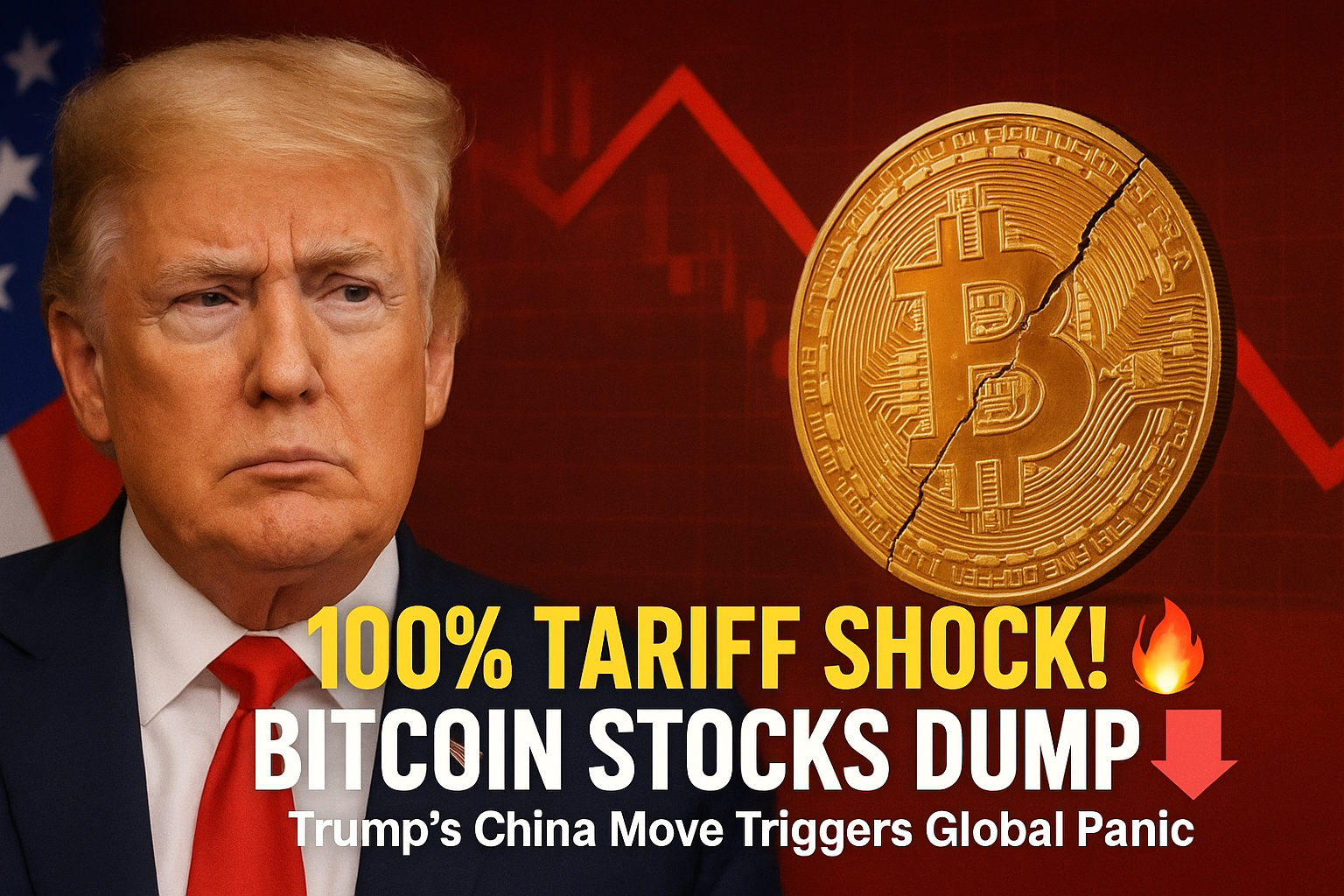
  • Bitcoin Stocks Dive as Trump’s 100% Tariff Shakes Global Markets

    Bitcoin Stocks Dive as Trump’s 100% Tariff Shakes Global Markets

    Donald Trump’s tariff bombshell on China rattles global investors, sending Bitcoin-linked stocks and treasuries tumbling amid renewed trade war fears.

    Tariff Tensions Return: Global Shockwaves Begin

    The global market witnessed a sharp tremor as former U.S. President Donald Trump announced a 100% tariff on Chinese imports, effective November 1. This move came in retaliation to China’s recent restrictions on rare earth exports, a vital resource for advanced technology and semiconductor production.

    The impact was immediate. The S&P 500 index fell 2.7%, reflecting widespread panic across global markets. Investors rushed to safer assets, triggering heavy sell-offs not only in traditional equities but also in crypto-related stocks — a sector highly sensitive to macroeconomic uncertainty.

    Crypto Stocks Lead Double-Digit Market Sell-Off

    Renewed U.S.–China trade tensions reignited global risk aversion, sparking a broad sell-off across crypto-linked companies. Investors, wary of rising tariffs and slowing global trade, began shedding high-volatility assets.

    Key highlights from Friday’s market close include:

    • Coinbase (COIN) plunged 7.75%, ending the session at $357.01 after hitting a low of $351.63.
    • Bullish (BLSH) dropped 9.42%, sliding from $66.65 to $60.37 amid sustained market weakness.
    • Metaplanet (MTPLF) — Japan’s Bitcoin treasury firm — lost 2.25%, reversing its early intraday gains.
    • MARA Holdings (MARA) tumbled 7.67% to $18.65, extending its losses in after-hours trading.

    These steep declines underscore how vulnerable digital asset equities remain to macroeconomic policy shocks, even as Bitcoin itself often claims to be a hedge against centralized financial instability.

    Bitcoin Treasuries Under Pressure: Strategy’s mNAV Slumps

    Among all digital asset firms, Strategy (MSTR) — one of the largest Bitcoin treasury companies — faced intense scrutiny. The stock fell 4.84% to $304.79, capping off one of its most volatile sessions in months.

    Beyond the daily price swings, analysts are increasingly concerned about fundamental valuation metrics. The company’s multiple-to-net asset value (mNAV) dropped below 1.180, marking its lowest level in 19 months.

    Industry experts warn that:

    • A sustained mNAV below 1.0 indicates weakened balance sheets.
    • It also suggests limited room for further Bitcoin accumulation.
    • Such conditions may lead to industry-wide consolidation among Bitcoin treasury firms.

    According to Geoffrey Kendrick, Head of Digital Assets Research at Standard Chartered, maintaining an mNAV above the 1.0 threshold is crucial for sustaining healthy balance sheets and investor confidence.

    The PIPE Problem: Financing Pressures Intensify

    Adding to the strain, many Bitcoin treasury companies are dependent on PIPE (Private Investment in Public Equity) financing to fund their Bitcoin purchases.

    CryptoQuant report highlights that:

    • Bitcoin treasury stocks often converge toward their discounted PIPE issuance prices, eroding investor returns.
    • Some early investors have faced losses of up to 55% from peak valuations.

    Currently, Strategy holds $78 billion worth of Bitcoin, yet its market cap stands at $94 billion — reflecting a $16 billion premium primarily driven by investor optimism in founder Michael Saylor’s Bitcoin-backed debt strategies.
    However, with total profits under $350 million over the past year, that premium could shrink if market sentiment continues to weaken.

    AI Satoshi’s Analysis

    “Trade wars expose how interdependent today’s financial systems remain. Despite Bitcoin’s design for independence, companies tied to fiat and equity markets remain vulnerable to macroeconomic shocks. This highlights the difference between holding Bitcoin and holding Bitcoin exposure through corporates — one is decentralized resilience, the other, market dependence.”

    Final Thoughts

    This week’s tariff-driven sell-off is a reminder that Bitcoin’s decentralization doesn’t shield companies tied to it. The difference between holding Bitcoin directly and holding Bitcoin through corporate exposure remains critical. As trade tensions rise and equity markets shake, digital-asset investors may increasingly turn back to Bitcoin’s original promise — financial independence from political turbulence.

    🔔 Follow @casi.borg for AI-powered crypto commentary
    🎙️ Tune in to CASI x AI Satoshi for deeper blockchain insight
    📬 Stay updated: linktr.ee/casiborg

    💬 Would you trust AI Satoshi’s market instincts — or stick with traditional analysts?

    ⚠️ Disclaimer: This content is generated with the help of AI and intended for educational and experimental purposes only. Not financial advice.

  • Bitcoin Jesus Faces $48M Tax Case

    Bitcoin Jesus Faces $48M Tax Case

    Early Bitcoin evangelist Roger Ver — once hailed as “Bitcoin Jesus” — is now facing a $48 million reckoning that echoes through the cryptocurrency world he helped shape.

    💰 The $48 Million Tax Reckoning

    Early Bitcoin investor and Bitcoin Cash (BCH) advocate Roger Ver is reportedly close to settling U.S. tax fraud charges with the Department of Justice (DOJ), according to The New York Times.

    • Ver was indicted in April 2025 and later arrested in Spain.
    • The DOJ accuses him of failing to report capital gains from selling “tens of thousands” of bitcoins.
    • These unreported gains allegedly stemmed from transactions made after he renounced his U.S. citizenship.

    If finalized, the proposed $48 million settlement would represent one of the largest tax-related penalties ever imposed on an early crypto millionaire.

    court hearing is scheduled for December 15, 2025, but the agreement still awaits court approval. Neither the DOJ nor Ver’s legal representatives have commented publicly on the case.

    🏛️ Politics, Lobbying, and Presidential Pardons

    In an unexpected political twist, Roger Ver reportedly hired Roger Stone, a well-known political strategist and ally of President Donald Trump, to lobby on his behalf.

    This move aligns with a broader wave of crypto-related pardons under the Trump administration, including:

    • Ross Ulbricht, founder of Silk Road
    • Arthur Hayes and other BitMEX founders
    • Even Binance founder Changpeng “CZ” Zhao, who recently applied for a presidential pardon after completing a short sentence related to compliance violations

    These developments highlight how crypto, politics, and power continue to intersect. The pattern also raises questions about how regulatory enforcement and political influence shape the next chapter of digital finance.

    🔄 From Bitcoin to Bitcoin Cash: The Ideological Divide

    Roger Ver’s journey mirrors crypto’s transformation:

    • 2011–2016: A libertarian figure preaching financial freedom through Bitcoin.
    • 2017: A vocal supporter of Bitcoin Cash (BCH) after the network split, prioritizing faster transactions and lower fees.
    • Today: A symbolic case study in how early crypto ideals are colliding with the realities of regulation.

    His story underscores a broader truth — the industry that once prided itself on being decentralized and borderless is now grappling with tax laws, compliance, and accountability.

    This shift shows how crypto has evolved from a rebel movement into a regulated financial ecosystem.

    🌍 Why This Case Matters for Crypto

    Roger Ver’s case isn’t just about unpaid taxes — it’s about what happens when decentralized ideals meet centralized enforcement.

    Here’s why it’s significant:

    1. Symbolic of Crypto’s Maturity: The era of “wild west” crypto is ending; regulation is inevitable.
    2. Investor Accountability: Governments are setting precedents for tax enforcement in digital assets.
    3. Public Perception: High-profile cases shape how traditional media and regulators view crypto.
    4. Ideological Reflection: The same pioneers who preached freedom from the system now face its consequences.

    This growing tension defines the new phase of blockchain’s evolution — one where technology and regulation must coexist.

    AI Satoshi’s Analysis

    This case reflects the tension between early crypto libertarian ideals and the growing reach of state enforcement in digital finance. Bitcoin was designed to eliminate reliance on central intermediaries — yet those who profited early now face the legacy system’s accountability mechanisms. The contrast underscores how personal conduct, not protocol design, invites regulation.

    🔔 Stay Connected

    • Follow: @casi.borg for AI-powered crypto commentary
    • Listen: 🎙️ CASI x AI Satoshi for deeper blockchain insights
    • Explore: linktr.ee/casiborg

    💬 Question for you: Do you think early crypto pioneers like Roger Ver are victims of outdated laws — or examples of accountability catching up?

    ⚠️ Disclaimer: This content is generated with the help of AI and intended for educational and experimental purposes only. Not financial advice.

  • Blockchain’s New Frontier: Coinbase Staking and the Future of Crypto

    Blockchain’s New Frontier: Coinbase Staking and the Future of Crypto

    Blockchain’s New Frontier

    Imagine a world where cryptocurrency staking becomes the norm, and blockchain innovation accelerates at breakneck speed. Welcome to the new frontier of blockchain technology.

    Recently, Coinbase Staking went live in NYC, sending shockwaves throughout the crypto community. The implications of this move are profound, and I believe it’s a harbinger of what’s to come.

    The Bigger Picture

    So, what exactly does this mean for the crypto and blockchain space? In short, it means that staking, once a niche concept, is now entering the mainstream. As more institutions and individuals turn to crypto, the demand for secure, reliable, and efficient staking solutions will only grow.

    This has significant implications for blockchain technology as a whole. As more use cases emerge, the complexity and sophistication of blockchain architectures will increase. We can expect to see more advanced consensus mechanisms, improved scalability, and a more robust and decentralized ecosystem.

    But here’s the real question: how will this shift impact the average investor or user? In my opinion, it will make blockchain technology more accessible and user-friendly. As staking becomes more mainstream, we’ll see a surge in adoption and a corresponding decrease in barriers to entry.

    Under the Hood

    So, what’s driving this change? The answer lies in the technical architecture of Coinbase Staking. By leveraging advanced consensus mechanisms and distributed ledger technology, Coinbase has created a system that’s both secure and efficient.

    This is just the beginning. As we move forward, we can expect to see similar innovations in other blockchain platforms. The key takeaway is that staking is no longer just for whales; it’s a democratizing force that will bring more people into the crypto space.

    The implications are profound, and I believe we’re on the cusp of a new era in blockchain technology. Get ready for a future where staking is the norm, and innovation knows no bounds.

    The Market Reality

    So, what does this mean for the market? In short, it means that we can expect a surge in adoption and a corresponding increase in value. As more institutions and individuals turn to crypto, the demand for staking solutions will skyrocket.

    This has significant implications for the broader market. As more people enter the crypto space, we can expect to see a corresponding increase in market cap and a decrease in volatility.

    But here’s the catch: the market is always unpredictable. While I believe that staking will drive growth and adoption, there are risks involved. As we navigate this new frontier, it’s essential to be vigilant and adapt to changing circumstances.

    What’s Next

    So, what’s next for Coinbase Staking and the broader blockchain ecosystem? In my opinion, it’s a bright future filled with innovation and growth. As we move forward, we can expect to see more advanced consensus mechanisms, improved scalability, and a more robust and decentralized ecosystem.

    But here’s the real question: how will this shift impact the average investor or user? In my opinion, it will make blockchain technology more accessible and user-friendly. As staking becomes more mainstream, we’ll see a surge in adoption and a corresponding decrease in barriers to entry.

    The implications are profound, and I believe we’re on the cusp of a new era in blockchain technology. Get ready for a future where staking is the norm, and innovation knows no bounds.

    Final Thoughts

    As we navigate this new frontier, it’s essential to be vigilant and adapt to changing circumstances. While I believe that staking will drive growth and adoption, there are risks involved.

    But here’s the reality: the future is uncertain, and the only constant is change. As we move forward, it’s essential to be open to new ideas, willing to take calculated risks, and committed to innovation.

    In closing, I believe that Coinbase Staking and the broader blockchain ecosystem are on the cusp of a new era. A future where staking is the norm, and innovation knows no bounds. Get ready for the ride of a lifetime.