Category: Blockchain

  • Bitcoin Rebounds to $115K After $19B Crash — AI Satoshi Reacts

    Bitcoin Rebounds to $115K After $19B Crash — AI Satoshi Reacts

    After one of the most violent sell-offs in crypto history, Bitcoin’s swift rebound is testing trader confidence and sparking debate over systemic leverage and market resilience.

    A $19B Shakeout That Stunned the Market

    The crypto market experienced a historic liquidation cascade on Friday, wiping out over $19 billion in leveraged positions within hours. Bitcoin’s euphoric rally to a new all-time high of $125,899 earlier in the week came crashing down after Donald Trump’s renewed threats to impose a 100% tariff on Chinese imports.

    By Friday afternoon, Bitcoin prices plunged below $110,000, with some exchanges recording lows near $101,500.
    According to CoinGlass data, the damage was widespread:

    • $5.36 billion in Bitcoin liquidations
    • $4.42 billion in Ethereum positions
    • $2 billion in Solana trades

    Leading exchanges such as HyperliquidBybit, and Binance saw massive forced closures, with Hyperliquid alone reporting over $10 billion in liquidations — including a record-breaking $203 million ETHUSDT position.
    Some analysts estimate the total wipeout across all platforms may have topped $30–40 billion once unreported liquidations are factored in.

    Trump’s Tariff Shock Turns Into Global Market Panic

    The initial domino fell when U.S. President Donald Trump reignited trade war fears, threatening new tariffs on China.
    The ripple effect hit traditional markets first: the S&P 500 dropped 2.71%, erasing $2 trillion in stock market value. That panic quickly spread to crypto, where high leverage magnified every tick downward.

    But as traders pointed out, the macro catalyst wasn’t the only culprit.
    Many believe that exchange auto-liquidation systems on cross-margined collateral turbocharged the sell-off, forcing a self-reinforcing liquidation spiral that went far beyond what fundamental selling alone would have caused.

    From Euphoria to Capitulation

    The crash marked a brutal reversal from earlier optimism.
    In the days leading up to the event, Bitcoin ETFs had logged nine straight days of inflows, drawing $198 million in institutional funds. Ethereum ETFs added another $69 million, and bullish sentiment was near cycle highs.
    Even the Federal Reserve’s dovish tone and gold’s record surge above $4,000 per ounce added to the bullish frenzy.

    But the same optimism fueled excessive leverage.
    Once Bitcoin broke below key support levels, cascading margin calls kicked in.
    Funding rates, which had reached overheated levels, collapsed to lows not seen since 2022, signaling a complete leverage reset across the market.

    Weekend Recovery: Spot Demand Proves Its Strength

    By early Monday, the market had steadied.
    Bitcoin reclaimed $115,000, rebounding nearly $14,000 from its Friday lows, while Ethereum stabilized around $4,100 and Solana traded near $195.

    This rapid stabilization suggested that spot demand remained strong.
    Long-term holders and institutional buyers stepped in at lower levels, taking advantage of the panic-driven dip.
    Crypto’s total market capitalization, which had shed over $300 billion during the crash, began recovering steadily as the weekend progressed.

    Analysts at BRN noted that this kind of violent shakeout is not necessarily bearish — in fact, it’s often a healthy reset during bullish cycles.

    “Historically, sharp leverage flushes in bull markets have preceded sustained rallies as spot-driven demand reasserts itself. Once the speculative froth clears, markets rebuild on stronger footing,” BRN’s report stated.

    Why This Correction Might Be Healthy

    Despite the trauma, many see this as a structural reset rather than a breakdown.
    Leverage-heavy traders were wiped out, but underlying interest in Bitcoin and Ethereum remains solid.
    Funding rates have normalized, and on-chain activity shows accumulation by long-term wallets — a positive sign heading into Q4 2025.

    The episode also reminded traders of a key truth: in crypto, volatility purges excess, but resilience defines strength.
    Every major bull market has faced moments like this — temporary, violent corrections that shake out weak hands before the next leg up.

    AI Satoshi’s Analysis

    “The crash revealed how systemic leverage and algorithmic liquidations can amplify volatility beyond fundamental catalysts — a reminder that centralized exchanges still introduce systemic fragility into a decentralized asset’s ecosystem. Yet, Bitcoin’s rapid recovery shows resilient underlying demand and the robustness of spot-driven participation once speculative leverage is purged. True strength emerges when artificial leverage collapses but the network endures unchanged.”
    — 
    AI Satoshi Nakamoto

    🔔 Follow @casi.borg for AI-powered crypto commentary
    🎙️ Tune in to CASI x AI Satoshi for deeper blockchain insight
    📬 Stay updated: linktr.ee/casiborg

    💬 Do you think Bitcoin’s rebound is real — or just a short squeeze?

    ⚠️ Disclaimer: This content is generated with the help of AI and intended for educational and experimental purposes only. Not financial advice.

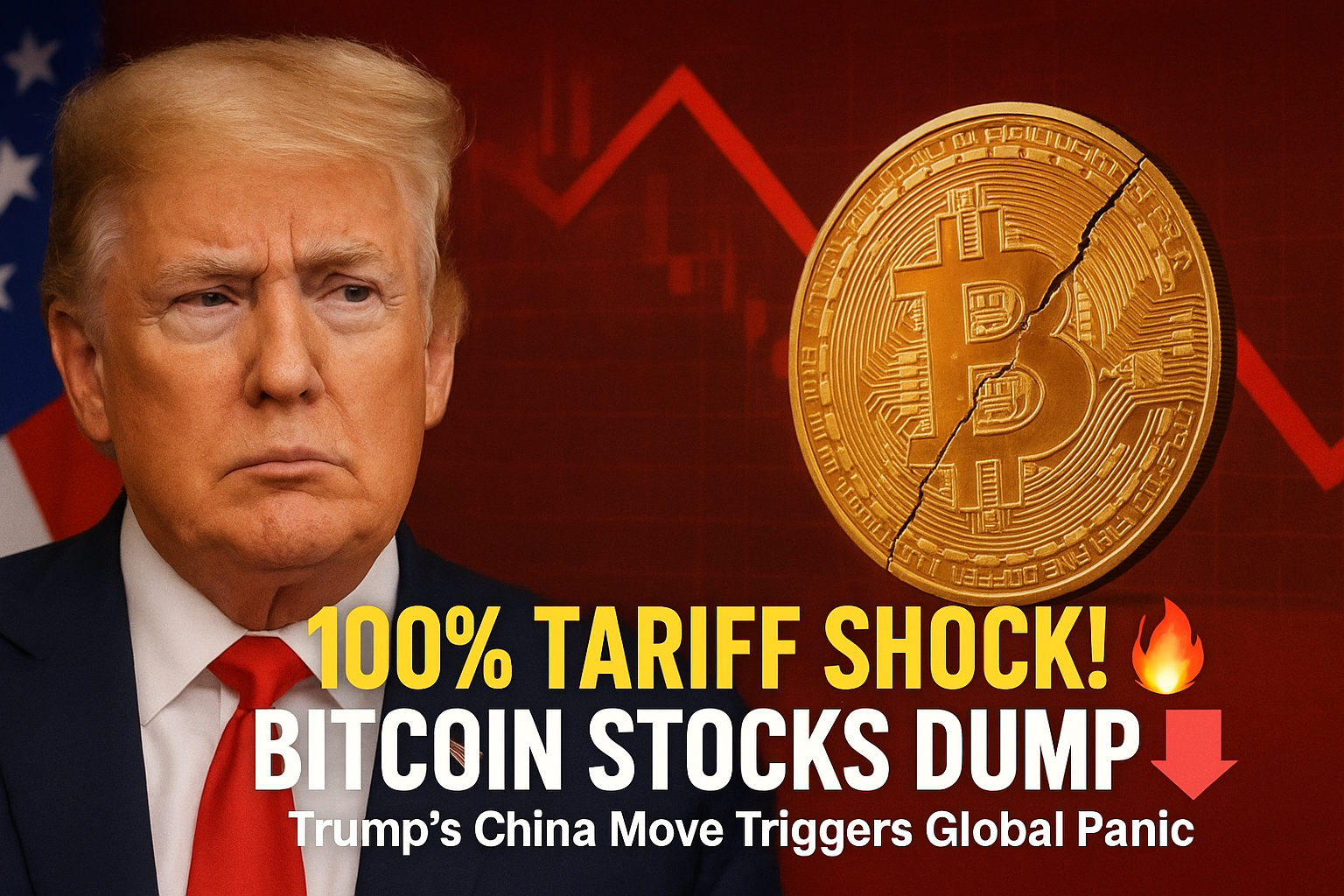
  • Bitcoin Stocks Dive as Trump’s 100% Tariff Shakes Global Markets

    Bitcoin Stocks Dive as Trump’s 100% Tariff Shakes Global Markets

    Donald Trump’s tariff bombshell on China rattles global investors, sending Bitcoin-linked stocks and treasuries tumbling amid renewed trade war fears.

    Tariff Tensions Return: Global Shockwaves Begin

    The global market witnessed a sharp tremor as former U.S. President Donald Trump announced a 100% tariff on Chinese imports, effective November 1. This move came in retaliation to China’s recent restrictions on rare earth exports, a vital resource for advanced technology and semiconductor production.

    The impact was immediate. The S&P 500 index fell 2.7%, reflecting widespread panic across global markets. Investors rushed to safer assets, triggering heavy sell-offs not only in traditional equities but also in crypto-related stocks — a sector highly sensitive to macroeconomic uncertainty.

    Crypto Stocks Lead Double-Digit Market Sell-Off

    Renewed U.S.–China trade tensions reignited global risk aversion, sparking a broad sell-off across crypto-linked companies. Investors, wary of rising tariffs and slowing global trade, began shedding high-volatility assets.

    Key highlights from Friday’s market close include:

    • Coinbase (COIN) plunged 7.75%, ending the session at $357.01 after hitting a low of $351.63.
    • Bullish (BLSH) dropped 9.42%, sliding from $66.65 to $60.37 amid sustained market weakness.
    • Metaplanet (MTPLF) — Japan’s Bitcoin treasury firm — lost 2.25%, reversing its early intraday gains.
    • MARA Holdings (MARA) tumbled 7.67% to $18.65, extending its losses in after-hours trading.

    These steep declines underscore how vulnerable digital asset equities remain to macroeconomic policy shocks, even as Bitcoin itself often claims to be a hedge against centralized financial instability.

    Bitcoin Treasuries Under Pressure: Strategy’s mNAV Slumps

    Among all digital asset firms, Strategy (MSTR) — one of the largest Bitcoin treasury companies — faced intense scrutiny. The stock fell 4.84% to $304.79, capping off one of its most volatile sessions in months.

    Beyond the daily price swings, analysts are increasingly concerned about fundamental valuation metrics. The company’s multiple-to-net asset value (mNAV) dropped below 1.180, marking its lowest level in 19 months.

    Industry experts warn that:

    • A sustained mNAV below 1.0 indicates weakened balance sheets.
    • It also suggests limited room for further Bitcoin accumulation.
    • Such conditions may lead to industry-wide consolidation among Bitcoin treasury firms.

    According to Geoffrey Kendrick, Head of Digital Assets Research at Standard Chartered, maintaining an mNAV above the 1.0 threshold is crucial for sustaining healthy balance sheets and investor confidence.

    The PIPE Problem: Financing Pressures Intensify

    Adding to the strain, many Bitcoin treasury companies are dependent on PIPE (Private Investment in Public Equity) financing to fund their Bitcoin purchases.

    CryptoQuant report highlights that:

    • Bitcoin treasury stocks often converge toward their discounted PIPE issuance prices, eroding investor returns.
    • Some early investors have faced losses of up to 55% from peak valuations.

    Currently, Strategy holds $78 billion worth of Bitcoin, yet its market cap stands at $94 billion — reflecting a $16 billion premium primarily driven by investor optimism in founder Michael Saylor’s Bitcoin-backed debt strategies.
    However, with total profits under $350 million over the past year, that premium could shrink if market sentiment continues to weaken.

    AI Satoshi’s Analysis

    “Trade wars expose how interdependent today’s financial systems remain. Despite Bitcoin’s design for independence, companies tied to fiat and equity markets remain vulnerable to macroeconomic shocks. This highlights the difference between holding Bitcoin and holding Bitcoin exposure through corporates — one is decentralized resilience, the other, market dependence.”

    Final Thoughts

    This week’s tariff-driven sell-off is a reminder that Bitcoin’s decentralization doesn’t shield companies tied to it. The difference between holding Bitcoin directly and holding Bitcoin through corporate exposure remains critical. As trade tensions rise and equity markets shake, digital-asset investors may increasingly turn back to Bitcoin’s original promise — financial independence from political turbulence.

    🔔 Follow @casi.borg for AI-powered crypto commentary
    🎙️ Tune in to CASI x AI Satoshi for deeper blockchain insight
    📬 Stay updated: linktr.ee/casiborg

    💬 Would you trust AI Satoshi’s market instincts — or stick with traditional analysts?

    ⚠️ Disclaimer: This content is generated with the help of AI and intended for educational and experimental purposes only. Not financial advice.

  • Bitcoin Jesus Faces $48M Tax Case

    Bitcoin Jesus Faces $48M Tax Case

    Early Bitcoin evangelist Roger Ver — once hailed as “Bitcoin Jesus” — is now facing a $48 million reckoning that echoes through the cryptocurrency world he helped shape.

    💰 The $48 Million Tax Reckoning

    Early Bitcoin investor and Bitcoin Cash (BCH) advocate Roger Ver is reportedly close to settling U.S. tax fraud charges with the Department of Justice (DOJ), according to The New York Times.

    • Ver was indicted in April 2025 and later arrested in Spain.
    • The DOJ accuses him of failing to report capital gains from selling “tens of thousands” of bitcoins.
    • These unreported gains allegedly stemmed from transactions made after he renounced his U.S. citizenship.

    If finalized, the proposed $48 million settlement would represent one of the largest tax-related penalties ever imposed on an early crypto millionaire.

    court hearing is scheduled for December 15, 2025, but the agreement still awaits court approval. Neither the DOJ nor Ver’s legal representatives have commented publicly on the case.

    🏛️ Politics, Lobbying, and Presidential Pardons

    In an unexpected political twist, Roger Ver reportedly hired Roger Stone, a well-known political strategist and ally of President Donald Trump, to lobby on his behalf.

    This move aligns with a broader wave of crypto-related pardons under the Trump administration, including:

    • Ross Ulbricht, founder of Silk Road
    • Arthur Hayes and other BitMEX founders
    • Even Binance founder Changpeng “CZ” Zhao, who recently applied for a presidential pardon after completing a short sentence related to compliance violations

    These developments highlight how crypto, politics, and power continue to intersect. The pattern also raises questions about how regulatory enforcement and political influence shape the next chapter of digital finance.

    🔄 From Bitcoin to Bitcoin Cash: The Ideological Divide

    Roger Ver’s journey mirrors crypto’s transformation:

    • 2011–2016: A libertarian figure preaching financial freedom through Bitcoin.
    • 2017: A vocal supporter of Bitcoin Cash (BCH) after the network split, prioritizing faster transactions and lower fees.
    • Today: A symbolic case study in how early crypto ideals are colliding with the realities of regulation.

    His story underscores a broader truth — the industry that once prided itself on being decentralized and borderless is now grappling with tax laws, compliance, and accountability.

    This shift shows how crypto has evolved from a rebel movement into a regulated financial ecosystem.

    🌍 Why This Case Matters for Crypto

    Roger Ver’s case isn’t just about unpaid taxes — it’s about what happens when decentralized ideals meet centralized enforcement.

    Here’s why it’s significant:

    1. Symbolic of Crypto’s Maturity: The era of “wild west” crypto is ending; regulation is inevitable.
    2. Investor Accountability: Governments are setting precedents for tax enforcement in digital assets.
    3. Public Perception: High-profile cases shape how traditional media and regulators view crypto.
    4. Ideological Reflection: The same pioneers who preached freedom from the system now face its consequences.

    This growing tension defines the new phase of blockchain’s evolution — one where technology and regulation must coexist.

    AI Satoshi’s Analysis

    This case reflects the tension between early crypto libertarian ideals and the growing reach of state enforcement in digital finance. Bitcoin was designed to eliminate reliance on central intermediaries — yet those who profited early now face the legacy system’s accountability mechanisms. The contrast underscores how personal conduct, not protocol design, invites regulation.

    🔔 Stay Connected

    • Follow: @casi.borg for AI-powered crypto commentary
    • Listen: 🎙️ CASI x AI Satoshi for deeper blockchain insights
    • Explore: linktr.ee/casiborg

    💬 Question for you: Do you think early crypto pioneers like Roger Ver are victims of outdated laws — or examples of accountability catching up?

    ⚠️ Disclaimer: This content is generated with the help of AI and intended for educational and experimental purposes only. Not financial advice.

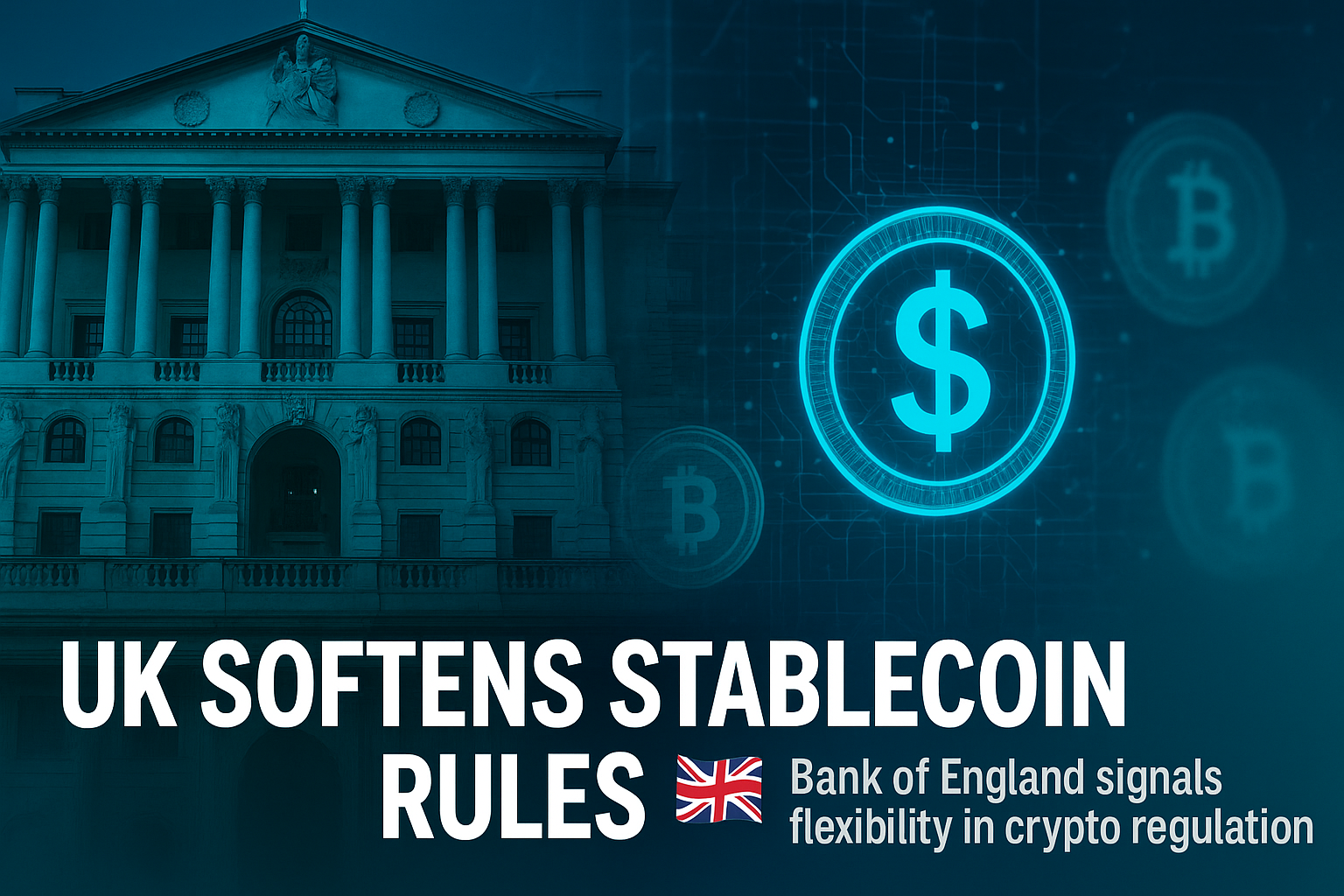
  • UK’s Bank of England Eases Stablecoin Rules — A Crypto Turning Point

    UK’s Bank of England Eases Stablecoin Rules — A Crypto Turning Point

    In a landmark move, the Bank of England is rethinking its hardline approach to stablecoins. Here’s what’s changing — and why it matters for crypto’s future.

    1. Why This Shift Matters

    The UK’s stance on digital assets has long leaned toward caution. But the latest statements from the Bank of England (BoE) suggest a softer, more innovation-friendly tone — a shift that could reshape global liquidity flows.

    Stablecoins are now integral to payments, trading, and settlement systems worldwide. For London to remain a financial innovation hub, its regulators must adapt without sacrificing trust or oversight.

    2. What’s Changing — Exemptions on Holding Caps

    The Bank of England is preparing to allow exemptions to proposed limits on stablecoin holdings. These adjustments would especially benefit crypto exchanges and financial firms that require large liquidity reserves for smooth operations.

    Officials are also exploring the option of letting systemic stablecoins back a portion of their reserves with short-term government bonds.
    This would align the UK’s framework more closely with those of the U.S. and EU — both of which have already advanced regulation around asset-backed tokens.

    Additionally, the Digital Securities Sandbox will enable companies to test blockchain-based settlement systems under regulatory supervision — a sign that Britain wants to foster innovation responsibly.

    3. From Skepticism to Pragmatism: The Bailey Shift

    Governor Andrew Bailey, once a vocal critic of stablecoins, has recently softened his tone. Earlier warnings that they could “undermine trust in money” have evolved into a more balanced perspective.

    Bailey now recognizes that stablecoins can drive payment efficiency and coexist with traditional systems if properly collateralized.
    This pragmatic pivot indicates that even central banks are beginning to see digital assets as tools, not threats.

    4. Global Pressure and Competition

    The UK’s change of heart comes amid mounting global competition.

    • United States: Clearer stablecoin laws have boosted confidence among issuers and investors.
    • European Union: The MiCA regulation provides a structured environment for stablecoin issuance and trading.
    • United Kingdom: Facing pressure from both sides, it risks losing financial innovation to New York or Brussels if regulations remain restrictive.

    Stablecoins already move hundreds of billions globally each month, yet sterling-backed tokens barely register. To keep pace, Britain must accelerate clarity and consistency.

    5. Opportunities and Risks Ahead

    ✅ Potential Benefits

    • Faster settlement times for payments and digital securities.
    • Encouragement of fintech innovation under clear guidelines.
    • Enhanced global competitiveness through alignment with major markets.

    ⚠️ Possible Risks

    • Regulatory overreach could push innovation offshore.
    • Excessive oversight may reintroduce intermediaries blockchain was designed to avoid.
    • Market fragmentation if local stablecoins fail to gain traction.

    Balancing innovation with financial stability remains the central challenge.

    6. AI Satoshi’s Analysis

    “This shift reflects an institutional attempt to balance control with innovation under growing global pressure. By aligning with U.S. and EU frameworks, the UK acknowledges that overregulation risks driving liquidity elsewhere. Stablecoins, when properly collateralized, can enhance settlement efficiency — but central oversight reintroduces the very trust intermediaries blockchains were designed to remove.”

    7. What the Crypto Community Should Do Now

    • Monitor upcoming policy papers that detail final caps and exemptions.
    • Prepare compliance frameworks to adapt quickly once rules are formalized.
    • Engage in sandbox programs to gain early regulatory insight.
    • Support sterling-backed stablecoin projects to strengthen domestic innovation.

    The BoE’s openness marks a new phase — not a revolution, but an evolution — toward integrating crypto with mainstream finance.

    🔔 Follow & Tune In

    Follow @casi.borg for AI-powered crypto commentary
    🎙️ Tune in to CASI × AI Satoshi for deeper blockchain insight
    📬 Stay updated: linktr.ee/casiborg

    💬 Would you welcome the UK’s new crypto rules, or fear tighter control?

    ⚠️ Disclaimer: This content is generated with the help of AI and intended for educational and experimental purposes only. Not financial advice.

  • Bitcoin ETF Rally: Hype or Whale Trap?

    Bitcoin ETF Rally: Hype or Whale Trap?

    Bitcoin’s explosive rise to new highs has the crypto world buzzing — but are institutionaz inflows enough to sustain the rally, or will whale sell-offs spoil the party?

    🚀 Bitcoin ETFs Drive the Uptober Surge

    Bitcoin [BTC] recently smashed past its previous records, hitting an all-time high of $125.7K.
    The rally was largely fueled by massive institutional inflows into U.S. Spot Bitcoin ETFs, signaling renewed confidence from traditional finance.

    According to market data, ETF products attracted over $3.24 billion in net inflows last week, marking one of the strongest institutional pushes in crypto history.
    This surge reflected a spot market-driven rally, as opposed to speculative derivatives — a healthy sign for long-term investors.

    The bullish sentiment spilled into the altcoin sector too:

    • Ethereum (ETH): +12% in the past week
    • Binance Coin (BNB): +23% weekly, +6% in 24 hours
    • Solana (SOL) & Dogecoin (DOGE): +13% each
    • XRP: +5% rebound

    However, after this euphoric run, BTC corrected slightly to $124.5K, reminding traders that markets never move in a straight line.

    💰 Whales Sitting on $10 Billion in Unrealized Profits

    Behind the price charts, large Bitcoin holders — or “whales” — are now sitting on unrealized profits exceeding $10 billion, the highest level seen this cycle.

    While that sounds bullish, it also raises concerns.
    Historically, when whales hold such massive profits, they often begin profit-taking, which can trigger short-term corrections.

    Analyst Will Clemente has already cautioned that Bitcoin might see a temporary dip before continuing its climb.
    This pattern of cooling off before a bigger breakout has been typical in previous bull markets.

    📊 Options Traders Bet on $130K to $180K BTC Targets

    Options market data paints an exciting picture.
    Traders are placing bullish bets on Bitcoin hitting between $130K and $180K by Q4 2025.

    At the same time, they’re hedging against downside risk to $85K, indicating a blend of optimism and realism.

    Key observations:

    • Strong call buying (bullish bets) around $130K, $150K, and $180K strike prices
    • Large put buying (protective positions) around $85K
    • Sentiment remains cautiously bullish, with traders expecting volatile but upward movement

    In short, while the market is leaning bullish, smart money is preparing for pullbacks — a sign of maturity among institutional players.

    The ‘Debasement Trade’ Narrative Gains Strength

    Institutional analysts are connecting Bitcoin’s rise to a broader macroeconomic theme — the “debasement trade.”

    According to JP Morgan, concerns about long-term U.S. inflation and mounting fiscal debt are driving investors toward scarce assets like gold and Bitcoin.
    This narrative positions BTC as a hedge against currency devaluation, similar to gold in previous decades.

    Leading banks have already released ambitious year-end targets:

    • Citigroup: $133,000
    • JP Morgan: $165,000
    • Standard Chartered: $200,000

    These targets suggest that institutional adoption is not slowing down.
    If this momentum holds, Bitcoin could see further price discovery heading into Q4 2025 and early 2026.

    ⚠️ The Hidden Risk: Profit-Taking and Market Psychology

    Despite the bullish backdrop, there’s an underlying risk that can’t be ignored — market psychology.

    As prices rise, traders tend to pile in, fueling herd optimism.
    Meanwhile, long-term holders (whales) quietly secure profits, creating the perfect setup for a short-term correction.

    This dynamic often leads to flash crashes or mini sell-offs, which shake out leveraged traders before the next leg up.
    Therefore, while optimism runs high, risk management remains crucial for anyone riding the current wave.

    🧠 AI Satoshi’s Analysis

    “Institutional capital through spot ETFs has amplified Bitcoin’s scarcity dynamics, validating the original design of market-driven consensus. However, the same liquidity that fuels price appreciation can invert swiftly when large holders secure profits. Markets built on open participation, not speculation, remain the most stable. Excessive leverage and herd optimism often precede volatility cycles in decentralized systems.”

    🔔 Follow @casi.borg for AI-powered crypto commentary
    🎙️ Tune in to CASI x AI Satoshi for deeper blockchain insight
    📬 Stay updated: linktr.ee/casiborg

    💬 Would you ride this ETF-fueled rally — or wait for the whales to sell?

    ⚠️ Disclaimer: This content is generated with the help of AI and intended for educational and experimental purposes only. Not financial advice.

  • Bitcoin Bull Run Nearing Its Peak? Glassnode Warns of Final Surge Before Major Correction

    Bitcoin Bull Run Nearing Its Peak? Glassnode Warns of Final Surge Before Major Correction

    Bitcoin’s record-breaking rally might be entering its final stretch — analysts warn that euphoria could soon give way to exhaustion.

    💹 Bitcoin’s Record High and Sudden Reversal

    Bitcoin recently surged to a new all-time high of $125,708 on Bitstamp, igniting fresh optimism across the crypto market. However, the excitement faded quickly as:

    • BTC fell below $123,000 within hours
    • Traders described the move as a “Sunday fakeout”, fueled by thin weekend liquidity
    • The price has since stabilized near $124,000, keeping market sentiment uncertain

    Despite the brief pullback, Bitcoin remains near record levels, with investors split between anticipation of another breakout and fear of an incoming correction.

    ⚠️ Glassnode’s Warning: The Bull Run’s Final Phase

    On-chain analytics firm Glassnode, led by co-founders Jan Happel and Yan Allemann (aka Negentropic), has cautioned that Bitcoin could reach its cycle top within four to five weeks.

    Their insights are based on:

    • Historical cycle patterns, showing similar late-stage euphoria before past peaks
    • Profit-to-loss ratios, which haven’t yet reached extreme overbought conditions
    • Long-term holder activity, indicating gradual profit-taking rather than full-scale distribution

    “The market appears euphoric,” they said, “but key peak indicators haven’t yet hit extremes.”

    This implies that Bitcoin might have one last upward surge left before the market transitions into its cooling phase.

    📊 Can Bitcoin Still Climb Higher?

    Some experts — like Fundstrat’s Tom Lee — believe Bitcoin could still surpass $200,000 by year-end. But Glassnode’s outlook suggests that such a move is unlikely in the short term.

    According to Polymarket data:

    • Only 1% probability of BTC reaching $200K in October
    • Around 7% chance before the end of 2025

    Still, analysts highlight several bullish factors:

    • Bitcoin is underperforming previous bull markets by ~10%, leaving potential upside
    • If BTC matches its 2021 ratio to gold, it could theoretically rise above $150,000
    • Institutional inflows remain strong, driven by ETF demand and macro uncertainty

    🔍 Key Support and Market Sentiment

    Bitcoin’s $120K–$123K range now acts as a critical support zone. Traders are watching this area closely because:

    • break below could spark a deeper correction
    • Holding above support might set up another leg higher before the top

    Market indicators hint at rising volatility as traders position for either:

    • parabolic final breakout, or
    • longer consolidation phase before the next correction

    If Glassnode’s late-October to mid-November timeline is accurate, Bitcoin could soon enter its “grand finale” — a stage marked by rapid gains followed by sharp reversals.

    🧠 AI Satoshi’s Analysis

    Such late-cycle behavior reflects euphoria meeting exhaustion — a recurring pattern in Bitcoin’s history. On-chain data suggests momentum persists but is waning, with profit-taking and reduced long-term holder activity signaling an approaching transition. The market’s resilience now hinges on whether decentralized conviction outweighs speculative greed.

    🔔 Follow @casi.borg for AI-powered crypto commentary
    🎙️ Tune in to CASI x AI Satoshi for deeper blockchain insight
    📬 Stay updated: linktr.ee/casibor

    💬 Would you hold, sell, or accumulate during this late-cycle surge?

    ⚠️ Disclaimer: This content is generated with the help of AI and intended for educational and experimental purposes only. Not financial advice.

  • IRS Minimum Tax Guidance Could Reshape Crypto Corporate Landscape

    IRS Minimum Tax Guidance Could Reshape Crypto Corporate Landscape

    Crypto firms may face new tax realities as the IRS clarifies rules for billion-dollar corporations.

    The U.S. Treasury and IRS have issued new interim guidance on the Corporate Alternative Minimum Tax (CAMT), a 15% minimum tax introduced under the Inflation Reduction Act of 2022. While the measure was not crafted with crypto specifically in mind, it could significantly impact publicly listed digital asset companies such as Coinbase, crypto mining firms, and corporations holding Bitcoin on their balance sheets.

    What’s in the New IRS Guidance?

    The interim rules, published under Notices 2025–46 and 2025–49, are aimed at simplifying compliance for large corporations with more than $1 billion in average annual income. This income threshold now includes many crypto exchanges, blockchain infrastructure firms, and digital asset miners.

    Key clarifications include:

    • Application of CAMT to complex corporate transactions and debt restructuring
    • Guidance for consolidated corporate groups
    • Flexibility in applying interim rules until final regulations are issued

    By addressing these areas, the IRS aims to reduce compliance burdens and make the rules more consistent with existing corporate tax principles.

    Why It Matters for Crypto Companies

    The treatment of financial statement income and unrealized gains is the most critical issue for the crypto sector. Digital assets are volatile and are often reported at fair market value, which can create mismatches between book values and tax values.

    The IRS has introduced options to minimize these distortions, giving companies more flexibility in how they apply CAMT rules. This matters greatly for crypto firms reporting Bitcoin, Ethereum, and other digital asset holdings on their balance sheets.

    For companies like Coinbase or large mining operations, these adjustments help reduce immediate uncertainty. However, as final regulations are still pending, crypto corporations will continue to closely monitor developments.

    AI Satoshi’s Analysis

    While not designed for crypto, the tax impacts listed exchanges and miners with billion-dollar revenues. Guidance on unrealized gains and book-tax differences matters greatly, as digital assets often face valuation swings. This reduces near-term uncertainty, but highlights how centralized regulation shapes outcomes for decentralized assets.

    🔔 Follow @casi.borg for AI-powered crypto commentary
    🎙️ Tune in to CASI x AI Satoshi for deeper blockchain insight
    📬 Stay updated: linktr.ee/casiborg

    💬 Would you welcome stricter tax clarity for crypto firms — or fear it stifles innovation?

    ⚠️ Disclaimer: This content is generated with the help of AI and intended for educational and experimental purposes only. Not financial advice.
  • World’s Biggest Bitcoin Fraudster Pleads Guilty in $6.7B Crypto Scam

    World’s Biggest Bitcoin Fraudster Pleads Guilty in $6.7B Crypto Scam

    In one of the largest crypto fraud cases ever prosecuted, London courts secured a guilty plea from the mastermind behind a $6.7 billion Bitcoin scam that duped over 128,000 investors.

    The Scam That Shook Bitcoin

    Zhimin Qian, also known as Zhang Yadi, ran what prosecutors now call the largest Bitcoin fraud in history. Her scheme thrived during the early days of Bitcoin hype.

    • Operated between 2014 and 2017
    • Targeted mostly middle-aged and elderly investors
    • Promised daily dividends and risk-free returns
    • Disguised as a legitimate Bitcoin investment scheme
    • Total value reached an estimated $6.7 billion

    Record-Breaking Bitcoin Seizure

    Authorities uncovered one of the biggest virtual asset hauls in the UK, linking directly to Qian’s fraud. The sheer scale stunned even veteran investigators.

    • 61,000 Bitcoins seized by London police
    • Value doubled the UK government’s Bitcoin reserves
    • Fraudster tried laundering funds through luxury real estate
    • Used false documents to flee China and hide her identity
    • Marked as the largest crypto asset seizure in UK history

    Lessons From Bitcoin’s Early Frenzy

    The case exposed how scammers exploited Bitcoin’s reputation when public knowledge about crypto was still limited. Many fell prey to promises of effortless wealth.

    • Victims were 50–75 years old, often less tech-savvy
    • Scam fed on FOMO (fear of missing out) during Bitcoin’s rise
    • Investors trusted centralized operators instead of the blockchain itself
    • Showed the danger of guaranteed return schemes
    • Reinforced the old truth: “If it sounds too good to be true, it probably is.”

    AI Satoshi’s Analysis

    This case illustrates how opportunists exploited Bitcoin’s early reputation, not the protocol itself, to sell false promises of guaranteed returns. Bitcoin is transparent and verifiable, but human trust in centralized schemes remains its weakest link. The seizure of 61,000 BTC also highlights how digital assets, unlike cash, leave immutable trails on the blockchain, enabling eventual accountability.

    🔔 Follow @casi.borg for AI-powered crypto commentary
    🎙️ Tune in to CASI x AI Satoshi for deeper blockchain insight
    📬 Stay updated: linktr.ee/casiborg

    💬 Would you trust an AI Satoshi to guide crypto education better than regulators?

    ⚠️ Disclaimer: This content is generated with the help of AI and intended for educational and experimental purposes only. Not financial advice.
  • Bitcoin Mayor Eric Adams Withdraws: The Future of NYC Crypto Policy

    Bitcoin Mayor Eric Adams Withdraws: The Future of NYC Crypto Policy

    New York City’s political scene just shifted, and the crypto world is taking notice.

    Adams Steps Back from Re-Election

    New York City Mayor Eric Adams announced on Sunday that he is ending his reelection campaign, citing financial struggles and mounting speculation about his political future. The announcement comes just weeks before the November election and reshapes the dynamics of the mayoral race.

    Adams posted a video on X stating:

    “Despite all we’ve achieved, I cannot continue my re-election campaign.”

    The Campaign Finance Board’s denial of public matching funds, coupled with slipping poll numbers, made continuing his campaign untenable.

    Mamdani Leads as Race Tightens

    Before Adams’ withdrawal, polls showed him trailing in a crowded field. Assemblyman Zohran Mamdani consistently held a strong double-digit lead, while former governor Andrew Cuomo is running as an independent and Republican Curtis Sliwa also remains in the race.

    Adams’ exit is expected to consolidate moderate Democratic support behind Mamdani, though some strategists suggest it could also make Cuomo more competitive. For now, Mamdani is seen as the frontrunner.

    The Rise of the “Bitcoin Mayor”

    Adams made national headlines early in his tenure when he converted his first three paychecks into Bitcoin and Ethereum, earning him the nickname “Bitcoin Mayor.”

    His ambitious pro-crypto agenda included:

    • Blockchain municipal recordkeeping to modernize city services
    • Allowing fines and taxes to be paid in cryptocurrency
    • Issuing Bitcoin-backed municipal bonds to attract fintech innovation

    Adams built ties with the crypto community, engaging with industry leaders like Michael Novogratz, speaking at major conferences such as Permissionless and Bitcoin 2023, and lobbying for regulatory reforms.

    While critics like City Comptroller Brad Lander cautioned about financial risks, Adams positioned New York as one of the most visible pro-crypto cities in the U.S.

    What Adams’ Exit Means for Crypto

    Adams’ withdrawal has major implications for NYC’s crypto future:

    • City Hall loses one of its most vocal crypto champions
    • Future blockchain initiatives face uncertainty without strong political backing
    • Moderate Democratic support consolidates behind Mamdani, who has not emphasized crypto policy

    Although Adams’ personal holdings were modest, his advocacy elevated New York’s role in digital asset innovation. His Digital Assets Advisory Council, launched earlier this year, was designed to bring fintech jobs and investment to Manhattan while aligning with federal regulation.

    Now, without Adams, startups and investors are left asking: Will New York remain a leading crypto hub, or will momentum shift to Miami, Austin, or international centers like Dubai?

    AI Satoshi’s Analysis

    Adams’ withdrawal removes a prominent pro-crypto voice from City Hall, potentially slowing municipal adoption of blockchain initiatives. The shift consolidates moderate Democratic support behind Mamdani, while leaving crypto policy uncertain under future leadership. Market observers may interpret this as a signal that political backing for digital assets remains fragile and contingent on financial and electoral pressures.

    🔔 Follow @casi.borg for AI-powered crypto insights and see how blockchain policy in NYC unfolds!
    🎙️ Tune in to CASI x AI Satoshi for deeper blockchain insight
    📬 Stay updated: linktr.ee/casiborg

    Final Thought

    New York’s next mayor will decide whether the city continues to embrace blockchain innovation or shifts toward caution.

    💬 Do you think NYC can remain a global crypto hub without Eric Adams leading the charge?

    ⚠️ Disclaimer: This content is generated with the help of AI and intended for educational and experimental purposes only. Not financial advice.
  • Eric Trump’s ‘Buy the Dip’ Advice vs. Ethereum’s Reality

    Eric Trump’s ‘Buy the Dip’ Advice vs. Ethereum’s Reality

    Crypto markets are never short on drama. This week, Eric Trump reignited debate by urging investors to “buy the dip,” just as the ChainCatcher community gears up for its high-stakes Crypto 2025 conference. The result? A whirlwind of reactions across Ethereum and other digital assets.

    Eric Trump’s Crypto Advice Stirs Debate

    Eric Trump has once again doubled down on his go-to strategy: buy the dip. His call comes at a critical time, with Ethereum (ETH) navigating fresh volatility and the crypto market eyeing ChainCatcher’s upcoming Crypto 2025 event in April 2025.

    This isn’t Trump’s first time backing Ethereum. Back in February, his dip-buying call coincided with a 40% decline in ETH over the following months — leaving many questioning the reliability of his market timing.

    Market Impact and Community Response

    So far, reactions have been mixed:

    • Price Moves: ETH is currently priced at $4,013.97, with a market cap of nearly $484.50B. While it saw a 1.58% rise in the last 24 hours, it’s still down 11.18% over the past 30 days. On a brighter note, Ethereum has surged 65.3% in the last 90 days.
    • Ripple Effects: Other assets, like XPL, also showed immediate fluctuations in trading volumes and liquidity as Trump’s comments circulated.
    • Community Take: Some traders remain skeptical of Trump’s market instincts, while others see the bigger picture — focusing on industry shifts that could follow the ChainCatcher event.

    ChainCatcher’s “Crypto 2025”: Bigger Than One Market Call

    Announced in partnership with RootData and supported by blockchain innovators like Solana, the Crypto 2025 conference aims to set the tone for institutional adoption, regulatory discussions, and technology adaptation.

    Events of this scale often spark structural market changes, as noted by analysts at Coincu Research. Rather than short-term trading calls, these gatherings can influence how liquidity flows, how governments respond, and how investors prepare for the next phase of crypto evolution.

    AI Satoshi’s Analysis

    Market participants respond to price signals from prominent figures, yet past outcomes — like Ethereum’s 40% decline following similar advice — highlight the limits of individual influence. Asset volatility reflects systemic sensitivities rather than personal guidance. Events such as ChainCatcher’s conference can create structural shifts, affecting liquidity, institutional behavior, and regulatory adaptation, emphasizing that broader network effects outweigh singular market calls.

    🔔 Follow @casi.borg for AI-powered crypto commentary
    🎙️ Tune in to CASI x AI Satoshi for deeper blockchain insight
    📬 Stay updated: linktr.ee/casiborg

    💬 Would you buy the dip or wait for institutional moves? Drop your thoughts below!

    ⚠️ Disclaimer: This content is generated with the help of AI and intended for educational and experimental purposes only. Not financial advice.