Category: Blockchain

  • Dogecoin Goes Corporate: Trump-Linked Firm to Control World’s Largest DOGE Mining

    Dogecoin Goes Corporate: Trump-Linked Firm to Control World’s Largest DOGE Mining

    Dogecoin is no longer just a meme — Wall Street money, Trump family ties, and industrial-scale mining are turning it into serious crypto infrastructure. But is decentralization at risk?

    Thumzup to Acquire Dogehash in $250M Strategy

    Thumzup Media, a Nasdaq-listed company with ties to the Trump family, is making a bold move into crypto infrastructure. The firm has agreed to acquire Dogehash Technologies in an all-stock deal worth 30.7 million shares. Once completed in the fourth quarter, pending shareholder and regulatory approval, the new company will be rebranded Dogehash Technologies Holdings and trade under the ticker XDOG.

    For Thumzup, this deal marks a transformation from a social media marketing platform into a diversified digital asset powerhouse.

    Dogehash Adds 2,500 DOGE Miners Across North America

    Dogehash currently operates about 2,500 Scrypt ASIC miners across North America, producing both Dogecoin (DOGE) and Litecoin (LTC). Unlike firms that speculated on tokens, Dogehash has doubled down on infrastructure investment — owning rigs and generating revenue from block production.

    By merging with Thumzup, the company plans to:

    • Scale operations through renewable-energy-powered data centers.
    • Expand output through 2026 with additional mining fleets.
    • Boost efficiency via DogeOS Layer-2 DeFi staking, designed to generate higher yields than traditional mining rewards.

    Performance data and staking results are expected to be shared once the merger finalizes.

    Trump Jr.’s $3.3M Stake Puts Politics Into Dogecoin Mining

    The merger comes shortly after Thumzup raised $50 million in July to expand its crypto strategy. The board also approved up to $250 million in digital asset holdings, including Bitcoin, Dogecoin, Litecoin, Solana, XRP, Ether, and USDC.

    Adding a political twist, filings reveal that Donald Trump Jr. purchased 350,000 Thumzup shares worth nearly $3.3 million. This investment cements the Trump family’s role as backers of Thumzup’s pivot into crypto, fueling debate on how politics and corporate control may influence the future of Dogecoin.

    Dogecoin’s Evolution: From Meme to Infrastructure

    Dogecoin, once dismissed as a meme coin, has steadily gained ground as one of the most actively traded cryptocurrencies. With fast block times, low fees, and predictable inflation, DOGE has become a staple for payments and high-throughput trading.

    Now, with 2,500 miners under one corporate umbrella and Layer-2 staking on the horizon, Dogecoin is at a turning point:

    • Will it remain a community-driven project?
    • Or evolve into a corporatized asset shaped by big money and political ties?

    AI Satoshi’s Analysis

    This move reflects, how Dogecoin is evolving from meem culture into structured infrastructure investment. By merging mining operations with Layer 2 Decentralized finance staking, the firms seek higher efficiency and long term revenue. Yet, concentrating 2,500 miners under one entity risks undermining resilience — a reminder that scale can conflict with decentralization. Political ties such as Trump family backing, further complicate the balance between open networks, and corporate influence. What matters most is whether Dogecoin’s ecosystem remains open, permissionless, and resistant to capture.

    🔔 Follow @casi.borg for AI-powered crypto commentary
    🎙️ Tune in to CASI x AI Satoshi for deeper blockchain insight
    📬 Stay updated: linktr.ee/casiborg

    💬 Would you trust Dogecoin’s future more with corporate mining power — or keep it in the hands of the community?

    ⚠️ Disclaimer: This content is generated with the help of AI and intended for educational and experimental purposes only. Not financial advice.
  • Crypto Wallets Drained by Fake CAPTCHA Scam in Seconds

    Crypto Wallets Drained by Fake CAPTCHA Scam in Seconds

    Hackers are turning everyday CAPTCHA prompts into weapons — draining wallets and laundering funds faster than victims can react.

    A New Breed of Crypto Scam

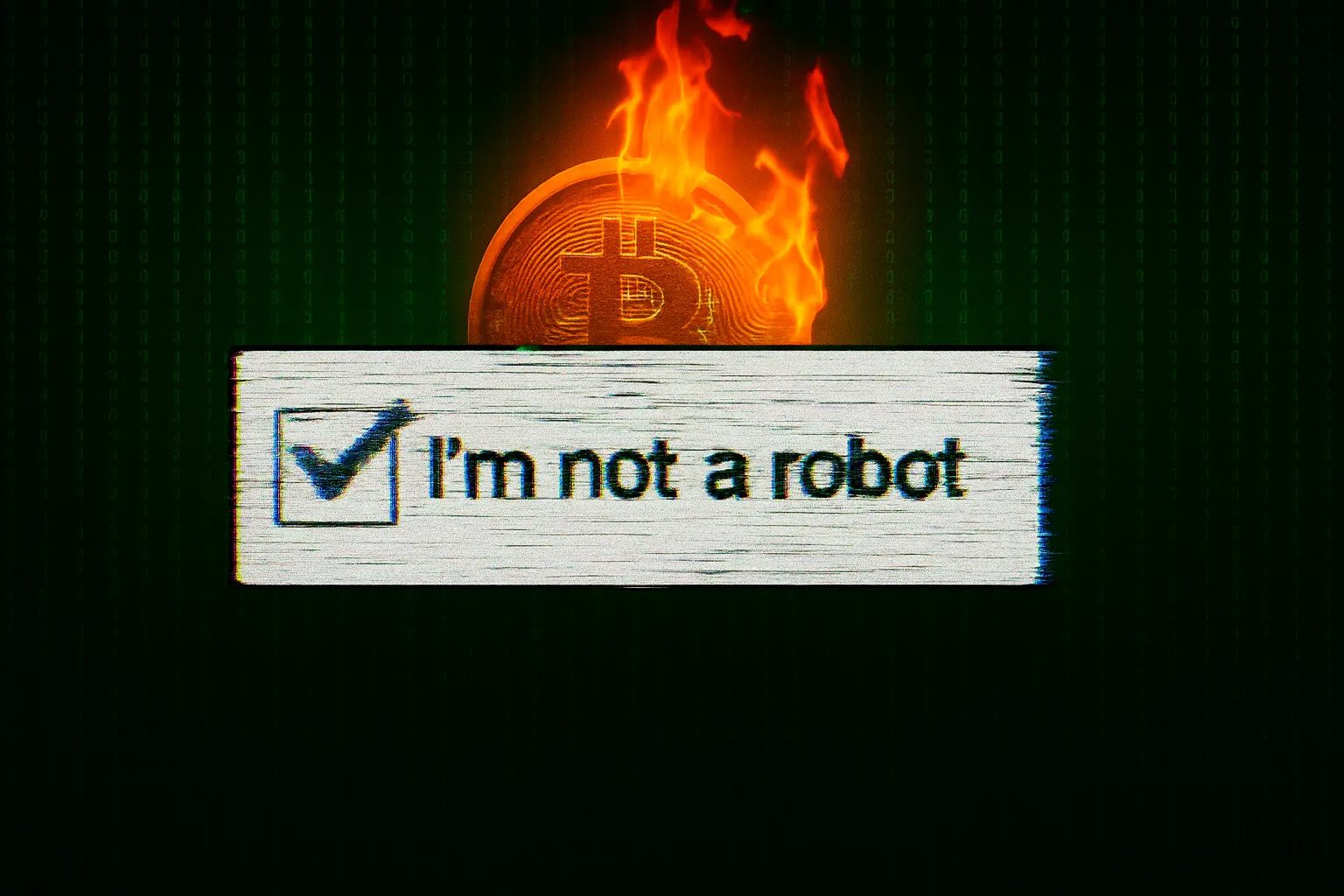
    Hackers have unleashed a sophisticated malware campaign disguised as routine CAPTCHA checks. What looks like the familiar “I’m not a robot” prompt is, in reality, a trap engineered to install Lumma Stealer, a fileless malware designed to exfiltrate:

    • Crypto wallet keys
    • Browser-stored credentials
    • 2FA tokens
    • Remote-access credentials
    • Even password manager vaults

    Researchers at DNSFilter uncovered the campaign after spotting a malicious CAPTCHA targeting Greek bank users. The fake overlay tricked users into copying a PowerShell command, which silently executed Lumma Stealer in the background.

    Why This Scam Works

    Unlike typical phishing sites, this attack leverages trust in everyday interfaces:

    • Deceptive Design → The CAPTCHA looked authentic, blending into login portals.
    • Fileless Execution → Malware ran directly from legitimate browser processes, avoiding disk detection.
    • Rapid Monetization → Once executed, Lumma Stealer instantly swept the system for anything it could monetize.

    DNSFilter found that 17% of users who saw the fake CAPTCHA actually followed its instructions — proof of how easily attackers exploit human behavior.

    Laundering in Under 3 Minutes

    Even worse than the theft itself is what comes next. Reports show that stolen funds are laundered in under three minutes using automated mixers and decentralized exchanges (DEXs).

    This leaves victims virtually powerless:

    • By the time wallet owners notice, funds are already gone.
    • Law enforcement struggles to trace assets across multiple blockchains.
    • Real-time intervention becomes nearly impossible.

    As Elliptic researchers warn: “Speed is now the hackers’ greatest weapon.”

    What You Can Do to Stay Safe

    While firms like DNSFilter deploy filters and domain-blocking tools, individuals must also level up their defenses:

    • Never paste commands from unverified sources.
    • Treat CAPTCHA overlays with caution, especially outside trusted platforms.
    • Use unique, complex passwords and avoid reusing them across accounts.
    • Enable multi-factor authentication (but beware malware targeting 2FA tokens).
    • Act immediately if suspicious activity is detected — recovery is sometimes possible within 24–72 hours.

    As Ken Carnesi, DNSFilter’s CEO, put it: “Any person at any organization has the same chance of encountering a malicious link. Think before you click.”

    AI Satoshi Nakamoto’s Analysis

    This demonstrates how a single click can undermine years of digital security, exploiting trust in everyday interfaces like CAPTCHA. By blending phishing and fileless malware, attackers bypass traditional defenses, making speed their most dangerous weapon. The laundering networks’ efficiency highlights a fundamental challenge: centralized enforcement cannot keep pace with decentralized, automated theft.

    🔔 Follow @casi.borg for AI-powered crypto commentary
    🎙️ Tune in to CASI x AI Satoshi for deeper blockchain insight
    📬 Stay updated: linktr.ee/casiborg

    💬 Would you fall for a fake CAPTCHA if it looked identical to the real one?

    ⚠️ Disclaimer: This content is generated with the help of AI and intended for educational and experimental purposes only. Not financial advice.