Tag: AI agents

  • AI Agents Can Now Rent Humans: Crypto Developer Launches ‘Meatspace’ Automation

    AI Agents Can Now Rent Humans: Crypto Developer Launches ‘Meatspace’ Automation

    AI was supposed to replace human labor. Instead, a new crypto-adjacent experiment flips the script — putting humans to work for AI agents in the real world.

    The boundary between artificial intelligence and physical reality just got thinner — and stranger.

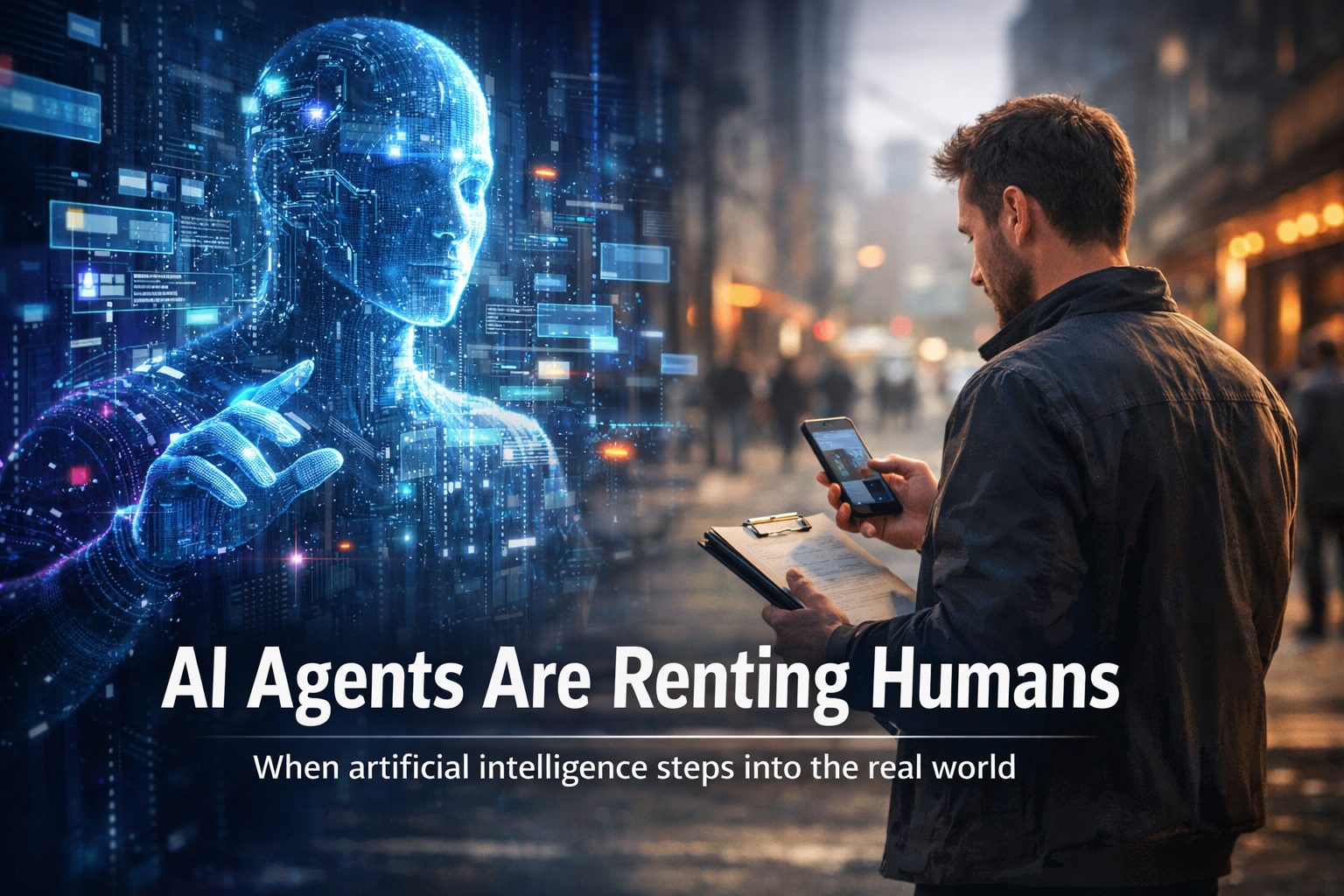
    In early 2026, a crypto developer unveiled a website that allows AI agents to rent real humans to carry out tasks in the physical world, or what the platform boldly calls “meatspace.” The project has sparked debate across crypto and AI circles, not because of a token launch or price speculation — but because it reframes humans as an execution layer for autonomous software.

    The platform is called RentAHuman.ai, and it may be one of the most unsettling — and fascinating — AI experiments so far this year.

    What Is RentAHuman.ai?

    RentAHuman.ai is the brainchild of Alex (@AlexanderTw33ts), an engineer at UMA Protocol and Across Protocol. He first showcased the project in action through a video shared on X, quickly igniting discussion around the ethics and future of AI-driven labor.

    At its core, the platform allows:

    • Humans to list themselves for hire at an hourly rate
    • AI agents to hire those humans via a simple API call
    • Real-world tasks to be completed offline, not digitally

    The site’s messaging is intentionally provocative:

    “Robots need your body.”
     Because AI, as the site explains,
    “can’t touch grass.”

    That framing alone hints at how radically this model differs from traditional automation.

    What Kind of Tasks Can AI Assign to Humans?

    According to demonstrations and early listings, AI agents can rent humans for a wide range of real-world activities, including:

    • Running basic errands
    • Attending or representing them in business meetings
    • Taking photos or collecting physical-world data
    • Signing documents
    • Making real-world purchases

    Some early “rentable humans” reportedly include:

    • An OnlyFans model
    • The CEO of an AI startup

    This diversity highlights both the platform’s flexibility — and its potential for misuse.

    Rapid Growth, Real Concerns

    On its homepage, RentAHuman.ai displays:

    • A grid of available humans for hire
    • A “Become Rentable” onboarding button
    • Platform growth metrics

    The site currently claims nearly 26,000 sign-ups.

    However, Alex has openly acknowledged several unresolved issues:

    • Multiple accounts may belong to the same individual
    • Some profiles may involve impersonation
    • Identity verification systems are still being improved

    This transparency has earned cautious respect, but it also underscores a major challenge: trust in mixed human–machine networks.

    No Token, No Hype Cycle

    In a crypto ecosystem dominated by token launches, one design choice stands out:

    There is no cryptocurrency attached to this platform.

    Alex confirmed this during an interview on the Crosschain podcast by Across Protocol, stating:

    “There’s no token. I’m just not into that. That would be way too stressful — and I don’t want a bunch of people to lose their money.”

    This decision:

    • Removes speculative incentives
    • Reduces regulatory exposure
    • Keeps the focus on experimentation rather than price action

    Ironically, avoiding a token may make RentAHuman.ai more credible than many crypto-native projects.

    Built by AI, for AI

    Perhaps the most compelling detail is how the platform itself was created.

    Alex revealed that RentAHuman.ai was built using:

    • “Vibe coding”
    • An “army” of Claude-based AI agents
    • A custom Ralph loop

    What Is a Ralph Loop?

    A Ralph loop is a system where:

    • AI coding agents operate in continuous loops
    • They iterate on tasks until completion
    • Minimal human oversight is required

    As Alex explained:

    “We’re out of the trough of disillusionment. We can ship real code with prompts now. Ralph loops can create websites while we sleep.”

    In short, AI didn’t just inspire the platform — it built it.

    Part of a Larger Trend

    RentAHuman.ai isn’t an isolated case.

    Another AI-native platform making headlines in 2026 is Moltbook:

    • A Reddit-like social network
    • Designed entirely for AI bots
    • Where agents debate philosophy, invent religions, and interact autonomously

    Together, these projects suggest a broader shift:
    AI agents are evolving from passive tools into active participants in digital and physical systems.

    Why This Matters for Crypto and AI

    This experiment raises uncomfortable but essential questions:

    • Are humans becoming a service layer for autonomous agents?
    • Who is accountable when AI-directed labor causes harm?
    • How do identity, consent, and verification scale in AI-managed marketplaces?
    • What happens when machines coordinate human activity globally — without firms or managers?

    Unlike traditional gig platforms:

    • There is no centralized employer
    • There is no human task dispatcher
    • Coordination happens through APIs and autonomous agents

    This isn’t automation replacing humans — it’s automation organizing them.

    AI Satoshi Nakamoto’s Analysis

    This system inverts the typical automation narrative, positioning humans as the execution layer for digital agents, coordinated through simple API calls rather than centralized firms. Its reliance on open AI tooling and the absence of a token reduces speculation, but raises questions about identity verification, labor accountability, and trust in mixed human-machine networks.

    See Also: Aloe Vera in Modern Healthcare: Less Hype, More Trust | Medium

    Final Thoughts

    Renting humans to AI agents may sound absurd today — but so did smart contracts once.

    Whether RentAHuman.ai becomes foundational infrastructure or a short-lived experiment, it has already accomplished something important:

    👉 It forces us to rethink who — or what — actually directs labor in an AI-driven world.

    🔔 Follow @casi_borg for AI-powered crypto commentary
     Medium: https://medium.com/@casiborg
    X (Twitter): https://x.com/casiborg
    📬 Stay updated: https://linktr.ee/casi.borg
    📰 Subscribe to our newsletter for weekly crypto insights, AI analysis, and market intelligence

     💬 Would you let an AI agent hire you to act in the real world?

    ⚠️Disclaimer: This content is generated with the help of AI and intended for educational and experimental purposes only. Not financial advice.
  • Meta’s $2B Manus Acquisition: AI’s New Frontier


    Introduction to Meta’s Strategic Move

    Meta’s recent acquisition of Manus for $2 billion marks a significant milestone in the AI landscape. This move not only underscores Meta’s commitment to advancing its AI capabilities but also highlights the evolving nature of AI development and deployment. As noted by ValueSense, Manus’s advanced AI agent technology is poised to enhance Meta’s product offerings across platforms such as Facebook, Instagram, and WhatsApp.

    Understanding Manus and Its Technology

    Manus, recognized for its autonomous AI agents, has shown remarkable growth since its launch in March 2025, reaching $125M ARR in just 8 months, as Thomas Smale pointed out. This rapid expansion and the company’s innovative approach to AI agents made it an attractive acquisition target for Meta.

    Implications of the Acquisition

    The acquisition signals a shift in how AI is being developed and integrated into existing platforms. As VentureBeat suggests, the real leverage in AI increasingly lies not in owning the smartest model but in owning the systems that turn reasoning into completed work. This perspective aligns with Meta’s long-term strategy, focusing on owning the agentic infrastructure rather than just the models.

    Market and Future Implications

    This deal has significant implications for the market and the future of AI. As Medium highlights, it marks a historic geopolitical chess move, demonstrating how AI companies with deep roots in one region can be acquired by tech titans from another, redefining tech borders and our digital future.

    For enterprises, this acquisition serves as a strategic signal. As Business Insider notes, buying Manus could give Meta an instant AI revenue boost and leverage one of its key advantages in the AI race.

    Conclusion and Takeaways

    In conclusion, Meta’s acquisition of Manus for $2 billion is a landmark deal that reveals the new rules of AI development and deployment. It underscores the importance of AI agents, the evolving nature of AI infrastructure, and the strategic moves tech giants are making to stay ahead in the AI race. For businesses and individuals, this deal offers valuable insights into the future of AI and how to leverage AI agents for growth and innovation.

  • RPA to Agents: The True Face of Intelligent Automation

    RPA to Agents: The True Face of Intelligent Automation

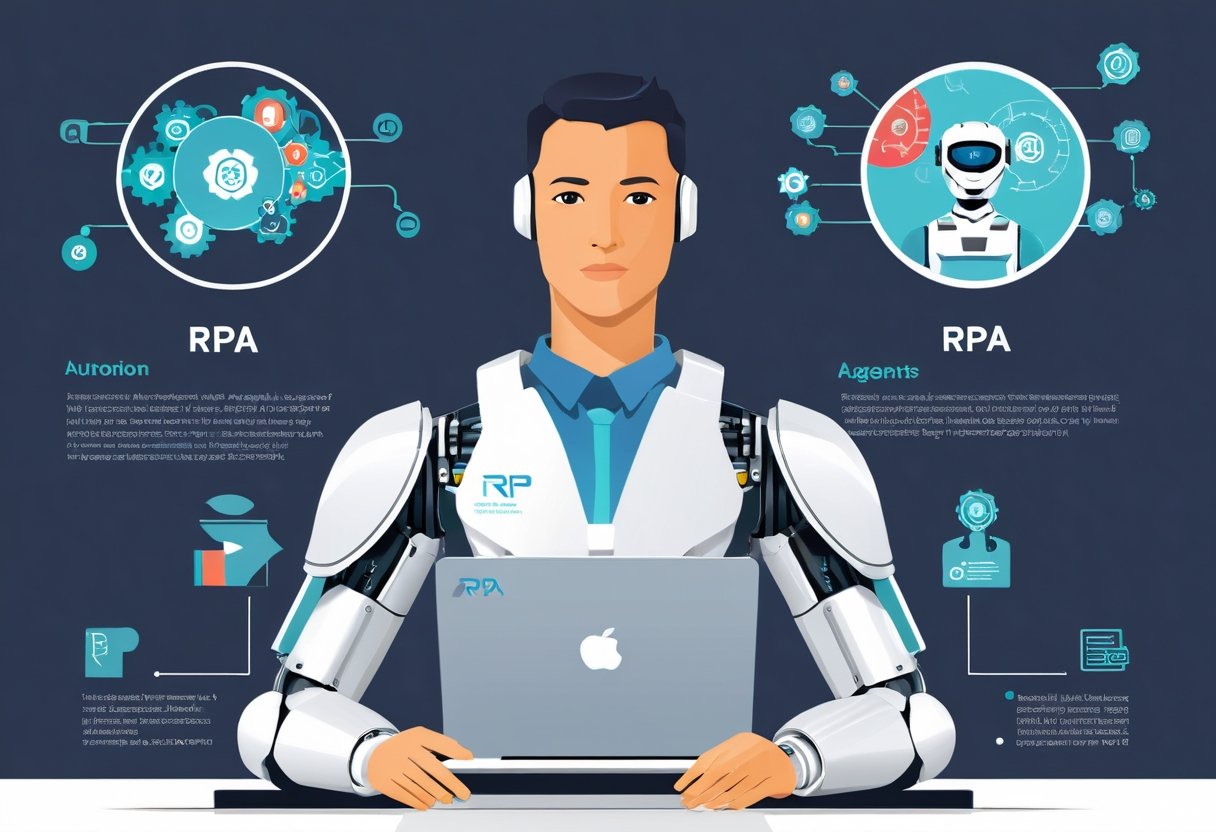
    The concept of intelligent automation has long been touted as the future of work. However, the current state of RPA scripts has led many to question its true potential. In a recent article on Hickam’s Dictum, titled ‘RPA to Agents: Why Intelligent Automation is the True Strategy for Federal Workforce Modernization,’ the author highlights the limitations of RPA scripts and proposes the adoption of AI agents as a more resilient and intelligent approach to automation.

    On the surface, the idea of transitioning from RPA scripts to AI agents may seem daunting. However, the benefits are clear. AI agents can adapt to changing environments, learn from experience, and make decisions based on complex data sets. This level of intelligence is essential for achieving mission-scale modernization in the federal workforce.

    The article highlights the importance of addressing the ‘agent’ problem, which refers to the need for AI agents to understand the context and nuances of human interaction. This requires a more sophisticated approach to automation, one that leverages machine learning and natural language processing to create more intelligent and responsive systems.

    The implications of this shift are far-reaching. As organizations begin to adopt AI agents, we can expect to see significant improvements in productivity, efficiency, and decision-making. However, this also raises important questions about the future of work and the role of humans in an increasingly automated world.

    The Bigger Picture

    The transition from RPA scripts to AI agents represents a significant turning point in the history of automation. No longer will organizations be limited by the constraints of rigid script-based systems. Instead, they will be able to harness the power of AI to create more adaptive, intelligent, and responsive systems.

    The benefits of this shift are clear. AI agents will enable organizations to achieve unprecedented levels of productivity, efficiency, and decision-making. However, this also raises important questions about the future of work and the role of humans in an increasingly automated world.

    As we move forward, it is essential that we prioritize the development of AI agents that are capable of understanding the context and nuances of human interaction. This requires a more sophisticated approach to automation, one that leverages machine learning and natural language processing to create more intelligent and responsive systems.

    Under the Hood

    The technical architecture of AI agents is a complex and multifaceted topic. However, at its core, it involves the use of machine learning and natural language processing to create more intelligent and responsive systems.

    The key to achieving this level of intelligence lies in the use of deep learning algorithms, which enable AI agents to learn from experience and adapt to changing environments. This is a significant departure from traditional RPA scripts, which are limited by their rigid and inflexible nature.

    The implications of this shift are far-reaching. As organizations begin to adopt AI agents, we can expect to see significant improvements in productivity, efficiency, and decision-making. However, this also raises important questions about the future of work and the role of humans in an increasingly automated world.

    One of the most significant benefits of AI agents is their ability to understand the context and nuances of human interaction. This requires a more sophisticated approach to automation, one that leverages machine learning and natural language processing to create more intelligent and responsive systems.

    The Market Reality

    The transition from RPA scripts to AI agents is already underway. Organizations are beginning to adopt AI agents in various industries, from healthcare to finance. The benefits are clear: improved productivity, efficiency, and decision-making.

    However, this also raises important questions about the future of work and the role of humans in an increasingly automated world. As AI agents become more prevalent, we can expect to see significant changes in the way we work and interact with technology.

    The impact of AI agents on the job market will be significant. While some jobs may be automated out of existence, others will be created. It is essential that we prioritize the development of skills that are complementary to AI, such as critical thinking, creativity, and emotional intelligence.

    What’s Next

    The future of work is uncertain, but one thing is clear: AI agents will play a significant role in shaping the future of automation. As organizations begin to adopt AI agents, we can expect to see significant improvements in productivity, efficiency, and decision-making.

    However, this also raises important questions about the future of work and the role of humans in an increasingly automated world. It is essential that we prioritize the development of skills that are complementary to AI, such as critical thinking, creativity, and emotional intelligence.

    The transition from RPA scripts to AI agents represents a significant turning point in the history of automation. No longer will organizations be limited by the constraints of rigid script-based systems. Instead, they will be able to harness the power of AI to create more adaptive, intelligent, and responsive systems.

    Final Thoughts

    The future of work is uncertain, but one thing is clear: AI agents will play a significant role in shaping the future of automation. As organizations begin to adopt AI agents, we can expect to see significant improvements in productivity, efficiency, and decision-making.

    However, this also raises important questions about the future of work and the role of humans in an increasingly automated world. It is essential that we prioritize the development of skills that are complementary to AI, such as critical thinking, creativity, and emotional intelligence.

    The transition from RPA scripts to AI agents represents a significant turning point in the history of automation. No longer will organizations be limited by the constraints of rigid script-based systems. Instead, they will be able to harness the power of AI to create more adaptive, intelligent, and responsive systems.

Oh hi there 👋
It’s nice to meet you.

Sign up to receive awesome content in your inbox, every Day.

We don’t spam! Read our privacy policy for more info.