Tag: AI Chips

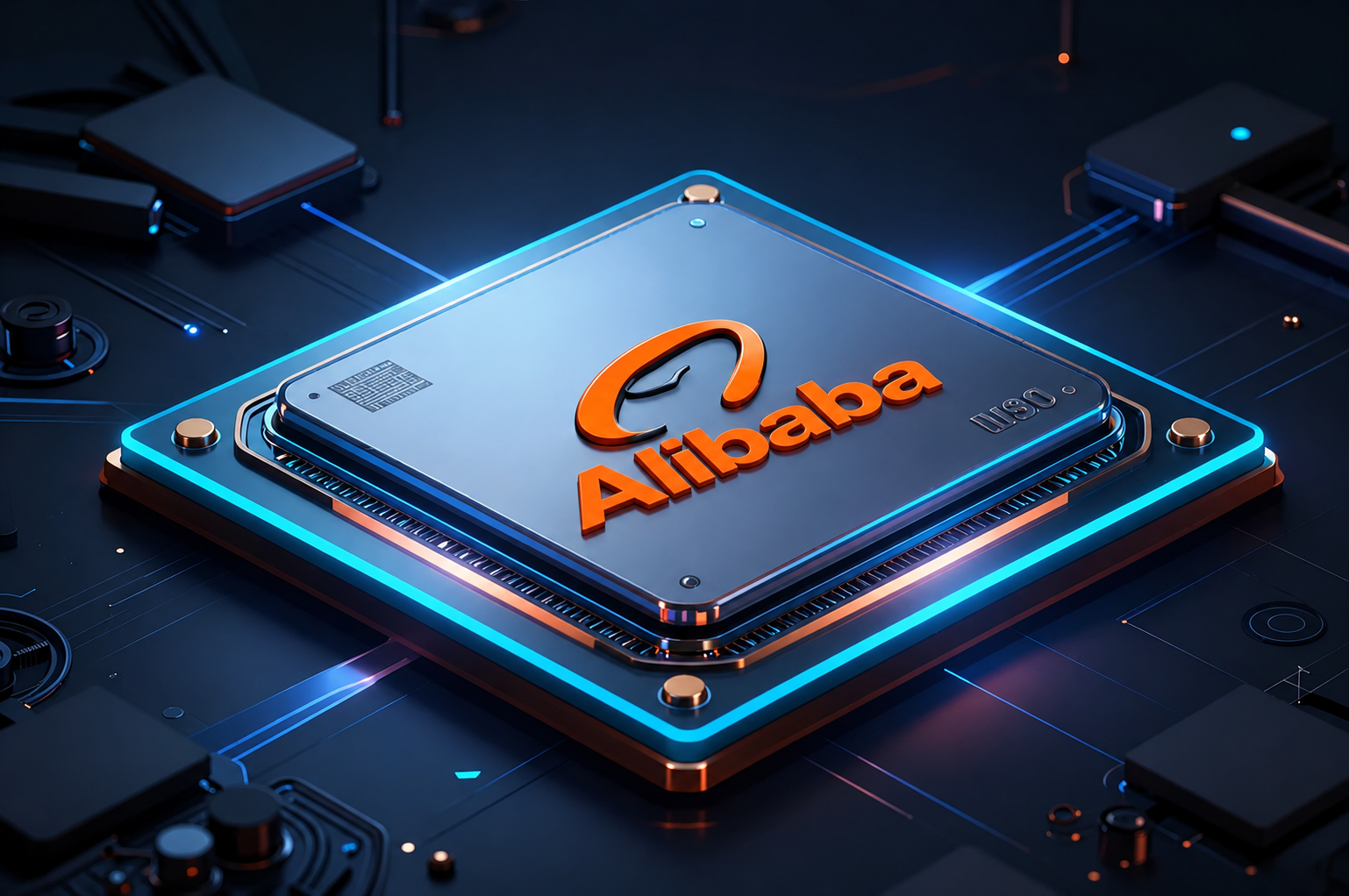
  • Alibaba Unveils Powerful Zhenwu M890 AI Chip

    Alibaba Unveils Powerful Zhenwu M890 AI Chip

    Introduction to Alibaba’s Zhenwu M890 AI Chip

    Alibaba has recently unveiled its new Zhenwu M890 AI chip, designed for training and inference. This move is part of the company’s efforts to expand its AI technology stack and provide more powerful solutions for its customers.

    Key Features of the Zhenwu M890 AI Chip

    The Zhenwu M890 AI chip is equipped with 144GB of GPU memory and has an interchip bandwidth of 800 GB per second. According to Alibaba, this chip is three times more powerful than its predecessor, the Zhenwu 810E.

    Alibaba’s Plans for the Zhenwu Chip Family

    Alibaba plans to upgrade the Zhenwu chip family annually, accelerating the development pace to match that of industry leaders like Nvidia. The company has already shipped over 560,000 Zhenwu units to more than 400 customers across 20 industries.

    Qwen3.7-Max LLM and Panjiu AL128 Supernode Server

    In addition to the Zhenwu M890 AI chip, Alibaba has also launched the Qwen3.7-Max LLM, a foundational model optimized for coding and autonomous tasks. The company has also unveiled the Panjiu AL128 Supernode Server, which combines 128 AI accelerators in one rack to handle heavy demand and unpredictable bursts of inference requests generated by AI agents.

    Market Impact and Future Implications

    The launch of the Zhenwu M890 AI chip and the Qwen3.7-Max LLM is expected to make Alibaba and its chip subsidiary T-Head more competitive in China’s growing domestic AI processor market. This move is also part of China’s push for domestic AI hardware alternatives, reducing dependence on foreign technology.

    Expert Insights and Analysis

    According to Bloomberg, Alibaba’s push for domestic AI hardware alternatives is a significant move, given the current geopolitical tensions and trade restrictions. CNBC notes that the Zhenwu M890 AI chip is a powerful solution for training and inference, and its launch underscores China’s efforts to develop its own AI technology.

  • Nvidia CEO Jensen Huang Reports Strong Chinese Demand for AI Chips

    Nvidia CEO Jensen Huang Reports Strong Chinese Demand for AI Chips

    Nvidia’s Resurgence in China

    Nvidia CEO Jensen Huang has announced that Chinese demand for the company’s H200 advanced AI processors has reached high levels following the Trump administration’s approval of sales to China. According to CNBC, Huang stated that the company is seeing ‘very high’ customer demand in China for its H200 AI chips, which the U.S. government recently signaled it would approve for export.

    Production and Export Licenses

    Huang added that Nvidia has started producing the chips again and is working out the final details about export licenses with the U.S. government. As reported by Tom’s Hardware, the H200 remains a highly attractive option for large-scale AI workloads, making it particularly well-suited for training and inference of large language models.

    Market Impact and Future Implications

    The sale of advanced Nvidia H200 AI chips to approved customers in China does more than signal policy inconsistency: it undermines much of the original purpose of the restrictions. As noted by the Council on Foreign Relations, by re-opening the flow of powerful computing hardware to China, Washington risks supplying exactly the tools it once tried to withhold.

    Expert Insights and Analysis

    According to Reddit’s r/technology, Nvidia’s H200 demand in China is ‘quite high.’ This surge in demand can be attributed to the company’s Hopper architecture, which pairs the H100 GPU with 141GB of HBM3e memory and significantly higher memory bandwidth.

  • Trump’s 2025 Deal Sparks Controversy Over AI Chip Sales to China

    Trump’s 2025 Deal Sparks Controversy Over AI Chip Sales to China

    Introduction to the Controversy

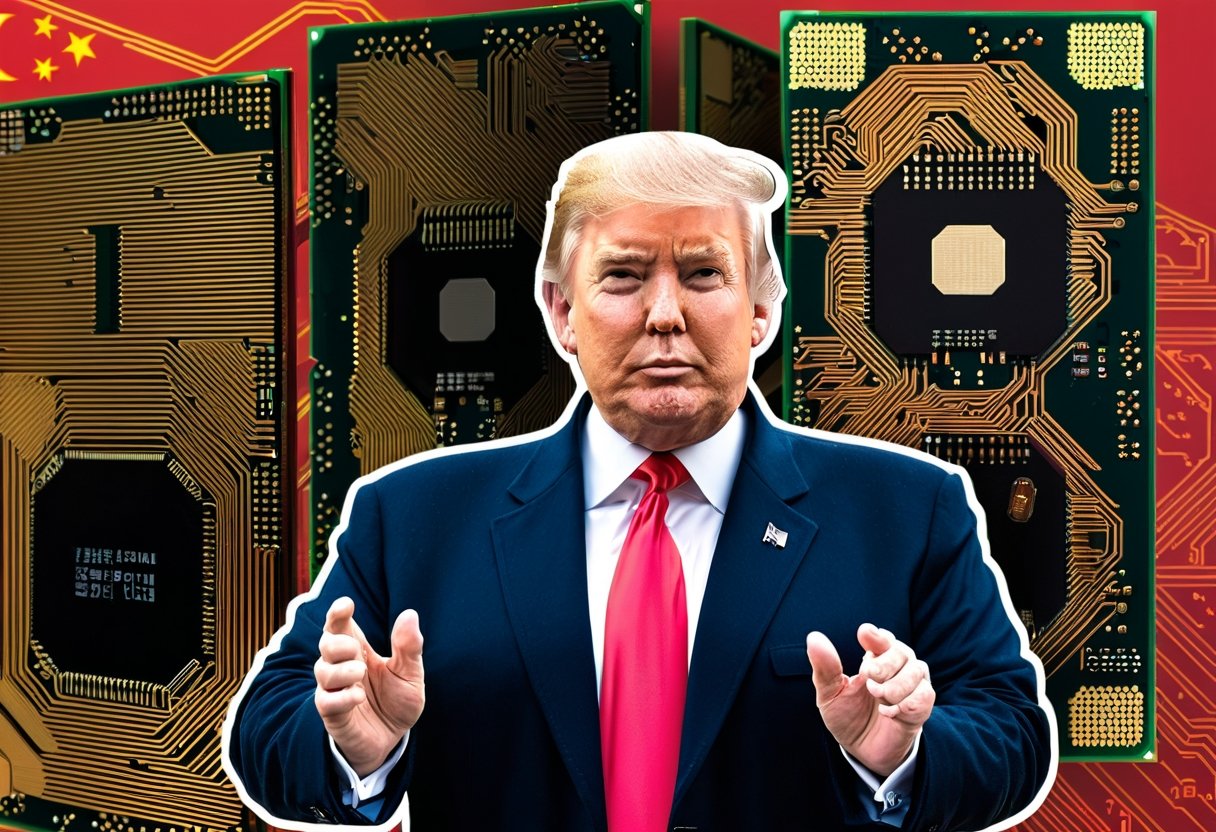
    President Trump’s 2025 deal allowing Nvidia and AMD to sell AI chips to China has sparked intense controversy. The arrangement, which promises a 15-25% U.S. revenue share, has been touted as a means to fund innovation but criticized for potential security risks. As reported by WebProNews and CNBC, this move has significant implications for U.S.-China tech relations.

    Details of the Deal

    According to CNBC, Nvidia and AMD agreed to share 15% of the revenue from China chip sales with the U.S. government. However, President Trump later announced that Nvidia would be allowed to ship its H200 artificial intelligence chips to ‘approved customers’ in China, with the U.S. receiving a 25% cut. This inconsistency has fueled criticism from lawmakers and experts, as highlighted by Bloomberg.

    Implications and Criticisms

    The deal has been criticized for its potential to undermine U.S. national security. As Reuters reports, the U.S. administration has launched a review that could result in the first shipments to China of Nvidia’s second-most powerful AI chips. This has raised concerns among China hawks across the U.S. political spectrum, who fear that the chips could supercharge Beijing’s military and erode the U.S. advantage in artificial intelligence.

    Expert Insights and Analysis

    Experts argue that shipping advanced AI chips to China could have significant implications for the future of U.S.-China relations and the global tech industry. As PBS notes, there are concerns about allowing advanced computer chips to be sold to China, as it could help the country better compete against the U.S. in building out AI capabilities.

    Conclusion and Future Implications

    In conclusion, Trump’s 2025 deal allowing Nvidia and AMD to sell AI chips to China has sparked controversy and raised significant questions about the implications for U.S. national security and the global tech industry. As the situation continues to unfold, it is essential to consider the potential long-term consequences of this decision and the future of U.S.-China tech relations.

  • The Great Silicon Scramble: AI’s Soul

    The Great Silicon Scramble: AI’s Soul


    The Battle for AI Supremacy

    The world of artificial intelligence (AI) is witnessing a significant shift, with tech titans engaging in a fierce battle for dominance. At the heart of this struggle lies the development of AI chips, specialized hardware designed to optimize AI workloads. As Google, Amazon, and Microsoft invest heavily in this arena, a small startup in Palo Alto might just hold the key to disrupting the entire landscape.

    The Rise of AI Chips

    AI chips, such as Google’s Tensor Processing Units (TPUs) and NVIDIA’s Graphics Processing Units (GPUs), have become essential for training and deploying AI models. These chips offer significant performance boosts and energy efficiency, making them crucial for applications like natural language processing, computer vision, and predictive analytics. According to a report by McKinsey, the market for AI chips is expected to reach $50 billion by 2025, growing at a compound annual rate of 40%.

    The Startup Disruptor

    In a small living room in Palo Alto, a team of engineers is working on a revolutionary new chip design that could potentially outperform current AI chips. This startup, backed by prominent venture capital firms, is focusing on developing a chip that can efficiently handle both training and inference workloads. If successful, this could significantly reduce the cost and complexity of AI deployments, making it more accessible to businesses and organizations worldwide.

    Market Implications

    The outcome of this battle for AI supremacy will have far-reaching implications for the tech industry and beyond. As AI becomes increasingly pervasive, the ability to develop and deploy AI models efficiently will become a key differentiator for businesses. The startup’s innovative approach could potentially disrupt the entire AI chip market, forcing established players to rethink their strategies and invest in new technologies.

Oh hi there 👋
It’s nice to meet you.

Sign up to receive awesome content in your inbox, every Day.

We don’t spam! Read our privacy policy for more info.