Tag: AI fintech

  • OpenAI and SpaceX IPOs Revolutionize Tech Landscape

    OpenAI and SpaceX IPOs Revolutionize Tech Landscape


    Introduction to the IPO Landscape

    The tech world is abuzz with the news of OpenAI and SpaceX filing for initial public offerings (IPOs). This move is set to revolutionize the tech landscape, with both companies poised to make a significant impact on the market. According to WIRED, OpenAI has filed confidential paperwork for an IPO, making it the third company to do so this year, following in the footsteps of Anthropic and SpaceX.

    OpenAI’s Financials and Growth

    OpenAI’s revenue from subscriptions, ads, and service fees grew to somewhere between $10 billion and $20 billion last year, as reported by WIRED. However, the company spent far more on cloud computing and staffing, leading to billions of dollars in losses. Despite this, an IPO would provide OpenAI with another fundraising opportunity, having already raised $122 billion in March.

    SpaceX’s Ambitious Plans

    SpaceX, on the other hand, is aiming to launch its IPO, which could be the largest ever. As reported by CNBC, the company plans to list under the ticker symbol SPCX on the Nasdaq. SpaceX’s revenue jumped 15% to $4.69 billion in the first quarter, with the company investing heavily in AI and data centers.

    Anthropic’s Valuation and Competition

    Anthropic, valued at almost a trillion dollars, has also filed for an IPO, as reported by Reuters. The company’s valuation has put it ahead of OpenAI, stepping up the competition between the two AI giants. With all three companies going public, the tech landscape is set to become even more competitive.

    Market Impact and Future Implications

    The IPOs of OpenAI, SpaceX, and Anthropic are set to have a significant impact on the market. As these companies go public, they will be subject to greater scrutiny and transparency, which could boost employee morale and customer confidence. The future implications of these IPOs are vast, with the potential for significant growth and innovation in the tech industry.

  • Apple’s WWDC Unveils Siri AI and Child Safety Tools

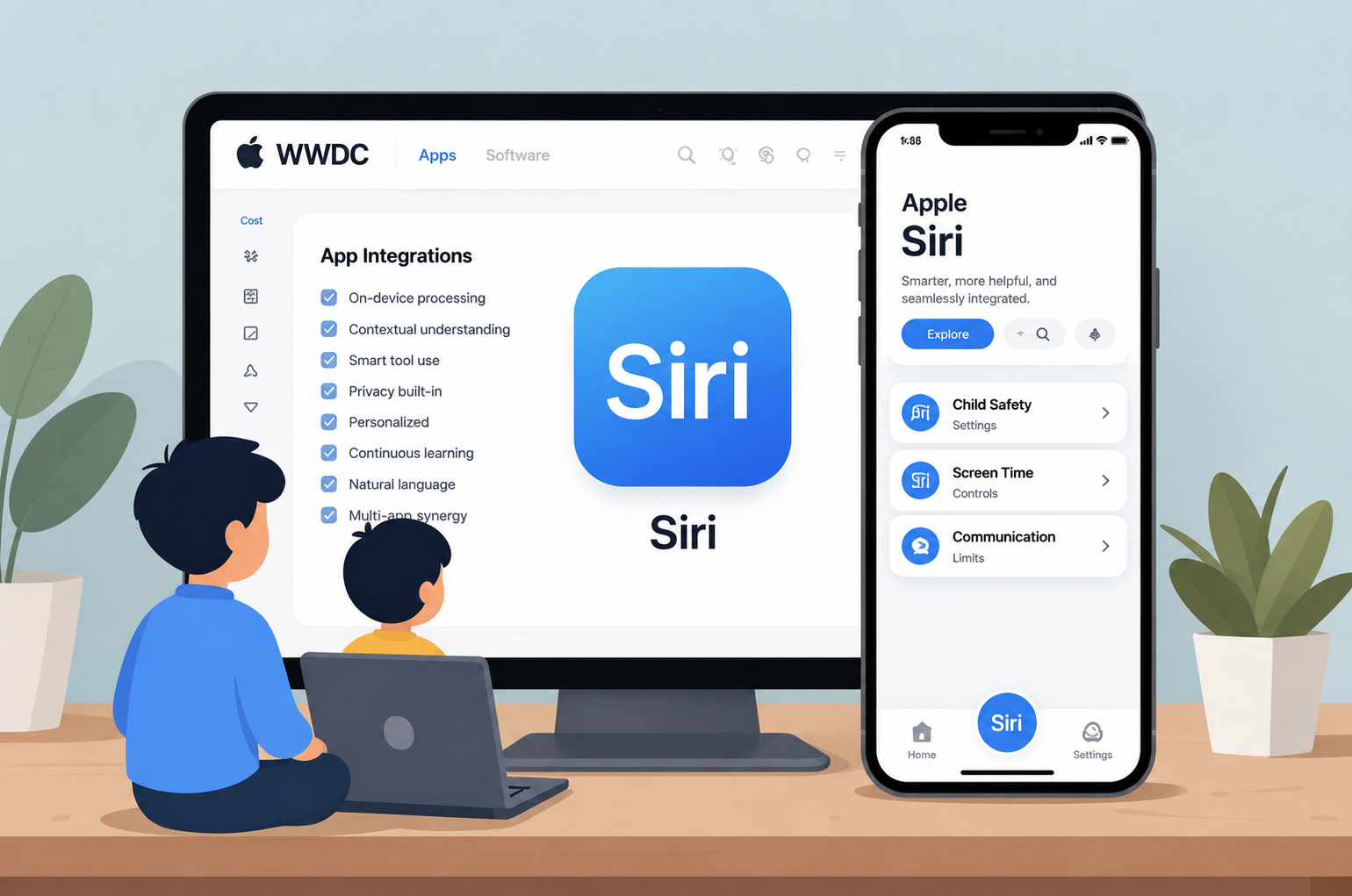
    Apple’s WWDC Unveils Siri AI and Child Safety Tools

    Introduction to Siri AI

    Apple’s annual Worldwide Developers Conference (WWDC) has unveiled a plethora of exciting updates, with the introduction of Siri AI being one of the most significant announcements. As noted by The Guardian, Siri AI is an AI-powered personal assistant integrated with Apple Intelligence capabilities, designed to understand personal context, analyze on-screen content, search the web, understand images, and complete tasks across apps.

    Key Features of Siri AI

    According to Apple’s Newsroom, Siri AI is built on Apple Intelligence, allowing it to draw on personal context understanding and help users find what they need in the moment across messages, emails, photos, and more. For instance, users can ask Siri to find a restaurant recommendation a friend messaged them about, surface a hotel confirmation number from an old email, or pull up photos with friends and family from a recent trip.

    Child Safety Features

    In addition to Siri AI, Apple has also introduced new child safety features, as reported by BNN Bloomberg. The new parental controls will, by default, allow children to access only the apps that are allowed by parents, and Apple is introducing a new ‘ask to browse’ feature that will require children to seek permission for every new website they visit.

    Market Impact and Future Implications

    The introduction of Siri AI and child safety features is expected to have a significant impact on the market, as noted by TechCrunch. With Apple’s focus on AI and child safety, the company is poised to take a leading position in the tech industry. As helloapple’s Instagram post suggests, the future of tech is exciting, and Apple is at the forefront of innovation.

    Practical Takeaways

    For users, the introduction of Siri AI and child safety features means a more personalized and secure experience. As The Guardian notes, the new features will be widely released in the fall, and users can expect a more capable and conversational assistant.

  • CES 2026: Unveiling the Future of Tech with AI and Beyond

    CES 2026: Unveiling the Future of Tech with AI and Beyond


    Introduction to CES 2026

    CES 2026 is just around the corner, and the tech world is buzzing with excitement. As the biggest tech show of the year, CES always starts with a bang, showcasing the latest innovations and trends in consumer technology. This year, we can expect to see a plethora of new products and announcements, from cutting-edge processors to AI-powered devices.

    New Processors and AI-Powered Devices

    According to PC Gamer, Intel is set to launch its new Panther Lake chips, which will offer a significant boost in processing performance. These chips are part of the Core Ultra Series 3 lineup and are built on the 18 Angstrom process. As PCMag notes, effective, muscular neural processing units (NPUs) are now a part of—or will soon be part of—almost all new mainstream laptop chips.

    AMD and Nvidia Announcements

    AMD is also expected to make some major announcements, including the introduction of new Ryzen chips. Mashable reports that AMD is probably introducing new Ryzen chips, including the new Ryzen 7 9850X3D. Meanwhile, Nvidia is likely to showcase its latest graphics cards and processors, with a focus on AI prowess.

    AI: The Dominant Theme of CES 2026

    AI is expected to be the dominant theme of CES 2026, with almost every major tech company showcasing their latest AI-powered devices and technologies. As Engadget notes, Intel’s Panther Lake chips are part of the company’s overall “AI PC” push. YouTube also reports that AI will be a major focus of CES 2026, with sessions, demonstrations, and programming focused on AI platforms, robotics workflows, and physical AI systems.

    Practical Takeaways

    So, what can we expect to take away from CES 2026? For starters, we can expect to see a wide range of new products and technologies that showcase the latest advancements in AI and other areas of consumer tech. We can also expect to see a major focus on sustainability and environmental responsibility, as tech companies increasingly prioritize eco-friendliness and social responsibility.

  • Humanoid Robots: The Future of Tech?

    Humanoid Robots: The Future of Tech?

    Introduction to Humanoid Robots

    Humanoid robots have long been a topic of interest in the tech world. With the commercial boom in artificial intelligence, the development of humanoid robots has gained significant traction. According to Modar Alaoui, founder of the Humanoids Summit, many researchers believe that humanoids or some other kind of physical embodiment of AI are “going to become the norm.”

    The Current State of Humanoid Robots

    The humanoid space has a very, very big hill to climb, said Cosima du Pasquier, co-founder of Haptica Robotics. There’s a lot of research that still needs to be solved. Despite the challenges, companies like Disney are making significant strides in the field. Disney’s contribution to the field, a walking robotic version of “Frozen” character Olaf, will be roaming on its own through Disneyland theme parks in Hong Kong and Paris early next year.

    The Role of AI in Humanoid Robots

    The same technical advances that made AI chatbots so good at language have played a role in teaching robots how to get better at performing tasks. Paired with computer vision, robots powered by “visual-language” models are trained to learn about their surroundings. This technology has the potential to revolutionize the way we interact with robots and could lead to the development of more advanced humanoid robots.

    The Future of Humanoid Robots

    While we are still far from having truly humanlike robots, the progress being made in the field is significant. According to McKinsey & Company, about 50 companies around the world have raised at least $100 million to develop humanoids, led by about 20 in China and 15 in North America. China is leading in part due to government incentives for component production and robot adoption and a mandate last year “to have a humanoid ecosystem established by 2025,” said McKinsey partner Ani Kelkar.

    In conclusion, humanoid robots are an exciting and rapidly evolving field. While there are still many challenges to overcome, the potential benefits of these robots are significant. As the technology continues to advance, we can expect to see more advanced humanoid robots that are capable of performing a wide range of tasks.

  • Open Source: The Future of Tech and AI

    Open Source: The Future of Tech and AI


    Introduction to Open Source

    Open source software has been around for decades, but its importance has grown significantly in recent years. With the rise of artificial intelligence (AI), open source is becoming the default choice for many developers and organizations. As Eric Raymond notes, ‘Open source is a development methodology, not a business model.’

    Benefits of Open Source

    The benefits of open source are numerous. It allows for collaboration among developers, transparency in code, and customization to meet specific needs. According to a GitHub survey, 90% of developers believe that open source is essential for their work.

    The Role of AI in Open Source

    AI is accelerating the shift towards open source by making scrutiny scalable. Automated code review and supply-chain analysis are just a few examples of how AI is being used to improve open source software. As Forbes notes, ‘AI is the future of open source, and open source is the future of AI.’

    Examples of Open Source AI

    There are many examples of open source AI projects, including TensorFlow and PyTorch. These projects have democratized access to AI and have enabled developers to build innovative applications. According to a Red Hat survey, 75% of organizations are using open source AI in their development workflows.

    Conclusion

    In conclusion, open source is the default future of tech and AI. With its numerous benefits and the accelerating role of AI, open source is becoming the go-to choice for developers and organizations. As Linus Torvalds notes, ‘The future of technology is open source.’

  • Revolut Integrates Solana Payments for 65 Million Users

    Revolut Integrates Solana Payments for 65 Million Users


    Introduction to Revolut and Solana

    Revolut, a leading digital banking app, has taken a significant step into the cryptocurrency space by integrating Solana payments for its 65 million users worldwide. This move marks a crucial expansion for Solana in mainstream finance, positioning the blockchain as infrastructure for high-volume payments across one of Europe’s largest digital banks.

    What This Means for Users

    According to Finbold, users can now send, receive, and pay using SOL, USDT, and USDC directly within the Revolut app. This integration also enables peer-to-peer transfers, withdrawals to external wallets, and participation in staking through the banking interface.

    Technical and Market Implications

    The integration underscores a growing trend of established financial technology companies turning to Solana for its high-performance infrastructure, as noted by AInvest. This move signals increasing confidence from major financial institutions in Solana’s ability to support scalable, low-cost payment and staking services for a mass-market audience.

    Future Outlook

    As StableDash points out, this development could catalyze institutional interest in Solana, particularly with Revolut’s large user base gaining seamless access to stablecoin transactions and native crypto services. The future implications of this integration are vast, with potential for further mainstream adoption of cryptocurrency.

  • The Great Silicon Scramble: AI’s Soul

    The Great Silicon Scramble: AI’s Soul


    The Battle for AI Supremacy

    The world of artificial intelligence (AI) is witnessing a significant shift, with tech titans engaging in a fierce battle for dominance. At the heart of this struggle lies the development of AI chips, specialized hardware designed to optimize AI workloads. As Google, Amazon, and Microsoft invest heavily in this arena, a small startup in Palo Alto might just hold the key to disrupting the entire landscape.

    The Rise of AI Chips

    AI chips, such as Google’s Tensor Processing Units (TPUs) and NVIDIA’s Graphics Processing Units (GPUs), have become essential for training and deploying AI models. These chips offer significant performance boosts and energy efficiency, making them crucial for applications like natural language processing, computer vision, and predictive analytics. According to a report by McKinsey, the market for AI chips is expected to reach $50 billion by 2025, growing at a compound annual rate of 40%.

    The Startup Disruptor

    In a small living room in Palo Alto, a team of engineers is working on a revolutionary new chip design that could potentially outperform current AI chips. This startup, backed by prominent venture capital firms, is focusing on developing a chip that can efficiently handle both training and inference workloads. If successful, this could significantly reduce the cost and complexity of AI deployments, making it more accessible to businesses and organizations worldwide.

    Market Implications

    The outcome of this battle for AI supremacy will have far-reaching implications for the tech industry and beyond. As AI becomes increasingly pervasive, the ability to develop and deploy AI models efficiently will become a key differentiator for businesses. The startup’s innovative approach could potentially disrupt the entire AI chip market, forcing established players to rethink their strategies and invest in new technologies.

  • The Future of Data Analysis: AI Takes the Lead

    The Future of Data Analysis: AI Takes the Lead


    Introduction to AI-Driven Data Transformation

    In 2025, India is experiencing a massive shift toward AI-driven data transformation. According to a recent IDC–Qlik report, generative AI adoption is rising quickly, and India’s AI spending is projected to reach US$ 9.2 billion by 2028, driven by enterprises adopting smarter data tools. This rapid growth is enabling organizations to automate a large part of their analytical workflows, making way for faster and more accurate insights.

    Why Data Analysis Is Becoming More Automated

    Data analysis traditionally involved manual work across multiple stages. Today, AI is transforming each of these steps, allowing organizations to automate up to 80% of their traditional data analysis tasks, as noted by SOURCE 1. With these capabilities, teams can focus on strategic decision-making.

    Top Data and AI Solution Companies in India

    Three strong contributors to India’s data automation ecosystem are:

    1. Tata Consultancy Services (TCS)

    AI Spending in India

    According to IDC, AI spending will grow at 2.2x the rate of overall digital technology spending in the next three years, generating an India economic impact of over $115 billion by the end of 2027.

    Market Impact and Future Implications

    The IDC MarketScape names Qlik as a Leader in Data Integration Software Platforms. This, combined with the projected growth of the generative AI market to US $59.01 billion in 2025, indicates a significant shift in how data analysis is approached.

    Practical Takeaways

    For businesses looking to leverage AI for data analysis, it’s crucial to invest in solutions that can automate a significant portion of their analytical workflows, thereby enhancing efficiency and accuracy.

  • Hong Kong Embraces 24/7 Tokenised Banking Revolution

    Hong Kong Embraces 24/7 Tokenised Banking Revolution


    Introduction to Tokenised Banking

    Hong Kong is taking a significant leap into the future of finance by introducing 24/7 tokenised banking. As reported by Blockhead, the Hong Kong Monetary Authority (HKMA) has launched a pilot program called EnsembleTX, enabling real-value transactions involving tokenised deposits and digital assets. This move is part of Hong Kong’s Fintech 2030 strategy, which aims to build a financial tokenisation ecosystem and create data and payment infrastructure.

    How Tokenised Banking Works

    Tokenised banking involves the use of blockchain technology to represent traditional assets in a digital form. As South China Morning Post explains, this allows for faster, more transparent, and more efficient transactions. The HKMA’s pilot program will initially facilitate interbank settlement through Hong Kong’s existing Real Time Gross Settlement system for Hong Kong dollars, with plans to progressively upgrade the infrastructure to support settlement in tokenised central bank money on a 24/7 basis.

    Benefits of Tokenised Banking

    The introduction of tokenised banking in Hong Kong is expected to bring numerous benefits, including round-the-clock access, lower costs, and improved cash management. As Yahoo Finance reports, tokenised deposits will also enable businesses to automate payments and apply rules based on predefined conditions. This will make it easier for companies to manage their finances and make transactions more efficiently.

    Participating Banks and Future Plans

    Seven major banks in Hong Kong, including Bank of China, China Construction Bank, and HSBC, will participate in the pilot program. As HKMA’s report outlines, the program will operate throughout 2026, with the goal of establishing a strong foundation for further innovation in Hong Kong’s tokenisation ecosystem. The HKMA also plans to explore the use of an e-HKD, a digital version of the Hong Kong dollar, for interbank settlement of tokenised deposits.

  • The Toxic Workplace Culture: How One Tech CEO’s Humiliation Led to Murder

    The Toxic Workplace Culture: How One Tech CEO’s Humiliation Led to Murder

    The Dark Side of Tech: How Workplace Humiliation Can Have Deadly Consequences

    Discover the shocking story of a tech CEO who allegedly humiliated his employees before his murder, revealing the dark side of workplace culture and its devastating consequences.

    The Toxic Workplace Culture

    The alleged humiliation of employees by a tech CEO is a stark reminder of the toxic workplace culture that can be prevalent in the tech industry.

    Leadership plays a crucial role in shaping the culture of an organization, and a toxic leader can have far-reaching consequences.

    The intersection of technology and humanity is a delicate one, and companies must prioritize the well-being and dignity of their employees.

    Practical Takeaways

    Companies must prioritize creating a positive and inclusive work culture to remain competitive in the market.

    Leadership plays a crucial role in shaping the culture of an organization, and a toxic leader can have far-reaching consequences.

    The intersection of technology and humanity is a delicate one, and companies must prioritize the well-being and dignity of their employees.

Oh hi there 👋
It’s nice to meet you.

Sign up to receive awesome content in your inbox, every Day.

We don’t spam! Read our privacy policy for more info.