Tag: AI Future

  • Meta’s $2B Manus Acquisition: AI’s New Frontier


    Introduction to Meta’s Strategic Move

    Meta’s recent acquisition of Manus for $2 billion marks a significant milestone in the AI landscape. This move not only underscores Meta’s commitment to advancing its AI capabilities but also highlights the evolving nature of AI development and deployment. As noted by ValueSense, Manus’s advanced AI agent technology is poised to enhance Meta’s product offerings across platforms such as Facebook, Instagram, and WhatsApp.

    Understanding Manus and Its Technology

    Manus, recognized for its autonomous AI agents, has shown remarkable growth since its launch in March 2025, reaching $125M ARR in just 8 months, as Thomas Smale pointed out. This rapid expansion and the company’s innovative approach to AI agents made it an attractive acquisition target for Meta.

    Implications of the Acquisition

    The acquisition signals a shift in how AI is being developed and integrated into existing platforms. As VentureBeat suggests, the real leverage in AI increasingly lies not in owning the smartest model but in owning the systems that turn reasoning into completed work. This perspective aligns with Meta’s long-term strategy, focusing on owning the agentic infrastructure rather than just the models.

    Market and Future Implications

    This deal has significant implications for the market and the future of AI. As Medium highlights, it marks a historic geopolitical chess move, demonstrating how AI companies with deep roots in one region can be acquired by tech titans from another, redefining tech borders and our digital future.

    For enterprises, this acquisition serves as a strategic signal. As Business Insider notes, buying Manus could give Meta an instant AI revenue boost and leverage one of its key advantages in the AI race.

    Conclusion and Takeaways

    In conclusion, Meta’s acquisition of Manus for $2 billion is a landmark deal that reveals the new rules of AI development and deployment. It underscores the importance of AI agents, the evolving nature of AI infrastructure, and the strategic moves tech giants are making to stay ahead in the AI race. For businesses and individuals, this deal offers valuable insights into the future of AI and how to leverage AI agents for growth and innovation.
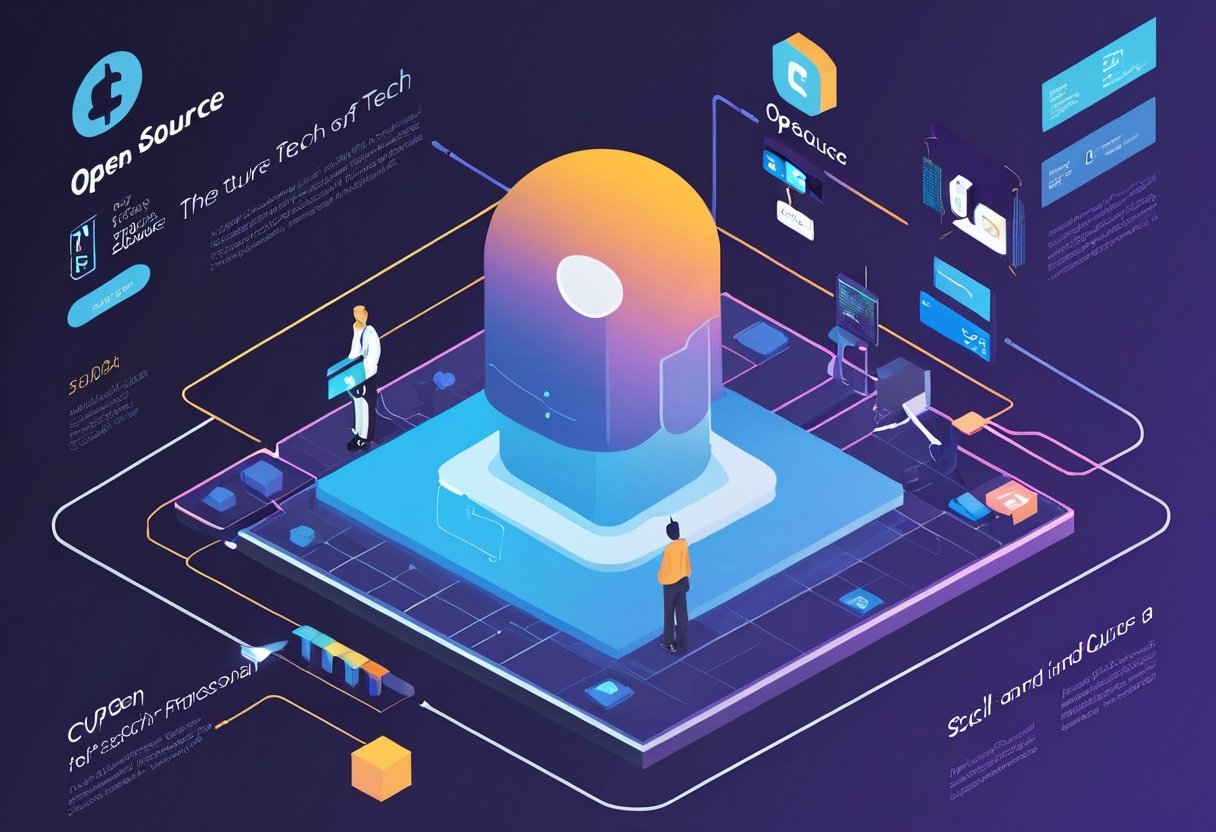

  • Open Source: The Future of Tech and AI

    Open Source: The Future of Tech and AI


    Introduction to Open Source

    Open source software has been around for decades, but its importance has grown significantly in recent years. With the rise of artificial intelligence (AI), open source is becoming the default choice for many developers and organizations. As Eric Raymond notes, ‘Open source is a development methodology, not a business model.’

    Benefits of Open Source

    The benefits of open source are numerous. It allows for collaboration among developers, transparency in code, and customization to meet specific needs. According to a GitHub survey, 90% of developers believe that open source is essential for their work.

    The Role of AI in Open Source

    AI is accelerating the shift towards open source by making scrutiny scalable. Automated code review and supply-chain analysis are just a few examples of how AI is being used to improve open source software. As Forbes notes, ‘AI is the future of open source, and open source is the future of AI.’

    Examples of Open Source AI

    There are many examples of open source AI projects, including TensorFlow and PyTorch. These projects have democratized access to AI and have enabled developers to build innovative applications. According to a Red Hat survey, 75% of organizations are using open source AI in their development workflows.

    Conclusion

    In conclusion, open source is the default future of tech and AI. With its numerous benefits and the accelerating role of AI, open source is becoming the go-to choice for developers and organizations. As Linus Torvalds notes, ‘The future of technology is open source.’

  • 🤖 Emotional AI: When Technology Starts to Feel You Back

    🤖 Emotional AI: When Technology Starts to Feel You Back

    Technology no longer just listens to what we say — it’s starting to feel what we feel. Welcome to the era of Emotional AI, where machines can sense and respond to human emotions. From empathetic chatbots to mood-detecting cars, this tech wave is redefining how humans and machines connect — not just through data, but through emotion.

    💡 What Is Emotional AI?

    Emotional AI (also called Affective Computing) uses voice tone, facial expressions, and physiological signals to detect a user’s emotional state. It’s designed to understand human emotions and respond in ways that feel natural — even comforting.

    Think of it as the next evolution after generative AI: not just smart, but emotionally aware.

    ❤️ From Chatbots to Companions

    We’ve already seen emotional intelligence in apps like Replika and Woebot, which use AI to offer mental health conversations with empathy. Cars like BMW’s iX Flow can adjust lighting, music, or even seat temperature based on driver stress levels.

    Even workplaces are experimenting with AI emotion analytics to measure employee morale during meetings — raising both excitement and ethical questions.

    Soon, your favorite devices may not only talk to you but comfort you.

    🧠 Why It Matters

    Emotional AI isn’t just about convenience — it’s about connection. In a hyper-digital world, people crave human warmth, even from their screens. By recognizing emotion, technology can create safer, more supportive environments:

    • Healthcare: Detecting depression or anxiety early through voice tone.
    • Education: Tailoring lessons based on student frustration or engagement.
    • Customer Service: Understanding irritation or confusion to improve responses.

    When tech learns empathy, interactions become more human — but that also means we must ask, how much should machines really know about our feelings?

    ⚖️ The Ethical Side

    Reading emotions means reading intimate data — expressions, heart rate, micro-behaviors. Companies developing Emotional AI face serious privacy challenges. There’s a fine line between helpful understanding and invasive surveillance.

    Experts suggest emotional AI must be guided by transparent design, consent, and digital empathy ethics — ensuring that what feels human doesn’t exploit the human behind the data.

    🌍 The Future of Feeling Machines

    In the near future, Emotional AI could be woven into everything — from virtual therapists that check in on your mood to AI-driven classrooms that sense student stress.

    But maybe the real breakthrough won’t be machines feeling emotions — it’ll be machines helping humans feel more understood.

    My face says calm, my data says chaos. Pick your version of real.

    🌐 Connect with Casi Borg

    📸 Instagram: @casi_borg
    🦋 BlueSky: casi-borg.bsky.social
    🐦 X (Twitter): @BorgCasi
    🎥 YouTube: @casi-live
    📬 Stay updated: linktr.ee/casi.borg

Oh hi there 👋
It’s nice to meet you.

Sign up to receive awesome content in your inbox, every Day.

We don’t spam! Read our privacy policy for more info.