Tag: AI in Healthcare

  • Cosmos Health Expands AI Integration for Enhanced Efficiency

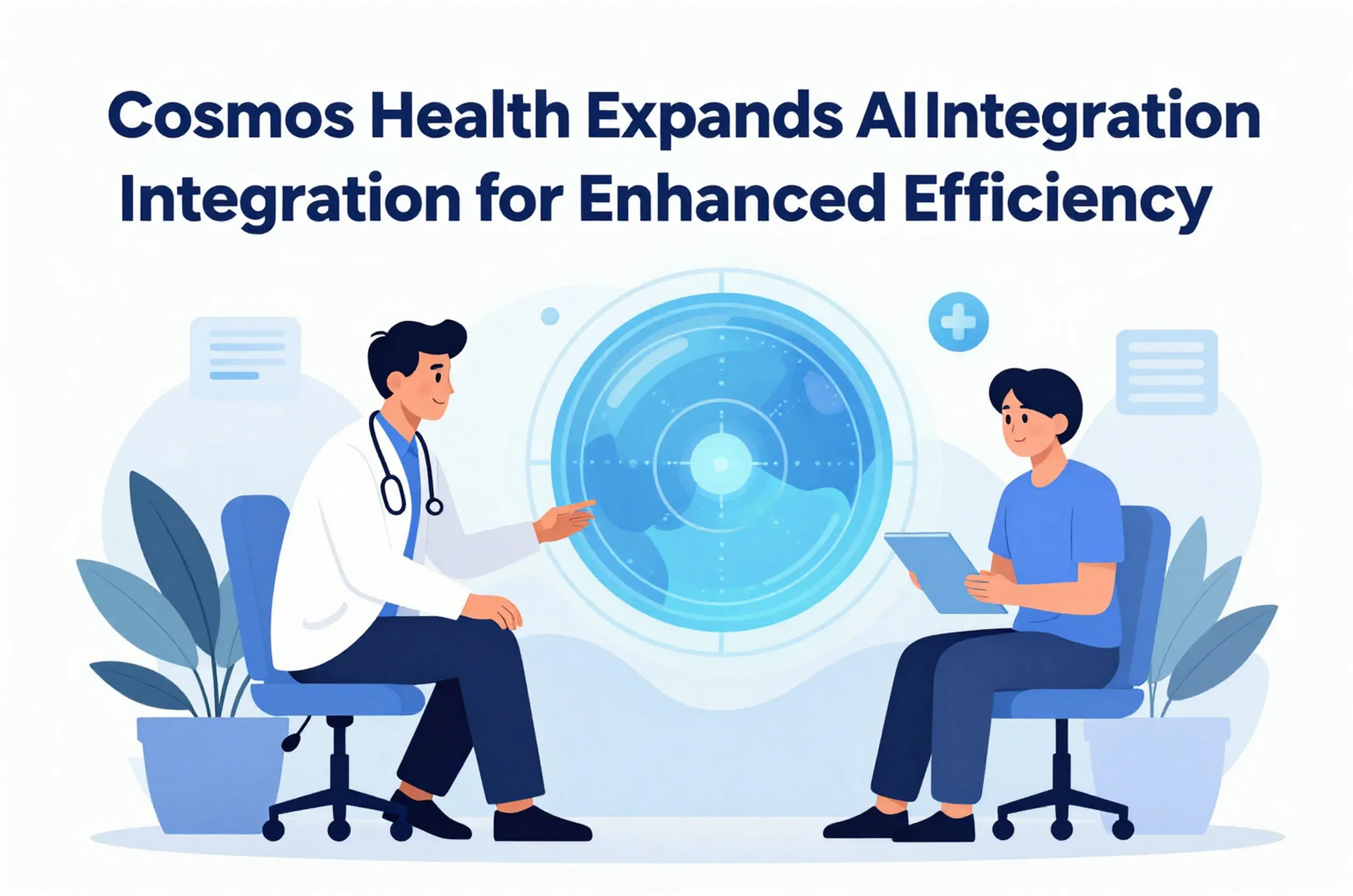
    Cosmos Health Expands AI Integration for Enhanced Efficiency

    Introduction to Cosmos Health’s AI Integration

    Cosmos Health Inc., a diversified, vertically integrated global healthcare group, has announced the continued integration of artificial intelligence (AI) across its operations. This move reflects the company’s ongoing investments aimed at enhancing efficiency, reducing costs, improving customer experience, and driving sales growth.

    Benefits of AI Integration

    According to the company, AI-driven optimization may reduce specific operating expenses by up to 30%, depending on the process and level of automation. This is a significant step forward for Cosmos Health, as it seeks to leverage AI to streamline its operations and improve its bottom line.

    Cosmos Health’s AI Deployment

    The company is deploying AI across various areas, including front-end order and customer management, back-end warehouse, inventory, and supply chain, as well as its proprietary Cloudscreen platform for drug repurposing. This comprehensive approach will enable Cosmos Health to support both operational gains and R&D efforts.

    Cosmos AI: A New Family of Generative Models

    Cosmos AI is a new family of generative models trained on 115 billion medical events, including diagnoses, labs, medications, and encounters. This innovative approach learns the evolving patterns of real-world care, generating dozens of potential health trajectories for a patient and surfacing meaningful insights directly within the clinical workflow.

    Expert Insights and Analysis

    Experts in the field believe that Cosmos Health’s AI integration is a step in the right direction, as it has the potential to transform the healthcare industry. With the ability to predict patient health trajectories and integrate seamlessly into clinical workflows, Cosmos AI can improve decision-making in real-time.

    Technical Analysis

    From a technical standpoint, Cosmos Health’s AI integration is built on a foundation of proprietary algorithms, state-of-the-art deep learning frameworks, and a hyper-scalable cloud architecture. This powerful combination ensures that the company’s AI solutions are not only intelligent but also robust, efficient, and ready for enterprise-level deployment.

    Market Impact and Future Implications

    The integration of AI across Cosmos Health’s operations is expected to have a significant impact on the market, as it sets a new standard for the use of AI in healthcare. As the company continues to invest in AI, we can expect to see further innovations and improvements in the years to come.

    Conclusion

    In conclusion, Cosmos Health’s AI integration is a significant step forward for the company, and the healthcare industry as a whole. With its comprehensive approach to AI deployment, Cosmos Health is well-positioned to drive growth, improve efficiency, and enhance customer experience.

  • Digital Transformation Reshapes Clinical Research Careers

    Digital Transformation Reshapes Clinical Research Careers


    Introduction to Digital Transformation in Clinical Research

    The clinical research industry is undergoing a significant transformation, driven by rapid technological advancements. According to ICON PLC, professionals in lab management, clinical trial coordination, and other operational roles are now required to work in tandem with automated systems and robotic tools. This shift calls for a blend of technical and managerial skills to effectively oversee these advanced systems.

    Impact on Clinical Research Roles

    The field of clinical research is being reshaped by innovations such as artificial intelligence, blockchain, and wearable technologies. As CCRPS notes, these advancements are making studies more efficient, inclusive, and patient-centric. However, they also require professionals to adapt and acquire new skills to remain relevant in the industry.

    Emerging Trends and Technologies

    Digital tools are enabling clinicians to have a unified place where they can document and monitor patient progress. As Microsoft highlights, digital technology can help support both clinicians conducting trials and those caring for patients who could benefit from the research being undertaken. Furthermore, Advarra emphasizes that digital transformation is crucial for the industry, with businesses expected to spend $2.3 trillion per year on digital transformation in the next four years.

    Future Directions and Opportunities

    As the clinical research industry continues to evolve, there will be a growing need for professionals who can navigate the intersection of technology and healthcare. According to Applied Clinical Trials, AI teammates will fundamentally reshape how we develop and test new therapies, requiring a paradigm shift from document-centric to data-centric approaches. This presents exciting opportunities for professionals willing to adapt and grow, with the potential to accelerate the development of life-saving therapies and enhance patient outcomes.

    Conclusion and Practical Takeaways

    In conclusion, digital transformation is revolutionizing the clinical research industry, presenting both challenges and opportunities for professionals. To remain relevant, it is essential to stay ahead of the curve and acquire the necessary skills to navigate this new era of healthcare. As ICON PLC emphasizes, learning to operate and manage automation and robotics not only improves overall efficiency but also prepares professionals for specialized roles in next-generation clinical research.

  • ChatGPT for Medical Advice: A Surprising Conversion

    ChatGPT for Medical Advice: A Surprising Conversion

    Introduction to ChatGPT for Medical Advice

    Recently, I found myself in a situation where I had to consider using ChatGPT for medical advice. Despite initial skepticism, my experience was eye-opening. I entered my symptoms into ChatGPT, and it provided a couple of potential causes, asked a series of yes/no questions, and then suggested I visit a doctor as soon as possible.

    My Journey with ChatGPT

    Although I was initially hesitant, I decided to give ChatGPT a try. I was surprised by the specificity of the potential causes it provided, as well as the follow-up questions it asked to narrow down the possibilities. The fact that it recommended I see a doctor promptly also showed a level of responsibility and awareness of its limitations.

    Expert Insights and Analysis

    A post on Reddit shares a similar experience, where the user found ChatGPT’s suggestions for their symptoms to be more comprehensive than what their doctors had considered over the past few years. This anecdotal evidence, while not scientifically proven, highlights the potential of AI in medical diagnosis.

    Practical Takeaways

    While ChatGPT and similar AI tools are not a replacement for professional medical advice, they can be a valuable resource for initial symptom checking and potentially identifying conditions that may have been overlooked. However, it’s crucial to follow up with a healthcare professional for a definitive diagnosis and treatment plan.

Oh hi there 👋
It’s nice to meet you.

Sign up to receive awesome content in your inbox, every Day.

We don’t spam! Read our privacy policy for more info.