Tag: AI in software engineering

  • The Rise of Vibe Coding: Empowering CEOs or Harming Innovation?

    The Rise of Vibe Coding: Empowering CEOs or Harming Innovation?

    The Concept of Vibe Coding

    Vibe coding, a term coined by Masad, refers to the practice of writing code based on intuition and vibes rather than rigorous testing and validation. While it may seem like a convenient way for non-technical founders to contribute to their company’s codebase, it has sparked intense debate in the tech community.

    The Risks of Vibe Coding

    According to Masad, vibe coding is ‘absolute brain rot’ and can lead to subpar code quality, security vulnerabilities, and maintenance nightmares. Moreover, it may create a culture where technical excellence is undervalued, and engineers are overworked and underappreciated.

    The Impact on CEOs and Founders

    The idea that CEOs can ‘vibe code’ their own prototypes without needing engineers has been met with skepticism. Replit boss suggests that this approach can lead to cost savings and increased productivity, but critics argue that it may compromise the quality and reliability of the final product.

    Expert Insights

    As experts point out, the success of a company depends on the collaboration between technical and non-technical teams. While CEOs may have a vision for their product, they often lack the technical expertise to execute it. By undervaluing the role of engineers, companies may be shooting themselves in the foot.

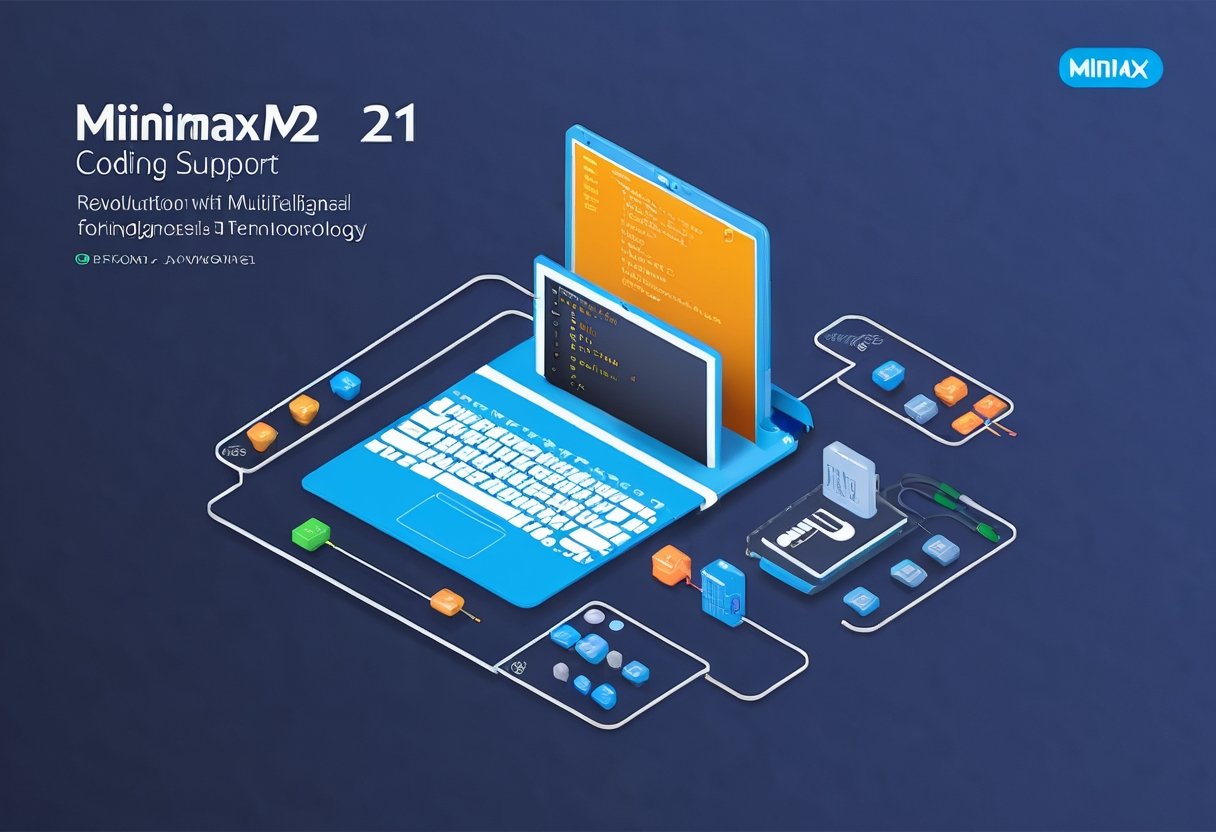
  • MiniMax M2.1 Revolutionizes Coding with Multilingual Support

    MiniMax M2.1 Revolutionizes Coding with Multilingual Support

    Introduction to MiniMax M2.1

    MiniMax M2.1, the latest update to the MiniMax model series, has been released as an open-source model, marking a significant shift in focus towards real-world, multi-language programming and everyday office automation. As noted by TechRepublic, this update is designed to handle complex, production-level tasks across software development and office workflows.

    Key Features of MiniMax M2.1

    One of the headline improvements in M2.1 is its support for multiple programming languages, including Rust, Java, Golang, C++, Kotlin, Objective-C, TypeScript, and JavaScript, as mentioned on the MiniMax website. This comprehensive range of languages makes M2.1 an ideal choice for real-world systems that are usually built with several languages working together.

    Enhancements in Mobile App Development

    MiniMax M2.1 also targets a long-standing weak spot in the industry: mobile app development. According to MGX, the company says M2.1 significantly improves native Android and iOS coding, while also raising its understanding of design and visual structure in web and app projects.

    Technical Analysis and Market Impact

    From a technical standpoint, MiniMax M2.1 demonstrates significant advancements in software engineering, particularly excelling in multilingual coding capabilities. As Medium notes, its proficiency is evident in benchmarks such as SWE-bench Multilingual, where it scored 72.5%, surpassing many contemporary models.

    Future Implications and Expert Insights

    The release of MiniMax M2.1 has significant implications for the future of coding and software development. As an expert in the field, it’s clear that M2.1 is not just another coding model, but a serious attempt to build an AI-native, real-world programming engine. The ability of M2.1 to support multiple programming languages and improve mobile app development makes it an attractive choice for developers and businesses alike.

  • AI Revolutionizes Coding: Anthropic Study Reveals

    Introduction to AI in Coding

    Anthropic, a leading AI company, has released an internal study that sheds light on how AI is transforming the world of software engineering. The study reveals that AI tools have fundamentally changed the workflows of Anthropic’s engineers and researchers, increasing productivity and broadening skill sets. According to the study, engineers at Anthropic are becoming increasingly ‘full-stack,’ with the help of AI, they can confidently write frontend interfaces or perform data visualizations, tasks that were previously outside their expertise.

    Key Findings of the Study

    The study found that AI has been deeply integrated into the daily development at Anthropic, with employees reporting a productivity increase of 20% to 50% over the past year. The autonomy of Claude Code, Anthropic’s internal coding tool, has also increased, handling workflows twice as complex as those half a year ago. The report shows that AI has been used in about 60% of daily tasks, with employees delegating tasks such as ‘easily verifiable’ or ‘boring’ tasks to Claude.

    Impact on Software Engineering

    The study also reveals that the involvement of AI is breaking down the barriers of technical specialization. Engineers who once focused on backend or security can now confidently write frontend interfaces or perform data visualizations. However, this shift has also raised concerns about the ‘atrophy of deeper skillsets’ needed to write and check code. Some employees expressed worries about the loss of social dynamics and mentorship opportunities, as they ‘need’ their colleagues less often.

    Future Implications

    As AI continues to transform the world of software engineering, it’s essential to consider the implications for the future. Will AI replace human coders, or will it augment their abilities? The study suggests that AI is likely to change the nature of work for software developers, generating both hope and concern. As one employee noted, ‘I thought that I really enjoyed writing code, and instead I actually just enjoy what I get out of writing code.’ Whether people embrace AI assistance or mourn the loss of hands-on coding seems to depend on what aspects of software engineering they find most meaningful.

    The study also highlights the importance of developing intuitions for AI delegation. Engineers tend to delegate tasks that are easily verifiable, low-stakes, or boring. Many describe a trust progression, starting with simple tasks and gradually delegating more complex work. While they’re currently keeping most design or ‘taste’ decisions for themselves, it’s likely that AI will continue to play a larger role in the coding process.

    Conclusion

    In conclusion, the Anthropic study provides valuable insights into the impact of AI on software engineering. As AI continues to transform the world of coding, it’s essential to consider the implications for the future. Will AI replace human coders, or will it augment their abilities? The answer is likely somewhere in between. By understanding the benefits and limitations of AI in coding, we can work towards creating a future where humans and machines collaborate to create innovative solutions.

  • AI Revolution in Software Engineering: Future Implications


    Introduction to AI in Software Engineering

    The integration of Artificial Intelligence (AI) in software engineering is transforming the field, enabling developers to build more resilient, intelligent, and adaptive systems. According to Forbes, AI tools are empowering engineers to tackle previously insurmountable challenges, making predictions, and enhancing collaboration between humans and machines.

    Key Applications of AI in Software Development

    AI is being used in various aspects of software development, including code generation, automated testing, and predictive analytics. As noted by Carnegie Mellon University, by 2027, generative AI will create new roles in software engineering and operations, prompting 80% of engineers to upskill.

    Impact of AI on Software Engineers

    The adoption of AI in software engineering is not just about automating workflows but about empowering engineers to focus on higher-level problem-solving. As IBM points out, AI is redefining the role of software engineers, moving them from code implementers to orchestrators of technology.

    Future of AI in Software Engineering

    The future of software engineering is filled with exciting possibilities. With advancements in machine learning, natural language processing, and predictive analytics, software engineers can expect innovations in AI-assisted coding, automated software optimization, and enhanced collaboration tools. A study by MIT maps the roadblocks to autonomous software engineering, highlighting research directions to overcome them.

Oh hi there 👋
It’s nice to meet you.

Sign up to receive awesome content in your inbox, every Day.

We don’t spam! Read our privacy policy for more info.