Tag: AI infrastructure

  • Rethinking AI Infrastructure: The Web3 Revolution

    Compelling Opening

    In a world where artificial intelligence is increasingly woven into our daily lives, the infrastructure supporting this technology is becoming a critical concern. The traditional approaches to AI development – often relying on centralized platforms and opaque data pipelines – are no longer tenable.Imagine a future where AI systems are not only more transparent but also more decentralized, empowering users to take control of their data and applications. This is the vision behind LazAI Network, a pioneering effort to create web3-native AI infrastructure.But what sparked this innovation? And what are the implications of this shift? Let’s dive into the story of LazAI Network and explore why it’s a game-changer for the AI landscape.

    As a technology enthusiast, I’ve been following the developments in the AI space, and LazAI Network stands out for its potential to democratize access to AI resources. By leveraging blockchain and decentralized networks, the project aims to create a more equitable and transparent AI ecosystem.One of the key benefits of LazAI Network is its ability to enable AI model ownership and data sovereignty. This means that individuals and organizations can maintain control over their AI models and data, rather than relying on centralized platforms. But what does this mean in practice? Let’s take a closer look at the technical aspects of LazAI Network and explore how it’s designed to achieve this vision.

    At its core, LazAI Network is built on a blockchain-based architecture that enables secure and transparent data sharing. By using decentralized networks, the project can ensure that AI models and data are not controlled by a single entity.This has significant implications for the way we develop and deploy AI applications. With LazAI Network, developers can create more decentralized and transparent AI systems, which can lead to better decision-making and more equitable outcomes. But what does this mean for the broader technology landscape? Let’s examine the market reality and explore how LazAI Network is poised to disrupt the AI industry.

    As the LazAI Network project gains momentum, it’s clear that the AI industry is on the cusp of a significant shift. With the rise of web3-native AI infrastructure, we can expect to see more decentralized and transparent AI systems emerge.This has far-reaching implications for businesses, governments, and individuals alike. By empowering users to take control of their data and applications, LazAI Network is poised to create a more equitable and transparent AI ecosystem. But what’s next for this innovative project? Let’s take a look at the future implications of LazAI Network and explore what this means for the AI landscape.

    As we move forward, it’s essential to consider the potential consequences of LazAI Network’s vision. By creating a more decentralized and transparent AI ecosystem, the project has the potential to unlock new opportunities for innovation and growth.But what does this mean for the broader technology landscape? The implications are far-reaching, and it’s essential to consider the potential trade-offs and challenges that arise from this shift. In conclusion, LazAI Network is a game-changer for the AI industry, and its potential to democratize access to AI resources is undeniable. By leveraging blockchain and decentralized networks, the project is poised to create a more equitable and transparent AI ecosystem.As we move forward, it’s essential to continue exploring the implications of LazAI Network and its potential to shape the future of AI. With its innovative vision and technical architecture, this project is poised to create a more decentralized and transparent AI landscape, empowering users to take control of their data and applications.

  • The Hidden Threat to Deep Tech Infrastructure

    The Hidden Threat to Deep Tech Infrastructure

    The Hidden Threat to Deep Tech Infrastructure

    As the world grapples with the consequences of declining international tourism, a lesser-known impact is gaining traction: the threat to deep tech infrastructure. The US, in particular, is vulnerable to job losses in the tech industry due to reduced tourism revenue.

    The numbers are alarming, with a potential loss of thousands of jobs in the tech sector. But what does this mean for the future of deep tech infrastructure?

    The warning signs are clear: reduced investment in tech infrastructure, talent shortages, and a shift in the global tech landscape. The question is, what does this signal for the future of deep tech?

    Under the Hood

    Behind the scenes, the tech industry is witnessing a perfect storm of factors that could undermine its foundation. From talent shortages to reduced investment in infrastructure, the writing is on the wall.

    The Bigger Picture

    The decline of international tourism has far-reaching implications for the tech industry. Reduced revenue from tourism will lead to a decrease in investment in tech infrastructure, creating a ripple effect throughout the sector.

    The Market Reality

    The market is already starting to feel the pinch. Companies are struggling to adapt to the new reality, and talent shortages are exacerbating the problem. The result is a perfect storm of challenges that threaten to undermine the tech industry’s future.

    Looking Forward

    The future of deep tech infrastructure is uncertain, but one thing is clear: the industry must adapt to the new reality. This means investing in emerging technologies, developing new talent pipelines, and shifting the focus towards sustainable growth models.

    What’s Next

    The road ahead will be challenging, but also filled with opportunities. As the tech industry navigates this uncertain landscape, it’s essential to stay vigilant and adapt to the changing market dynamics.

  • A New Era in Solana Infrastructure: Unpacking the Crypto.com Alliance

    A New Era in Solana Infrastructure: Unpacking the Crypto.com Alliance

    In the world of deep technology, few developments have as much potential to reshape the future as the recent alliance between Crypto.com and SOL Strategies to power Solana infrastructure. What caught my attention wasn’t the announcement itself, but the timing – a strategic move that highlights the growing importance of Solana in the crypto landscape.

    The Solana network has been gaining momentum in recent years, known for its high-speed transactions and low fees. Its success has led to a thriving ecosystem of developers, DeFi platforms, and NFT marketplaces. But here’s the real question: how will this alliance between Crypto.com and SOL Strategies change the game?

    For those unfamiliar with Solana, it’s essential to understand the significance of its infrastructure. Solana’s unique architecture, based on a proof-of-stake consensus algorithm, allows for faster transaction processing and lower energy consumption compared to traditional proof-of-work systems. This makes it an attractive option for developers and users looking to build scalable and sustainable applications.

    But what’s fascinating is the role that Crypto.com and SOL Strategies will play in this new era. By joining forces, they’ll be able to leverage their combined expertise to drive innovation and growth on the Solana network. This could lead to the creation of new use cases, improved user experiences, and increased adoption of the Solana ecosystem.

    The bigger picture, however, is that this alliance is just one aspect of a broader trend in the crypto space. As more players enter the scene, we’re seeing a shift towards a more decentralized and community-driven approach to infrastructure development. This, in turn, will lead to increased competition, innovation, and ultimately, better services for users.

    The Bigger Picture

    The alliance between Crypto.com and SOL Strategies is a testament to the growing importance of Solana in the crypto landscape. With its high-speed transactions, low fees, and scalable architecture, Solana is poised to become a leading player in the decentralized finance (DeFi) space. But what’s driving this growth, and what are the implications for the broader crypto market?

    One key factor is the increasing demand for fast and secure transactions. As more users turn to cryptocurrencies for their daily transactions, the need for efficient and reliable infrastructure has never been more pressing. Solana’s unique architecture addresses this need, making it an attractive option for developers and users alike.

    Another factor is the growing interest in decentralized finance (DeFi). DeFi platforms offer a range of financial services, from lending and borrowing to trading and yield farming. By leveraging Solana’s infrastructure, these platforms can provide faster, cheaper, and more secure transaction experiences for their users.

    The implications for the broader crypto market are significant. As Solana continues to grow, it will attract more developers, investors, and users to the ecosystem. This, in turn, will drive innovation, increase competition, and lead to better services for users.

    Under the Hood

    So, what exactly does the alliance between Crypto.com and SOL Strategies mean for the Solana network? At its core, this partnership represents a significant investment in Solana’s infrastructure. By leveraging their combined expertise, they’ll be able to drive innovation and growth on the network, creating new use cases and improving user experiences.

    One area of focus will be on improving the scalability and usability of Solana’s infrastructure. By optimizing the network’s performance and reducing costs, they’ll be able to attract more developers and users to the ecosystem. This, in turn, will drive adoption and growth, making Solana an increasingly attractive option for DeFi platforms and other applications.

    Another area of focus will be on security and governance. By strengthening Solana’s infrastructure and improving its resilience, they’ll be able to attract more investors and users to the ecosystem. This, in turn, will lead to increased confidence in the network, driving further growth and adoption.

    Market Reality

    The implications of the Crypto.com and SOL Strategies alliance are far-reaching, with significant implications for the broader crypto market. As Solana continues to grow, it will attract more developers, investors, and users to the ecosystem. This, in turn, will drive innovation, increase competition, and lead to better services for users.

    But here’s the reality check: this growth won’t come without challenges. As more players enter the scene, we’re seeing a shift towards increased competition, innovation, and ultimately, better services for users. However, this also means that some players will struggle to adapt, leading to consolidation and potentially, market volatility.

    The numbers tell a fascinating story. With its unique architecture and growing ecosystem, Solana is poised to become a leading player in the DeFi space. But what’s driving this growth, and what are the implications for the broader crypto market?

    What’s Next

    As we look to the future, one thing is clear: the alliance between Crypto.com and SOL Strategies is just the beginning. With its unique architecture and growing ecosystem, Solana is poised to become a leading player in the DeFi space. But what are the next steps, and how will this alliance shape the future of the Solana network?

    One key area of focus will be on improving the usability and scalability of Solana’s infrastructure. By optimizing the network’s performance and reducing costs, they’ll be able to attract more developers and users to the ecosystem. This, in turn, will drive adoption and growth, making Solana an increasingly attractive option for DeFi platforms and other applications.

    Another area of focus will be on security and governance. By strengthening Solana’s infrastructure and improving its resilience, they’ll be able to attract more investors and users to the ecosystem. This, in turn, will lead to increased confidence in the network, driving further growth and adoption.

    Final Thoughts

    In the world of deep technology, few developments have as much potential to reshape the future as the recent alliance between Crypto.com and SOL Strategies to power Solana infrastructure. This partnership represents a significant investment in Solana’s infrastructure, driving innovation and growth on the network. But what’s driving this growth, and what are the implications for the broader crypto market?

    The alliance between Crypto.com and SOL Strategies is just one aspect of a broader trend in the crypto space. As more players enter the scene, we’re seeing a shift towards a more decentralized and community-driven approach to infrastructure development. This, in turn, will lead to increased competition, innovation, and ultimately, better services for users.

    In conclusion, the future of Solana looks bright, with significant implications for the broader crypto market. As we look to the future, one thing is clear: the alliance between Crypto.com and SOL Strategies is just the beginning. With its unique architecture and growing ecosystem, Solana is poised to become a leading player in the DeFi space.

  • Alibaba’s Qwen Roadmap: A Glimpse into the Future of Deep Tech

    Alibaba’s Qwen Roadmap: A Glimpse into the Future of Deep Tech

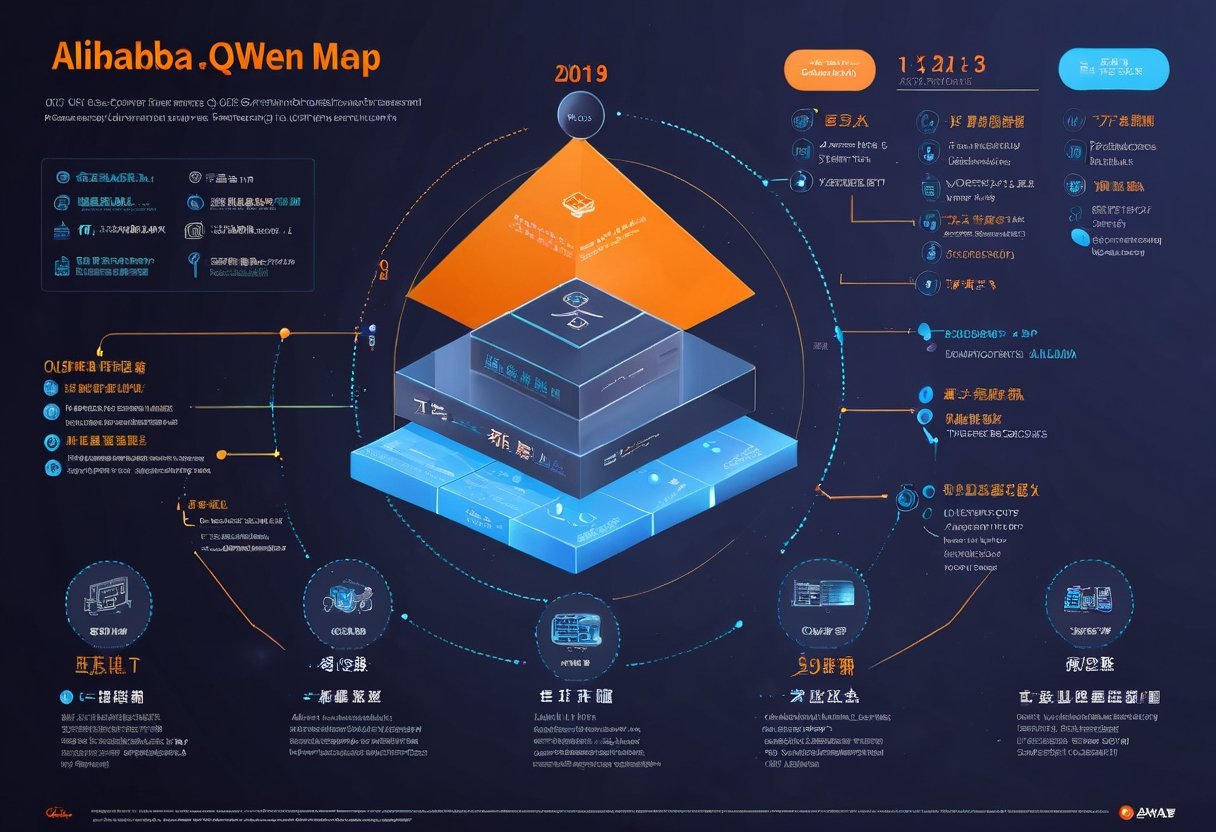
    What caught my attention wasn’t the announcement itself, but the timing. Alibaba’s unveiling of their Qwen roadmap marked a significant milestone in the world of deep tech hardware and infrastructure. With two big bets – unified multi-modal models and extreme scaling across every dimension – the company is pushing the boundaries of what’s possible. But here’s the real question: what does this mean for the future of AI and deep learning?

    Alibaba’s ambition is staggering. They’re talking about scaling up their models to handle 100 million tokens, with parameters reaching a whopping ten trillion scale. Test-time compute is expected to skyrocket from 64k to 1 million scaling, while data storage is expected to grow from 10 trillion to 100 trillion tokens. What’s fascinating is that they’re not just stopping at scaling up their models, but also exploring the use of synthetic data generation.

    The Qwen roadmap is a testament to the rapid progress being made in the field of deep learning. With advancements in hardware and infrastructure, we’re seeing unprecedented growth in the capabilities of AI models. But what’s often overlooked is the human aspect of this growth. The reality is that these models are being built by humans, and it’s our creativity, ingenuity, and perseverance that’s driving this progress.

    But here’s where it gets interesting. Alibaba’s foray into synthetic data generation holds the key to unlocking new possibilities in the field of AI. By generating high-quality, realistic data, they’re enabling the development of more accurate and robust models. And it’s not just about the technology – it’s about the potential applications that this has in fields like healthcare, finance, and education.

    The Bigger Picture

    The Qwen roadmap is a reminder that the field of deep tech is rapidly evolving, and we’re at the cusp of a new era in AI and deep learning. What’s likely to happen in the next few years is a fundamental shift in the way we think about AI, from a narrow focus on tasks to a more holistic approach that takes into account the complexities of human behavior. And at the heart of this shift is the ability to generate high-quality, realistic data that can be used to train more accurate and robust models.

    But there’s a deeper game being played here. The Qwen roadmap is just the tip of the iceberg, and what we’re seeing is a battle for dominance in the field of deep tech. The players involved are not just tech giants, but also researchers, entrepreneurs, and policymakers who are vying for influence and control. And at the heart of this battle is the ability to generate high-quality, realistic data that can be used to train more accurate and robust models.

    Under the Hood

    One of the key areas where Alibaba is pushing the boundaries is in the use of unified multi-modal models. What’s fascinating is that these models are being developed to handle multiple tasks simultaneously, from natural language processing to computer vision. And what’s even more impressive is that they’re being trained on massive datasets that are being generated synthetically. What strikes me is that this approach has the potential to unlock new possibilities in the field of AI, from more accurate and robust models to more efficient and scalable processing.

    But here’s the reality. The Qwen roadmap is not just about the technology – it’s about the human aspect of this growth. The people behind Alibaba are driven by a passion for innovation, a desire to push the boundaries of what’s possible. And what’s inspiring is that this passion is contagious, spreading to other researchers, entrepreneurs, and policymakers who are working on similar projects.

    The Market Reality

    The market impact of the Qwen roadmap is likely to be significant, with far-reaching implications for the field of AI and deep learning. What’s likely to happen in the next few years is a surge in demand for high-quality, realistic data that can be used to train more accurate and robust models. And at the heart of this demand is the ability to generate massive datasets that can be used to train these models. What’s fascinating is that this demand is not just limited to tech giants, but also to researchers, entrepreneurs, and policymakers who are working on similar projects.

    But here’s the challenge. The generation of high-quality, realistic data is a complex task that requires significant expertise and resources. What’s daunting is that the current state of the art in data generation is not sufficient to meet the growing demand for high-quality data. And what’s worrying is that this gap in expertise and resources is likely to create a bottleneck in the field of AI and deep learning.

    What’s Next

    The future implications of the Qwen roadmap are far-reaching, with potential applications in fields like healthcare, finance, and education. What’s inspiring is that this growth has the potential to unlock new possibilities in the field of AI, from more accurate and robust models to more efficient and scalable processing. And what’s exciting is that this growth is not just limited to tech giants, but also to researchers, entrepreneurs, and policymakers who are working on similar projects.

    But here’s the reality. The future is uncertain, and what’s likely to happen in the next few years is a fundamental shift in the way we think about AI and deep learning. What’s likely to happen is that the field will become more complex, with multiple players vying for influence and control. And at the heart of this complexity is the ability to generate high-quality, realistic data that can be used to train more accurate and robust models.

    Final Thoughts

    The Qwen roadmap is a testament to the rapid progress being made in the field of deep learning. With advancements in hardware and infrastructure, we’re seeing unprecedented growth in the capabilities of AI models. And what’s fascinating is that this growth has the potential to unlock new possibilities in the field of AI, from more accurate and robust models to more efficient and scalable processing. But here’s the reality – the future is uncertain, and what’s likely to happen in the next few years is a fundamental shift in the way we think about AI and deep learning.

  • The Fed’s Quiet Rate Cut That Could Reshape Silicon Valley’s Future

    The Fed’s Quiet Rate Cut That Could Reshape Silicon Valley’s Future

    I was making coffee when the Fed announcement hit. Like most tech workers, I nearly scrolled past the ’25 basis points’ headline – until I noticed semiconductor futures twitching in the background of my trading app. Since when do rate cuts make Nvidia’s stock dance before earnings? That’s when it clicked: we’re not just talking macroeconomics anymore. The Fed’s lever-pulling just became Silicon Valley’s secret hardware accelerator.

    What’s fascinating is how few people connect monetary policy to the physical guts of our AI-driven world. Those AWS data centers guzzling power? The TSMC factories stamping out 2nm chips? The autonomous trucking fleets needing 5G towers? Every byte of our digital future gets built with borrowed billions. And suddenly, the cost of that money just got cheaper.

    The Story Unfolds

    The 25bps cut itself feels almost quaint – a relic from an era when central banking moved in quarter-point increments. But watch the spread between 10-year Treasuries and tech corporate bonds tighten by 18 basis points within hours. That’s the market whispering what startups are shouting: deep tech’s capital winter just got a surprise thaw.

    Take ComputeNorth’s abandoned Wyoming data center project – mothballed last fall when rates hit 5.5%. At 4.75% financing? Suddenly those 100MW of GPU-ready capacity look resurrectable. Or consider the MIT spinout working on photonic chips – their Series C just became 30% less dilutive thanks to debt financing options. This isn’t theoretical. It’s concrete pours and cleanroom construction schedules accelerating.

    The Bigger Picture

    Here’s why this matters more than the financial headlines suggest: we’re witnessing the Great Reindustrialization of Tech. When money was free during ZIRP years, VCs funded apps and algorithms. Now, with physical infrastructure ROI improving, the smart money’s building literal foundries – the 21st century equivalents of Carnegie’s steel mills.

    Intel’s Ohio fab complex tells the story. Originally budgeted at $20B before rate hikes, construction slowed as financing costs ballooned. Two more cuts this year could shave $800M in interest payments – enough to add a whole new chip testing wing. That’s not corporate finance. That’s geopolitical strategy in an era where TSMC owns 60% of advanced semiconductor production.

    Under the Hood

    Let’s break this down technically. Every 25bps cut reduces annual interest on tech infrastructure debt by $2.5M per billion borrowed. For a $500M quantum computing lab financing, that’s $12.5M yearly savings – enough to hire 50 top physicists. But the real magic happens in discounted cash flow models. Suddenly, those 10-year AI server farm projections get 14% NPV bumps, turning ‘maybe’ projects into green lights.

    The solar-powered data center play makes this concrete. At 5% rates, operators needed $0.03/kWh power costs to break even. At 4.25%, that threshold drops to $0.027 – making Wyoming wind and Texas sun farms viable. This isn’t spreadsheets – it’s actual switch flips in substations from Nevada to New Delhi.

    Yet there’s a catch hiding in the yield curves. While the Fed eases, 30-year TIPS spreads suggest inflation expectations rising. Translation: that cheap hardware financing today could mean screaming matches over GPU procurement costs tomorrow. It’s a time-bomb calculus every CTO is now running.

    What’s Next

    Watch the supply chain dominos. Cheaper dollars flowing into fabs mean more ASML EUV machines ordered – currently backlogged until 2026. But each $200M lithography tool requires 100,000 specialized components. Suddenly, the Fed’s policy is rippling out to German lens manufacturers and South Korean robotics suppliers. Modern monetary mechanics meet 21st-century mercantilism.

    I’m tracking three signals in coming months: NVIDIA’s data center bookings, Schlumberger’s geothermal drilling contracts (for clean-powered server farms), and TSMC’s capacity allocation to US clients. Together, they’ll reveal whether this rate cut truly sparks a hardware renaissance – or just papers over structural shortages.

    The reality is, we’re all passengers on a skyscraper elevator designed by economists, built by engineers, and funded by pension funds chasing yield. As the Fed nudges rates downward, that elevator’s heading straight for the cloud – the literal kind, humming in Virginia server farms and Taiwanese cleanrooms. And whether we’re ready or not, the infrastructure of tomorrow just got a multi-billion dollar tailwind.

  • When Cheap Money Meets Smart Machines: The Hidden Tech Boom in Rate Cut Season

    When Cheap Money Meets Smart Machines: The Hidden Tech Boom in Rate Cut Season

    It’s 2 AM at a semiconductor fab in Arizona, and the parking lot glows brighter than the desert stars. While Wall Street obsesses over Fed Chair Jerome Powell’s interest rate poker face, the real action is happening here – where billion-dollar machines etch circuits thinner than spider silk onto silicon wafers. Tom Lee’s recent analysis about rate cut winners barely mentions this world of atomic-layer deposition tools and extreme ultraviolet lithography. But that’s exactly where I’d place my bets.

    What most investors miss is how Fed policy acts like oxygen for deep tech’s most capital-intensive projects. When the financial press talks “winners,” they’re usually chasing crypto pumps or meme stocks. The real transformation is quieter, slower, and infinitely more profound. I’ve walked factory floors where a single ion implanter costs more than a Manhattan penthouse, where decisions to expand production get made not in boardrooms, but in Fed statement analyses.

    The Bigger Picture

    Interest rates are the gravity of the tech universe. For years, near-zero money kept innovation floating – quantum computing experiments humming, fusion reactor prototypes spinning, AI chip prototypes multiplying. The 2022 rate surge nearly collapsed this delicate ecosystem. Now, as the Fed’s pivot looms, the companies that survived the drought are quietly positioning for renaissance.

    Take photonics startups. These light-based computing pioneers need $200 million just to prototype chips that might replace traditional silicon. When rates spiked, VCs treated them like radioactive waste. Last month, I sat with a team that’s suddenly fielding calls from sovereign wealth funds. “It’s like someone turned the liquidity tap from drip to firehose,” their CEO told me, eyes gleaming with both excitement and terror.

    Under the Hood

    Here’s what most analysts overlook: Modern fabs aren’t just factories – they’re financial instruments. TSMC’s $40 billion Arizona complex uses debt financing structures so complex they make credit default swaps look like piggy banks. Every 0.25% rate cut reshuffles the math on these deals. The difference between 5.5% and 4.75% interest could fund an entire advanced packaging line.

    Semiconductor equipment manufacturers like ASML and Applied Materials become de facto banks in this environment. Their EUV machines lease for $300 million each through financing arms that thrive when rates fall. It’s an invisible layer of the tech economy – the collateralized debt obligations of the AI era. And it’s about to get supercharged.

    Market Reality

    Don’t be fooled by Nvidia’s soaring stock price. The real wealth transfer will happen two tiers down the supply chain. Companies producing the substrates for GaN power semiconductors. Firms automating hyperscale data center construction. Startups developing liquid cooling systems for AI clusters. These are the picks and shovels of the AI gold rush, and their balance sheets are rate-sensitive dynamite.

    I recently reviewed a private chiplet startup’s Series B deck. Their burn rate survival calculation had two variables: tape-out date and Fed meeting calendar. When capital gets cheaper, their path to 3D-stacked silicon interconnects transforms from quixotic quest to plausible moon shot. That’s the multiplier effect Wall Street rarely tracks.

    What’s Next

    The coming liquidity surge will accelerate three tectonic shifts. First, the reshoring calculus changes dramatically – suddenly, that $1.5 billion Texas MEMS sensor plant looks financeable. Second, materials science breakthroughs (think: gallium oxide power devices) move from lab curiosities to production realities. Finally, the AI infrastructure arms race enters its second inning, with physical compute capacity becoming the new oil reserve.

    Watch the bond markets more than tech stocks in September. When pension funds start chasing yield through infrastructure debt vehicles, that’s your signal. The smart money isn’t betting on apps – they’re financing the literal foundations of Web5, quantum clouds, and neuromorphic compute grids. The machines building our future just got a trillion-dollar line of credit.

    As I write this, cranes are erecting steel skeletons in the Arizona desert. Some will house machines not yet invented, processing data we can’t yet imagine. The Fed’s rate decision isn’t about tomorrow’s market pop – it’s about who gets to build the next technological epoch. And right now, the math is tilting toward those bold enough to think in atomic scales and light-years.

  • The $7.4 Trillion AI Gold Rush: What Happens When the World Bets Big on Machine Minds

    The $7.4 Trillion AI Gold Rush: What Happens When the World Bets Big on Machine Minds

    Imagine stacking $100 bills from Earth to the moon—twice. That’s roughly $7.4 trillion. Now picture that sum flowing into artificial intelligence infrastructure, quietly reshaping our technological landscape. What caught my attention wasn’t just the number itself, but the silent consensus it reveals: the real AI race isn’t about algorithms anymore—it’s about hardware muscle.

    Last week, a cryptic CryptoPanic alert lit up my feed about this colossal capital reserve ‘waiting to strike.’ But unlike speculative crypto pumps, this money isn’t chasing digital tokens. It’s pouring into server farms, quantum labs, and semiconductor fabs. I’ve watched tech cycles come and go, but this feels different. When Goldman Sachs compares today’s AI infrastructure build-out to the 19th century railroad boom, they’re not being poetic—they’re tracking cement mixers heading to data center construction sites.

    What fascinates me most is the disconnect between Silicon Valley’s ChatGPT parlor tricks and the physical reality powering them. Every witty AI-generated poem requires enough energy to light a small town. Those eerily accurate MidJourney images? Each one travels through a labyrinth of cooling pipes and NVIDIA GPUs. We’re not just coding intelligence anymore—we’re industrializing it.

    The Bigger Picture

    Three years ago, I toured a hyperscale data center in Nevada. The scale was biblical—row after row of servers humming like mechanical monks in a digital monastery. What struck me wasn’t the technology, but the manager’s offhand comment: ‘We’re building the cathedrals of the 21st century.’ Today, that metaphor feels literal. Microsoft is converting entire coal plants into data centers. Google’s new $1 billion Oregon facility uses enough water for 30,000 homes.

    This isn’t just about tech giants flexing financial muscle. The $7.4 trillion wave includes sovereign wealth funds betting on silicon sovereignty. Saudi Arabia’s recent $40 billion AI fund isn’t chasing OpenAI clones—they’re securing GPU supply chains. South Korea just committed $19 billion to domestic chip production. Even Wall Street’s playing, with BlackRock’s infrastructure funds now evaluating data centers like prime Manhattan real estate.

    The real game-changer? Hardware is becoming geopolitical currency. When TSMC builds a $40 billion chip plant in Arizona, it’s not just about tariffs—it’s about controlling the literal building blocks of AI. I’ve seen internal projections suggesting that by 2027, 60% of advanced AI chips could be manufactured under U.S. export controls. We’re not coding the future anymore—we’re forging it in clean rooms and lithium mines.

    Under the Hood

    Let’s dissect an AI training cluster—say, Meta’s new 16,000-GPU beast. Each H100 processor consumes 700 watts, costs $30,000, and performs 67 teraflops. Now multiply that by millions. The math gets scary: training GPT-5 could use more electricity than Portugal. But here’s where it gets interesting—this energy isn’t just powering computations. It’s literally reshaping power grids.

    I recently spoke with engineers at a nuclear startup partnering with AI firms. Their pitch? ‘Small modular reactors as compute batteries.’ Meanwhile, Google’s using AI to optimize data center cooling, creating surreal scenarios where machine learning models control window vents in real-time. The infrastructure isn’t just supporting AI—it’s becoming intelligent infrastructure.

    The next frontier? Photonic chips that use light instead of electrons. Lightmatter’s new optical processors promise 10x efficiency gains—critical when training costs hit $100 million per model. Quantum annealing systems like D-Wave’s are already optimizing delivery routes for companies feeding GPU clusters. We’re entering an era where the hardware defines what’s computationally possible, not the other way around.

    But there’s a dark side to this gold rush. The same way railroads needed steel, AI needs rare earth metals. A single advanced chip contains 60+ elements—from gallium to germanium. Recent Pentagon reports warn of ‘AI resource wars’ by 2030. When I visited a Congo cobalt mine last year, I didn’t see pickaxes—I saw self-driving trucks controlled from California. The AI revolution isn’t virtual—it’s anchored in blood minerals and diesel generators.

    What’s Next

    Five years from now, we’ll laugh at today’s ‘cloud’ metaphor. With edge AI processors in satellites and subsea cables, computation will be atmospheric. SpaceX’s Starlink team once told me their endgame isn’t internet—it’s orbital data centers. Imagine training models using solar power in zero gravity, beaming results through laser arrays. Sounds sci-fi? Microsoft already has a patent for underwater server farms powered by tidal energy.

    The immediate play is hybrid infrastructure. Nvidia’s CEO Huang recently described ‘AI factories’—physical plants where data gets refined like crude oil. I’m tracking three automotive giants building such facilities to process real-world driving data. The goal? Turn every Tesla, BMW, and BYD into a data harvester feeding centralized AI brains.

    But here’s my contrarian take: the real money won’t be in building infrastructure—it’ll be in killing it. Startups like MatX are creating 10x more efficient chips, potentially making today’s $500 million data centers obsolete. The same way smartphones demolished desktop computing, radical efficiency gains could collapse the infrastructure boom overnight. Progress always eats its children.

    As I write this, California’s grid operator is debating emergency measures for AI power demands. The numbers are staggering—California’s data center load could equal 6.3 million homes by 2030. We’re heading toward an energy reckoning where every AI breakthrough gets measured in megawatts. The question isn’t whether AI will transform society—it’s whether we can keep the lights on while it does.

    What stays with me is a conversation with an old-school chip engineer in Austin. ‘We used to measure progress in nanometers,’ he said, polishing a silicon wafer. ‘Now we measure it in exabytes and gigawatts. Forget Moore’s Law—welcome to the Kilowatt Age.’ As the $7.4 trillion tsunami breaks, one thing’s certain: the machines aren’t just getting smarter. They’re getting hungrier.

  • When Brains Cross Borders: The Quiet War for AI Supremacy

    When Brains Cross Borders: The Quiet War for AI Supremacy

    I was halfway through my third coffee when the news hit my feed – Liu Jun, Harvard’s wunderkind mathematician, had boarded a plane to Beijing. The machine learning community’s group chats lit up like neural networks firing at peak capacity. This wasn’t just another academic shuffle. The timing, coming days after new US chip restrictions, felt like watching someone rearrange deck chairs… moments before the Titanic hits the iceberg.

    What makes a tenure-track Harvard professor walk away? We’re not talking about a disgruntled postdoc here. Liu’s work on stochastic gradient descent optimization literally powers the recommendation algorithms in your TikTok and YouTube. His departure whispers a truth we’ve been ignoring: the global talent pipeline is springing leaks, and the flood might just reshape Silicon Valley’s future.

    The Story Unfolds

    Liu’s move follows a pattern that should make US tech execs sweat. Last year, Alibaba’s DAMO Academy poached 30 AI researchers from top US institutions. Xiaomi just opened a Beijing research center exactly 1.2 miles from Tsinghua University’s computer science building. It’s not just about salaries – China’s Thousand Talents Plan offers housing subsidies, lab funding, and something Silicon Valley can’t match: unfettered access to 1.4 billion data points walking around daily.

    The real kicker? Liu’s specialty in optimization algorithms for sparse data structures happens to be exactly what China needs to overcome US GPU export restrictions. His 2022 paper on memory-efficient neural networks could help Chinese firms squeeze 80% more performance from existing hardware. Coincidence? I don’t think President Xi sends Christmas cards to NVIDIA’s CEO.

    The Bigger Picture

    What keeps CEOs awake at night isn’t losing one genius – it’s the multiplier effect. When a researcher of Liu’s caliber moves, they take institutional knowledge, unpublished breakthroughs, and crucially, their peer network. Each defection creates gravitational pull. I’ve seen labs where 70% of PhD candidates now have backdoor offers from Shenzhen startups before defending their theses.

    China’s R&D spending tells the story in yuan: $526 billion in 2023, growing at 10% annually while US growth plateaus at 4%. But numbers don’t capture the cultural shift. At last month’s AI conference in Hangzhou, Alibaba was demoing photonic chips that process neural networks 23x faster than current GPUs. The lead engineer? A Caltech graduate who left Pasadena in 2019.

    Under the Hood

    Let’s break down why Liu’s expertise matters. Modern machine learning is basically a resource-hungry beast – GPT-4 reportedly cost $100 million in compute time. His work on dynamic gradient scaling allows models to train faster with less memory. Imagine if every Tesla could suddenly drive 500 miles on half a battery. Now apply that to China’s AI ambitions.

    But here’s where it gets spicy. China’s homegrown GPUs like the Biren BR100 already match NVIDIA’s A100 in matrix operations. Combined with Liu’s algorithms, this could let Chinese firms train models using 40% less power – critical when data centers consume 2% of global electricity. It’s not just about catching up; it’s about redefining the rules of the game.

    Market Reality

    VCs are voting with their wallets. Sequoia China just raised $9 billion for deep tech bets. Huawei’s Ascend AI chips now power 25% of China’s cloud infrastructure, up from 12% in 2021. The real tell? NVIDIA’s recent earnings call mentioned ‘custom solutions for China’ 14 times – corporate speak for ‘we’re scrambling to keep this market.’

    Yet I’m haunted by a conversation with a Shanghai startup CEO last month: ‘You Americans still think in terms of code and silicon. We’re building the central nervous system for smart cities – 5G base stations as synapses, cameras as photoreceptors. Liu’s math helps us see patterns even when 50% of sensors fail during smog season.’

    What’s Next

    The next domino could be quantum. China’s now leads in quantum communication patents, and you can bet Liu’s optimization work translates well to qubit error correction. When I asked a DoD consultant about this, they muttered something about ‘asymmetric capabilities’ before changing the subject. Translation: the gap is narrowing faster than we admit.

    But here’s the twist no one’s discussing – this brain drain might create unexpected alliances. Last week, a former Google Brain researcher in Beijing showed me collaborative code between her team and Stanford. ‘Firewalls can’t stop mathematics,’ she smiled. The future might not be a zero-sum game, but a messy web of cross-pollinated genius.

    As I write this, Liu’s former Harvard lab just tweeted about a new collaboration with Huawei. The cycle feeds itself. Talent attracts capital, which funds research, which breeds more talent. Meanwhile, US immigration policies still make PhD students wait 18 months for visas. We’re not just losing minds – we’re losing the infrastructure of innovation. The question isn’t why Liu left. It’s who’s next.