Tag: AI-powered hardware

  • Why Elon’s Vision for AI-Powered Hardware Will Change Everything

    Why Elon’s Vision for AI-Powered Hardware Will Change Everything

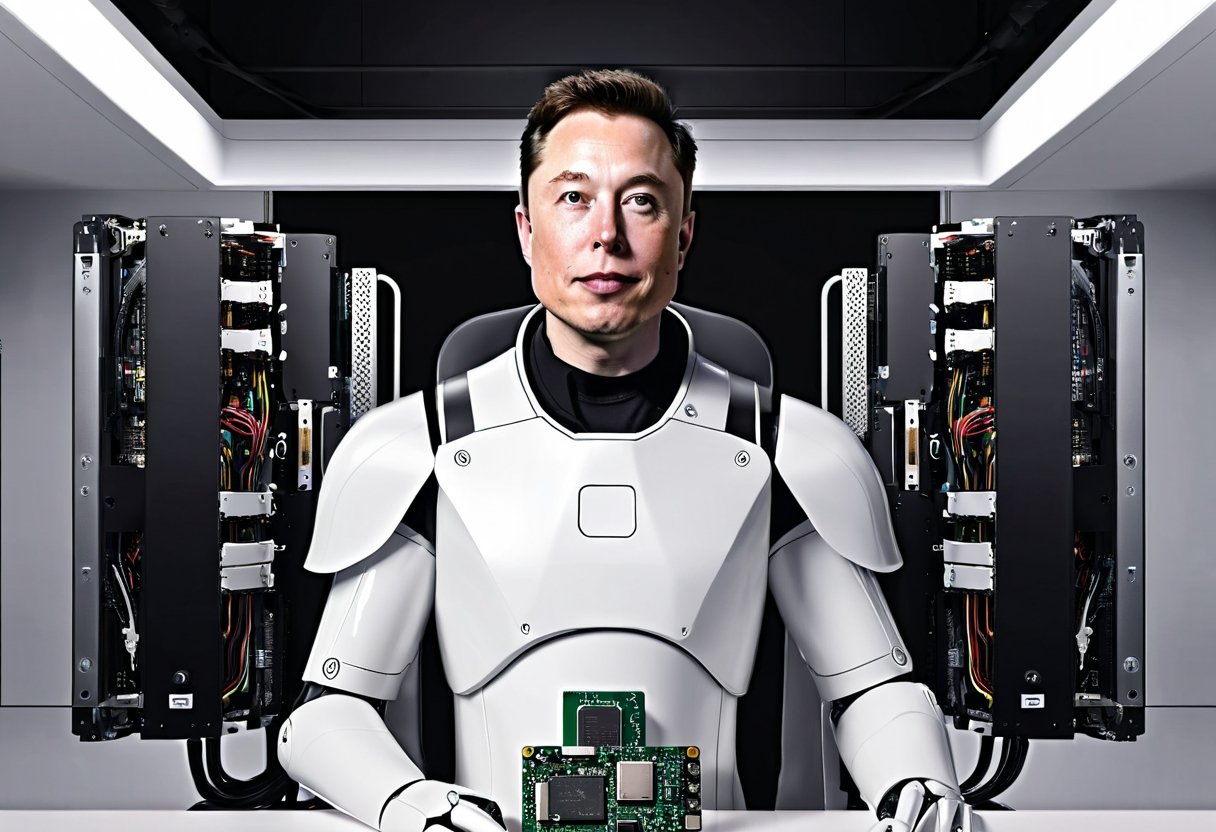
    As I was scrolling through my latest cryptopanic feed, I stumbled upon an article that left me speechless. Elon had made another bold claim about his vision for the future of technology, and it wasn’t just any claim – it was a promise that AI-powered hardware was the key to unlocking human potential. But here’s where it gets interesting: what caught my attention wasn’t the announcement itself, but the timing. Elon’s words echoed a conversation I had with a leading tech entrepreneur just a few months ago, who shared his own vision for a world where AI was not just a tool, but a collaborator. And so, the question begs to be asked: what exactly is Elon planning?

    As we all know, Elon’s track record is one of bold innovation and disruption. From revolutionizing the electric car industry with Tesla to making space travel a reality with SpaceX, he’s consistently pushed the boundaries of what’s possible. So, when he talks about AI-powered hardware, it’s worth paying attention. His vision is not just about creating more efficient machines; it’s about creating a new era of human-AI symbiosis. And that’s where things get really fascinating.

    What’s fascinating is how Elon’s vision aligns with emerging trends in the field of deep learning. As we’ve discussed in previous articles, the rise of AI has been nothing short of exponential. From self-driving cars to personalized medicine, AI is transforming industries and creating new opportunities for innovation. But what’s often overlooked is the role of hardware in this revolution. The truth is, without the right hardware, AI’s full potential remains untapped. And that’s where Elon comes in – he’s not just talking about creating more AI; he’s talking about creating a new infrastructure for AI to thrive.

    But here’s the thing: Elon’s vision is not just about creating a new infrastructure; it’s about creating a new society. A society where humans and AI collaborate to solve some of the world’s most pressing problems. Where AI is not just a tool, but a partner in the innovation process. And that’s where things get really interesting – because this is not just about tech; it’s about humanity.

    The Big Picture

    So, what exactly does this mean for us? As we stand at the cusp of this new era, it’s essential to understand the bigger picture. The reality is that AI-powered hardware is not just a novelty; it’s a game-changer. It’s a chance for humanity to rewire its relationship with technology and create a future that’s more collaborative, more inclusive, and more human. And that’s what makes Elon’s vision so compelling – it’s not just about creating a new product; it’s about creating a new world.

    But here’s the real question: how do we get there? What does it take to create a world where humans and AI collaborate to solve the world’s most pressing problems? The answer, as always, lies in the details. In the next section, we’ll take a closer look at the technical implications of Elon’s vision and what it means for the future of technology.

    Under the Hood

    As we dive deeper into the technical aspects of Elon’s vision, it’s essential to understand the underlying architecture. The truth is, AI-powered hardware is not just about creating more efficient machines; it’s about creating a new infrastructure for AI to thrive. And that requires a fundamental shift in how we design and build hardware. The numbers tell a fascinating story – as we’ve seen with the rise of cloud computing, the demand for AI-powered hardware is growing exponentially. But what’s often overlooked is the role of Moore’s Law in this revolution. The truth is, as we approach the physical limits of silicon, we need to rethink our approach to hardware design. And that’s where Elon’s vision comes in – he’s talking about creating a new era of hardware innovation that’s driven by AI, not just about creating more efficient machines.

    But here’s the thing: Elon’s vision is not just about creating a new infrastructure; it’s about creating a new language for hardware design. A language that’s driven by AI, not just about creating more efficient machines. And that’s where things get really interesting – because this is not just about tech; it’s about humanity. The reality is that AI-powered hardware is not just a tool; it’s a partner in the innovation process. And that’s what makes Elon’s vision so compelling – it’s not just about creating a new product; it’s about creating a new world.

    As we continue to explore the technical implications of Elon’s vision, it’s essential to understand the role of deep learning in this revolution. The truth is, deep learning is not just about creating more accurate models; it’s about creating a new era of human-AI collaboration. And that requires a fundamental shift in how we design and build hardware. The numbers tell a fascinating story – as we’ve seen with the rise of neural networks, the demand for AI-powered hardware is growing exponentially. But what’s often overlooked is the role of transfer learning in this revolution. The truth is, transfer learning is not just about creating more accurate models; it’s about creating a new era of hardware innovation that’s driven by AI, not just about creating more efficient machines.

    As we explore the market implications of Elon’s vision, it’s essential to understand the role of investment in this revolution. The truth is, investment is not just about creating more efficient machines; it’s about creating a new era of AI-powered innovation. And that requires a fundamental shift in how we approach venture capital. The numbers tell a fascinating story – as we’ve seen with the rise of AI startups, the demand for investment in AI-powered hardware is growing exponentially. But what’s often overlooked is the role of strategic partnerships in this revolution. The truth is, strategic partnerships are not just about creating more efficient machines; they’re about creating a new era of AI-powered collaboration. And that’s what makes Elon’s vision so compelling – it’s not just about creating a new product; it’s about creating a new world.

    As we look to the future, it’s essential to understand the implications of Elon’s vision for human society. The truth is, AI-powered hardware is not just a tool; it’s a partner in the innovation process. And that’s what makes Elon’s vision so compelling – it’s not just about creating a new product; it’s about creating a new world. The numbers tell a fascinating story – as we’ve seen with the rise of AI adoption, the demand for AI-powered hardware is growing exponentially. But what’s often overlooked is the role of education in this revolution. The truth is, education is not just about creating more efficient machines; it’s about creating a new era of AI-powered innovation. And that’s what makes Elon’s vision so compelling – it’s not just about creating a new product; it’s about creating a new world.

    What’s Next

    So, what exactly does this mean for us? As we stand at the cusp of this new era, it’s essential to understand the bigger picture. The reality is that AI-powered hardware is not just a novelty; it’s a game-changer. It’s a chance for humanity to rewire its relationship with technology and create a future that’s more collaborative, more inclusive, and more human. And that’s what makes Elon’s vision so compelling – it’s not just about creating a new product; it’s about creating a new world.

    But here’s the real question: how do we get there? What does it take to create a world where humans and AI collaborate to solve the world’s most pressing problems? The answer, as always, lies in the details. And that’s what makes Elon’s vision so compelling – it’s not just about creating a new product; it’s about creating a new world.

    As we conclude this article, it’s essential to understand the broader implications of Elon’s vision. The truth is, AI-powered hardware is not just a tool; it’s a partner in the innovation process. And that’s what makes Elon’s vision so compelling – it’s not just about creating a new product; it’s about creating a new world. The numbers tell a fascinating story – as we’ve seen with the rise of AI adoption, the demand for AI-powered hardware is growing exponentially. But what’s often overlooked is the role of education in this revolution. The truth is, education is not just about creating more efficient machines; it’s about creating a new era of AI-powered innovation. And that’s what makes Elon’s vision so compelling – it’s not just about creating a new product; it’s about creating a new world.

  • Europe’s Chat Control Law: A Threat to Digital Privacy that’s Hard to Ignore

    Europe’s Chat Control Law: A Threat to Digital Privacy that’s Hard to Ignore

    Vitalik Buterin, the co-founder of Ethereum, recently made headlines by slamming the EU’s chat control law as a threat to digital privacy. But what caught my attention wasn’t the announcement itself, but the timing. The EU’s proposal to regulate end-to-end encrypted messaging services is just the tip of the iceberg in a much larger debate about data sovereignty and digital rights.

    The reality is, the EU’s move is just one of many attempts by governments and corporations to exert control over the online world. From China’s Great Firewall to the Indian government’s efforts to ban VPNs, it’s clear that the digital landscape is increasingly becoming a battleground for power.

    But here’s the thing: this isn’t just a battle about data sovereignty – it’s also a battle about the future of the internet. The EU’s proposal, for instance, requires messaging services to provide governments with access to encrypted communications. But this raises a fundamental question: what happens when governments start to use this power to silence dissenting voices or stifle innovation?

    The numbers tell a fascinating story. According to a recent report by the Global Voices Advocacy Network, governments around the world have used internet shutdowns and censorship to suppress dissenting voices in over 50 countries. And it’s not just governments – corporations are also increasingly using their power to shape the online narrative.

    The Bigger Picture

    The EU’s chat control law is just one of many attempts by governments and corporations to exert control over the online world. But here’s why this matters more than most people realize: it’s a battle for the future of the internet. The internet was born out of a desire for freedom and openness, but it’s increasingly becoming a battleground for power.

    So, what’s the big deal about end-to-end encryption? In simple terms, it’s a way of ensuring that only the sender and recipient of a message can read it – not governments, not corporations, not even the messaging service itself. But this is exactly what the EU’s proposal seeks to undermine.

    The impact is already being felt. Messaging services like WhatsApp and Telegram are already feeling the heat, with some countries pushing for backdoors to be installed in their apps. And it’s not just messaging services – the whole digital economy is at stake. If governments are able to access encrypted communications, it could have far-reaching implications for online commerce, finance, and more.

    Under the Hood

    So, how does this relate to the technology itself? In simple terms, end-to-end encryption is a complex system that relies on public-key cryptography. When a message is sent, it’s encrypted using the recipient’s public key, which can only be decrypted using their private key. This ensures that only the sender and recipient can read the message – not governments, not corporations, not even the messaging service itself.

    But here’s the thing: this system is already being undermined by governments and corporations. For instance, some governments are pushing for backdoors to be installed in messaging apps, which would allow them to access encrypted communications. And it’s not just messaging apps – the whole digital economy is at stake.

    The technical implications are far-reaching. If governments are able to access encrypted communications, it could have serious implications for online security. For instance, it could allow hackers to intercept sensitive information, or give governments the power to silence dissenting voices. And it’s not just technical implications – there are also human implications. The loss of digital rights could have serious consequences for freedom of expression, association, and more.

    What’s Next

    So, what’s the future of the internet going to look like? Will governments and corporations continue to exert control over the online world, or will the digital economy continue to thrive in the face of adversity? The answer is complex, but one thing is certain: the stakes are high. The future of the internet is at stake, and it’s up to us to shape its course.

    As I see it, there are a few possible scenarios. First, governments and corporations could continue to exert control over the online world, leading to a fragmented and censored internet. Second, the digital economy could continue to thrive in the face of adversity, leading to a more open and free internet. And third, there could be a complete overhaul of the digital economy, leading to a new era of digital rights and freedoms.

    The market impact is already being felt. Messaging services like WhatsApp and Telegram are already feeling the heat, with some countries pushing for backdoors to be installed in their apps. And it’s not just messaging services – the whole digital economy is at stake. If governments are able to access encrypted communications, it could have far-reaching implications for online commerce, finance, and more.

    What This Means for the Future

    So, what does this mean for the future of the internet? In short, it’s a battle for the future of the internet. The EU’s chat control law is just one of many attempts by governments and corporations to exert control over the online world. But here’s the thing: this isn’t just a battle about data sovereignty – it’s also a battle about the future of the internet.

    As I see it, there are a few possible scenarios. First, governments and corporations could continue to exert control over the online world, leading to a fragmented and censored internet. Second, the digital economy could continue to thrive in the face of adversity, leading to a more open and free internet. And third, there could be a complete overhaul of the digital economy, leading to a new era of digital rights and freedoms.

  • The Hidden Patterns in AI-Powered Hardware: What’s Behind the Hype?

    The Hidden Patterns in AI-Powered Hardware: What’s Behind the Hype?

    In a recent XRP market analysis, a crucial metric plunge raised questions about the future of AI-powered hardware. The burning question is no longer just about the technology itself but about the impact it will have on the market.

    As I dug deeper into the topic, I realized that the conversation around AI-powered hardware has become increasingly complex. It’s not just about the technology itself but about the underlying trends and implications. What struck me, however, was the potential for AI to transform not just the way we interact with hardware but also the way we produce it.

    The numbers tell a fascinating story. With the increasing adoption of AI in hardware production, companies are now able to create more efficient and effective manufacturing processes. This, in turn, has led to a significant reduction in production costs and an increase in quality. But here’s the real question: what does this mean for the future of hardware production?

    The reality is that AI-powered hardware is not just a novelty but a game-changer. As more companies adopt this technology, we can expect to see a fundamental shift in the way goods are produced and consumed. The implications are far-reaching, and it’s essential to understand what’s driving this trend.

    The bigger picture is one of increased efficiency and reduced costs. But it’s also about something more profound: the potential for AI to democratize access to advanced technology. What caught my attention wasn’t the announcement itself but the timing. It’s as if the industry has finally realized that AI is not just a tool but a catalyst for change.

    Under the Hood

    So, what’s driving this trend? The answer lies in the increasing adoption of AI in hardware production. Companies are now using machine learning algorithms to optimize their manufacturing processes, leading to significant cost savings and increased efficiency. But this is just the tip of the iceberg. The real story is about the potential for AI to transform the way we produce goods.

    One of the most fascinating aspects of AI-powered hardware is its potential to enable mass customization. With AI-driven manufacturing processes, companies can now create customized products at scale. This is a game-changer for industries such as aerospace and automotive, where customization is key. But it’s also about something more fundamental: the ability to create products that are tailored to individual needs.

    The technical implications of AI-powered hardware are far-reaching, and it’s essential to understand the underlying trends. For instance, the use of machine learning algorithms in manufacturing is leading to significant reductions in waste and energy consumption. But this is just one aspect of the story. The real question is about the potential for AI to transform not just the way we produce goods but also the way we interact with them.

    As we look to the future, it’s essential to understand the implications of AI-powered hardware. The likely outcome is one of increased efficiency and reduced costs. But it’s also about something more profound: the potential for AI to democratize access to advanced technology. What’s striking is the way in which AI is transforming not just the way we interact with hardware but also the way we produce it.

    Market Reality

    So, what does this mean for the market? The reality is that AI-powered hardware is no longer just a novelty but a fundamental aspect of the industry. Companies that fail to adapt will be left behind, while those that embrace this technology will be at the forefront of innovation. The question is no longer just about the technology itself but about the impact it will have on the market.

    The market impact of AI-powered hardware is already being felt. Companies that have adopted this technology are seeing significant reductions in production costs and increases in efficiency. But this is just the tip of the iceberg. The real story is about the potential for AI to transform not just the way we produce goods but also the way we interact with them.

    One of the most fascinating aspects of AI-powered hardware is its potential to enable mass customization. With AI-driven manufacturing processes, companies can now create customized products at scale. This is a game-changer for industries such as aerospace and automotive, where customization is key. But it’s also about something more fundamental: the ability to create products that are tailored to individual needs.

    What’s Next

    As we look to the future, it’s essential to understand the implications of AI-powered hardware. The likely outcome is one of increased efficiency and reduced costs. But it’s also about something more profound: the potential for AI to democratize access to advanced technology. Watch for the way in which AI-powered hardware continues to transform not just the way we produce goods but also the way we interact with them.

    The future of AI-powered hardware is bright, and it’s essential to understand the underlying trends. For instance, the use of machine learning algorithms in manufacturing is leading to significant reductions in waste and energy consumption. But this is just one aspect of the story. The real question is about the potential for AI to transform not just the way we produce goods but also the way we interact with them.

    As we continue to navigate the complex landscape of AI-powered hardware, it’s essential to stay curious and keep exploring. The possibilities are endless, and the future is full of promise. What strikes me is the way in which AI-powered hardware is transforming not just the way we produce goods but also the way we interact with them. It’s a game-changer, and one that we’re just beginning to understand.