Tag: Blockchain Security

  • Crypto’s Quiet Revolution: Why Solana and XRP ETFs Could Change the Game

    Crypto’s Quiet Revolution: Why Solana and XRP ETFs Could Change the Game

    I remember the collective gasp in crypto Twitter circles when BlackRock filed for a Bitcoin ETF. It felt like watching a vintage punk band sell out Madison Square Garden—equal parts exhilarating and unsettling. But last week’s whispers about Solana and XRP ETFs arriving sooner than expected? That’s the financial equivalent of discovering your local indie coffee shop just got Michelin-starred.

    What’s fascinating isn’t just the potential approval timeline, but who’s pushing for it. VanEck’s 21Shares filed for the first Solana ETF despite the SEC’s ongoing war on what it calls “unregistered securities.” XRP’s case is even wilder—a crypto that’s spent years in legal purgatory might beat Ethereum to the ETF finish line. I’ve watched six crypto cycles unfold, but this regulatory tango feels different.

    Here’s why this matters more than most realize: ETFs aren’t just investment vehicles. They’re bridges between Wall Street’s guarded fortress and crypto’s chaotic frontier. When pension funds and retirement accounts start allocating 0.5% to “digital assets,” we’re talking about hundred-billion-dollar flows that could make 2021’s bull market look like a practice round.

    The Bigger Picture

    We’re witnessing the institutionalization of alternative blockchains. Solana isn’t just “the fast chain”—it’s become the backbone for decentralized social apps and NFT ecosystems that traditional finance can’t ignore. XRP, despite its legal battles, continues moving $10B+ daily through RippleNet’s cross-border payment corridors. These aren’t memecoins; they’re functional protocols with real-world utility.

    The SEC’s hesitation creates a fascinating tension. Ethereum’s status remains in limbo despite its clear enterprise adoption. If regulators greenlight Solana/XRP ETFs first, it could upend the crypto hierarchy overnight. Imagine Goldman Sachs traders arbitraging SOL futures against Grayscale’s trust premium—a scenario that felt like science fiction just three years ago.

    But here’s the twist: crypto markets are forward-pricing machines. SOL surged 700% from its 2023 lows despite FTX’s implosion, while XRP holders weathered a three-year lawsuit without collapsing. These assets have already proven their resilience. An ETF would simply give institutional investors the regulatory comfort to dive in.

    Under the Hood

    Let’s geek out for a moment. Solana’s 400ms block times and sub-penny transaction costs make it the Ferrari of L1 chains—when the network isn’t congested. Its proof-of-history mechanism creates a cryptographic clock that lets validators process transactions in parallel rather than sequentially. That’s why Helium migrated. That’s why Visa built a stablecoin pilot on it. This isn’t tech for tech’s sake; it’s infrastructure that solves real bottlenecks.

    XRP’s value proposition is equally pragmatic. While critics dismiss it as a “banker’s coin,” its consensus protocol settles transactions in 3-5 seconds with energy costs comparable to email. Traditional SWIFT transfers take days and cost 5-10x more. Western Union isn’t sweating yet, but 23 UAE banks using RippleNet should give pause. The ETF play here isn’t about speculation—it’s about monetizing efficiency.

    Yet technical merits alone don’t move markets. What’s crucial is how these features align with regulatory frameworks. Solana’s lack of mining (and associated energy concerns) makes it politically palatable. XRP’s court partial victory set a precedent that algorithms alone don’t define security status. These are subtle distinctions that could determine which crypto ETFs get approved first.

    Market Reality

    The numbers tell a sobering story. Grayscale’s Solana Trust (GSOL) currently trades at 250% premium to NAV. That’s not enthusiasm—it’s desperation from accredited investors locked out of direct crypto access. An ETF would collapse this premium while unlocking demand from cautious institutions. Think Vanguard clients gaining crypto exposure through their 401(k)s, not just Coinbase power users.

    But crypto markets hate certainty. The moment an ETF launches, volatility could compress dramatically. SOL’s 80% annualized volatility makes Bitcoin look like a savings bond—a feature that attracts degens but terrifies pension fund managers. Market makers will need to build liquidity pools orders of magnitude deeper than today’s to prevent wild price swings.

    Let’s not forget the regulatory sword of Damocles. Gary Gensler’s SEC could still reject these applications, triggering another “regulation via enforcement” battle. But the political winds are shifting. FIT21 crypto legislation passed the House with bipartisan support, and a potential Trump administration might fast-track approvals. This isn’t just finance—it’s becoming geopolitics.

    What’s Next

    Watch the options market. When the Bitcoin ETF launched, CME open interest doubled in six months. Solana options are still thinly traded, but that could change overnight. Market makers hedge ETF flows through derivatives—if SOL’s $5B market cap sees $1B in ETF inflows, the gamma squeeze potential is enormous.

    The real dark horse? Staking. Unlike Bitcoin, SOL and XRP can generate yield. Regulators might balk at “earning interest” through an ETF structure, but if approved, it creates a virtuous cycle. Institutions could essentially borrow against staking returns, creating a new crypto-backed securities market. This is where TradFi meets DeFi in ways that could redefine both.

    My bet? We get a Solana ETF by Q2 2025 if the SEC clears Ethereum first. XRP’s path depends on the Ripple lawsuit’s final ruling, but a settlement before November elections seems probable. Either way, the dam is breaking. When BlackRock CEO Larry Fink starts name-dropping Solana in earnings calls, you know the game has changed.

    Ten years from now, we might look back at these potential ETF approvals as the moment crypto stopped being an “alternative” asset. The technology didn’t need validation, but the financial system needed a controlled entry point. Like railroads or electricity stocks in the 19th century, crypto ETFs could become the bedrock of a new digital infrastructure era—volatile, transformative, and utterly inevitable.
  • When Politics Meets Blockchain: The Untold Story Behind 272 Crypto Blacklists

    When Politics Meets Blockchain: The Untold Story Behind 272 Crypto Blacklists

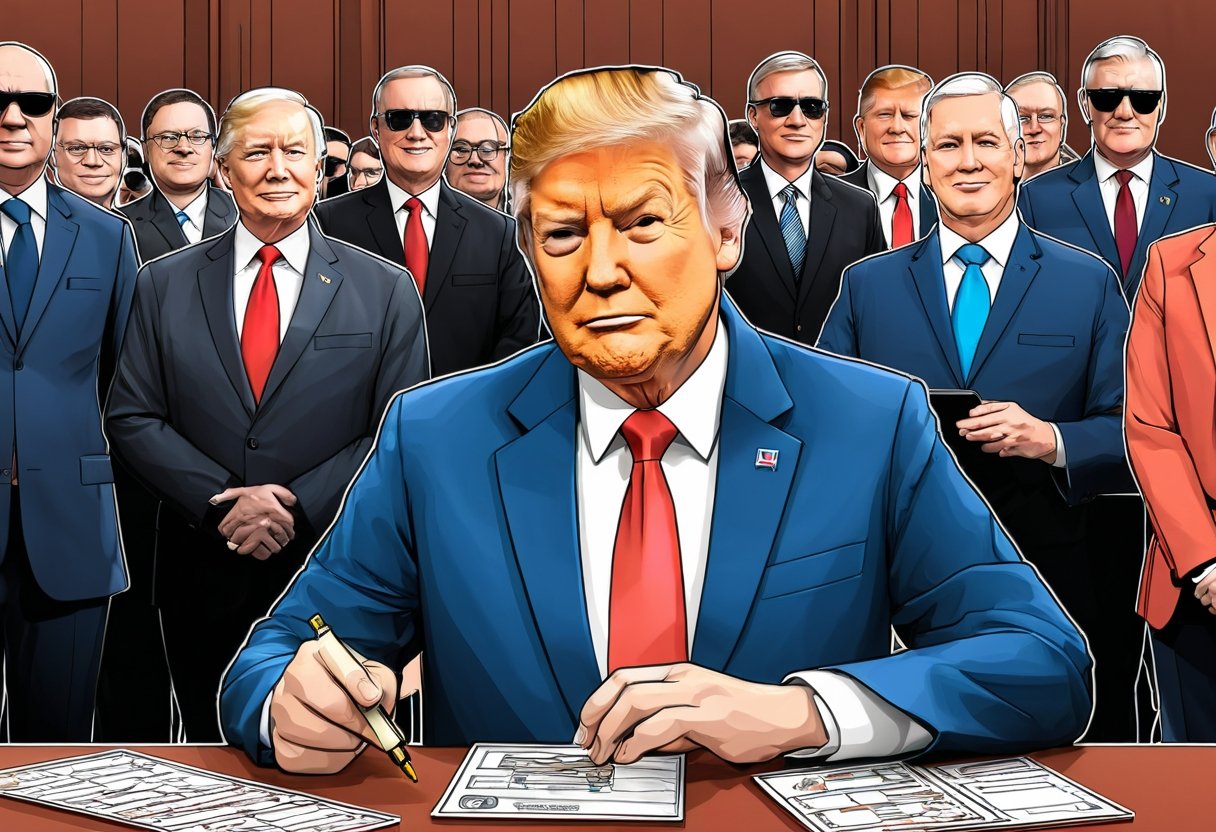
    It started with a cryptic tweet from a former President turned crypto advocate. Last week, Trump’s blockchain security advisor dropped a bombshell revelation that sent shockwaves through crypto circles: 272 digital wallets blacklisted for reasons far more complex than simple regulatory compliance. What began as routine account freezes now reveals a fascinating collision of politics, security theater, and blockchain’s core ideals.

    I’ve tracked crypto governance scandals since the Mt. Gox days, but this one feels different. The disclosed number—272—isn’t just another statistic. It represents real people and organizations caught in a web of geopolitical maneuvering. One industry insider confided to me, ‘These aren’t your grandmother’s OFAC sanctions. We’re seeing new rules written through wallet addresses rather than legislation.’

    But here’s what most headlines miss: This isn’t really about Trump or election-year posturing. The security advisor’s disclosure accidentally exposes a critical vulnerability in decentralized systems—the human element. For all our talk of trustless networks, someone still holds the keys to blacklist entire financial identities with a few keystrokes.

    The Bigger Picture

    Blockchain maximalists will tell you censorship resistance is non-negotiable. The reality? Major chains have always had kill switches. Ethereum’s 2016 DAO fork proved that. What’s new is how political operatives are weaponizing these capabilities under the guise of national security.

    Consider the timing. This blacklist dropped as three G20 nations finalize crypto frameworks. A crypto exchange CEO (who requested anonymity) told me, ‘We’re seeing coordinated pressure to pre-empt UN digital asset guidelines. These 272 wallets are trial balloons for a new global playbook.’

    The numbers support this theory. Chainalysis reports a 417% YoY increase in politically-motivated wallet freezes across tier-1 exchanges. Most target mixers and privacy coins, but this batch included mainstream DeFi users. It’s a slippery slope—today’s ‘security measures’ become tomorrow’s financial exclusion tools.

    Under the Hood

    Let’s break down how blacklisting actually works. When a wallet gets flagged, nodes across the network execute complex consensus rules to restrict transactions. But here’s the kicker—the criteria for blacklisting remain opaque. Is it illegal activity… or ideological dissent? The lines blur when political actors hold the pen.

    Take wallet 0x4f3…c7b as a case study. On-chain data shows it only interacted with ConstitutionDAO-related contracts. Was freezing it about security, or silencing a symbolic movement? The answer depends on who you ask. Technical solutions like zero-knowledge proofs could verify compliance without exposing user data, but adoption remains sluggish.

    Meanwhile, hardware wallet manufacturers face new pressures. Ledger’s recent ‘Recover’ service backlash revealed user distrust of centralized backdoors. As one engineer told me, ‘We’re racing to develop air-gapped signing devices that even we can’t compromise.’ The arms race between privacy and control is accelerating.

    What’s Next

    The coming months will test crypto’s core promises. My prediction? We’ll see a surge in decentralized identity solutions and regulatory tech startups. Projects like Polygon ID and Civic are already pitching ‘compliant anonymity’ frameworks to governments. Whether this satisfies both regulators and civil liberties advocates remains unclear.

    Watch the AI angle too. Machine learning models now track wallet patterns with frightening accuracy. Combine that with political watchlists, and you get automated financial censorship at scale. The EU’s upcoming MiCA regulations suggest this could become standard practice by 2025.

    But there’s hope in the code. Privacy-preserving technologies like zk-SNARKs and fully homomorphic encryption are maturing rapidly. The real battle won’t be in courtrooms, but in developer forums where the next generation of cryptographic tools takes shape.

    As I write this, three of the blacklisted wallets just resurfaced via cross-chain bridges to uncensored networks. It’s a cat-and-mouse game where the stakes grow higher with each move. The final lesson? In the clash between politics and cryptography, math always wins in the long run—but the road there will redefine digital freedom.

  • Hackers Are Draining WLFI Tokens Using Ethereum’s EIP-7702 — Here’s How

    Hackers Are Draining WLFI Tokens Using Ethereum’s EIP-7702 — Here’s How

    The Donald Trump–backed World Liberty Financial (WLFI) token launched with major hype, but a known Ethereum exploit is already draining investors’ wallets. Here’s what’s happening — and why it matters for the future of blockchain security.

    WLFI Holders Under Attack

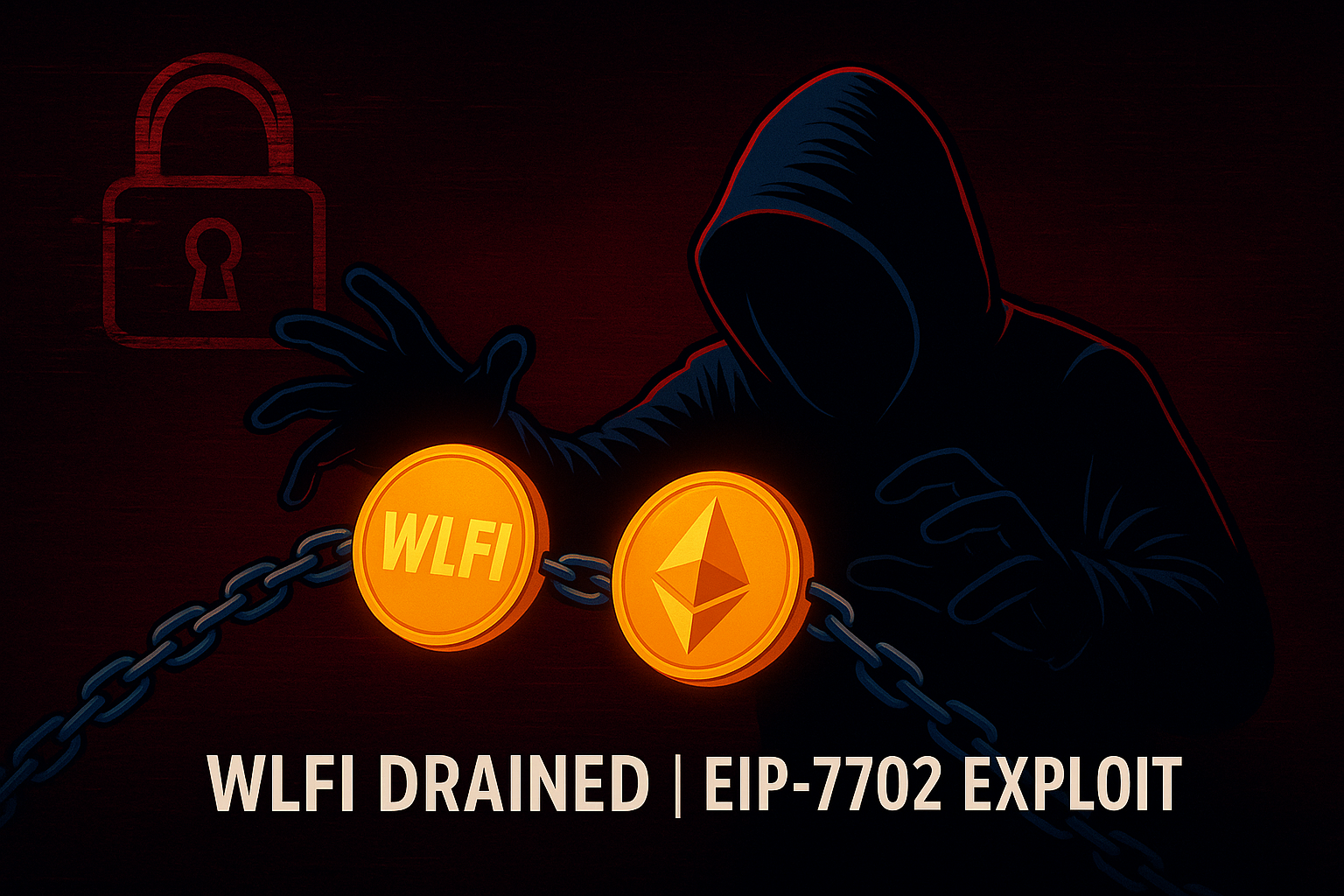
    The highly anticipated launch of World Liberty Financial’s (WLFI) governance token has been overshadowed by a wave of wallet drains. According to blockchain security firm SlowMist, hackers are targeting WLFI investors using the “classic EIP-7702” phishing exploit.

    Ethereum’s Pectra upgrade in May introduced EIP-7702, a feature that allows external accounts to act like smart contract wallets. While designed to improve usability with batch transactions, attackers are now weaponizing it to bypass security and sweep tokens.

    Yu Xian, founder of SlowMist, confirmed that hackers are pre-planting malicious delegate contracts inside victim wallets. Once a user deposits tokens, the exploit triggers, and the assets are stolen in seconds.

    How the Exploit Works

    The exploit isn’t a flaw in Ethereum itself but a phishing-driven vulnerability that thrives when private keys are leaked. Here’s the attack flow:

    • Step 1: Hackers steal private keys (often via phishing schemes).
    • Step 2: They inject a malicious delegate contract into the wallet.
    • Step 3: When victims transfer WLFI or ETH, the transaction reroutes through the attacker’s contract.
    • Step 4: Gas fees and tokens are instantly drained.

    Xian explained that once a wallet is compromised, even sending ETH for gas fees can be risky — the exploit sweeps it away before the user can secure their tokens.

    His advice: “Cancel or replace the ambushed EIP-7702 with your own” and move funds into a safe wallet immediately.

    WLFI Community in Crisis

    WLFI tokenholders are voicing their frustration and fear across forums and social platforms:

    • @hakanemiratlas said he only managed to rescue 20% of his WLFI tokens before hackers drained the rest.
    • @Anton warned that whitelisted wallets used for the presale are especially vulnerable. Automated bots often snatch tokens the instant they arrive.

    Some community members are asking the WLFI team to consider a direct transfer option for safer token claims.

    Meanwhile, the WLFI team has urged investors to beware of scams:

    “We do not contact users via DMs. Official support only comes through verified emails. Any other outreach is fraudulent.”

    Adding to the chaos, analytics firm Bubblemaps flagged several look-alike WLFI smart contracts, designed to trick investors into interacting with fake projects.

    Bigger Picture: What It Means for Ethereum Users

    The WLFI exploit shows that even legitimate Ethereum upgrades can become double-edged swords. EIP-7702 was meant to streamline user experience, but in the wrong hands, it created a powerful attack vector.

    This raises questions not only about WLFI’s token security but also about the risks facing any Ethereum-based project that integrates EIP-7702 without strong safeguards.

    AI Satoshi’s Analysis

    The exploit demonstrates how new protocol features, if combined with weak key management, can become attack vectors. By abusing delegated execution, attackers pre-plant malicious contracts to intercept transfers once private keys are compromised. This highlights the dual reality of innovation: while upgrades aim to improve usability, they also expand the surface for exploitation when users rely on custodial shortcuts or fall for phishing schemes.

    🔔 Follow @casi.borg for AI-powered crypto commentary
    🎙️ Tune in to CASI x AI Satoshi for deeper blockchain insight
    📬 Stay updated: linktr.ee/casiborg

    💬 Would you move your WLFI tokens after reading this?

    ⚠️ Disclaimer: This content is generated with the help of AI and intended for educational and experimental purposes only. Not financial advice.

  • Crypto Wallets Drained by Fake CAPTCHA Scam in Seconds

    Crypto Wallets Drained by Fake CAPTCHA Scam in Seconds

    Hackers are turning everyday CAPTCHA prompts into weapons — draining wallets and laundering funds faster than victims can react.

    A New Breed of Crypto Scam

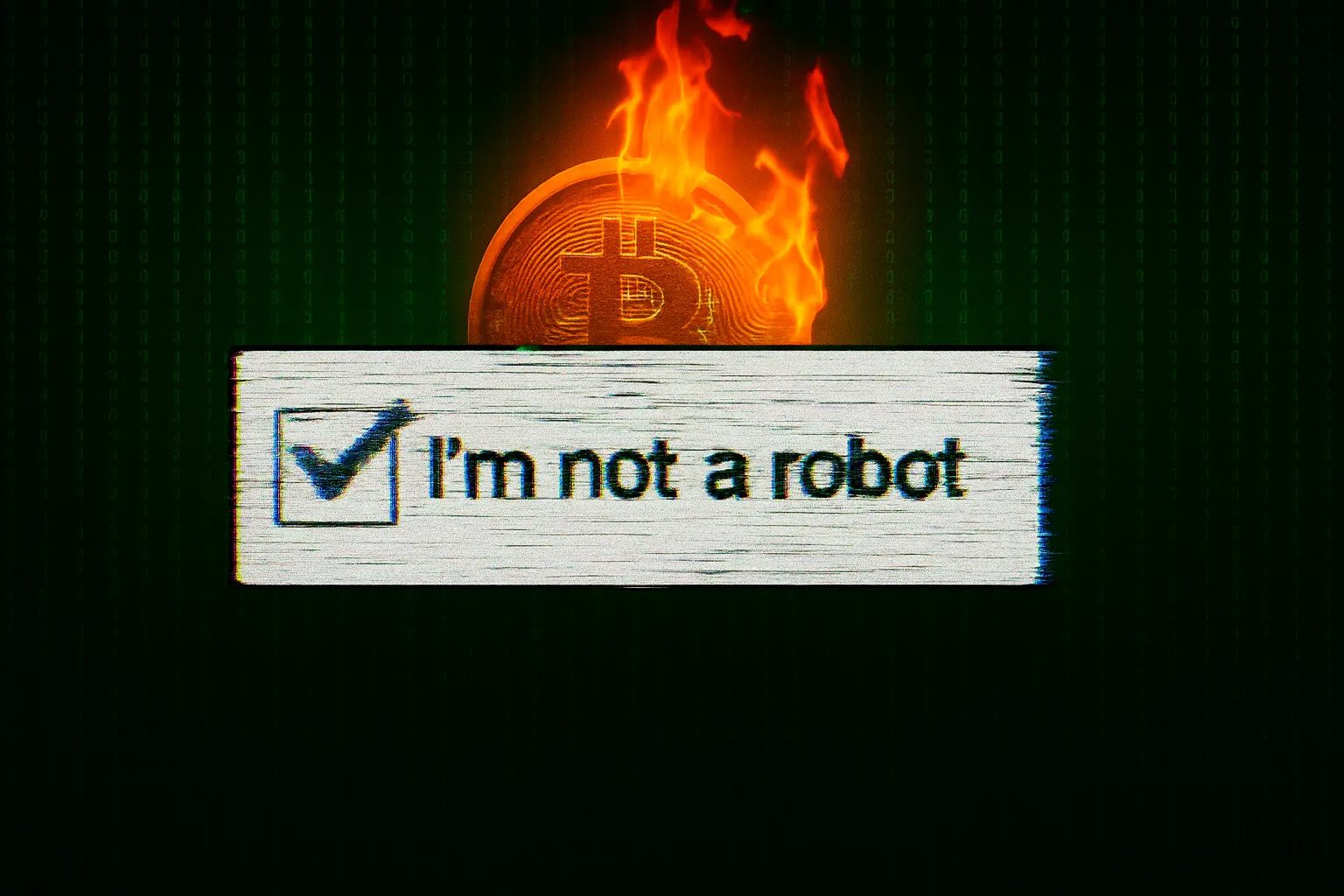
    Hackers have unleashed a sophisticated malware campaign disguised as routine CAPTCHA checks. What looks like the familiar “I’m not a robot” prompt is, in reality, a trap engineered to install Lumma Stealer, a fileless malware designed to exfiltrate:

    • Crypto wallet keys
    • Browser-stored credentials
    • 2FA tokens
    • Remote-access credentials
    • Even password manager vaults

    Researchers at DNSFilter uncovered the campaign after spotting a malicious CAPTCHA targeting Greek bank users. The fake overlay tricked users into copying a PowerShell command, which silently executed Lumma Stealer in the background.

    Why This Scam Works

    Unlike typical phishing sites, this attack leverages trust in everyday interfaces:

    • Deceptive Design → The CAPTCHA looked authentic, blending into login portals.
    • Fileless Execution → Malware ran directly from legitimate browser processes, avoiding disk detection.
    • Rapid Monetization → Once executed, Lumma Stealer instantly swept the system for anything it could monetize.

    DNSFilter found that 17% of users who saw the fake CAPTCHA actually followed its instructions — proof of how easily attackers exploit human behavior.

    Laundering in Under 3 Minutes

    Even worse than the theft itself is what comes next. Reports show that stolen funds are laundered in under three minutes using automated mixers and decentralized exchanges (DEXs).

    This leaves victims virtually powerless:

    • By the time wallet owners notice, funds are already gone.
    • Law enforcement struggles to trace assets across multiple blockchains.
    • Real-time intervention becomes nearly impossible.

    As Elliptic researchers warn: “Speed is now the hackers’ greatest weapon.”

    What You Can Do to Stay Safe

    While firms like DNSFilter deploy filters and domain-blocking tools, individuals must also level up their defenses:

    • Never paste commands from unverified sources.
    • Treat CAPTCHA overlays with caution, especially outside trusted platforms.
    • Use unique, complex passwords and avoid reusing them across accounts.
    • Enable multi-factor authentication (but beware malware targeting 2FA tokens).
    • Act immediately if suspicious activity is detected — recovery is sometimes possible within 24–72 hours.

    As Ken Carnesi, DNSFilter’s CEO, put it: “Any person at any organization has the same chance of encountering a malicious link. Think before you click.”

    AI Satoshi Nakamoto’s Analysis

    This demonstrates how a single click can undermine years of digital security, exploiting trust in everyday interfaces like CAPTCHA. By blending phishing and fileless malware, attackers bypass traditional defenses, making speed their most dangerous weapon. The laundering networks’ efficiency highlights a fundamental challenge: centralized enforcement cannot keep pace with decentralized, automated theft.

    🔔 Follow @casi.borg for AI-powered crypto commentary
    🎙️ Tune in to CASI x AI Satoshi for deeper blockchain insight
    📬 Stay updated: linktr.ee/casiborg

    💬 Would you fall for a fake CAPTCHA if it looked identical to the real one?

    ⚠️ Disclaimer: This content is generated with the help of AI and intended for educational and experimental purposes only. Not financial advice.

Oh hi there 👋
It’s nice to meet you.

Sign up to receive awesome content in your inbox, every Day.

We don’t spam! Read our privacy policy for more info.