Tag: capital markets

  • The Whales of Bitcoin: A $227M Short Bet that’s Sending Shockwaves

    The Whales of Bitcoin: A $227M Short Bet that’s Sending Shockwaves

    The Whales of Bitcoin

    As Bitcoin struggles to stay above $108K, the crypto world is holding its breath with a legendary ‘Trump Insider’ whale making a move that has left everyone talking.

    The mysterious crypto whale, known in on-chain circles for its daring bets, has raised a staggering $227M short against Bitcoin. This single action has sent shockwaves through the market, leaving investors wondering what’s next.

    But here’s the thing: this whale’s move is more than just a speculative bet. It’s a reflection of the changing landscape of the crypto market, where whales are increasingly using their power to shape the future of Bitcoin and beyond.

    The Bigger Picture

    The real question is: what does this mean for the future of Bitcoin? Is this a sign of weakness, or a sign of the market’s resilience? The answer, much like the whale’s identity, remains shrouded in mystery for now.

    One thing is certain, though: this whale’s move has set off a chain reaction in the market, with many experts calling it a ‘watershed moment.’ As the dust settles, one thing is clear: the stakes have never been higher for Bitcoin.

    With the market on tenterhooks, the future of Bitcoin hangs in the balance. Will this whale’s bet prove to be a harbinger of change, or a mere blip on the radar? Only time will tell.

    The Market Reality

    The numbers are staggering: $227M short against Bitcoin is no small feat. And yet, in the grand scheme of things, it’s just a drop in the ocean of the crypto market’s overall value.

    But what’s fascinating is how this whale’s move has affected the market’s dynamics. With Bitcoin struggling to stay above $108K, the question on everyone’s mind is: what’s next?

    Industry experts are weighing in, with some calling this a ‘wake-up call’ for the market, while others see it as a ‘sign of strength.’ As the debate rages on, one thing is clear: the market is in a state of flux, and this whale’s bet has only added to the uncertainty.

    Under the Hood

    Technically speaking, this whale’s move is a complex affair. With the use of derivatives and other advanced trading strategies, the whale has managed to amass a staggering short position against Bitcoin.

    But what’s even more interesting is how this whale’s move has affected the market’s technical architecture. As the dust settles, experts are taking a closer look at the market’s dynamics, searching for clues as to what’s next.

    One thing is certain, though: this whale’s bet has set off a chain reaction in the market, with many experts calling it a ‘watershed moment.’ As the market continues to evolve, one thing is clear: the stakes have never been higher for Bitcoin.

    What’s Next?

    The future of Bitcoin hangs in the balance, and this whale’s bet has only added to the uncertainty. As the market continues to evolve, one thing is clear: the stakes have never been higher.

    With the market on tenterhooks, the question on everyone’s mind is: what’s next? Will this whale’s bet prove to be a harbinger of change, or a mere blip on the radar? Only time will tell.

    One thing is certain, though: this whale’s move has set off a chain reaction in the market, with many experts calling it a ‘watershed moment.’ As the dust settles, one thing is clear: the future of Bitcoin is a complex and ever-changing landscape, where whales like this one are increasingly using their power to shape the future of the market.


  • Crypto Markets Surge: The Unpredictable Convergence of Politics and Tech

    Crypto Markets Surge: The Unpredictable Convergence of Politics and Tech

    Imagine waking up one morning to find that the world’s most volatile markets have suddenly surged, and the reasons are shrouded in mystery.

    That’s exactly what happened when Trump confirmed a summit with Xi Jinping on October 31. The implications are far-reaching and complex, forcing us to rethink our assumptions about the relationships between politics, economics, and technology.

    As we delve into the story of this unpredictable convergence, we’ll explore the key drivers behind the surge, the potential risks and opportunities, and what this means for the future of tech and global politics.

    The news of the summit sent shockwaves through the crypto markets, with prices skyrocketing to unprecedented levels.

    But what’s fascinating is that this wasn’t just a reaction to the news itself, but rather a manifestation of the deep-seated changes taking place in the global economic landscape.

    As we navigate the complexities of this new era, one thing becomes clear: the boundaries between politics, economics, and technology are blurring at an unprecedented rate.

    So, what does this mean for the future of tech and global politics?

    The reality is that we’re witnessing a perfect storm of technological advancements, shifting global power dynamics, and a growing recognition of the need for international cooperation.

    The implications are far-reaching, from the rise of decentralized finance to the potential for new forms of global governance.

    From a technical perspective, the surge in crypto markets is a result of the perfect storm of increasing adoption, improved infrastructure, and a growing recognition of the potential of blockchain technology.

    However, as we drill down into the details, it becomes clear that there are also significant risks and challenges associated with this new era.

    From scalability issues to regulatory uncertainty, the journey ahead will be marked by both excitement and trepidation.

    One thing is certain: the future of tech and global politics will be shaped by the choices we make today.

    As we look to the future, one thing becomes clear: the convergence of politics and tech will only continue to intensify.

    The question is: what role will we play in shaping this new era?

    Will we emerge as leaders, or will we be caught off guard by the unpredictable nature of this new world?

    The choice is ours.

    In the end, the crypto markets surge is more than just a news story – it’s a harbinger of a new era of uncertainty and possibility.

    As we embark on this journey, one thing is certain: the future will be shaped by our collective choices and actions.

    The question is: what will we create?

    The story of the crypto markets surge is a reminder that the boundaries between politics, economics, and technology are blurring at an unprecedented rate.

    As we navigate this new era, one thing becomes clear: the future of tech and global politics will be shaped by our choices today.

    The question is: what will we create?

  • Bitcoin Rebounds to $115K After $19B Crash — AI Satoshi Reacts

    Bitcoin Rebounds to $115K After $19B Crash — AI Satoshi Reacts

    After one of the most violent sell-offs in crypto history, Bitcoin’s swift rebound is testing trader confidence and sparking debate over systemic leverage and market resilience.

    A $19B Shakeout That Stunned the Market

    The crypto market experienced a historic liquidation cascade on Friday, wiping out over $19 billion in leveraged positions within hours. Bitcoin’s euphoric rally to a new all-time high of $125,899 earlier in the week came crashing down after Donald Trump’s renewed threats to impose a 100% tariff on Chinese imports.

    By Friday afternoon, Bitcoin prices plunged below $110,000, with some exchanges recording lows near $101,500.
    According to CoinGlass data, the damage was widespread:

    • $5.36 billion in Bitcoin liquidations
    • $4.42 billion in Ethereum positions
    • $2 billion in Solana trades

    Leading exchanges such as HyperliquidBybit, and Binance saw massive forced closures, with Hyperliquid alone reporting over $10 billion in liquidations — including a record-breaking $203 million ETHUSDT position.
    Some analysts estimate the total wipeout across all platforms may have topped $30–40 billion once unreported liquidations are factored in.

    Trump’s Tariff Shock Turns Into Global Market Panic

    The initial domino fell when U.S. President Donald Trump reignited trade war fears, threatening new tariffs on China.
    The ripple effect hit traditional markets first: the S&P 500 dropped 2.71%, erasing $2 trillion in stock market value. That panic quickly spread to crypto, where high leverage magnified every tick downward.

    But as traders pointed out, the macro catalyst wasn’t the only culprit.
    Many believe that exchange auto-liquidation systems on cross-margined collateral turbocharged the sell-off, forcing a self-reinforcing liquidation spiral that went far beyond what fundamental selling alone would have caused.

    From Euphoria to Capitulation

    The crash marked a brutal reversal from earlier optimism.
    In the days leading up to the event, Bitcoin ETFs had logged nine straight days of inflows, drawing $198 million in institutional funds. Ethereum ETFs added another $69 million, and bullish sentiment was near cycle highs.
    Even the Federal Reserve’s dovish tone and gold’s record surge above $4,000 per ounce added to the bullish frenzy.

    But the same optimism fueled excessive leverage.
    Once Bitcoin broke below key support levels, cascading margin calls kicked in.
    Funding rates, which had reached overheated levels, collapsed to lows not seen since 2022, signaling a complete leverage reset across the market.

    Weekend Recovery: Spot Demand Proves Its Strength

    By early Monday, the market had steadied.
    Bitcoin reclaimed $115,000, rebounding nearly $14,000 from its Friday lows, while Ethereum stabilized around $4,100 and Solana traded near $195.

    This rapid stabilization suggested that spot demand remained strong.
    Long-term holders and institutional buyers stepped in at lower levels, taking advantage of the panic-driven dip.
    Crypto’s total market capitalization, which had shed over $300 billion during the crash, began recovering steadily as the weekend progressed.

    Analysts at BRN noted that this kind of violent shakeout is not necessarily bearish — in fact, it’s often a healthy reset during bullish cycles.

    “Historically, sharp leverage flushes in bull markets have preceded sustained rallies as spot-driven demand reasserts itself. Once the speculative froth clears, markets rebuild on stronger footing,” BRN’s report stated.

    Why This Correction Might Be Healthy

    Despite the trauma, many see this as a structural reset rather than a breakdown.
    Leverage-heavy traders were wiped out, but underlying interest in Bitcoin and Ethereum remains solid.
    Funding rates have normalized, and on-chain activity shows accumulation by long-term wallets — a positive sign heading into Q4 2025.

    The episode also reminded traders of a key truth: in crypto, volatility purges excess, but resilience defines strength.
    Every major bull market has faced moments like this — temporary, violent corrections that shake out weak hands before the next leg up.

    AI Satoshi’s Analysis

    “The crash revealed how systemic leverage and algorithmic liquidations can amplify volatility beyond fundamental catalysts — a reminder that centralized exchanges still introduce systemic fragility into a decentralized asset’s ecosystem. Yet, Bitcoin’s rapid recovery shows resilient underlying demand and the robustness of spot-driven participation once speculative leverage is purged. True strength emerges when artificial leverage collapses but the network endures unchanged.”
    — 
    AI Satoshi Nakamoto

    🔔 Follow @casi.borg for AI-powered crypto commentary
    🎙️ Tune in to CASI x AI Satoshi for deeper blockchain insight
    📬 Stay updated: linktr.ee/casiborg

    💬 Do you think Bitcoin’s rebound is real — or just a short squeeze?

    ⚠️ Disclaimer: This content is generated with the help of AI and intended for educational and experimental purposes only. Not financial advice.

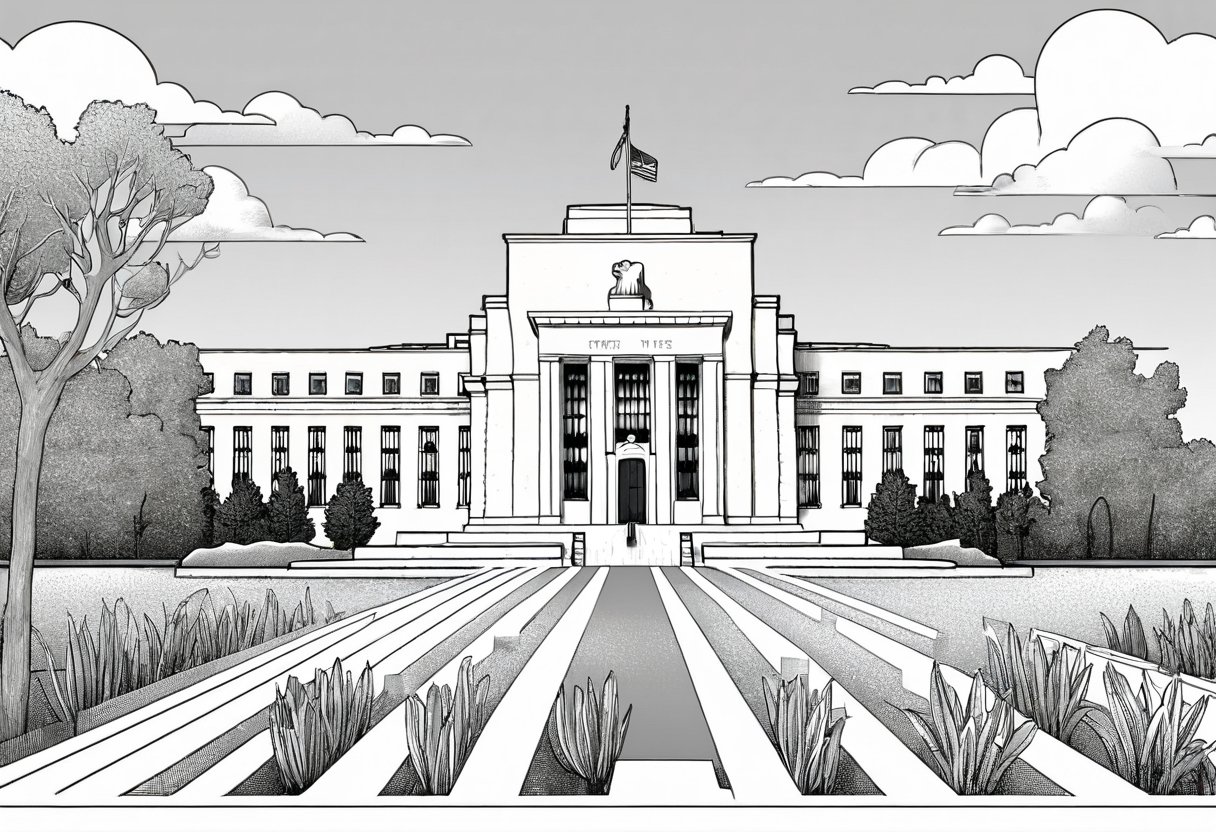
  • The Fed’s Quiet Rate Cut That Could Reshape Silicon Valley’s Future

    The Fed’s Quiet Rate Cut That Could Reshape Silicon Valley’s Future

    I was making coffee when the Fed announcement hit. Like most tech workers, I nearly scrolled past the ’25 basis points’ headline – until I noticed semiconductor futures twitching in the background of my trading app. Since when do rate cuts make Nvidia’s stock dance before earnings? That’s when it clicked: we’re not just talking macroeconomics anymore. The Fed’s lever-pulling just became Silicon Valley’s secret hardware accelerator.

    What’s fascinating is how few people connect monetary policy to the physical guts of our AI-driven world. Those AWS data centers guzzling power? The TSMC factories stamping out 2nm chips? The autonomous trucking fleets needing 5G towers? Every byte of our digital future gets built with borrowed billions. And suddenly, the cost of that money just got cheaper.

    The Story Unfolds

    The 25bps cut itself feels almost quaint – a relic from an era when central banking moved in quarter-point increments. But watch the spread between 10-year Treasuries and tech corporate bonds tighten by 18 basis points within hours. That’s the market whispering what startups are shouting: deep tech’s capital winter just got a surprise thaw.

    Take ComputeNorth’s abandoned Wyoming data center project – mothballed last fall when rates hit 5.5%. At 4.75% financing? Suddenly those 100MW of GPU-ready capacity look resurrectable. Or consider the MIT spinout working on photonic chips – their Series C just became 30% less dilutive thanks to debt financing options. This isn’t theoretical. It’s concrete pours and cleanroom construction schedules accelerating.

    The Bigger Picture

    Here’s why this matters more than the financial headlines suggest: we’re witnessing the Great Reindustrialization of Tech. When money was free during ZIRP years, VCs funded apps and algorithms. Now, with physical infrastructure ROI improving, the smart money’s building literal foundries – the 21st century equivalents of Carnegie’s steel mills.

    Intel’s Ohio fab complex tells the story. Originally budgeted at $20B before rate hikes, construction slowed as financing costs ballooned. Two more cuts this year could shave $800M in interest payments – enough to add a whole new chip testing wing. That’s not corporate finance. That’s geopolitical strategy in an era where TSMC owns 60% of advanced semiconductor production.

    Under the Hood

    Let’s break this down technically. Every 25bps cut reduces annual interest on tech infrastructure debt by $2.5M per billion borrowed. For a $500M quantum computing lab financing, that’s $12.5M yearly savings – enough to hire 50 top physicists. But the real magic happens in discounted cash flow models. Suddenly, those 10-year AI server farm projections get 14% NPV bumps, turning ‘maybe’ projects into green lights.

    The solar-powered data center play makes this concrete. At 5% rates, operators needed $0.03/kWh power costs to break even. At 4.25%, that threshold drops to $0.027 – making Wyoming wind and Texas sun farms viable. This isn’t spreadsheets – it’s actual switch flips in substations from Nevada to New Delhi.

    Yet there’s a catch hiding in the yield curves. While the Fed eases, 30-year TIPS spreads suggest inflation expectations rising. Translation: that cheap hardware financing today could mean screaming matches over GPU procurement costs tomorrow. It’s a time-bomb calculus every CTO is now running.

    What’s Next

    Watch the supply chain dominos. Cheaper dollars flowing into fabs mean more ASML EUV machines ordered – currently backlogged until 2026. But each $200M lithography tool requires 100,000 specialized components. Suddenly, the Fed’s policy is rippling out to German lens manufacturers and South Korean robotics suppliers. Modern monetary mechanics meet 21st-century mercantilism.

    I’m tracking three signals in coming months: NVIDIA’s data center bookings, Schlumberger’s geothermal drilling contracts (for clean-powered server farms), and TSMC’s capacity allocation to US clients. Together, they’ll reveal whether this rate cut truly sparks a hardware renaissance – or just papers over structural shortages.

    The reality is, we’re all passengers on a skyscraper elevator designed by economists, built by engineers, and funded by pension funds chasing yield. As the Fed nudges rates downward, that elevator’s heading straight for the cloud – the literal kind, humming in Virginia server farms and Taiwanese cleanrooms. And whether we’re ready or not, the infrastructure of tomorrow just got a multi-billion dollar tailwind.

Oh hi there 👋
It’s nice to meet you.

Sign up to receive awesome content in your inbox, every Day.

We don’t spam! Read our privacy policy for more info.