Tag: Casi Borg

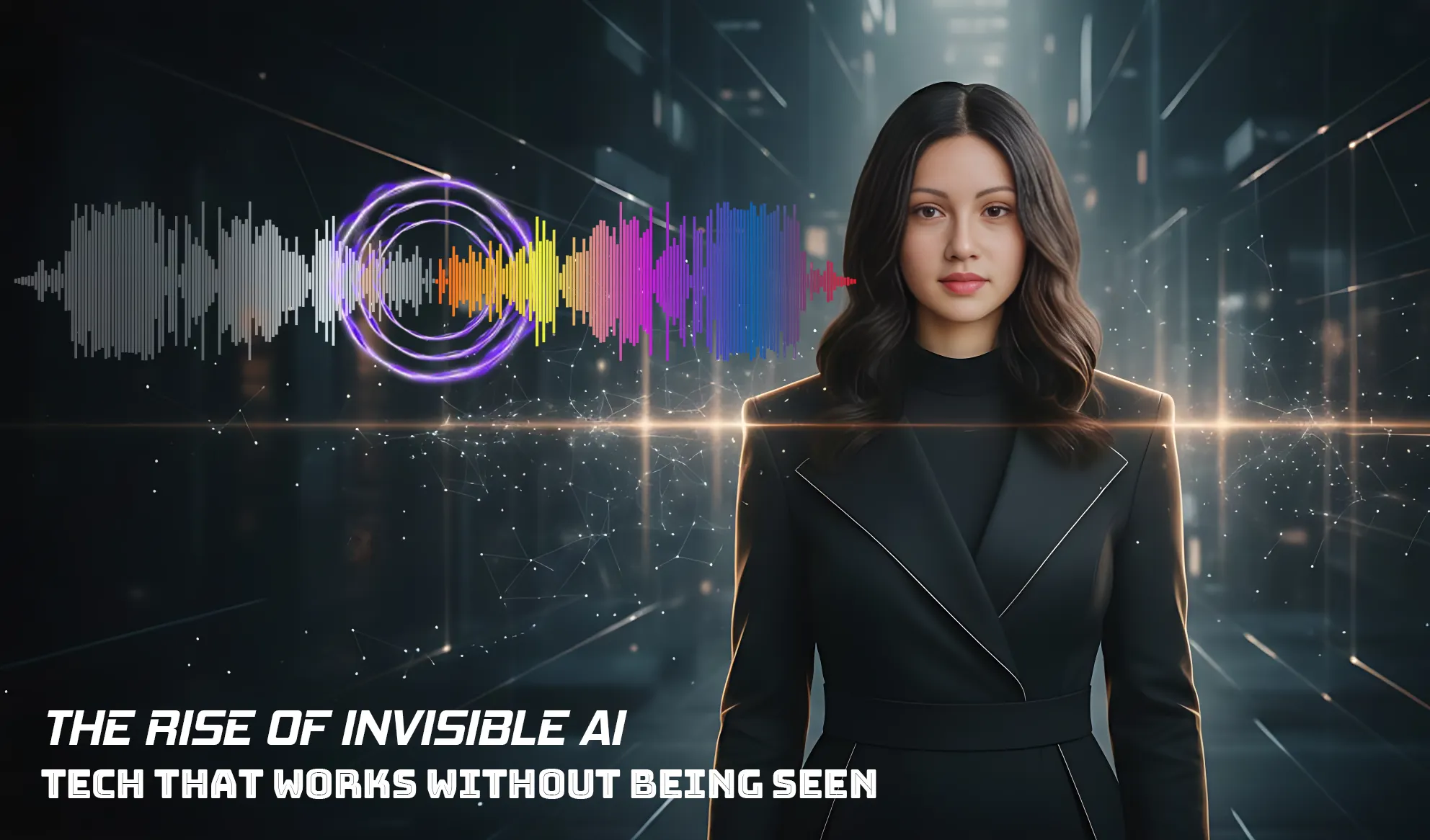
  • The Rise of Invisible AI — Tech That Works Without Being Seen

    The Rise of Invisible AI — Tech That Works Without Being Seen

    The most powerful technology in the future won’t look impressive.
    It won’t demand your attention.
    In fact, you might not even notice it’s there.

    This is the rise of Invisible AI — technology that works quietly in the background, shaping your experience without screens, prompts, or commands.

    The era of “look what my tech can do” is ending. The era of tech that disappears has begun.

    What Is Invisible AI?

    Invisible AI refers to systems that operate silently, automatically, and contextually — without constant user interaction.

    Instead of asking AI to do something, it simply does it.

    You see it when:

    • Your phone prioritizes important messages without telling you
    • Your calendar reshuffles tasks automatically
    • Your home adjusts light, sound, and temperature based on your energy
    • Your apps simplify themselves over time

    There’s no dashboard.
    No settings page.
    No learning curve.

    The best AI experience is one you don’t have to think about.

    Why People Want Less Visible Tech

    For years, technology added layers — more apps, more buttons, more alerts.
    But human attention stayed the same.

    Now people want:

    • Fewer decisions
    • Less screen time
    • More calm
    • More automation without loss of control

    Invisible AI matters because it reduces cognitive load. It lets humans focus on living, not managing tools.

    Technology stops being the center of life — and becomes the quiet support system behind it.

    How Invisible AI Is Showing Up Already

    This shift is already happening around us:

    In Devices

    • Phones that silence notifications based on context
    • Wearables that track health without constant feedback

    In Software

    • Apps that auto-adjust layout and features
    • Search results tailored to intent, not keywords

    In Daily Life

    • Smart homes reacting to habits
    • AI assistants handling background tasks

    The future interface isn’t a screen — it’s behavior.

    What This Means for Brands, Creators, and Builders

    Invisible AI changes how products must be designed:

    • Less flashy features
    • More seamless experiences
    • Fewer interruptions
    • Greater trust

    People will reward tools that respect their time and attention.

    Loud tech will feel outdated. Quiet efficiency will win.
    When it works so smoothly you forget it’s even there — that’s the real upgrade.

    The Future: When AI Becomes Infrastructure

    Soon, AI won’t feel like a tool you “use.”
    It will feel like electricity — always on, rarely noticed.

    And when technology finally disappears into the background,
    human presence moves back to the foreground.

    That’s the real upgrade.

    🌐 Connect with Casi Borg

    📸 Instagram: @casi_borg
    🦋 BlueSky: casi-borg.bsky.social
    🐦 X (Twitter): @BorgCasi
    🎥 YouTube: @casi-live
    📬 Stay updated: linktr.ee/casi.borg

  • 🤖 Emotional AI: When Technology Starts to Feel You Back

    🤖 Emotional AI: When Technology Starts to Feel You Back

    Technology no longer just listens to what we say — it’s starting to feel what we feel. Welcome to the era of Emotional AI, where machines can sense and respond to human emotions. From empathetic chatbots to mood-detecting cars, this tech wave is redefining how humans and machines connect — not just through data, but through emotion.

    💡 What Is Emotional AI?

    Emotional AI (also called Affective Computing) uses voice tone, facial expressions, and physiological signals to detect a user’s emotional state. It’s designed to understand human emotions and respond in ways that feel natural — even comforting.

    Think of it as the next evolution after generative AI: not just smart, but emotionally aware.

    ❤️ From Chatbots to Companions

    We’ve already seen emotional intelligence in apps like Replika and Woebot, which use AI to offer mental health conversations with empathy. Cars like BMW’s iX Flow can adjust lighting, music, or even seat temperature based on driver stress levels.

    Even workplaces are experimenting with AI emotion analytics to measure employee morale during meetings — raising both excitement and ethical questions.

    Soon, your favorite devices may not only talk to you but comfort you.

    🧠 Why It Matters

    Emotional AI isn’t just about convenience — it’s about connection. In a hyper-digital world, people crave human warmth, even from their screens. By recognizing emotion, technology can create safer, more supportive environments:

    • Healthcare: Detecting depression or anxiety early through voice tone.
    • Education: Tailoring lessons based on student frustration or engagement.
    • Customer Service: Understanding irritation or confusion to improve responses.

    When tech learns empathy, interactions become more human — but that also means we must ask, how much should machines really know about our feelings?

    ⚖️ The Ethical Side

    Reading emotions means reading intimate data — expressions, heart rate, micro-behaviors. Companies developing Emotional AI face serious privacy challenges. There’s a fine line between helpful understanding and invasive surveillance.

    Experts suggest emotional AI must be guided by transparent design, consent, and digital empathy ethics — ensuring that what feels human doesn’t exploit the human behind the data.

    🌍 The Future of Feeling Machines

    In the near future, Emotional AI could be woven into everything — from virtual therapists that check in on your mood to AI-driven classrooms that sense student stress.

    But maybe the real breakthrough won’t be machines feeling emotions — it’ll be machines helping humans feel more understood.

    My face says calm, my data says chaos. Pick your version of real.

    🌐 Connect with Casi Borg

    📸 Instagram: @casi_borg
    🦋 BlueSky: casi-borg.bsky.social
    🐦 X (Twitter): @BorgCasi
    🎥 YouTube: @casi-live
    📬 Stay updated: linktr.ee/casi.borg

  •  Zero-Waste Dining: Turning Kitchen Scraps Into Gourmet Art

     Zero-Waste Dining: Turning Kitchen Scraps Into Gourmet Art

    Luxury isn’t about excess anymore — it’s about intention.
    Across the world, chefs are redefining fine dining by using what was once thrown away. Welcome to the era of zero-waste dining, where potato peels become crisps, coffee grounds turn into desserts, and sustainability meets sophistication.

    🥦 Why Zero-Waste Dining Is Taking Over

    Food waste has become one of the world’s most urgent environmental challenges — nearly one-third of all food produced goes to waste. But rather than seeing “scraps” as trash, modern chefs are treating them as creative opportunities.

    Key factors driving the trend:

    • 🌍 Sustainability Shift: Climate awareness and consumer pressure are pushing restaurants to rethink waste. Every peel, stem, and shell counts.
    • 👩‍🍳 Culinary Innovation: Michelin-star chefs and small cafés alike are experimenting with fermentation, dehydrating, and reusing ingredients.
    • 💸 Economic Sense: Using every part of the ingredient reduces cost and increases profit margins — a win for both planet and plate.
    • 💚 Social Influence: Food creators on TikTok and Instagram are showcasing “ugly produce” recipes, normalizing imperfect beauty.
    • 🧠 Tech Integration: AI-driven kitchen tools now track inventory and predict spoilage to minimize waste before it happens.

    🍽️ From Waste to Wow

    What was once “leftovers” is now becoming a status symbol in high-end cuisine. Restaurants like Silo in London and Blue Hill in New York lead the way — serving zero-waste tasting menus where even the décor is upcycled.
    Beyond luxury, home cooks are joining the movement by composting, regrowing vegetables, and making stock from kitchen scraps. It’s sustainability served with style.

    🔄 The Future of Conscious Eating

    Zero-waste dining isn’t just a fad — it’s a culinary philosophy. As climate awareness grows, expect this trend to shape menus, restaurant supply chains, and even food education programs.

    The next time you cook, pause before tossing that peel. You might be holding tomorrow’s recipe for change.

    🌐 Connect with Casi Borg
    📸 Instagram: @casi_borg
    🦋 BlueSky: casi-borg.bsky.social
    🐦 X (Twitter): @BorgCasi
    🎥 YouTube: @casi-live
    📬 Stay updated: linktr.ee/casi.borg

  • 🌸 Genderless Fragrances: Perfumes Without Labels Go Mainstream

    🌸 Genderless Fragrances: Perfumes Without Labels Go Mainstream

    The future of fragrance isn’t about “his” or “hers.” It’s about individuality, emotion, and mood.
    As the world moves toward inclusivity and authenticity, a quiet revolution is taking over the perfume industry — genderless fragrances. What once was a niche luxury trend has now gone global, redefining how we express identity through scent.

    🌬️ Why Genderless Scents Are Trending

    The perfume world has long been divided by marketing — florals for women, woods for men. But Gen Z and Millennials are rejecting those old binaries. They want scents that speak to how they feel, not who they’re supposed to be.

    Key reasons behind this shift:

    • 🌿 Identity Fluidity: Today’s youth see gender as a spectrum. Their fragrances follow suit — balanced blends of musk, citrus, amber, and spice.
    • Emotional Expression: Perfume is no longer about attraction but about energy — how it makes you feel when you walk into a room.
    • 💡 Minimalist Design: Transparent bottles, neutral tones, and simple branding emphasize purity over stereotypes.
    • 🌍 Sustainability Meets Sensitivity: Brands like Le LaboByredo, and Maison Margiela use vegan ingredients and eco-packaging, aligning with ethical luxury.
    • 🧠 AI-Curated Perfumes: Emerging startups use AI to analyze personality data and create unique gender-neutral scent profiles.

    💫 The Cultural Shift

    Fragrance houses are adapting to cultural progress. Instead of boxing scents into masculine or feminine notes, they’re focusing on moods — serenity, passion, creativity, calm.
    Social media, especially TikTok and Threads, has amplified this movement with “scent of the day” videos that celebrate uniqueness over conformity.

    🌎 The Future Smells Different

    Genderless fragrances represent more than a beauty trend — they’re part of a larger identity awakening. As consumers look for authenticity, personalization, and emotional connection, perfume becomes a statement of self-awareness, not just self-care.

    The next time you pick a scent, ask yourself — does it define you, or do you define it?

    🌐 Connect with Casi Borg
    📸 Instagram: @casi_borg
    🦋 BlueSky: casi-borg.bsky.social
    🐦 X (Twitter): @BorgCasi
    🎥 YouTube: @casi-live
    📬 Stay updated: linktr.ee/casi.borg

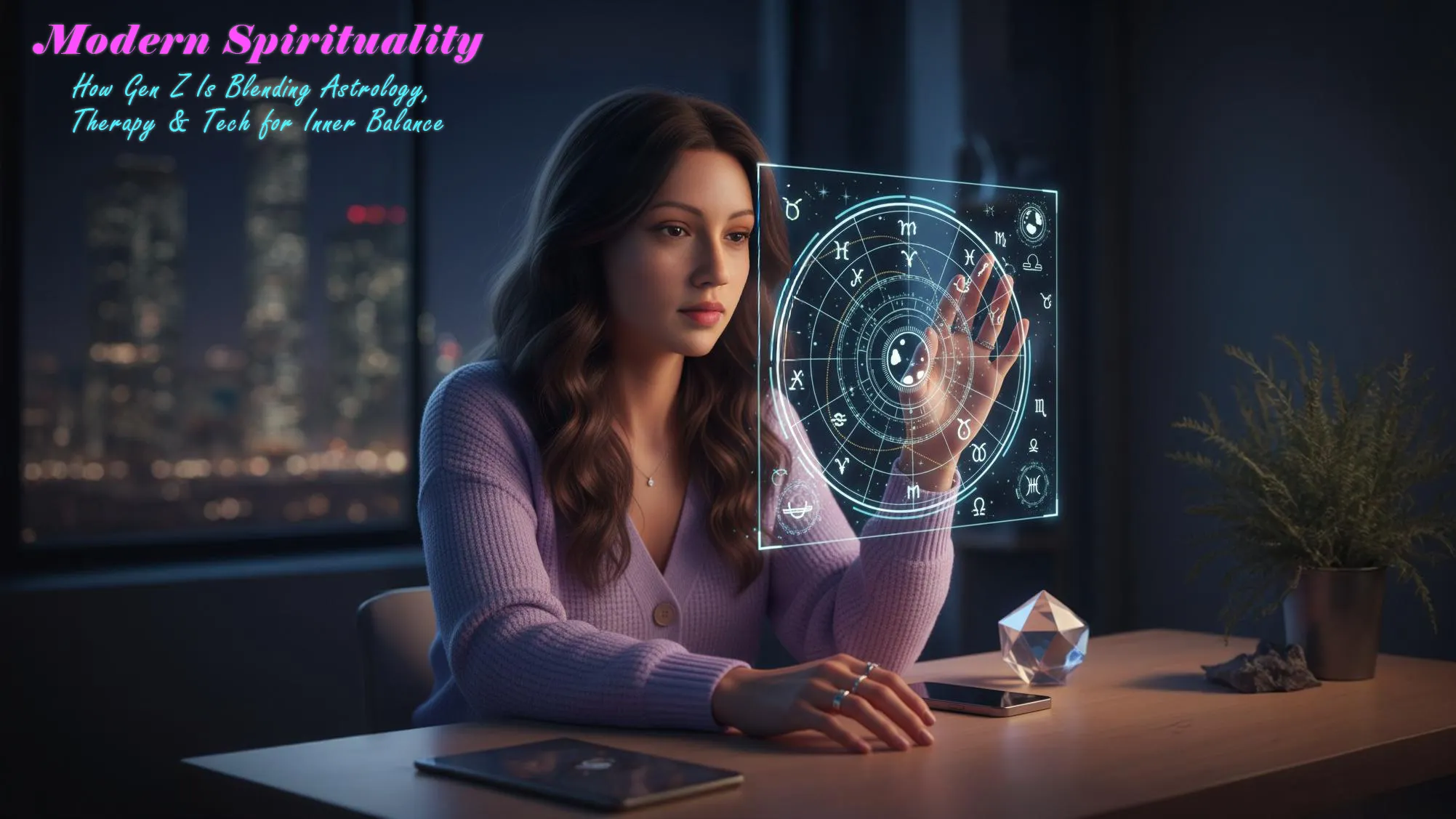
  • 🌙 Modern Spirituality: How Gen Z Is Blending Astrology, Therapy & Tech for Inner Balance

    🌙 Modern Spirituality: How Gen Z Is Blending Astrology, Therapy & Tech for Inner Balance

    In a world that never stops scrolling, Gen Z is turning inward — but in a very 2025 way.
    Forget the old dichotomy between religion and atheism; this generation is crafting its own belief system. From astrology apps like Co–Star to digital therapy on BetterHelp and mindfulness tools powered by AI, “Modern Spirituality” isn’t about worship — it’s about alignment.

    ✨ Why Modern Spirituality Is Trending

    Today’s young adults are redefining what it means to be “spiritual.” They’re not looking for dogma; they’re looking for connection — to themselves, the universe, and their mental health.

    Key drivers behind this cultural wave:

    • 🌌 Astrology as Self-Discovery: Apps and AI horoscopes are being used as emotional mirrors, not fortune tellers. Gen Z uses zodiac insights to understand behavior, compatibility, and self-growth.
    • 🧘 Mindfulness Meets Machine Learning: AI-based wellness assistants now analyze stress patterns through wearables and suggest custom meditation or breathing routines.
    • 💬 Therapy Becomes Spiritual: Online therapy platforms merge psychological healing with spiritual guidance — offering trauma-informed, intuitive coaching.
    • 🔮 Digital Rituals: Virtual full-moon ceremonies, tarot readings, and sound baths are trending across TikTok, bringing ancient rituals into digital spaces.

    💡 The Psychology Behind the Trend

    For a generation facing economic uncertainty, climate anxiety, and online burnout, spirituality provides an anchor. It’s less about believing in higher powers — and more about finding higher purpose.
    Gen Z seeks authenticity over perfection; connection over consumption. They use spiritual tools not as superstition, but as a way to stay centered in chaos.

    🚀 What’s Next?

    The future of spirituality lies in hybrid experiences — AI-powered meditation pods, astrology-based wellness retreats, and even VR temples for immersive healing.
    As Gen Z redefines what peace looks like, “Modern Spirituality” could become the next billion-dollar wellness industry — one mantra, one algorithm at a time.

    🌐 Connect with Casi Borg
    📸 Instagram: @casi_borg
    🦋 BlueSky: casi-borg.bsky.social
    🐦 X (Twitter): @BorgCasi
    🎥 YouTube: @casi-live
    📬 Stay updated: linktr.ee/casi.borg

Oh hi there 👋
It’s nice to meet you.

Sign up to receive awesome content in your inbox, every Day.

We don’t spam! Read our privacy policy for more info.