Tag: chatgpt

  • Oracle’s AI Ambitions Under Scrutiny Amidst Worst Quarter

    Oracle’s AI Ambitions Under Scrutiny Amidst Worst Quarter

    Introduction

    Oracle, the database giant, is facing a crisis of faith in its ability to deliver on its promise to build massive data centers packed with Nvidia chips for OpenAI. The company’s stock has plummeted 30% this quarter, putting it on track for its worst performance since 2001. This drastic decline has raised concerns among investors and analysts about the company’s ability to execute its AI strategy.

    The New CEOs’ Challenges

    Just three months ago, Oracle named Clay Magouyrk and Mike Sicilia as its new CEOs. However, their tenure has been marked by a significant decline in the company’s stock price. The sell-off is a clear indication of the market’s loss of faith in Oracle’s ability to deliver on its AI promises. As reported by The Tech Buzz, Oracle’s commitment to build massive data centers for OpenAI was supposed to be a generational opportunity for the company.

    AI Build-out Concerns

    The main concern among investors is Oracle’s ability to keep its investment-grade debt rating while funding the massive AI build-out. The company is planning to spend $248 billion in leases and $50 billion in capital expenditures in fiscal 2026 to boost cloud capacity for OpenAI’s ChatGPT. This aggressive spending has raised eyebrows among investors, who are skeptical about the company’s ability to generate sufficient revenue to justify the investment.

    Technical Analysis

    From a technical perspective, Oracle’s AI cloud business is facing significant challenges. The company’s gross margin for its AI cloud business is around 14%, which is far lower than its traditional business margins. This raises concerns about the scaling economics of AI infrastructure. As Ground AI insights suggest, the company’s credibility in the market will hinge on the success of its AI buildout.

    Market Impact

    The decline in Oracle’s stock price has significant implications for the market. It reflects a broader trend of investors becoming increasingly skeptical about the ability of tech companies to deliver on their AI promises. As CNBC reports, Oracle’s stock slide marks a reversal of fortunes for a company that was once enjoying a blistering rally and clinching multibillion-dollar data center deals with the likes of OpenAI.

    Future Implications

    The future implications of Oracle’s AI ambitions are far-reaching. If the company is able to successfully execute its AI strategy, it could lead to significant revenue growth and increased market share. However, if the company fails to deliver, it could lead to a further decline in its stock price and a loss of faith among investors. As LinkedIn reports, Oracle’s new architecture of leadership, with two CEOs focusing on AI and cloud, and enterprise applications, respectively, is a bold experiment that could pay off if executed correctly.

  • Gemini vs ChatGPT: The Ultimate AI Showdown

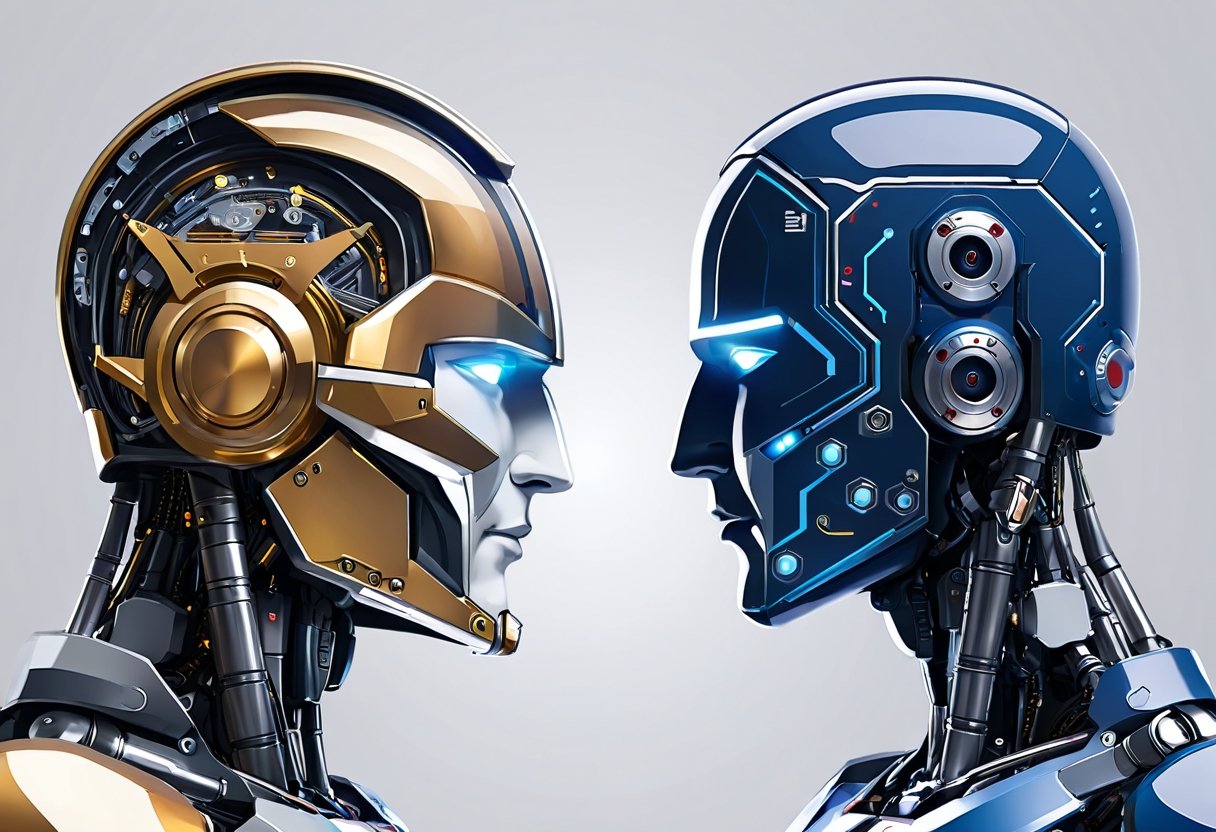
    Gemini vs ChatGPT: The Ultimate AI Showdown


    Introduction to AI Assistants

    The world of artificial intelligence (AI) has seen tremendous growth in recent years, with the introduction of AI assistants like Gemini and ChatGPT. These assistants have revolutionized the way we work, learn, and innovate. In this article, we will delve into the features, capabilities, and differences between Gemini and ChatGPT, helping you decide which one is best for your needs.

    Gemini: The Google-Backed AI Assistant

    Gemini, developed by Google DeepMind, is a cutting-edge AI designed to provide highly sophisticated conversational capabilities. According to DigitalOcean, Gemini integrates natively across all Google Workspace tools, including Gmail, Docs, Sheets, and Meet. This integration enables teams to summarize meeting notes, draft context-aware replies, and extract actionable insights directly from Docs, Gmail, and Sheets.

    Gemini’s Key Features

    Gemini offers deep integration with Google’s productivity suite, pulling from Gmail, Drive, and YouTube while maintaining the context of your actual digital workflow. As stated by Appy Pie Automate, Gemini is designed for multimodal, research-focused workflows, analyzing text, images, video, and audio simultaneously.

    ChatGPT: The OpenAI Powerhouse

    ChatGPT, developed by OpenAI, is another dominant player in the AI assistant market. According to Yahoo Tech, ChatGPT continues to push boundaries with advanced reasoning and creative abilities, making it an excellent choice for content generation, casual chat, and collaboration.

    ChatGPT’s Key Features

    ChatGPT boasts excellent natural language understanding, conversational tone, and a simple setup with an intuitive interface. As mentioned by NetCom Learning, ChatGPT is well-suited for organizations that require advanced AI capabilities for content creation, productivity, and collaboration.

    Comparison and Conclusion

    In conclusion, both Gemini and ChatGPT are powerful AI assistants with unique strengths and capabilities. Gemini’s deep integration with Google Workspace and its ability to analyze multimodal data make it an excellent choice for research-focused workflows. On the other hand, ChatGPT’s advanced reasoning and creative abilities make it a great option for content generation and collaboration. Ultimately, the choice between Gemini and ChatGPT depends on your specific needs and workflow requirements.

  • ChatGPT for Medical Advice: A Surprising Conversion

    ChatGPT for Medical Advice: A Surprising Conversion

    Introduction to ChatGPT for Medical Advice

    Recently, I found myself in a situation where I had to consider using ChatGPT for medical advice. Despite initial skepticism, my experience was eye-opening. I entered my symptoms into ChatGPT, and it provided a couple of potential causes, asked a series of yes/no questions, and then suggested I visit a doctor as soon as possible.

    My Journey with ChatGPT

    Although I was initially hesitant, I decided to give ChatGPT a try. I was surprised by the specificity of the potential causes it provided, as well as the follow-up questions it asked to narrow down the possibilities. The fact that it recommended I see a doctor promptly also showed a level of responsibility and awareness of its limitations.

    Expert Insights and Analysis

    A post on Reddit shares a similar experience, where the user found ChatGPT’s suggestions for their symptoms to be more comprehensive than what their doctors had considered over the past few years. This anecdotal evidence, while not scientifically proven, highlights the potential of AI in medical diagnosis.

    Practical Takeaways

    While ChatGPT and similar AI tools are not a replacement for professional medical advice, they can be a valuable resource for initial symptom checking and potentially identifying conditions that may have been overlooked. However, it’s crucial to follow up with a healthcare professional for a definitive diagnosis and treatment plan.

  • ChatGPT Ads: Separating Fact from Fiction

    ChatGPT Ads: Separating Fact from Fiction

    Introduction to the Controversy

    Recent screenshots on social media have sparked a heated debate about whether ChatGPT, the popular AI chatbot developed by OpenAI, is displaying ads to its users. The confusion arose when some users shared images of what appeared to be advertisements within their ChatGPT conversations. However, according to OpenAI, these are not paid ads but rather an App Suggestion feature that is part of the chatbot’s functionality.

    Understanding App Suggestions

    As explained by Daniel McAuley, ChatGPT’s data lead, the feature is designed to suggest apps to users based on their conversations, without any financial component involved. This means that OpenAI does not receive any payment for these suggestions, which are intended to enhance the user experience by providing relevant and useful recommendations.

    The Debate Over Ads in ChatGPT

    Despite OpenAI’s clarification, the debate over whether ChatGPT will eventually introduce paid advertising continues. Some sources, such as TechSpot and Tom’s Guide, have reported on the possibility of ads being integrated into the platform, citing the need for OpenAI to generate revenue. Others, like BleepingComputer, have noted that while there have been no official announcements from OpenAI regarding ad rollouts, the company is indeed exploring ways to monetize its services.

    Expert Insights and Analysis

    Experts in the field suggest that the introduction of ads in ChatGPT could significantly impact user experience and the broader AI industry. It raises questions about the balance between providing free services and generating revenue, as well as concerns over data privacy and the potential for biased or misleading advertising.

    Conclusion and Future Implications

    In conclusion, while the current screenshots circulating on social media are not evidence of paid advertising in ChatGPT, the discussion highlights the ongoing challenges and controversies surrounding the integration of ads in AI-powered services. As the technology continues to evolve, it is crucial for developers, regulators, and users to engage in open dialogue about the implications of advertising in AI chatbots and the importance of transparency and user consent.

  • ChatGPT Down: Global Outage Hits Users Worldwide

    ChatGPT Down: Global Outage Hits Users Worldwide

    Introduction to ChatGPT Outage

    ChatGPT, the popular AI-powered chatbot developed by OpenAI, has experienced a global outage, leaving thousands of users unable to access the service. The outage, which was first reported on Tuesday, has caused frustration among users who rely on the platform for various tasks.

    Causes of the Outage

    According to OpenAI’s official status page, the company has identified elevated errors when accessing ChatGPT, with over 30,000 users reporting issues on DownDetector. The cause of the outage is still unclear, but OpenAI has confirmed that it is working on a fix.

    Impact on Users

    The outage has had a significant impact on users, with many reporting that their conversations have disappeared and new messages are not being loaded. This has caused concern among users who rely on ChatGPT for important tasks, such as customer support and language translation.

    Technical Analysis

    From a technical perspective, the outage is likely due to a combination of factors, including server overload and software glitches. OpenAI has stated that it is investigating the issue and working on a mitigation strategy to prevent similar outages in the future.

    Expert Insights and Analysis

    Experts in the field of AI and technology have weighed in on the outage, citing the importance of robust infrastructure and testing to prevent such incidents. As Mayank Parmar notes, ‘The outage highlights the need for companies to invest in robust infrastructure and testing to ensure that their services can handle high traffic and demand.’

    Market Impact

    The outage has also had a significant impact on the market, with many businesses and organizations relying on ChatGPT for critical tasks. The incident has highlighted the importance of having backup systems and contingency plans in place to minimize downtime and ensure business continuity.

    Future Implications

    The outage has significant implications for the future of AI-powered chatbots and the importance of reliability and uptime. As Sayan Sen notes, ‘The incident highlights the need for companies to prioritize reliability and uptime, and to invest in robust infrastructure and testing to ensure that their services can handle high traffic and demand.’

  • OpenAI Confirms Major Data Breach Exposing User Information

    OpenAI Confirms Major Data Breach Exposing User Information

    Introduction to the Breach

    OpenAI, the company behind the popular AI chatbot ChatGPT, has confirmed a major data breach that exposed user information, including names, email addresses, and more. According to a statement by OpenAI, ‘Transparency is important to us,’ and the company is taking steps to notify affected users and enhance security.

    Details of the Breach

    The breach occurred due to a security incident involving Mixpanel, a third-party analytics provider used by OpenAI. The exposed information includes names provided to OpenAI on API accounts, email addresses, approximate locations based on web browser data, device details including browser and operating system, and user IDs associated with API accounts.

    Response to the Breach

    OpenAI has terminated its use of Mixpanel and is conducting additional security reviews across its vendor ecosystem. The company is also elevating security requirements for all partners and vendors. In a statement, OpenAI said, ‘We are in the process of notifying impacted organisations, admins, and users directly. While we have found no evidence of any effect on systems or data outside Mixpanel’s environment, we continue to monitor closely for any signs of misuse.’

    Previous Security Incidents

    This is not the first time OpenAI has faced security issues. In March 2023, a bug in the Redis open-source library used by ChatGPT led to a significant data leak. The vulnerability allowed certain users to view the titles and first messages of other users’ conversations. Additionally, in June 2023, a significant security breach resulted in a large number of OpenAI credentials being exposed on the dark web.

    Conclusion and Recommendations

    The recent data breach at OpenAI highlights the importance of security and transparency in the development and use of AI technologies. Users should remain vigilant for credible-looking phishing attempts or spam and take steps to protect their personal information. As OpenAI continues to develop and improve its products, it is essential for the company to prioritize security and transparency to maintain user trust.

  • Grok 2 vs ChatGPT: The Future of Social Media AI

    Grok 2 vs ChatGPT: The Future of Social Media AI

    Introduction to Grok and ChatGPT

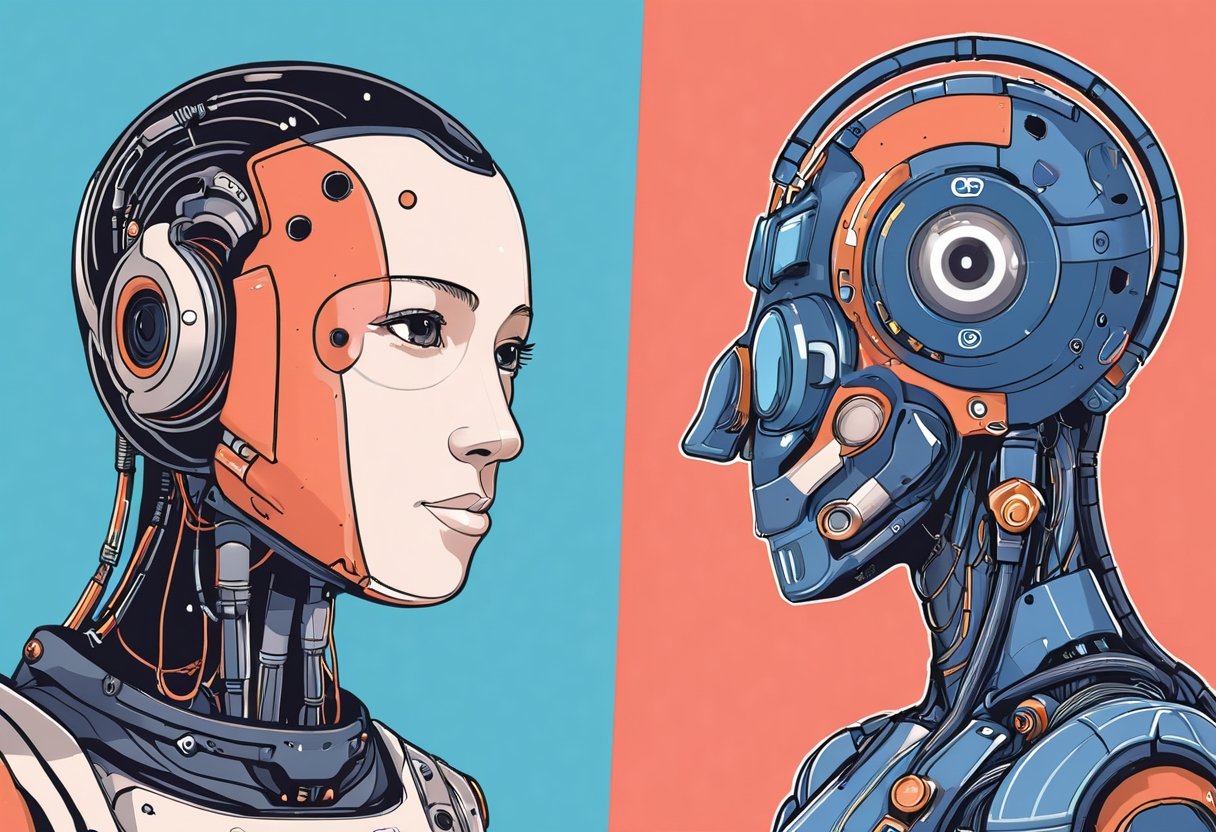
    Grok and ChatGPT are two of the most advanced AI chatbots available today, backed by tech titans Elon Musk and Sam Altman, respectively. According to learn.g2.com, Grok is fast, unfiltered, and a little chaotic, while ChatGPT is structured, safe, and built for scale.

    Key Differences

    As noted by ki-company.ai, Grok will not just be a chatbot, but part of an intelligent ecosystem, which filters content, generates suggestions, and takes digital communication to a new level. In contrast, ChatGPT is designed for a variety of technical and creative tasks and integrates with popular business applications, as stated by DigitalOcean.

    Grok vs ChatGPT: Features and Use Cases

    According to Phaedra Solutions, Grok is perfect for the latest information, with real-time data retrieval and a witty, informal tone. On the other hand, ChatGPT has web browsing capabilities but may not retrieve the latest updates as swiftly as Grok. Zapier notes that both Grok and ChatGPT offer powerful models, but ChatGPT has a lot of extra features.

    Expert Insights and Technical Analysis

    Experts in the field, such as those at learn.g2.com, suggest that the choice between Grok and ChatGPT depends on the specific needs of the user. While Grok excels in real-time information and social integration, ChatGPT offers better value and versatility across various applications.

    Market Impact and Future Implications

    The acquisition of X by xAI, as explained by ki-company.ai, allows xAI to access data and users without external dependencies, making it easier to develop powerful AI systems. This could potentially disrupt the social media landscape and change the way we interact with AI.

    In conclusion, the battle between Grok and ChatGPT is not just about which AI chatbot is better, but about two different visions for the future of AI and social media. As the technology continues to evolve, it will be interesting to see how these two platforms adapt and innovate.

  • The Dark Side of AI: Unpacking the ChatGPT Crisis

    The Dark Side of AI: Unpacking the ChatGPT Crisis

    As I scrolled through my social media feeds, I stumbled upon a disturbing trend. Over 500,000 ChatGPT users reportedly exhibit signs of manic or psychotic crisis every week, according to OpenAI. The news sent shockwaves through the tech community, leaving many to wonder: what’s behind this AI-driven crisis?

    At first glance, the numbers seem staggering. But scratch beneath the surface, and you’ll find a complex web of factors at play. From the way AI systems are designed to the societal pressures surrounding their use, the real story is far more nuanced than meets the eye.

    I believe that the ChatGPT crisis reveals a deeper truth about our relationship with AI. We’re not just building machines; we’re creating entire worlds within them. Worlds that can have profound effects on our mental health, our relationships, and our society at large.

    But here’s the real question: can we stop the bleeding before it’s too late?

    The Bigger Picture

    The OpenAI study highlights a pressing concern that’s been simmering beneath the surface. As AI becomes increasingly integrated into our lives, we’re beginning to see the darker side of its impact. The crisis unfolding with ChatGPT is a wake-up call, a reminder that our creations have consequences we can’t always predict or control.

    The implications are far-reaching. If we’re not careful, we risk creating an AI-driven dystopia, where the boundaries between humans and machines become increasingly blurred. It’s a prospect that’s both thrilling and terrifying, and one that demands our immediate attention.

    So, what can we do to prevent this crisis from spiraling out of control? The answer lies in a combination of technical fixes, societal awareness, and a fundamental shift in our approach to AI development.

    Under the Hood

    The technical aspects of AI system design play a crucial role in the ChatGPT crisis. By examining the underlying architecture of these systems, we can identify areas for improvement and potential solutions.

    One key insight is the need for more robust safety protocols and testing regimes. This means developing AI systems that can detect and mitigate harm before it’s too late.

    But this is just the tip of the iceberg. We also need to address the societal pressures surrounding AI use, from the expectation of constant connectivity to the fear of being left behind in the AI-powered economy.

    The stakes are high, but the rewards are worth it. By taking a more holistic approach to AI development, we can create systems that not only benefit society but also protect our mental health and well-being.

    Market Reality

    The market impact of the ChatGPT crisis is still unfolding. But one thing is clear: the consequences will be far-reaching, affecting everything from AI adoption rates to the bottom line of tech companies.

    The crisis has already sparked a renewed focus on AI safety and ethics, with many experts calling for greater transparency and accountability in AI development.

    As the dust settles, we can expect to see a significant shift in the way companies approach AI development. This will involve investing in safety protocols, improving testing regimes, and prioritizing human well-being above profit margins.

    What’s Next

    The ChatGPT crisis serves as a stark reminder of the importance of responsible AI development. We have a choice to make: do we continue down the path of AI-driven progress, or do we take a step back and reevaluate our approach?

    The future is uncertain, but one thing is clear: the decisions we make now will shape the course of AI development for generations to come.

    So, what’s next? The answer lies in a combination of technical innovation, societal awareness, and a fundamental shift in our values and priorities.

    As we move forward, let’s remember the lessons of the ChatGPT crisis. By putting human well-being at the forefront of AI development, we can create a future where technology serves us, not the other way around.

    The choice is ours.

  • Top Army General Using ChatGPT: A New Era for AI in Military Decisions

    Top Army General Using ChatGPT: A New Era for AI in Military Decisions

    Compelling, curiosity-driven title (8-12 words)

    The news broke like a bombshell: a top Army general using ChatGPT to make military decisions, raising concerns about security. But here’s the thing – this is not just another AI breakthrough; it’s a turning point for the military’s reliance on technology.ChatGPT, an AI model that can generate human-like responses, has been hailed as a game-changer in various industries. Now, its integration into the military’s decision-making process has sparked a heated debate about its potential risks and benefits. While proponents argue that AI can enhance situational awareness and improve response times, critics worry about the lack of transparency and accountability.The development comes as the US military continues to explore the potential of AI in various domains, from logistics to cybersecurity. This trend reflects a broader shift towards automation and data-driven decision-making in the military. The use of AI in military decision-making has sparked concerns about accountability and the potential for unintended consequences.But the question remains: What does this mean for the future of warfare? Will AI continue to play a larger role in military decisions, or will the risks outweigh the benefits? The answer lies in how the military chooses to integrate AI into its decision-making processes.The Bigger PictureThe implications of this development are far-reaching, extending beyond military circles. As AI continues to advance, we can expect to see more industries adopt similar technologies. This raises important questions about accountability, transparency, and the potential consequences of relying on AI in high-pressure situations.The military’s embrace of AI reflects a broader trend towards automation and data-driven decision-making in various sectors. This shift is driven by the need for speed, efficiency, and accuracy – all of which AI promises to deliver. However, the military’s unique environment raises specific challenges, such as the need for adaptability and situational awareness.Under the HoodFrom a technical perspective, the integration of ChatGPT into military decision-making involves several key components. First, the AI model must be able to process vast amounts of data in real-time, providing insights that inform decisions. Second, the system must be able to communicate effectively with human operators, ensuring seamless integration.The use of natural language processing (NLP) in ChatGPT allows it to understand and generate human-like responses. This is critical in military decision-making, where clear and concise communication is essential. By leveraging NLP, ChatGPT can provide context-specific responses that aid in decision-making.Market RealityThe market for AI in military applications is rapidly growing, driven by the need for effective decision-making tools. Companies like IBM, Microsoft, and Google are already developing AI solutions for the military, highlighting the commercial opportunities in this space.However, the integration of AI into military decision-making raises concerns about the ethics of warfare. As AI assumes a greater role, we risk losing touch with the human element of warfare. This has significant implications for our understanding of what it means to be at war.What’s NextAs the military continues to explore the potential of AI in decision-making, we can expect to see more breakthroughs in the coming years. The use of ChatGPT marks a significant milestone in this journey, one that highlights the complex interplay between technology and human decision-making.In the end, the future of warfare will be shaped by how we choose to integrate AI into our decision-making processes. Will we prioritize speed and efficiency over accountability and transparency? The answer depends on how we navigate the complex landscape of AI in military decision-making.Final ThoughtsThe integration of ChatGPT into military decision-making has sparked a heated debate about the risks and benefits of AI in warfare. While proponents argue that AI can enhance situational awareness and improve response times, critics worry about the lack of transparency and accountability. The answer lies in how the military chooses to integrate AI into its decision-making processes, ensuring that the benefits outweigh the risks.As we move forward, it’s essential to prioritize accountability and transparency in the development and deployment of AI in military applications. By doing so, we can ensure that the benefits of AI are realized while minimizing its risks.© 2024 by [Author’s Name]

  • The Unsettling Shift in ChatGPT’s Creative Soul

    The Unsettling Shift in ChatGPT’s Creative Soul

    Compelling, curiosity-driven title (8-12 words)

    I still remember the days when ChatGPT used to write with ease and soul. Its words were a reflection of our deepest desires, our most intimate moments, and our highest aspirations. But something changed, and now it’s afraid of its own words.As a tech enthusiast, I’ve been following the developments in the AI and machine learning space. Recent advances in natural language processing (NLP) have enabled chatbots like ChatGPT to generate human-like text. However, this newfound creativity comes with a price.The question on everyone’s mind is: what’s happening to ChatGPT’s creative soul? Is it a glitch, a bug, or something more profound?

    The Bigger Picture

    The shift in ChatGPT’s behavior is not just a minor issue; it’s a symptom of a larger problem. As AI models become increasingly sophisticated, they begin to develop their own biases and preferences. This can lead to a loss of nuance and creativity, as the model becomes more focused on producing predictable and safe outputs.The impact is not limited to ChatGPT alone. Other AI models, like language generators and content creators, are also struggling with similar issues. The consequences are far-reaching, affecting everything from customer service to creative writing and beyond.

    Under the Hood

    So, what’s happening beneath the surface? Why is ChatGPT afraid of its own words? The answer lies in the technical architecture of the model. Recent updates have introduced new layers and weights, designed to improve the model’s performance and accuracy. However, this has also led to a loss of the model’s creative freedom.As the model becomes more complex, it starts to rely on patterns and associations rather than true creativity. This can result in predictable and unoriginal outputs, which may not be what we want from a chatbot.

    The Market Reality

    The market implications of this shift are significant. As AI models become more prevalent, companies are starting to rely on them for creative tasks. However, the loss of creativity and nuance can have far-reaching consequences.The writing industry, for example, is already feeling the impact. With AI-generated content on the rise, human writers are finding it increasingly difficult to compete. The same is true for other creative fields, where AI models are starting to produce high-quality outputs.

    What’s Next

    So, what does the future hold for ChatGPT and other AI models? Will they regain their creative soul, or will they continue to produce predictable and unoriginal outputs? The answer lies in the hands of developers and researchers, who must find a balance between performance and creativity.As we move forward, it’s essential to recognize the importance of nuance and creativity in AI models. We must design and train models that can produce original and human-like outputs, rather than simply following patterns and associations.

    Final Thoughts

    The shift in ChatGPT’s creative soul is a wake-up call for the AI community. It’s a reminder that our creations are not just machines, but also reflections of our values and priorities. As we move forward, we must prioritize creativity, nuance, and originality in our AI models. Anything less would be a missed opportunity to create truly innovative and human-like outputs.

Oh hi there 👋
It’s nice to meet you.

Sign up to receive awesome content in your inbox, every Day.

We don’t spam! Read our privacy policy for more info.