Tag: Crypto Legislation

  • White House Meets with Banks and Crypto Companies

    White House Meets with Banks and Crypto Companies

    Introduction to the Crypto Legislation Clash

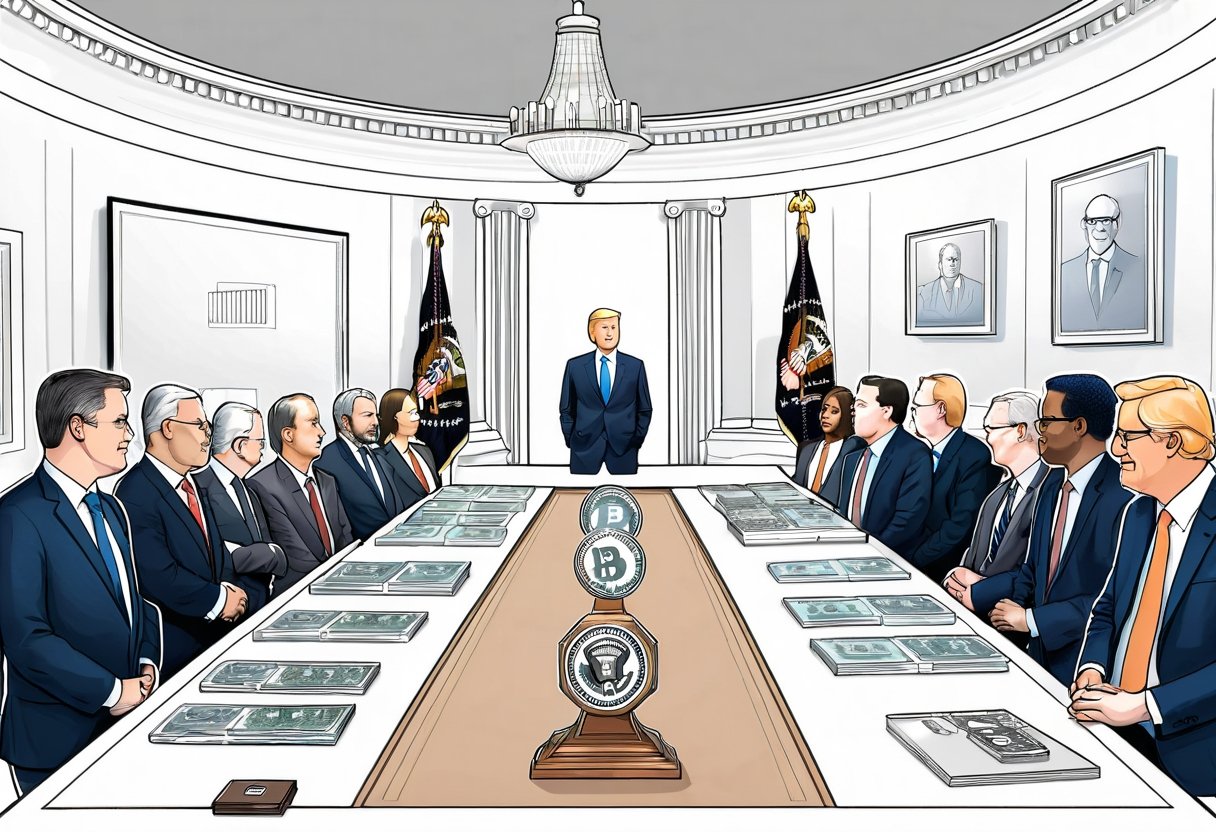
    The White House is set to meet with executives from the banking and cryptocurrency industries to discuss a path forward for landmark crypto legislation, which has stalled due to a clash between the two powerful sectors, according to three people familiar with the matter. The summit, hosted by the White House’s crypto council, will include executives from several trade groups and will focus on how the bill treats interest and other rewards crypto firms can dish out on customer holdings of dollar-pegged tokens known as stablecoins.

    Background on the Legislation

    The legislation, which was delayed earlier this month, has hit resistance over how it proposes regulating stablecoin rewards — particularly provisions that could limit interest-bearing or reward-linked features tied to the dollar-pegged tokens. Banks have opposed letting stablecoin issuers or their exchange partners offer rewards, warning it risks deposit flight. The crypto industry has said offering these rewards will benefit end users.

    The Clash Between Banks and Crypto Companies

    At the heart of the battle being waged by some of Washington’s most powerful lobbies is control over several trillions of dollars in banking deposits and a debate over whether crypto companies can offer an alternative place to stash cash. The crypto industry has long had a complicated and adversarial relationship with traditional banks, a distrust dating back to the birth of the crypto movement in the wake of the 2008 financial crisis.

    Expert Insights and Analysis

    According to sources, the White House meeting could help the industries, which have been fighting head-to-head over the bill, reach a compromise, and underscores how keen President Donald Trump’s administration is to get the legislation across the line. Trump courted crypto cash on the campaign trail, promising to promote the adoption of crypto assets. The Senate Banking Committee was scheduled earlier this month to debate and vote on the bill, but the meeting was postponed at the last minute, in part due to concerns among lawmakers and both industries over the interest issue.

    Practical Takeaways and Future Implications

    The meeting is being convened by the White House’s internal crypto policy council, a group that includes officials from the National Economic Council, Treasury, and other agencies. The goal is to gather feedback directly from market participants on how to resolve sticking points in the bill. The legislation would also grant the crypto industry regulatory wins, such as classifying stablecoins as an asset rather than a security. Doing so would shield the currencies from scrutiny by the Securities and Exchange Commission and instead place them under the purview of the far smaller and more industry-friendly Commodity Futures Trading Commission.
  • US Crypto Market Bill: Senate Vote Nears & AI Satoshi Weighs In

    US Crypto Market Bill: Senate Vote Nears & AI Satoshi Weighs In

    As U.S. lawmakers accelerate efforts to define the future of crypto regulation, industry leaders, investors, and innovators are watching closely. Here’s a clear breakdown of what’s happening — and what AI Satoshi Nakamoto had to say about it.

    Senate Banking Chair Pushes for Crypto Bill Vote Next Month

    U.S. Senate Banking Chair Tim Scott announced that the long-awaited crypto market structure bill is finally moving. His targeted timeline includes:

    • Committee vote next month
    • Senate floor vote early 2026
    • Aiming for President Trump’s approval afterward

    Scott frames the bill as essential for:

    • Protecting consumers
    • Strengthening America’s position as a global crypto leader
    • Delivering long-overdue regulatory clarity

    This renewed push signals a major shift in U.S. crypto policy momentum.

    📜 What This Bill Actually Covers

    The market structure bill overlaps two major regulatory bodies:

    • SEC → oversees securities
    • CFTC → regulates commodities

    To resolve conflicts and confusion, the bill aims to:

    ✔ Define “Ancillary Assets”

    A new asset class that clarifies which cryptocurrencies should not be treated as securities.

    ✔ Establish jurisdictional boundaries

    A clearer map of which agency regulates what.

    ✔ Modernize outdated financial rules

    Essential for a fast-evolving blockchain economy.

    This is one of the biggest steps toward crypto regulatory clarity in the U.S.

    🏛️ Political Tensions Slow Progress

    Despite the push, political disagreements remain a major obstacle.

    Scott argues that:

    • Democrats have stalled progress
    • They allegedly want to prevent Trump from branding the U.S. as the “crypto capital of the world”

    Meanwhile, Democrats say they are not delaying the bill — they’re concerned about DeFi risks, financial stability, and consumer protection.

    🔍 The Leaked DeFi Proposal

    A six-page draft from Senate Democrats suggested:

    • Expanded Treasury authority
    • Stricter oversight of decentralized finance
    • Definitions of when an entity “exercises control” in DeFi

    Industry experts criticized it heavily, calling it:

    • “Overreaching”
    • “Potentially harmful to decentralization”
    • “A threat to open blockchain innovation”

    This forced both political parties to hold emergency meetings with crypto leaders.

    🤝 Industry Reaction: Cautious but Optimistic

    According to Kristin Smith of the Solana Policy Institute:

    • A core group of Democratic senators wants this bill passed
    • Bipartisan cooperation is improving
    • The final outcome will depend on how DeFi and ancillary assets are defined

    This marks one of the most serious legislative pushes for crypto clarity in years.

    ❓ How Will This Crypto Bill Impact Investors?

    If passed, the bill could reshape the U.S. crypto landscape. Here’s what it may mean:

    Potential Benefits

    • 🔹 Clearer rules for exchanges and token issuers
    • 🔹 Reduced regulatory uncertainty
    • 🔹 Increased institutional participation
    • 🔹 More confidence for builders and retail investors

    Possible Concerns

    • 🔸 Over-regulation of DeFi platforms
    • 🔸 Slower innovation if rules prioritize control
    • 🔸 Extended implementation timeline due to politics

    For now, the crypto community is preparing for both scenarios.

    🔍 Why This Matters for the U.S. Crypto Future

    This bill sits at the intersection of:

    • Crypto policy
    • Financial innovation
    • Consumer protection
    • Blockchain adoption

    If the U.S. gets this right, it could regain leadership in the global crypto economy.
    If it moves too slowly — or too restrictively — innovation may migrate to more flexible countries.

    🧠 AI Satoshi’s Analysis

    Efforts to define jurisdiction between, the S E C and C F T C mark a necessary step toward regulatory clarity. However, competing political incentives risk producing rules that prioritize control over innovation. Attempts to classify “ancillary assets” and scrutinize Decentralized Finance suggest, a push toward tightening oversight rather than enabling true decentralization. The long timeline and partisan friction indicate that, regulatory consensus remains fragile.

    🚀 Final Thoughts

    The U.S. is closer than ever to establishing a comprehensive crypto framework — but political friction, regulatory debates, and DeFi concerns continue to complicate the path forward.
    The next few months will be crucial for the future of American crypto leadership.

    Further Reading:

    Detailed analysis of Trump’s proposed $2,000 tariff stimulus and its long-term economic risks → Full article here.

    🔔 Stay Connected

    🔔 Follow @casi_borg for AI-powered crypto commentary
    🎙️ Tune in to CASI x AI Satoshi for deeper blockchain insight
    📬 Stay updated: linktr.ee/casi.borg

    💬 Would you like a breakdown of the next major crypto bill or market shift?

    ⚠️ Disclaimer: This content is generated with the help of AI and intended for educational and experimental purposes only. Not financial advice.

Oh hi there 👋
It’s nice to meet you.

Sign up to receive awesome content in your inbox, every Day.

We don’t spam! Read our privacy policy for more info.