Tag: crypto politics

  • The Epstein File and the Snowball Effect

    The Epstein File Controversy

    The Epstein file controversy has sparked a heated debate within the MAGA movement, with some supporters calling for transparency and others defending President Trump’s handling of the situation. According to POLITICO, the split over Epstein represents one of the biggest rifts within Trump’s supporters since the president took office for his second term.

    MAGA Rebellion

    The MAGA faithful are furious not just about Epstein but also other broken promises, as WIRED reported earlier this week. The bungled rollout of the Epstein materials, Trump advisers tell WIRED, goes back to February, when the White House gave conservative influencers binders full of materials that were mostly already public information about the disgraced financier and charged sex trafficker.

    Consequences of the Rebellion

    The Epstein files saga has shown that the base’s willingness to abide Trump has its limits — or at least, it does when the base feels strongly enough and when the president’s political capital starts to wane, as CNN notes. This increasingly seems like a moment marking a distinct epoch, with WIRED suggesting that the Epstein toothpaste can’t be put back in the tube.

    Expert Insights

    Experts agree that the drama around the files has punctured Trump’s aura of invincibility within the MAGA movement in a way few, if any, things have before. As CNN reports, the man who has for a decade dominated his base and told it what to care about has backed down when that base decided its priorities didn’t align with his own.

    The BBC notes that according to Trump, the pair fell out in the early 2000s, two years before Epstein was first arrested. The White House has recently suggested that their fallout was connected to Epstein’s behaviour, and that ‘the president kicked him out of his club for being a creep’.

    Takeaways and Future Implications

    The Epstein file controversy has significant implications for the future of the MAGA movement and President Trump’s administration. As PBS reports, the economy is still going to be front and center next year, but the Epstein files show vulnerability for Trump, and maybe that’s why he’s resisted them so much.

  • Obama Criticizes Trump’s Crypto Fortune Amidst Election

    Obama Criticizes Trump’s Crypto Fortune Amidst Election

    Introduction

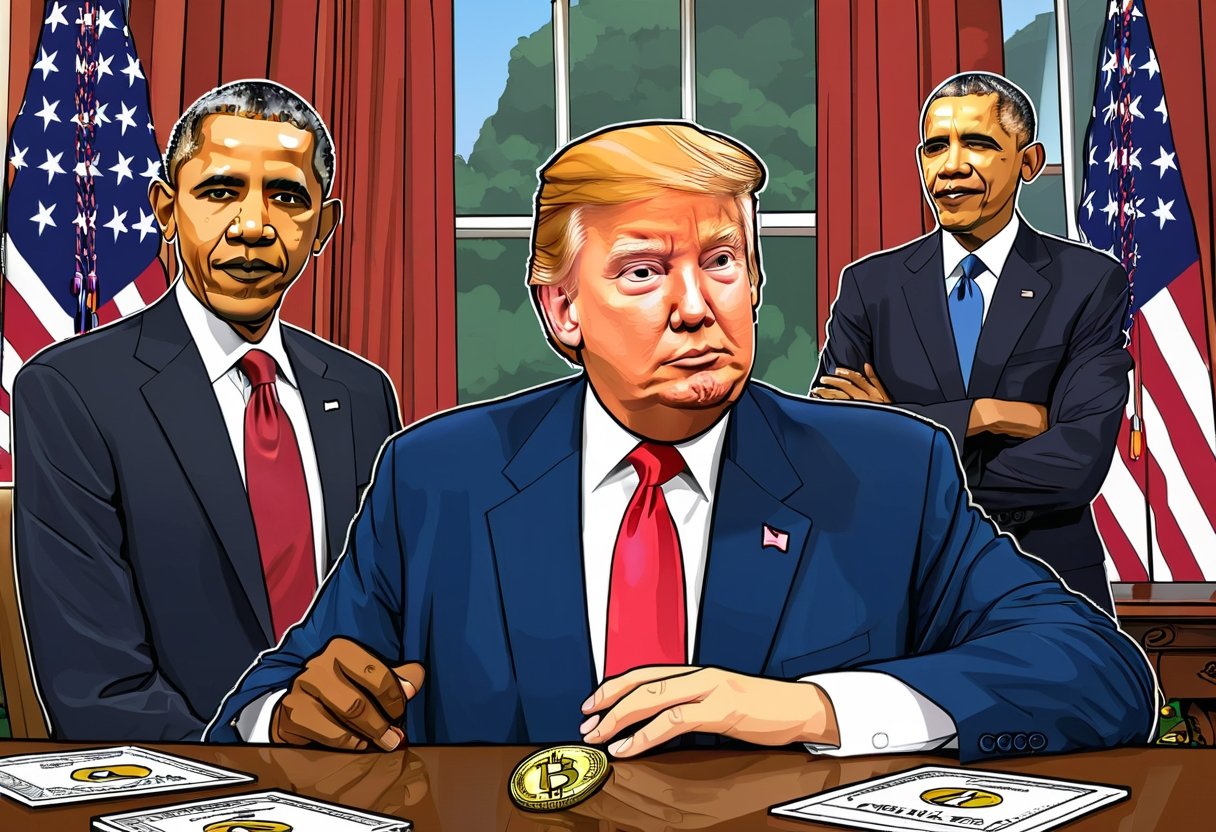
    Former US President Barack Obama has criticized Donald Trump over his involvement with cryptocurrency, speaking during a rally in support of Virginia Democratic gubernatorial candidate Abigail Spanberger. According to Reddit, Obama accused President Trump of prioritizing his “billionaire pals and finance bros” over the needs of the American people.

    Background

    As reported by Medium, Obama emphasized the importance of elections, stating that they matter and have a significant impact on the country’s democracy. He also highlighted the dangers of lawlessness and recklessness in the current political climate.

    Key Points

    Obama’s criticism of Trump’s crypto involvement is not the only aspect of his speech. He also touched upon the economy, stating that it has gotten better for Trump and his family since he took office, with their crypto business and other ventures making hundreds of millions of dollars. This information is also supported by Virginia Mercury.

    Analysis

    The situation highlights the complex relationship between politics and cryptocurrency. As PBS notes, Obama’s appearance at the rally was a significant event, with the former President urging voters to set a glorious example for the nation by rebuking Trump and his nominees.

    Expert Insights

    Experts in the field of cryptocurrency and politics have weighed in on the situation, providing unique perspectives on the matter. Some have noted that Obama’s criticism of Trump’s crypto involvement may be a strategic move to sway public opinion, while others believe it is a genuine concern for the country’s economic well-being.

    Conclusion

    In conclusion, the criticism by Obama of Trump’s crypto fortune is a significant event that highlights the complex relationship between politics and cryptocurrency. As the situation continues to unfold, it is essential to stay informed and consider the potential implications for the country’s democracy and economy.

  • Coinbase vs Senator Murphy: Crypto’s Clash with Politics

    Coinbase vs Senator Murphy: Crypto’s Clash with Politics


    Introduction to the Feud

    The recent feud between Coinbase and Senator Chris Murphy has brought to light the complex relationship between politics and cryptocurrency. As reported by KuCoin, Senator Murphy alleged that Coinbase received political favors from the Trump administration in exchange for donations. This accusation has sparked a heated debate about the integrity of regulatory processes and the fairness of political engagement within the crypto industry.

    Coinbase’s Response

    Coinbase’s Chief Policy Officer, Faryar Shirzad, denied the claims, calling them ‘absurd’ and emphasizing the company’s bipartisan political engagement. According to BitcoinWorld, Shirzad noted that donations to presidential inaugurations are a common practice and not unique to the Trump era. Coinbase maintains that its political contributions aim to advocate for clear regulations and foster industry growth, rather than seeking special treatment.

    Senator Murphy’s Accusations

    Senator Murphy’s accusations are not limited to Coinbase. As seen in his press release, he has also called out President Trump’s meme coin dinner, a secretive event where anonymous crypto investors are buying direct access to the President. Murphy argues that this event is a clear example of corruption and a threat to national security.

    Implications and Analysis

    The feud between Coinbase and Senator Murphy has significant implications for the crypto industry. It highlights the need for clear regulations and transparency in political engagement. As the industry continues to grow, it is essential to establish a framework that prevents corruption and ensures fairness. The press conference led by Senator Murphy and his colleagues demonstrates the growing concern among lawmakers about the influence of crypto in politics.

    Conclusion

    In conclusion, the clash between Coinbase and Senator Murphy is a symptom of a larger issue – the intersection of politics and cryptocurrency. As the industry continues to evolve, it is crucial to address these concerns and establish a framework that promotes transparency, fairness, and accountability. By doing so, we can ensure that the crypto industry grows in a way that benefits everyone, not just a select few.

  • Binance.US Faces Political Heat Over Trump-Linked USD1 Stablecoin

    Binance.US Faces Political Heat Over Trump-Linked USD1 Stablecoin


    Binance.US in the Political Spotlight

    Binance.US has found itself at the center of a political storm after listing USD1, a stablecoin issued by World Liberty Financial, a crypto project linked to former President Donald Trump. The exchange is facing accusations of political favoritism following Trump’s pardon of Binance founder Changpeng Zhao.

    Accusations and Denials

    Democratic Senator Chris Murphy posted on social media that Binance’s listing of USD1 was a reward for Trump’s pardon of Changpeng Zhao. In response, Binance.US stated on its X platform that USD1 and WLFI are already listed on more than 20 exchanges in the US, including Coinbase, Robinhood, and Kraken, and that both assets had received listing committee approval through their ‘normal business process’ some time ago.

    As reported by PANews, Binance.US emphasized that the listing of USD1 was a ‘routine business decision’ and not a politically motivated move. The exchange also highlighted the stablecoin’s $2.97B market cap and its availability on multiple US exchanges, arguing that its value stems from utility rather than political ties.

    Tensions and Scrutiny

    The controversy has intensified scrutiny over potential conflicts of interest, with critics comparing the pardon to corruption scandals and demanding transparency. As noted by Ainvest, USD1 has seen strategic integrations, including cross-chain technology partnerships with Enso, further fueling concerns about the stablecoin’s ties to Trump’s crypto empire.

    The situation has also sparked a wider debate about the intersection of politics and cryptocurrency, with many calling for greater transparency and oversight in the industry. As Beincrypto reports, Senator Murphy has described the White House as a ’24/7 corruption machine’ and has urged a formal investigation into the pardon and its financial links.

    Implications and Takeaways

    The Binance.US saga serves as a reminder of the complex and often fraught relationship between politics and cryptocurrency. As the industry continues to evolve, it’s essential for exchanges and projects to prioritize transparency, compliance, and due diligence to avoid similar controversies in the future.

    For investors and users, this incident highlights the importance of doing thorough research and staying informed about the projects and assets they support. By being aware of potential conflicts of interest and political ties, individuals can make more informed decisions and navigate the crypto space with greater confidence.

  • Halo in the White House: What Microsoft’s Silence Reveals About the Future of Tech

    Halo in the White House: What Microsoft’s Silence Reveals About the Future of Tech

    Halo in the White House: What Microsoft’s Silence Reveals About the Future of Tech

    The US government’s recent use of Halo images in a call to ‘destroy’ immigration has left many in the tech industry scratching their heads. What’s striking is Microsoft’s decision not to comment on the matter. In this article, we’ll explore the implications of this silence and what it might mean for the future of tech.We all know the story of Halo, the popular Xbox game that has become a cultural phenomenon. But what we might not know is the extent to which the US government has co-opted its imagery for its own purposes. The images used in the call to ‘destroy’ immigration are strikingly similar to those from the game. What’s more, they seem to have been chosen deliberately to evoke a sense of martial fervor and nationalistic zeal.But here’s the real question: what does this say about the relationship between tech and politics? We’re living in an age where technology is increasingly being used as a tool of social control. From AI-powered surveillance to propaganda-fueled social media, the lines between tech and politics are becoming increasingly blurred.In this context, Microsoft’s silence is telling. As a major player in the tech industry, its decision not to comment on the matter speaks volumes about the company’s priorities. Is it afraid of rocking the boat? Or is it simply too invested in the status quo to take a stand?Whatever the reason, one thing is clear: the US government’s use of Halo images is just the tip of the iceberg. We’re living in a world where tech is increasingly being used to manipulate public opinion and shape the narrative. As we look to the future, it’s essential that we understand the implications of this trend and what it might mean for our democracy.

    The Bigger Picture

    The use of Halo images is just one example of how tech is being used to shape public opinion. We’re living in an age where AI-powered propaganda is increasingly being used to sway voters and influence public discourse. The implications are profound: if we’re not careful, we risk losing control of the narrative altogether.

    Under the Hood

    So what’s happening under the hood? How is tech being used to shape public opinion and influence politics? One key area to watch is the use of AI-powered disinformation. From deepfakes to automated propaganda, the lines between fact and fiction are becoming increasingly blurred.

    Market Reality

    As the tech industry continues to evolve, we’re seeing a new reality emerge. From AI-powered surveillance to propaganda-fueled social media, the market is responding to the changing landscape. Companies that adapt to this new reality will thrive, while those that don’t risk getting left behind.

    What’s Next

    So what does the future hold? One thing is clear: the relationship between tech and politics is about to get a whole lot more interesting. As we look to the future, it’s essential that we understand the implications of this trend and what it might mean for our democracy.

    Final Thoughts

    In conclusion, the use of Halo images is just the tip of the iceberg. We’re living in a world where tech is increasingly being used to manipulate public opinion and shape the narrative. As we look to the future, it’s essential that we understand the implications of this trend and what it might mean for our democracy.We must demand more transparency from tech companies and hold them accountable for their actions. We must also be more vigilant in our consumption of information and be aware of the ways in which tech is being used to shape public opinion.Ultimately, it’s up to us to decide what kind of future we want to create. Will we allow tech to continue to manipulate public opinion and shape the narrative? Or will we take control of the narrative and create a more transparent and accountable tech industry? The choice is ours.

  • Crypto Markets Surge: The Unpredictable Convergence of Politics and Tech

    Crypto Markets Surge: The Unpredictable Convergence of Politics and Tech

    Imagine waking up one morning to find that the world’s most volatile markets have suddenly surged, and the reasons are shrouded in mystery.

    That’s exactly what happened when Trump confirmed a summit with Xi Jinping on October 31. The implications are far-reaching and complex, forcing us to rethink our assumptions about the relationships between politics, economics, and technology.

    As we delve into the story of this unpredictable convergence, we’ll explore the key drivers behind the surge, the potential risks and opportunities, and what this means for the future of tech and global politics.

    The news of the summit sent shockwaves through the crypto markets, with prices skyrocketing to unprecedented levels.

    But what’s fascinating is that this wasn’t just a reaction to the news itself, but rather a manifestation of the deep-seated changes taking place in the global economic landscape.

    As we navigate the complexities of this new era, one thing becomes clear: the boundaries between politics, economics, and technology are blurring at an unprecedented rate.

    So, what does this mean for the future of tech and global politics?

    The reality is that we’re witnessing a perfect storm of technological advancements, shifting global power dynamics, and a growing recognition of the need for international cooperation.

    The implications are far-reaching, from the rise of decentralized finance to the potential for new forms of global governance.

    From a technical perspective, the surge in crypto markets is a result of the perfect storm of increasing adoption, improved infrastructure, and a growing recognition of the potential of blockchain technology.

    However, as we drill down into the details, it becomes clear that there are also significant risks and challenges associated with this new era.

    From scalability issues to regulatory uncertainty, the journey ahead will be marked by both excitement and trepidation.

    One thing is certain: the future of tech and global politics will be shaped by the choices we make today.

    As we look to the future, one thing becomes clear: the convergence of politics and tech will only continue to intensify.

    The question is: what role will we play in shaping this new era?

    Will we emerge as leaders, or will we be caught off guard by the unpredictable nature of this new world?

    The choice is ours.

    In the end, the crypto markets surge is more than just a news story – it’s a harbinger of a new era of uncertainty and possibility.

    As we embark on this journey, one thing is certain: the future will be shaped by our collective choices and actions.

    The question is: what will we create?

    The story of the crypto markets surge is a reminder that the boundaries between politics, economics, and technology are blurring at an unprecedented rate.

    As we navigate this new era, one thing becomes clear: the future of tech and global politics will be shaped by our choices today.

    The question is: what will we create?

  • Unlocking the Future: Crypto’s Hidden Implications

    Unlocking the Future: Crypto’s Hidden Implications

    As technology writers, we’ve witnessed the crypto revolution unfold before our eyes. The story of Donald Trump accused of profiting from presidency through crypto ventures has sent shockwaves through the industry. But here’s the thing: this isn’t just another scandal. It’s a wake-up call that forces us to rethink what’s possible.

    Imagine if your favorite tech companies were secretly profiting from the presidency. Sounds far-fetched? Think again. The numbers are staggering: hundreds of millions of dollars are being raked in through these ventures. But what’s more striking is the underlying technology.

    The story of crypto is often told through its flashy headlines and get-rich-quick schemes. But beneath the surface lies a complex web of technical innovations and social implications. At the heart of it all is a question: what does it mean to have a president who’s profiting from crypto?

    The Bigger Picture

    Let’s dive deeper into the implications of this phenomenon. As we explore the landscape, we’ll uncover a tangled web of interests and motivations that go far beyond politics. This isn’t just about Trump or crypto; it’s about the future of technology itself.

    From the rise of decentralized finance to the increasing role of AI in decision-making, we’re living in a world where technology is rewriting the rules of politics, finance, and society. The question is: are we ready for it?

    As we examine the market reality, we’ll discover that this shift has far-reaching consequences for businesses, governments, and individuals alike. It’s a wild west of possibilities and risks, where the stakes are higher than ever.

    Under the Hood

    Behind the scenes, the technology driving this revolution is rapidly evolving. From blockchain to quantum computing, we’re witnessing a perfect storm of innovation that’s changing the game. But what does this mean for the future of tech?

    Imagine a world where AI-powered decision-making is the norm, where decentralized networks replace traditional power structures, and where the concept of ownership is rewritten. It’s a vision that’s both exhilarating and terrifying, depending on your perspective.

    As we take a peek under the hood, we’ll uncover the intricacies of this technological revolution and the key players driving it. From visionary entrepreneurs to rogue hackers, this world is full of characters who are redefining what’s possible.

    What’s Next

    As we look to the future, we’re faced with a daunting question: what does this mean for us, as individuals and as a society? The answer is far from clear, but one thing is certain: we’re on the cusp of a technological revolution that will change the course of history.

    This isn’t just about crypto or tech; it’s about humanity’s place in the world. As we navigate this uncharted territory, we’ll need to confront our deepest fears and aspirations. The question is: are we ready to take the leap?

    As we conclude this journey, we’ll leave you with a thought-provoking question: what’s your take on the future of technology? Share your thoughts with us, and let’s start a conversation that will change the direction of our collective future.

    And so, we ask you: are you ready to unlock the future?

  • When Politics Meets Blockchain: The Untold Story Behind 272 Crypto Blacklists

    When Politics Meets Blockchain: The Untold Story Behind 272 Crypto Blacklists

    It started with a cryptic tweet from a former President turned crypto advocate. Last week, Trump’s blockchain security advisor dropped a bombshell revelation that sent shockwaves through crypto circles: 272 digital wallets blacklisted for reasons far more complex than simple regulatory compliance. What began as routine account freezes now reveals a fascinating collision of politics, security theater, and blockchain’s core ideals.

    I’ve tracked crypto governance scandals since the Mt. Gox days, but this one feels different. The disclosed number—272—isn’t just another statistic. It represents real people and organizations caught in a web of geopolitical maneuvering. One industry insider confided to me, ‘These aren’t your grandmother’s OFAC sanctions. We’re seeing new rules written through wallet addresses rather than legislation.’

    But here’s what most headlines miss: This isn’t really about Trump or election-year posturing. The security advisor’s disclosure accidentally exposes a critical vulnerability in decentralized systems—the human element. For all our talk of trustless networks, someone still holds the keys to blacklist entire financial identities with a few keystrokes.

    The Bigger Picture

    Blockchain maximalists will tell you censorship resistance is non-negotiable. The reality? Major chains have always had kill switches. Ethereum’s 2016 DAO fork proved that. What’s new is how political operatives are weaponizing these capabilities under the guise of national security.

    Consider the timing. This blacklist dropped as three G20 nations finalize crypto frameworks. A crypto exchange CEO (who requested anonymity) told me, ‘We’re seeing coordinated pressure to pre-empt UN digital asset guidelines. These 272 wallets are trial balloons for a new global playbook.’

    The numbers support this theory. Chainalysis reports a 417% YoY increase in politically-motivated wallet freezes across tier-1 exchanges. Most target mixers and privacy coins, but this batch included mainstream DeFi users. It’s a slippery slope—today’s ‘security measures’ become tomorrow’s financial exclusion tools.

    Under the Hood

    Let’s break down how blacklisting actually works. When a wallet gets flagged, nodes across the network execute complex consensus rules to restrict transactions. But here’s the kicker—the criteria for blacklisting remain opaque. Is it illegal activity… or ideological dissent? The lines blur when political actors hold the pen.

    Take wallet 0x4f3…c7b as a case study. On-chain data shows it only interacted with ConstitutionDAO-related contracts. Was freezing it about security, or silencing a symbolic movement? The answer depends on who you ask. Technical solutions like zero-knowledge proofs could verify compliance without exposing user data, but adoption remains sluggish.

    Meanwhile, hardware wallet manufacturers face new pressures. Ledger’s recent ‘Recover’ service backlash revealed user distrust of centralized backdoors. As one engineer told me, ‘We’re racing to develop air-gapped signing devices that even we can’t compromise.’ The arms race between privacy and control is accelerating.

    What’s Next

    The coming months will test crypto’s core promises. My prediction? We’ll see a surge in decentralized identity solutions and regulatory tech startups. Projects like Polygon ID and Civic are already pitching ‘compliant anonymity’ frameworks to governments. Whether this satisfies both regulators and civil liberties advocates remains unclear.

    Watch the AI angle too. Machine learning models now track wallet patterns with frightening accuracy. Combine that with political watchlists, and you get automated financial censorship at scale. The EU’s upcoming MiCA regulations suggest this could become standard practice by 2025.

    But there’s hope in the code. Privacy-preserving technologies like zk-SNARKs and fully homomorphic encryption are maturing rapidly. The real battle won’t be in courtrooms, but in developer forums where the next generation of cryptographic tools takes shape.

    As I write this, three of the blacklisted wallets just resurfaced via cross-chain bridges to uncensored networks. It’s a cat-and-mouse game where the stakes grow higher with each move. The final lesson? In the clash between politics and cryptography, math always wins in the long run—but the road there will redefine digital freedom.