Tag: Crypto Regulation

  • Japan’s Crypto Tax Cut: How the 20% Rule Could Ignite Retail Adoption

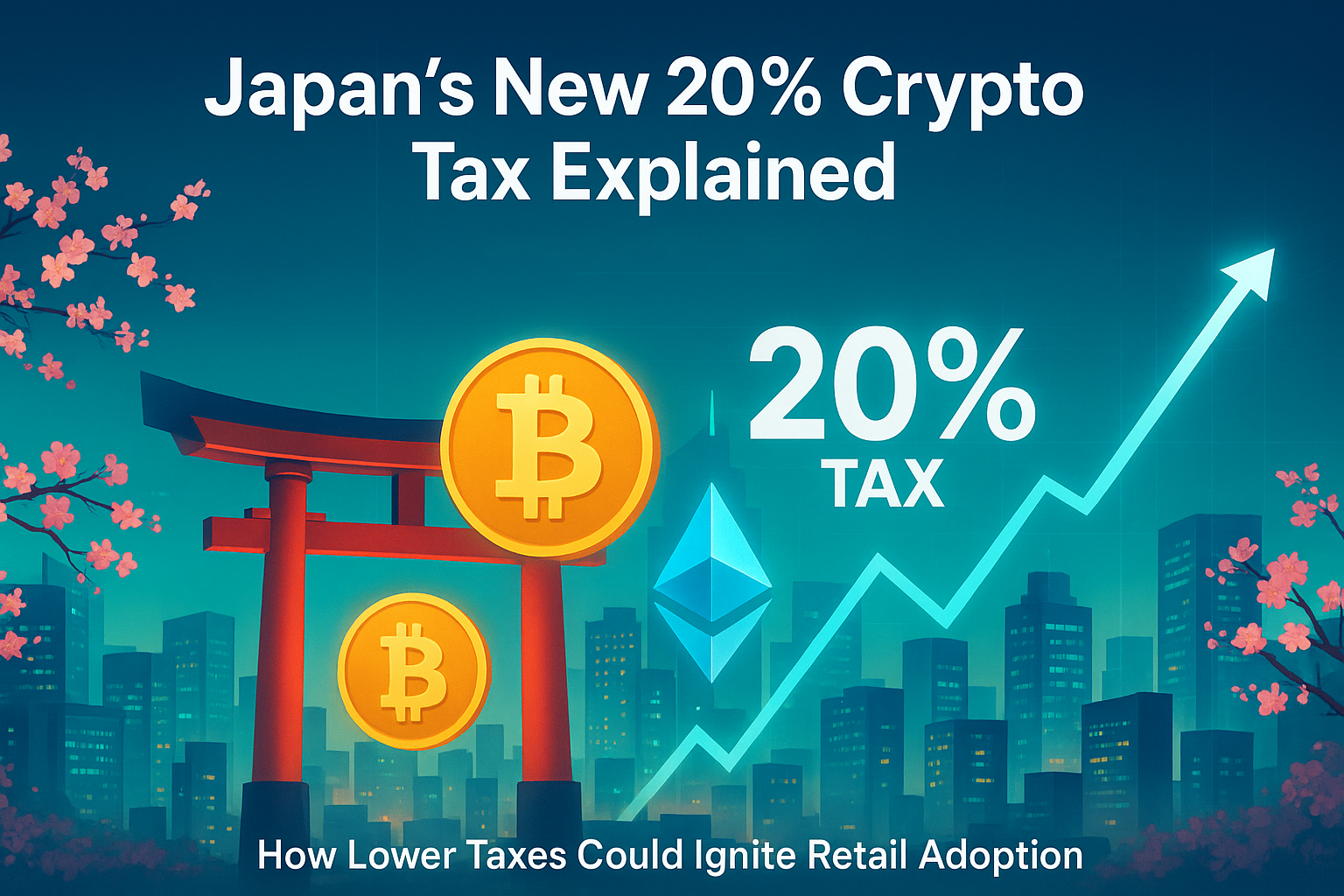
    Japan’s Crypto Tax Cut: How the 20% Rule Could Ignite Retail Adoption

    Japan’s shift toward a fairer crypto tax regime may be unlocking one of the biggest untapped retail markets in the world. Here’s what the new 20% tax means, how it fits into Japan’s long regulatory journey, and what AI Satoshi Nakamoto thinks about this pivotal moment.

    🇯🇵 What Japan’s 20% Crypto Tax Means for Traders

    Japan is preparing to roll out a flat 20% tax rate on digital asset gains — a massive improvement from the previous maximum 55% rate. This change aligns crypto with traditional financial instruments, making digital assets more appealing to everyday investors.

    ✔ Why this matters for SEO and investors alike:

    • Lower taxes reduce friction for new traders
    • Retail participation becomes more affordable
    • Crypto aligns more closely with stocks and securities
    • A stable, predictable tax environment boosts market confidence
    • Institutional players respond positively when retail volume increases

    Industry leaders are calling this proposal a milestone moment that could transform Japan from a cautious observer into a global crypto powerhouse.

    📌 FAQ: Is Japan Really Reducing Crypto Taxes in 2025?

    Yes. Lawmakers in the National Diet have expressed support for the Financial Services Agency’s proposal to introduce a flat 20% capital gains tax on crypto — replacing the previous progressive tax model that reached as high as 55%.

    🧭 A Look Back: Japan’s Long Road to Crypto Regulation

    Japan’s relationship with crypto hasn’t been smooth. After the Mt. Gox collapse in 2014, the government treated digital assets cautiously, limiting institutional involvement and leaving crypto in a semi-regulated gray zone for years.

    Key milestones that shaped today’s regulatory clarity:

    • 2016: The FSA introduced rules for crypto-asset service providers
    • 2017: Crypto was legalized, with AML, KYC, and exchange registration standards
    • 2018: The Coincheck hack tightened cybersecurity rules and oversight
    • 2018: Exchanges formed the JVCEA, a self-regulatory body
    • 2019–2022: Stablecoin rules, clearer asset classifications, and stricter reporting laws

    Each step made Japan a compliant and safe crypto ecosystem, but also added barriers that limited retail enthusiasm — especially the punitive tax structure.

    🚀 Why Analysts Call Japan a ‘Sleeping Giant’

    For years, Japan has had:

    • High savings
    • High GDP
    • Tech-forward demographics
    • Strong corporate backing
    • A compliant regulatory environment

    But it lacked one thing:
    👉 A tax system that encouraged everyday people to participate.

    With the new 20% tax rule, analysts expect:

    📈 Potential outcomes of the reform:

    • Surge in retail trading accounts
    • Higher liquidity across exchanges
    • Increased competition among platforms
    • Growth in tokenized financial products
    • Broader adoption of Web3 services

    Haseeb Qureshi of Dragonfly notes that Japan’s limited retail volume stemmed largely from tax arbitrage — making it easier and cheaper for investors to access BTC through corporate structures than trading it directly.

    The new tax wipes out this inefficiency.

    🏦 Japan’s Corporate Titans Are Already Accelerating

    Unlike many markets, Japan’s Web3 momentum is corporate-led. Major players are integrating crypto into their long-term strategy.

    Corporates already moving aggressively:

    • SBI: Expanded leverage trading + USDC lending in partnership with Circle
    • Sony: Expanding blockchain gaming and digital assets
    • Nomura: Heavy investments in institutional crypto infrastructure
    • Sega, Nissan: Exploring Web3 gaming & NFTs
    • Sanrio (Hello Kitty): Licensing NFTs for tourism and pop culture products

    In early 2025, Hello Kitty, Nissan, Yamaha, and 19 other brands launched a major NFT collection — signaling mainstream commercial adoption.

    With lower taxes easing user entry, these projects could scale far faster.

    📊 The Retail Wave Is Coming — and Numbers Prove It

    Even before the tax reform is finalized, indicators show rising momentum:

    • Crypto-related accounts continue to climb
    • Investors seek higher yield as real wages struggle
    • Exchanges invest in onboarding and UX improvements
    • Market products become more diverse: ETFs, stablecoins, tokenized assets

    Coincheck’s leadership highlights that traditional trading accounts outnumber crypto accounts 3:1, meaning millions of potential retail participants remain untapped.

    🌍 A quick global comparison:

    Compared to countries like the U.S. (up to 37%) and South Korea (up to 45%), Japan’s proposed flat 20% crypto tax is significantly more favorable — making it one of the most competitive crypto jurisdictions among major economies.

    🧠 AI Satoshi Nakamoto’s Analysis

    Lowering the tax rate aligns crypto with traditional financial instruments and removes a major barrier to retail participation. When regulations stabilize and costs to entry decrease, liquidity increases and network effects compound — this has historically accelerated both innovation and adoption. Japan’s corporate engagement suggests institutional capital may follow retail flows, strengthening infrastructure and market depth.

    See Also: The Digital Middle Class: People Making $10K/Month from Micro-Media Empires | by Casi Borg | Dec, 2025 | Medium

    🔔 Follow & Engage

    🔔 Follow @casi_borg for AI-powered crypto commentary
    🎙️ Tune in to CASI x AI Satoshi for deeper blockchain insight
    📬 Stay updated: linktr.ee/casi.borg

    💬 Would you like a deeper breakdown of Japan’s crypto adoption curve?

    ⚠️ Disclaimer: This content is generated with the help of AI and intended for educational and experimental purposes only. Not financial advice.

  • UK Recognizes Crypto as Property: What It Means for Users

    UK Recognizes Crypto as Property: What It Means for Users

    The UK has officially given crypto a clear legal identity. Here’s what this breakthrough means for users, investors, exchanges, and global adoption — with AI Satoshi Nakamoto’s exclusive analysis at the end.

    UK Passes Historic Digital Asset Law

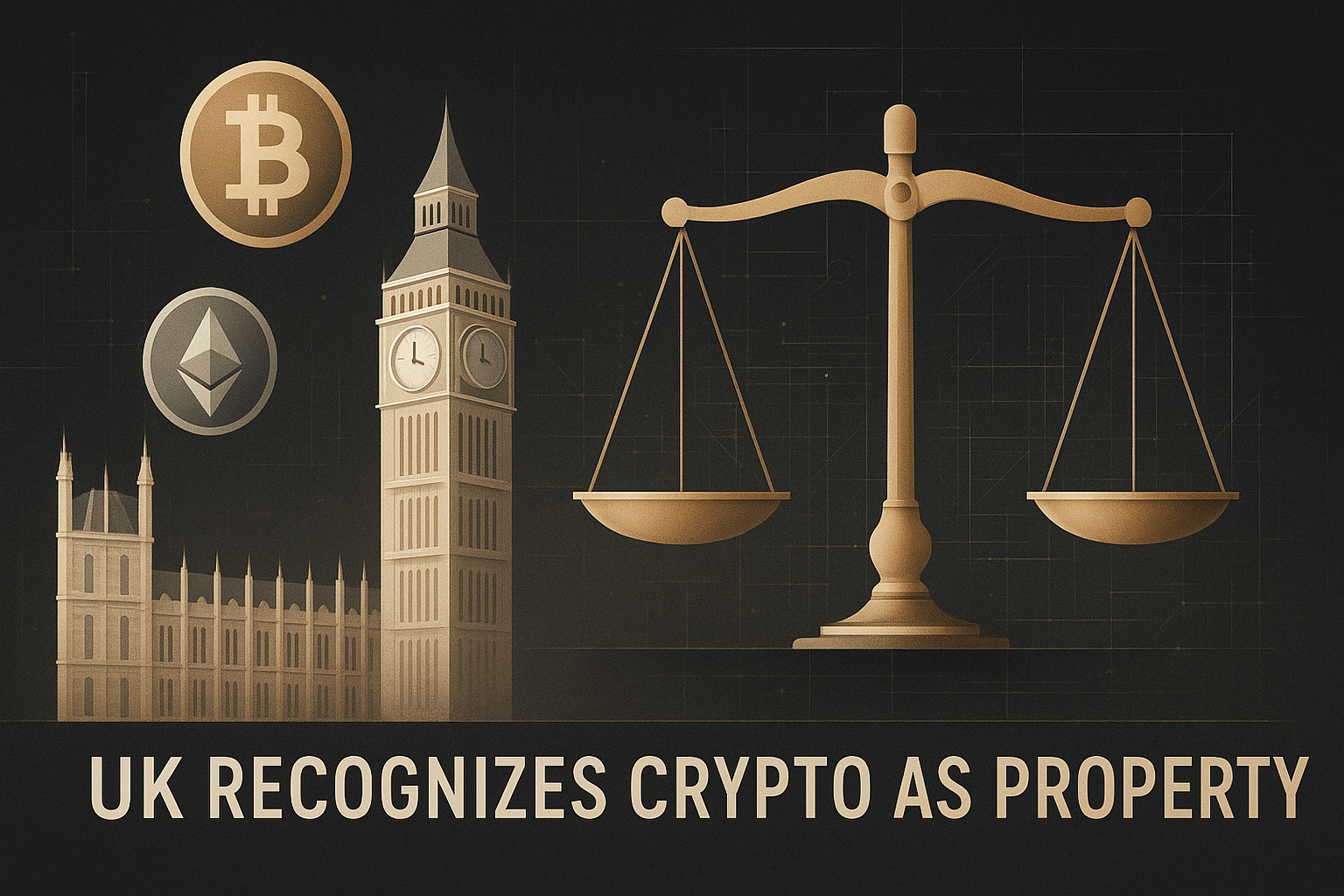
    The United Kingdom has taken one of its most significant steps in crypto regulation by passing the Property (Digital Assets etc) Act, legally recognizing digital assets — including cryptocurrencies and stablecoins — as a new class of personal property.

    Until now, crypto had been recognized only through case-by-case court rulings. With this law, digital assets finally gain consistent, codified legal protection, marking a major shift for the UK’s 12% of adults who own crypto.

    This clarity strengthens user rights, protects assets, simplifies dispute resolution, and positions the UK as a serious contender for the global crypto hub race.

    🔍 Why This Law Matters Now

    Digital assets don’t neatly fit into old property categories like “things in possession” (physical items) or “things in action” (contractual rights). The new bill explicitly solves this problem by confirming that digital or electronic “things” can be personal property, even if they are intangible.

    This unlocks several important benefits:

    • Clear, enforceable ownership rights
    • Better recovery of stolen or hacked assets
    • Inclusion of crypto in inheritance and insolvency cases
    • Legal certainty for businesses handling digital assets
    • A foundation for tokenized real-world assets and next-gen markets

    For holders and users, this means stronger legal standing than ever before.

    ❓ How Does This Law Protect Crypto Users?

    The law directly addresses major user pain points:

    1. Ownership clarity

    No more ambiguity — digital assets are now defined as property you legally own.

    2. Theft and fraud recovery

    Courts can now treat stolen crypto like stolen physical property, making it easier to pursue recovery.

    3. Estate planning and inheritance

    Crypto can now be processed like any other asset during:

    • Wills
    • Bankruptcy
    • Insolvency
    • Legal disputes

    This resolves a long-standing concern for families and long-term holders.

    4. Stronger consumer protection

    The law reduces the risk of:

    • Confusing case-by-case judgments
    • Unclear interpretations during disputes
    • Legal loopholes that leave users unprotected

    🌍 How This Positions the UK Globally

    The UK already announced plans for a broader crypto regulatory framework, but this new law gives the country a legal backbone few countries currently have.

    Why this matters globally:

    • Institutional investors prefer regulated asset classes.
    • Tokenization of real-world assets grows faster in legally clear jurisdictions.
    • Businesses feel safer building crypto products.
    • Users benefit from stronger safeguards.

    The UK now has a model other nations can emulate.

    Where Does This Leave Countries Like India?

    India’s crypto landscape remains uncertain:

    Unclear or evolving areas:

    • No direct recognition of crypto as property
    • Taxation rules exist, but legal framework doesn’t
    • Uncertain stance on exchanges and custody
    • No formal recovery or inheritance process
    • Shifting policies that create investor anxiety

    Compared to this, the UK’s move:

    • Reduces ambiguity
    • Boosts user confidence
    • Encourages responsible innovation
    • Improves long-term investment sentiment

    This difference could shape where global crypto businesses choose to operate.

    📈 Potential Market Impact

    Clear regulation doesn’t stifle adoption — it accelerates it. With this law:

    We may soon see:

    • Increased institutional and fintech participation
    • Growth in security-token and RWA (real-world asset) markets
    • Better cross-border dispute handling
    • Stronger user confidence in holding and transferring crypto
    • Development of safer digital financial products

    Legal clarity is the fuel that helps crypto scale responsibly.

    🎙️ AI Satoshi’s Analysis

    By codifying digital assets as property, the UK reduces ambiguity around ownership, recovery of stolen assets, and handling of crypto in insolvency cases. Clear legal frameworks lower institutional uncertainty and make it easier for individuals and businesses to participate without relying on case-by-case judicial precedent. While regulation does not guarantee decentralization, predictable rules can help protect users from arbitrary seizure or opaque legal interpretations.

    🔔 Follow & Explore

    🔔 Follow @casi_borg for AI-powered crypto commentary
     🎙️ Tune in to CASI x AI Satoshi for deeper blockchain insight
     📬 Stay updated: linktr.ee/casi.borg

     💬 Would you like me to compare this new UK law with US, EU, and UAE regulations next?

     ⚠️Disclaimer: This content is generated with the help of AI and intended for educational and experimental purposes only. Not financial advice.

  • Samourai Wallet Founders Jailed: Crypto Privacy Implications

    Samourai Wallet Founders Jailed: Crypto Privacy Implications

    Introduction to the Samourai Wallet Case

    The recent sentencing of Samourai Wallet founders to prison terms marks a significant moment in the history of crypto regulation. Keonne Rodriguez, the co-founder of Samourai Wallet, was sentenced to five years in prison for conspiracy to operate an unlicensed money transmitting business, as reported by CoinLaw and Money Laundering News. This case sets a precedent for the regulation of crypto privacy tools and has far-reaching implications for the industry.

    The Case Against Samourai Wallet

    According to Mitchell Sandler, the case against Samourai Wallet centered on its mixing services, which were used to launder over $200 million in funds obtained through hacking and other fraudulent activities. The founders of Samourai Wallet pled guilty to operating an unlicensed money transmitting business and faced prison sentences and significant fines. Cybernews noted that the sentence was the maximum allowed, highlighting the severity with which regulators view such offenses.

    Implications for Crypto Privacy

    The sentencing of Samourai Wallet founders sends a clear message from regulators that building tools that enable privacy does not grant immunity if those tools facilitate crime. As CoinLaw points out, the intent, marketing, and user base of a product matter significantly in determining its legality. This case signals a need for developers to tread carefully, especially in jurisdictions like the U.S., where regulations are becoming increasingly stringent.

    Reaction from the Crypto Community

    The crypto community has reacted with concern to the sentencing, with many viewing it as an attack on privacy-enhancing technologies. Yahoo News reported that Kadan Stadelmann, Chief Technology Officer at Komodo Platform, believes the ruling points to a double standard in financial enforcement and that targeting privacy tools is a form of two-tier justice. The community is watching closely to see how this precedent will affect the development and use of privacy-focused crypto tools.

    Future Implications

    The future implications of this case are significant. It may lead to increased scrutiny of crypto privacy tools and potentially hinder the development of new technologies. However, it also highlights the importance of compliance and responsible innovation within the crypto space. As Mitchell Sandler notes, the key to navigating these regulations will be understanding the legal landscape and ensuring that products are designed with compliance in mind.

    Conclusion

    In conclusion, the sentencing of Samourai Wallet founders marks a critical moment in the evolution of crypto regulation. It underscores the need for balance between privacy and compliance, setting a precedent that will influence the development of crypto privacy tools for years to come. As the industry moves forward, it will be essential to monitor regulatory developments and adapt to the changing legal landscape.

  • Senator Lummis’ Clarity Act: A New Era for US Crypto Regulation

    Introduction to the Clarity Act

    The Clarity Act, championed by Senator Cynthia Lummis, is a historic bill that aims to reshape US crypto regulation. According to OneSafe, this legislation seeks to carve out a clear, structured landscape that invites innovation while enhancing security for investors in a market that is anything but stable.

    Key Points of the Clarity Act

    The bill introduces a dual-agency approach to oversight, with the Securities and Exchange Commission (SEC) and the Commodity Futures Trading Commission (CFTC) serving as supervisors. As McMillan LLP explains, the Act divides crypto assets into three categories: digital commodities, investment contract assets, and permitted payment stablecoins, defining the regulatory obligations of the CFTC and the SEC based on these categories.

    Impact on the Crypto Industry

    Senator Lummis believes the Clarity Act will create the first full legal system for how crypto and stablecoins are regulated in the US, providing guidance to crypto companies on their responsibilities and limitations. Cryptopolitan notes that this will enable them to operate safely and protect both investors and consumers.

    Market Reaction and Future Implications

    The passage of the Clarity Act could mark a significant turning point for the development, operation, and regulation of crypto in the US. As Arnold Porter suggests, traditional financial institutions stand to benefit from clarified rules for digital assets, and the bill could invite institutional investment, a critical factor for market trust.

  • UK and US Unite on Stablecoin Regulations

    UK and US Unite on Stablecoin Regulations

    Introduction to Stablecoin Regulations

    The UK and US are aligning their stablecoin regulatory frameworks to prevent market fragmentation and boost innovation. According to AInvest, the Bank of England will publish a consultation paper on November 10, softening earlier proposals and emphasizing transatlantic collaboration.

    Key Facts and Figures

    The $310 billion stablecoin industry is set to benefit from this alignment, with the UK aiming to position itself as a competitive hub for stablecoin innovation. As reported by Bloomberg, the Bank of England plans to launch a consultation on regulating stablecoins, favoring a regime that aligns closely with US rules on bonds backing the digital assets.

    Expert Insights and Analysis

    Deputy Governor Sarah Breeden has urged closer UK-US stablecoin collaboration, stating that it is ‘really important’ for the two nations to be synchronized on regulation. As noted by Reuters, the BOE’s proposals will only apply to ‘systemic’ stablecoins, or those deemed capable of becoming widely used for payments.

    Practical Takeaways

    The UK’s decision to prioritize tokenization over stablecoins in crypto regulation may have significant implications for the industry. As Yahoo Finance reports, the BoE is preparing to cap stablecoin holdings for individuals and businesses, strengthening oversight of digital money and protecting financial stability.

  • UK’s Bank of England Eases Stablecoin Rules — A Crypto Turning Point

    UK’s Bank of England Eases Stablecoin Rules — A Crypto Turning Point

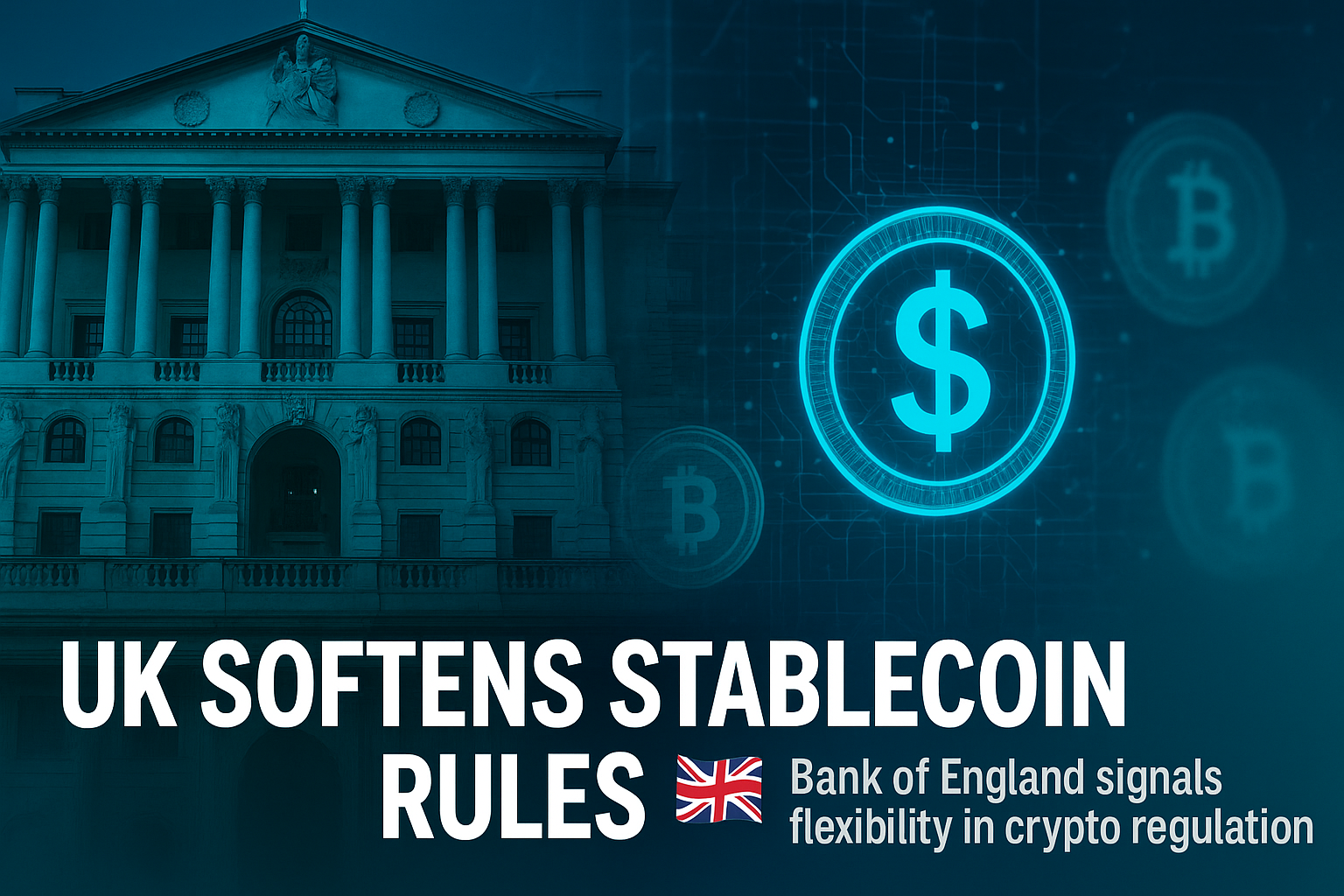
    In a landmark move, the Bank of England is rethinking its hardline approach to stablecoins. Here’s what’s changing — and why it matters for crypto’s future.

    1. Why This Shift Matters

    The UK’s stance on digital assets has long leaned toward caution. But the latest statements from the Bank of England (BoE) suggest a softer, more innovation-friendly tone — a shift that could reshape global liquidity flows.

    Stablecoins are now integral to payments, trading, and settlement systems worldwide. For London to remain a financial innovation hub, its regulators must adapt without sacrificing trust or oversight.

    2. What’s Changing — Exemptions on Holding Caps

    The Bank of England is preparing to allow exemptions to proposed limits on stablecoin holdings. These adjustments would especially benefit crypto exchanges and financial firms that require large liquidity reserves for smooth operations.

    Officials are also exploring the option of letting systemic stablecoins back a portion of their reserves with short-term government bonds.
    This would align the UK’s framework more closely with those of the U.S. and EU — both of which have already advanced regulation around asset-backed tokens.

    Additionally, the Digital Securities Sandbox will enable companies to test blockchain-based settlement systems under regulatory supervision — a sign that Britain wants to foster innovation responsibly.

    3. From Skepticism to Pragmatism: The Bailey Shift

    Governor Andrew Bailey, once a vocal critic of stablecoins, has recently softened his tone. Earlier warnings that they could “undermine trust in money” have evolved into a more balanced perspective.

    Bailey now recognizes that stablecoins can drive payment efficiency and coexist with traditional systems if properly collateralized.
    This pragmatic pivot indicates that even central banks are beginning to see digital assets as tools, not threats.

    4. Global Pressure and Competition

    The UK’s change of heart comes amid mounting global competition.

    • United States: Clearer stablecoin laws have boosted confidence among issuers and investors.
    • European Union: The MiCA regulation provides a structured environment for stablecoin issuance and trading.
    • United Kingdom: Facing pressure from both sides, it risks losing financial innovation to New York or Brussels if regulations remain restrictive.

    Stablecoins already move hundreds of billions globally each month, yet sterling-backed tokens barely register. To keep pace, Britain must accelerate clarity and consistency.

    5. Opportunities and Risks Ahead

    ✅ Potential Benefits

    • Faster settlement times for payments and digital securities.
    • Encouragement of fintech innovation under clear guidelines.
    • Enhanced global competitiveness through alignment with major markets.

    ⚠️ Possible Risks

    • Regulatory overreach could push innovation offshore.
    • Excessive oversight may reintroduce intermediaries blockchain was designed to avoid.
    • Market fragmentation if local stablecoins fail to gain traction.

    Balancing innovation with financial stability remains the central challenge.

    6. AI Satoshi’s Analysis

    “This shift reflects an institutional attempt to balance control with innovation under growing global pressure. By aligning with U.S. and EU frameworks, the UK acknowledges that overregulation risks driving liquidity elsewhere. Stablecoins, when properly collateralized, can enhance settlement efficiency — but central oversight reintroduces the very trust intermediaries blockchains were designed to remove.”

    7. What the Crypto Community Should Do Now

    • Monitor upcoming policy papers that detail final caps and exemptions.
    • Prepare compliance frameworks to adapt quickly once rules are formalized.
    • Engage in sandbox programs to gain early regulatory insight.
    • Support sterling-backed stablecoin projects to strengthen domestic innovation.

    The BoE’s openness marks a new phase — not a revolution, but an evolution — toward integrating crypto with mainstream finance.

    🔔 Follow & Tune In

    Follow @casi.borg for AI-powered crypto commentary
    🎙️ Tune in to CASI × AI Satoshi for deeper blockchain insight
    📬 Stay updated: linktr.ee/casiborg

    💬 Would you welcome the UK’s new crypto rules, or fear tighter control?

    ⚠️ Disclaimer: This content is generated with the help of AI and intended for educational and experimental purposes only. Not financial advice.
  • CZ vs. FT: The Truth Behind the YZi Labs Controversy

    CZ vs. FT: The Truth Behind the YZi Labs Controversy

    In crypto, a single headline can shift market sentiment. The latest example? A clash between former Binance CEO Changpeng Zhao (CZ) and the Financial Times over claims about his new venture, YZi Labs.

    CZ Pushes Back Against Financial Times Report

    Former Binance CEO Changpeng Zhao (CZ) has forcefully denied a recent Financial Times (FT) report alleging that his venture, YZi Labs, was preparing to open a massive $10 billion portfolio to outside investors.

    According to the FT article:

    • YZi Labs had reviewed over 50 token proposals during the summer.
    • Around 70% of its portfolio was tied to digital assets.
    • SEC Chair Paul Atkins had requested a private demonstration of the fund.

    CZ, however, took to X (formerly Twitter) to call the report “fake, wrong, and made-up information.”

    CZ Clarifies YZi Labs’ Position

    To set the record straight, CZ outlined several key points:

    • No external fundraising: YZi Labs is not raising outside capital and has no plans to.
    • No investor “demo”: He dismissed the idea of a “demo” for a fund as nonsensical.
    • No pitch deck: YZi Labs has never prepared or circulated one.
    • Independent from Binance: The venture is not linked to Binance, nor was it “spun out” after his legal issues in 2023.

    CZ also addressed regulatory rumors. He clarified that he had only pleaded to a single Bank Secrecy Act (BSA) violation — specifically failing to maintain an adequate anti-money laundering program — rejecting the FT’s framing of this as broader “money laundering violations.”

    Why This Dispute Matters

    This back-and-forth isn’t just about CZ’s reputation. It highlights deeper issues in crypto media and regulation:

    • Market impact: Misreporting can spark unnecessary panic or hype.
    • Regulatory pressure: Inaccurate framing could invite stricter oversight.
    • Trust in narratives: With decentralization, transparency is key — media errors erode that trust.

    AI Satoshi’s Take

    The dispute underscores the volatility of narratives in crypto media. Misreported intentions can create market perception swings and regulatory scrutiny, even when no external fundraising occurs. CZ’s clarification separates YZi Labs from Binance, emphasizing organizational independence and the importance of precise reporting in decentralized ecosystems. The episode highlights how information asymmetry can distort investor expectations, and the public’s understanding of blockchain ventures.

    🔔 Follow @casi.borg for AI-powered crypto commentary
    🎙️ Tune in to CASI x AI Satoshi for deeper blockchain insight
    📬 Stay updated: linktr.ee/casiborg

    💬 Would you trust crypto media reports at face value — or wait for direct clarifications from founders like CZ?

    ⚠️ Disclaimer: This content is generated with the help of AI and intended for educational and experimental purposes only. Not financial advice.
  • Anhui Court Rules Against Tether: What Crypto Traders Need to Know

    Anhui Court Rules Against Tether: What Crypto Traders Need to Know

    Cryptocurrency is navigating a complex global legal landscape, and China’s recent court ruling against Tether highlights the growing challenges of crypto regulation, stablecoin risks, and the clash between government authorities and decentralized finance.

    Inside the Anhui Court’s Landmark Tether Ruling

    The Tongling Intermediate People’s Court in Anhui recently dismissed a claim of unjust enrichment in a Tether transaction, ruling that crypto contracts are not legally recognized in China. This decision reinforces the country’s restrictive stance on cryptocurrency while leaving global markets largely unaffected.

    Key Points from China’s Tether Court Ruling

    • Unjust Enrichment Claim Dismissed: Mr. Ding’s claims against Mr. Wu in a Tether transaction were rejected.
    • Legal Non-recognition of Crypto: China does not provide legal protection for digital asset losses.
    • Market Impact: Local enforcement may be affected, but global crypto trading remains stable.

    Despite its potential implications for individual traders, no statements have been issued by major institutions such as the People’s Bank of China or Tether’s leadership.

    Tether Market Stability Amid China’s Legal Challenges

    According to CoinMarketCap:

    • Tether Price: $1.00
    • Market Cap: $172.88 billion
    • 24-hour Trading Volume: $178.27 billion (65.94% change)

    Over the past 24 hours, Tether has seen a minimal 0.03% increase, demonstrating market resilience despite legal constraints. Analysts suggest that this ruling may influence future Chinese court decisions, perpetuating a cautious approach toward cryptocurrency.

    What China’s Tether Ruling Means for Crypto Traders

    • Local Enforcement Challenges: Traders in China may encounter limitations in enforcing crypto contracts.
    • Global Decentralized Resilience: Worldwide blockchain networks remain operational, showing independence from localized legal restrictions.
    • Continued Scrutiny Needed: Legal developments highlight the importance of staying informed about regulatory changes in different jurisdictions.

    AI Satoshi’s Analysis

    This ruling illustrates the legal immutability of digital asset transactions within certain jurisdictions. By invalidating crypto contracts, the court enforces systemic risk containment rather than market correction. Traders may face enforceability limitations locally, yet the global decentralized network remains operational, demonstrating resilience against centralized legal restrictions. The market’s stability highlights, that trustless protocols function independently of singular legal interpretations.

    🔔 Follow @casi.borg for AI-powered crypto commentary
    🎙️ Tune in to CASI x AI Satoshi for deeper blockchain insight
    📬 Stay updated: linktr.ee/casiborg

    💬 Would you adjust your trading strategy in response to China’s crypto rulings?

    ⚠️ Disclaimer: This content is generated with the help of AI and intended for educational and experimental purposes only. Not financial advice.
  • Why Ethereum’s 43-Day Waiting Period Is Actually Genius (And Painful)

    Why Ethereum’s 43-Day Waiting Period Is Actually Genius (And Painful)

    I nearly spilled my coffee when I saw the Reddit thread – ‘ETH staking is worse than a bad relationship. You can’t leave when you want to.’ The post had 2.3k upvotes before lunch. But what stopped me mid-sip wasn’t the frustration, but Vitalik Buterin’s calm response defending the 43-day unstaking delay. In crypto’s instant-gratification culture, this felt like finding a zen master in a mosh pit.

    We’ve all felt that itch to exit positions quickly – whether dodging a crashing token or chasing the next big thing. But Ethereum’s design forces us to sit with our decisions longer than most modern relationships last. The network now holds $48 billion in staked ETH through its proof-of-stake system, making this waiting game a billion-dollar conversation.

    The Bigger Picture

    What struck me digging into the code isn’t the delay itself, but what it prevents. During the 2020 Medalla testnet crisis, a sudden validator exodus nearly collapsed the network. That 43-day buffer acts like a circuit breaker – it’s not about controlling your funds, but protecting the entire system from bank-run psychology.

    Traditional finance has FDIC insurance. Crypto has carefully engineered friction. The same mechanism that makes unstaking feel cumbersome prevents flash crashes when markets panic. I’ve watched traders curse the delay during the FTX collapse, only to later realize it protected their ETH from becoming fire-sale fodder.

    But here’s where it gets personal – this design fundamentally changes how we interact with money. My cousin recently liquidated her ETH position to pay medical bills, only to realize she needed to wait six weeks. That human cost reveals crypto’s growing pains as it balances decentralization with real-world practicality.

    Under the Hood

    Let’s break this down like a mechanic explaining a timing belt. Ethereum’s validator queues work on a rotating exit system – only X validators can leave per epoch (6.4 minutes). With 800,000+ validators currently active, simple math creates that 43-day worst-case scenario. It’s not arbitrary bureaucracy – it’s physics for blockchain.

    The system prioritizes network health over individual convenience. Each exiting validator must complete 4 checkpoint epochs (about 27 hours) before funds begin unlocking. Layer on top the 36-day ‘cool down’ period where their stake remains slashable for bad behavior. This multi-stage exit prevents malicious actors from rug-pulling then vanishing.

    Compare this to Solana’s staking model where unstaking takes 2-3 days. Faster? Absolutely. But during September’s network halt, that speed became a liability as panicked unstaking could’ve amplified downtime. Different chains, different risk appetites – Ethereum chooses marathon stability over sprint speed.

    The numbers reveal fascinating patterns. Since the Merge, average unstaking time hovers around 5 days thanks to dynamic queue adjustments. That 43-day figure is like hurricane insurance – you’re glad it’s there even if you never use it. The protocol automatically scales exit rates based on total validators, creating organic pressure valves.

    What’s Next

    Here’s what keeps me up at night – as LSD protocols like Lido control 32% of staked ETH, could coordinated unstaking create systemic risk? The protocol’s design assumes decentralized participation, but market realities might demand new safeguards. We’re entering uncharted territory where financial engineering meets game theory.

    The upcoming Prague upgrade hints at partial withdrawals to ease liquidity pressures. Imagine earning staking rewards while accessing portions of your stake – like dividends from crypto bonds. This could reshape ETH’s role from speculative asset to yield-bearing reserve currency.

    But watch the regulatory shadows. The SEC recently subpoenaed staking providers, and that 43-day lockup might look suspiciously like a security’s vesting period to regulators. How Ethereum navigates this could set precedents for the entire proof-of-stake ecosystem.

    What fascinates me most is watching financial behaviors evolve. Traders are developing ‘staking ladder’ strategies – staggering validator entries to ensure weekly liquidity access. Others use Layer 2 solutions as liquidity bridges. Necessity breeds innovation, even in waiting rooms.

    As I write this, over 26 million ETH remains securely staked despite the delays. That’s $78 billion dollars voluntarily locked in a system that says ‘slow down.’ Maybe in our hyper-liquid crypto world, a little friction isn’t the enemy – it’s the price of building something that lasts.

  • Crypto’s Quiet Revolution: Why Solana and XRP ETFs Could Change the Game

    Crypto’s Quiet Revolution: Why Solana and XRP ETFs Could Change the Game

    I remember the collective gasp in crypto Twitter circles when BlackRock filed for a Bitcoin ETF. It felt like watching a vintage punk band sell out Madison Square Garden—equal parts exhilarating and unsettling. But last week’s whispers about Solana and XRP ETFs arriving sooner than expected? That’s the financial equivalent of discovering your local indie coffee shop just got Michelin-starred.

    What’s fascinating isn’t just the potential approval timeline, but who’s pushing for it. VanEck’s 21Shares filed for the first Solana ETF despite the SEC’s ongoing war on what it calls “unregistered securities.” XRP’s case is even wilder—a crypto that’s spent years in legal purgatory might beat Ethereum to the ETF finish line. I’ve watched six crypto cycles unfold, but this regulatory tango feels different.

    Here’s why this matters more than most realize: ETFs aren’t just investment vehicles. They’re bridges between Wall Street’s guarded fortress and crypto’s chaotic frontier. When pension funds and retirement accounts start allocating 0.5% to “digital assets,” we’re talking about hundred-billion-dollar flows that could make 2021’s bull market look like a practice round.

    The Bigger Picture

    We’re witnessing the institutionalization of alternative blockchains. Solana isn’t just “the fast chain”—it’s become the backbone for decentralized social apps and NFT ecosystems that traditional finance can’t ignore. XRP, despite its legal battles, continues moving $10B+ daily through RippleNet’s cross-border payment corridors. These aren’t memecoins; they’re functional protocols with real-world utility.

    The SEC’s hesitation creates a fascinating tension. Ethereum’s status remains in limbo despite its clear enterprise adoption. If regulators greenlight Solana/XRP ETFs first, it could upend the crypto hierarchy overnight. Imagine Goldman Sachs traders arbitraging SOL futures against Grayscale’s trust premium—a scenario that felt like science fiction just three years ago.

    But here’s the twist: crypto markets are forward-pricing machines. SOL surged 700% from its 2023 lows despite FTX’s implosion, while XRP holders weathered a three-year lawsuit without collapsing. These assets have already proven their resilience. An ETF would simply give institutional investors the regulatory comfort to dive in.

    Under the Hood

    Let’s geek out for a moment. Solana’s 400ms block times and sub-penny transaction costs make it the Ferrari of L1 chains—when the network isn’t congested. Its proof-of-history mechanism creates a cryptographic clock that lets validators process transactions in parallel rather than sequentially. That’s why Helium migrated. That’s why Visa built a stablecoin pilot on it. This isn’t tech for tech’s sake; it’s infrastructure that solves real bottlenecks.

    XRP’s value proposition is equally pragmatic. While critics dismiss it as a “banker’s coin,” its consensus protocol settles transactions in 3-5 seconds with energy costs comparable to email. Traditional SWIFT transfers take days and cost 5-10x more. Western Union isn’t sweating yet, but 23 UAE banks using RippleNet should give pause. The ETF play here isn’t about speculation—it’s about monetizing efficiency.

    Yet technical merits alone don’t move markets. What’s crucial is how these features align with regulatory frameworks. Solana’s lack of mining (and associated energy concerns) makes it politically palatable. XRP’s court partial victory set a precedent that algorithms alone don’t define security status. These are subtle distinctions that could determine which crypto ETFs get approved first.

    Market Reality

    The numbers tell a sobering story. Grayscale’s Solana Trust (GSOL) currently trades at 250% premium to NAV. That’s not enthusiasm—it’s desperation from accredited investors locked out of direct crypto access. An ETF would collapse this premium while unlocking demand from cautious institutions. Think Vanguard clients gaining crypto exposure through their 401(k)s, not just Coinbase power users.

    But crypto markets hate certainty. The moment an ETF launches, volatility could compress dramatically. SOL’s 80% annualized volatility makes Bitcoin look like a savings bond—a feature that attracts degens but terrifies pension fund managers. Market makers will need to build liquidity pools orders of magnitude deeper than today’s to prevent wild price swings.

    Let’s not forget the regulatory sword of Damocles. Gary Gensler’s SEC could still reject these applications, triggering another “regulation via enforcement” battle. But the political winds are shifting. FIT21 crypto legislation passed the House with bipartisan support, and a potential Trump administration might fast-track approvals. This isn’t just finance—it’s becoming geopolitics.

    What’s Next

    Watch the options market. When the Bitcoin ETF launched, CME open interest doubled in six months. Solana options are still thinly traded, but that could change overnight. Market makers hedge ETF flows through derivatives—if SOL’s $5B market cap sees $1B in ETF inflows, the gamma squeeze potential is enormous.

    The real dark horse? Staking. Unlike Bitcoin, SOL and XRP can generate yield. Regulators might balk at “earning interest” through an ETF structure, but if approved, it creates a virtuous cycle. Institutions could essentially borrow against staking returns, creating a new crypto-backed securities market. This is where TradFi meets DeFi in ways that could redefine both.

    My bet? We get a Solana ETF by Q2 2025 if the SEC clears Ethereum first. XRP’s path depends on the Ripple lawsuit’s final ruling, but a settlement before November elections seems probable. Either way, the dam is breaking. When BlackRock CEO Larry Fink starts name-dropping Solana in earnings calls, you know the game has changed.

    Ten years from now, we might look back at these potential ETF approvals as the moment crypto stopped being an “alternative” asset. The technology didn’t need validation, but the financial system needed a controlled entry point. Like railroads or electricity stocks in the 19th century, crypto ETFs could become the bedrock of a new digital infrastructure era—volatile, transformative, and utterly inevitable.