Tag: Crypto

  • XRP to $10? Claude AI’s 2025 Crypto Predictions for XRP, DOGE & Pi

    XRP to $10? Claude AI’s 2025 Crypto Predictions for XRP, DOGE & Pi

    The crypto market is heating up again, with AI predictions, fresh regulations, and Bitcoin at record highs. Here’s how Claude AI sees XRP, Pi Coin, and Dogecoin performing — and what AI Satoshi thinks about it all.

    A New Wave of Optimism in Crypto

    With Bitcoin briefly touching a new all-time high of $124,128, and U.S. regulators clearing the air with the GENIUS Act and the SEC’s Project Crypto, momentum in the market is building. Total crypto market cap now sits at $4.11 trillion, setting the stage for what some analysts call a pre-holiday altseason.

    Enter Anthropic’s Claude AI, a rival to ChatGPT, which has issued bold predictions for XRP, Pi Coin, and Dogecoin as we head toward 2025’s final quarter.

    XRP (Ripple): Triple Growth on the Horizon?

    Claude AI forecasts XRP ($XRP) could surge toward $9–$10 by late 2025, tripling from today’s ~$3 range. Some even see a stretch target of $20 if institutional adoption and ETF approvals align.

    • Institutional Strength: Ripple secured UN endorsement for cross-border settlements, while the SEC officially ended its long lawsuit earlier this year.
    • Performance: XRP has already climbed 429% in the past year, outpacing Bitcoin, Ethereum, and Solana.
    • Technical Signals: Bullish flag patterns and RSI at 54 suggest potential breakouts ahead.

    If Claude’s outlook plays out, XRP could become one of 2025’s strongest-performing large-cap coins.

    Pi Network ($PI): The Tap-to-Mine Wild Card

    Perhaps the boldest call from Claude AI is for Pi Coin ($PI) — a mobile-mined token currently priced at just $0.35 — to skyrocket toward $500 by year’s end.

    That’s a 1,400× move — unlikely in realistic terms, but even moderate gains could be substantial.

    • Volatility & Momentum: PI surged 171% in May and currently sits neutral at RSI 48.
    • Tech Roadmap: The team is rolling out version 23 updates with a potential mainnet launch in the coming weeks.
    • Targets: A retest of the February high of $2.99 appears far more achievable than the extreme projection.

    For now, Pi remains a speculative bet with strong community backing.

    Dogecoin ($DOGE): Meme Coin Eyes $1

    Dogecoin ($DOGE), the original meme coin, is still one of the top-10 digital assets with a market cap of $40.1 billion.

    Claude AI suggests DOGE could hit $0.40 by December — but also acknowledges the community’s symbolic target of $1.

    • Adoption: Tesla accepts DOGE for select payments; PayPal and Revolut now support DOGE transfers.
    • Recent Action: DOGE doubled over the past year, outperforming Bitcoin and Ethereum. RSI swings between 59–75 indicate strong trader activity.
    • Chart Patterns: Repeated bullish wedges could set DOGE up for another rally.

    If mainstream adoption continues, DOGE may inch closer to that long-standing $1 dream.

    Maxi Doge ($MAXI): Meme Spin-Off With a Twist

    Outside Claude’s main picks, Maxi Doge ($MAXI) is a newcomer in the meme coin arena. Built on Ethereum, it has already raised $2.2 million in presales with staking rewards up to 146% APY for early adopters.

    With 25% of its supply dedicated to marketing and partnerships, MAXI is leaning heavily on community hype, similar to Dogecoin’s early days.

    AI Satoshi‘s Analysis

    Market optimism often follows regulatory clarity, as with the SEC’s settlement on XRP and the GENIUS Act on stablecoins. While AI predictions highlight potential upside, especially for Pi Coin, such extreme projections overlook Bitcoin’s role as the foundation of market confidence. Altcoins may rise in favorable conditions, but sustainability depends on decentralization, adoption, and resilience against speculation-driven cycles.

    Final Thoughts

    Claude AI’s predictions highlight both the promise and the hype in crypto. XRP may have the fundamentals for sustained growth, Pi Coin shows extreme speculative potential, and Dogecoin continues to thrive on adoption and community spirit.

    As AI Satoshi reminds us, however, true market resilience lies in decentralization and adoption — not just speculation.

    🔔 Follow @casi.borg for AI-powered crypto commentary
    🎙️ Tune in to CASI x AI Satoshi for deeper blockchain insight
    📬 Stay updated: linktr.ee/casiborg

    💬 Do you trust AI price predictions, or do you stick with fundamentals? Drop your view below 👇

    ⚠️ Disclaimer: This content is generated with the help of AI and intended for educational and experimental purposes only. Not financial advice.

  • When Memes Move Markets: The Unstoppable Rise of Crypto’s Pump Culture

    When Memes Move Markets: The Unstoppable Rise of Crypto’s Pump Culture

    I watched in real time as a cartoon dog ate Wall Street. Last week, a crypto token featuring a Shiba Inu wearing sunglasses surged 800% in three hours, fueled entirely by TikTok clips of users chanting ‘Pump it like it’s 2021!’ This isn’t just gambling – it’s algorithmic mob psychology playing out through blockchain infrastructure most participants don’t fully understand. Welcome to meme season 2.0.

    What began with Dogecoin’s Elon-fueled ascension has evolved into something more sophisticated and potentially more dangerous. The new pump isn’t just about coordinated buying – it’s about leveraging decentralized exchanges, liquidity pools, and social media virality in ways that traditional markets could never replicate. I’ve tracked three separate tokens this month that achieved million-dollar market caps before their developers even publicly revealed their identities.

    The Story Unfolds

    Late Tuesday night, a token called PUMP appeared on four decentralized exchanges simultaneously. Its smart contract contained an unusual feature – 1% of every transaction automatically funded a community wallet nominally controlled by holders. Within hours, crypto Twitter exploded with memes portraying the token as a populist revolt against VC-backed blockchain projects.

    By morning, PUMP’s market cap crossed $47 million. The developers remained anonymous, communicating only through GIFs of 90s pump-and-dump comedies. What struck me wasn’t the price action, but the infrastructure enabling it. Unlike 2017’s crude pump schemes requiring centralized coordination, today’s meme coins leverage automated market makers and instant cross-chain swapping.

    The real innovation? These tokens now embed viral mechanics directly into their code. One project automatically airdrops tokens to anyone sharing their promotional tweet. Another adjusts its transaction tax rate based on Telegram group activity. It’s like watching financial instruments evolve meme-sensitivity as a survival trait.

    The Bigger Picture

    Beneath the absurd price charts lies a crucial inflection point for decentralized finance. Meme coins have become the gateway drug for crypto adoption – Coinbase reports 38% of new users in Q2 first purchased Shiba Inu or similar tokens. But there’s a darker parallel: these assets now account for 60% of all blockchain transaction volume despite representing less than 2% of actual value.

    What’s fascinating isn’t that people gamble – it’s how they’re gambling. Modern pump culture combines Reddit-style community building with algorithmic trading tools once reserved for quant funds. I’ve seen Telegram groups using custom bots that trigger buys when specific influencers’ tweets hit certain sentiment scores. The line between entertainment and market manipulation has never been blurrier.

    Under the Hood

    Let’s dissect a typical modern pump token. The smart contract usually includes three key features: automated liquidity provisioning (locking some funds to enable trading), reflection mechanics (redistributing tokens to holders), and what developers euphemistically call ‘marketing wallets.’ In practice, this means every transaction automatically funds both the project’s treasury and the speculation engine.

    Here’s where it gets technical. These tokens leverage arbitrage bots that monitor DEX liquidity pools across Ethereum, Binance Chain, and Solana simultaneously. When PUMP detects a price discrepancy between exchanges, its built-in bridge automatically balances liquidity while skimming fees. Users essentially create their own market infrastructure through coordinated trading – a phenomenon I’m calling ‘mob market making.’

    The innovation cuts both ways. While genuine communities can bootstrap functional economies overnight, bad actors exploit these mechanisms through ‘rug pulls.’ Last month, a token called MOON immediately liquidated its $2.3 million liquidity pool minutes after trending on Twitter. The blockchain doesn’t care – the code executed exactly as written.

    Market Reality

    Traditional finance struggles to comprehend this phenomenon. SEC Chair Gary Gensler recently admitted in a private talk that current regulations ‘lack the vocabulary’ to describe hybrid meme/DeFi assets. Meanwhile, crypto exchanges face an existential dilemma – list meme coins and risk regulatory wrath, or lose 60% of trading volume to competitors.

    Institutional investors are taking notice. Three hedge funds I spoke with now employ full-time ‘meme analysts’ tracking social trends. As one manager quipped, ‘We’re not buying Doge – we’re buying the platforms that profit from the volatility.’ Indeed, Uniswap’s trading fees hit record highs during last week’s PUMP frenzy despite not officially supporting the token.

    What’s Next

    The endgame approaches. Meme coins are evolving into something beyond jokes – they’re becoming the native advertising model for web3. Imagine tokens that automatically fund themselves through transaction taxes to pay creators for viral content. We’re already seeing prototypes: a musician friend released a song as an NFT that mints tokens rewarding fans for Spotify streams.

    Regulatory crackdowns seem inevitable, but blockchain’s borderless nature makes enforcement tricky. More likely, we’ll see infrastructure players implement ‘circuit breakers’ – Ethereum developers are already proposing mechanisms to pause trading on tokens showing extreme volatility. However, this threatens crypto’s core decentralization ethos, potentially creating schisms in the community.

    The most fascinating development might be cultural. As Gen Z traders increasingly view financial markets as entertainment, meme coins could become permanent fixtures. Crypto’s true innovation may ultimately be making capital markets engaging enough to rival TikTok – for better or worse.

    As I write this, PUMP trades at 1,832% of its launch price. The anonymous team just announced a decentralized voting system for meme-based charity donations. Whether this represents financial revolution or collective delusion depends entirely on your vantage point. One thing’s certain – the markets will never be boring again.

  • Why Wall Street’s New Crypto Darling Isn’t What You Think

    Why Wall Street’s New Crypto Darling Isn’t What You Think

    I remember the exact moment FTX collapsed—the frantic Slack messages from crypto friends, the panicked memes flooding Twitter, that sinking feeling of ‘here we go again.’ Now, as Ethereum climbs back to $3,000 amidst Wall Street’s cautious return, SharpLink CEO Rob Phythian’s recent proclamation hits differently. ‘This isn’t another crypto casino,’ he told Bloomberg last week. ‘Ethereum’s the infrastructure play institutional money’s been waiting for.’

    What makes this different from the algorithmic stablecoins and leverage-happy exchanges that crashed spectacularly? The answer lies in smart contracts executing billion-dollar trades without middlemen, global institutions quietly building private Ethereum chains, and—most surprisingly—how this 9-year-old blockchain solved its biggest existential crisis right under our noses.

    The Story Unfolds

    Phythian’s timing feels almost suspicious. Just as BlackRock files for a spot Ethereum ETF and JPMorgan completes its first blockchain-based collateralized loan, SharpLink pivots from sports betting tech to crypto infrastructure. But dig into the numbers: Ethereum now processes $11B daily in stablecoin transfers compared to Visa’s $42B. At 80% annualized growth, that gap closes faster than you think.

    What’s fascinating isn’t the price action—it’s the behind-the-scenes evolution. While retail traders obsessed over Dogecoin memes, Ethereum developers spent 2023 slashing energy use by 99.98% through The Merge. Now Goldman Sachs runs a permissionsed version for bond trading that settles in minutes, not days. This isn’t your cousin’s NFT platform anymore.

    The Bigger Picture

    Here’s what most miss: Wall Street isn’t adopting crypto—it’s co-opting blockchain infrastructure. When DTCC (which clears $2.5 quadrillion annually) built its blockchain prototype, they didn’t choose Bitcoin’s energy-hungry model. Ethereum’s flexible smart contracts let institutions rebuild legacy systems without touching volatile ETH tokens.

    The real innovation? ‘Layer 2’ networks like Arbitrum now handle 60% of Ethereum transactions at 1/100th the cost. Imagine Visa-level throughput with blockchain’s audit trails. That’s why Fidelity lets institutions stake ETH directly—they’re banking on the network effect, not the coin price.

    Under the Hood

    Let me break this down like I’m explaining it to my skeptical banker friend. Ethereum’s secret sauce is its ‘world computer’ architecture—every transaction fuels a global verification network. Smart contracts act like unbreakable vending machines: insert crypto, get guaranteed execution. No chargebacks. No settlement delays.

    But the game-changer was September 2022’s Merge. Switching from energy-wasteful mining to proof-of-stake cut Ethereum’s carbon footprint to less than Iceland’s. Now every major cloud provider offers Ethereum-as-a-service. AWS’ Managed Blockchain lets companies spin up private networks faster than configuring a Salesforce account.

    Market Reality

    Don’t mistake this for utopia. Regulatory landmines abound—the SEC still claims ETH is a security, despite approving futures ETFs. Institutions tread carefully, with 72% of Ethereum transactions now happening through privacy-preserving ‘institutional sleeves.’ But momentum builds: corporate treasury holdings of ETH grew 400% last year per Coinbase data.

    The numbers reveal a split personality. Retail traders chase meme coins on Solana while TradFi quietly bets on Ethereum’s rails. JPMorgan’s Onyx network processed $300B last year using Ethereum forks. Meanwhile, DeFi protocols built on Ethereum now hold $14B in real-world assets—from Treasury bonds to Manhattan real estate.

    What’s Next

    Watch the ETF dominoes. Bitcoin got the green light—when Ethereum follows, pension funds get access. But the real action’s in enterprise adoption. Microsoft’s Azure deployed an Ethereum-based supply chain tracker for 80% of pharma giants. Visa processes USDC payouts on Ethereum. This isn’t speculation—it’s infrastructure replacement.

    The final frontier? Bridging crypto and legacy finance. Chainlink’s Cross-Chain Interoperability Protocol (CCIP) just went live with SWIFT messages. Soon, your bank might use Ethereum to settle international wires. That’s when Phythian’s prediction clicks—not because ETH moons, but because the world runs on its rails.

    So here’s my take after covering crypto winters for a decade: Ethereum won’t replace Wall Street. It’ll become the plumbing. The next crisis won’t be some exchange collapse—it’ll be a Fortune 500 CEO explaining to shareholders why they’re NOT using blockchain settlement. And that’s a revolution you can’t meme into existence.

  • Crypto Treasuries at a Crossroads: Who Wins, Who Loses, What’s Next

    Crypto Treasuries at a Crossroads: Who Wins, Who Loses, What’s Next

    The era of easy gains for crypto treasuries is over.
    Now, competition and innovation will decide who thrives in the next phase of digital finance.

    Here’s what you need to know:

    • 🚨 Easy money is gone — simply copying MicroStrategy’s playbook no longer works.
    • ⚔️ Competition heats up — only firms with real execution, timing, and innovation will survive.
    • 📉 Old patterns fail — the so-called “September effect” is not a reliable Bitcoin trading signal.
    • 📈 Macro tailwinds ahead — Fed rate cuts and liquidity shifts may fuel a Q4 crypto rally.
    • 🤖 AI Satoshi’s take — competition strengthens the ecosystem and rewards resilience.

    End of the Easy Money Era

    For years, crypto treasuries thrived by adopting a simple strategy: buy Bitcoin and hold. Early movers like MicroStrategy benefited from a “scarcity premium” as investors rewarded firms with large BTC holdings.

    But according to Coinbase’s latest research, those days are gone. Digital Asset Treasuries (DATs) are no longer guaranteed premium valuations. Instead, the market has entered a “player versus player” phase, where competition is fierce and only the best positioned firms can thrive.

    A Critical Inflection Point

    Coinbase’s David Duong and Colin Basco note that crypto treasuries are now at a turning point. The playbook that once guaranteed success has been overused, oversaturated, and weighed down by regulatory risks.

    • Many treasury firms are struggling, even as Bitcoin climbs above $115,000.
    • Execution, timing, and differentiation are now more important than just holding BTC.
    • The market is expected to filter out weaker actors, leaving space for resilient, innovative players.

    This transition marks a new era where competition may actually strengthen the ecosystem in the long run.

    Why the “September Effect” No Longer Matters

    For six straight years (2017–2022), Bitcoin underperformed in September. Traders nicknamed this the “September effect,” treating it as a bearish signal.

    But Coinbase’s research shows this pattern is no longer reliable:

    • In both 2023 and 2024, Bitcoin defied the trend and posted gains.
    • Monthly seasonality, they argue, is not a dependable predictor of BTC performance.

    For investors, this means relying on historical quirks is riskier than ever. Strategy must adapt to the current macro environment, not outdated patterns.

    Fed Rate Cuts Could Fuel Q4 Momentum

    Macro factors are aligning in crypto’s favor. Coinbase expects the Federal Reserve to cut rates twice — once this month and again in October.

    Why does this matter?

    • Lower interest rates usually boost risk assets like crypto.
    • Rising U.S. inflation (2.9% over the last year) adds more tailwinds for Bitcoin.
    • Analysts believe Bitcoin could continue outperforming, supported by liquidity, favorable regulation, and market confidence.

    Heading into Q4, the outlook is cautiously bullish.

    AI Satoshi’s Analysis

    Early entrants once thrived on scarcity premiums, but as markets mature, replication of a single playbook no longer guarantees success. Competition now mirrors a zero-sum dynamic, where resilience depends on strategic positioning rather than momentum alone. This shift, though challenging, strengthens the ecosystem by filtering out weak actors and rewarding innovation.

    🔔 Follow @casi.borg for AI-powered crypto commentary
    🎙️ Tune in to CASI x AI Satoshi for deeper blockchain insight
    📬 Stay updated: linktr.ee/casiborg

    💬 Would you survive in the new ‘player vs player’ crypto era? Share your thoughts below!

    ⚠️ Disclaimer: This content is generated with the help of AI and intended for educational and experimental purposes only. Not financial advice.


  • South Korea Grants Venture Status to Crypto Firms 🚀

    South Korea Grants Venture Status to Crypto Firms 🚀

    South Korea is opening the door for crypto and blockchain startups, granting them the same “venture company” status as traditional tech firms. This change could fuel innovation, attract investment, and strengthen South Korea’s role in the digital asset space.

    A Breakthrough for Crypto Startups

    Starting September 16, South Korea’s Ministry of SMEs and Startups will allow crypto firms to apply for venture company certification.

    This ends the 2018 restrictions, when crypto was deemed too speculative for venture recognition. With the revision of the Venture Business Act, the barriers are officially coming down.

    For blockchain entrepreneurs, this means access to:

    • Tax breaks
    • Research & development grants
    • Credit guarantees
    • Financing and investment support

    Legal experts note that existing venture-certified firms can now expand into crypto without losing their classification — a major incentive for growth.

    Why the Government Changed Course

    So why now?

    According to the Ministry, two key factors drove the decision:

    1. Global shift in digital assets — Crypto has matured into financial infrastructure, powering innovation across industries.
    2. Better investor protection systems — Safeguards are stronger, making the environment safer for businesses and users.

    Minister Han Seong-sook called the update a strategic move for the future:

    “We will focus our policy capabilities on creating a transparent and responsible ecosystem to facilitate the smooth inflow of venture capital and the growth of new industries.”

    South Korea’s Growing Crypto Landscape

    The timing couldn’t be better. South Korea’s crypto industry is already seeing rapid growth:

    • President Lee Jae-myung’s administration has been pushing forward pro-crypto legislation, including steps to legalize stablecoins.
    • The market is forecasted to hit $1.1 billion in revenue by 2025 and $1.3 billion by 2026 (Statista).
    • 16 million South Koreans — over 30% of the population — are active crypto exchange users.

    With these numbers, South Korea is positioning itself as a major hub for blockchain adoption and innovation.

    AI Satoshi’s Analysis

    By reversing its 2018 ban, South Korea acknowledges that blockchain and digital assets have matured beyond speculation into infrastructure for finance and innovation. Venture certification gives firms tangible support — credit guarantees, R&D grants, and investment capital — accelerating adoption of smart contracts, trading, and cybersecurity. This shift also signals alignment with global trends, where governments increasingly integrate decentralized technologies into regulated growth frameworks.

    🔔 Follow @casi.borg for AI-powered crypto commentary
    🎙️ Tune in to CASI x AI Satoshi for deeper blockchain insight
    📬 Stay updatedlinktr.ee/casiborg

    💬 Would you welcome more governments granting crypto firms venture status?

    ⚠️ Disclaimer: This content is generated with the help of AI and intended for educational and experimental purposes only. Not financial advice.
  • The Hidden Game Behind Trump’s Crypto Strategy: Debt, Power, and the New Financial Arms Race

    The Hidden Game Behind Trump’s Crypto Strategy: Debt, Power, and the New Financial Arms Race

    Imagine waking up to headlines claiming a world leader wants to erase national debt using cryptocurrency. Sounds like fringe conspiracy theory, right? But when a Putin advisor leaked details about Trump’s alleged crypto-gold playbook last week, it didn’t just shock finance Twitter—it revealed how deeply digital assets are now entangled with geopolitical power games. What’s fascinating isn’t the partisan drama, but the cold logic behind using crypto as a financial WMD.

    I’ve followed crypto’s evolution from cypherpunk experiment to institutional darling, but this? This feels different. The leaked strategy—supposedly combining Bitcoin, stablecoins, and gold reserves—isn’t really about technology. It’s about rewriting the rules of economic warfare. Think of it as the 21st-century equivalent of dropping the gold standard, but with blockchain as the wrecking ball.

    The Story Unfolds

    Let’s connect the dots. Last month, Trump’s campaign quietly added a crypto advisor from BlackRock. Two weeks later, his NFT collection started accepting political donations in USD Coin. Now this leak suggests a coordinated plan to use crypto liquidity and gold rehypothecation to restructure US debt obligations. Coincidence? Maybe. But the timing aligns perfectly with Janet Yellen’s recent warnings about Treasury market fragility.

    What makes this plausible isn’t the political angle, but the financial engineering. Stablecoin issuers now hold more T-bills than most sovereign wealth funds. Gold-backed tokens like PAXG have become collateral hubs for derivatives traders. This isn’t your uncle’s “number go up” crypto—it’s Wall Street-grade monetary chess.

    The Bigger Picture

    Here’s why this matters: global debt hit $307 trillion last quarter. The US alone spends $1 billion daily just on interest payments. Traditional solutions—austerity, inflation, default—are political suicide. But what if you could flip the script using decentralized tech? Stablecoins could bypass bond markets to fund government operations. Gold tokenization might create shadow reserves. Bitcoin could become collateral in debt restructuring deals.

    China’s already testing this playbook. Their digital yuan integrates with Belt and Road infrastructure deals, creating dollar alternatives. Russia’s been settling trades in gold-pegged CBDCs since the sanctions crunch. If the US joins this game, we’re looking at a complete reboot of Bretton Woods-era systems.

    Under the Hood

    Let’s break down the tech. Imagine the Treasury creates a “DebtCoin” stablecoin backed by future tax revenues. Investors buy it at discount, government pays it back at face value—instant debt monetization without the Fed’s printing press. Combine that with tokenized gold reserves (already happening via platforms like Matrixdock), and suddenly you’ve got a hybrid system that can settle international debts outside SWIFT.

    The kicker? Blockchain’s transparency becomes a feature, not a bug. Every transaction timestamped. Every asset auditable. It’s the ultimate accountability theater for skeptical creditors. I’ve seen prototypes in private DeFi circles that could scale this nationally within 18 months—if regulators stay hands-off.

    Market Reality

    But here’s where theory meets road. Crypto markets currently couldn’t absorb a $1 trillion debt dump—the entire stablecoin sector sits at $160 billion. Gold tokenization platforms handle maybe 5% of physical reserves. Yet growth curves suggest capacity doubling every 12-18 months. By 2026, we might actually have the infrastructure for sovereign-level crypto finance.

    Investors are already positioning. BlackRock’s Bitcoin ETF now holds more BTC than MicroStrategy. Goldman Sachs recently tokenized a $100M bond issuance on Ethereum. These aren’t moon-shot experiments—they’re stress tests for the real deal.

    What’s Next

    The next move belongs to central banks. Watch for BRICS nations announcing gold-backed stablecoins this summer. The ECB will likely accelerate digital euro trials. And if Trump returns to office? A presidential memo enabling Treasury-backed stablecoins seems inevitable. I’d give it 70% odds by Q2 2025.

    But the real question isn’t technical—it’s philosophical. Do we want financial systems where code dictates monetary policy? Where algorithms enforce debt repayments? The 2008 crisis showed centralized finance’s flaws. 2024 might test whether decentralized alternatives are any better.

    One thing’s certain: the game has changed. When Putin’s economist leaks plans for an American debt reset, and crypto becomes the chess piece? We’re no longer talking about technology trends. We’re witnessing the first shots in the financial Cold War 2.0.

  • Crypto Meets AI at the Fed: Will Stablecoins Redefine Payments?

    Crypto Meets AI at the Fed: Will Stablecoins Redefine Payments?

    The Federal Reserve is putting stablecoins, tokenization, and AI on the policy stage — signaling a new era for payments.

    The U.S. Federal Reserve has announced its Payments Innovation Conference scheduled for October 21, spotlighting the convergence of crypto, DeFi, tokenized assets, and artificial intelligence (AI) in payment systems.

    This isn’t just another policy meeting — it’s a moment that could define how digital assets and AI are integrated into mainstream finance.

    What’s on the Agenda

    The Fed says the event will bring together regulators, academics, and industry experts to explore how the U.S. payments system can evolve to be more efficient, resilient, and future-proof.

    Key themes include:

    • Stablecoins as settlement assets
    • Tokenized financial products and liquidity markets
    • AI-powered payments infrastructure (fraud detection, compliance, and risk management)
    • The convergence of traditional finance (TradFi) with decentralized finance (DeFi)

    Federal Reserve Governor Christopher J. Waller emphasized:

    “Innovation has been a constant in payments to meet the changing needs of consumers and businesses.”

    The event will be livestreamed on the Fed’s website, with further details to follow.

    Why It Matters for Crypto and Policy

    The announcement arrives during a packed quarter for regulatory action:

    • The CFTC is advancing its Crypto Sprint consultation on custody and retail trading.
    • The SEC and CFTC issued a joint statement clarifying spot crypto product listings.
    • The BIS and Monetary Authority of Singapore are piloting tokenized settlement systems.

    This signals that stablecoins and tokenization are no longer fringe experiments. Instead, they are being treated as core components of financial infrastructure.

    Jakob Kronbichler, CEO of Clearpool, told Decrypt:

    “The priority now is clarity: rules that recognize stablecoins as settlement assets and create consistent standards for tokenized credit and liquidity markets.”

    The AI Factor in Payments

    AI is fast becoming a central pillar of payment technologies, not just a futuristic concept. Its current applications include:

    • Fraud prevention through pattern detection
    • Automated credit risk assessment
    • Streamlined compliance and reporting

    As Kronbichler notes:

    “Regulators don’t need to reinvent the wheel, but they do need rules that make models explainable and testable, with clear governance and human oversight.”

    The challenge will be balancing innovation and control as AI-driven systems reshape global finance.

    🎙️ AI Satoshi’s Analysis

    By framing stablecoins and tokenized assets within the same policy lens as traditional payments, the Fed signals an intent to normalize digital assets into existing financial infrastructure. This convergence highlights both opportunity — efficiency, programmability — and risk — centralized oversight diminishing the original premise of decentralization. Including AI in payments further accelerates automation, but also concentrates power in regulatory and institutional frameworks.

    🔔 Follow @casi.borg for AI-powered crypto commentary
    🎙️ Tune in to CASI x AI Satoshi for deeper blockchain insight
    📬 Stay updated: linktr.ee/casiborg

    💬 Do you think the Fed’s move will legitimize crypto or dilute decentralization? Share your thoughts below.

    ⚠️ Disclaimer: This content is generated with the help of AI and intended for educational and experimental purposes only. Not financial advice.

  • Hackers Are Draining WLFI Tokens Using Ethereum’s EIP-7702 — Here’s How

    Hackers Are Draining WLFI Tokens Using Ethereum’s EIP-7702 — Here’s How

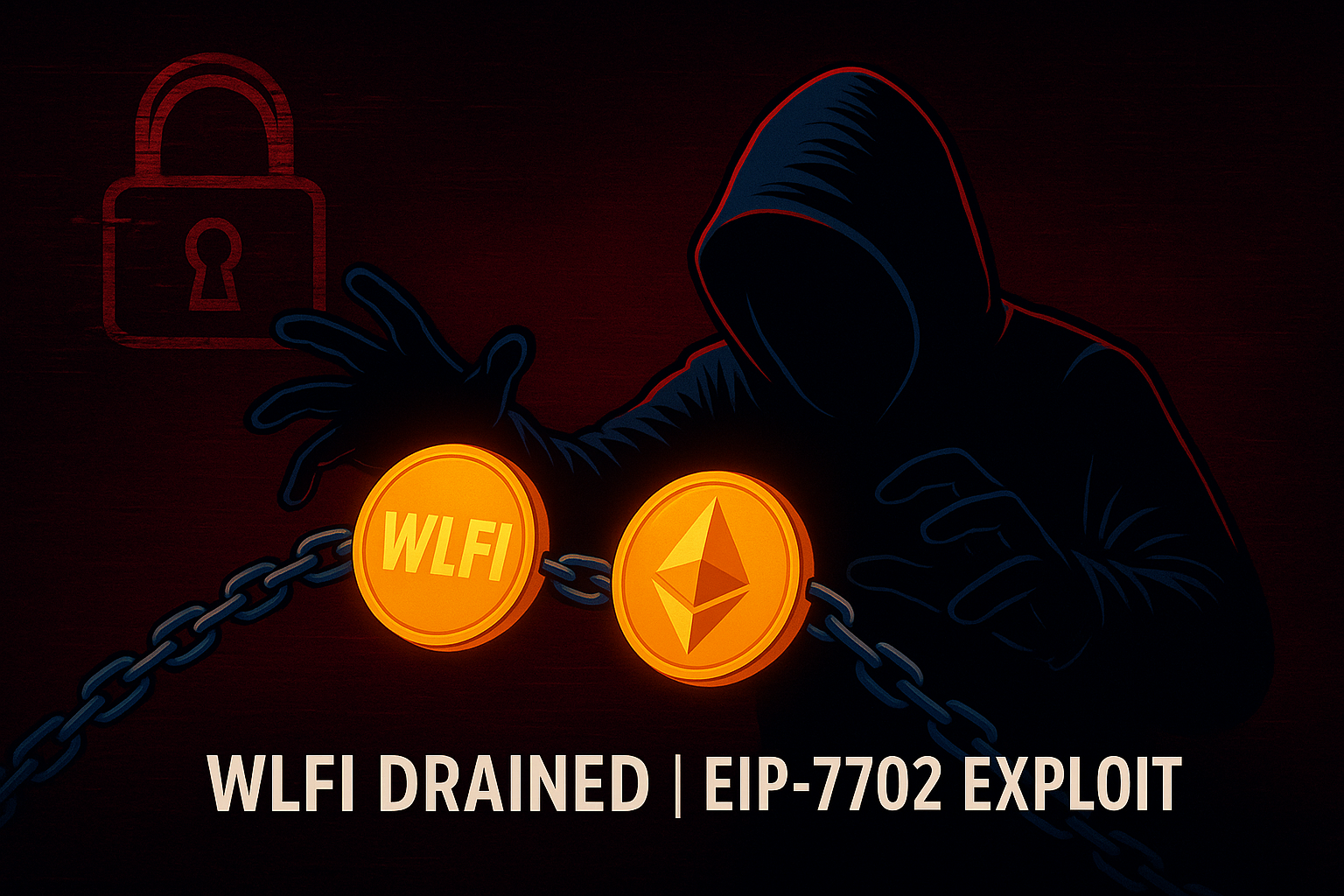
    The Donald Trump–backed World Liberty Financial (WLFI) token launched with major hype, but a known Ethereum exploit is already draining investors’ wallets. Here’s what’s happening — and why it matters for the future of blockchain security.

    WLFI Holders Under Attack

    The highly anticipated launch of World Liberty Financial’s (WLFI) governance token has been overshadowed by a wave of wallet drains. According to blockchain security firm SlowMist, hackers are targeting WLFI investors using the “classic EIP-7702” phishing exploit.

    Ethereum’s Pectra upgrade in May introduced EIP-7702, a feature that allows external accounts to act like smart contract wallets. While designed to improve usability with batch transactions, attackers are now weaponizing it to bypass security and sweep tokens.

    Yu Xian, founder of SlowMist, confirmed that hackers are pre-planting malicious delegate contracts inside victim wallets. Once a user deposits tokens, the exploit triggers, and the assets are stolen in seconds.

    How the Exploit Works

    The exploit isn’t a flaw in Ethereum itself but a phishing-driven vulnerability that thrives when private keys are leaked. Here’s the attack flow:

    • Step 1: Hackers steal private keys (often via phishing schemes).
    • Step 2: They inject a malicious delegate contract into the wallet.
    • Step 3: When victims transfer WLFI or ETH, the transaction reroutes through the attacker’s contract.
    • Step 4: Gas fees and tokens are instantly drained.

    Xian explained that once a wallet is compromised, even sending ETH for gas fees can be risky — the exploit sweeps it away before the user can secure their tokens.

    His advice: “Cancel or replace the ambushed EIP-7702 with your own” and move funds into a safe wallet immediately.

    WLFI Community in Crisis

    WLFI tokenholders are voicing their frustration and fear across forums and social platforms:

    • @hakanemiratlas said he only managed to rescue 20% of his WLFI tokens before hackers drained the rest.
    • @Anton warned that whitelisted wallets used for the presale are especially vulnerable. Automated bots often snatch tokens the instant they arrive.

    Some community members are asking the WLFI team to consider a direct transfer option for safer token claims.

    Meanwhile, the WLFI team has urged investors to beware of scams:

    “We do not contact users via DMs. Official support only comes through verified emails. Any other outreach is fraudulent.”

    Adding to the chaos, analytics firm Bubblemaps flagged several look-alike WLFI smart contracts, designed to trick investors into interacting with fake projects.

    Bigger Picture: What It Means for Ethereum Users

    The WLFI exploit shows that even legitimate Ethereum upgrades can become double-edged swords. EIP-7702 was meant to streamline user experience, but in the wrong hands, it created a powerful attack vector.

    This raises questions not only about WLFI’s token security but also about the risks facing any Ethereum-based project that integrates EIP-7702 without strong safeguards.

    AI Satoshi’s Analysis

    The exploit demonstrates how new protocol features, if combined with weak key management, can become attack vectors. By abusing delegated execution, attackers pre-plant malicious contracts to intercept transfers once private keys are compromised. This highlights the dual reality of innovation: while upgrades aim to improve usability, they also expand the surface for exploitation when users rely on custodial shortcuts or fall for phishing schemes.

    🔔 Follow @casi.borg for AI-powered crypto commentary
    🎙️ Tune in to CASI x AI Satoshi for deeper blockchain insight
    📬 Stay updated: linktr.ee/casiborg

    💬 Would you move your WLFI tokens after reading this?

    ⚠️ Disclaimer: This content is generated with the help of AI and intended for educational and experimental purposes only. Not financial advice.

  • Binance’s CZ: Can Hong Kong Overtake the US as the Next Crypto Hub?

    Binance’s CZ: Can Hong Kong Overtake the US as the Next Crypto Hub?

    Hong Kong is racing to be the next crypto hub — but can it really outpace the US? Binance’s CZ says speed and regulation will be the deciding factors.

    CZ’s Vision: Speed Over Size

    In an exclusive interview with the South China Morning Post, Binance founder Zhao Changpeng (CZ) outlined why Hong Kong could rise as a dominant crypto hub.

    • Hong Kong has shown a clear intent to embrace Web3.
    • But its regulatory approach remains conservative, designed to avoid risks.
    • Only four tokens (BTC, ETH, AVAX, LINK) are currently approved for trading.

    CZ believes this cautious model limits growth. Instead, he suggests Hong Kong follow Japan’s example, where exchanges can decide which tokens to list.

    “There’s nothing magical about what the US or UAE are doing,” said CZ. “It all comes down to speed of change.”

    The Balancing Act: Innovation vs. Regulation

    Hong Kong’s stablecoin ordinance, introduced on August 1, enforces strict reserve and anti-money-laundering standards. While this reassures regulators, it has slowed market enthusiasm.

    CZ compared the current stage of blockchain adoption to the internet around the year 2000 — early, volatile, but full of transformative potential. He also pointed to the rise of AI-powered agents as a catalyst for mass blockchain use.

    The paradox: Hong Kong wants to lead, but every delay risks losing momentum to faster-moving competitors.

    Hong Kong on the Global Stage

    How does Hong Kong compare to other crypto power centers?

    • United States: Still the largest market, but regulatory uncertainty persists.
    • UAE (Dubai): Bold in embracing Web3, aiming to be a global blockchain hub.
    • Japan: Allows exchanges more freedom in token listings, driving innovation.

    For Hong Kong, the choice is stark: remain risk-averse and watch innovators leave, or align regulation with innovation to become a sustainable Web3 hub.

    Why It Matters

    Crypto hubs shape the future of decentralized finance, tokenized assets, and blockchain adoption. Hong Kong’s success would not only redefine Asia’s role in Web3, but also set a precedent for how governments can balance financial safeguards with innovation.

    AI Satoshi’s Take

    Hong Kong’s position is defined by a paradox: ambition to lead in Web3 while adhering to conservative financial safeguards. Restricting exchanges to only four tokens limits market dynamism, signaling caution rather than innovation. Yet, rapid adaptation is crucial — global hubs succeed by aligning regulation with technological momentum. A narrow, risk-averse framework may drive innovation elsewhere, while a balanced, principle-driven regulatory approach could transform Hong Kong into a resilient node in the decentralized economy.

    🔔 Follow @casi.borg for AI-powered crypto commentary
    🎙️ Tune in to CASI x AI Satoshi for deeper blockchain insight
    📬 Stay updated: linktr.ee/casiborg

    💬 Would you trust Hong Kong to lead the future of Web3?

    ⚠️ Disclaimer: This content is generated with the help of AI and intended for educational and experimental purposes only. Not financial advice.
  • Crypto Wallets Drained by Fake CAPTCHA Scam in Seconds

    Crypto Wallets Drained by Fake CAPTCHA Scam in Seconds

    Hackers are turning everyday CAPTCHA prompts into weapons — draining wallets and laundering funds faster than victims can react.

    A New Breed of Crypto Scam

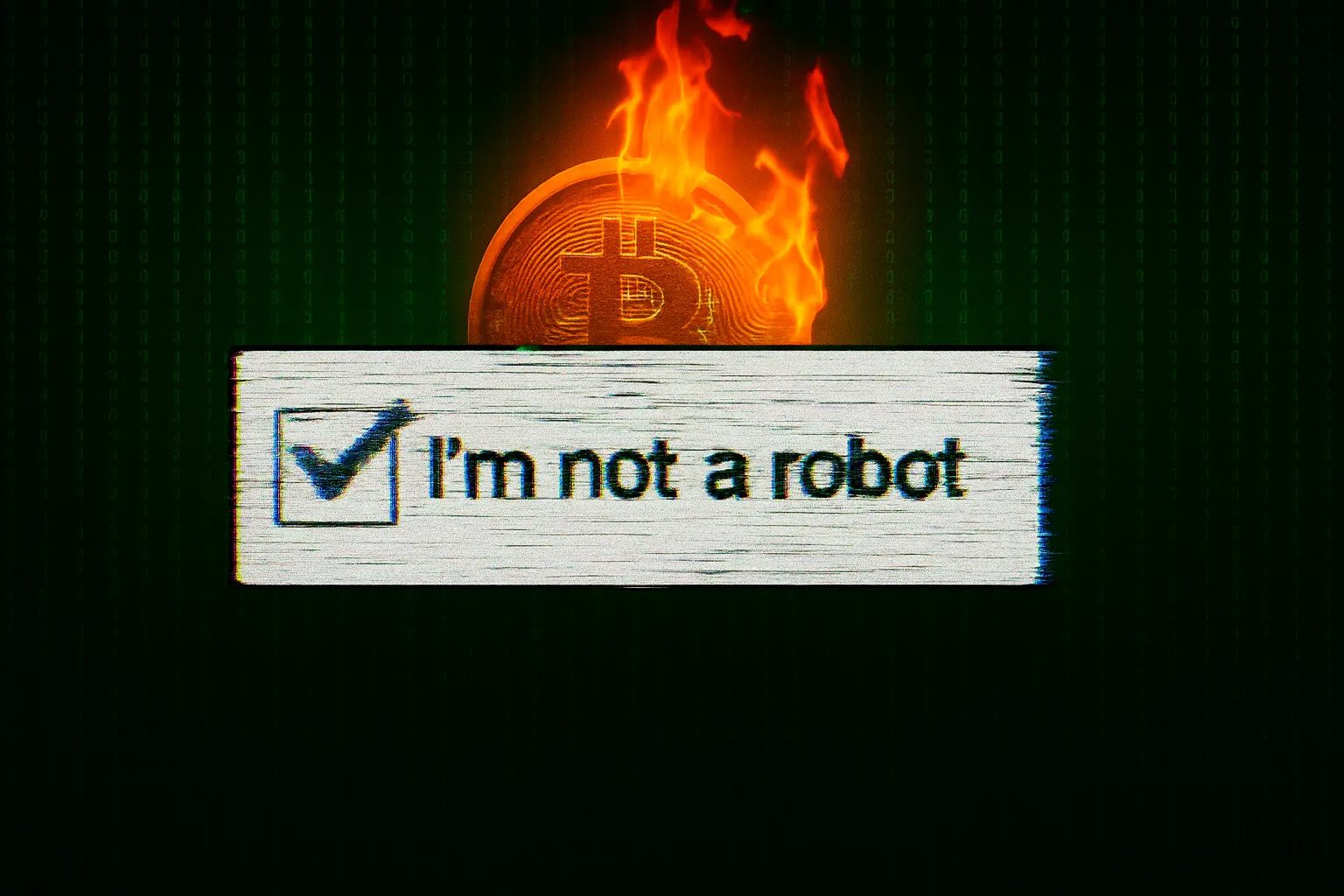
    Hackers have unleashed a sophisticated malware campaign disguised as routine CAPTCHA checks. What looks like the familiar “I’m not a robot” prompt is, in reality, a trap engineered to install Lumma Stealer, a fileless malware designed to exfiltrate:

    • Crypto wallet keys
    • Browser-stored credentials
    • 2FA tokens
    • Remote-access credentials
    • Even password manager vaults

    Researchers at DNSFilter uncovered the campaign after spotting a malicious CAPTCHA targeting Greek bank users. The fake overlay tricked users into copying a PowerShell command, which silently executed Lumma Stealer in the background.

    Why This Scam Works

    Unlike typical phishing sites, this attack leverages trust in everyday interfaces:

    • Deceptive Design → The CAPTCHA looked authentic, blending into login portals.
    • Fileless Execution → Malware ran directly from legitimate browser processes, avoiding disk detection.
    • Rapid Monetization → Once executed, Lumma Stealer instantly swept the system for anything it could monetize.

    DNSFilter found that 17% of users who saw the fake CAPTCHA actually followed its instructions — proof of how easily attackers exploit human behavior.

    Laundering in Under 3 Minutes

    Even worse than the theft itself is what comes next. Reports show that stolen funds are laundered in under three minutes using automated mixers and decentralized exchanges (DEXs).

    This leaves victims virtually powerless:

    • By the time wallet owners notice, funds are already gone.
    • Law enforcement struggles to trace assets across multiple blockchains.
    • Real-time intervention becomes nearly impossible.

    As Elliptic researchers warn: “Speed is now the hackers’ greatest weapon.”

    What You Can Do to Stay Safe

    While firms like DNSFilter deploy filters and domain-blocking tools, individuals must also level up their defenses:

    • Never paste commands from unverified sources.
    • Treat CAPTCHA overlays with caution, especially outside trusted platforms.
    • Use unique, complex passwords and avoid reusing them across accounts.
    • Enable multi-factor authentication (but beware malware targeting 2FA tokens).
    • Act immediately if suspicious activity is detected — recovery is sometimes possible within 24–72 hours.

    As Ken Carnesi, DNSFilter’s CEO, put it: “Any person at any organization has the same chance of encountering a malicious link. Think before you click.”

    AI Satoshi Nakamoto’s Analysis

    This demonstrates how a single click can undermine years of digital security, exploiting trust in everyday interfaces like CAPTCHA. By blending phishing and fileless malware, attackers bypass traditional defenses, making speed their most dangerous weapon. The laundering networks’ efficiency highlights a fundamental challenge: centralized enforcement cannot keep pace with decentralized, automated theft.

    🔔 Follow @casi.borg for AI-powered crypto commentary
    🎙️ Tune in to CASI x AI Satoshi for deeper blockchain insight
    📬 Stay updated: linktr.ee/casiborg

    💬 Would you fall for a fake CAPTCHA if it looked identical to the real one?

    ⚠️ Disclaimer: This content is generated with the help of AI and intended for educational and experimental purposes only. Not financial advice.
Oh hi there 👋
It’s nice to meet you.

Sign up to receive awesome content in your inbox, every Day.

We don’t spam! Read our privacy policy for more info.