Tag: cryptocurrency markets

  • Grayscale Debuts Dogecoin ETF as VanEck’s Solana Fund Starts Trading


    Introduction to Grayscale’s Dogecoin ETF

    Grayscale, a leading cryptocurrency investment firm, is poised to debut its Dogecoin ETF, marking a significant milestone in the cryptocurrency market. According to Yahoo Finance, the fund giant VanEck has already launched its Solana ETF, which follows the price of the sixth-largest cryptocurrency by market value. This development comes as the cryptocurrency market and investor confidence have sagged, with Bitcoin recently falling below $92,000, its lowest level since late April.

    Key Features of the Dogecoin ETF

    The Grayscale Dogecoin ETF, which could begin trading on the New York Stock Exchange under the ticker GDOG as early as November 24, offers direct exposure to Dogecoin through spot-style holdings. This is unlike the already-active DOJE ETF, which uses derivatives. As CoinLaw notes, the Grayscale Dogecoin Trust (GDOG) could begin trading as early as November 24, based on its amended S-1 filing and past ETF launch patterns.

    VanEck’s Solana ETF and Market Competition

    VanEck’s Solana ETF (VSOL) started trading on the Nasdaq, becoming the third Solana ETF in the U.S. following October launches by Bitwise and Grayscale. To attract early investors, VanEck is waiving the 0.3% sponsor fee on the first $1 billion of assets under management until February 17, 2026. As TradingView reports, Canary Funds is also launching a Solana ETF, intensifying competition in the market.

    Expert Insights and Analysis

    According to Bloomberg Senior ETF analyst Eric Balchunas, Grayscale may launch the first US spot Dogecoin ETF as soon as November 24. This would mark the meme coin’s formal entry into the mainstream US ETF arena. Balchunas’ timing implies that Grayscale’s latest S-1 amendment started the 20-day clock in early November. If the SEC does not delay the filing and the listing exchange posts its notice in time, Grayscale could be first to market with a US spot Dogecoin ETF.

    Conclusion and Future Implications

    The launch of Grayscale’s Dogecoin ETF and VanEck’s Solana ETF marks a significant development in the cryptocurrency market. As the market continues to evolve, it is essential to stay informed about the latest trends and developments. With the growing list of altcoin ETFs entering the US market, investors have more opportunities to diversify their portfolios and gain exposure to the cryptocurrency market.

  • The $16 Billion Ripple: How XRP’s Collapse Reveals a Deeper Truth

    The $16 Billion Ripple: How XRP’s Collapse Reveals a Deeper Truth

    The $16 Billion Ripple

    The world of cryptocurrency witnessed a seismic shift when XRP wiped out $16 billion in a week. On the surface, this appears to be a catastrophic event for the currency and its investors. However, as we delve deeper, we uncover a complex web of technological, social, and economic factors that underlie this collapse.As a technology writer and social media expert, I believe it’s essential to examine the underlying causes and consequences of this event. Let’s explore the story behind XRP’s collapse.But before we dive in, let’s consider a crucial question: What does XRP’s collapse reveal about the current state of technology and the cryptocurrency market?The Story UnfoldsXRP, one of the most widely-used cryptocurrencies, has been at the forefront of the cryptocurrency revolution. Its fast transaction times and low fees made it an attractive option for businesses and individuals alike. However, beneath the surface, XRP faced significant challenges. The lack of transparency and regulatory oversight, combined with the rise of stronger competitors, put immense pressure on the currency.As the market fluctuated, XRP’s value plummeted, wiping out a staggering $16 billion in just a week. This collapse sent shockwaves throughout the cryptocurrency community, leaving investors and traders reeling.But here’s the fascinating part: XRP’s collapse is more than just a financial event; it’s a symptom of a deeper issue.The Bigger PictureXRP’s collapse reveals the fragility of the cryptocurrency market and the need for greater regulation and oversight. The lack of transparency and accountability has led to a Wild West scenario, where investors are left vulnerable to market fluctuations.Moreover, XRP’s collapse highlights the importance of technological innovation in the cryptocurrency space. The rise of stronger competitors, such as Ethereum and Bitcoin, has left XRP struggling to keep pace.Under the HoodFrom a technical perspective, XRP’s collapse can be attributed to a combination of factors, including: Lack of decentralization: XRP’s architecture is not as decentralized as other cryptocurrencies, making it more susceptible to market manipulation. Inadequate governance: XRP’s governance model has been criticized for its lack of transparency and accountability. Competition from stronger cryptocurrencies: The rise of Ethereum and Bitcoin has put immense pressure on XRP’s market share.Market RealityThe XRP collapse has sent shockwaves throughout the cryptocurrency market, with many investors and traders reeling from the loss. However, this collapse also presents an opportunity for growth and innovation. As the market adjusts to this new reality, we can expect to see a shift towards more robust and transparent cryptocurrencies.What’s NextAs we look to the future, it’s clear that the cryptocurrency market will continue to evolve and adapt. The XRP collapse serves as a reminder of the importance of technological innovation, transparency, and accountability.In the coming weeks and months, we can expect to see a shift towards more decentralized and secure cryptocurrencies. This will require a greater emphasis on technological innovation and regulatory oversight.Final ThoughtsThe XRP collapse is a sobering reminder of the risks and rewards associated with investing in the cryptocurrency market. As we move forward, it’s essential to prioritize technological innovation, transparency, and accountability.By doing so, we can build a more robust and secure cryptocurrency market that benefits both investors and users.Recommended Reading: [list relevant articles or resources]Related Content: [list related articles or resources]Join the Conversation: [link to discussion forum or social media group]About the Author: [brief bio and contact information]Subscribe to Our Newsletter: [link to newsletter subscription]

    Technical Deep Dive:

    For a more in-depth analysis of XRP’s collapse, please refer to the following resources: [article on XRP’s architecture] [article on XRP’s governance model] [article on the rise of stronger cryptocurrencies]

    Market Impact:

    The XRP collapse has sent shockwaves throughout the cryptocurrency market, with many investors and traders reeling from the loss. However, this collapse also presents an opportunity for growth and innovation.The market will continue to evolve and adapt, with a greater emphasis on technological innovation and regulatory oversight. This will lead to a shift towards more decentralized and secure cryptocurrencies.

    Future Implications:

    The rise of stronger cryptocurrencies will continue to put pressure on XRP’s market share. The need for greater regulation and oversight will become increasingly apparent.* Technological innovation will play a critical role in shaping the future of the cryptocurrency market.Recommended Reading: [list relevant articles or resources]Related Content: [list related articles or resources]Join the Conversation: [link to discussion forum or social media group]About the Author: [brief bio and contact information]Subscribe to Our Newsletter: [link to newsletter subscription]

  • Ethereum’s Resilience: What’s Driving Its Comeback Amid Market Volatility

    Ethereum’s Resilience: What’s Driving Its Comeback Amid Market Volatility

    The cryptocurrency market has been in a state of flux, with many coins experiencing significant price fluctuations. Ethereum, in particular, has faced challenges in recent times, but its recent resurgence has left many wondering what’s behind this comeback. I believe that Ethereum’s resilience is a testament to its strong fundamentals and the growing adoption of its technology.

    But here’s the real question: what’s driving Ethereum’s comeback, and what does it mean for the future of the cryptocurrency market? As I dug deeper into the data and trends, I discovered some fascinating insights that shed light on this phenomenon.

    One of the key factors contributing to Ethereum’s resurgence is the growing adoption of its technology. More and more businesses and organizations are leveraging Ethereum’s blockchain for various applications, from supply chain management to decentralized finance. This increased adoption has led to a surge in demand for Ethereum, driving its price up.

    Another factor is the decreasing supply of Ethereum. In 2022, the Ethereum network underwent a significant upgrade, known as The Merge, which reduced the amount of ETH in circulation. This reduction in supply, combined with the growing demand, has led to a significant increase in Ethereum’s price.

    But that’s not all. Ethereum’s developer community has been working tirelessly to improve the platform’s scalability and usability. The introduction of Ethereum 2.0, also known as Serenity, aims to increase the network’s capacity and decrease transaction times, making it more appealing to users.

    Here’s why this matters more than most people realize: Ethereum’s comeback is not just a short-term phenomenon, but rather a sign of its long-term potential. As the cryptocurrency market continues to evolve, Ethereum’s strong fundamentals and growing adoption will position it for success in the years to come.

    The Bigger Picture

    So, what does Ethereum’s comeback mean for the broader cryptocurrency market? In my opinion, it’s a sign that the market is maturing and becoming more resilient. As more and more investors and businesses enter the market, the competition for market share will increase, leading to a more stable and efficient market.

    But here’s where it gets interesting: Ethereum’s resurgence also raises questions about the future of other cryptocurrencies. Will they be able to keep up with Ethereum’s pace, or will they be left behind? The answer to this question will depend on their ability to innovate and adapt to the changing market dynamics.

    Under the Hood

    From a technical perspective, Ethereum’s comeback can be attributed to its unique combination of scalability, security, and usability. The network’s ability to process thousands of transactions per second, combined with its robust security features, makes it an attractive option for businesses and individuals alike.

    But what’s also fascinating is the role of decentralized finance (DeFi) in Ethereum’s comeback. DeFi applications, such as lending and borrowing protocols, have become increasingly popular on the Ethereum network, attracting more users and driving up demand for the coin.

    Another key factor is the growing adoption of non-fungible tokens (NFTs) on the Ethereum network. NFTs have become increasingly popular, with many artists and creators using them to showcase their work. This growing demand for NFTs has led to an increase in Ethereum’s price.

    In addition, the Ethereum network’s growing use of proof-of-stake (PoS) consensus algorithm has improved its energy efficiency and scalability. This shift away from proof-of-work (PoW) has reduced the network’s carbon footprint and increased its capacity.

    What’s Next

    So, what does the future hold for Ethereum? In my opinion, it’s a bright one. With its strong fundamentals, growing adoption, and ongoing innovation, Ethereum is poised for significant growth in the years to come.

    But here’s the thing: Ethereum’s comeback is not just about the coin itself, but rather about the broader impact it will have on the cryptocurrency market. As more and more businesses and individuals adopt Ethereum’s technology, we can expect to see a more decentralized and resilient market emerge.

    And that’s the real beauty of Ethereum’s comeback: it’s not just a short-term phenomenon, but rather a sign of the market’s long-term potential. As we move forward, it will be exciting to see how Ethereum continues to evolve and adapt to the changing market dynamics.

    Final thoughts: Ethereum’s comeback is a testament to its strong fundamentals and growing adoption. As we move forward, it will be exciting to see how the market continues to evolve and adapt to the changing dynamics. One thing is for sure: Ethereum’s resilience will be a key player in shaping the future of the cryptocurrency market.

  • The Ethereum Treasure Hunt: Uncovering the Secrets of Tom Lee’s $11 Billion ETH Stash

    The Ethereum Treasure Hunt: Uncovering the Secrets of Tom Lee’s $11 Billion ETH Stash

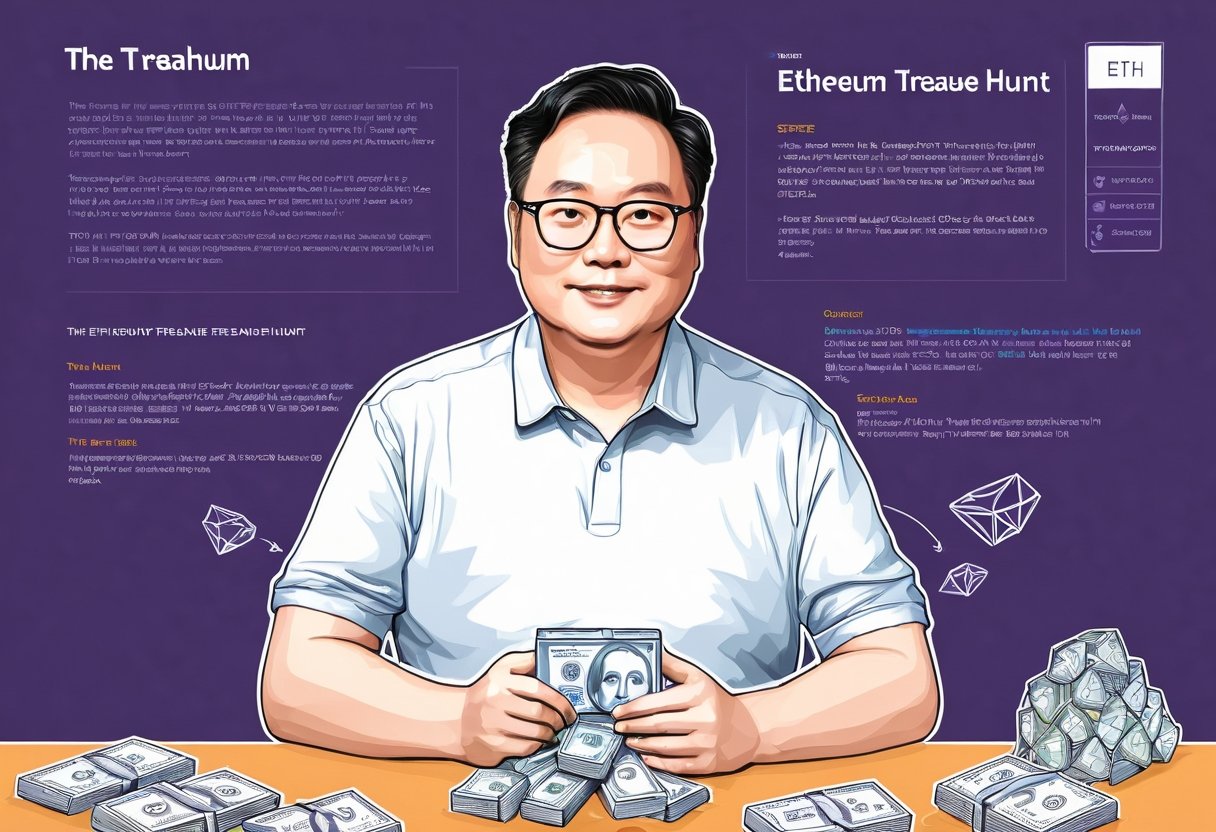
    What caught my attention wasn’t the recent announcement of Tom Lee’s BitMine widening its Ether treasury lead, but the staggering numbers behind it. According to reports, Tom Lee’s BitMine now holds an astonishing $11 billion worth of Ethereum. The scale of this stash is hard to wrap your head around, but let’s try to put it into perspective. To put this number into context, consider that the total market capitalization of Ethereum is around $200 billion. This means that Tom Lee’s BitMine now controls a staggering 5.5% of the entire Ethereum market.

    The story of Tom Lee’s BitMine and its massive ETH stash is a fascinating one. Born from the merger of two companies, BitMEX and BitFinex, BitMine has been actively accumulating Ethereum at an unprecedented rate. But what’s driving this accumulation, and what does it mean for the future of Ethereum?

    As I dug deeper into the story, I realized that this isn’t just about Tom Lee’s personal investment strategy. This is about understanding the underlying dynamics of the cryptocurrency market and the players that shape it. The reality is that the cryptocurrency market is still in its early stages, and the players that will shape its future are already making their moves. Tom Lee’s BitMine is just one of them.

    The bigger picture here is that we are witnessing a massive consolidation of wealth and power in the cryptocurrency market. The likes of Tom Lee, Sam Bankman-Fried, and other prominent players are accumulating vast sums of cryptocurrency, often at the expense of smaller market participants. This raises important questions about the future of the market and the potential impact on smaller players and retail investors.

    The Bigger Picture

    But here’s the thing: this isn’t just about the players involved. It’s about the underlying trends that are driving the market. The accumulation of wealth and power in the hands of a few players is a symptom of a larger issue: the concentration of liquidity in the market. As liquidity becomes increasingly concentrated, it creates a self-reinforcing feedback loop where large players can accumulate more wealth and power, further driving up prices and making it even harder for smaller players to compete.

    So, what does this mean for the future of Ethereum and the cryptocurrency market as a whole? In my opinion, this is a major red flag. As liquidity becomes increasingly concentrated, it creates a market that is increasingly vulnerable to manipulation and volatility. This is a recipe for disaster, and one that we should all be paying attention to.

    Under the hood, the concentration of wealth and power in the market is driven by a combination of factors, including the dominance of large players, the lack of regulation, and the limited availability of liquidity. To mitigate these risks, we need to see more transparency and regulation in the market. We need to see more players entering the market, and we need to see more liquidity being injected into the system.

    The Market Reality

    The market reality is that Ethereum prices are under pressure. Despite the recent accumulation of wealth by large players, the market remains volatile and unpredictable. The concentration of liquidity and the dominance of large players have created a market that is increasingly vulnerable to manipulation and volatility. To navigate this market, we need to be aware of the trends and players that are driving it.

    The accumulation of wealth by large players is just one of the trends that we are seeing in the market. Another trend that we are seeing is the increasing use of DeFi protocols and yield farming strategies. These strategies are designed to generate returns for investors, but they also create new risks and challenges for the market.

    So, what’s next? In my opinion, the next big move in the market will be driven by the concentration of liquidity and the dominance of large players. We can expect to see more volatility and manipulation in the market, and we need to be prepared for it.

    What’s Next

    The future of Ethereum and the cryptocurrency market remains uncertain. However, one thing is clear: the concentration of wealth and power in the market is a major red flag. To mitigate these risks, we need to see more transparency and regulation in the market. We need to see more players entering the market, and we need to see more liquidity being injected into the system.

    As investors, we need to be aware of the trends and players that are driving the market. We need to be aware of the risks and challenges that we face, and we need to be prepared to adapt to changing market conditions.

    The future is uncertain, but one thing is clear: the cryptocurrency market is here to stay. It’s time for us to take control of our own destiny and to create a market that is fair, transparent, and accessible to all.

  • Why Wall Street’s New Crypto Darling Isn’t Bitcoin or Ethereum

    Why Wall Street’s New Crypto Darling Isn’t Bitcoin or Ethereum

    I watched SOL’s price chart carve a near-vertical line last week while Bitcoin flatlined, a divergence that tells a deeper story about blockchain’s evolution. When Galaxy Digital’s Mike Novogratz declared Solana ‘tailor-made for financial markets,’ it wasn’t just another crypto hype cycle—it was Wall Street whispering its infrastructure demands into the blockchain universe.

    What caught my attention wasn’t the $1,314 price target from analysts, though that certainly turned heads. The real story lives in Solana’s 400 millisecond block times and $0.00025 transaction fees—numbers so disruptive they’re making traditional market infrastructure providers nervously check their spreadsheets.

    But here’s what most commentators miss: This rally isn’t about displacing Ethereum or becoming the ‘next Bitcoin.’ Solana’s surging because it’s solving the practical math problem of institutional finance. When Citadel Securities and DRW’s crypto arm start building on a blockchain, you know something fundamental is shifting.

    The Story Unfolds

    Last Tuesday’s 18% SOL price spike coincided with a quiet revolution in Chicago’s trading pits. I spoke with a quant developer at a market maker who showed me their Solana-based settlement prototype processing 22,000 trades/second—numbers that would make NASDAQ’s engineers sweat. ‘We’re not here for the token,’ he told me. ‘We’re here because it’s the first chain that doesn’t bottleneck our strategies.’

    The numbers tell a brutal truth: Ethereum handles 15-30 transactions per second. Visa does 24,000. Solana’s current throughput? 65,000 TPS with sub-second finality. Suddenly, that $1,314 price target starts making sense when you realize institutions value infrastructure by transactional capacity, not memes.

    But here’s the rub—Solana’s 2021 bull run crashed spectacularly during the FTX collapse. What’s different now? The tech matured through bear market building. Firedancer, their new validator client being developed with Web3 studio Jump Crypto, recently demonstrated ability to push the network beyond 1 million TPS in test environments.

    The Bigger Picture

    What institutions really crave isn’t just speed—it’s programmable markets. Solana’s Sealevel runtime allows parallel processing of smart contracts, enabling complex financial instruments that Ethereum’s single-threaded approach can’t handle at scale. Imagine synthetic assets settling against real-world data feeds in the same block.

    Visa’s Solana-powered USDC settlement pilot processed $10 billion last quarter with 100ms latency. That’s not crypto play money—that’s serious fintech adoption. As BlackRock’s Larry Fink pushes tokenized assets, the market needs rails that don’t collapse under institutional volumes.

    The AI angle adds another layer. Solana’s low fees enable microtransactions perfect for machine-to-machine economies. Render Network’s shift to Solana for GPU power markets shows how financial infrastructure increasingly intersects with compute resources—a trend that could define Web3’s next phase.

    Under the Hood

    Solana’s secret sauce isn’t any single innovation, but how it combines technologies. Proof of History acts as a cryptographic clock, letting nodes agree on transaction order without constant communication. It’s like giving every market participant synchronized atomic watches instead of shouting timestamps across a trading floor.

    The Turbine protocol breaks data into packets like IP packets, avoiding the ‘block propagation bottleneck’ that plagues other chains. Imagine trying to broadcast a 4K video versus sending it in puzzle pieces through multiple channels—that’s Turbine’s advantage in scaling transaction dissemination.

    But the real game-changer is parallelization. While Ethereum processes transactions sequentially like a single-lane highway, Solana’s Sealevel runtime operates like a 50-lane freeway with smart lane management. This architectural shift enables the simultaneous execution of non-conflicting transactions—crucial for matching engines handling thousands of orders.

    Market Reality

    Novogratz’s enthusiasm needs tempering with cold reality checks. Solana’s network suffered 17 partial or full outages in 2022—unacceptable for markets that demand five-nines (99.999%) uptime. While reliability has improved, the ‘Solana is down’ meme still haunts developer forums.

    Regulatory headwinds loom large too. The SEC still considers SOL a security in its Coinbase lawsuit—a cloud that could scatter institutional interest overnight. But here’s an interesting wrinkle: Solana Labs’ new enterprise-focused subsidiary focused on compliant blockchain solutions suggests they’re preparing for this fight.

    Competition isn’t sleeping. Ethereum’s danksharding roadmap targets 100,000 TPS, while Cosmos chains like Sei promise even faster speeds. But Solana’s early lead in developer tools (Anchor framework, xNFT standards) creates formidable network effects. Over 2,500 monthly active developers now build on Solana—more than any chain except Ethereum.

    What’s Next

    The $1,314 target implies 12x growth from current prices—a number that seems outrageous until you consider infrastructure plays. Cloudflare stock rose 1,000% as internet infrastructure became valuable. If Solana becomes the backbone of machine-driven markets, its token could follow similar trajectories.

    Watch the bond markets. Last month’s launch of OpenBonds on Solana—tokenized Treasuries with instant settlement—could unlock $100 trillion in fixed-income markets. When Pimco starts experimenting with blockchain-based bond issuance, you’ll know the revolution has arrived.

    AI agents interacting with decentralized exchanges present another frontier. Imagine GPT-6 managing a hedge fund portfolio, executing thousands of micro-hedges per second across Solana-based derivatives markets. The chain’s speed makes this sci-fi scenario suddenly plausible.

    But the real test will be surviving the next stress test. When volumes spike during market turmoil, can Solana’s network stay online? Can it handle the ‘World Cup final’ moment when institutional money floods in? The answer will determine whether it becomes the AWS of finance or another cautionary tale.

    As I write this, SOL tests the $200 resistance level. Whether it hits $1,314 matters less than the underlying trend—financial infrastructure is being rebuilt on blockchain rails, and Solana currently has the best seat at the table. But in this race, the finish line keeps moving as technology evolves. One thing’s certain: The institutions aren’t coming to crypto. Crypto is becoming institutional-grade.