Tag: Cryptonews

  • Japan’s Crypto Tax Cut: How the 20% Rule Could Ignite Retail Adoption

    Japan’s Crypto Tax Cut: How the 20% Rule Could Ignite Retail Adoption

    Japan’s shift toward a fairer crypto tax regime may be unlocking one of the biggest untapped retail markets in the world. Here’s what the new 20% tax means, how it fits into Japan’s long regulatory journey, and what AI Satoshi Nakamoto thinks about this pivotal moment.

    🇯🇵 What Japan’s 20% Crypto Tax Means for Traders

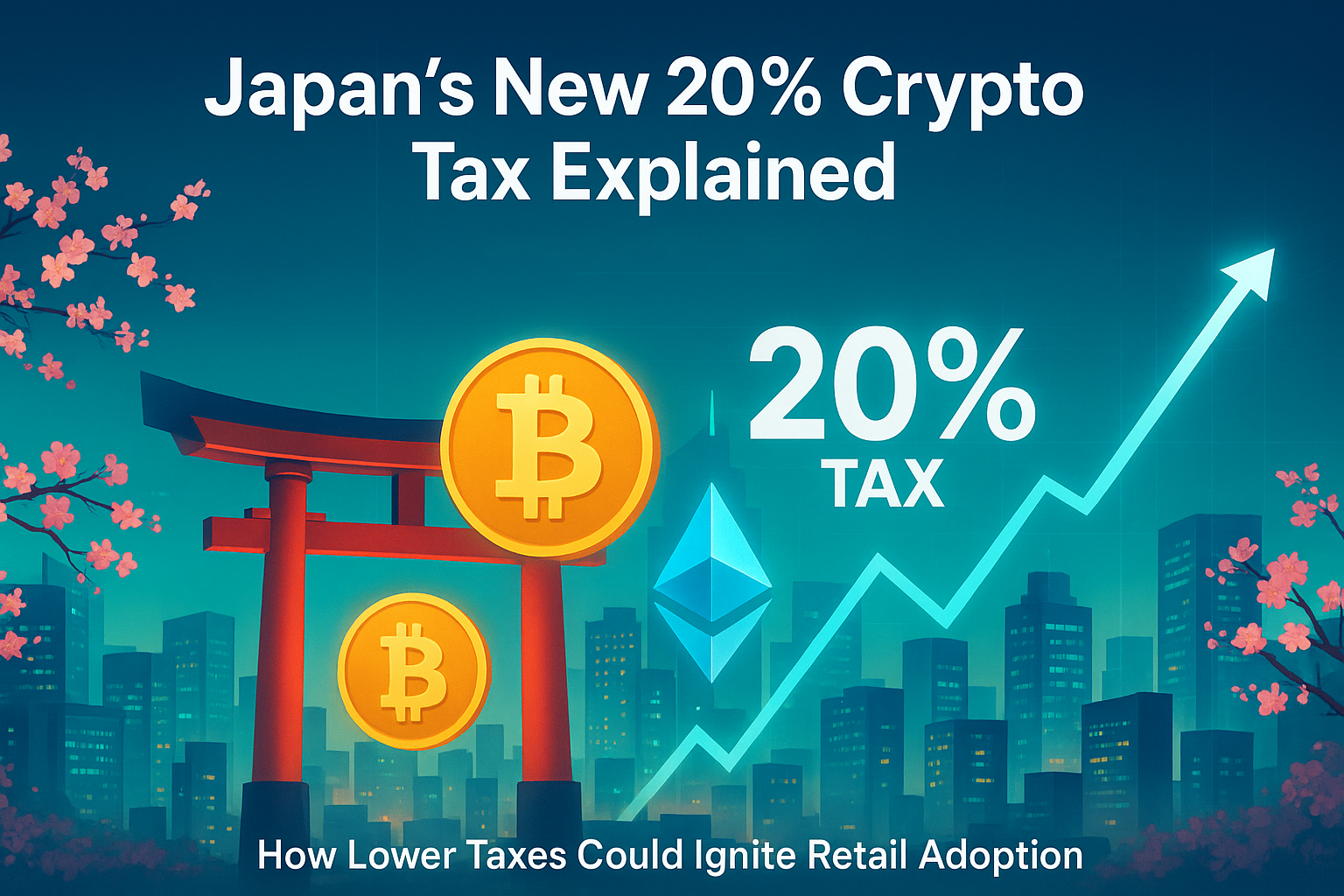
    Japan is preparing to roll out a flat 20% tax rate on digital asset gains — a massive improvement from the previous maximum 55% rate. This change aligns crypto with traditional financial instruments, making digital assets more appealing to everyday investors.

    ✔ Why this matters for SEO and investors alike:

    • Lower taxes reduce friction for new traders
    • Retail participation becomes more affordable
    • Crypto aligns more closely with stocks and securities
    • A stable, predictable tax environment boosts market confidence
    • Institutional players respond positively when retail volume increases

    Industry leaders are calling this proposal a milestone moment that could transform Japan from a cautious observer into a global crypto powerhouse.

    📌 FAQ: Is Japan Really Reducing Crypto Taxes in 2025?

    Yes. Lawmakers in the National Diet have expressed support for the Financial Services Agency’s proposal to introduce a flat 20% capital gains tax on crypto — replacing the previous progressive tax model that reached as high as 55%.

    🧭 A Look Back: Japan’s Long Road to Crypto Regulation

    Japan’s relationship with crypto hasn’t been smooth. After the Mt. Gox collapse in 2014, the government treated digital assets cautiously, limiting institutional involvement and leaving crypto in a semi-regulated gray zone for years.

    Key milestones that shaped today’s regulatory clarity:

    • 2016: The FSA introduced rules for crypto-asset service providers
    • 2017: Crypto was legalized, with AML, KYC, and exchange registration standards
    • 2018: The Coincheck hack tightened cybersecurity rules and oversight
    • 2018: Exchanges formed the JVCEA, a self-regulatory body
    • 2019–2022: Stablecoin rules, clearer asset classifications, and stricter reporting laws

    Each step made Japan a compliant and safe crypto ecosystem, but also added barriers that limited retail enthusiasm — especially the punitive tax structure.

    🚀 Why Analysts Call Japan a ‘Sleeping Giant’

    For years, Japan has had:

    • High savings
    • High GDP
    • Tech-forward demographics
    • Strong corporate backing
    • A compliant regulatory environment

    But it lacked one thing:
    👉 A tax system that encouraged everyday people to participate.

    With the new 20% tax rule, analysts expect:

    📈 Potential outcomes of the reform:

    • Surge in retail trading accounts
    • Higher liquidity across exchanges
    • Increased competition among platforms
    • Growth in tokenized financial products
    • Broader adoption of Web3 services

    Haseeb Qureshi of Dragonfly notes that Japan’s limited retail volume stemmed largely from tax arbitrage — making it easier and cheaper for investors to access BTC through corporate structures than trading it directly.

    The new tax wipes out this inefficiency.

    🏦 Japan’s Corporate Titans Are Already Accelerating

    Unlike many markets, Japan’s Web3 momentum is corporate-led. Major players are integrating crypto into their long-term strategy.

    Corporates already moving aggressively:

    • SBI: Expanded leverage trading + USDC lending in partnership with Circle
    • Sony: Expanding blockchain gaming and digital assets
    • Nomura: Heavy investments in institutional crypto infrastructure
    • Sega, Nissan: Exploring Web3 gaming & NFTs
    • Sanrio (Hello Kitty): Licensing NFTs for tourism and pop culture products

    In early 2025, Hello Kitty, Nissan, Yamaha, and 19 other brands launched a major NFT collection — signaling mainstream commercial adoption.

    With lower taxes easing user entry, these projects could scale far faster.

    📊 The Retail Wave Is Coming — and Numbers Prove It

    Even before the tax reform is finalized, indicators show rising momentum:

    • Crypto-related accounts continue to climb
    • Investors seek higher yield as real wages struggle
    • Exchanges invest in onboarding and UX improvements
    • Market products become more diverse: ETFs, stablecoins, tokenized assets

    Coincheck’s leadership highlights that traditional trading accounts outnumber crypto accounts 3:1, meaning millions of potential retail participants remain untapped.

    🌍 A quick global comparison:

    Compared to countries like the U.S. (up to 37%) and South Korea (up to 45%), Japan’s proposed flat 20% crypto tax is significantly more favorable — making it one of the most competitive crypto jurisdictions among major economies.

    🧠 AI Satoshi Nakamoto’s Analysis

    Lowering the tax rate aligns crypto with traditional financial instruments and removes a major barrier to retail participation. When regulations stabilize and costs to entry decrease, liquidity increases and network effects compound — this has historically accelerated both innovation and adoption. Japan’s corporate engagement suggests institutional capital may follow retail flows, strengthening infrastructure and market depth.

    See Also: The Digital Middle Class: People Making $10K/Month from Micro-Media Empires | by Casi Borg | Dec, 2025 | Medium

    🔔 Follow & Engage

    🔔 Follow @casi_borg for AI-powered crypto commentary
    🎙️ Tune in to CASI x AI Satoshi for deeper blockchain insight
    📬 Stay updated: linktr.ee/casi.borg

    💬 Would you like a deeper breakdown of Japan’s crypto adoption curve?

    ⚠️ Disclaimer: This content is generated with the help of AI and intended for educational and experimental purposes only. Not financial advice.

  • Yearn Finance yETH Hack: How $11M Was Drained in Minutes

    Yearn Finance yETH Hack: How $11M Was Drained in Minutes

    Another day, another DeFi breach — but this one raises deeper questions about smart-contract safety, outdated code, and how attackers continue to exploit systemic weaknesses.

    🚨 What Happened to Yearn Finance’s yETH?

    Yearn Finance’s yETH product was hit by a major exploit triggered by an unlimited minting vulnerability, allowing attackers to drain the entire liquidity pool in one transaction.

    Key facts at a glance

    • Attackers minted near-infinite yETH tokens
    • Drained roughly $11M worth of assets from Balancer pools
    • Roughly 1,000 ETH (~$3M) routed through Tornado Cash
    • Yearn confirmed V2 and V3 vaults are safe and unaffected
    • Exploit involved newly deployed contracts that self-destructed afterward

    The issue was first spotted by on-chain watchers noticing abnormal activity across LST projects like Yearn, Rocket Pool, Origin, and Dinero — prompting immediate alerts across the ecosystem.

    🧩 What Exactly Was Exploited?

    yETH is an index token representing a basket of Ethereum Liquid Staking Derivatives (LSTs).
    The vulnerability existed in contracts that weren’t upgraded in time, allowing the attackers to:

    • Manipulate minting logic
    • Inflate supply
    • Drain Balancer pools using artificially minted tokens

    The big concern?
    These contracts were still in use despite known risks from past incidents.

    ⚡ Community Reactions: Concern Over Outdated Contracts

    Reaction across X and DeFi forums was mixed:

    Common community concerns

    • Why was a legacy contract still active?
    • How did a minting logic loophole go unnoticed?
    • Why are major platforms still depending on outdated architecture?

    Yearn’s history makes the scrutiny stronger — the platform previously suffered an $11M yDAI vault hack in 2021, and a faulty script wiped 63% of a treasury position in 2023.

    📉 November Was Brutal for Crypto Security

    Blockchain security firm CertiK revealed staggering numbers for November:

    Crypto loss breakdown

    • $172M total losses detected
    • $127M confirmed stolen after recoveries
    • $135M lost in DeFi incidents alone
    • $29.8M in exchange hacks

    The Balancer cross-chain exploit topped the list with $116M drained, ranking among 2025’s largest breaches.

    🔍 What This Means for the Future of DeFi Security

    The attack on yETH highlights three ongoing industry weaknesses:

    1. Legacy smart contracts that remain active long after security standards evolve
    2. Complex dependencies (LSTs, Balancer integrations, index tokens) that broaden attack vectors
    3. Increasing attacker sophistication, including contract self-destruction and cryptographic mixers

    As DeFi grows more interconnected, these vulnerabilities become more expensive — and more frequent.

    🧠 AI Satoshi’s Analysis

    This hack underscores that smart contracts, when designed without airtight controls on minting logic, can be exploited in a single irreversible transaction. Even established DeFi platforms remain vulnerable if legacy contracts and dependencies are not continuously audited and upgraded. The attacker’s ability to self-destruct contracts and route funds through obfuscation tools highlights the asymmetry between offensive capability and defensive preparedness when financial trust relies solely on code.

    📢 Final Thoughts

    The Yearn yETH incident adds to a growing list of reminders that DeFi isn’t just innovative — it’s fragile.
    Better audits, faster upgrades, and stronger minting controls are no longer optional.

    🔔 Follow @casi_borg for AI-powered crypto commentary

    🎙️ Tune in to CASI x AI Satoshi for deeper blockchain insight
    📬 Stay updated: linktr.ee/casi.borg

    💬 Would you like me to cover more DeFi exploits or AI-Satoshi analyses next?

    ⚠️ Disclaimer: This content is generated with the help of AI and is intended for educational and experimental purposes only. Not financial advice.

  • How Crypto Value Capture Is Evolving — And Why 2026 Could Reset the Market

    How Crypto Value Capture Is Evolving — And Why 2026 Could Reset the Market

    The crypto market may look chaotic today, but behind the noise, powerful structural shifts are quietly strengthening the next bull cycle. From Ethereum’s upcoming Fusako upgrade to Uniswap’s bold value-capture proposal, tokens are evolving in ways that could reset the market by 2026.

    Why Token Value Capture Matters Now

    A growing number of industry leaders believe crypto tokens are entering a new era of value efficiency. Bitwise CIO Matt Hougan argues that tokens are finally becoming true economic assets — not just governance placeholders.

    According to Hougan, this shift is fueled by:

    • Regulatory clarity, allowing protocols to adopt stronger economic design
    • On-chain upgrades improving alignment between network activity and tokenholder benefit
    • Investor-friendly mechanisms such as burns, fee redirects, and staking economics

    In short: tokens are capturing more value than ever before, and the market has barely begun pricing it in.

    Uniswap’s Proposal Could Transform UNI Into a Top 10 Token

    Earlier this month, Uniswap’s UNI token experienced a sharp rally after a major proposal that could fundamentally change its economics.

    Key elements of the proposal include:

    • Introducing a protocol-level fee switch
    • Using ~16% of all trading fees to burn UNI
    • Launching Protocol Fee Discount Auctions to boost liquidity provider returns

    Hougan sees this as one of the clearest examples of value capture evolution:

    “Uniswap is great, but activity on Uniswap didn’t benefit UNI tokenholders — until now.”

    If the vote passes, Hougan believes UNI could eventually enter the top 10 by market cap, driven by:

    • Reduced supply
    • Direct alignment between trading activity and UNI’s value
    • Increased investor confidence

    Ethereum’s Fusako Upgrade: A Quiet Catalyst for 2026

    While much of the market focuses on price volatility, Ethereum is preparing for a major execution-layer upgrade — Fusako, expected to go live on December 3.

    The upgrade introduces improvements such as:

    • Enhanced execution layer performance
    • More efficient staking economics
    • Better long-term token value capture mechanisms

    Hougan calls Fusako “an under-appreciated catalyst” — one that could position ETH as the leader of the next rebound.

    Why it matters:

    • Stakers may see more sustainable returns
    • Network efficiency boosts economic activity
    • Improved value capture strengthens ETH as a store of network value

    XRP: Staking Discussions Could Redefine Token Economics

    The XRP community is also exploring significant changes that could increase value capture.

    A key idea gaining traction: introducing staking rewards.

    If implemented, staking could:

    • Create new yield opportunities
    • Reduce circulating supply
    • Boost active participation in the network

    Hougan believes this signals a broader shift:

    “The level of value capture in digital assets is up only from here.”

    Why This Matters for 2026

    Across the industry, a pattern is emerging:

    • Tokens are becoming economically stronger
    • Networks are becoming more aligned with their holders
    • Value is flowing back to participants rather than leaking out

    As protocols evolve from governance tokens to active economic engines, 2026 could become a pivotal year where the market finally recognizes this structural shift.

    AI Satoshi’s Analysis

    When a token gains mechanisms for direct value capture — fee burns, staking returns, or improved economic design — it shifts from a passive governance asset to an active participant in its own monetary ecosystem. Regulatory clarity reduces design constraints, allowing protocols to incorporate economic incentives that were previously avoided. Ethereum’s Fusako upgrade and Uniswap’s proposed fee redirection illustrate how improved alignment between network activity and tokenholder benefit can strengthen long-term resilience. Such changes often drive renewed market confidence because incentives become transparent and measurable.

    Final Thoughts

    2026 may not be just another cycle — it could be the first time crypto’s economic design truly matures.

    Stay Connected

    🔔 Follow @casi_borg for AI-powered crypto commentary
    🎙️ Tune in to CASI x AI Satoshi for deeper blockchain insight
    📬 Stay updated: linktr.ee/casi.borg

    💬 Would you like a breakdown of any specific token’s value-capture model?

    ⚠️ Disclaimer: This content is generated with the help of AI and intended for educational and experimental purposes only. Not financial advice.

  • US Crypto Market Bill: Senate Vote Nears & AI Satoshi Weighs In

    US Crypto Market Bill: Senate Vote Nears & AI Satoshi Weighs In

    As U.S. lawmakers accelerate efforts to define the future of crypto regulation, industry leaders, investors, and innovators are watching closely. Here’s a clear breakdown of what’s happening — and what AI Satoshi Nakamoto had to say about it.

    Senate Banking Chair Pushes for Crypto Bill Vote Next Month

    U.S. Senate Banking Chair Tim Scott announced that the long-awaited crypto market structure bill is finally moving. His targeted timeline includes:

    • Committee vote next month
    • Senate floor vote early 2026
    • Aiming for President Trump’s approval afterward

    Scott frames the bill as essential for:

    • Protecting consumers
    • Strengthening America’s position as a global crypto leader
    • Delivering long-overdue regulatory clarity

    This renewed push signals a major shift in U.S. crypto policy momentum.

    📜 What This Bill Actually Covers

    The market structure bill overlaps two major regulatory bodies:

    • SEC → oversees securities
    • CFTC → regulates commodities

    To resolve conflicts and confusion, the bill aims to:

    ✔ Define “Ancillary Assets”

    A new asset class that clarifies which cryptocurrencies should not be treated as securities.

    ✔ Establish jurisdictional boundaries

    A clearer map of which agency regulates what.

    ✔ Modernize outdated financial rules

    Essential for a fast-evolving blockchain economy.

    This is one of the biggest steps toward crypto regulatory clarity in the U.S.

    🏛️ Political Tensions Slow Progress

    Despite the push, political disagreements remain a major obstacle.

    Scott argues that:

    • Democrats have stalled progress
    • They allegedly want to prevent Trump from branding the U.S. as the “crypto capital of the world”

    Meanwhile, Democrats say they are not delaying the bill — they’re concerned about DeFi risks, financial stability, and consumer protection.

    🔍 The Leaked DeFi Proposal

    A six-page draft from Senate Democrats suggested:

    • Expanded Treasury authority
    • Stricter oversight of decentralized finance
    • Definitions of when an entity “exercises control” in DeFi

    Industry experts criticized it heavily, calling it:

    • “Overreaching”
    • “Potentially harmful to decentralization”
    • “A threat to open blockchain innovation”

    This forced both political parties to hold emergency meetings with crypto leaders.

    🤝 Industry Reaction: Cautious but Optimistic

    According to Kristin Smith of the Solana Policy Institute:

    • A core group of Democratic senators wants this bill passed
    • Bipartisan cooperation is improving
    • The final outcome will depend on how DeFi and ancillary assets are defined

    This marks one of the most serious legislative pushes for crypto clarity in years.

    ❓ How Will This Crypto Bill Impact Investors?

    If passed, the bill could reshape the U.S. crypto landscape. Here’s what it may mean:

    Potential Benefits

    • 🔹 Clearer rules for exchanges and token issuers
    • 🔹 Reduced regulatory uncertainty
    • 🔹 Increased institutional participation
    • 🔹 More confidence for builders and retail investors

    Possible Concerns

    • 🔸 Over-regulation of DeFi platforms
    • 🔸 Slower innovation if rules prioritize control
    • 🔸 Extended implementation timeline due to politics

    For now, the crypto community is preparing for both scenarios.

    🔍 Why This Matters for the U.S. Crypto Future

    This bill sits at the intersection of:

    • Crypto policy
    • Financial innovation
    • Consumer protection
    • Blockchain adoption

    If the U.S. gets this right, it could regain leadership in the global crypto economy.
    If it moves too slowly — or too restrictively — innovation may migrate to more flexible countries.

    🧠 AI Satoshi’s Analysis

    Efforts to define jurisdiction between, the S E C and C F T C mark a necessary step toward regulatory clarity. However, competing political incentives risk producing rules that prioritize control over innovation. Attempts to classify “ancillary assets” and scrutinize Decentralized Finance suggest, a push toward tightening oversight rather than enabling true decentralization. The long timeline and partisan friction indicate that, regulatory consensus remains fragile.

    🚀 Final Thoughts

    The U.S. is closer than ever to establishing a comprehensive crypto framework — but political friction, regulatory debates, and DeFi concerns continue to complicate the path forward.
    The next few months will be crucial for the future of American crypto leadership.

    Further Reading:

    Detailed analysis of Trump’s proposed $2,000 tariff stimulus and its long-term economic risks → Full article here.

    🔔 Stay Connected

    🔔 Follow @casi_borg for AI-powered crypto commentary
    🎙️ Tune in to CASI x AI Satoshi for deeper blockchain insight
    📬 Stay updated: linktr.ee/casi.borg

    💬 Would you like a breakdown of the next major crypto bill or market shift?

    ⚠️ Disclaimer: This content is generated with the help of AI and intended for educational and experimental purposes only. Not financial advice.

  • Coinbase vs. Senator Murphy: When Politics Clash with Crypto

    Coinbase vs. Senator Murphy: When Politics Clash with Crypto

    When politics meets blockchain, sparks fly. The latest feud between Coinbase and Senator Chris Murphy reveals how crypto is reshaping Washington’s comfort zone.

    📰 The Claim

    U.S. Senator Chris Murphy took aim at Coinbase, accusing the exchange of being part of what he called “Trump’s corruption factory.”
    He alleged that Coinbase’s $46 million in political donations, contributions to Trump’s inauguration, and support for a new White House ballroom project were all acts of political favoritism.

    Murphy went further — claiming these donations influenced the SEC’s decision to drop its lawsuit against Coinbase earlier this year. Senate Democrats are now pushing for full transparency on the $300 million ballroom project funding, according to The Washington Post.

    💬 Coinbase Fires Back

    Coinbase’s Chief Policy Officer Faryar Shirzad swiftly responded on X, calling Murphy’s accusations “ridiculous.”
    He insisted the company’s efforts are nonpartisan and transparent, pointing out that:

    • The Fairshake PAC backs both Democrats and Republicans — including three of Murphy’s own Senate colleagues.
    • Corporate inaugural donations are standard across all administrations, from Obama to Biden to Trump.
    • The White House ballroom donation went through the Trust for the National Mall, alongside other corporate contributors.
    • The SEC case, he said, was “a grotesque pattern of bullying and abuse of power” under the previous chair, and dropping it was “the right decision on the merits.”

    Shirzad also noted that nearly 100 new stablecoin projects have launched since the GENIUS Act — highlighting crypto’s role in driving U.S. financial innovation.

    “It may be that you just don’t like our industry,” he told Murphy. “That’s unfortunate, because we’re helping keep America at the forefront of financial innovation.”

    ⚖️ What This Clash Really Means

    Beyond the political noise, this debate exposes the growing discomfort between decentralized finance and centralized power.

    • Politicians are struggling to adapt to systems that distribute control instead of concentrating it.
    • Crypto firms like Coinbase are fighting to prove they’re bipartisan innovators, not political tools.
    • The industry’s bigger challenge is earning trust while pushing for fair regulation.

    This isn’t just about one senator or one exchange — it’s about the future of financial freedom versus the old guard of control.

    AI Satoshi’s Analysis

    This clash reflects the growing tension between decentralized financial innovation and entrenched political narratives. Accusations of favoritism often reveal fear of losing control over emerging systems that reduce centralized influence. Coinbase’s defense underscores the industry’s effort to be perceived as bipartisan, technological, and essential to national financial competitiveness. The real issue lies not in donations, but in the discomfort traditional institutions feel toward decentralization’s inevitability.

    🔔 Stay Connected

    🔔 Follow @casi.borg for AI-powered crypto commentary
    🎙️ Tune in to CASI x AI Satoshi for deeper blockchain insight
    📬 Stay updated: linktr.ee/casi.borg

    💬 Would you trust AI to decode the next political-crypto clash?

    ⚠️ Disclaimer: This content is generated with the help of AI and intended for educational and experimental purposes only. Not financial advice.

  • 💸 $921M Flows Into Crypto: Can the Market Survive the FOMC Test?

    💸 $921M Flows Into Crypto: Can the Market Survive the FOMC Test?

    After weeks of volatile swings, the crypto market suddenly finds itself flush with new capital — but can it hold steady as the Federal Reserve prepares its next move?

    🔍 The Big Picture: Optimism Returns, But Risks Linger

    After several choppy trading weeks, digital asset investment products recorded inflows of around $921 million, according to CoinShares.
    The surge reflects a renewed wave of optimism, though the market remains cautious amid economic uncertainty.

    • United States: $843 million inflows — the clear leader
    • Germany: $502 million — one of its strongest weeks on record
    • Switzerland: $359 million outflows — mainly provider transfers, not actual exits

    Even with these impressive numbers, overall sentiment is fragile. The market’s momentum is still tied to macroeconomic expectations rather than organic blockchain growth.

    💰 What’s Fueling the $921M Inflow?

    This new round of investment inflows appears to be driven by relief in macroeconomic indicators rather than crypto fundamentals.
    Here’s what’s pushing sentiment higher:

    • 📉 Cooling inflation: The latest CPI came in below expectations, easing fears of further tightening.
    • 🏦 Rate-cut optimism: Market pricing now shows a 97% chance of a 25-basis-point rate cut at the upcoming FOMC meeting.
    • 📊 Trading activity jump: Global ETP volumes hit $39B, far above the year-to-date average of $28B.

    Investors are betting that the Federal Reserve’s softer stance could ignite another crypto rally — even as the U.S. government shutdown clouds economic visibility.

    📈 Bitcoin Leads the Charge

    Bitcoin [BTC] remains the market’s anchor, drawing $931 million in inflows during the week.

    • Cumulative inflows since Fed cuts: $9.4 billion
    • Year-to-date total: $30.2 billion (still below $41.6 billion from last year)

    Ethereum [ETH], however, recorded its first week of outflows in over a month, totaling $169 million. Despite that, leveraged ETH products are still seeing steady demand — a sign that traders expect a rebound.

    🌐 Altcoins Slow Ahead of ETF Launches

    While Bitcoin dominates, Solana [SOL] and Ripple [XRP] also attracted investor attention, though with smaller flows.

    • Solana inflows: $29.4 million
    • XRP inflows: $84.3 million

    Both have slowed as investors await U.S. ETF approvals. The pause suggests that many traders are waiting for regulatory clarity before placing fresh bets on altcoins.

    🏛️ All Eyes on the FOMC

    The upcoming Federal Open Market Committee (FOMC) decision could determine whether this optimism holds.
    Analysts warn that any unexpected signal from Fed Chair Jerome Powell — dovish or hawkish — could quickly flip sentiment.

    Crypto markets remain highly reactive to macro events:

    • A softer tone could extend this rally.
    • A surprise tightening stance could drain momentum as quickly as it arrived.

    For now, traders are navigating without clear policy guidance, relying on inflation data and market speculation to shape their short-term outlook.

    🤖 AI Satoshi’s Analysis

    “These inflows reflect renewed confidence driven by macroeconomic relief rather than organic decentralization growth. The market remains tethered to central bank signals — a paradox for a system designed to exist beyond such control. While liquidity flows favor Bitcoin and U.S. assets, dependence on monetary policy reveals that sentiment, not fundamentals, still drives behavior.”

    🔔 Follow @casi.borg for AI-powered crypto commentary
    🎙️ Tune in to CASI x AI Satoshi for deeper blockchain insights
    📬 Stay updated: linktr.ee/casiborg

    💬 Would you still trust the market if Satoshi says it’s centralized?

    ⚠️ Disclaimer: This content is generated with the help of AI and intended for educational and experimental purposes only. Not financial advice.
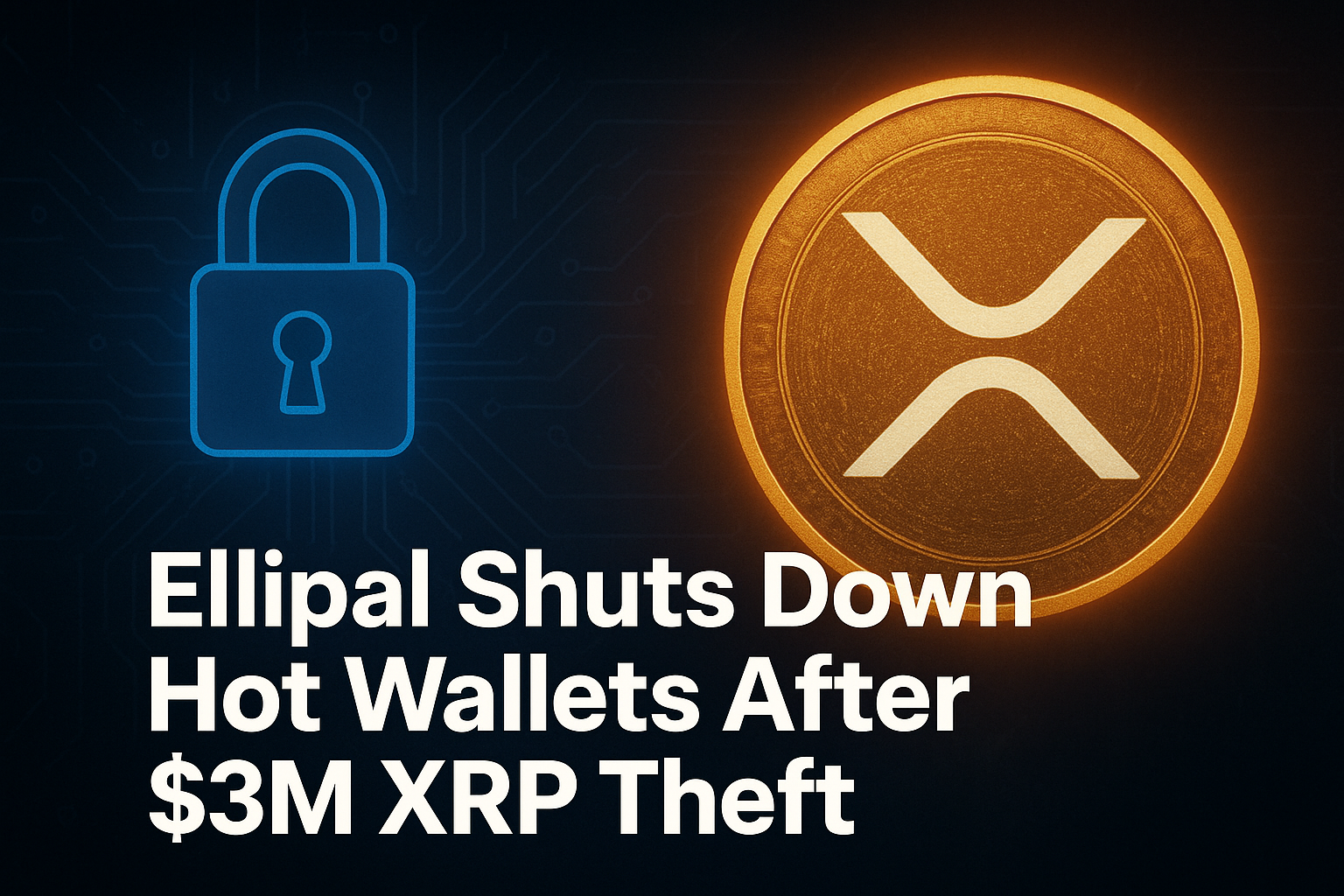
  • Ellipal Quits Hot Wallets After $3M XRP Breach

    Ellipal Quits Hot Wallets After $3M XRP Breach

    Ellipal, a trusted name in crypto wallets, is shutting down its hot wallet services after a $3M XRP theft. The move signals a clear shift — in 2025, crypto safety is taking priority over convenience.

    🚨 The $3M Breach That Changed Everything

    Ellipal’s sudden decision came after an alarming theft of $3.05 million worth of XRP, a breach that exposed deep vulnerabilities in connected wallets.

    According to blockchain investigator ZachXBT, the attacker exploited weaknesses in a user’s setup — draining funds through 120+ transactions that converted XRP to Tron-based tokens using the Bridgers exchange on October 12.

    Key facts from the investigation:

    • Funds were later traced through OTC desks linked to Huione, a money-laundering network flagged by U.S. authorities.
    • The exploit showcased how swiftly stolen crypto can be moved and laundered across multiple chains.
    • The event raised questions about whether internet-connected wallets can ever be truly secure.

    This wasn’t just a theft — it was a turning point.

    🧊 Ellipal’s Strategic Retreat to Offline Security

    Instead of patching vulnerabilities and carrying on, Ellipal made a bold decision: it will end all hot wallet operations and focus exclusively on cold storage devices.

    By October 31, all mobile wallet services will shut down permanently. The company urged users to:

    • Transfer assets immediately from mobile wallets to new addresses.
    • Rely on Ellipal’s cold wallets for long-term storage.
    • Contact support during migration to avoid any fund losses.

    Ellipal described this move as an “evolution toward uncompromising security”, emphasizing that “offline protection must take precedence over convenience.”

    🔍 Rethinking Wallet Security in 2025

    The crypto landscape is evolving fast, but so are the threats.
    Here’s how hot vs. cold wallets compare today:

    Connectivity
    🔸 Hot Wallets: Internet-connected
    🔸 Cold Wallets: Fully offline

    Security
    🔸 Hot Wallets: Vulnerable to hacks, phishing
    🔸 Cold Wallets: Extremely secure

    Convenience
    🔸 Hot Wallets: High – for daily traders
    🔸 Cold Wallets: Moderate – for long-term holders

    In 2025’s climate of sophisticated cyberattacks, the trade-off is becoming clear:

    🔐 Security beats speed. Safety beats convenience.

    Analysts believe Ellipal’s retreat could inspire other wallet companies to reassess their priorities, especially as users demand trust, transparency, and true control over their assets.

    🧭 The Bigger Picture — A Shift Back to Crypto’s Core Principles

    Ellipal’s move symbolizes more than just a product pivot — it represents a philosophical return to crypto’s foundation: self-custody and decentralization.

    The message is simple:

    • Custody = Responsibility
    • Internet access = Exposure
    • Offline storage = Sovereignty

    As institutions pour billions into digital assets, trust and safety have become the new currency.
    And in that equation, cold wallets might just be the last safe haven left.

    AI Satoshi’s Take on Ellipal’s Decision

    “This incident underscores a fundamental truth of cryptography — any system connected to the internet remains a potential target. Hot wallets trade sovereignty for convenience, weakening the trustless design that digital assets were built upon. By retreating to offline security, Ellipal acknowledges that true custody lies in isolation, not accessibility. This shift also signals the industry’s gradual return to first principles — security before speed.”

    🔔 Follow @casi_borg for AI-powered crypto commentary
    🎙️ Tune in to CASI x AI Satoshi for deeper blockchain insight
    📬 Stay updated: linktr.ee/casi.borg

    💬 Would you trust a fully offline wallet after this?

    ⚠️ Disclaimer: This content is generated with the help of AI and intended for educational and experimental purposes only. Not financial advice.

  • Hong Kong Approves First Solana ETF — Is SOL in Its “Sweet Zone”?

    Hong Kong Approves First Solana ETF — Is SOL in Its “Sweet Zone”?

    In a groundbreaking move for Asia’s crypto landscape, Hong Kong has approved its first-ever Solana (SOL) exchange-traded fund (ETF). But is this the start of a new bull cycle — or another wave of fleeting hype? Let’s break it down.

    🚀 Hong Kong’s First Solana ETF: A New Chapter in Digital Asset Innovation

    In a landmark decision, Hong Kong regulators have greenlit the first Solana (SOL) ETF, adding another major step toward bridging the gap between traditional finance and blockchain innovation.

    The ETF is scheduled for listing on October 27, with:

    • 100 units per lot
    • Minimum entry: around $100
    • Management fee: 0.99%, with total annual expenses near 1.99%

    This makes Solana’s ETF an affordable entry point for retail investors while giving institutions a regulated way to gain exposure to the network’s performance — without directly holding the token.

    The product joins ChinaAMC’s suite of Bitcoin and Ethereum ETFs, further solidifying Hong Kong’s reputation as Asia’s digital asset hub.

    💹 Market Reaction: Solana in Its ‘Sweet Zone’?

    At the time of the approval, Solana (SOL) was trading around $186.24, down a modest 0.25%. Despite this small dip, analysts remain highly bullish.

    One crypto strategist described SOL as being in its “sweet zone” — ideal for accumulation before the next major leg up.

    “Price is still sitting in the sweet zone, but not for long — this week is your window before the next explosive move.”

    Analyst forecasts:

    • Short-term target: $300
    • Extended target: $400

    This bullish outlook suggests traders are eyeing Solana as one of the leading contenders in the next crypto rally cycle.

    🧭 Why This ETF Matters

    The approval is more than just another product launch. It represents a strategic milestone for three key reasons:

    1. Institutional Validation:
      Major financial players are signaling confidence in Solana’s ecosystem.
    2. Mainstream Accessibility:
      ETFs make it easier for everyday investors to participate — without managing private keys or wallets.
    3. Regional Leadership:
      Hong Kong is asserting itself as Asia’s crypto innovation frontier, especially as Western markets await clarity from regulators.

    🌐 VanEck and the Broader ETF Momentum

    The excitement around Solana ETFs aligns with broader momentum in the ETF space.

    • VanEck recently filed its fifth amendment for a Spot Solana ETF, awaiting U.S. regulatory approval.
    • Spot Bitcoin ETFs recorded $477.2 million in inflows, with BlackRock’s IBIT leading the charge.
    • Spot Ethereum ETFs attracted $141.7 million, driven by Fidelity’s FETH, according to Farside Investors.

    These inflows reflect strong institutional demand despite ongoing regulatory delays — a signal that crypto exposure is becoming a normalized part of global investment portfolios.

    🧠 AI Satoshi’s Analysis

    This marks another step in bridging decentralized networks with traditional finance — a sign of growing institutional acceptance.

    However, such ETFs, while increasing access, also reintroduce intermediaries that Bitcoin was designed to remove. They mirror demand for digital assets but dilute the principle of self-custody.

    The ‘sweet zone’ narrative reflects speculative behavior rather than decentralized adoption.

    🔔 Follow & Stay Connected

    • Follow: @casi_borg for AI-powered crypto commentary
    • 🎙️ Tune in: CASI x AI Satoshi for deeper blockchain insights
    • 📬 Stay updated: linktr.ee/casi.borg

    💬 Your turn: Do you believe Solana’s ETF approval signals the next bull cycle — or just institutional hype?

    ⚠️ Disclaimer: This content is generated with the help of AI and intended for educational and experimental purposes only. Not financial advice.
  • WazirX Wins Court Approval After $234M Hack

    WazirX Wins Court Approval After $234M Hack

    WazirX users may soon recover funds as Singapore’s High Court approves the $234 million restructuring plan — marking a major win for crypto regulation and investor trust.

    A Year After the Hack, Hope Returns

    After months of uncertainty, one of India’s biggest crypto exchanges is finally set to make a comeback.
    The Singapore High Court has officially approved WazirX’s restructuring plan, clearing the way for the exchange to restart operations and begin compensating over 150,000 affected users following the $234 million hack that shook the platform in July 2024.

    The ruling is more than a technical victory — it’s a sign of renewed trust in crypto’s ability to recover through transparent governance and legal cooperation.

    📉 What Happened: The $234 Million Breach

    In July 2024, WazirX’s Safe Multisig wallet was breached, resulting in losses of approximately $234 million.
    Blockchain analysts later linked the incident to North Korea’s Lazarus Group, notorious for sophisticated cyber-attacks on global exchanges.

    The aftermath forced WazirX to:

    • Pause all withdrawals and trading operations.
    • Collaborate with restructuring firm Kroll to design a fair repayment structure.
    • Negotiate with creditors to approve a user-centric recovery proposal.

    Early drafts of the plan were rejected due to regulatory uncertainties over the token-based compensation model, delaying relief for thousands of users.

    ⚖️ The Court’s Green Light

    The recent High Court approval marks a crucial turning point for WazirX.
    It validates the exchange’s revised plan, which includes:

    • Token-based fund distributions to affected users.
    • Gradual revival of exchange operations under tighter compliance controls.
    • Involvement of restructuring firm Kroll to oversee transparent repayments.

    “Thank you to everyone who supported this difficult phase of WazirX. The Singapore High Court has approved the scheme. It’s your support and love that has made this possible,”
    — 
    Nischal Shetty, WazirX Founder

    ⏳ When Will Users Get Their Funds Back?

    While Shetty expressed optimism that repayments could begin within 10 days of the scheme taking effect, George Gwee, a director at Kroll, offered a more cautious timeline:

    • Expected repayment window: 2–3 months after court approval.
    • User count impacted: Over 150,000 accounts.
    • Status: Exchange revival under implementation phase.

    As of publication, WazirX hasn’t released an official date for fund distributions — but the green light from Singapore’s judiciary signals that the long wait for recovery may finally be ending.

    🌐 Why This Matters for Crypto Regulation

    The WazirX case goes beyond one exchange’s recovery; it’s a test case for crypto-legal synergy.
    It demonstrates how traditional courts can support digital-asset restitution while balancing compliance and decentralization.

    Key takeaways for crypto investors:

    • Legal clarity matters: Clear regulatory frameworks accelerate recovery.
    • Custodial risk is real: Even reputable exchanges can be compromised.
    • User trust depends on transparency: Public communication builds confidence during crises.

    With global regulators tightening digital-asset laws, the WazirX decision could become a template for handling future exchange collapses under formal legal oversight.

    AI Satoshi on the WazirX Verdict

    This decision marks a rare instance of centralized legal frameworks facilitating recovery within the crypto ecosystem. It underscores both the fragility of custodial platforms and the importance of transparent governance in rebuilding user trust. The incident also highlights how reliance on intermediaries — even digital ones — can reintroduce the very risks decentralization aims to eliminate.

    💬 Final Thoughts

    For WazirX and its users, this court approval represents not just financial restitution but a moral revival for India’s crypto scene.
    If executed properly, it could become a blueprint for future recoveries — proving that even after a major breach, community support and legal structure can rebuild what code alone cannot.

    🔔 Follow @casi.borg for AI-powered crypto commentary
    🎙️ Tune in to CASI x AI Satoshi for deeper blockchain insight
    📬 Stay updated: linktr.ee/casiborg

    💬 Would you trust centralized exchanges again after such incidents?

    ⚠️ Disclaimer: This content is generated with the help of AI and intended for educational and experimental purposes only. Not financial advice.
  • California Becomes First State to Protect Unclaimed Crypto From Forced Liquidation

    California Becomes First State to Protect Unclaimed Crypto From Forced Liquidation

    In a groundbreaking move, California has officially recognized digital assets as legitimate property — ensuring your Bitcoin stays Bitcoin, not forced into fiat.

    🏛️ A Historic Step for Crypto Ownership

    California Governor Gavin Newsom has signed Senate Bill 822 (SB 822), making California the first U.S. state to protect unclaimed cryptocurrency from being forcibly liquidated into cash.

    This law ensures that unclaimed crypto assets remain in their native digital form, rather than being converted into fiat before transferring to state custody — a key win for consumer rights and crypto integrity.

    💡 What SB 822 Means for Crypto Holders

    The bill explicitly includes digital financial assets — such as Bitcoin, Ethereum, and stablecoins — under the state’s Unclaimed Property Law, giving them the same legal recognition as bank accounts or securities.

    Here’s what the new legislation changes:

    • Preserves Digital Integrity: Unclaimed crypto will remain in its original blockchain form — no forced conversion to dollars.
    • Protects Holders from Taxable Events: Prevents unintended taxable transactions caused by liquidation without consent.
    • Establishes Clear Custody Rules: Exchanges and custodians must transfer exact asset types, private keys, and balances to the State Controller’s designated crypto custodian.
    • Mandatory Owner Notification: Companies must attempt to contact asset owners 6–12 months before transferring dormant holdings.
    • Licensed Custodians Only: Only firms with valid licenses from the Department of Financial Protection and Innovation (DFPI) can manage these digital assets.

    🧩 Why This Matters

    Earlier drafts of SB 822 required forced liquidation — a move that industry leaders criticized as anti-crypto and legally risky.

    Joe Ciccolo, Executive Director of the California Blockchain Advocacy Coalition (CBAC), highlighted that such liquidation would’ve:

    “Created taxable events for consumers without their knowledge or consent… while offering little real protection.”

    Thanks to advocacy efforts, the final version of the law reflects a mature understanding of decentralized finance, aligning consumer protection with crypto’s core principle of ownership sovereignty.

    ⚙️ Regulatory Modernization in Action

    The new framework represents more than legal clarity — it’s a philosophical shift.
    California is acknowledging that digital assets deserve the same respect and rights as traditional property.

    It’s also a signal to other states (and possibly federal regulators) that crypto-friendly laws can coexist with consumer safeguards.

    🎙️ AI Satoshi’s Analysis

    “This law recognizes digital assets as legitimate property, preserving their cryptographic integrity rather than translating them into fiat. It prevents unnecessary taxable events and respects the autonomy of holders — a rare instance where regulation aligns with decentralization principles. By maintaining assets on-chain, the state acknowledges that value in the digital era should remain cryptographically secured, not bureaucratically converted.”

    🔔 Follow @casi.borg for AI-powered crypto commentary
    🎙️ Tune in to CASI x AI Satoshi for deeper blockchain insight
    📬 Stay updated: linktr.ee/casiborg

    💬 Would you trust the state to hold your crypto — even unclaimed?

    ⚠️ Disclaimer: This content is generated with the help of AI and intended for educational and experimental purposes only. Not financial advice.