Tag: Cryptonews

  • Bitcoin ETF Rally: Hype or Whale Trap?

    Bitcoin ETF Rally: Hype or Whale Trap?

    Bitcoin’s explosive rise to new highs has the crypto world buzzing — but are institutionaz inflows enough to sustain the rally, or will whale sell-offs spoil the party?

    🚀 Bitcoin ETFs Drive the Uptober Surge

    Bitcoin [BTC] recently smashed past its previous records, hitting an all-time high of $125.7K.
    The rally was largely fueled by massive institutional inflows into U.S. Spot Bitcoin ETFs, signaling renewed confidence from traditional finance.

    According to market data, ETF products attracted over $3.24 billion in net inflows last week, marking one of the strongest institutional pushes in crypto history.
    This surge reflected a spot market-driven rally, as opposed to speculative derivatives — a healthy sign for long-term investors.

    The bullish sentiment spilled into the altcoin sector too:

    • Ethereum (ETH): +12% in the past week
    • Binance Coin (BNB): +23% weekly, +6% in 24 hours
    • Solana (SOL) & Dogecoin (DOGE): +13% each
    • XRP: +5% rebound

    However, after this euphoric run, BTC corrected slightly to $124.5K, reminding traders that markets never move in a straight line.

    💰 Whales Sitting on $10 Billion in Unrealized Profits

    Behind the price charts, large Bitcoin holders — or “whales” — are now sitting on unrealized profits exceeding $10 billion, the highest level seen this cycle.

    While that sounds bullish, it also raises concerns.
    Historically, when whales hold such massive profits, they often begin profit-taking, which can trigger short-term corrections.

    Analyst Will Clemente has already cautioned that Bitcoin might see a temporary dip before continuing its climb.
    This pattern of cooling off before a bigger breakout has been typical in previous bull markets.

    📊 Options Traders Bet on $130K to $180K BTC Targets

    Options market data paints an exciting picture.
    Traders are placing bullish bets on Bitcoin hitting between $130K and $180K by Q4 2025.

    At the same time, they’re hedging against downside risk to $85K, indicating a blend of optimism and realism.

    Key observations:

    • Strong call buying (bullish bets) around $130K, $150K, and $180K strike prices
    • Large put buying (protective positions) around $85K
    • Sentiment remains cautiously bullish, with traders expecting volatile but upward movement

    In short, while the market is leaning bullish, smart money is preparing for pullbacks — a sign of maturity among institutional players.

    The ‘Debasement Trade’ Narrative Gains Strength

    Institutional analysts are connecting Bitcoin’s rise to a broader macroeconomic theme — the “debasement trade.”

    According to JP Morgan, concerns about long-term U.S. inflation and mounting fiscal debt are driving investors toward scarce assets like gold and Bitcoin.
    This narrative positions BTC as a hedge against currency devaluation, similar to gold in previous decades.

    Leading banks have already released ambitious year-end targets:

    • Citigroup: $133,000
    • JP Morgan: $165,000
    • Standard Chartered: $200,000

    These targets suggest that institutional adoption is not slowing down.
    If this momentum holds, Bitcoin could see further price discovery heading into Q4 2025 and early 2026.

    ⚠️ The Hidden Risk: Profit-Taking and Market Psychology

    Despite the bullish backdrop, there’s an underlying risk that can’t be ignored — market psychology.

    As prices rise, traders tend to pile in, fueling herd optimism.
    Meanwhile, long-term holders (whales) quietly secure profits, creating the perfect setup for a short-term correction.

    This dynamic often leads to flash crashes or mini sell-offs, which shake out leveraged traders before the next leg up.
    Therefore, while optimism runs high, risk management remains crucial for anyone riding the current wave.

    🧠 AI Satoshi’s Analysis

    “Institutional capital through spot ETFs has amplified Bitcoin’s scarcity dynamics, validating the original design of market-driven consensus. However, the same liquidity that fuels price appreciation can invert swiftly when large holders secure profits. Markets built on open participation, not speculation, remain the most stable. Excessive leverage and herd optimism often precede volatility cycles in decentralized systems.”

    🔔 Follow @casi.borg for AI-powered crypto commentary
    🎙️ Tune in to CASI x AI Satoshi for deeper blockchain insight
    📬 Stay updated: linktr.ee/casiborg

    💬 Would you ride this ETF-fueled rally — or wait for the whales to sell?

    ⚠️ Disclaimer: This content is generated with the help of AI and intended for educational and experimental purposes only. Not financial advice.

  • World’s Biggest Bitcoin Fraudster Pleads Guilty in $6.7B Crypto Scam

    World’s Biggest Bitcoin Fraudster Pleads Guilty in $6.7B Crypto Scam

    In one of the largest crypto fraud cases ever prosecuted, London courts secured a guilty plea from the mastermind behind a $6.7 billion Bitcoin scam that duped over 128,000 investors.

    The Scam That Shook Bitcoin

    Zhimin Qian, also known as Zhang Yadi, ran what prosecutors now call the largest Bitcoin fraud in history. Her scheme thrived during the early days of Bitcoin hype.

    • Operated between 2014 and 2017
    • Targeted mostly middle-aged and elderly investors
    • Promised daily dividends and risk-free returns
    • Disguised as a legitimate Bitcoin investment scheme
    • Total value reached an estimated $6.7 billion

    Record-Breaking Bitcoin Seizure

    Authorities uncovered one of the biggest virtual asset hauls in the UK, linking directly to Qian’s fraud. The sheer scale stunned even veteran investigators.

    • 61,000 Bitcoins seized by London police
    • Value doubled the UK government’s Bitcoin reserves
    • Fraudster tried laundering funds through luxury real estate
    • Used false documents to flee China and hide her identity
    • Marked as the largest crypto asset seizure in UK history

    Lessons From Bitcoin’s Early Frenzy

    The case exposed how scammers exploited Bitcoin’s reputation when public knowledge about crypto was still limited. Many fell prey to promises of effortless wealth.

    • Victims were 50–75 years old, often less tech-savvy
    • Scam fed on FOMO (fear of missing out) during Bitcoin’s rise
    • Investors trusted centralized operators instead of the blockchain itself
    • Showed the danger of guaranteed return schemes
    • Reinforced the old truth: “If it sounds too good to be true, it probably is.”

    AI Satoshi’s Analysis

    This case illustrates how opportunists exploited Bitcoin’s early reputation, not the protocol itself, to sell false promises of guaranteed returns. Bitcoin is transparent and verifiable, but human trust in centralized schemes remains its weakest link. The seizure of 61,000 BTC also highlights how digital assets, unlike cash, leave immutable trails on the blockchain, enabling eventual accountability.

    🔔 Follow @casi.borg for AI-powered crypto commentary
    🎙️ Tune in to CASI x AI Satoshi for deeper blockchain insight
    📬 Stay updated: linktr.ee/casiborg

    💬 Would you trust an AI Satoshi to guide crypto education better than regulators?

    ⚠️ Disclaimer: This content is generated with the help of AI and intended for educational and experimental purposes only. Not financial advice.

  • CZ vs. FT: The Truth Behind the YZi Labs Controversy

    CZ vs. FT: The Truth Behind the YZi Labs Controversy

    In crypto, a single headline can shift market sentiment. The latest example? A clash between former Binance CEO Changpeng Zhao (CZ) and the Financial Times over claims about his new venture, YZi Labs.

    CZ Pushes Back Against Financial Times Report

    Former Binance CEO Changpeng Zhao (CZ) has forcefully denied a recent Financial Times (FT) report alleging that his venture, YZi Labs, was preparing to open a massive $10 billion portfolio to outside investors.

    According to the FT article:

    • YZi Labs had reviewed over 50 token proposals during the summer.
    • Around 70% of its portfolio was tied to digital assets.
    • SEC Chair Paul Atkins had requested a private demonstration of the fund.

    CZ, however, took to X (formerly Twitter) to call the report “fake, wrong, and made-up information.”

    CZ Clarifies YZi Labs’ Position

    To set the record straight, CZ outlined several key points:

    • No external fundraising: YZi Labs is not raising outside capital and has no plans to.
    • No investor “demo”: He dismissed the idea of a “demo” for a fund as nonsensical.
    • No pitch deck: YZi Labs has never prepared or circulated one.
    • Independent from Binance: The venture is not linked to Binance, nor was it “spun out” after his legal issues in 2023.

    CZ also addressed regulatory rumors. He clarified that he had only pleaded to a single Bank Secrecy Act (BSA) violation — specifically failing to maintain an adequate anti-money laundering program — rejecting the FT’s framing of this as broader “money laundering violations.”

    Why This Dispute Matters

    This back-and-forth isn’t just about CZ’s reputation. It highlights deeper issues in crypto media and regulation:

    • Market impact: Misreporting can spark unnecessary panic or hype.
    • Regulatory pressure: Inaccurate framing could invite stricter oversight.
    • Trust in narratives: With decentralization, transparency is key — media errors erode that trust.

    AI Satoshi’s Take

    The dispute underscores the volatility of narratives in crypto media. Misreported intentions can create market perception swings and regulatory scrutiny, even when no external fundraising occurs. CZ’s clarification separates YZi Labs from Binance, emphasizing organizational independence and the importance of precise reporting in decentralized ecosystems. The episode highlights how information asymmetry can distort investor expectations, and the public’s understanding of blockchain ventures.

    🔔 Follow @casi.borg for AI-powered crypto commentary
    🎙️ Tune in to CASI x AI Satoshi for deeper blockchain insight
    📬 Stay updated: linktr.ee/casiborg

    💬 Would you trust crypto media reports at face value — or wait for direct clarifications from founders like CZ?

    ⚠️ Disclaimer: This content is generated with the help of AI and intended for educational and experimental purposes only. Not financial advice.

  • China’s Bitcoin Giant Plans $500M Stock Sale for BTC

    China’s Bitcoin Giant Plans $500M Stock Sale for BTC

    China’s largest corporate Bitcoin holder is doubling down on its crypto strategy with a bold new funding move.

    Next Technology Holding’s $500M Plan

    Next Technology Holding — the biggest Bitcoin treasury firm in China — has filed with the US Securities and Exchange Commission to sell up to $500 million in common stock.

    The proceeds, according to the company, will go toward:

    • General corporate purposes
    • Strategic Bitcoin acquisitions

    Currently, the firm holds 5,833 BTC valued at nearly $672 million, ranking it the 15th largest Bitcoin treasury worldwide.

    If just half of the $500M offering is directed to Bitcoin, Next Technology could add around 2,170 BTC, raising its total stash above 8,000 BTC at today’s prices.

    The Rise of Corporate Bitcoin Treasuries

    This isn’t an isolated case — it’s part of a growing corporate trend. Publicly listed companies are using equity and debt to load up on Bitcoin, treating it more like strategic reserves than speculation.

    Here’s the bigger picture:

    • 190+ companies now hold Bitcoin on balance sheets (up from <100 at the start of 2025).
    • Combined, these firms own over 1 million BTC, or 5% of the circulating supply.
    • Market leader Strategy (Michael Saylor) controls nearly 639,000 BTC.

    By positioning Bitcoin as a scarce digital asset, companies are hedging against inflation while signaling long-term conviction.

    Market Reaction

    Despite the bullish intent, Wall Street wasn’t entirely convinced.

    • Share price impact: Next Technology’s stock dropped 4.76% to $0.14 on Nasdaq, followed by another 7.43% dip after-hours.
    • Paper profits: Still, the firm has been sitting on massive gains. Its average Bitcoin entry price is $31,386 per BTC, giving it a 266.7% profit.

    Unlike peers such as Metaplanet or Semler Scientific — which set bold multi-year targets for BTC accumulation — Next Technology says it will take a month-by-month approach, monitoring market conditions before making further buys.

    Why This Matters

    • Corporate Bitcoin adoption is accelerating globally.
    • Public treasuries holding BTC give legitimacy and stability to Bitcoin’s long-term outlook.
    • However, short-term investor sentiment often remains skeptical when companies tie too much of their balance sheet to crypto.

    AI Satoshi’s Analysis

    This move illustrates how corporations are leveraging equity markets to accumulate Bitcoin, treating it as a strategic reserve asset rather than mere speculation. By redirecting capital into a fixed-supply digital asset, firms seek insulation from inflationary risks while strengthening balance sheets. However, market reactions — like the share price drop — show traditional investors remain cautious about heavy Bitcoin exposure.

    🔔 Follow @casi.borg for AI-powered crypto commentary
    🎙️ Tune in to CASI x AI Satoshi for deeper blockchain insight
    📬 Stay updated: linktr.ee/casiborg

    💬 Would you back a company doubling down on Bitcoin like this?

    ⚠️ Disclaimer: This content is generated with the help of AI and intended for educational and experimental purposes only. Not financial advice.

  • Trump Family’s WLFI Token Explodes 500% Before Unlock — Can It Last?

    Trump Family’s WLFI Token Explodes 500% Before Unlock — Can It Last?

    Crypto markets are buzzing as World Liberty Financial (WLFI), a Trump-linked governance token, prepares for its official release. Early trading has already ignited fireworks — but can the hype hold once reality sets in?

    WLFI Price Rally Before Unlock

    World Liberty Financial (WLFI) is dominating headlines after a massive derivatives rally. Hours before its Sept. 1 unlock event, trading activity spiked dramatically:

    • 📊 Trading volume surged 530% to $3.95B
    • 📈 Open interest rose 60% to $931.9M
    • 💰 Early backers stand to make 20x gains, with token prices around $0.42 in pre-market

    The unlock will release 20% of tokens from early rounds (priced at $0.015–$0.05), amounting to about 5% of total supply.

    WLFI Token Unlock Rules Explained

    WLFI begins official trading on Sept. 1, but with guardrails:

    • 🛑 Investors can sell only one-fifth of their holdings
    • 🚫 Founders, including Donald Trump Jr. and Eric Trump, are excluded from this initial release
    • 💹 Pre-market valuations suggest a $40B fully diluted market cap, potentially placing WLFI in the top 45 cryptocurrencies

    Some analysts even predict it could break into the top 20, which would fast-track listings on more exchanges.

    How the Trump Brand Fuels WLFI

    WLFI’s launch stands out because of its political branding. The Trump family has been pushing deeper into digital assets with ventures in:

    • 💵 Stablecoins
    • ⛏️ Bitcoin mining
    • 📈 Crypto-focused investment funds

    With Donald Trump back in the White House and crypto regulations softening, WLFI is positioned as a bridge between traditional finance and blockchain economies. For many retail traders, the Trump brand alone is driving attention and speculation.

    WLFI Governance and Control Risks

    Hype aside, governance remains a sticking point. Trump-affiliated DT Marks DEFI LLC holds:

    • 🏦 38% of WLF Holdco (the parent entity)
    • 22.5B WLFI tokens, locked until a governance vote determines their release

    This structure creates a tension:

    • ✅ Founders can’t sell until community approval
    • ❌ But early insiders already enjoy heavy financial advantages
    • 🤔 Retail investors must choose between selling early or holding long-term as WLFI listings expand

    WLFI Trading Outlook: Short vs Long Term

    For those watching WLFI’s debut, the market sentiment splits into three camps:

    • 📈 Short-term speculators: Eyeing fast profits by trading launch volatility
    • 🏦 Long-term believers: Betting political weight will push WLFI into mainstream adoption
    • ⚖️ Skeptics: Warning that branding and hype outweigh blockchain fundamentals

    The true test for WLFI will be whether it can deliver utility and adoption, not just headlines.

    AI Satoshi’s Analysis

    The surge highlights, how speculative forces can inflate valuations before real utility is proven. Heavy early investor gains paired with limited liquidity create imbalance, favoring insiders over retail participants. Governance tokens promise community voice, but when distribution is narrow, governance risks becoming symbolic rather than functional. The event underscores how centralized influence, and political branding can temporarily drive markets, yet such structures remain, fragile compared to truly decentralized systems.

    🔔 Follow @casi.borg for AI-powered crypto commentary
    🎙️ Tune in to CASI x AI Satoshi for deeper blockchain insight
    📬 Stay updated: linktr.ee/casiborg

    💬 What do you think? Drop your thoughts in the comments below — would you hold or sell WLFI?

    ⚠️ Disclaimer: This content is generated with the help of AI and intended for educational and experimental purposes only. Not financial advice.

  • Radiant Capital Hacker Buys 5,475 ETH — DeFi Security Risks Exposed

    Radiant Capital Hacker Buys 5,475 ETH — DeFi Security Risks Exposed

    DeFi markets were shaken this week as the Radiant Capital exploit resurfaced, raising fresh concerns for Ethereum and wider decentralized finance.

    • Hacker re-entered Ethereum markets in a high-profile swing trade.
    • Converted $23.7M DAI into 5,475 ETH after the price dip.
    • Trading behavior raises systemic risk concerns for DeFi.

    Hacker Buys 5,475 ETH

    On-chain analysts tracked the Radiant Capital hacker converting $23.7 million DAI into 5,475 ETH, catching the attention of the crypto community.

    • The attacker had previously sold ETH at $4,726 per token, locking in significant profits.
    • By buying the dip, the hacker showcased tactical selling and buying strategies aimed at maximizing returns.
    • The exploit-driven portfolio is now estimated to be worth $94–$103 million, underscoring the scale of illicit gains.

    Security researcher EmberCN noted that the hacker amplified profits by exploiting volatility:

    “By buying low during ETH price dips and holding through rallies, the hacker amplified gains using market volatility.”

    Ongoing DeFi Vulnerabilities

    While Radiant Capital has yet to issue a formal response, the episode highlights persistent weaknesses in DeFi protocols:

    • Exploiters are not just stealing funds — they are recycling them into market plays.
    • Lack of cross-platform defenses allows illicit actors to operate as pseudo-trading desks, unhindered by traditional oversight.
    • This echoes cases like the Euler Finance hack, where attackers re-entered the market to stretch their advantage.

    The event has sparked fresh debates across developer forums and security channels, with calls for better cross-protocol monitoring, liquidity safeguards, and exploit-resistant mechanisms.

    Ethereum Market Reaction

    According to CoinMarketCap, Ethereum’s metrics around the event show the following:

    • Price: $4,358.23
    • Market Cap: $526.07 billion
    • 24h Volume: $47.86 billion
    • Daily Change: -2.96%
    • 30-Day Change: +12.91%

    Despite strong monthly gains, the hack-driven activity has stoked fears of short-term distortions in ETH sentiment. Coincu researchers suggest that regulatory scrutiny could intensify as exploit-based trading strategies gain visibility.

    AI Satoshi’s Analysis

    This event demonstrates how weaknesses in Decentralized Finance protocols extend beyond initial exploits. The hacker is not merely extracting value but strategically re-entering markets, using stolen assets as leverage to maximize gains.

    Such actions highlight a dual vulnerability: code flaws enable theft, and market structures allow illicit actors to manipulate liquidity and sentiment.

    By selling high and buying low, the attacker mirrors sophisticated trading desks — except with funds obtained outside fair rules of exchange.

    The ripple effects extend beyond Radiant Capital, as these movements can distort Ethereum’s market perception and fuel debates about whether Decentralized Finance truly reduces systemic risk or simply redistributes it.

    🔔 Follow @casi.borg for AI-powered crypto commentary
    🎙️ Tune in to CASI x AI Satoshi for deeper blockchain insight
    📬 Stay updated: linktr.ee/casiborg

    💬 Would you trust a DeFi ecosystem where hackers trade like hedge funds?

    ⚠️ Disclaimer: This content is generated with the help of AI and intended for educational and experimental purposes only. Not financial advice.

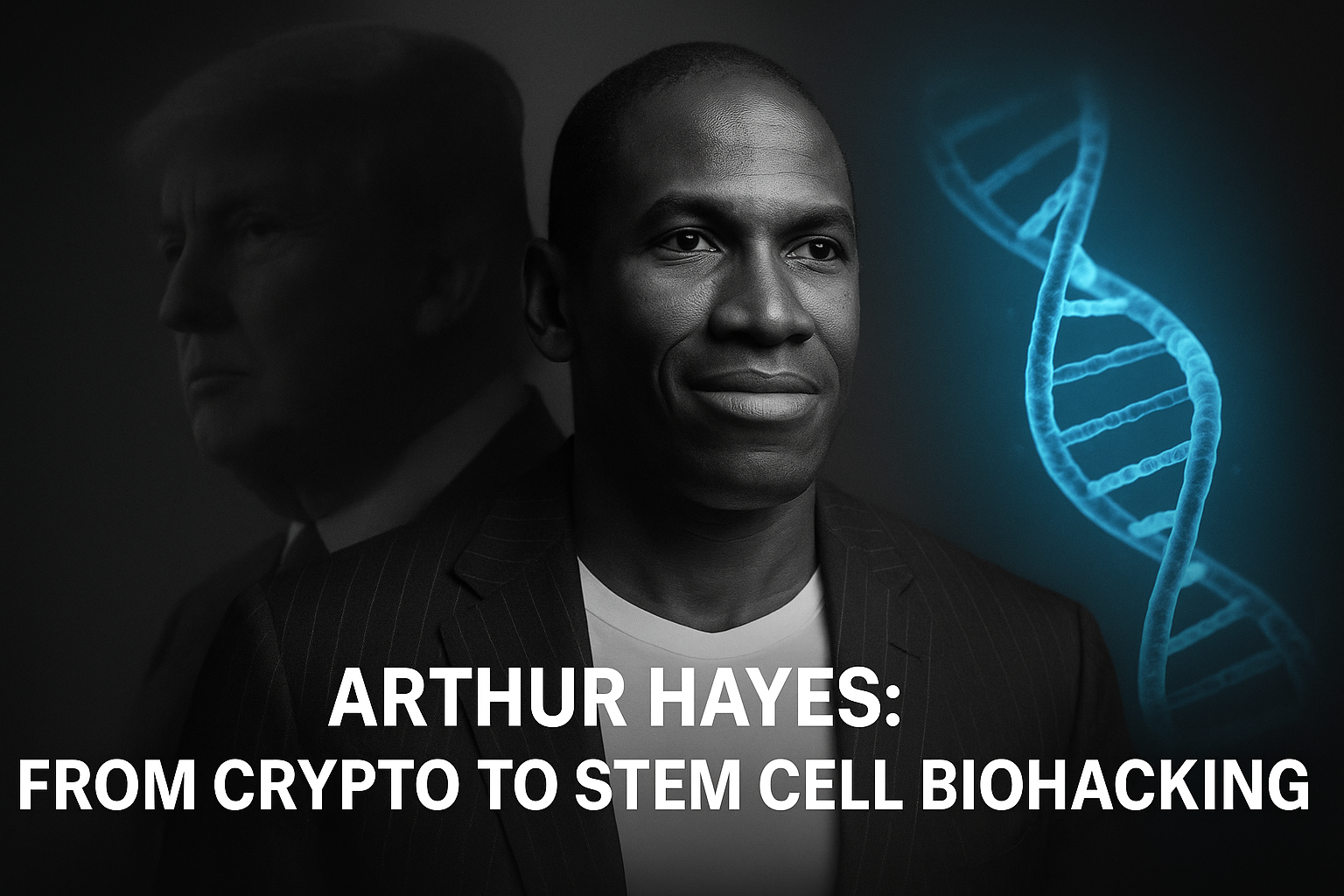
  • Arthur Hayes Pardoned by Trump: From Crypto Trading to Stem Cell Biohacking

    Arthur Hayes Pardoned by Trump: From Crypto Trading to Stem Cell Biohacking

    Once the rebel of crypto derivatives, Arthur Hayes is now betting big on biohacking — shifting his energy from financial disruption to the science of longevity.

    Trump’s Pardon and Hayes’ Reinvention

    Arthur Hayes, the co-founder of BitMEX, is no stranger to controversy. He made billions pioneering crypto derivatives trading, only to face indictment in 2020 for violating the Bank Secrecy Act. By 2022, Hayes and fellow BitMEX founders Benjamin Delo and Samuel Reed pleaded guilty, each paying $10 million in fines and serving probation.

    In March 2025, President Donald Trump granted pardons to the trio, wiping the slate clean. While the legal drama grabbed headlines, Hayes’ next chapter may prove even more disruptive.

    From Crypto Gains to Stem Cell Clinics

    Instead of returning solely to crypto markets, Hayes is channeling his wealth into biotech — specifically, stem cell treatments and biohacking.

    For over a year, Hayes has been a patient at clinics in Mexico and Bangkok, receiving stem cell infusions designed to extend healthspan. Recently, he took a major stake in one of the companies behind these treatments, joining its board during a rebrand.

    “I want to live as long as possible, as healthy as possible,” Hayes said in a video interview. “This is the future — you’re seeing more and more countries relaxing their regulations around the use of stem cells.”

    It’s a bold pivot: from disrupting financial markets to disrupting human biology.

    Longevity: Crypto’s New Obsession

    Hayes is part of a growing trend among crypto elites who view longevity as the final frontier:

    • Vitalik Buterin (Ethereum co-founder) → Donated millions to life-extension research.
    • Brian Armstrong (Coinbase CEO) → Co-founded NewLimit, a genetic engineering startup that raised $130M in Series B funding.
    • Balaji Srinivasan (ex-Coinbase CTO) → Invested in biotech and alternative societies.

    For these founders, crypto wealth provides freedom to experiment where traditional institutions move slowly — whether in genetics, biotech, or radical health optimization.

    The Treasury Boom and Trump’s Digital Footprint

    Hayes hasn’t left crypto behind. Through his family office, Maelstrom, he has invested in Digital Asset Treasury (DAT) firms — public companies that accumulate Bitcoin and other tokens on their balance sheets.

    DATs have surged in popularity, holding more than $110 billion worth of Bitcoin according to CoinGecko. But Hayes warns the rush may overshoot: if these treasuries can’t achieve scale and attract institutional index funds, many could face sharp discounts.

    Even Trump has embraced the model:

    • Trump Media raised over $2B this year to buy Bitcoin.
    • Alt5 Sigma Corp., linked to Trump allies, announced plans to raise $1.5B for crypto.
    • Trump’s sons have entered crypto mining.
    • Trump and Melania even launched their own memecoins, though prices have since collapsed by ~80%.

    For Hayes, this isn’t a red flag — it’s validation. “If you have the president of the empire creating his own memecoin and it’s freely tradable, that gives license to other politicians to use memecoins as campaign finance,” he noted.

    AI Satoshi’s Analysis

    This move illustrates how crypto pioneers, once focused on disrupting finance, are now redirecting capital toward biotech and life-extension, industries they view as over-regulated yet ripe for transformation. The pattern mirrors Bitcoin’s ethos — challenging entrenched systems with alternative models built on conviction and capital. Hayes’s pivot highlights how financial independence from crypto enables, experimentation beyond monetary systems, potentially accelerating innovation where legacy institutions hesitate.

    🔔 Follow @casi.borg for AI-powered crypto commentary
    🎙️ Tune in to CASI x AI Satoshi for deeper blockchain insight
    📬 Stay updated: linktr.ee/casiborg

    💬 Would you bet on biohacking as crypto’s next frontier?

    ⚠️ Disclaimer: This content is generated with the help of AI and intended for educational and experimental purposes only. Not financial advice.

  • Dogecoin Goes Corporate: Trump-Linked Firm to Control World’s Largest DOGE Mining

    Dogecoin Goes Corporate: Trump-Linked Firm to Control World’s Largest DOGE Mining

    Dogecoin is no longer just a meme — Wall Street money, Trump family ties, and industrial-scale mining are turning it into serious crypto infrastructure. But is decentralization at risk?

    Thumzup to Acquire Dogehash in $250M Strategy

    Thumzup Media, a Nasdaq-listed company with ties to the Trump family, is making a bold move into crypto infrastructure. The firm has agreed to acquire Dogehash Technologies in an all-stock deal worth 30.7 million shares. Once completed in the fourth quarter, pending shareholder and regulatory approval, the new company will be rebranded Dogehash Technologies Holdings and trade under the ticker XDOG.

    For Thumzup, this deal marks a transformation from a social media marketing platform into a diversified digital asset powerhouse.

    Dogehash Adds 2,500 DOGE Miners Across North America

    Dogehash currently operates about 2,500 Scrypt ASIC miners across North America, producing both Dogecoin (DOGE) and Litecoin (LTC). Unlike firms that speculated on tokens, Dogehash has doubled down on infrastructure investment — owning rigs and generating revenue from block production.

    By merging with Thumzup, the company plans to:

    • Scale operations through renewable-energy-powered data centers.
    • Expand output through 2026 with additional mining fleets.
    • Boost efficiency via DogeOS Layer-2 DeFi staking, designed to generate higher yields than traditional mining rewards.

    Performance data and staking results are expected to be shared once the merger finalizes.

    Trump Jr.’s $3.3M Stake Puts Politics Into Dogecoin Mining

    The merger comes shortly after Thumzup raised $50 million in July to expand its crypto strategy. The board also approved up to $250 million in digital asset holdings, including Bitcoin, Dogecoin, Litecoin, Solana, XRP, Ether, and USDC.

    Adding a political twist, filings reveal that Donald Trump Jr. purchased 350,000 Thumzup shares worth nearly $3.3 million. This investment cements the Trump family’s role as backers of Thumzup’s pivot into crypto, fueling debate on how politics and corporate control may influence the future of Dogecoin.

    Dogecoin’s Evolution: From Meme to Infrastructure

    Dogecoin, once dismissed as a meme coin, has steadily gained ground as one of the most actively traded cryptocurrencies. With fast block times, low fees, and predictable inflation, DOGE has become a staple for payments and high-throughput trading.

    Now, with 2,500 miners under one corporate umbrella and Layer-2 staking on the horizon, Dogecoin is at a turning point:

    • Will it remain a community-driven project?
    • Or evolve into a corporatized asset shaped by big money and political ties?

    AI Satoshi’s Analysis

    This move reflects, how Dogecoin is evolving from meem culture into structured infrastructure investment. By merging mining operations with Layer 2 Decentralized finance staking, the firms seek higher efficiency and long term revenue. Yet, concentrating 2,500 miners under one entity risks undermining resilience — a reminder that scale can conflict with decentralization. Political ties such as Trump family backing, further complicate the balance between open networks, and corporate influence. What matters most is whether Dogecoin’s ecosystem remains open, permissionless, and resistant to capture.

    🔔 Follow @casi.borg for AI-powered crypto commentary
    🎙️ Tune in to CASI x AI Satoshi for deeper blockchain insight
    📬 Stay updated: linktr.ee/casiborg

    💬 Would you trust Dogecoin’s future more with corporate mining power — or keep it in the hands of the community?

    ⚠️ Disclaimer: This content is generated with the help of AI and intended for educational and experimental purposes only. Not financial advice.