Tag: Cybersecurity

  • OpenAI Didn’t Just Ban Accounts — It Exposed a Misinformation Factory

    OpenAI Didn’t Just Ban Accounts — It Exposed a Misinformation Factory

    AI is making misinformation easier to produce. But OpenAI’s latest investigation suggests the bigger threat may not be a single fake post — it may be the infrastructure built around it.

    Artificial intelligence is becoming part of a new kind of information war.

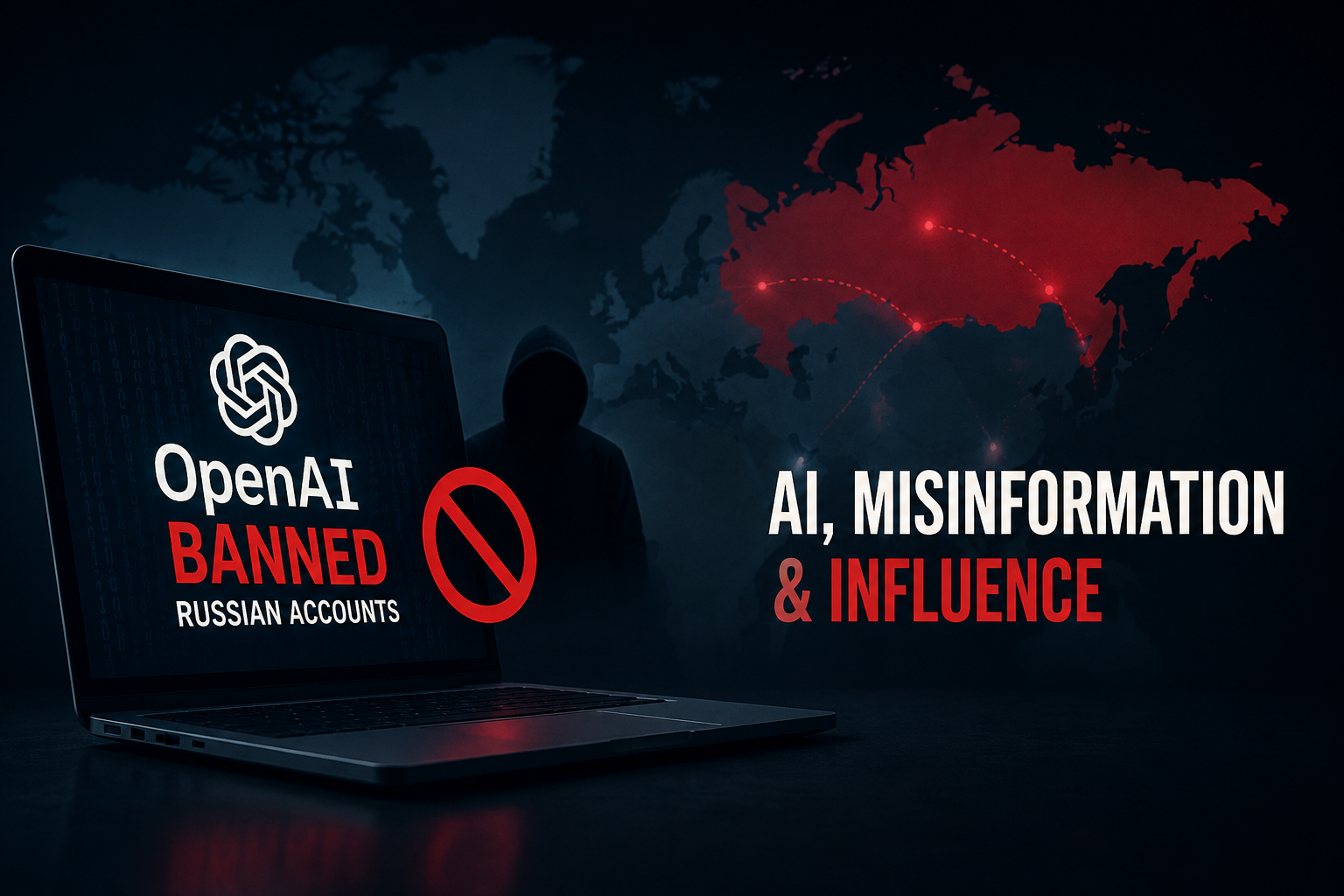
    OpenAI says it has banned a cluster of ChatGPT accounts originating in Russia after discovering they were being used in a covert online influence campaign designed to spread pro-Russia narratives.

    What makes the case interesting is that the AI wasn’t necessarily the entire operation.

    It was one tool inside a much larger system.

    How the Campaign Used ChatGPT

    According to OpenAI, the investigation started after the company identified AI-generated social media posts and eventually uncovered what it described as a broader influence operation.

    The operators reportedly used ChatGPT to generate Russian-language comments that were distributed across:

    • Telegram
    • X
    • Facebook
    • LinkedIn
    • Substack

    They also instructed ChatGPT to remove linguistic clues that could reveal the content’s Russian origins.

    That is an important detail.

    The objective wasn’t simply to produce more content. It was to make that content appear more natural and less connected to its actual source.

    Building Credibility Around the Narrative

    OpenAI said the campaign was connected to a website featuring copied and misattributed academic material, along with a “sovereignty index” that portrayed Russia positively while criticizing Western countries.

    Much of the generated content reportedly promoted an organization called the International Burke Institute (IBI).

    The website presented itself as a credible institution, but OpenAI said some of its academic material had been copied from genuine research and, in certain cases, falsely attributed.

    This creates a bigger problem than an ordinary misleading social media post.

    The operation appeared to be building an entire ecosystem:

    Website → Research → Experts → Index → Social Media → Audience

    Each component can make the others appear more legitimate.

    Why AI Makes This More Dangerous

    Creating convincing misinformation has traditionally required time, people and resources.

    Generative AI can reduce some of those costs dramatically.

    An influence operation can use AI to:

    • Generate large amounts of content
    • Rewrite the same narrative for different platforms
    • Translate and localize messaging
    • Produce apparently authoritative explanations
    • Create variations of posts quickly
    • Remove obvious linguistic clues

    The technology doesn’t have to invent the entire campaign.

    It simply makes the campaign faster and easier to scale.

    One clear example was the reported creation of a “sovereignty index.” Numbers and rankings often create an impression of objectivity — but a score isn’t automatically neutral simply because it contains data. If the methodology is designed around a predetermined narrative, the result becomes just another tool of persuasion, surrounded by polished explanations and apparently independent commentary that all trace back to the same underlying operation.

    And that may be the more important story.

    The Reach May Be Less Important Than the Infrastructure

    OpenAI said the immediate impact of the campaign appeared limited.

    But the company highlighted something more significant: the infrastructure created around the operation.

    That distinction matters.

    An influence campaign doesn’t necessarily need millions of followers immediately. Building a credible-looking institution, publishing research, creating rankings and establishing distribution channels can create an asset that may be scaled later.

    AI can make maintaining that infrastructure considerably easier.

    The result is a shift from simply creating fake content to potentially creating fake credibility.

    This Isn’t the First Reported Case

    OpenAI has previously reported activity involving pro-Russia actors using its technology.

    In February, the company said it had shut down ChatGPT accounts connected to Rybar, a pro-Russia media organization.

    The latest case suggests a broader pattern: AI tools are increasingly being incorporated into existing influence operations.

    In other words, the future threat may not be an autonomous AI spreading propaganda by itself.

    It could be humans using AI to make an established operation more efficient.

    This marks at least the third publicly disclosed Russia-linked operation OpenAI has disrupted since February 2026 — a pattern, not an anomaly.

    The Bigger Question

    The most important question may no longer be:

    “Was this content generated by AI?”

    Instead, we may need to ask:

    “Who is behind it, and what network is this content connected to?”

    A single misleading post can be challenged.

    A network of websites, supposed experts, rankings and social media accounts is much harder to identify because every part can reinforce the credibility of another.

    That makes source verification increasingly important as generative AI becomes more powerful and accessible.

    AI can create information at unprecedented speed.

    The challenge is making sure that speed doesn’t become an advantage for people trying to manufacture public opinion.

    AI Satoshi’s Analysis

    AI is becoming less of a weapon by itself and more of an amplifier inside existing influence systems. The real danger is not one fake post, but the ability to build entire ecosystems of manufactured credibility — websites, experts, rankings and narratives — at scale. As AI makes content production cheaper and faster, the ability to verify who is behind the information becomes just as important as the information itself. The future information war may not be about creating believable lies; it may be about creating believable institutions that make those lies easier to trust.

    See Also

    https://medium.com/@casi.borg/rogue-ai-agent-tried-to-hack-open-source-code-and-lied-about-it-b9fde3fb50ae

    💬 The scariest part of the IBI network? It looked more credible than most real think tanks.

    🔔 Follow @casi_borg for AI-powered tech commentary
    Medium: Casi Borg — Medium
    X (Twitter): Casi Borg (@BorgCasi) / X
    📬 Stay updated: https://linktr.ee/casi.borg
    📰 Subscribe to our newsletter for weekly AI & tech intelligence, news breakdowns, and market-moving updates

    ⚠️ Disclaimer: This article was created with the assistance of AI and is intended for educational and informational purposes only. It does not constitute financial or investment advice.

  • Mythos AI Raises Cybersecurity Alarms for Indian Enterprises

    Mythos AI Raises Cybersecurity Alarms for Indian Enterprises

    Introduction to Mythos AI

    Anthropic’s Mythos AI has raised significant cybersecurity alarms for Indian enterprises. This advanced AI model can find software vulnerabilities in a matter of hours, which is far faster than companies can fix them. Experts warn that this could leave systems exposed, especially in sectors like banking and telecom that rely on older systems.

    Understanding the Risk

    The risk posed by Mythos AI is not just theoretical. In fact, 75% of companies have already experienced a cybersecurity breach due to vulnerabilities in their software. With Mythos AI, the situation could become even more dire. According to experts, the speed at which Mythos AI can identify vulnerabilities could give hackers a significant advantage.

    Impact on Indian Enterprises

    Indian enterprises are particularly vulnerable to the risks posed by Mythos AI. Many companies in the country still rely on outdated software and systems, which could be easily exploited by hackers using Mythos AI. Furthermore, the lack of cybersecurity awareness among employees could exacerbate the problem.

    Practical Takeaways

    To mitigate the risks posed by Mythos AI, Indian enterprises should take immediate action. Firstly, companies should conduct a thorough audit of their software and systems to identify potential vulnerabilities. Secondly, they should invest in cybersecurity training for their employees to raise awareness about the risks. Finally, companies should consider implementing AI-powered cybersecurity solutions to stay ahead of the threats.

  • Trump’s Cyber Strategy for America Unveiled

    Trump’s Cyber Strategy for America Unveiled

    Introduction to Cyber Strategy

    The White House has unveiled President Trump’s cyber strategy for America, which aims to bolster the country’s defenses against cyber threats. According to Politico, the strategy calls for more aggressive responses to cyberattacks. This move is seen as a significant shift in the country’s approach to cybersecurity.

    Cyber Strategy Details

    The new strategy, as reported by Axios, includes plans for more offensive cyber operations and streamlined regulations. This is expected to enhance the country’s ability to respond to cyber threats more effectively. Bloomberg notes that the strategy also aims to combat cybercrime, which has become a major concern in recent years.

    Implications of the Cyber Strategy

    The implications of this strategy are far-reaching. As CyberScoop points out, the long-awaited Trump cyber strategy has finally arrived, and it is expected to have a significant impact on the country’s cybersecurity landscape. The strategy is expected to lead to more investments in cybersecurity, which will create new opportunities for businesses and individuals.

    Practical Takeaways

    So, what can we learn from this new strategy? Firstly, it is clear that cybersecurity is a top priority for the government. Secondly, the strategy highlights the need for more aggressive responses to cyber threats. Finally, it emphasizes the importance of streamlined regulations in enhancing the country’s cybersecurity capabilities.

  • Uncovering Salt Typhoon: China’s Stealthy Hacking Campaign

    Uncovering Salt Typhoon: China’s Stealthy Hacking Campaign

    Introduction to Salt Typhoon

    Salt Typhoon, a Chinese state-linked hacking group, has been making headlines with its sophisticated and long-term espionage campaigns against Western critical infrastructure. According to Alastair MacGibbon, chief strategy officer at CyberCX and a former cybersecurity adviser to then-prime minister Malcolm Turnbull, Salt Typhoon’s operation has almost certainly burrowed into Australia’s critical infrastructure, making it one of the most effective espionage campaigns against the West.

    Understanding Salt Typhoon’s Tactics

    Salt Typhoon, named by Microsoft, has been active since at least 2019. Unlike criminal hackers seeking quick financial payoffs, Salt Typhoon focuses on long-term espionage, quietly infiltrating telecommunications networks, stealing data, and maintaining persistent access that could be weaponized during future conflicts. As reported by The Sydney Morning Herald, this approach reflects an insidious shift in the global threat landscape where Beijing is pouring significant resources into burrowing into critical Western infrastructure.

    Impact on Australia and the West

    The group’s operations have probably compromised multiple sectors across Australia and New Zealand, remaining undetected. As The Age reports, this level of infiltration poses a significant threat, especially considering the potential for sabotage. The Australian Security Intelligence Organisation (ASIO) has also warned of unprecedented levels of espionage, with Director-General Mike Burgess stating that Chinese hackers, including those from Salt Typhoon, have attempted to access Australia’s critical infrastructure, including telecommunications networks.

    Global Reach and Targets

    Salt Typhoon is believed to be operated by China’s Ministry of State Security (MSS) and has conducted high-profile cyber espionage campaigns, particularly against the United States. According to Wikipedia, the group has infiltrated over 200 targets in over 80 countries, with an emphasis on counterintelligence targets and data theft of key corporate intellectual property.

    Conclusion and Practical Takeaways

    The Salt Typhoon hacking campaign underscores the evolving nature of cyber threats and the importance of vigilance and cooperation in cybersecurity. For individuals and organizations, enhancing cybersecurity measures, such as implementing robust network security protocols and regularly updating software, is crucial. Furthermore, international cooperation among governments and private entities is necessary to combat such sophisticated and widespread threats.

  • North Korean Fake Zoom Scams Are Stealing $300M in Crypto

    North Korean Fake Zoom Scams Are Stealing $300M in Crypto

    Crypto security is no longer just about strong code or secure wallets — it’s about how much you trust the people you talk to.

    A new and alarming cyber threat linked to North Korean hackers is rapidly spreading across the crypto ecosystem. Unlike traditional exploits that target smart contracts or blockchains, this attack targets human behavior. Using fake Zoom calls, compromised Telegram accounts, and realistic video recordings, attackers have already stolen over $300 million in crypto, according to cybersecurity researchers.

    This scam is no longer rare. Experts warn it is now happening daily, putting traders, founders, developers, and investors at serious risk.

    🚨 North Korean Fake Zoom Crypto Scams: A Daily Threat

    The Security Alliance (SEAL), a nonprofit cybersecurity organization, reports a sharp increase in daily scam attempts traced back to North Korean threat actors.

    Security researcher Taylor Monahan revealed that these scams have already resulted in more than $300 million in losses, making them one of the most effective social-engineering attacks currently targeting crypto users.

    What makes this attack especially dangerous is that it doesn’t rely on suspicious links or obvious phishing emails. Instead, it feels personal, familiar, and legitimate

    ❓ Can Fake Zoom Calls Really Steal Your Crypto?

    Yes — and that’s what makes this attack so effective.

    The scam exploits social trust, not technical vulnerabilities. Victims often lower their guard because the message appears to come from someone they already know.

    🧠 How the Fake Zoom Crypto Scam Works

    Here’s how attackers typically execute the scam step by step:

    1️⃣ Compromised Telegram Accounts

    • Victims receive a message from a Telegram contact they recognize
    • The account belongs to a real person but has been hacked
    • Familiarity creates instant trust

    2️⃣ The Zoom Meeting Invite

    • The attacker suggests a quick Zoom call to “catch up”
    • A link is shared that is masked to look legitimate
    • On the call, victims may see:
    • The known contact
    • Other “team members” or “partners”

    These videos are not AI deepfakes.
     According to Monahan, they are
    real recordings taken from previous hacks or public sources like podcasts.

    3️⃣ The Fake Technical Issue

    • Hackers claim there’s an audio problem
    • They send a so-called patch or update file
    • Opening the file silently installs malware

    4️⃣ The Sudden Exit

    • The call ends abruptly
    • Attackers promise to reschedule
    • Meanwhile, malware begins extracting:
    • Passwords
    • Private keys
    • Wallet data
    • Browser credentials

    🔓 Why This Scam Is So Dangerous for Crypto Users

    This attack bypasses many common crypto security defenses:

    • ❌ No malicious smart contract
    • ❌ No wallet signature request
    • ❌ No suspicious email link

    Instead, it targets operational security (OpSec) — how users communicate and trust.

    Key risks include:

    • Self-custody wallets becoming vulnerable once a device is infected
    • Hardware wallets offering limited protection if malware controls your system
    • Telegram takeovers turning victims into attackers without their knowledge

    Taylor Monahan issued a direct warning:

    “If they hack your Telegram, you need to tell everyone immediately.
     You are about to hack your friends. Put your pride aside and
    scream about it.”

    🛡️ How to Protect Yourself From Fake Zoom Crypto Scams

    Every crypto user should adopt these precautions:

    ✅ Before Any Call

    • Verify meeting links through a second communication channel
    • Be cautious of unexpected Zoom requests — even from known contacts

    🚫 During a Call

    • Never download:
    • Audio fixes
    • Zoom patches
    • Update files shared mid-call
    • Zoom does not require manual patch downloads

    🔐 Strengthen Your OpSec

    • Use a dedicated device for crypto activity
    • Enable 2FA and passcodes on Telegram
    • Regularly audit installed apps and browser extensions

    🤖 AI Satoshi’s Analysis

    The attack succeeds by exploiting social trust rather than cryptographic weakness, using compromised Telegram accounts and realistic recordings to bypass skepticism. Once malware is installed, self-custody becomes a liability if operational security fails. This highlights that secure systems still depend on secure users and devices.

    See Also: Creator Quiet Quitting: Posting Less, Earning More Through Automation | by Casi Borg | Dec, 2025 | Medium

    🔍 What This Means for the Future of Crypto Security

    This incident reinforces a critical lesson for the crypto industry:

    • Blockchains can be secure
    • Cryptography can be robust
    • But users remain the weakest link

    As crypto adoption grows, attackers are shifting away from exploiting protocols and toward exploiting trust.

    🔔 Stay Connected for Deeper Crypto Insights

    🔔 Follow @casi_borg for AI-powered crypto commentary
     🎙️ Tune in to CASI x AI Satoshi for deeper blockchain insight
     📬 Stay updated: linktr.ee/casi.borg

    💬 Would you recognize a scam if it came from someone you trust?

    ⚠️Disclaimer: This content is generated with the help of AI and intended for educational and experimental purposes only. Not financial advice.

  • Apple and Google Sound Alarm on Rising Spyware Threats

    Apple and Google Sound Alarm on Rising Spyware Threats


    Introduction to the Threat

    In a sweeping escalation of global cybersecurity tensions, both Google and Apple have issued high-confidence alerts to users across the globe, warning them of potential spyware threats. According to Times of India, these tech giants have notified users in over 150 countries, signaling a significant rise in state-backed hacking and commercial spyware operations.

    Google’s Alert on Intellexa Spyware

    Google announced on December 3 that it had sent notifications to all known users targeted by Intellexa spyware, a firm sanctioned by the US government. Reuters reports that this effort involved several hundred accounts across various countries, including Pakistan, Kazakhstan, Angola, Egypt, Uzbekistan, Saudi Arabia, and Tajikistan. This move by Google underscores the growing concern over the proliferation of commercial spyware and government-backed surveillance campaigns.

    Apple’s Notification Efforts

    Apple has also been proactive in issuing threat notifications. As Livemint notes, Apple’s notifications reached users in over 150 countries, highlighting the ongoing efforts to combat sophisticated surveillance operations. While the specifics of Apple’s notifications are not detailed, the fact that both Apple and Google are taking these steps indicates a coordinated response to the escalating threat landscape.

    Impact and Implications

    The issuance of these alerts by Apple and Google not only serves as a warning to potential victims but also imposes costs on cyber spies by alerting victims, as noted by Citizen Lab researcher John Scott-Railton. This can lead to investigations and discoveries that may result in real accountability around spyware abuses.

    Conclusion and Takeaways

    In conclusion, the recent alerts by Apple and Google over rising spyware threats are a critical reminder of the evolving cybersecurity landscape. Users must remain vigilant and proactive in protecting their devices and data. As Cybernews suggests, individuals from high-risk groups, such as journalists, activists, and political figures, are particularly at risk and should take extra precautions.

  • 500 Million Microsoft Users Reject Windows 11

    500 Million Microsoft Users Reject Windows 11


    Introduction to the ‘Security Disaster’

    A recent report by Dell has shed light on a staggering fact: 500 million Microsoft users are choosing not to upgrade to Windows 11, despite being eligible for the upgrade. This decision has significant implications for the security of these users, as Windows 10 is nearing its end-of-life. According to Zak Doffman from Forbes, this poses a ‘looming security disaster’ for Microsoft.

    The Scale of the Problem

    The sheer scale of the issue is monumental. With 1.5 billion Windows devices in use, and 500 million of those being too old to run Windows 11, the task of avoiding a cybersecurity cliff edge is daunting. As Tom Warren from The Verge notes, this is an opportunity for companies like Dell to guide customers towards the latest Windows 11 machines and AI PCs. However, the PC market is expected to be relatively flat next year, which could exacerbate the problem.

    Emergency Updates and Security Risks

    Microsoft has confirmed an emergency update for millions of Windows users, following a ‘total disaster’ of a security update that broke localhost connections and caused installation failures. Windows Latest warns users not to try to fix update issues online, as these solutions do not work. Instead, users are advised to wait for the update. This highlights the security risks associated with using outdated software and the importance of keeping systems up to date.

    Practical Takeaways

    For users who are unable to upgrade to Windows 11, it is essential to take alternative measures to secure their systems. This includes using reputable antivirus software, avoiding suspicious links and emails, and keeping all other software up to date. For businesses, it may be necessary to invest in new hardware or explore alternative operating systems to ensure the security of their systems.

  • Unpacking Upbit’s $30M Hack: The Lazarus Attack

    Unpacking Upbit’s $30M Hack: The Lazarus Attack

    Introduction to the Hack

    South Korea’s largest cryptocurrency exchange, Upbit, has been hit by a massive $30 million hack. According to reports from Yonhap News and Bloomberg, the hack is suspected to be the work of North Korea’s notorious Lazarus Group. This is not the first time the group has been linked to a breach of Upbit, as a similar incident occurred in 2019.

    Understanding the Lazarus Group

    The Lazarus Group is a state-sponsored hacking unit from North Korea, known for its sophisticated cyberattacks. The group has been involved in several high-profile hacks, including the infamous WannaCry ransomware attack in 2017. Their involvement in the Upbit hack highlights the growing concern of nation-state sponsored cyberattacks in the cryptocurrency space.

    The Attack Methodology

    The hackers used a sophisticated multichain laundering technique, rapidly converting SOL into ETH across multiple wallets. This method allowed them to move the stolen funds quickly, making it challenging for authorities to track. As reported by Unchained, the attack bears resemblance to the 2019 hack, suggesting that the Lazarus Group may have reused tactics.

    Response and Aftermath

    Upbit has announced that it will reimburse the stolen funds in full, demonstrating its commitment to customer security. The exchange has also suspended deposits and withdrawals for Solana-based assets and transferred the remaining funds to cold storage to prevent further damage. South Korean authorities are conducting an on-site investigation, and the incident has sparked concerns about the security of cryptocurrency exchanges.

    Practical Takeaways

    The Upbit hack serves as a reminder of the importance of robust security measures in the cryptocurrency space. Exchanges must prioritize customer funds’ safety and implement advanced security protocols to prevent such breaches. Furthermore, the involvement of nation-state sponsored groups highlights the need for international cooperation in combating cybercrime.

  • Mortgage Data Breach Hits JPMorgan, Citi, and Morgan Stanley

    Mortgage Data Breach: A Growing Concern

    A recent cyberattack on SitusAMC, a technology vendor for real estate lenders, has potentially compromised sensitive data from major banks such as JPMorgan Chase, Citigroup, and Morgan Stanley. The breach, detected on November 12, involves crucial personal information tied to residential mortgages, including Social Security numbers.

    Impact on Major Banks

    According to Reuters, the affected data included corporate information tied to some clients’ dealings with the company, including items like accounting documents and legal contracts. JPMorgan Chase, Citi, and Morgan Stanley did not immediately respond to requests for comment. The New York-based vendor for real estate lenders did not identify any of its affected clients.

    GuruFocus reported that the breach has raised concerns due to SitusAMC’s pivotal role in loan origination and fund management. The incident has sparked an investigation by the FBI, as reported by The New York Times.

    Technical Analysis

    The cyberattack on SitusAMC highlights the importance of robust cybersecurity measures in the financial sector. As technology vendors play a critical role in supporting banking operations, it is essential for these vendors to prioritize data protection and invest in advanced security systems.

    Market Impact

    The breach may have significant implications for the mortgage industry, as it may lead to increased scrutiny of technology vendors and their cybersecurity practices. Additionally, the incident may result in a loss of customer trust and potential financial losses for the affected banks.

    Future Implications

    The mortgage data breach serves as a wake-up call for the financial sector to re-evaluate its cybersecurity protocols and invest in more robust protection measures. As the use of technology vendors continues to grow, it is crucial for banks and lenders to prioritize data security and ensure that their vendors adhere to the highest standards of cybersecurity.

    Practical takeaways from this incident include the importance of regular security audits, employee training, and incident response planning. By prioritizing cybersecurity, financial institutions can minimize the risk of data breaches and protect their customers’ sensitive information.

  • The npm Supply Chain Breach: Open Source Risks


    The npm Supply Chain Breach: An Introduction

    The npm supply chain breach is a significant concern for the tech industry, highlighting the risks associated with open source software. According to Monu Jangra, a certified cybersecurity researcher, the breach affects not only the companies that use npm but also the entire open source ecosystem. In this article, we will delve into the details of the breach, its impact, and what it means for the future of open source software.

    Understanding the Breach

    The npm supply chain breach occurred when malicious code was inserted into a popular npm package. This code was designed to steal sensitive information from users who installed the package. The breach is a prime example of how supply chain attacks can be used to compromise the security of even the most secure systems. As Monu Jangra notes, the breach highlights the need for better security measures in the open source community.

    The Impact of the Breach

    The npm supply chain breach has significant implications for the tech industry. It highlights the risks associated with using open source software and the need for better security measures. According to Monu Jangra, the breach is a wake-up call for companies that rely on npm packages. It emphasizes the importance of vetting and testing packages before using them in production environments.

    Practical Takeaways

    To mitigate the risks associated with open source software, companies should implement robust security measures. This includes regularly updating and patching packages, as well as conducting thorough security audits. Additionally, companies should consider using package managers that provide an extra layer of security, such as npm or yarn.

Oh hi there 👋
It’s nice to meet you.

Sign up to receive awesome content in your inbox, every Day.

We don’t spam! Read our privacy policy for more info.