Tag: Data Analytics

  • We’re Living in a World of Increasing Convergence

    We’re Living in a World of Increasing Convergence

    We’re Living in a World of Increasing Convergence

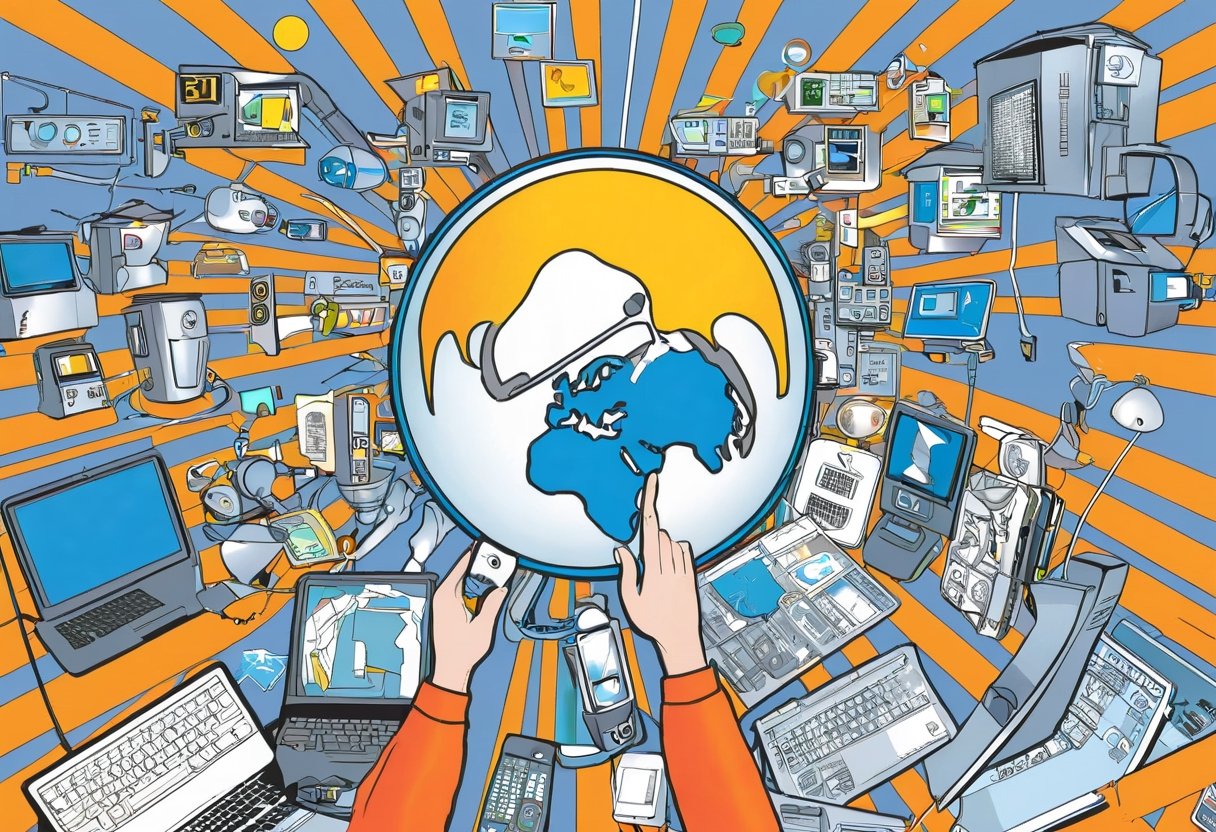
    The world we live in today is a far cry from the one depicted in the movie Wall-E, where humans live in a post-scarcity, high-tech utopia. However, we are slowly converging on a reality that’s eerily similar. With the rise of Amazon and other tech giants, we’re witnessing a phenomenon where a single company can offer a wide range of services, from cloud computing to doorbell cameras.

    But what does this mean for us, the consumers? How will this convergence shape our lives, and what are the implications for the future of technology?

    The Story Unfolds

    The story of Amazon’s rise to dominance is a fascinating one. From its humble beginnings as an online bookstore to its current status as a multinational tech giant, Amazon has consistently pushed the boundaries of what’s possible. Its acquisition of Whole Foods, for example, marked a significant shift in the retail landscape, demonstrating the company’s willingness to disrupt traditional industries.

    But Amazon’s ambitions go beyond mere retail. The company’s cloud computing platform, Amazon Web Services (AWS), has become the backbone of modern technology, powering everything from Netflix to the CIA. This has created a new reality where a single company can offer a wide range of services, from infrastructure to software.

    So, what does this mean for the future of technology? How will this convergence shape our lives, and what are the implications for businesses and individuals alike?

    The Bigger Picture

    The convergence of services and technologies is leading to a new era of innovation, where companies are leveraging the power of data and AI to create new products and services. This has significant implications for businesses, which must adapt to a rapidly changing landscape.

    For consumers, the benefits are clear: increased convenience, reduced costs, and a wider range of options. However, there are also risks, such as the loss of data privacy and the concentration of power in the hands of a few tech giants.

    Under the Hood

    So, what’s driving this convergence? At its core, it’s the increasing importance of data and AI in modern technology. Companies are leveraging these technologies to create new products and services, which in turn are driving the convergence of services and technologies.

    Take, for example, the case of AWS, which has become the backbone of modern technology. The platform offers a wide range of services, from compute and storage to database and analytics. This has created a new reality where companies can focus on innovation, rather than worrying about the underlying infrastructure.

    But there’s a catch: the more we rely on these platforms, the more vulnerable we become to data breaches and other security risks. This has significant implications for businesses and individuals alike, who must adapt to a rapidly changing landscape.

    What’s Next

    So, what does the future hold? Will we continue to see a convergence of services and technologies, or will we witness a new era of innovation, driven by the power of data and AI?

    One thing is clear: the future of technology will be shaped by the convergence of services and technologies. Whether we like it or not, we’re living in a world of increasing convergence, where a single company can offer a wide range of services, from cloud computing to doorbell cameras.

    This may seem daunting, but it also presents opportunities for innovation and growth. As we move forward, it’s essential to stay ahead of the curve, adapting to a rapidly changing landscape and leveraging the power of data and AI to create new products and services.

    Looking Forward

    The future of technology is uncertain, but one thing is clear: we’re living in a world of increasing convergence, where a single company can offer a wide range of services, from cloud computing to doorbell cameras. As we move forward, it’s essential to stay ahead of the curve, adapting to a rapidly changing landscape and leveraging the power of data and AI to create new products and services.

    This may seem daunting, but it also presents opportunities for innovation and growth. By embracing the convergence of services and technologies, we can create a brighter future for ourselves and future generations.

    Final Thoughts

    The convergence of services and technologies is a reality we can no longer ignore. As we move forward, it’s essential to stay ahead of the curve, adapting to a rapidly changing landscape and leveraging the power of data and AI to create new products and services.

    By embracing this reality, we can create a brighter future for ourselves and future generations. So, what do you think? How will the convergence of services and technologies shape our lives, and what are the implications for businesses and individuals alike?

  • The AI Inflection Point: Unlocking the Secrets of the Golden Age of Prediction Markets

    The AI Inflection Point

    The AI inflection point marks a profound shift in the way we think about intelligence and prediction. It’s as if the AI genie has been unleashed, and we’re now grappling with the implications of an exponentially growing intelligence landscape.As AI-driven systems begin to outperform humans in various domains, we’re witnessing a rapid redefinition of what it means to be intelligent. The Golden Age of Prediction Markets, which some pundits are heralding, is not just a euphemism for the surge in activity; it’s a harbinger of a larger transformation.But here’s the real question: As AI becomes increasingly pervasive, what does it mean for humanity? Will we be able to keep pace with the accelerating growth of intelligence, or will we find ourselves relegated to the sidelines as AI assumes the driving seat?

    The Uncharted Territory of AI

    The current state of AI is a fascinating tapestry of strengths and weaknesses. We’ve made tremendous strides in areas like natural language processing, computer vision, and decision-making, but we’re still grappling with the intricacies of human cognition.What’s fascinating is that AI systems are now beginning to exhibit a level of creativity and innovation that was previously thought to be the exclusive domain of humans. This has significant implications for fields like art, science, and even philosophy.

    The Prediction Market Revolution

    The Prediction Market revolution is not just about AI; it’s about a fundamental shift in how we think about prediction and decision-making. By harnessing the power of machine learning and data analytics, we’re now able to make predictions with unprecedented accuracy and speed.But what’s often overlooked is the human element. As AI assumes a more prominent role in prediction markets, we’re forced to confront the limitations of human intuition and the importance of human oversight.

    The Bigger Picture

    The bigger picture is one of profound transformation and upheaval. As AI becomes an increasingly dominant force in our lives, we’re forced to reevaluate our relationships with technology, each other, and ourselves.The question on everyone’s mind is: What does this mean for humanity? Will we be able to adapt to the changing landscape, or will we find ourselves struggling to keep pace?

    Under the Hood

    The technical underpinnings of the Prediction Market revolution are complex and multifaceted. We’re talking about the convergence of AI, blockchain, and predictive analytics, with each component playing a crucial role in the grand symphony.One of the most interesting aspects of this convergence is the emergence of decentralized prediction markets. By leveraging the power of blockchain and AI, we’re able to create prediction markets that are more transparent, secure, and inclusive.

    The Market Reality

    The market reality is that the Golden Age of Prediction Markets is already underway. The numbers are staggering, with billions of dollars being poured into AI-driven prediction markets.But what’s often overlooked is the human impact. As AI assumes a more prominent role in prediction markets, we’re forced to confront the limitations of human intuition and the importance of human oversight.

    What’s Next

    The question on everyone’s mind is: What’s next? Will we see a continued surge in AI-driven prediction markets, or will we hit a wall as we struggle to keep pace with the accelerating growth of intelligence?One thing is certain: The future of prediction markets is going to be shaped by a complex interplay of technological, social, and economic factors. As we navigate this uncharted territory, we’re forced to confront the limitations of our current understanding and the importance of human oversight.

    Final Thoughts

    The AI inflection point marks a profound shift in the way we think about intelligence and prediction. As we embark on this journey into the unknown, we’re forced to confront the limitations of our current understanding and the importance of human oversight.The future of prediction markets is going to be shaped by a complex interplay of technological, social, and economic factors. As we navigate this uncharted territory, we’re forced to confront the limitations of our current understanding and the importance of human oversight.But here’s the thing: We’re not just talking about prediction markets; we’re talking about the future of humanity. The question on everyone’s mind is: What does this mean for us? Will we be able to adapt to the changing landscape, or will we find ourselves struggling to keep pace?The answer, much like the future itself, remains to be seen.

Oh hi there 👋
It’s nice to meet you.

Sign up to receive awesome content in your inbox, every Day.

We don’t spam! Read our privacy policy for more info.