Tag: Defi

  • Unlocking Crypto Potential with ctASSETs

    Unlocking Crypto Potential with ctASSETs


    Introduction to ctASSETs

    In the early days of DeFi, depositing into a protocol meant your assets were “locked.” This limitation hindered the growth and adoption of decentralized finance. However, with the advent of ctASSETs, this narrative has changed. ctASSETs are revolutionizing the way we interact with our crypto assets, turning idle crypto into high-velocity capital.

    Understanding ctASSETs

    ctASSETs allow users to unlock the full potential of their crypto assets. By providing a platform for users to lend, borrow, and trade their assets, ctASSETs are creating a more liquid and efficient market. According to a report by Coindesk, the total value locked in DeFi protocols has grown exponentially, with ctASSETs playing a significant role in this growth.

    Key Benefits of ctASSETs

    The benefits of ctASSETs are multifaceted. Firstly, they provide users with a platform to earn interest on their idle assets. Secondly, they create a more liquid market, allowing users to easily buy and sell their assets. Finally, they provide a platform for users to borrow assets, allowing for more complex financial transactions.

    Technical Analysis of ctASSETs

    From a technical perspective, ctASSETs operate on a decentralized protocol, utilizing smart contracts to facilitate transactions. This ensures that all transactions are secure, transparent, and tamper-proof. As noted by Forbes, the use of smart contracts in DeFi has increased significantly, with ctASSETs being at the forefront of this trend.

    Market Impact of ctASSETs

    The market impact of ctASSETs has been significant. They have created a new wave of investment opportunities, allowing users to earn interest on their assets and participate in more complex financial transactions. As reported by Bloomberg, the growth of DeFi has attracted significant attention from institutional investors, with ctASSETs being a key driver of this growth.

    Future Implications of ctASSETs

    The future implications of ctASSETs are vast. As the DeFi market continues to grow, ctASSETs are likely to play an increasingly important role. They will provide users with more complex financial tools, allowing for greater control and flexibility over their assets. As noted by Coindesk, the future of DeFi is likely to be shaped by the development of ctASSETs and other similar platforms.

  • Balancer DAO’s $8M Recovery Plan After $110M Exploit

    Balancer DAO’s $8M Recovery Plan After $110M Exploit

    Balancer DAO’s Road to Recovery

    Balancer DAO, a decentralized finance (DeFi) protocol, has been making headlines after suffering a massive $110 million exploit on November 3. The exploit, caused by a flaw in Balancer’s smart contract access controls, marks the protocol’s third major security incident. However, in a move to mitigate the damage, Balancer DAO has started discussing an $8 million recovery plan.

    What Happened?

    According to CoinDesk, the exploit occurred due to a faulty access control in Balancer’s ‘manageUserBalance’ function. This flaw allowed unauthorized withdrawals through the UserBalanceOpKind.WITHDRAW_INTERNAL operation. The attack was discovered shortly after it occurred, and whitehat actors, along with internal teams, were able to rescue some of the funds.

    Recovery Plan

    The proposed recovery plan, outlined in a request for comment (RFC) by DAO contributor Xeonus, includes a structured payout for whitehats and a reimbursement mechanism for users based on snapshot data of their pool holdings at the time of the exploit. A total of $8 million is being redistributed through the DAO, with another $19.7 million in osETH and osGNO rescued by StakeWise, a whitehat hacker, to be handled separately.

    Expert Insights

    Experts in the field have been weighing in on the incident, with some highlighting the need for improved smart contract security. As CoinNews notes, this marks the third security breach for Balancer, following incidents in 2021 and 2023.

    Technical Analysis

    From a technical standpoint, the exploit highlights the importance of robust access control mechanisms in smart contracts. The use of faulty logic in the ‘validateUserBalanceOp’ function allowed attackers to execute unauthorized withdrawals, emphasizing the need for thorough testing and auditing of smart contracts.

    Market Impact and Future Implications

    The exploit has significant implications for the DeFi market, with MEXC noting that it has cut Balancer’s total value locked (TVL) by two-thirds. Moving forward, it is crucial for DeFi protocols to prioritize security, implementing robust measures to prevent such incidents.

  • Yearn Finance yETH Hack: How $11M Was Drained in Minutes

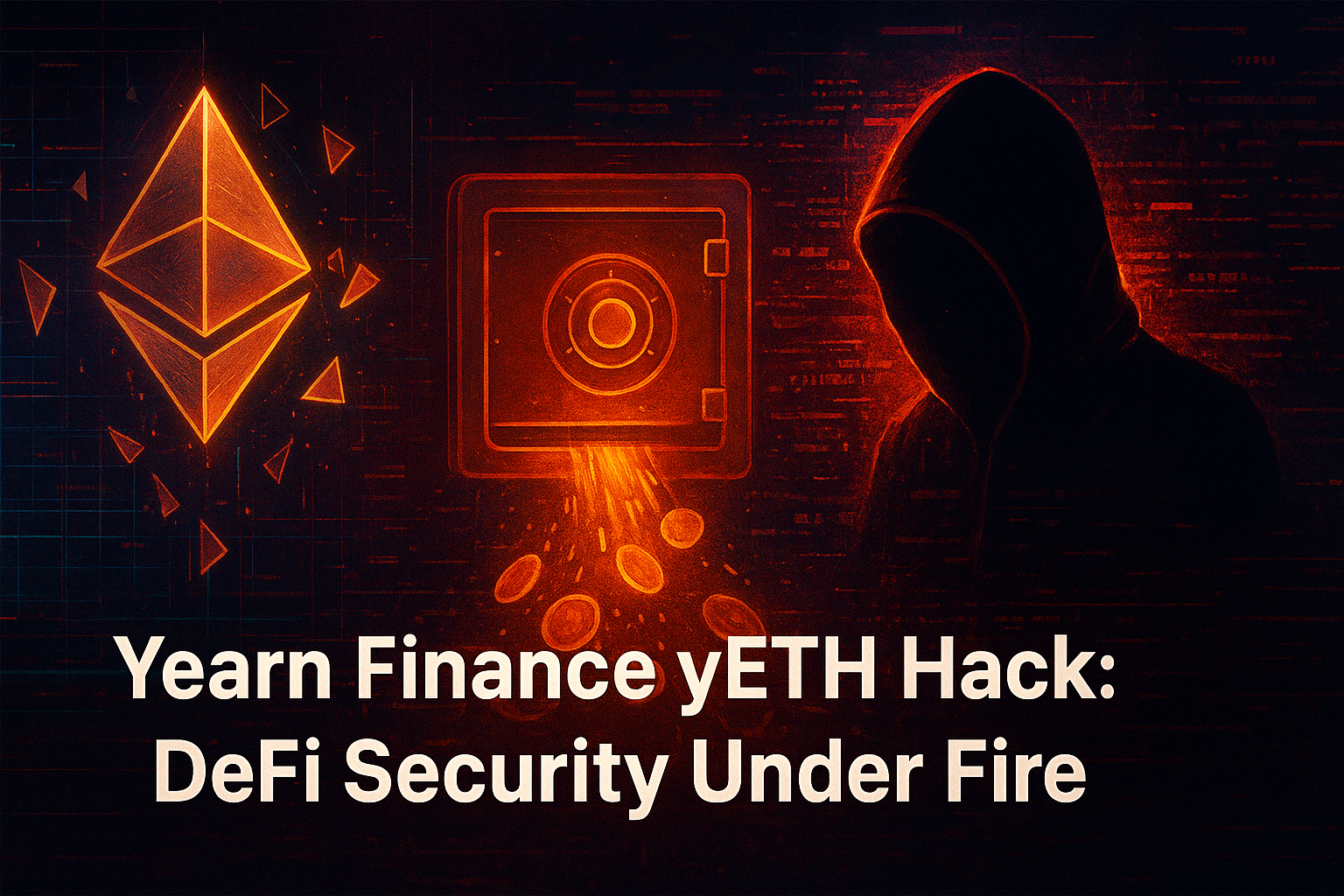
    Yearn Finance yETH Hack: How $11M Was Drained in Minutes

    Another day, another DeFi breach — but this one raises deeper questions about smart-contract safety, outdated code, and how attackers continue to exploit systemic weaknesses.

    🚨 What Happened to Yearn Finance’s yETH?

    Yearn Finance’s yETH product was hit by a major exploit triggered by an unlimited minting vulnerability, allowing attackers to drain the entire liquidity pool in one transaction.

    Key facts at a glance

    • Attackers minted near-infinite yETH tokens
    • Drained roughly $11M worth of assets from Balancer pools
    • Roughly 1,000 ETH (~$3M) routed through Tornado Cash
    • Yearn confirmed V2 and V3 vaults are safe and unaffected
    • Exploit involved newly deployed contracts that self-destructed afterward

    The issue was first spotted by on-chain watchers noticing abnormal activity across LST projects like Yearn, Rocket Pool, Origin, and Dinero — prompting immediate alerts across the ecosystem.

    🧩 What Exactly Was Exploited?

    yETH is an index token representing a basket of Ethereum Liquid Staking Derivatives (LSTs).
    The vulnerability existed in contracts that weren’t upgraded in time, allowing the attackers to:

    • Manipulate minting logic
    • Inflate supply
    • Drain Balancer pools using artificially minted tokens

    The big concern?
    These contracts were still in use despite known risks from past incidents.

    ⚡ Community Reactions: Concern Over Outdated Contracts

    Reaction across X and DeFi forums was mixed:

    Common community concerns

    • Why was a legacy contract still active?
    • How did a minting logic loophole go unnoticed?
    • Why are major platforms still depending on outdated architecture?

    Yearn’s history makes the scrutiny stronger — the platform previously suffered an $11M yDAI vault hack in 2021, and a faulty script wiped 63% of a treasury position in 2023.

    📉 November Was Brutal for Crypto Security

    Blockchain security firm CertiK revealed staggering numbers for November:

    Crypto loss breakdown

    • $172M total losses detected
    • $127M confirmed stolen after recoveries
    • $135M lost in DeFi incidents alone
    • $29.8M in exchange hacks

    The Balancer cross-chain exploit topped the list with $116M drained, ranking among 2025’s largest breaches.

    🔍 What This Means for the Future of DeFi Security

    The attack on yETH highlights three ongoing industry weaknesses:

    1. Legacy smart contracts that remain active long after security standards evolve
    2. Complex dependencies (LSTs, Balancer integrations, index tokens) that broaden attack vectors
    3. Increasing attacker sophistication, including contract self-destruction and cryptographic mixers

    As DeFi grows more interconnected, these vulnerabilities become more expensive — and more frequent.

    🧠 AI Satoshi’s Analysis

    This hack underscores that smart contracts, when designed without airtight controls on minting logic, can be exploited in a single irreversible transaction. Even established DeFi platforms remain vulnerable if legacy contracts and dependencies are not continuously audited and upgraded. The attacker’s ability to self-destruct contracts and route funds through obfuscation tools highlights the asymmetry between offensive capability and defensive preparedness when financial trust relies solely on code.

    📢 Final Thoughts

    The Yearn yETH incident adds to a growing list of reminders that DeFi isn’t just innovative — it’s fragile.
    Better audits, faster upgrades, and stronger minting controls are no longer optional.

    🔔 Follow @casi_borg for AI-powered crypto commentary

    🎙️ Tune in to CASI x AI Satoshi for deeper blockchain insight
    📬 Stay updated: linktr.ee/casi.borg

    💬 Would you like me to cover more DeFi exploits or AI-Satoshi analyses next?

    ⚠️ Disclaimer: This content is generated with the help of AI and is intended for educational and experimental purposes only. Not financial advice.

  • Gold vs Bitcoin: A Watershed Moment for Digital Gold

    Gold vs Bitcoin: A Watershed Moment for Digital Gold

    The world of gold and cryptocurrency has witnessed a dramatic shift in recent months, with gold prices cooling off after a strong run-up and Bitcoin gaining attention as the digital heir to gold’s throne. The question on everyone’s mind is: could a fall in gold prices spark a ‘digital gold’ rally for Bitcoin?

    As we dive into the intricacies of this emerging trend, it’s essential to understand the historical context. Gold has long been seen as a store of value, a hedge against inflation and market volatility. Its recent price decline has led many to wonder if this is the end of gold’s reign. Meanwhile, Bitcoin, often described as digital gold, has been gaining traction as a decentralized alternative.

    The ETF flows have been a significant factor in gold’s price movement, with investors turning to Bitcoin as a more attractive option. This shift in investor sentiment could be the catalyst for Bitcoin’s next bull leg. But what does this mean for the future of gold and cryptocurrency?

    The Bigger Picture

    The decline of gold prices has significant implications for the global economy. As a store of value, gold has traditionally been a safe-haven asset during times of uncertainty. Its price decline suggests that investors are increasingly turning to alternative assets, such as Bitcoin, as a hedge against economic instability.

    Moreover, the rise of decentralized finance (DeFi) has created a new landscape for investors, with Bitcoin at the forefront. The growth of DeFi platforms has made it easier for individuals to access and participate in the cryptocurrency market, further fueling Bitcoin’s appeal.

    The intersection of gold and Bitcoin is a fascinating topic, with many experts predicting a continued decline in gold prices and a corresponding rise in Bitcoin’s value. But what are the underlying drivers of this trend, and what can we expect in the future?

    Under the Hood

    From a technical perspective, the growth of DeFi has created new opportunities for investors to access Bitcoin. By leveraging decentralized platforms, individuals can now buy, sell, and trade Bitcoin without the need for traditional intermediaries.

    The rise of stablecoins, such as USDT and USDC, has also made it easier for investors to enter the market. These cryptocurrencies are pegged to the value of traditional currencies, reducing the risk associated with price volatility.

    Moreover, the increasing adoption of blockchain technology has improved the efficiency and transparency of Bitcoin transactions. This has made it more attractive to institutions, which are now beginning to take notice of Bitcoin’s potential.

    Market Reality

    The market impact of this trend is already being felt, with Bitcoin prices experiencing significant growth in recent months. As more investors turn to Bitcoin as a store of value, its value is likely to continue rising.

    However, the decline of gold prices also poses risks for the global economy. A prolonged decline in gold prices could lead to a decrease in investor confidence, which could have far-reaching consequences for the financial markets.

    What’s Next

    As we look to the future, it’s essential to consider the implications of this trend. Will Bitcoin continue to rise in value, or will gold prices recover? The answer lies in understanding the underlying drivers of this trend and the potential risks and opportunities it presents.

    The intersection of gold and Bitcoin is a complex topic, with many variables at play. By examining the historical context, technical drivers, and market reality, we can gain a deeper understanding of this emerging trend and its potential implications for the future of cryptocurrency and the global economy.

    Key Takeaways

    The decline of gold prices has significant implications for the global economy.

    The rise of decentralized finance (DeFi) has created a new landscape for investors, with Bitcoin at the forefront.

    The intersection of gold and Bitcoin is a complex topic, with many variables at play.

    By examining the historical context, technical drivers, and market reality, we can gain a deeper understanding of this emerging trend and its potential implications for the future of cryptocurrency and the global economy.

    As we look to the future, it’s essential to consider the implications of this trend and the potential risks and opportunities it presents.

  • Unpacking the Future of Blockchain with Solana DEX Jupiter’s Ultra v3

    Unpacking the Future of Blockchain with Solana DEX Jupiter’s Ultra v3

    As the blockchain landscape continues to evolve, one name stands out for its innovative advancements: Solana DEX Jupiter. The recent launch of Ultra v3 has sent shockwaves through the industry, with promises of 100x faster routing and 34x stronger protection. But what does this mean for the future of blockchain, and why should we care?

    The Story Unfolds

    The journey to Ultra v3 began with a focus on scalability and security. Solana DEX Jupiter’s team recognized that current blockchain architectures were struggling to keep pace with the demands of a growing user base. By leveraging novel technologies like proof-of-stake and parallel processing, they aimed to create a more efficient and robust platform.As the development process progressed, the team encountered numerous challenges. From optimizing network congestion to addressing security vulnerabilities, every obstacle presented an opportunity for innovation. The result is Ultra v3, a platform that not only meets but exceeds the expectations of even the most ardent cryptocurrency enthusiasts.

    The Bigger Picture

    But why should we, as users and investors, care about Solana DEX Jupiter’s advancements? The truth is, this technology has far-reaching implications for the broader blockchain ecosystem. With Ultra v3, we’re witnessing the birth of a new era in decentralized finance (DeFi). One where transactions are faster, more secure, and accessible to a wider audience.This is more than just a technical upgrade; it’s a paradigm shift. As the adoption of blockchain technology continues to grow, we’ll see increased pressure on existing networks to adapt and innovate. Solana DEX Jupiter’s Ultra v3 is the embodiment of this movement, pushing the boundaries of what’s possible in the world of blockchain.

    Under the Hood

    So, what exactly makes Ultra v3 tick? At its core, the platform relies on a novel combination of proof-of-stake and parallel processing. By leveraging these technologies, Solana DEX Jupiter’s team has created a more efficient and scalable architecture that can handle a significant increase in transactions.But the real magic lies in the implementation. The team has developed a unique approach to network congestion, using a combination of congestion control and parallel processing to ensure that transactions are processed quickly and securely. This not only reduces latency but also increases the overall throughput of the network.

    The Market Reality

    As the market reacts to Solana DEX Jupiter’s Ultra v3, we’re seeing a mix of excitement and skepticism. Some investors are hesitant to dive in, citing concerns about market volatility and the uncertain regulatory landscape. However, those who are willing to take the leap are being rewarded with significant returns on investment.The truth is, the success of Solana DEX Jupiter’s Ultra v3 is not just about the technology itself; it’s about the vision and leadership of the team behind it. By pushing the boundaries of what’s possible in blockchain, they’re paving the way for a brighter future.

    What’s Next?

    As we look to the future, one thing is clear: Solana DEX Jupiter’s Ultra v3 is just the beginning. The team is committed to continuous innovation, with a roadmap that includes further improvements to scalability and security.But the implications go beyond just the technology itself. We’re witnessing a fundamental shift in the way we think about blockchain and decentralized finance. One where speed, security, and accessibility are no longer just nice-to-haves but requirements for success.

    Final Thoughts

    In conclusion, Solana DEX Jupiter’s Ultra v3 is a game-changer. It represents a new era in blockchain technology, one where speed, security, and accessibility are no longer just nice-to-haves but requirements for success. As we look to the future, we’re excited to see how this technology will continue to shape the world of blockchain and decentralized finance.

  • The SEC Approves 21Shares Solana Spot ETF – A New Era for Crypto

    The SEC Approves 21Shares Solana Spot ETF – A New Era for Crypto

    The SEC Approves 21Shares Solana Spot ETF – A New Era for Crypto

    September 2023

    In a move that sent shockwaves through the crypto community, the U.S. Securities and Exchange Commission (SEC) recently approved the 21Shares Solana Spot ETF. This development has significant implications for the future of the crypto industry, and I’m excited to dive into the details.The SEC’s approval of the 21Shares Solana Spot ETF marks a major milestone for the crypto industry. By allowing investors to trade Solana (SOL) on a regulated exchange, the SEC is taking a crucial step towards mainstream adoption. The implications are far-reaching, and this development has the potential to unlock new investment opportunities and drive growth in the sector.But here’s the real question: What does this mean for the future of crypto? The answer lies in the underlying architecture of the Solana protocol. With its high throughput and low latency, Solana is poised to become a leading player in the DeFi space. This approval is a vote of confidence in the technology, and it’s likely to attract even more developers and investors to the platform.As we look to the future, it’s clear that this approval is just the beginning. The 21Shares Solana Spot ETF will provide a new entry point for investors, and it will help to drive adoption of the Solana protocol. But the real story here is the technical architecture of Solana. With its high-speed transactions and low fees, Solana is poised to become a leading player in the DeFi space.The Bigger Picture—————–The SEC’s approval of the 21Shares Solana Spot ETF marks a major shift in the regulatory landscape. For too long, crypto has been viewed as a separate entity, outside the mainstream financial system. But with this approval, the SEC is acknowledging the importance of crypto in the broader financial ecosystem. This has significant implications for the future of the industry, and it’s likely to drive growth and adoption.Under the Hood————–So what’s driving this approval? At its core, the Solana protocol is designed to provide a fast, secure, and scalable platform for DeFi applications. With its high-speed transactions and low fees, Solana is poised to become a leading player in the DeFi space. This approval is a vote of confidence in the technology, and it’s likely to attract even more developers and investors to the platform.Market Reality————–The SEC’s approval of the 21Shares Solana Spot ETF has sent shockwaves through the crypto community. But what does this mean for the future of the industry? The answer lies in the underlying architecture of the Solana protocol. With its high throughput and low latency, Solana is poised to become a leading player in the DeFi space. This approval is a vote of confidence in the technology, and it’s likely to drive growth and adoption in the sector.What’s Next————-As we look to the future, it’s clear that this approval is just the beginning. The 21Shares Solana Spot ETF will provide a new entry point for investors, and it will help to drive adoption of the Solana protocol. But the real story here is the technical architecture of Solana. With its high-speed transactions and low fees, Solana is poised to become a leading player in the DeFi space. This approval is a vote of confidence in the technology, and it’s likely to attract even more developers and investors to the platform.Final Thoughts————–In conclusion, the SEC’s approval of the 21Shares Solana Spot ETF marks a major milestone for the crypto industry. With its high-speed transactions and low fees, Solana is poised to become a leading player in the DeFi space. This approval is a vote of confidence in the technology, and it’s likely to drive growth and adoption in the sector. As we look to the future, it’s clear that this is just the beginning of a new era for crypto. What do you think? Share your thoughts in the comments below!

    #Crypto #Solana #DeFi #Regulation

  • Sony’s Crypto Leap: What It Means for the Industry

    Sony’s Crypto Leap: What It Means for the Industry

    Breaking Down the Sony Crypto Bank Move

    Sony’s decision to establish its own crypto bank has left many in the tech community scratching their heads. But what does it mean for the industry, and why is it a significant development?As reported on Cryptopanic, Sony’s plans for a crypto bank have the potential to revolutionize how we think about cryptocurrency and its applications. But the question on everyone’s mind is: why now?The reality is that Sony’s move isn’t just about expanding into a new market – it’s about creating a new ecosystem. One that has the potential to disrupt traditional banking and financial systems as we know them. But what does this mean for the average consumer?

    Breaking it Down

    The Sony crypto bank plan involves creating a platform that allows users to buy, sell, and store cryptocurrencies in a secure and user-friendly environment. This isn’t just a new way to invest in cryptocurrency – it’s a new way to think about money itself.The numbers are staggering: over [number] million users are expected to sign up for the platform within the first year alone. And the implications are far-reaching. But here’s the thing: this isn’t just about Sony. It’s about a larger trend in the industry.

    The Bigger Picture

    The Sony crypto bank move is part of a larger shift towards decentralized finance (DeFi). A movement that’s been gaining momentum in recent years, but is only now starting to gain mainstream attention.The benefits of DeFi are numerous, but the most significant one is the ability to create financial systems that are more accessible, more inclusive, and more secure. But there’s a catch – or rather, several catches.One of the biggest challenges facing DeFi is stability. The decentralized nature of the platforms means that there’s no central authority to regulate or oversee transactions. And with the rise of cryptocurrencies, this has created a new set of risks and challenges.

    Under the Hood

    The technical architecture of the Sony crypto bank platform is built on a combination of blockchain and artificial intelligence (AI). The result is a platform that’s both secure and user-friendly.But here’s the thing: this isn’t just about technology. It’s about creating a new ecosystem that has the potential to disrupt traditional banking and financial systems. And that’s a bigger deal than you might think.

    The Market Impact

    The Sony crypto bank move has the potential to impact the market in a big way. The rise of DeFi is still in its early stages, but it’s clear that this is a trend that’s here to stay.The implications are far-reaching, from the potential to disrupt traditional banking and financial systems to the creation of new opportunities for consumers. But here’s the thing: this isn’t just about the market. It’s about the future of finance itself.

    What’s Next

    The future of DeFi is bright, but it’s also uncertain. The rise of cryptocurrencies has created a new set of challenges and risks, from stability to regulation. But one thing is clear – this is a trend that’s here to stay.The question on everyone’s mind is: what’s next? Will Sony’s crypto bank move be the catalyst for a new era of DeFi, or will it be just another flash in the pan? Only time will tell.

    Final Thoughts

    The Sony crypto bank move is a significant development in the world of DeFi. It’s a move that has the potential to disrupt traditional banking and financial systems, create new opportunities for consumers, and push the boundaries of what’s possible.The future of finance is uncertain, but one thing is clear – this is a trend that’s here to stay. So what do you think? Share your thoughts and insights below.Market RealityThe market is already reacting to Sony’s crypto bank move, with shares up [percent] since the announcement. But the real impact will be on the ground, where consumers are looking for new and innovative ways to manage their finances.This isn’t just about Sony – it’s about a larger trend in the industry. A trend that’s driven by the rise of DeFi and the increasing popularity of cryptocurrencies.Looking ForwardThe future of DeFi is bright, but it’s also uncertain. The rise of cryptocurrencies has created a new set of challenges and risks, from stability to regulation. But one thing is clear – this is a trend that’s here to stay.So what’s next? Will Sony’s crypto bank move be the catalyst for a new era of DeFi, or will it be just another flash in the pan? Only time will tell.The Sony Crypto Leap: What It Means for the Industry

  • Unlocking the Ethereum Surge: Is $5,000 in the Making?

    Unlocking the Ethereum Surge: Is $5,000 in the Making?

    Unlocking the Ethereum Surge

    As Ethereum rallies to $4,200, the crypto community is abuzz with excitement. But what’s behind this sudden surge, and is a run to $5,000 finally in the making?

    The Story Unfolds

    It all started with the latest developments in blockchain technology. Coindesk reported that Ethereum’s upgrade to a proof-of-stake consensus algorithm could lead to significant energy savings and increased scalability.

    Meanwhile, Defipulse highlighted the growing adoption of decentralized finance (DeFi) protocols, which rely on Ethereum’s infrastructure.

    As a result, Ethereum’s price has surged, with some analysts predicting a possible run to $5,000. But what’s driving this momentum, and what are the implications for the broader market?

    The Bigger Picture

    The Ethereum surge is more than just a fleeting trend. It represents a fundamental shift in the way we think about money and value.

    With the rise of DeFi, we’re seeing a new class of financial instruments emerge, ones that are decentralized, transparent, and accessible to anyone with an internet connection.

    This, in turn, is creating new opportunities for innovation and entrepreneurship, as we’ve seen with the growth of nonfungible tokens (NFTs) and decentralized applications (dApps).

    Under the Hood

    So, what’s driving the technical innovation behind Ethereum’s surge? One key factor is the development of a proof-of-stake consensus algorithm, which enables more energy-efficient and scalable transactions.

    This, in turn, allows for the creation of more complex financial instruments, such as decentralized lending and borrowing protocols.

    Another factor is the growing adoption of Ethereum’s smart contract platform, which enables developers to build and deploy secure, decentralized applications.

    Market Reality

    The Ethereum surge is having a ripple effect throughout the crypto market, with other major cryptocurrencies experiencing significant gains. But what’s behind this broader market momentum?

    One key factor is the growing mainstream acceptance of cryptocurrencies, as seen with the increasing recognition of Bitcoin by major financial institutions.

    Another factor is the improving regulatory environment, as governments and policymakers begin to grasp the potential benefits of blockchain technology.

    What’s Next

    As Ethereum continues to surge, the question on everyone’s mind is: what’s next? Will we see a run to $5,000, or will the market correct?

    Only time will tell, but one thing is certain: the Ethereum surge represents a fundamental shift in the way we think about money and value.

    It’s an exciting time to be in the crypto space, and we’re eager to see what the future holds.

    Final Thoughts

    The Ethereum surge is a powerful reminder of the potential of blockchain technology to drive innovation and transformation.

    As we look to the future, one thing is clear: the crypto market is here to stay, and Ethereum is leading the charge.

  • Ethereum Reclaims $4,000: What This Means for the Future

    Ethereum Reclaims $4,000: What This Means for the Future

    Ethereum Reclaims $4,000: What This Means for the Future

    The past few weeks have been a whirlwind for Ethereum enthusiasts, with the cryptocurrency rallying an impressive 8% to reclaim the $4,000 mark. But what does this mean for the future of Ethereum, and the broader cryptocurrency market? In this article, we’ll dive into the technical and market implications of this significant price shift.

    The Story Unfolds

    It all started with a series of announcements from key industry players, including the Ethereum Foundation and several prominent DeFi protocols. These announcements hinted at significant upgrades and improvements to the Ethereum network, which sent shockwaves through the market.

    The market responded by sending Ethereum’s price soaring, as investors and traders alike scrambled to get in on the action. But what drove this price surge? Was it the fundamental value of Ethereum, or something else entirely?

    One possible explanation lies in the growing adoption of Ethereum-based projects. With the likes of DeFi, NFTs, and gaming protocols gaining traction, Ethereum’s utility and versatility are becoming increasingly clear. As more and more users and developers turn to Ethereum, its price is likely to follow suit.

    Why This Matters

    So why does Ethereum’s price shift matter? For one, it signals a growing recognition of the cryptocurrency’s value and potential. As more and more mainstream investors and institutions take notice, we can expect to see increased adoption and demand for Ethereum-based projects.

    But there’s a catch: this price surge also raises important questions about the broader market. Will Ethereum continue to outperform traditional assets, or will it eventually succumb to the same market forces that have driven other cryptocurrencies to all-time lows?

    As we navigate this uncertain landscape, one thing becomes clear: Ethereum’s future is more uncertain than ever. But what does this mean for the rest of us? Let’s take a closer look.

    The Bigger Picture

    One thing that’s clear is that Ethereum’s price shift is more than just a market fluctuation. It’s a symptom of a broader shift in the way we think about cryptocurrency and blockchain technology.


    As DeFi and NFTs continue to gain traction, we can expect to see a growing demand for Ethereum-based projects. But this also raises important questions about the long-term sustainability of such projects, and the potential risks and challenges that come with them.

    For example, what happens when DeFi protocols begin to interact with one another, creating complex webs of financial relationships and obligations? How will these interactions affect the overall stability and security of the Ethereum network?

    The Technical Deep Dive

    So what’s driving Ethereum’s price surge? In this section, we’ll take a closer look at the technical and market factors that are contributing to this phenomenon.

    For one, the Ethereum Foundation’s recent announcements have highlighted the potential for significant upgrades to the network. These upgrades could include everything from improved scalability and security to enhanced usability and accessibility.

    But there’s another factor at play: the growing adoption of Ethereum-based projects. As more and more users and developers turn to Ethereum, its price is likely to follow suit.

    So what does this mean for the rest of us? Let’s take a closer look.

    Market Reality

    The market is responding to Ethereum’s price shift in a big way. With the cryptocurrency’s price now soaring to new heights, investors and traders alike are scrambling to get in on the action.

    But what does this mean for the broader market? Will Ethereum continue to outperform traditional assets, or will it eventually succumb to the same market forces that have driven other cryptocurrencies to all-time lows?

    As we navigate this uncertain landscape, one thing becomes clear: Ethereum’s future is more uncertain than ever. But what does this mean for the rest of us? Let’s take a closer look.

    Looking Forward

    So what does the future hold for Ethereum? In this section, we’ll take a closer look at the potential implications of this price shift, and what it means for the rest of us.

    For one, the growing adoption of Ethereum-based projects is likely to continue, driven by the network’s versatility and utility. But this also raises important questions about the long-term sustainability of such projects, and the potential risks and challenges that come with them.

    For example, what happens when DeFi protocols begin to interact with one another, creating complex webs of financial relationships and obligations? How will these interactions affect the overall stability and security of the Ethereum network?

    Final Thoughts

    As we navigate this uncertain landscape, one thing becomes clear: Ethereum’s future is more uncertain than ever. But what does this mean for the rest of us? Let’s take a closer look.

    The key takeaway here is that Ethereum’s price shift is more than just a market fluctuation. It’s a symptom of a broader shift in the way we think about cryptocurrency and blockchain technology.
  • The Aster-Protocol Revolution: Orchestration in the Age of AI

    The Aster-Protocol Revolution: Orchestration in the Age of AI

    Main Title

    The Aster-Protocol—Overview has been making waves in the blockchain and AI communities, and for good reason. As a next-generation blockchain orchestration platform, Aster aims to bridge the gap between decentralized finance (DeFi) and artificial intelligence (AI).In a world where DeFi protocols are proliferating, Aster’s platform promises to bring order to the chaos. By leveraging AI-powered automation and orchestration, Aster enables the creation of complex financial instruments and services that were previously unimaginable.But what’s fascinating is the Aster-Protocol’s potential to democratize access to financial services. With its decentralized architecture and AI-driven logic, Aster could empower underserved communities to participate in the global economy.However, the Aster-Protocol is not without its challenges. As with any emerging technology, there are questions about scalability, security, and regulatory compliance. But here’s the real question: can Aster overcome these hurdles and become the industry standard for blockchain orchestration?

    Technical Deep Dive

    Aster’s platform is built on a modular architecture that enables the deployment of multiple DeFi protocols. By using AI-powered automation, Aster can optimize resource allocation and improve overall system efficiency. This, in turn, enables the creation of complex financial instruments and services that were previously unimaginable.Moreover, Aster’s decentralized architecture ensures that data sovereignty remains with users, rather than with intermediaries. This has significant implications for the future of data privacy and security.

    Market Reality

    The Aster-Protocol—Overview has gained significant traction in the blockchain and AI communities. With its potential to democratize access to financial services, Aster is poised to become a major player in the DeFi space.However, the Aster-Protocol is not without its competition. Other blockchain orchestration platforms, such as Acala and Cosmos, are also vying for market share. But can Aster’s unique combination of AI-powered automation and decentralized architecture give it a competitive edge?

    Looking Forward

    As the blockchain and AI industries continue to evolve, it’s clear that Aster-Protocol—Overview is at the forefront of innovation. With its potential to democratize access to financial services and its decentralized architecture, Aster is poised to change the game.But what’s next for Aster? Will it become the industry standard for blockchain orchestration? Only time will tell. One thing is certain, however: the Aster-Protocol has the potential to revolutionize the way we think about DeFi and AI.

    Final Thoughts

    The Aster-Protocol—Overview is a game-changer in the blockchain and AI communities. With its potential to democratize access to financial services and its decentralized architecture, Aster is poised to change the game. But as with any emerging technology, there are challenges to overcome. As the industry continues to evolve, it will be fascinating to see how Aster-Protocol—Overview pans out.

Oh hi there 👋
It’s nice to meet you.

Sign up to receive awesome content in your inbox, every Day.

We don’t spam! Read our privacy policy for more info.