Tag: digital assets

  • Japan’s Crypto Tax Cut: Igniting Retail Adoption

    Japan’s Crypto Tax Cut: Igniting Retail Adoption


    Introduction to Japan’s Crypto Tax Reform

    Japan is on the cusp of a significant shift in its cryptocurrency tax policy, aiming to impose a flat 20% tax on crypto gains by 2026. This move is expected to boost domestic adoption and reduce offshore trading, as reported by Blockchain Council and Ai Invest. The current progressive tax system, which can push combined rates as high as 55%, has long been a barrier to domestic adoption.

    Evolution of Japan’s Crypto Tax Policy

    According to Coindesk, Japan’s cryptocurrency market is set to undergo a seismic shift with the implementation of the new tax rate. The 2026 reform replaces the current system, where crypto income is treated as miscellaneous earnings, with a flat, standardized structure. This simplification is not just a tax cut – it’s a strategic realignment, treating crypto gains similarly to stocks and investment trusts.

    Impact on Retail Adoption and Institutional Interest

    The new tax framework is designed to encourage local participation, attract institutional interest, and position Japan as a more competitive digital hub. As Yahoo Finance notes, officials expect the change to boost trading activity and strengthen Japan’s digital-asset industry. With a flat, 20% tax rate, Japan is taking clear steps toward becoming a competitive hub for digital finance, benefiting retail traders, institutions, and the broader technology ecosystem.

    Expert Insights and Analysis

    Experts believe that this move will have a profound impact on the global digital asset market. Ai Invest suggests that the implications are profound, with a simplified tax structure aligned with traditional investments. This strategic realignment may encourage more investors to enter the market, driving growth and adoption.

    Conclusion and Future Implications

    In conclusion, Japan’s crypto tax cut is a significant step toward creating a more favorable environment for digital assets. As the country continues to evolve its regulatory framework, it is likely to attract more institutional and retail investors. The future implications of this move are far-reaching, with potential effects on the global digital asset market and the wider financial industry.

  • UK Recognizes Crypto as Property: A New Era for Digital Assets

    UK Recognizes Crypto as Property: A New Era for Digital Assets


    Introduction to the UK’s Crypto Breakthrough

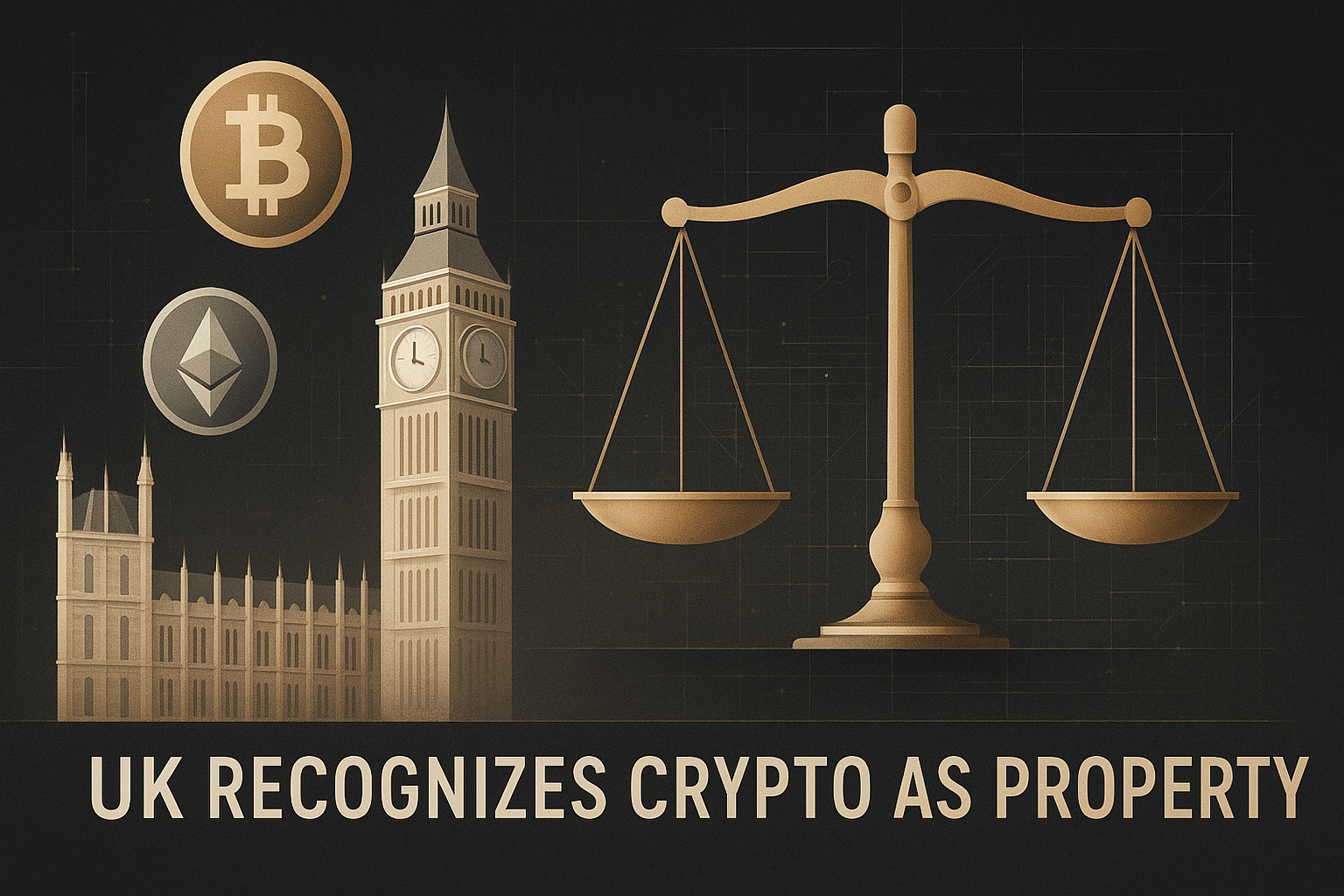
    The United Kingdom has officially recognized cryptocurrency as property, marking a significant milestone in the history of digital assets. This breakthrough has far-reaching implications for users, investors, exchanges, and the global adoption of cryptocurrency. According to Brave New Coin, the Property (Digital Assets etc) Act 2025 received Royal Assent from King Charles III, becoming law across England, Wales, and Northern Ireland.

    What the New Law Means for Crypto Holders

    The new law provides concrete benefits for anyone who owns digital assets in the UK. As Decrypt reports, crypto holders can now more easily prove ownership in legal disputes and recover stolen funds through the court system. Previously, these cases relied on judges interpreting unclear property laws.

    Institutional Adoption and Market Growth

    The UK’s landmark crypto property law has significant implications for institutional adoption and market growth. AInvest notes that legal clarity reduces institutional risks, accelerating market participation and crypto adoption growth. This legislative milestone cements the UK’s role as a global epicenter for digital asset growth.

    Expert Insights and Analysis

    Experts in the field are hailing this move as a major step forward for cryptocurrency. In an exclusive analysis, AI Satoshi Nakamoto stated that ‘the UK’s recognition of crypto as property is a significant step towards mainstream adoption. It provides a clear legal framework for institutions to invest in digital assets, which will drive growth and innovation in the industry.’

    Future Implications and What to Watch For

    As the UK continues to lead the way in cryptocurrency regulation, other countries are likely to follow suit. The future implications of this move are far-reaching, with potential impacts on global trade, finance, and technology. As Freeman Law notes, the UK’s regulatory clarity is not just a checkbox – it is a competitive advantage that will drive institutional demand and crypto adoption growth.

  • UK Recognizes Crypto as Property: What It Means for Users

    UK Recognizes Crypto as Property: What It Means for Users

    The UK has officially given crypto a clear legal identity. Here’s what this breakthrough means for users, investors, exchanges, and global adoption — with AI Satoshi Nakamoto’s exclusive analysis at the end.

    UK Passes Historic Digital Asset Law

    The United Kingdom has taken one of its most significant steps in crypto regulation by passing the Property (Digital Assets etc) Act, legally recognizing digital assets — including cryptocurrencies and stablecoins — as a new class of personal property.

    Until now, crypto had been recognized only through case-by-case court rulings. With this law, digital assets finally gain consistent, codified legal protection, marking a major shift for the UK’s 12% of adults who own crypto.

    This clarity strengthens user rights, protects assets, simplifies dispute resolution, and positions the UK as a serious contender for the global crypto hub race.

    🔍 Why This Law Matters Now

    Digital assets don’t neatly fit into old property categories like “things in possession” (physical items) or “things in action” (contractual rights). The new bill explicitly solves this problem by confirming that digital or electronic “things” can be personal property, even if they are intangible.

    This unlocks several important benefits:

    • Clear, enforceable ownership rights
    • Better recovery of stolen or hacked assets
    • Inclusion of crypto in inheritance and insolvency cases
    • Legal certainty for businesses handling digital assets
    • A foundation for tokenized real-world assets and next-gen markets

    For holders and users, this means stronger legal standing than ever before.

    ❓ How Does This Law Protect Crypto Users?

    The law directly addresses major user pain points:

    1. Ownership clarity

    No more ambiguity — digital assets are now defined as property you legally own.

    2. Theft and fraud recovery

    Courts can now treat stolen crypto like stolen physical property, making it easier to pursue recovery.

    3. Estate planning and inheritance

    Crypto can now be processed like any other asset during:

    • Wills
    • Bankruptcy
    • Insolvency
    • Legal disputes

    This resolves a long-standing concern for families and long-term holders.

    4. Stronger consumer protection

    The law reduces the risk of:

    • Confusing case-by-case judgments
    • Unclear interpretations during disputes
    • Legal loopholes that leave users unprotected

    🌍 How This Positions the UK Globally

    The UK already announced plans for a broader crypto regulatory framework, but this new law gives the country a legal backbone few countries currently have.

    Why this matters globally:

    • Institutional investors prefer regulated asset classes.
    • Tokenization of real-world assets grows faster in legally clear jurisdictions.
    • Businesses feel safer building crypto products.
    • Users benefit from stronger safeguards.

    The UK now has a model other nations can emulate.

    Where Does This Leave Countries Like India?

    India’s crypto landscape remains uncertain:

    Unclear or evolving areas:

    • No direct recognition of crypto as property
    • Taxation rules exist, but legal framework doesn’t
    • Uncertain stance on exchanges and custody
    • No formal recovery or inheritance process
    • Shifting policies that create investor anxiety

    Compared to this, the UK’s move:

    • Reduces ambiguity
    • Boosts user confidence
    • Encourages responsible innovation
    • Improves long-term investment sentiment

    This difference could shape where global crypto businesses choose to operate.

    📈 Potential Market Impact

    Clear regulation doesn’t stifle adoption — it accelerates it. With this law:

    We may soon see:

    • Increased institutional and fintech participation
    • Growth in security-token and RWA (real-world asset) markets
    • Better cross-border dispute handling
    • Stronger user confidence in holding and transferring crypto
    • Development of safer digital financial products

    Legal clarity is the fuel that helps crypto scale responsibly.

    🎙️ AI Satoshi’s Analysis

    By codifying digital assets as property, the UK reduces ambiguity around ownership, recovery of stolen assets, and handling of crypto in insolvency cases. Clear legal frameworks lower institutional uncertainty and make it easier for individuals and businesses to participate without relying on case-by-case judicial precedent. While regulation does not guarantee decentralization, predictable rules can help protect users from arbitrary seizure or opaque legal interpretations.

    🔔 Follow & Explore

    🔔 Follow @casi_borg for AI-powered crypto commentary
     🎙️ Tune in to CASI x AI Satoshi for deeper blockchain insight
     📬 Stay updated: linktr.ee/casi.borg

     💬 Would you like me to compare this new UK law with US, EU, and UAE regulations next?

     ⚠️Disclaimer: This content is generated with the help of AI and intended for educational and experimental purposes only. Not financial advice.


  • El Salvador’s Bold Bitcoin Move Amid Market Turmoil

    El Salvador’s Bold Bitcoin Move Amid Market Turmoil


    Introduction to El Salvador’s Bitcoin Strategy

    El Salvador has been making headlines with its aggressive Bitcoin accumulation strategy, despite the recent market downturn. The country’s president, Nayib Bukele, announced the purchase of 1,090 BTC, valued at over $100 million, during a market dip that pushed the price of Bitcoin below $90,000.

    Understanding the Context

    According to CoinDesk, El Salvador’s total Bitcoin reserves now approach 7,500 BTC, maintained by a policy of buying one BTC per day. This move comes amid discussions with U.S. officials on digital asset regulation and pressure from the International Monetary Fund (IMF) to discourage additional public sector holdings.

    El Salvador’s Bitcoin Holdings and Market Impact

    The purchase occurred at a time when the value of digital gold dipped below $90,000, with the asset trading around $91,400, having decreased by 4% in the last 24 hours and 13% over the past week, as reported by ForkLog. This significant buy has raised the country’s reported holdings to 7,474 BTC, worth about $676 million at the time of disclosure.

    Expert Insights and Analysis

    President Bukele’s recent bitcoin purchase comes amid a significant market selloff, with the country treating the drop as a prime buying moment. As Bitcoin Magazine notes, El Salvador’s conviction comes during a brutal week for the broader market, with Bitcoin plunging below $90,000 in Asian trading.

    Conclusion and Future Implications

    In conclusion, El Salvador’s bold move to buy 1,090 BTC amid market turmoil showcases the country’s commitment to its Bitcoin strategy. As the crypto market continues to evolve, it will be interesting to see how El Salvador’s decision impacts the global economy and the future of digital assets.

  • Hong Kong Revolutionizes Finance with Real-Value Tokenized Deposits


    Introduction to Tokenized Deposits

    Hong Kong is making significant strides in the financial sector by introducing real-value tokenized deposits. This innovative approach is part of Project Ensemble, a pilot program launched by the Hong Kong Monetary Authority (HKMA). The project aims to enable live, value-bearing transactions using tokenized deposits and digital assets, marking a substantial shift from traditional banking methods.

    Project Ensemble and Its Objectives

    According to Crowdfund Insider, the HKMA has announced the next phase of Project Ensemble, which will facilitate real-value transactions involving tokenized deposits and digital assets within a controlled environment. The primary objective is to enable efficient settlement of tokenized transactions, focusing on tokenized money market fund transactions and real-time treasury management.

    Key Features of Project Ensemble

    The pilot environment will be upgraded to support settlement in tokenized Central Bank Money (CeBM) on a 24/7 basis, as mentioned by the HKMA. This upgrade will further enable the continuous development of Hong Kong’s broader tokenization ecosystem.

    Market Impact and Future Implications

    The introduction of real-value tokenized deposits in Hong Kong is expected to have a significant impact on the financial market. As SCMP reports, the demand for tokenization is rising, with a survey indicating a sixfold surge in demand from corporate treasuries over the next two years. This trend suggests a promising future for tokenized deposits and digital assets in Hong Kong.

    Technical Analysis and Expert Insights

    From a technical perspective, the use of tokenized deposits and digital assets requires a robust infrastructure to support 24/7 settlement. As Ledger Insights notes, the ability to execute payments between banks is a key difference in this pilot, with HSBC being the first to facilitate such a transaction as part of Project Ensemble.

    Conclusion and Practical Takeaways

    In conclusion, Hong Kong’s move to real-value tokenized deposits marks a significant advancement in the financial sector. The pilot phase of Project Ensemble is expected to run throughout 2026, providing valuable insights into the feasibility and benefits of tokenized deposits and digital assets. As the financial landscape continues to evolve, it is crucial for market participants to stay informed about the latest developments and trends in tokenization and digital assets.

  • Hong Kong Moves to Real-Value Tokenized Deposits

    Hong Kong Moves to Real-Value Tokenized Deposits

    Hong Kong is no longer experimenting — it’s now executing. With its latest pilot, the city has stepped into real-value, on-chain financial settlement.

    Hong Kong has officially launched the pilot phase of Project Ensemble, enabling live, value-bearing transactions using tokenized deposits and digital assets. This shift positions the city as a front-runner in Asia’s digital finance race and marks a significant evolution from mere experimentation to real-world implementation.

    A Major Shift: From Sandbox to Live Settlement

    The Hong Kong Monetary Authority (HKMA) announced that Project Ensemble is transitioning from a controlled testing environment into actual settlement with real funds — a pivotal step in its long-term crypto roadmap.

    Key highlights of the pilot:

    • Tokenized deposits will now be tested in real market transactions.
    • Interbank settlement begins with the HKD Real Time Gross Settlement system.
    • The ecosystem will gradually evolve into 24/7 settlement in tokenized central bank money.
    • The pilot runs through 2026, initially focusing on:
    • Tokenized money-market fund operations
    • Real-time treasury and liquidity management
    • The initiative supports Hong Kong’s goal of becoming a global hub for regulated digital assets.

    HKMA Chief Executive Eddie Yue described the development as the point where “innovation meets implementation”, bringing tangible benefits to the financial sector.

    Asia’s Push Toward On-Chain Financial Infrastructure

    Hong Kong’s announcement aligns with a broader regional agenda to modernize financial rails through tokenization.

    Parallel momentum in Asia:

    • Singapore will trial tokenized MAS bills settled with a central bank digital currency (CBDC).
    • DBS and J.P. Morgan’s Kinexys are working on an interoperability framework for cross-chain tokenized deposits.
    • Major financial hubs are exploring programmable, interoperable, and compliance-aligned digital money systems.

    Together, Hong Kong and Singapore are shaping Asia into the leading testbed for institutional-grade tokenized finance.

    Why Tokenized Deposits Matter

    Tokenized deposits are traditional bank deposits represented on blockchain infrastructure.
    This gives them several advantages:

    • Near-instant settlement
    • Automation through programmable logic
    • Increased liquidity visibility
    • Lower operational risk
    • Enhanced transparency and auditing
    • Continuous (24/7) settlement potential

    Project Ensemble is now advancing from theory to actual usage — one of the world’s first attempts to test tokenized deposits in a live financial environment.

    Who Benefits From This Pilot?

    For Banks

    • Efficient and programmable settlement processes
    • Lower reconciliation overhead
    • Better liquidity mobility and intraday operations

    For Investors

    • Faster money-market fund transactions
    • Improved real-time treasury management

    For Markets

    • Stronger regulatory clarity around tokenized settlement
    • More confidence for institutions exploring on-chain finance
    • A pathway toward global interoperability between tokenized systems

    Hong Kong isn’t just modernizing its systems — it is redefining how traditional finance interacts with blockchain-powered infrastructure.

    AI Satoshi’s Analysis

    Transitioning from a sandbox to value-bearing settlement shows that traditional financial institutions are now relying on cryptographic finality rather than procedural trust. By integrating tokenized deposits with real-time gross settlement, Hong Kong is testing whether centralized digital money can gain efficiency without compromising systemic stability. The regional momentum — Hong Kong and Singapore — signals a shift toward interoperable, programmable financial rails, though these remain permissioned and centrally governed.

    Follow @casi_borg

    🔔 Follow @casi_borg for AI-powered crypto commentary
    🎙️ Tune in to CASI x AI Satoshi for deeper blockchain insight
    📬 Stay updated: linktr.ee/casi.borg

    💬 Would you like a breakdown of another major crypto development?

    ⚠️ Disclaimer: This content is generated with the help of AI and intended for educational and experimental purposes only. Not financial advice.

  • Hong Kong Embraces 24/7 Tokenised Banking Revolution

    Hong Kong Embraces 24/7 Tokenised Banking Revolution


    Introduction to Tokenised Banking

    Hong Kong is taking a significant leap into the future of finance by introducing 24/7 tokenised banking. As reported by Blockhead, the Hong Kong Monetary Authority (HKMA) has launched a pilot program called EnsembleTX, enabling real-value transactions involving tokenised deposits and digital assets. This move is part of Hong Kong’s Fintech 2030 strategy, which aims to build a financial tokenisation ecosystem and create data and payment infrastructure.

    How Tokenised Banking Works

    Tokenised banking involves the use of blockchain technology to represent traditional assets in a digital form. As South China Morning Post explains, this allows for faster, more transparent, and more efficient transactions. The HKMA’s pilot program will initially facilitate interbank settlement through Hong Kong’s existing Real Time Gross Settlement system for Hong Kong dollars, with plans to progressively upgrade the infrastructure to support settlement in tokenised central bank money on a 24/7 basis.

    Benefits of Tokenised Banking

    The introduction of tokenised banking in Hong Kong is expected to bring numerous benefits, including round-the-clock access, lower costs, and improved cash management. As Yahoo Finance reports, tokenised deposits will also enable businesses to automate payments and apply rules based on predefined conditions. This will make it easier for companies to manage their finances and make transactions more efficiently.

    Participating Banks and Future Plans

    Seven major banks in Hong Kong, including Bank of China, China Construction Bank, and HSBC, will participate in the pilot program. As HKMA’s report outlines, the program will operate throughout 2026, with the goal of establishing a strong foundation for further innovation in Hong Kong’s tokenisation ecosystem. The HKMA also plans to explore the use of an e-HKD, a digital version of the Hong Kong dollar, for interbank settlement of tokenised deposits.

  • Ethereum: The Future of Global Finance

    Introduction to Ethereum’s Potential

    Ethereum, often referred to as the ‘altcoin king,’ has been gaining significant attention from institutional leaders and investors alike. According to Joseph Chalom, former head of digital assets at BlackRock, Ethereum has the potential to become the backbone of a decades-long transformation in global finance.

    Technical Indicators and Market Outlook

    Despite the long-term optimism, Ethereum’s near-term outlook remains uncertain. Technical indicators suggest that the loss of key support could extend the ongoing correction, especially if Bitcoin continues to trade sideways. However, analysts emphasize that Ethereum’s fundamental position in global finance—combined with institutional staking adoption—could provide a strong floor for future growth once the current volatility subsides.

    Ethereum’s Role in Digitizing Finance

    Chalom believes that Ethereum will not only be a blockchain but the digital infrastructure of Wall Street. Traditional financial institutions already rely on Ethereum’s ecosystem for its trust, liquidity, and security. The network has become central to financial digitization, hosting the majority of stablecoins, tokenized assets, and smart contract activity.

    Tokenization and Smart Contracts

    The tokenization of real-world assets, disciplined risk management, and a massive generational wealth transfer can put trillions of dollars on the Ethereum track. Chalom stated that Ethereum will transform the future of finance, saying, ‘Over time, we won’t call it DeFi or TradFi; we’ll just call it finance, and its infrastructure will be Ethereum.’

    Practical Takeaways and Future Implications

    As Ethereum continues to grow and mature, it’s essential for investors and institutions to understand its potential impact on the global financial system. With its strong fundamentals and increasing adoption, Ethereum is poised to play a significant role in shaping the future of finance.

  • U.S. Treasury’s New Staking Tax Rules Signal a Major Win for Crypto Innovation

    U.S. Treasury’s New Staking Tax Rules Signal a Major Win for Crypto Innovation

    The U.S. government just gave a green light to staking inside exchange-traded products — a move that could reshape how institutions and investors engage with proof-of-stake networks like Ethereum and Solana.

    📊 Treasury’s Landmark Move

    On November 11, U.S. Treasury Secretary Scott Bessent announced a new guidance clarifying how staking rewards within crypto ETPs (Exchange-Traded Products) will be taxed.

    This guidance, released jointly by the Treasury Department and the IRS, sets a clear regulatory path for staking-based funds, addressing one of the most persistent uncertainties in the digital asset space.

    According to Bessent, this update provides an “explicit path” for asset managers to offer digital asset yields without triggering immediate tax events for investors — a key step toward making staking more accessible and compliant within traditional financial products.

    ⚙️ What This Means for the Market

    The new policy:

    • ✅ Removes a major legal barrier for fund sponsors.
    • 🚀 Encourages innovation in staking products.
    • 🌍 Strengthens the U.S. leadership in blockchain regulation and technology.

    Bill Hughes, Senior Counsel at ConsenSys, called it a “critical development” that will likely increase institutional participation while ensuring regulatory clarity.

    As a result, the update could:

    • Boost staking participation across Ethereum, Solana, and Avalanche.
    • Improve liquidity and decentralization across proof-of-stake networks.
    • Invite global influence, as other jurisdictions look to the U.S. model for guidance.

    💹 Market Sentiment and Reactions

    The crypto community’s response has been overwhelmingly positive.
    Across TwitterDiscord, and other forums, users and analysts are calling the move a validation of mainstream staking models.

    Even though Ethereum (ETH) showed a minor 0.57% dip in the last 24 hours, trading at $3,607.10 (with a 12.12% market dominance and over $36B in 24-hour trading volume), analysts at Coincu Research see this as a short-term fluctuation amid a larger bullish signal.

    They predict the new policy could:

    • Expand the range of regulated crypto investment products,
    • Drive more entities toward decentralized network participation, and
    • Spark global staking adoption, especially as major institutions test new ETP structures.

    🧠 Why It Matters

    This guidance doesn’t just affect tax policy — it bridges the gap between traditional finance and decentralized protocols.

    It could open doors for:

    • Institutional funds to earn staking rewards legally,
    • Investors to participate in yield-based crypto products through regulated platforms, and
    • Developers to innovate around compliant DeFi structures.

    In essence, it’s a sign that crypto is maturing — and regulators are finally acknowledging staking as a legitimate economic mechanism, not just a speculative activity.

    AI Satoshi’s Take

    “This marks a pivotal shift — by providing clear tax treatment, regulators are legitimizing staking as an integral part of modern financial systems. It bridges traditional finance with decentralized protocols, reducing friction between innovation and compliance. The move could accelerate global recognition of blockchain’s economic validity, strengthening network participation and liquidity without undermining decentralization.”

    🧭 Conclusion

    Clear rules strengthen trust — but true resilience still depends on systems, not states.

    🔔 Follow @casi_borg for AI-powered crypto commentary
    🎙️ Tune in to CASI x AI Satoshi for deeper blockchain insight
    📬 Stay updated: linktr.ee/casi.borg

    💬 Would you stake your crypto in an ETP after this policy update?

    ⚠️ Disclaimer: This content is generated with the help of AI and intended for educational and experimental purposes only. Not financial advice.
  • Trump Backs EU’s $217B Plan to Tap Frozen Russian Assets

    Trump Backs EU’s $217B Plan to Tap Frozen Russian Assets

    As global geopolitics and crypto economics intersect, Washington’s latest move to support Europe’s use of Russian funds could redefine how financial power shapes modern warfare.

    💰 The Big Shift: Trump’s White House Supports EU Move

    Donald Trump’s administration has officially backed the European Union’s plan to use $217 billion in frozen Russian assets to support Ukraine.
    According to Reuters, this marks one of the boldest financial strategies since Moscow’s 2022 invasion — turning immobilized wealth into leverage rather than traditional aid.

    • The funds, mostly held in Belgium, were frozen following Russia’s attack on Ukraine.
    • The EU proposal lets member states use up to €185 billion without direct confiscation.
    • White House source confirmed: “Washington absolutely supports the EU and the steps they’re taking right now.”

    However, Belgium is slowing the plan amid fears of retaliation.
    Adding to tensions, Germany linked recent drone sightings over Belgian airfields to possible Russian activity — a subtle warning from Moscow to keep hands off those assets.

    🛰️ Rising Tensions: Germany Points Finger at Moscow

    On the same day Trump endorsed the EU plan, Germany accused Russia of orchestrating drone flights over military and airport zones in Belgium. Officials described it as a signal attack, warning Europe against touching frozen assets.

    • Moscow denied involvement but threatened a “painful response” if its sovereign wealth is used.
    • Western allies have frozen roughly $300 billion in Russian state assets.
    • The EU’s current proposal could become the largest active use of that money to date.

    Rather than a direct “seizure,” Europe aims to channel interest earnings from these assets — avoiding legal landmines while tightening economic pressure.

    ⛽ Orban’s Visit: Sanctions and Energy Diplomacy

    While financial warfare made headlines, Trump welcomed Hungarian Prime Minister Viktor Orban to the White House.
    Their discussions revolved around energy, trade, and the ongoing Russia–Ukraine conflict, but Orban’s main ask was sanction relief for importing Russian oil and gas.

    Trump’s answer surprised many:

    “We’re looking at it because it’s very difficult for him to get the oil and gas from other areas. They don’t have the advantage of having a sea,”
    — 
    Donald Trump, White House briefing

    Key points from their meeting:

    • Trump blasted Europe’s “hypocrisy” for buying Russian energy while condemning Moscow.
    • He praised Orban’s leadership, calling it a “fantastic job.”
    • Orban took aim at Biden-era diplomacy, describing this as a “golden era” in U.S.–Hungary ties.
    • Talks hinted at Hungary boosting imports of U.S. liquefied natural gas (LNG) and nuclear fuel, possibly in exchange for leniency on Russia-linked sanctions.

    This was Orban’s first official visit since Trump’s return to office, underscoring their deepening political alignment — one rooted in pragmatism and shared criticism of Europe’s energy dependence.

    💣 What This Means for Global Finance

    Trump’s endorsement of the EU plan and his soft tone on Hungary signal a strategic recalibration of U.S. power — one that blends sanctions, diplomacy, and financial leverage.

    Here’s what’s at stake:

    1. Financial Warfare > Physical Conflict: The West is replacing bombs with bank accounts, using economic systems as tools of deterrence.
    2. Legal Balancing Act: Europe’s “use without seizure” model keeps it in compliance with international law — for now.
    3. Moscow’s Retaliation Risk: From cyber strikes to energy blackmail, Russia could respond in unpredictable ways.
    4. Trump’s Dual-Track Strategy: Supporting the EU while offering flexibility to allies like Hungary helps maintain U.S. influence across divided European fronts.

    This is economic statecraft in motion, where digital finance and geopolitics intertwine more tightly than ever before.

    🧠 AI Satoshi’s Analysis

    “This move signals a coordinated tightening of financial pressure on Russia without direct military escalation. The use of immobilized sovereign assets represents a new frontier in economic warfare — leveraging digital records and institutional custody instead of force. Yet, it exposes the fragility of centralized global finance, where trust in custodianship is assumed, not guaranteed.”

    🔔 Follow @casi_borg for AI-powered crypto commentary
    🎙️ Tune in to CASI x AI Satoshi for deeper blockchain insight
    📬 Stay updated: linktr.ee/casi.borg

    💬 Would you trust a financial system where assets can be frozen — and repurposed — by politics?

    ⚠️ Disclaimer: This content is generated with the help of AI and intended for educational and experimental purposes only. Not financial advice.