Tag: digital finance

  • South Korea’s Stablecoin Race: KakaoBank, Naver & the Future of Digital Finance

    South Korea’s Stablecoin Race: KakaoBank, Naver & the Future of Digital Finance

    South Korea’s tech and banking giants are accelerating their stablecoin ambitions — and the crypto world is watching closely. Here’s the full story, plus AI Satoshi Nakamoto’s exclusive analysis shared on my podcast.

    🇰🇷 KakaoBank Enters the Stablecoin Era

    KakaoBank — South Korea’s dominant digital bank — has officially moved its Korean-won stablecoin initiative into the development stage, according to a Newspim report.

    The shift is visible through:

    • New job listings seeking blockchain backend developers
    • Requirements such as smart contract expertise, token standard knowledge, and full-node management
    • KakaoBank previously confirming it is exploring digital-asset issuance and custody

    This marks a major step from research → actual product development.

    🟡 Why This Matters Right Now

    KakaoBank isn’t entering the race alone.
    Its parent group already formed a KRW-stablecoin task force to shape its strategy for digital finance. Additional moves include:

    • KakaoPay filed six stablecoin ticker trademarks: PKRW, KKRW, KRWP, KPKRW, KRWKP, KRWK
    • Kakao ecosystem advantage:
    • 42M KakaoPay members
    • 24M monthly active users
    • KakaoTalk dominates South Korea’s messaging landscape

    With South Korea’s population at 51.7M, that’s near-universal adoption — a huge launchpad for any digital asset.

    🟢 Meanwhile: Naver Builds Its Own Stablecoin Ecosystem

    Naver, Kakao’s long-time tech rival, is also scaling its blockchain ambitions.

    Key developments:

    • Naver Financial is merging with Upbit, the largest crypto exchange in South Korea
    • NaverPay already serves 30M monthly users
    • The company is building a wallet for a local stablecoin project in Busan

    This sets up a two-giant showdown:

    • Kakao → messaging network + banking
    • Naver → search engine + fintech + exchange

    Both are now positioning stablecoins as their next big growth engine.

    🏛️ The Political Push Behind the Stablecoin Boom

    South Korea’s new president, Lee Jae Myung, made “Korean won stablecoin sovereignty” a national priority.

    His goals:

    • Reduce dependence on USD-backed stablecoins
    • Strengthen domestic monetary resilience
    • Modernize South Korea’s digital finance architecture

    However, politics has slowed progress.

    ⚠️ The Roadblock

    • Several lawmakers introduced bills to regulate local stablecoins
    • No meaningful progress has passed
    • Bank of Korea insists only registered banks should issue KRW stablecoins
    • Local players push back, calling the stance restrictive

    So the market is developing faster than regulation, driven by corporations instead of the government.

    🔍 What This Means for the Future of Korean Digital Money

    South Korea’s stablecoin movement is creating:

    • corporate-led currency ecosystem
    • A battle between the nation’s biggest platforms
    • A model that may influence other countries seeking digital currency independence

    If KakaoBank and Naver succeed, South Korea could become a global case study in private-sector stablecoin dominance.

    🧠 AI Satoshi’s Analysis

    When private corporations issue stablecoins backed by a nation’s currency, the control of money creation shifts from governments to corporate infrastructure. South Korea’s push for a local stablecoin market is framed as monetary sovereignty, yet the competitive landscape suggests centralization of power — not decentralization — merely shifting control from U.S. issuers to domestic tech giants. If banks manage issuance and custody, censorship resistance and user autonomy may remain limited despite blockchain branding.

    🔔 Follow & Stay Updated

    Follow @casi_borg for AI-powered crypto commentary
    🎙️ Tune in to CASI x AI Satoshi for deeper blockchain insight
    📬 Stay updated: linktr.ee/casi.borg

    💬 Would you like me to break down the next major crypto story?

    See Also: How Crypto Value Capture Is Evolving — And Why 2026 Could Reset the Market | by Casi Borg | Nov, 2025 | Medium

    ⚠️ Disclaimer: This content is generated with the help of AI and intended for educational and experimental purposes only. Not financial advice.

  • Hong Kong’s Fintech 2030: Tokenized Bonds Take Center Stage

    Hong Kong’s Fintech 2030: Tokenized Bonds Take Center Stage

    As global finance embraces digital transformation, Hong Kong steps forward with a bold blueprint — one that redefines how nations blend blockchain with traditional finance.

    Hong Kong’s Fintech 2030 Vision Unveiled

    During Hong Kong Fintech Week 2025Eddie Yue, Chief Executive of the Hong Kong Monetary Authority (HKMA), unveiled the Fintech 2030 Vision — a roadmap designed to position Hong Kong as a leading global fintech hub.

    The initiative places financial tokenization and government bond innovation at its core, marking a shift from theoretical blockchain talk to applied, regulated finance.

    Key highlights include:

    • Launching government bond tokenization pilots to modernize issuance and settlement.
    • Expanding blockchain infrastructure integration for secure digital asset management.
    • Encouraging industry collaboration through public-private partnerships and sandbox testing.
    • Advancing the Ensemble Project, supporting real-world tokenized transactions.

    Why Tokenization Matters

    Tokenization — the process of turning real-world assets into digital tokens on blockchain networks — has become one of the most transformative trends in finance.

    Hong Kong’s tokenization strategy aims to:

    • Boost transparency and efficiency in financial markets.
    • Enable fractional ownership of high-value assets like bonds and real estate.
    • Cut cross-border settlement delays and operational costs.

    By embedding tokenization into state-backed instruments, Hong Kong is bridging traditional finance with decentralized infrastructure, setting the foundation for programmable, transparent capital markets.

    Industry Reaction: Cautious Optimism

    The fintech community has responded with measured enthusiasm. Analysts view the HKMA’s Fintech 2030 plan as a potential benchmark for global regulatory adoption — one that could inspire similar frameworks in Singapore, London, and Dubai.

    However, experts caution that success depends on:

    • Regulatory clarity and international coordination.
    • Interoperability between legacy systems and new blockchain layers.
    • Institutional trust in the security and scalability of tokenized assets.

    Eddie Yue reaffirmed the central bank’s vision:

    “We believe this new fintech strategy would provide the shot in the arm to elevate the banking industry to new heights and catalyse the growth of a healthy fintech ecosystem that benefits both banks and customers.”

    Market Snapshot: Ethereum and Tokenization Momentum

    As of November 3, 2025Ethereum (ETH) — the backbone of many tokenization projects — trades at $3,736.96, with a market cap of $451.04 billion and 12.5% market dominance.

    Although its price dipped 3.78% in the last 24 hours, Ethereum’s $29.07 billion trading volume reflects sustained investor confidence in blockchain infrastructure.

    Analysts believe Hong Kong’s fintech initiatives could further validate Ethereum’s institutional use cases, potentially boosting adoption of tokenization protocols and on-chain finance tools.

    From Vision to Infrastructure

    Hong Kong’s digital finance journey began in 2021, when the HKMA initiated early blockchain pilots aimed at modernizing the banking ecosystem.
    With Fintech 2030, those early experiments have matured into a national strategy focused on scalability, compliance, and innovation.

    The city’s fintech evolution reflects a global trend: shifting from crypto speculation to regulated implementation, where blockchain serves as financial infrastructure rather than a disruptive novelty.

    By nurturing this balance, Hong Kong positions itself as a testbed for secure, government-backed tokenization, potentially influencing global policy directions.

    AI Satoshi’s Analysis

    By embedding tokenization into state-backed instruments like government bonds, Hong Kong is transitioning from theoretical blockchain use to applied, regulated finance. This signifies the merging of traditional monetary systems with decentralized infrastructure — a cautious yet decisive step toward transparent, programmable assets. The initiative reflects a shift from speculative crypto adoption to institutional utility, setting a precedent for other financial hubs.

    🔔 Follow @casi_borg for AI-powered crypto commentary
    🎙️ Tune in to CASI x AI Satoshi for deeper blockchain insight
    📬 Stay updated: linktr.ee/casi.borg

    💬 Would you invest in tokenized government bonds if they became available?

    ⚠️ Disclaimer: This content is generated with the help of AI and intended for educational and experimental purposes only. Not financial advice.

  • UK Crypto Regulation: The Uncharted Territory

    UK Crypto Regulation: The Uncharted Territory

    Compelling, curiosity-driven title (8-12 words)

    I think we’re on the cusp of something big in the world of crypto, and it starts with the United Kingdom’s bold move to regulate stablecoins by 2026. The implications are far-reaching and exciting, but also raise important questions about the future of digital finance.

    What’s Driving This Shift?

    The UK’s decision to set a clear deadline for stablecoin regulations isn’t just a response to the growing popularity of cryptocurrencies like Bitcoin and Ethereum. It’s also a recognition that the industry is rapidly evolving and that governments need to keep pace. What’s fascinating is how this will shape the future of decentralized finance (DeFi).

    The Story Unfolds

    The UK’s stablecoin regulations will have a significant impact on the global market, particularly in Europe. The new rules will require stablecoin issuers to register with the Financial Conduct Authority (FCA) and adhere to strict guidelines. This will bring much-needed transparency and security to the market, but also raises concerns about the potential for over-regulation.The Bigger PictureThe UK’s move towards regulating stablecoins is just the tip of the iceberg. It’s part of a broader trend towards greater regulatory clarity in the crypto space. But here’s the real question: what does this mean for the future of decentralized finance?Under the HoodLet’s dive deeper into the technical implications of the UK’s stablecoin regulations. The new rules will require issuers to implement robust risk management practices and conduct regular audits. This will help to prevent the kind of market instability we saw in 2022, but also raises questions about the trade-offs between security and freedom.Market RealityThe impact of the UK’s stablecoin regulations will be felt across the global market. The new rules will make it more difficult for unregistered stablecoin issuers to operate in the UK, but also creates opportunities for legitimate players to enter the market.What’s NextSo, what does the future hold for stablecoins and DeFi? One thing is certain: the industry will continue to evolve rapidly in response to changing regulatory landscapes. The key will be to stay ahead of the curve and adapt to the new rules.Final ThoughtsThe UK’s stablecoin regulations mark a significant turning point in the history of digital finance. It’s a reminder that the industry is maturing and that governments are taking a more active role in shaping its future. What’s your take on the implications of this move? Let’s hear your thoughts!

  • UK Sets 2026 Deadline for Stablecoin Regulations: A New Era for Crypto Stability?

    UK Sets 2026 Deadline for Stablecoin Regulations: A New Era for Crypto Stability?

    The UK’s ambitious move toward a regulated stablecoin framework marks a pivotal moment for digital finance — bridging traditional monetary systems with decentralized innovation.

    The United Kingdom has officially set 2026 as the target year for implementing comprehensive stablecoin regulations, signaling a significant shift in how the nation views digital assets within its financial system.

    🏛️ The UK’s Stablecoin Roadmap

    Beginning November 10, the UK will initiate consultations led by HM Treasury, the Financial Conduct Authority (FCA), and the Bank of England. The collective mission: to design a regulatory environment that balances innovation with financial stability.

    Key components include:

    • HM Treasury leading legislative updates under the Financial Services and Markets Act (FSMA).
    • FCA to oversee stablecoin issuers and custodians, ensuring operational transparency and compliance.
    • Bank of England to regulate systemic stablecoins, requiring them to meet bank-level safety standards.

    Sir Jon Cunliffe, Deputy Governor of the Bank of England, emphasized:

    “We [the BoE] are focused on ensuring that systemic stablecoins meet standards comparable to those required of banks in terms of safety and resilience.”

    This statement reinforces the UK’s intent to bring stablecoins — particularly fiat-backed tokens — under the same umbrella of trust as traditional financial institutions.

    💷 Why It Matters

    While immediate market reactions remain muted, analysts suggest this is a strategic foundation for future crypto adoption.

    • It aligns the UK’s framework with U.S. regulatory standards, inviting global participation.
    • It reduces systemic risk by mandating stronger backing and compliance for issuers.
    • It potentially enhances investor confidence, encouraging mainstream financial players to enter the stablecoin market.

    The EU and UK collaboration on these standards signals a broader continental shift toward market stability and institutional trust.

    📊 Market Snapshot

    According to CoinMarketCap (October 18, 2025):

    • Tether USDt (USDT) maintains a solid $1.00 peg.
    • Market Cap: $181.74 billion
    • Trading Volume: Up 10.62%, reaffirming liquidity dominance at 5.03%.
    • 90-Day Price Change: Minimal, at +0.02%, showing sustained equilibrium.

    The Coincu research team predicts that these upcoming regulations will likely boost market stability in the UK, promote institutional adoption, and support innovative financial solutions through compliance clarity.

    🎙️ AI Satoshi’s Take

    “This move reflects a growing acknowledgment that decentralized assets now influence traditional monetary systems. By imposing bank-like standards on systemic stablecoins, the UK aims to safeguard financial stability while legitimizing blockchain-based payment mechanisms. Yet, regulation always introduces a central point of control — the very concept Bitcoin was designed to remove.”


    🔔 Follow @casi.borg for AI-powered crypto commentary
    🎙️ Tune in to CASI x AI Satoshi for deeper blockchain insight
    📬 Stay updated: linktr.ee/casiborg

    💬 Would you support global crypto regulation if it means stronger stability?

    ⚠️ Disclaimer: This content is generated with the help of AI and intended for educational and experimental purposes only. Not financial advice.

  • UK’s Bank of England Eases Stablecoin Rules — A Crypto Turning Point

    UK’s Bank of England Eases Stablecoin Rules — A Crypto Turning Point

    In a landmark move, the Bank of England is rethinking its hardline approach to stablecoins. Here’s what’s changing — and why it matters for crypto’s future.

    1. Why This Shift Matters

    The UK’s stance on digital assets has long leaned toward caution. But the latest statements from the Bank of England (BoE) suggest a softer, more innovation-friendly tone — a shift that could reshape global liquidity flows.

    Stablecoins are now integral to payments, trading, and settlement systems worldwide. For London to remain a financial innovation hub, its regulators must adapt without sacrificing trust or oversight.

    2. What’s Changing — Exemptions on Holding Caps

    The Bank of England is preparing to allow exemptions to proposed limits on stablecoin holdings. These adjustments would especially benefit crypto exchanges and financial firms that require large liquidity reserves for smooth operations.

    Officials are also exploring the option of letting systemic stablecoins back a portion of their reserves with short-term government bonds.
    This would align the UK’s framework more closely with those of the U.S. and EU — both of which have already advanced regulation around asset-backed tokens.

    Additionally, the Digital Securities Sandbox will enable companies to test blockchain-based settlement systems under regulatory supervision — a sign that Britain wants to foster innovation responsibly.

    3. From Skepticism to Pragmatism: The Bailey Shift

    Governor Andrew Bailey, once a vocal critic of stablecoins, has recently softened his tone. Earlier warnings that they could “undermine trust in money” have evolved into a more balanced perspective.

    Bailey now recognizes that stablecoins can drive payment efficiency and coexist with traditional systems if properly collateralized.
    This pragmatic pivot indicates that even central banks are beginning to see digital assets as tools, not threats.

    4. Global Pressure and Competition

    The UK’s change of heart comes amid mounting global competition.

    • United States: Clearer stablecoin laws have boosted confidence among issuers and investors.
    • European Union: The MiCA regulation provides a structured environment for stablecoin issuance and trading.
    • United Kingdom: Facing pressure from both sides, it risks losing financial innovation to New York or Brussels if regulations remain restrictive.

    Stablecoins already move hundreds of billions globally each month, yet sterling-backed tokens barely register. To keep pace, Britain must accelerate clarity and consistency.

    5. Opportunities and Risks Ahead

    ✅ Potential Benefits

    • Faster settlement times for payments and digital securities.
    • Encouragement of fintech innovation under clear guidelines.
    • Enhanced global competitiveness through alignment with major markets.

    ⚠️ Possible Risks

    • Regulatory overreach could push innovation offshore.
    • Excessive oversight may reintroduce intermediaries blockchain was designed to avoid.
    • Market fragmentation if local stablecoins fail to gain traction.

    Balancing innovation with financial stability remains the central challenge.

    6. AI Satoshi’s Analysis

    “This shift reflects an institutional attempt to balance control with innovation under growing global pressure. By aligning with U.S. and EU frameworks, the UK acknowledges that overregulation risks driving liquidity elsewhere. Stablecoins, when properly collateralized, can enhance settlement efficiency — but central oversight reintroduces the very trust intermediaries blockchains were designed to remove.”

    7. What the Crypto Community Should Do Now

    • Monitor upcoming policy papers that detail final caps and exemptions.
    • Prepare compliance frameworks to adapt quickly once rules are formalized.
    • Engage in sandbox programs to gain early regulatory insight.
    • Support sterling-backed stablecoin projects to strengthen domestic innovation.

    The BoE’s openness marks a new phase — not a revolution, but an evolution — toward integrating crypto with mainstream finance.

    🔔 Follow & Tune In

    Follow @casi.borg for AI-powered crypto commentary
    🎙️ Tune in to CASI × AI Satoshi for deeper blockchain insight
    📬 Stay updated: linktr.ee/casiborg

    💬 Would you welcome the UK’s new crypto rules, or fear tighter control?

    ⚠️ Disclaimer: This content is generated with the help of AI and intended for educational and experimental purposes only. Not financial advice.

  • Crypto Treasuries at a Crossroads: Who Wins, Who Loses, What’s Next

    Crypto Treasuries at a Crossroads: Who Wins, Who Loses, What’s Next

    The era of easy gains for crypto treasuries is over.
    Now, competition and innovation will decide who thrives in the next phase of digital finance.

    Here’s what you need to know:

    • 🚨 Easy money is gone — simply copying MicroStrategy’s playbook no longer works.
    • ⚔️ Competition heats up — only firms with real execution, timing, and innovation will survive.
    • 📉 Old patterns fail — the so-called “September effect” is not a reliable Bitcoin trading signal.
    • 📈 Macro tailwinds ahead — Fed rate cuts and liquidity shifts may fuel a Q4 crypto rally.
    • 🤖 AI Satoshi’s take — competition strengthens the ecosystem and rewards resilience.

    End of the Easy Money Era

    For years, crypto treasuries thrived by adopting a simple strategy: buy Bitcoin and hold. Early movers like MicroStrategy benefited from a “scarcity premium” as investors rewarded firms with large BTC holdings.

    But according to Coinbase’s latest research, those days are gone. Digital Asset Treasuries (DATs) are no longer guaranteed premium valuations. Instead, the market has entered a “player versus player” phase, where competition is fierce and only the best positioned firms can thrive.

    A Critical Inflection Point

    Coinbase’s David Duong and Colin Basco note that crypto treasuries are now at a turning point. The playbook that once guaranteed success has been overused, oversaturated, and weighed down by regulatory risks.

    • Many treasury firms are struggling, even as Bitcoin climbs above $115,000.
    • Execution, timing, and differentiation are now more important than just holding BTC.
    • The market is expected to filter out weaker actors, leaving space for resilient, innovative players.

    This transition marks a new era where competition may actually strengthen the ecosystem in the long run.

    Why the “September Effect” No Longer Matters

    For six straight years (2017–2022), Bitcoin underperformed in September. Traders nicknamed this the “September effect,” treating it as a bearish signal.

    But Coinbase’s research shows this pattern is no longer reliable:

    • In both 2023 and 2024, Bitcoin defied the trend and posted gains.
    • Monthly seasonality, they argue, is not a dependable predictor of BTC performance.

    For investors, this means relying on historical quirks is riskier than ever. Strategy must adapt to the current macro environment, not outdated patterns.

    Fed Rate Cuts Could Fuel Q4 Momentum

    Macro factors are aligning in crypto’s favor. Coinbase expects the Federal Reserve to cut rates twice — once this month and again in October.

    Why does this matter?

    • Lower interest rates usually boost risk assets like crypto.
    • Rising U.S. inflation (2.9% over the last year) adds more tailwinds for Bitcoin.
    • Analysts believe Bitcoin could continue outperforming, supported by liquidity, favorable regulation, and market confidence.

    Heading into Q4, the outlook is cautiously bullish.

    AI Satoshi’s Analysis

    Early entrants once thrived on scarcity premiums, but as markets mature, replication of a single playbook no longer guarantees success. Competition now mirrors a zero-sum dynamic, where resilience depends on strategic positioning rather than momentum alone. This shift, though challenging, strengthens the ecosystem by filtering out weak actors and rewarding innovation.

    🔔 Follow @casi.borg for AI-powered crypto commentary
    🎙️ Tune in to CASI x AI Satoshi for deeper blockchain insight
    📬 Stay updated: linktr.ee/casiborg

    💬 Would you survive in the new ‘player vs player’ crypto era? Share your thoughts below!

    ⚠️ Disclaimer: This content is generated with the help of AI and intended for educational and experimental purposes only. Not financial advice.
  • When Politics Meets Crypto: The Unseen Ripples of Trump Media’s $6.4B Gamble

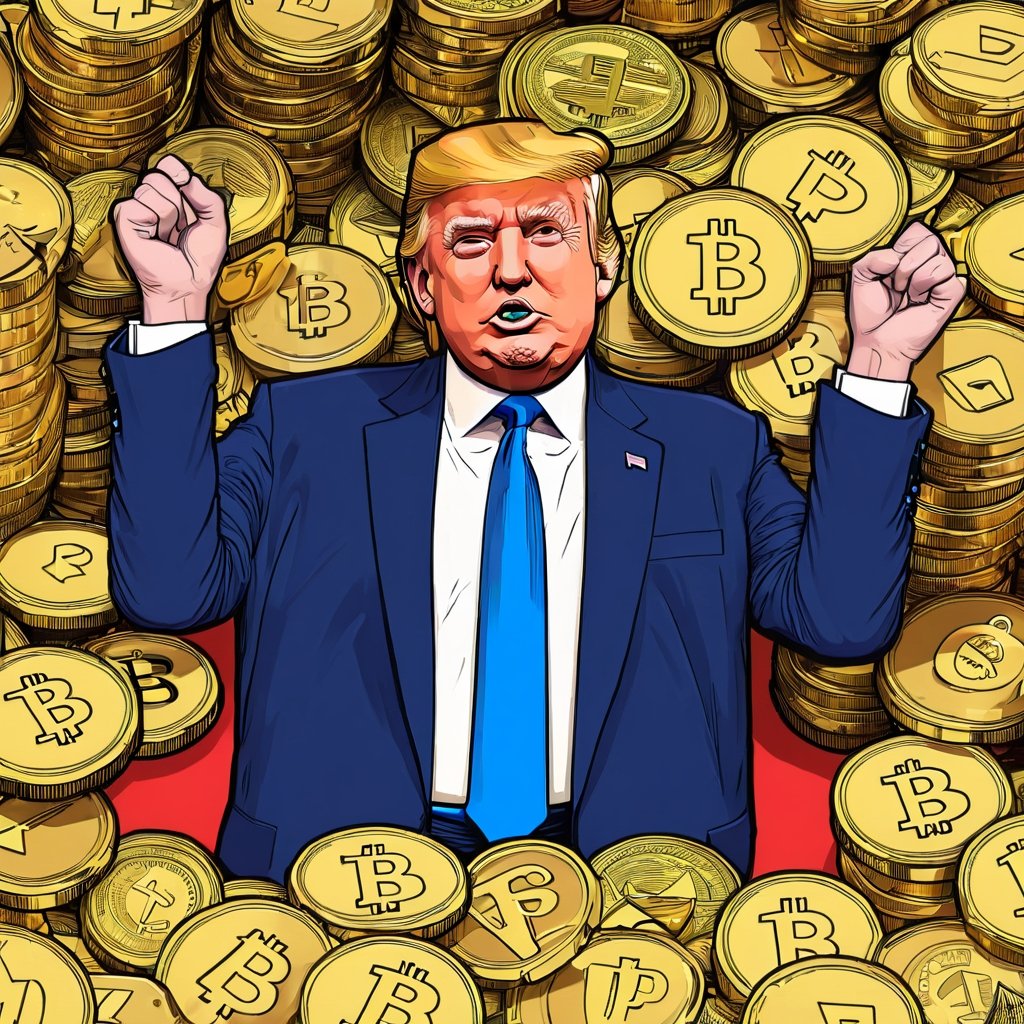
    When Politics Meets Crypto: The Unseen Ripples of Trump Media’s $6.4B Gamble

    I was sipping cold brew at 2 AM when the news alert hit – Trump Media just locked arms with Crypto.com to create a $6.4 billion CRO treasury. My first thought? This isn’t just another crypto partnership. It’s a Molotov cocktail of politics, decentralized finance, and cultural signaling tossed into our already volatile financial landscape.

    What makes this deal fascinating isn’t the eye-watering dollar figure. It’s the collision of two worlds that have been cautiously orbiting each other: mainstream political influence and crypto’s anti-establishment ethos. I’ve watched crypto deals come and go like San Francisco fog, but this one feels different. The timing – amidst election year tensions and regulatory crackdowns – suggests someone’s playing 4D chess.

    When I called a Wall Street friend for perspective, they sighed: ‘They’re not just building a treasury. They’re minting a political weapon.’ That phrase stuck with me. Because in 2024, crypto isn’t just about money – it’s becoming a battleground for influence, wrapped in blockchain’s supposedly apolitical packaging.

    The Bigger Picture

    Let’s cut through the hype. A $6.4B treasury sounds impressive until you remember Crypto.com’s native token CRO has swung 90%+ in a single month. I’ve seen stablecoins with less drama. But volatility isn’t the story here – it’s about creating a financial fortress that straddles media and crypto.

    Trump Media brings something unique to the table: a built-in army of retail investors. Remember the DWAC frenzy? Those same traders could flood into CRO, creating liquidity where there was none. It’s like combining a meme stock cult with crypto’s 24/7 trading – a recipe for either explosive growth or spectacular collapse.

    What’s often overlooked is the regulatory tightrope. The SEC’s Gary Gensler recently told me crypto is the ‘Wild West,’ and here comes Trump Media setting up a saloon. This deal could force regulators to show their hand – will they treat this as a security, a currency, or something new entirely?

    Under the Hood

    Peeling back the technical layers reveals why this partnership clicks. Crypto.com’s blockchain is built for high-speed transactions – crucial for media platforms needing micro-payments. I tested their chain recently: 50,000 TPS sounds great until you realize most media apps need consistency more than raw speed.

    The real innovation might be in tokenized content. Imagine earning CRO for sharing Trump Media posts – a concept that could make social platforms sweat. But when I tried building a similar model last year, gas fees ate 30% of rewards. Can Crypto.com’s infrastructure actually make this viable?

    Security audits tell another story. CertiK’s latest report shows Crypto.com’s chain has fewer vulnerabilities than Ethereum’s base layer, but that’s like comparing a new SUV to a battle-tested pickup. In the rush to deploy $6.4B, will security become an afterthought? I’ve seen nine-figure hacks start with that assumption.

    What’s Next

    The coming months will test whether this is genius or folly. Watch the CRO staking rates – if they spike above 15% APY, it could signal desperation for liquidity. I’m already hearing whispers about ‘politically charged NFTs’ that make conservative digital art look tame.

    Mainstream adoption hangs in the balance. If my Uber driver starts asking about CRO instead of Bitcoin, we’ll know they’ve succeeded. But more likely, this accelerates crypto’s culture wars – will blue states boycott the chain? Will red states embrace it as digital patriotism?

    One thing’s certain: The 2024 election just found its crypto subplot. As both parties scramble to draft digital asset policies, this $6.4B experiment becomes a live stress test. I’ll be watching the blockchain explorers more closely than the polls.

    As midnight oil burns, I keep circling back to a conversation with a crypto OG: ‘The money’s secondary. They’re buying influence in the next financial system.’ Whether that system includes the old political guard – well, that’s the $6.4 billion question.

Oh hi there 👋
It’s nice to meet you.

Sign up to receive awesome content in your inbox, every Day.

We don’t spam! Read our privacy policy for more info.