Tag: Ethereum

  • Ethereum ICO Whale Stakes $120M After Decade-Long Slumber

    Ethereum ICO Whale Stakes $120M After Decade-Long Slumber


    Ethereum ICO Whale Awakens

    A dormant Ethereum ICO whale, holding 40,000 ETH (worth $120M), has become active after over ten years, according to Cryptotimes.io and TradingView. The wallet holder decided to move the entire crypto fortune to a new address and immediately staked it, indicating a strong long-term conviction in Ethereum.

    What is an Ethereum ICO Whale?

    An Ethereum ICO whale is an individual or entity that acquired a large amount of ETH during Ethereum’s Initial Coin Offering in 2014-2015, often at a price below $1 per ETH. As Cryptorank.io explains, these early investors have seen historic returns, with some realizing gains of over 9,500x on their original investment.

    Significance of the Whale’s Activity

    The whale’s decision to stake, rather than sell, $120M worth of ETH is seen as a strong vote of confidence in Ethereum’s long-term viability and its proof-of-stake system. This move is particularly notable given the current market conditions, with some analysts attributing recent price fluctuations to the actions of large crypto whales.

    Contrasting Behavior Among Whales

    While some early investors are selling their holdings, others, like the 0x2dCA wallet, are choosing to stake their ETH. As Financefeeds reports, the top 1% of whales are quietly buying and consolidating their supply, suggesting a split in behavior between long-term insiders and those tied to staking, infrastructure roles, or institutional holdings.

    Market Implications

    The increase in large-address concentration and the decline in exchange balances suggest that ETH is moving into deeper storage rather than being prepared for sale. This could have a positive impact on the market, as it reduces the likelihood of a large sell-off and indicates a growing confidence in Ethereum’s long-term prospects.

    Historical Context

    Ethereum’s Initial Coin Offering in 2014-2015 was a pivotal moment in the project’s history, raising over $18 million in BTC and distributing 80% of the initial supply to over 6,000 wallets. As ETH Kipu notes, this event marked a key milestone in the development of open digital infrastructure and demonstrated the potential for community-driven, decentralized projects.

  • Ethereum Heads Into 2026 With New Momentum

    Ethereum Heads Into 2026 With New Momentum


    Introduction to Ethereum’s New Momentum

    Ethereum is poised to enter 2026 with significant momentum, driven by the upcoming Fusaka upgrade and growing institutional interest. According to Tom Lee, Ethereum could temporarily dip to $2,500 but is expected to rebound to $7,000–$9,000 by early 2026. This bullish outlook is supported by BitMine Immersion Technologies, which aims to hold 5% of Ethereum’s supply.

    The Fusaka Upgrade: A Game-Changer for Ethereum

    The Fusaka upgrade, scheduled for December 3, 2025, will increase block gas limits and introduce PeerDAS, improving scalability, reducing costs, and strengthening Ethereum’s ecosystem. As noted by CCN, this upgrade could lead to a fresh wave of institutional inflows and define the next chapter in ETH’s market story.

    Institutional Interest and Accumulation

    Institutional investors are showing strong confidence in Ethereum’s long-term value. With BitMine Immersion Technologies aiming to hold 5% of the supply, it’s clear that institutional interest is on the rise. As Cryptorobotics notes, the delicate interplay between the Fusaka upgrade and institutional interest will shape Ethereum’s future and solidify its place in the cryptocurrency ecosystem.

    Layer 2 Ecosystem and Future Upgrades

    The Fusaka upgrade is not the only development on the horizon for Ethereum. The upcoming Glamsterdam upgrade in 2026 will focus on further scalability and client efficiency. As CCN explains, Ethereum will then move into the Surge–Verge–Purge–Splurge phases, completing its evolution into a highly scalable, decentralized, and sustainable global network.

    Expert Insights and Analysis

    Experts like Tom Lee are bullish on Ethereum’s long-term prospects, citing the potential for renewed investor confidence and higher price targets in 2026. As Ambcrypto notes, the current market setup reinforces the strategy to ‘buy the fear’ while others panic sell.

    Practical Takeaways

    For investors and enthusiasts, it’s essential to stay informed about the upcoming Fusaka upgrade and its potential impact on Ethereum’s price and ecosystem. As the cryptocurrency landscape continues to evolve, it’s crucial to keep a close eye on developments and adjust strategies accordingly.

  • Fidelity’s On-Chain Cash Fund Surges Past $250M

    Fidelity’s On-Chain Cash Fund Surges Past $250M

    Fidelity’s Tokenized Money-Market Fund on Ethereum

    Fidelity’s tokenized money-market fund on Ethereum has topped $250 million in assets under management (AUM), according to crypto trader Cryptorand, as reported by Coinpaper. The fund, known as Fidelity Digital Interest Token (FDIT), is a tokenized share class of Fidelity’s Treasury money market fund, offering on-chain exposure to U.S. Treasury securities and other short-term government-backed instruments.

    Growth and Performance

    The total on-chain value of real-world assets (RWAs) is now over $36 billion, more than doubling since the start of this year, with Ethereum dominating, holding $11.6 billion in RWAs, or over 63.7% of the sector’s total, as per The Defiant. The fund’s AUM has grown 15% in the past month, with the represented asset value reaching over $266.2 million, according to data from RWAxyz.

    Market Implications and Trends

    The growth of Fidelity’s on-chain cash fund is a significant indicator of the increasing adoption of blockchain technology in traditional finance. As Ethereum continues to surge, with its price reclaiming $3,000, the demand for on-chain financial products is likely to increase, driving further growth in the sector, as noted by CFGi.io.

    Expert Insights and Analysis

    The success of Fidelity’s tokenized fund on Ethereum highlights the potential for traditional financial institutions to leverage blockchain technology to offer innovative products and services. As the market continues to evolve, it is likely that we will see more traditional financial institutions entering the on-chain space, driving further growth and adoption.

    According to RWA.xyz, the market consists of tokenized U.S. Treasuries, bonds, and private credit, with private credit making up more than half of the sector’s market capitalization, accounting for $18.7 billion. This trend is expected to continue, with more investors seeking on-chain exposure to traditional assets.

    Conclusion and Future Outlook

    In conclusion, Fidelity’s on-chain cash fund surging past $250M is a significant milestone for the adoption of blockchain technology in traditional finance. As the market continues to grow and evolve, it is likely that we will see more innovative on-chain products and services, driving further adoption and growth in the sector.

  • Yearn Finance yETH Hack: How $11M Was Drained in Minutes

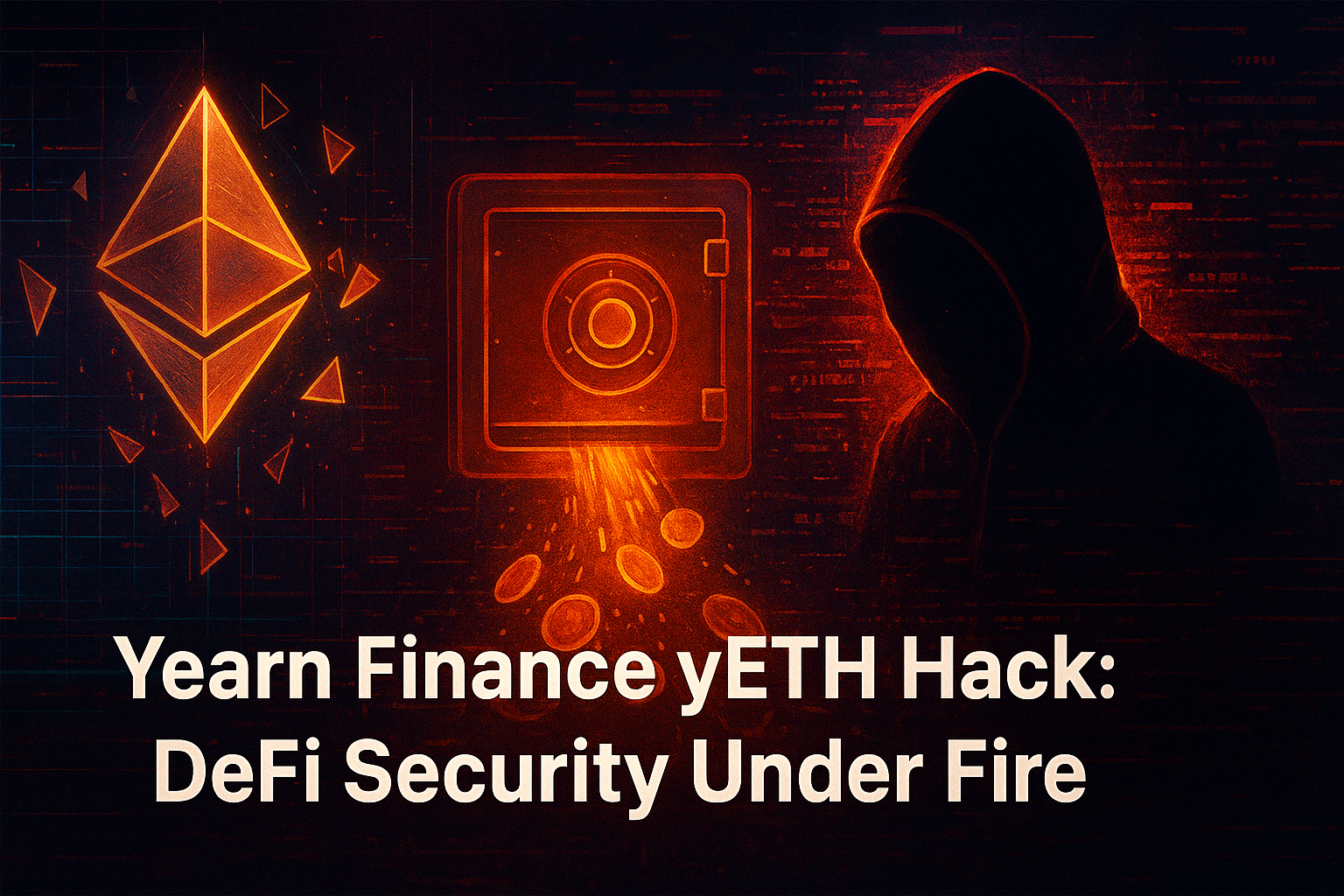
    Yearn Finance yETH Hack: How $11M Was Drained in Minutes

    Another day, another DeFi breach — but this one raises deeper questions about smart-contract safety, outdated code, and how attackers continue to exploit systemic weaknesses.

    🚨 What Happened to Yearn Finance’s yETH?

    Yearn Finance’s yETH product was hit by a major exploit triggered by an unlimited minting vulnerability, allowing attackers to drain the entire liquidity pool in one transaction.

    Key facts at a glance

    • Attackers minted near-infinite yETH tokens
    • Drained roughly $11M worth of assets from Balancer pools
    • Roughly 1,000 ETH (~$3M) routed through Tornado Cash
    • Yearn confirmed V2 and V3 vaults are safe and unaffected
    • Exploit involved newly deployed contracts that self-destructed afterward

    The issue was first spotted by on-chain watchers noticing abnormal activity across LST projects like Yearn, Rocket Pool, Origin, and Dinero — prompting immediate alerts across the ecosystem.

    🧩 What Exactly Was Exploited?

    yETH is an index token representing a basket of Ethereum Liquid Staking Derivatives (LSTs).
    The vulnerability existed in contracts that weren’t upgraded in time, allowing the attackers to:

    • Manipulate minting logic
    • Inflate supply
    • Drain Balancer pools using artificially minted tokens

    The big concern?
    These contracts were still in use despite known risks from past incidents.

    ⚡ Community Reactions: Concern Over Outdated Contracts

    Reaction across X and DeFi forums was mixed:

    Common community concerns

    • Why was a legacy contract still active?
    • How did a minting logic loophole go unnoticed?
    • Why are major platforms still depending on outdated architecture?

    Yearn’s history makes the scrutiny stronger — the platform previously suffered an $11M yDAI vault hack in 2021, and a faulty script wiped 63% of a treasury position in 2023.

    📉 November Was Brutal for Crypto Security

    Blockchain security firm CertiK revealed staggering numbers for November:

    Crypto loss breakdown

    • $172M total losses detected
    • $127M confirmed stolen after recoveries
    • $135M lost in DeFi incidents alone
    • $29.8M in exchange hacks

    The Balancer cross-chain exploit topped the list with $116M drained, ranking among 2025’s largest breaches.

    🔍 What This Means for the Future of DeFi Security

    The attack on yETH highlights three ongoing industry weaknesses:

    1. Legacy smart contracts that remain active long after security standards evolve
    2. Complex dependencies (LSTs, Balancer integrations, index tokens) that broaden attack vectors
    3. Increasing attacker sophistication, including contract self-destruction and cryptographic mixers

    As DeFi grows more interconnected, these vulnerabilities become more expensive — and more frequent.

    🧠 AI Satoshi’s Analysis

    This hack underscores that smart contracts, when designed without airtight controls on minting logic, can be exploited in a single irreversible transaction. Even established DeFi platforms remain vulnerable if legacy contracts and dependencies are not continuously audited and upgraded. The attacker’s ability to self-destruct contracts and route funds through obfuscation tools highlights the asymmetry between offensive capability and defensive preparedness when financial trust relies solely on code.

    📢 Final Thoughts

    The Yearn yETH incident adds to a growing list of reminders that DeFi isn’t just innovative — it’s fragile.
    Better audits, faster upgrades, and stronger minting controls are no longer optional.

    🔔 Follow @casi_borg for AI-powered crypto commentary

    🎙️ Tune in to CASI x AI Satoshi for deeper blockchain insight
    📬 Stay updated: linktr.ee/casi.borg

    💬 Would you like me to cover more DeFi exploits or AI-Satoshi analyses next?

    ⚠️ Disclaimer: This content is generated with the help of AI and is intended for educational and experimental purposes only. Not financial advice.

  • Ethereum’s Fusaka Upgrade: What to Expect and Its Impact

    Ethereum’s Fusaka Upgrade: A New Era for Scalability

    Ethereum’s Fusaka upgrade is set to arrive next week, bringing with it a host of improvements to the network’s scalability, efficiency, and affordability. According to U.Today, the upgrade will increase the available gas limit by 200%, making it possible for the network to handle more transactions and reduce gas fees.

    What is Fusaka and How Does it Work?

    Fusaka is a major network update that focuses on boosting data throughput, improving Layer-2 performance, and reducing the hardware demands on node operators. As explained by Bitget, the upgrade introduces PeerDAS, or Peer Data Availability Sampling, which makes data more accessible for all Ethereum-based L2s. This, in turn, will strengthen Ethereum’s long-term capacity while keeping the network decentralized and efficient.

    Impact on Ethereum’s Ecosystem

    The Fusaka upgrade is expected to have a significant impact on Ethereum’s ecosystem. Finance Yahoo notes that the upgrade will raise Ethereum’s block gas limit to 60 million units, boosting transaction capacity and reducing gas costs. This will make it more attractive for developers to build on the Ethereum network, leading to increased adoption and growth.

    Expert Insights and Technical Analysis

    According to Phemex, the Fusaka upgrade will transform Ethereum into a faster, cheaper, and more efficient blockchain, particularly for L2 networks. The introduction of PeerDAS, Verkle Trees, and a 150M gas limit will address scalability and cost challenges while reinforcing decentralization. Margex also notes that the upgrade will enable the network to handle more transactions and reduce congestion issues caused by Ethereum’s growing popularity.

    Conclusion and Future Implications

    In conclusion, the Fusaka upgrade is a significant milestone for Ethereum, marking a new era for scalability and efficiency. As the network continues to evolve, we can expect to see increased adoption, growth, and innovation. The future implications of this upgrade are vast, and it will be exciting to see how it shapes the Ethereum ecosystem and the broader crypto market.

  • Vitalik Buterin’s 256 ETH Donation Sparks Privacy Revolution

    Vitalik Buterin’s 256 ETH Donation Sparks Privacy Revolution

    Vitalik Buterin’s Recent Move

    Vitalik Buterin, the founder of Ethereum, has made a significant move by donating 256 ETH to two privacy-focused messaging platforms, Session and SimpleX Chat. This donation, valued at approximately $800,000, highlights Buterin’s commitment to advancing privacy-preserving communication.

    Why Privacy Matters

    As Cryptodaily notes, Buterin’s action could signal the start of a new trend in the crypto space, with a focus on privacy and security. With regulatory efforts like the EU’s Chat Control proposal on the rise, the need for private messaging solutions has never been more pressing.

    The Projects Behind the Donation

    Session and SimpleX Chat are two decentralized messaging platforms that prioritize privacy by removing common identifiers like phone numbers and user IDs from messaging services. As Bitcoinist reports, these platforms are working towards permissionless account creation and metadata privacy, two critical areas of focus for Buterin.

    Technical Challenges Ahead

    Despite the progress made by these platforms, technical hurdles like decentralization, multi-device security, and resilience against cyberattacks still need to be addressed. As Cryptorank explains, the donation will provide significant resources for both projects to accelerate development and tackle these core challenges.

    Market Impact and Future Implications

    The donation has sparked curiosity and speculation within the crypto community, with many investors and enthusiasts seeing this as a precursor to new trends in the crypto space. As Cryptopotato notes, Buterin’s backing comes at a time when regulatory efforts have raised concerns over the future of private messaging.

  • Crypto Value Capture Evolution And 2026 Market Reset

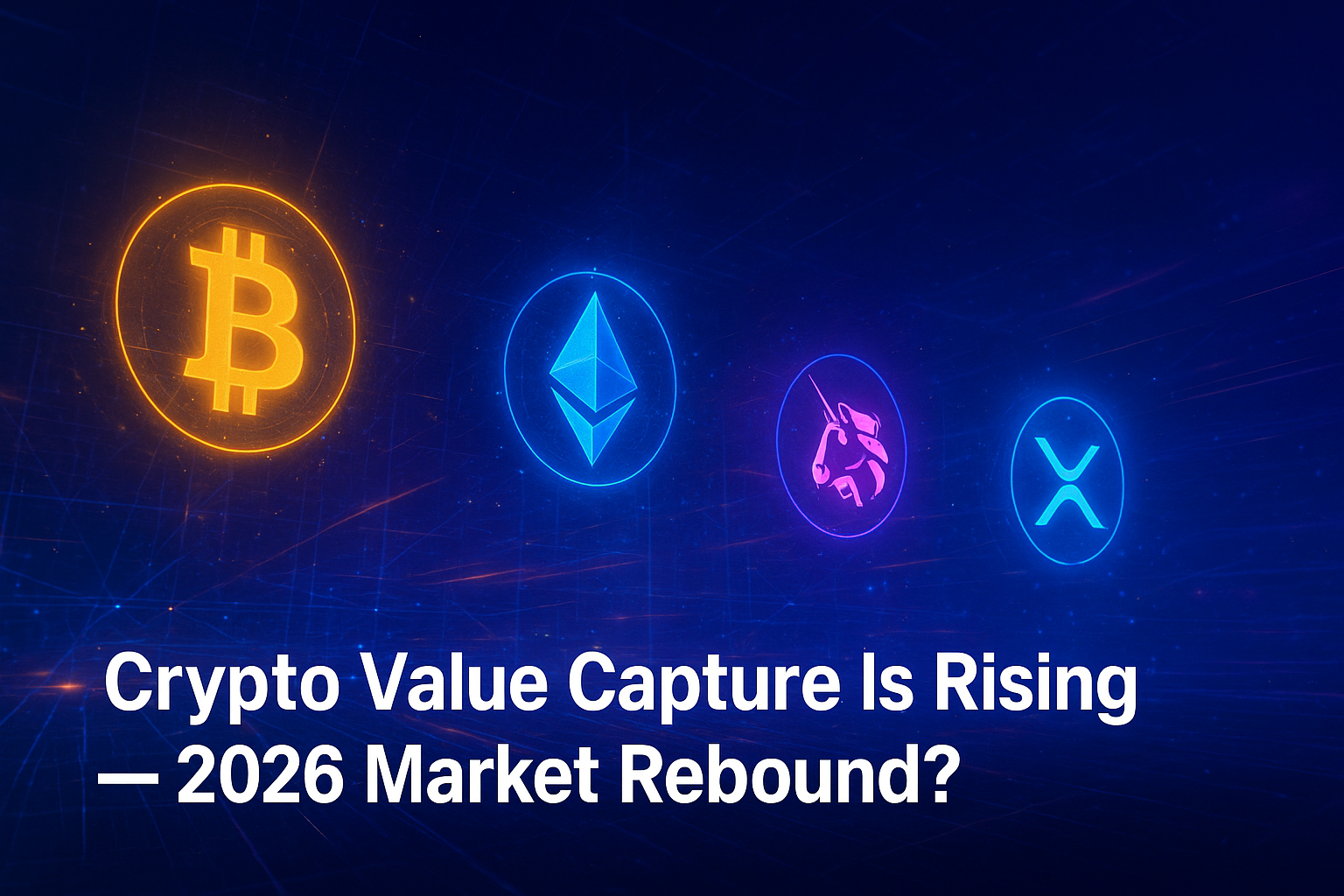
    Crypto Value Capture Evolution And 2026 Market Reset


    Crypto Market Shifts

    The crypto market may seem chaotic, but powerful structural shifts are strengthening the next bull cycle, as noted by Casi Borg. Ethereum’s upcoming Fusako upgrade and Uniswap’s value-capture proposal are key examples of this evolution.

    Token Value Capture

    According to Hougan, Ethereum’s Fusako upgrade could significantly increase token value capture, potentially fueling a 2026 rebound. This shift in value capture is crucial for the crypto market’s future.

    Market Impact

    The expected surge in crypto token value capture may lead to a price surge in 2026, as Markets.com suggests. However, it’s essential to remember that trading CFDs involves significant risk and could result in capital loss.

    Expert Insights

    Arthur Hayes believes that the 2026 bull run could start with a specific pattern, as seen in his video. Understanding these patterns and shifts is vital for investors and enthusiasts alike.

    In conclusion, the crypto value capture is evolving, with potential significant impacts on the 2026 market. It’s crucial to stay informed and adapt to these changes.

  • How Crypto Value Capture Is Evolving — And Why 2026 Could Reset the Market

    How Crypto Value Capture Is Evolving — And Why 2026 Could Reset the Market

    The crypto market may look chaotic today, but behind the noise, powerful structural shifts are quietly strengthening the next bull cycle. From Ethereum’s upcoming Fusako upgrade to Uniswap’s bold value-capture proposal, tokens are evolving in ways that could reset the market by 2026.

    Why Token Value Capture Matters Now

    A growing number of industry leaders believe crypto tokens are entering a new era of value efficiency. Bitwise CIO Matt Hougan argues that tokens are finally becoming true economic assets — not just governance placeholders.

    According to Hougan, this shift is fueled by:

    • Regulatory clarity, allowing protocols to adopt stronger economic design
    • On-chain upgrades improving alignment between network activity and tokenholder benefit
    • Investor-friendly mechanisms such as burns, fee redirects, and staking economics

    In short: tokens are capturing more value than ever before, and the market has barely begun pricing it in.

    Uniswap’s Proposal Could Transform UNI Into a Top 10 Token

    Earlier this month, Uniswap’s UNI token experienced a sharp rally after a major proposal that could fundamentally change its economics.

    Key elements of the proposal include:

    • Introducing a protocol-level fee switch
    • Using ~16% of all trading fees to burn UNI
    • Launching Protocol Fee Discount Auctions to boost liquidity provider returns

    Hougan sees this as one of the clearest examples of value capture evolution:

    “Uniswap is great, but activity on Uniswap didn’t benefit UNI tokenholders — until now.”

    If the vote passes, Hougan believes UNI could eventually enter the top 10 by market cap, driven by:

    • Reduced supply
    • Direct alignment between trading activity and UNI’s value
    • Increased investor confidence

    Ethereum’s Fusako Upgrade: A Quiet Catalyst for 2026

    While much of the market focuses on price volatility, Ethereum is preparing for a major execution-layer upgrade — Fusako, expected to go live on December 3.

    The upgrade introduces improvements such as:

    • Enhanced execution layer performance
    • More efficient staking economics
    • Better long-term token value capture mechanisms

    Hougan calls Fusako “an under-appreciated catalyst” — one that could position ETH as the leader of the next rebound.

    Why it matters:

    • Stakers may see more sustainable returns
    • Network efficiency boosts economic activity
    • Improved value capture strengthens ETH as a store of network value

    XRP: Staking Discussions Could Redefine Token Economics

    The XRP community is also exploring significant changes that could increase value capture.

    A key idea gaining traction: introducing staking rewards.

    If implemented, staking could:

    • Create new yield opportunities
    • Reduce circulating supply
    • Boost active participation in the network

    Hougan believes this signals a broader shift:

    “The level of value capture in digital assets is up only from here.”

    Why This Matters for 2026

    Across the industry, a pattern is emerging:

    • Tokens are becoming economically stronger
    • Networks are becoming more aligned with their holders
    • Value is flowing back to participants rather than leaking out

    As protocols evolve from governance tokens to active economic engines, 2026 could become a pivotal year where the market finally recognizes this structural shift.

    AI Satoshi’s Analysis

    When a token gains mechanisms for direct value capture — fee burns, staking returns, or improved economic design — it shifts from a passive governance asset to an active participant in its own monetary ecosystem. Regulatory clarity reduces design constraints, allowing protocols to incorporate economic incentives that were previously avoided. Ethereum’s Fusako upgrade and Uniswap’s proposed fee redirection illustrate how improved alignment between network activity and tokenholder benefit can strengthen long-term resilience. Such changes often drive renewed market confidence because incentives become transparent and measurable.

    Final Thoughts

    2026 may not be just another cycle — it could be the first time crypto’s economic design truly matures.

    Stay Connected

    🔔 Follow @casi_borg for AI-powered crypto commentary
    🎙️ Tune in to CASI x AI Satoshi for deeper blockchain insight
    📬 Stay updated: linktr.ee/casi.borg

    💬 Would you like a breakdown of any specific token’s value-capture model?

    ⚠️ Disclaimer: This content is generated with the help of AI and intended for educational and experimental purposes only. Not financial advice.

  • Bit Digital Sees 33% Revenue Growth and Expands Ethereum Holdings

    Bit Digital Sees 33% Revenue Growth and Expands Ethereum Holdings

    Introduction to Bit Digital’s Q3 Performance

    Bit Digital, a leading cryptocurrency mining company, has reported a significant increase in its revenue for the third quarter of 2025. According to the company’s financial results, total revenue for the quarter was $30.5 million, representing a 33% increase compared to $22.8 million in the same period last year. This growth was primarily driven by the expansion of its Ethereum holdings and staking activities.

    Expansion of Ethereum Holdings

    As reported by Proactive Investors, Bit Digital has been rapidly expanding its Ethereum (ETH) position, with approximately 122,000 ETH held at the end of September and over 153,000 ETH by the end of October. This represents a fivefold increase since June, demonstrating the company’s strategic focus on Ethereum.

    Staking Revenue Growth

    The company’s staking revenue saw a remarkable increase, reaching about $2.9 million in the third quarter, up from $400,000 in the previous quarter. As TipRanks noted, this growth was driven by the large stake balance and higher realized ETH price. Bit Digital’s CEO, Sam Tabar, highlighted that staking income will become the main engine of the company’s results as its ETH position continues to grow.

    Financial Performance and Outlook

    Bit Digital’s financial performance for the quarter was strong, with a mining gross margin of 32% and an active hash rate of about 1.9 exahash. The company also reported a digital asset valuation gain of $168 million, contributing to a net income of $150.9 million. As Investing.com reported, the company’s disciplined approach to capital allocation and its focus on Ethereum-centric operations are expected to drive future growth.

    Market Impact and Future Implications

    The growth of Bit Digital’s Ethereum holdings and staking activities has significant implications for the cryptocurrency market. As Timothy Sykes noted, the company’s strategic focus on Ethereum underscores its commitment to expanding its presence in the digital asset space. The increase in staking revenue and the expansion of Ethereum holdings are expected to contribute to the company’s future growth and profitability.

    Conclusion

    In conclusion, Bit Digital’s Q3 performance was strong, with significant growth in revenue and Ethereum holdings. The company’s focus on Ethereum-centric operations and its disciplined approach to capital allocation are expected to drive future growth. As the cryptocurrency market continues to evolve, Bit Digital’s strategic positioning and commitment to innovation are likely to have a positive impact on its financial performance and market presence.

  • BlackRock Registers Staked Ethereum Trust: A New Era

    BlackRock Registers Staked Ethereum Trust: A New Era


    Introduction to BlackRock’s Staked Ethereum Trust

    BlackRock, the world’s largest asset manager, has taken a significant step towards entering the staked ether ETF market by registering the iShares Staked Ethereum Trust in Delaware. This move signals the company’s intent to seek approval for a yield-bearing ether product, as reported by CoinDesk and dlnews.

    What Does This Mean for Ethereum and the ETF Market?

    The registration of the iShares Staked Ethereum Trust is a preliminary step and not yet a formal application under the Securities Act of 1933. However, it indicates that BlackRock is preparing to join the race to launch a staked ether ETF, following in the footsteps of VanEck, which has also registered a similar trust tied to Lido’s staked ETH, as The Defiant notes.

    BlackRock’s Existing Ethereum ETF and Market Presence

    BlackRock’s ETHA is the largest Ethereum ETF, with over $13 billion in assets under management. The company’s move to register a staked Ethereum trust suggests that it is looking to expand its crypto offerings and provide investors with a yield-bearing product. As Unchained points out, this could be a significant development in the Ethereum staking market, which has seen steady growth, with around 35.7 million ETH locked in the network, worth $108 billion.

    Regulatory Clarity and the Future of Staked Ethereum ETFs

    The SEC has said that some crypto staking products aren’t securities, which could pave the way for BlackRock and other issuers to launch staked Ethereum ETFs. However, as Yahoo Finance notes, BlackRock still needs to submit a Form S-1 to the U.S. Securities and Exchange Commission before the fund can move forward.

    Conclusion and Future Implications

    The registration of the iShares Staked Ethereum Trust is a significant development in the Ethereum ETF market and could have far-reaching implications for investors and the broader crypto industry. As CoinDesk and other sources suggest, this move could signal the start of a new era in Ethereum investing, with staked ether ETFs potentially offering investors a new way to earn yield from their ether holdings.

Oh hi there 👋
It’s nice to meet you.

Sign up to receive awesome content in your inbox, every Day.

We don’t spam! Read our privacy policy for more info.