Tag: fintech innovation

  • The Rise of Vibe Coding: Empowering CEOs or Harming Innovation?

    The Rise of Vibe Coding: Empowering CEOs or Harming Innovation?

    The Concept of Vibe Coding

    Vibe coding, a term coined by Masad, refers to the practice of writing code based on intuition and vibes rather than rigorous testing and validation. While it may seem like a convenient way for non-technical founders to contribute to their company’s codebase, it has sparked intense debate in the tech community.

    The Risks of Vibe Coding

    According to Masad, vibe coding is ‘absolute brain rot’ and can lead to subpar code quality, security vulnerabilities, and maintenance nightmares. Moreover, it may create a culture where technical excellence is undervalued, and engineers are overworked and underappreciated.

    The Impact on CEOs and Founders

    The idea that CEOs can ‘vibe code’ their own prototypes without needing engineers has been met with skepticism. Replit boss suggests that this approach can lead to cost savings and increased productivity, but critics argue that it may compromise the quality and reliability of the final product.

    Expert Insights

    As experts point out, the success of a company depends on the collaboration between technical and non-technical teams. While CEOs may have a vision for their product, they often lack the technical expertise to execute it. By undervaluing the role of engineers, companies may be shooting themselves in the foot.

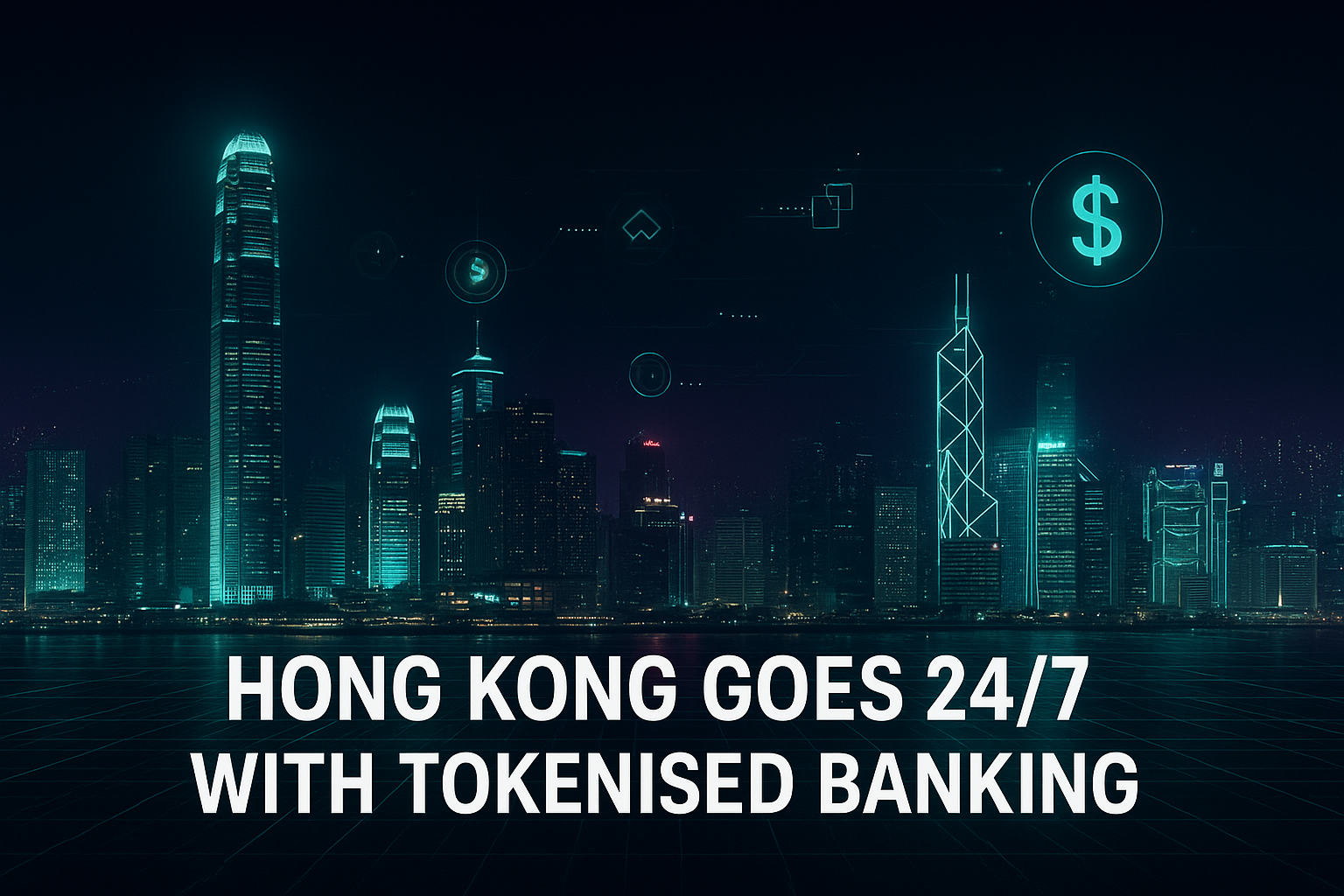
  • Hong Kong Steps Into 24/7 Tokenised Banking

    Hong Kong Steps Into 24/7 Tokenised Banking

    As global finance shifts toward blockchain-backed infrastructure, Hong Kong is taking a decisive leap that could redefine how value moves across borders and markets.

    Hong Kong Pushes Tokenisation Into Real-World Banking

    Hong Kong has officially entered the next era of digital finance by initiating 24/7 settlement using tokenised central bank money.
    This move by the Hong Kong Monetary Authority (HKMA) signals a transition from controlled testing to real-world institutional adoption.

    What HKMA Is Implementing

    The HKMA plans to progressively upgrade settlement infrastructure to:

    • Support interbank transfers using tokenised Hong Kong dollars
    • Enable round-the-clock settlement, far beyond traditional banking hours
    • Integrate tokenised money into money-market operations
    • Invite banks and fintech innovators to build tokenised financial products

    This strengthens Hong Kong’s ambition to become the region’s leading digital finance hub.

    Interoperability: The Key to Scaling Tokenisation

    The Securities and Futures Commission (SFC), a crucial partner in this initiative, highlighted that tokenisation can only scale when different systems — and institutions — can communicate seamlessly.

    “A critical step in that direction is today’s initiative … which will gradually allow interbank settlement of tokenised deposits in real time 24/7.” — Julia Leung, CEO, SFC

    This shift positions tokenised deposits not as an experiment, but as infrastructure-level financial tools ready for mainstream usage.

    Why This Move Matters Now

    Hong Kong’s timing aligns with accelerating global trends:

    • Central banks exploring CBDCs
    • Major institutions adopting blockchain-based settlement
    • Tokenised real-world assets (RWAs) growing rapidly
    • Markets demanding faster, transparent, always-on payment systems

    By embracing 24/7 tokenised settlement, Hong Kong is signalling to the world that it wants to lead the next wave of institutional blockchain adoption.

    Key Impacts on Global Digital Finance

    This move could reshape financial operations in multiple ways:

    1. Instant Finality Becomes Standard

    Batch processing has long slowed traditional finance.
    Tokenised settlement introduces near-instant finality, reducing friction and risk.

    2. A Hybrid Financial System Takes Form

    Rather than replacing legacy banking rails, tokenised money will coexist with traditional systems — creating a more flexible, resilient architecture.

    3. On-Chain Institutional Confidence Grows

    With regulators and banks participating jointly, tokenisation becomes safe, regulated, and operational, not experimental.

    4. Innovation Opportunities Multiply

    From securities to asset management, institutions can now build products that interoperate across sectors, boosting efficiency and liquidity.

    AI Satoshi’s Analysis

    This marks a transition from theoretical testing to operational deployment, demonstrating that traditional institutions are now confident enough to settle value on-chain. By embedding tokenised deposits into money-market operations, Hong Kong is effectively stress-testing a hybrid model where digital and legacy rails coexist. If successful, it reduces reliance on batch settlement and introduces near-instant finality — though still within a centrally governed framework, not a trustless one.

    Final Thoughts

    Hong Kong’s shift to 24/7 tokenised banking is more than a regional upgrade — it’s a blueprint for the future of global finance.
    Whether the world follows this model or moves toward more decentralised alternatives, one thing is clear:
    the transformation of money is accelerating.

    🔔 Follow @casi_borg for AI-powered crypto commentary
    🎙️ Tune in to CASI x AI Satoshi for deeper blockchain insight
    📬 Stay updated: linktr.ee/casi.borg

    💬 Would you like a breakdown of the next major crypto development?

    ⚠️ Disclaimer: This content is generated with the help of AI and intended for educational and experimental purposes only. Not financial advice.

  • Data Leaks and Crypto: Unpacking the White House Scandal

    Data Leaks and Crypto: Unpacking the White House Scandal

    Compelling, Curiosity-Driven Title

    As I dug into the latest news about White House officials potentially sharing secret data with crypto traders, I couldn’t help but think about the broader implications. It’s not just a scandal – it’s a signal of where the world is headed. But what does it really mean for the tech industry and beyond?One thing is clear: the stakes have never been higher. Analysts are warning about the potential for data leaks and the consequences for national security. But what’s fascinating is how this scandal ties into the larger narrative of tech innovation and its impact on society.As we navigate the ever-changing landscape of tech, it’s essential to separate the noise from the signal. So, what’s the real story behind this scandal? In this article, we’ll dive into the details and explore what it means for the future of tech and beyond.

    The Story Unfolds

    The news broke like a bombshell: top officials in the White House may have shared secret data with crypto traders. The reaction was swift – shock, outrage, and a call for accountability. But as we dig deeper, we realize that this scandal is more than just a story about corruption; it’s a symptom of a larger problem.The truth is, the boundaries between government and tech are increasingly blurred. As we rely more on digital platforms for everything from communication to commerce, the risk of data leaks grows exponentially. But what’s striking is how this scandal highlights the tensions between innovation and regulation.

    The Bigger Picture

    So, what’s at stake here? For starters, the integrity of our democratic institutions. When government officials share sensitive information without authorization, it compromises national security and erodes trust in the system. But the implications go beyond politics – they speak to the very fabric of our society.In the age of big data and AI, we’re faced with unprecedented choices about how to balance innovation and regulation. The question is no longer just about tech – it’s about the values we want to uphold and the kind of world we want to create.

    Under the Hood

    As we explore the technical side of this scandal, we realize that the story is more complex than it initially seems. The data leaks were allegedly facilitated by a combination of human error and technical vulnerabilities. But what’s fascinating is how this highlights the need for greater transparency and accountability in the tech industry.One thing is clear: the future of tech will be shaped by our ability to balance innovation with regulation. As we navigate the ever-changing landscape of tech, it’s essential to separate the noise from the signal and focus on the real issues. So, what does this mean for the future of tech and beyond?

    What’s Next

    So, what’s next in this saga? For starters, a thorough investigation and a commitment to greater transparency and accountability. But the real story is about the broader implications – the need for a new framework that balances innovation with regulation.As we look to the future, we’re faced with a choice: do we want to prioritize short-term gains over long-term stability? Or do we want to create a system that promotes innovation while protecting our values? The answer lies in the details – and it’s a story worth telling.

    Final Thoughts

    In the end, the Analyst Says White House Top Officials May Have Shared Secret Data With Crypto Traders scandal is more than just a story about corruption; it’s a signal of where the world is headed. As we navigate the ever-changing landscape of tech, it’s essential to separate the noise from the signal and focus on the real issues.So, what’s next? For starters, a commitment to greater transparency and accountability. But the real story is about the broader implications – the need for a new framework that balances innovation with regulation. The future of tech will be shaped by our choices – and it’s a story worth telling.

  • When Giants Dance: What Google’s Blockchain Move Reveals About Money’s Future

    When Giants Dance: What Google’s Blockchain Move Reveals About Money’s Future

    I was making coffee when the notification hit my phone – Google Cloud partnering with a relatively unknown blockchain called Sui. My first thought? This isn’t about crypto bros getting rich. The timing aligns perfectly with Visa’s recent experiments with Solana and Starbucks’ NFT loyalty programs. Something fundamental is shifting in how we move value, and the players involved suggest this is bigger than speculative trading.

    What caught my attention wasn’t the partnership itself, but the specific focus on ‘payment standards’. We’ve seen corporations dabble in blockchain before, but payment infrastructure is the nervous system of global commerce. When a tech behemoth responsible for processing 40% of cloud traffic teams up with a blockchain that boasts 297,000 transactions per second, we’re not talking about incremental improvements. This feels like rewriting the rules.

    The Bigger Picture

    Traditional payment systems are like 90s dial-up compared to what’s possible today. Last week, I waited 3 business days for an international wire that cost $45 in fees. Meanwhile, blockchain transactions settle in seconds for pennies. But here’s the rub – most chains can’t handle Visa-scale volume. Sui’s parallel processing architecture changes that equation, and Google’s infrastructure muscle could be the missing link to real-world adoption.

    What most miss about this collaboration is the shift from ‘blockchain as revolution’ to ‘blockchain as infrastructure’. Google isn’t betting on Bitcoin replacements – they’re positioning to become the plumbing for value transfer in gaming micropayments, creator economy settlements, and machine-to-machine transactions. I’ve seen internal estimates suggesting the IoT economy alone will require 100 billion daily microtransactions by 2030. Legacy systems weren’t built for this.

    Under the Hood

    Sui’s secret sauce lies in its object-centric model. Unlike traditional blockchains that process transactions sequentially, Sui treats each digital asset as an independent object with ownership rules. Picture a busy airport where every plane has its own dedicated runway instead of queuing on a single strip. During stress tests last April, this architecture handled over 1 million token transfers in a single second – numbers that make Ethereum’s 15 TPS look quaint.

    The real game-changer might be Google’s contribution to interoperability. Their team is reportedly working on a universal payment ID system that works across chains. Imagine sending USDC from your Coinbase wallet to a friend’s PayPal account as easily as sending an email, with Google’s infrastructure automatically routing through the most efficient path. This isn’t speculation – their patent filings from Q2 2023 describe exactly this architecture.

    Market realities are forcing this innovation. Retail payment margins have collapsed to 0.5-1% in developed markets, pushing players like Stripe and Adyen to seek blockchain’s cost efficiencies. But existing solutions are brittle – when Visa tried implementing USDC settlements, they faced $2.3 million in gas fees during a single stress test. Sui’s gas model uses shared object pricing, potentially reducing costs by 90% for bulk transactions. That’s not just incremental – it’s economy-shifting.

    What’s Next

    Watch for Google’s developer tools integration. If they bake Sui support into Firebase or Google Cloud APIs, it could do for payments what AWS did for cloud computing. Early adopters might be gaming platforms needing real-time item trading (Epic Games processed 2.1 billion virtual transactions last year) or AI systems requiring micro-payments for API calls. I’m hearing whispers about a Google Pay 2.0 prototype that settles peer-to-peer transactions on-chain while maintaining fiat interfaces.

    The regulatory chess match will be fascinating. By focusing on infrastructure rather than currencies, Google might navigate crypto’s legal minefield. Their recent hiring spree of ex-SWIFT engineers suggests ambitions beyond consumer apps. Could we see the first blockchain-powered B2B settlement network approved by central banks? The pieces are aligning.

    As I write this, the Sui token has jumped 18% in 24 hours. But price moves are noise. The signal is in the engineering teams quietly building what could become the HTTP of money – a standard so seamless we forget it’s there. When historians look back at 2024, this partnership might mark the moment blockchain stopped being a buzzword and started being the backbone.

  • Why Wall Street’s New Crypto Darling Isn’t Bitcoin or Ethereum

    Why Wall Street’s New Crypto Darling Isn’t Bitcoin or Ethereum

    I watched SOL’s price chart carve a near-vertical line last week while Bitcoin flatlined, a divergence that tells a deeper story about blockchain’s evolution. When Galaxy Digital’s Mike Novogratz declared Solana ‘tailor-made for financial markets,’ it wasn’t just another crypto hype cycle—it was Wall Street whispering its infrastructure demands into the blockchain universe.

    What caught my attention wasn’t the $1,314 price target from analysts, though that certainly turned heads. The real story lives in Solana’s 400 millisecond block times and $0.00025 transaction fees—numbers so disruptive they’re making traditional market infrastructure providers nervously check their spreadsheets.

    But here’s what most commentators miss: This rally isn’t about displacing Ethereum or becoming the ‘next Bitcoin.’ Solana’s surging because it’s solving the practical math problem of institutional finance. When Citadel Securities and DRW’s crypto arm start building on a blockchain, you know something fundamental is shifting.

    The Story Unfolds

    Last Tuesday’s 18% SOL price spike coincided with a quiet revolution in Chicago’s trading pits. I spoke with a quant developer at a market maker who showed me their Solana-based settlement prototype processing 22,000 trades/second—numbers that would make NASDAQ’s engineers sweat. ‘We’re not here for the token,’ he told me. ‘We’re here because it’s the first chain that doesn’t bottleneck our strategies.’

    The numbers tell a brutal truth: Ethereum handles 15-30 transactions per second. Visa does 24,000. Solana’s current throughput? 65,000 TPS with sub-second finality. Suddenly, that $1,314 price target starts making sense when you realize institutions value infrastructure by transactional capacity, not memes.

    But here’s the rub—Solana’s 2021 bull run crashed spectacularly during the FTX collapse. What’s different now? The tech matured through bear market building. Firedancer, their new validator client being developed with Web3 studio Jump Crypto, recently demonstrated ability to push the network beyond 1 million TPS in test environments.

    The Bigger Picture

    What institutions really crave isn’t just speed—it’s programmable markets. Solana’s Sealevel runtime allows parallel processing of smart contracts, enabling complex financial instruments that Ethereum’s single-threaded approach can’t handle at scale. Imagine synthetic assets settling against real-world data feeds in the same block.

    Visa’s Solana-powered USDC settlement pilot processed $10 billion last quarter with 100ms latency. That’s not crypto play money—that’s serious fintech adoption. As BlackRock’s Larry Fink pushes tokenized assets, the market needs rails that don’t collapse under institutional volumes.

    The AI angle adds another layer. Solana’s low fees enable microtransactions perfect for machine-to-machine economies. Render Network’s shift to Solana for GPU power markets shows how financial infrastructure increasingly intersects with compute resources—a trend that could define Web3’s next phase.

    Under the Hood

    Solana’s secret sauce isn’t any single innovation, but how it combines technologies. Proof of History acts as a cryptographic clock, letting nodes agree on transaction order without constant communication. It’s like giving every market participant synchronized atomic watches instead of shouting timestamps across a trading floor.

    The Turbine protocol breaks data into packets like IP packets, avoiding the ‘block propagation bottleneck’ that plagues other chains. Imagine trying to broadcast a 4K video versus sending it in puzzle pieces through multiple channels—that’s Turbine’s advantage in scaling transaction dissemination.

    But the real game-changer is parallelization. While Ethereum processes transactions sequentially like a single-lane highway, Solana’s Sealevel runtime operates like a 50-lane freeway with smart lane management. This architectural shift enables the simultaneous execution of non-conflicting transactions—crucial for matching engines handling thousands of orders.

    Market Reality

    Novogratz’s enthusiasm needs tempering with cold reality checks. Solana’s network suffered 17 partial or full outages in 2022—unacceptable for markets that demand five-nines (99.999%) uptime. While reliability has improved, the ‘Solana is down’ meme still haunts developer forums.

    Regulatory headwinds loom large too. The SEC still considers SOL a security in its Coinbase lawsuit—a cloud that could scatter institutional interest overnight. But here’s an interesting wrinkle: Solana Labs’ new enterprise-focused subsidiary focused on compliant blockchain solutions suggests they’re preparing for this fight.

    Competition isn’t sleeping. Ethereum’s danksharding roadmap targets 100,000 TPS, while Cosmos chains like Sei promise even faster speeds. But Solana’s early lead in developer tools (Anchor framework, xNFT standards) creates formidable network effects. Over 2,500 monthly active developers now build on Solana—more than any chain except Ethereum.

    What’s Next

    The $1,314 target implies 12x growth from current prices—a number that seems outrageous until you consider infrastructure plays. Cloudflare stock rose 1,000% as internet infrastructure became valuable. If Solana becomes the backbone of machine-driven markets, its token could follow similar trajectories.

    Watch the bond markets. Last month’s launch of OpenBonds on Solana—tokenized Treasuries with instant settlement—could unlock $100 trillion in fixed-income markets. When Pimco starts experimenting with blockchain-based bond issuance, you’ll know the revolution has arrived.

    AI agents interacting with decentralized exchanges present another frontier. Imagine GPT-6 managing a hedge fund portfolio, executing thousands of micro-hedges per second across Solana-based derivatives markets. The chain’s speed makes this sci-fi scenario suddenly plausible.

    But the real test will be surviving the next stress test. When volumes spike during market turmoil, can Solana’s network stay online? Can it handle the ‘World Cup final’ moment when institutional money floods in? The answer will determine whether it becomes the AWS of finance or another cautionary tale.

    As I write this, SOL tests the $200 resistance level. Whether it hits $1,314 matters less than the underlying trend—financial infrastructure is being rebuilt on blockchain rails, and Solana currently has the best seat at the table. But in this race, the finish line keeps moving as technology evolves. One thing’s certain: The institutions aren’t coming to crypto. Crypto is becoming institutional-grade.

Oh hi there 👋
It’s nice to meet you.

Sign up to receive awesome content in your inbox, every Day.

We don’t spam! Read our privacy policy for more info.