Tag: future of healthcare

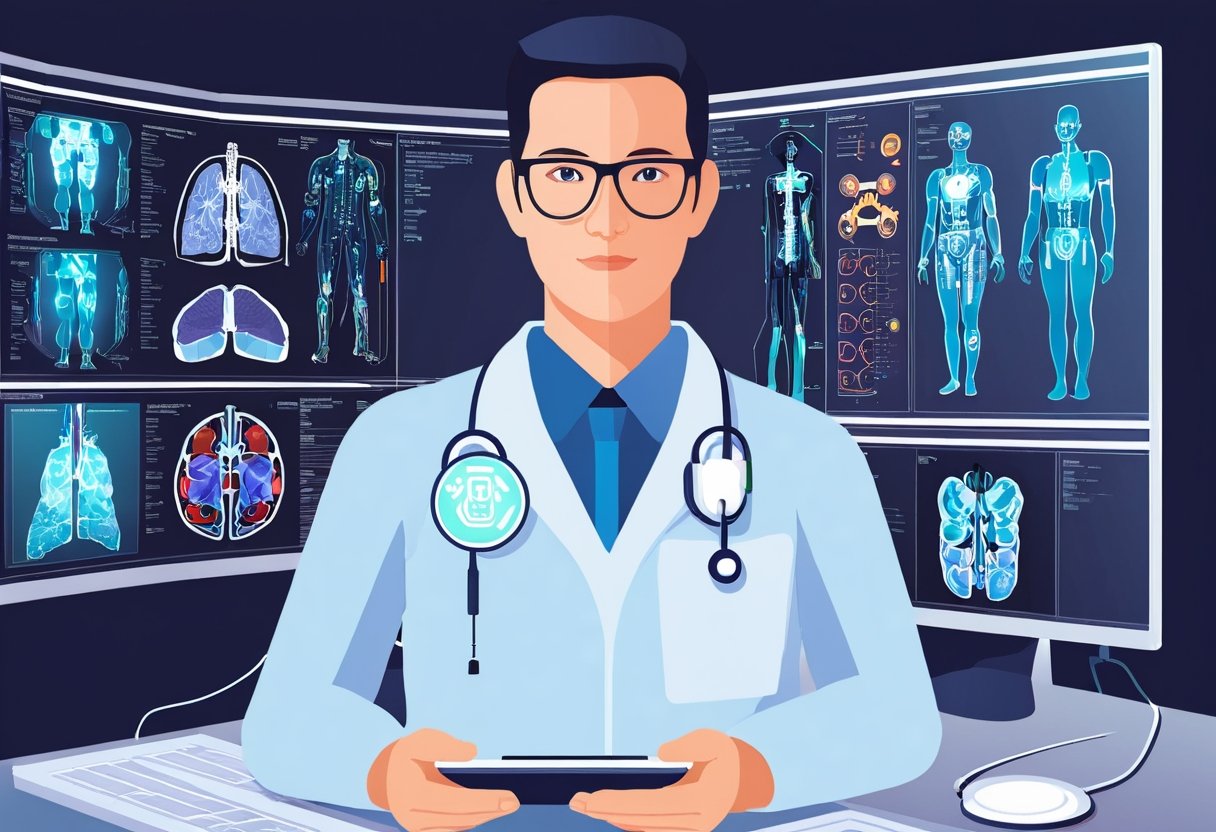
  • Revolutionizing Disease Diagnosis with Artificial Intelligence

    Revolutionizing Disease Diagnosis with Artificial Intelligence


    Introduction to AI in Disease Diagnosis

    Artificial intelligence (AI) is transforming the field of healthcare, particularly in disease diagnosis. According to Spectral-ai, AI technologies, especially in medical diagnostics, are revolutionizing how diseases are detected, analyzed, and treated. By leveraging machine learning and deep learning algorithms, AI can process vast amounts of data swiftly and accurately, providing healthcare providers with invaluable insights.

    Applications and Benefits of AI in Medical Diagnostics

    As noted by Medinform, current AI developments have achieved comparable performance with medical experts in specific fields. Their predictive performance and streamlined efficiency pertaining to disease diagnoses, particularly in medical imaging tasks, have transcended that of clinicians. A study published in the UK, mentioned in BMC Medical Education, showed that utilizing an AI system to interpret mammograms had an absolute reduction in false positives and false negatives by 5.7% and 9.4%, respectively.

    Challenges and Future Directions

    Despite the advancements, there are challenges in integrating AI into clinical practice. The quality and quantity of input data significantly affect the accuracy of AI tools. Moreover, there is a need for further studies to explore the application of AI in other medical imaging tasks and image-unrelated medical practices. As AI continues to evolve, it is expected to support medical decisions by providing clinicians with real-time assistance and insights, potentially reducing the risk of human errors and improving patient outcomes.

    Conclusion and Practical Takeaways

    In conclusion, AI is revolutionizing disease diagnosis, offering new levels of accuracy and efficiency. Healthcare providers, researchers, and patients must work together to address the challenges and ensure the effective integration of AI into clinical practice. Practical takeaways include the importance of high-quality data, the need for continuous training and validation of AI models, and the potential for AI to enhance patient care and outcomes.

  • 3D Printed Organs: A Glimpse into the Future of Human Regeneration

    Just Realized How Close 3D Printed Organs Are

    I recently discovered the incredible advancements being made in 3D printed organs, and it’s left me wondering about the future of human regeneration. From burn victims receiving printed skin grafts to individuals walking around with 3D printed jaws fused to their skull, the possibilities are endless.

    The Dawn of Personalized Medicine

    With the rise of 3D printing in the medical field, we’re witnessing a new era of personalized medicine. The technology allows for the creation of custom-made organs and tissues tailored to individual patients’ needs. This has the potential to revolutionize the way we treat injuries and diseases.

    3D Printed Skin Grafts: A Breakthrough in Burn Victim Care

    One remarkable example of 3D printed organs in action is the use of printed skin grafts for burn victims. A recent case study reported a patient receiving a 3D printed skin graft, which not only saved their life but also allowed them to regain a significant amount of mobility.

    The Future of Dental Implants: 3D Printed Crowns

    Dentists are now using 3D printing to create custom-made crowns for patients. This technology allows for a same-day procedure, eliminating the need for molds and lengthy waiting periods. The results are not only visually stunning but also incredibly durable.

    Personal Reflections and Implications

    As I ponder the future of 3D printed organs, I’m struck by the potential for this technology to transform the lives of individuals with debilitating conditions. My own experiences with a flawed spine have left me wondering if 3D printing could one day provide a solution. The possibilities are endless, and it’s essential that we continue to push the boundaries of this technology.

    Technical Analysis and Market Impact

    The rise of 3D printed organs is primarily driven by advancements in bioprinting and biomaterials. Researchers are working tirelessly to develop new materials and techniques that can replicate the complexity of human tissue. As this technology continues to evolve, we can expect to see a significant increase in the adoption of 3D printing in the medical field.

    Future Implications and Takeaways

    The implications of 3D printed organs are far-reaching and multifaceted. As this technology becomes more mainstream, we can expect to see a shift in the way we approach healthcare. Patients will have access to more personalized and effective treatments, leading to improved outcomes and increased quality of life. It’s essential to continue investing in research and development to ensure that this technology reaches its full potential.

    Expert Insights

    Dr. [Name], a leading expert in the field of bioprinting, notes that ‘the key to successful 3D printed organs lies in the development of biomaterials that can mimic the properties of human tissue.’ This emphasis on material science is crucial in creating organs that are both functional and durable.

    Practical Takeaways

    If you’re interested in staying up-to-date on the latest developments in 3D printed organs, be sure to follow reputable sources such as the National Institutes of Health and the American Academy of Facial Plastic and Reconstructive Surgery. By staying informed, you can gain a deeper understanding of the potential applications and implications of this technology.

    Conclusion and Call-to-Action

    As we continue to push the boundaries of 3D printed organs, it’s essential to remember the potential this technology holds for improving human lives. By investing in research and development, we can unlock new possibilities for personalized medicine and transform the future of healthcare. Join the conversation and share your thoughts on the future of 3D printed organs.