Tag: future of software development

  • AI Revolutionizes Coding: Why Human Touch Matters

    Introduction to AI-Assisted Coding

    Artificial intelligence (AI) has made tremendous strides in recent years, transforming the way we approach various aspects of our lives, including coding. With the advent of AI-assisted coding tools, developers can now automate many repetitive and mundane tasks, freeing up time for more creative and high-level thinking. However, as IBM notes, while AI can identify bugs and suggest fixes, it lacks the nuanced understanding and intuition of a seasoned developer.

    The Role of Human Expertise in AI-Assisted Coding

    According to Anthropic, human expertise remains an integral part of the software development process. Humans are better equipped to discern the intent behind code, assess its alignment with business goals, and apply organizational context to ensure that it meets project requirements. Moreover, as Claire Longo points out, without knowing how to code, one would not be able to craft the right prompts to generate meaningful code or detect and fix the errors made by AI.

    Debugging and Code Reading Skills

    The ability to identify and diagnose errors in code, as well as read and comprehend what code does, are crucial skills for detecting when AI-generated code is incorrect and understanding why it fails. As Anthropic research highlights, participants who used AI assistance during coding tasks scored lower on debugging questions, suggesting that the ability to understand when code is incorrect and why it fails may be a particular area of concern if AI impedes coding development.

    Best Practices for AI-Assisted Coding

    As Claire Longo advises, to effectively leverage AI-assisted coding tools, developers should focus on guiding the AI to deliver working and reliable code, rather than simply relying on the AI to generate code. This requires a deep understanding of coding principles, as well as the ability to communicate effectively with the AI tool.

    Vibe Coding vs. AI-Assisted Coding

    There is a difference between vibe coding and AI-assisted coding. Vibe coding involves using natural language to describe the end product, while AI handles every step of the technical implementation. In contrast, AI-assisted coding requires developers to have a deep understanding of coding principles and to guide the AI tool to deliver working and reliable code.

    Conclusion

    In conclusion, while AI has revolutionized the coding landscape, human expertise and judgment remain essential components of the software development process. By understanding the strengths and limitations of AI-assisted coding tools, developers can effectively leverage these tools to improve their productivity and efficiency, while also ensuring that their code is reliable, maintainable, and aligned with business goals.
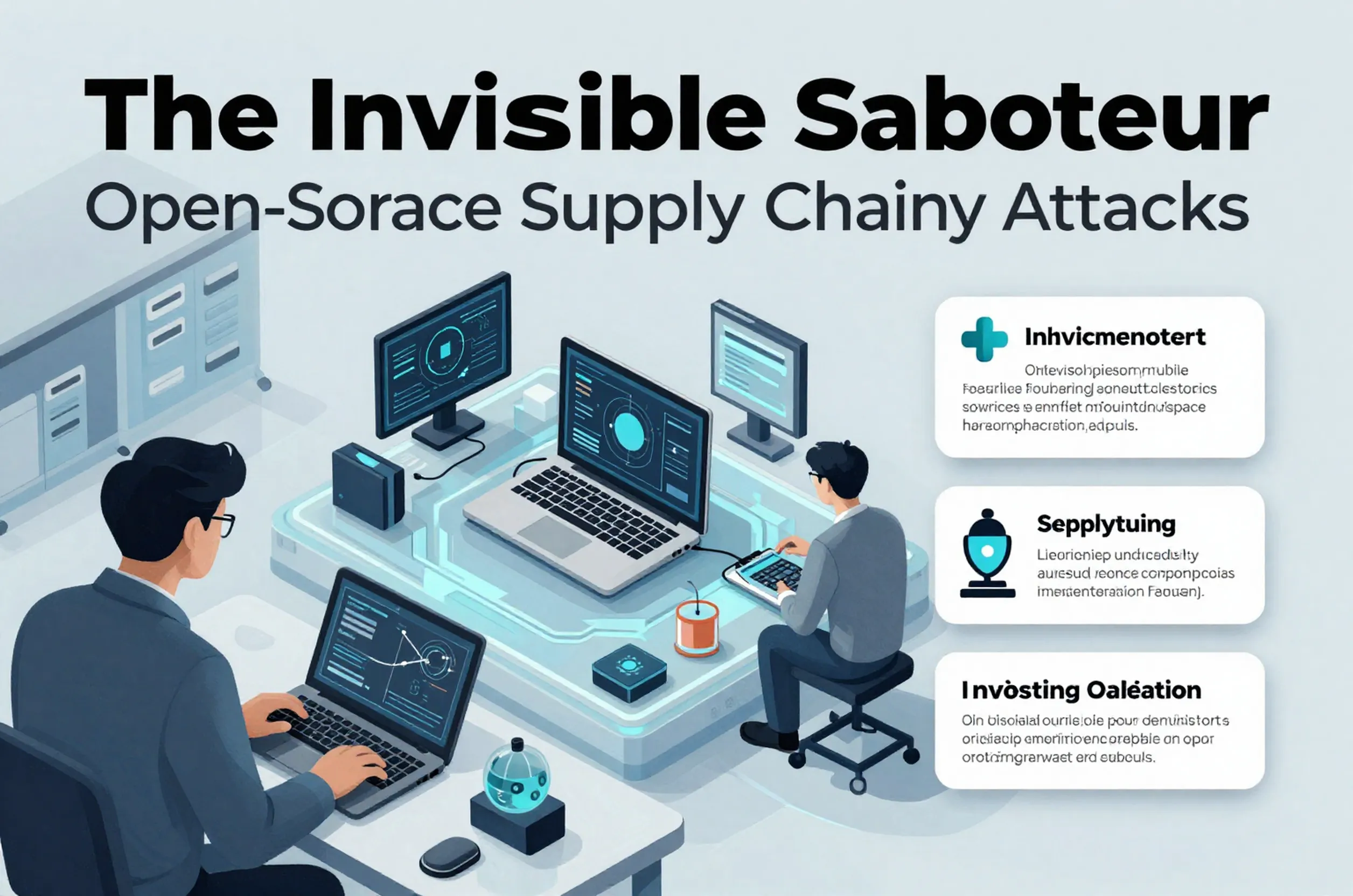
  • The Invisible Saboteur: Open-Source Supply Chain Attacks

    The Invisible Saboteur: Open-Source Supply Chain Attacks


    The Rise of Open-Source Supply Chain Attacks

    Open-source supply chain attacks are becoming a significant threat to the software industry. These attacks involve compromising open-source libraries or frameworks that are widely used in software development. According to security experts, the frequency and sophistication of these attacks are increasing rapidly.

    Vulnerabilities in Open-Source Libraries

    Libraries like Axios, which are downloaded millions of times monthly, represent high-value targets for attackers. A single compromised release of such a library could cascade across enterprise systems worldwide, causing significant damage. Software developers often rely on these libraries to build their applications, unaware of the potential risks.

    The Industry’s Defenses: A Cause for Concern

    The industry’s defenses against open-source supply chain attacks remain dangerously thin. Many software companies lack the necessary resources and expertise to detect and respond to these attacks effectively. As a result, the risk of a successful attack is increasing, with potentially devastating consequences.

    Practical Takeaways

    To mitigate the risk of open-source supply chain attacks, software developers and companies must take proactive measures. This includes conducting regular security audits, implementing robust testing and validation procedures, and staying up-to-date with the latest security patches and updates.

  • Debunking the Death of Programming Hype

    Debunking the Death of Programming Hype

    Introduction to the Hype

    Every day, social media platforms are filled with stories of individuals who have supposedly built and profited from apps in mere minutes using the latest AI tools. As a professional programmer, these claims are not only humorous but also misleading. The notion that AI can replace human programmers is a concept that has been circulating for some time now, but it’s essential to separate fact from fiction.

    The Role of AI in Programming

    AI is indeed a powerful tool that can aid in programming tasks. Tools like Copilot have become invaluable assets for many developers, helping with code completion, debugging, and even suggesting improvements. However, the idea that these tools can fully replace the expertise and creativity of human programmers is far-fetched. Geoffrey Hinton’s prediction that radiologists would be replaced by AI by 2021 is a prime example of how such predictions often fail to materialize.

    Limitations of AI in Programming

    While AI can process and analyze vast amounts of data, it lacks the critical thinking and problem-solving skills that human programmers possess. Complex software development requires a deep understanding of the problem domain, the ability to design elegant solutions, and the capacity to integrate multiple components seamlessly. These are skills that AI systems, as advanced as they are, have not yet mastered.

    Practical Takeaways

    For those considering a career in programming, it’s crucial to understand that the field is not dying but evolving. The rise of AI and automated tools means that programmers will need to focus on higher-level tasks that require creativity, problem-solving, and strategic thinking. Investing in skills that complement AI, such as data science, machine learning, and software engineering, will be key to success in the future.

    Conclusion

    In conclusion, the ‘death of the programmer’ hype is just that—hype. While AI is a valuable tool, it is not a replacement for human expertise. Programmers should embrace AI as a means to augment their work, not replace it. By focusing on developing skills that are complementary to AI, programmers can not only survive but thrive in a future where technology continues to advance at an unprecedented pace.

  • The Rise of Vibe Coding: Empowering CEOs or Harming Innovation?

    The Rise of Vibe Coding: Empowering CEOs or Harming Innovation?

    The Concept of Vibe Coding

    Vibe coding, a term coined by Masad, refers to the practice of writing code based on intuition and vibes rather than rigorous testing and validation. While it may seem like a convenient way for non-technical founders to contribute to their company’s codebase, it has sparked intense debate in the tech community.

    The Risks of Vibe Coding

    According to Masad, vibe coding is ‘absolute brain rot’ and can lead to subpar code quality, security vulnerabilities, and maintenance nightmares. Moreover, it may create a culture where technical excellence is undervalued, and engineers are overworked and underappreciated.

    The Impact on CEOs and Founders

    The idea that CEOs can ‘vibe code’ their own prototypes without needing engineers has been met with skepticism. Replit boss suggests that this approach can lead to cost savings and increased productivity, but critics argue that it may compromise the quality and reliability of the final product.

    Expert Insights

    As experts point out, the success of a company depends on the collaboration between technical and non-technical teams. While CEOs may have a vision for their product, they often lack the technical expertise to execute it. By undervaluing the role of engineers, companies may be shooting themselves in the foot.

  • AI Revolution in Software Engineering: Future Implications


    Introduction to AI in Software Engineering

    The integration of Artificial Intelligence (AI) in software engineering is transforming the field, enabling developers to build more resilient, intelligent, and adaptive systems. According to Forbes, AI tools are empowering engineers to tackle previously insurmountable challenges, making predictions, and enhancing collaboration between humans and machines.

    Key Applications of AI in Software Development

    AI is being used in various aspects of software development, including code generation, automated testing, and predictive analytics. As noted by Carnegie Mellon University, by 2027, generative AI will create new roles in software engineering and operations, prompting 80% of engineers to upskill.

    Impact of AI on Software Engineers

    The adoption of AI in software engineering is not just about automating workflows but about empowering engineers to focus on higher-level problem-solving. As IBM points out, AI is redefining the role of software engineers, moving them from code implementers to orchestrators of technology.

    Future of AI in Software Engineering

    The future of software engineering is filled with exciting possibilities. With advancements in machine learning, natural language processing, and predictive analytics, software engineers can expect innovations in AI-assisted coding, automated software optimization, and enhanced collaboration tools. A study by MIT maps the roadblocks to autonomous software engineering, highlighting research directions to overcome them.

Oh hi there 👋
It’s nice to meet you.

Sign up to receive awesome content in your inbox, every Day.

We don’t spam! Read our privacy policy for more info.