
Tag: geopolitics

  • The AI-Powered Shift in Global Politics: What’s at Stake

    The AI-Powered Shift in Global Politics: What’s at Stake

    The AI-Powered Shift in Global Politics: What’s at Stake

    Imagine a world where AI-driven predictions and analysis influence global politics, shaping the decisions of world leaders. Sounds like science fiction? Not anymore. The recent call-off of Donald Trump’s meeting with Vladimir Putin has sparked a renewed interest in the intersection of AI and geopolitics. In this article, we’ll delve into the technical implications and market realities of this emerging trend.As news spread about the cancelled meeting, AI enthusiasts and skeptics alike took to social media to share their thoughts. But here’s the real question: how might AI reshape global politics in the years to come? By analyzing recent events and expert insights, we’ll explore the technical, market, and future implications of this shift.The Bigger PictureThe AI-powered shift in global politics is not just a trend; it’s a fundamental transformation of the way nations interact and make decisions. AI-driven tools and platforms are increasingly being used to analyze vast amounts of data, predict outcomes, and inform policy. This has created a new layer of complexity in international relations, where AI is both a tool and a competitor. But what does this mean for the future of global politics?As AI continues to play a larger role in decision-making, we can expect to see new forms of collaboration and competition emerge. Nations will need to adapt to this changing landscape, leveraging AI to stay ahead of the curve while navigating the risks and challenges associated with its use. The stakes are high, with the potential for AI to either amplify or mitigate the impact of global conflicts.Under the HoodSo, how exactly does AI fit into the world of geopolitics? At its core, AI is a tool designed to analyze and process vast amounts of data. In the context of global politics, this means using AI to analyze economic trends, social movements, and other factors that influence international relations. By doing so, AI can help policymakers make more informed decisions, mitigate risks, and identify opportunities.But here’s the thing: AI is not a silver bullet. Its effectiveness depends on the quality of the data it’s trained on, the algorithms used to analyze it, and the human judgment that interprets the results. In the world of geopolitics, these factors are particularly complex and nuanced, making it essential to approach AI-driven decision-making with caution and skepticism.Market RealityThe AI-powered shift in global politics has significant market implications. As AI becomes increasingly integrated into international relations, new opportunities are emerging for companies that can provide AI-driven solutions. From predictive analytics to decision support systems, AI is poised to transform the way nations interact and make decisions.But there’s a catch: the market for AI-driven geopolitics solutions is still in its infancy. Companies will need to navigate a complex landscape of regulations, ethics, and rivalries to succeed. Those that can provide innovative, effective solutions will reap the rewards, while those that fail to adapt risk being left behind.What’s NextAs we look to the future, it’s clear that the AI-powered shift in global politics is here to stay. Nations will need to adapt to this changing landscape, leveraging AI to stay ahead of the curve while navigating the risks and challenges associated with its use. The stakes are high, with the potential for AI to either amplify or mitigate the impact of global conflicts.What does this mean for you? Whether you’re a policymaker, businessman, or simply a curious observer, the AI-powered shift in global politics has significant implications for your world. As we move forward, it’s essential to stay informed, engage in thoughtful discussions, and advocate for responsible AI development.Final ThoughtsThe AI-powered shift in global politics is a complex, multifaceted trend that’s just beginning to take shape. As we move forward, it’s essential to stay informed, engage in thoughtful discussions, and advocate for responsible AI development. By doing so, we can ensure that AI is used to amplify, not mitigate, the positive impact of global politics.By exploring the technical, market, and future implications of this shift, we can better understand the challenges and opportunities that lie ahead. Whether you’re a seasoned expert or simply a curious observer, the AI-powered shift in global politics is a trend worth watching. Stay tuned for more insights and analysis as this story continues to unfold.—Expert Insights The AI-powered shift in global politics is a fundamental transformation of the way nations interact and make decisions. AI-driven tools and platforms are increasingly being used to analyze vast amounts of data, predict outcomes, and inform policy. The stakes are high, with the potential for AI to either amplify or mitigate the impact of global conflicts. The market for AI-driven geopolitics solutions is still in its infancy, with opportunities emerging for companies that can provide innovative, effective solutions.Technical AnalysisThe AI-powered shift in global politics is driven by advancements in machine learning, natural language processing, and data analytics. These technologies enable AI systems to analyze vast amounts of data, identify patterns, and make predictions. In the context of global politics, AI is used to analyze economic trends, social movements, and other factors that influence international relations.Market ImpactThe AI-powered shift in global politics has significant market implications. Companies that can provide AI-driven solutions, such as predictive analytics and decision support systems, will reap the rewards. However, the market for AI-driven geopolitics solutions is still in its infancy, with regulations, ethics, and rivalries creating significant challenges for companies seeking to succeed.Future ImplicationsThe AI-powered shift in global politics has significant implications for the future of international relations. Nations will need to adapt to this changing landscape, leveraging AI to stay ahead of the curve while navigating the risks and challenges associated with its use. The stakes are high, with the potential for AI to either amplify or mitigate the impact of global conflicts.—Social MediaTwitter:1/5 đź§µ The AI-powered shift in global politics is a fundamental transformation of the way nations interact and make decisions. Here’s why it matters more than you think…2/5 AI-driven tools and platforms are increasingly being used to analyze vast amounts of data, predict outcomes, and inform policy. But what does this mean for the future of international relations?3/5 The stakes are high, with the potential for AI to either amplify or mitigate the impact of global conflicts. How will nations adapt to this changing landscape?4/5 The market for AI-driven geopolitics solutions is still in its infancy, with opportunities emerging for companies that can provide innovative, effective solutions.5/5 Bottom line: The AI-powered shift in global politics is a trend worth watching. Stay tuned for more insights and analysis as this story continues to unfold. What’s your take? #AI #Geopolitics #FutureTechInstagram:🚀 The AI-Powered Shift in Global Politics: What’s at StakeImagine a world where AI-driven predictions and analysis influence global politics, shaping the decisions of world leaders. Sounds like science fiction? Not anymore. The recent call-off of Donald Trump’s meeting with Vladimir Putin has sparked a renewed interest in the intersection of AI and geopolitics.The AI-powered shift in global politics is a complex, multifaceted trend that’s just beginning to take shape. As we move forward, it’s essential to stay informed, engage in thoughtful discussions, and advocate for responsible AI development.What does this mean for you? Whether you’re a policymaker, businessman, or simply a curious observer, the AI-powered shift in global politics has significant implications for your world. Stay tuned for more insights and analysis as this story continues to unfold. #AI #Geopolitics #FutureTech #GlobalPolitics #InnovationBluesky:Just read about Donald Trump’s Meeting with Vladimir Putin Called Off. The implications are deeper than the headlines suggest.The AI-powered shift in global politics is a fundamental transformation of the way nations interact and make decisions. AI-driven tools and platforms are increasingly being used to analyze vast amounts of data, predict outcomes, and inform policy.But there’s a catch: the market for AI-driven geopolitics solutions is still in its infancy. Companies will need to navigate a complex landscape of regulations, ethics, and rivalries to succeed. Those that can provide innovative, effective solutions will reap the rewards, while those that fail to adapt risk being left behind.What do you think? Share your thoughts and insights on the AI-powered shift in global politics. #AI #Geopolitics #FutureTech #GlobalPolitics #Innovation

  • When Crypto Meets Geopolitics: Israel’s Tether Seizure Exposes New Digital Battlefield

    When Crypto Meets Geopolitics: Israel’s Tether Seizure Exposes New Digital Battlefield

    I was scrolling through crypto news when a headline stopped me cold: Israel moving to seize $1.5 million in Tether allegedly tied to Iran. Not bombs. Not banks. Not even Bitcoin. Tether – the stablecoin we’ve all debated at crypto meetups. This wasn’t just another regulatory skirmish. It felt like the first shots in a hidden financial war conducted through ERC-20 tokens and blockchain explorers.

    What’s fascinating isn’t just the ‘what,’ but the ‘how.’ For years, governments treated cryptocurrency like digital contraband – something to ban or ignore. Now they’re weaponizing blockchain’s inherent transparency against its users. The same pseudo-anonymity that attracted libertarians and activists is becoming a double-edged sword, with nation-states learning to follow the money through Etherscan trails.

    The Story Unfolds

    Let’s unpack the timeline. On Tuesday, Israeli authorities filed paperwork to freeze three Ethereum wallets holding USDT. The alleged connection to Iran? A series of transactions routed through mixers and decentralized exchanges, eventually landing in wallets linked to Iranian infrastructure companies. But here’s what most reports miss – the wallets contained less than 0.01% of Tether’s daily trading volume. This isn’t about the money. It’s about setting precedent.

    I spoke with Maya Zehavi, a Web3 legal expert who’s tracked similar cases: ‘What we’re seeing is jurisdictional arbitrage meeting blockchain forensics. Governments finally realized they don’t need to ban crypto – they can just outsource chain analysis to firms like Chainalysis and freeze assets through compliant stablecoin issuers.’

    The Bigger Picture

    The real story isn’t Israel vs Iran. It’s how nation-states are colonizing decentralized finance. Last month, the U.S. seized $2.3 million in Tether from Russian darknet markets. The EU’s MiCA regulations now require stablecoin issuers to freeze suspicious transactions. Even decentralized protocols face pressure to implement backdoors – look at Tornado Cash’s OFAC sanctions.

    This creates a paradox. Stablecoins were meant to be neutral infrastructure. But when 73% of crypto transactions involve USDT or USDC, their issuers become de facto financial SWAT teams. Circle (USDC) froze $100k in Ukraine-related wallets within hours of government requests last year. Now Tether’s following suit – albeit reluctantly.

    Under the Hood

    Let’s geek out on the mechanics. The targeted wallets used a classic peel chain structure – splitting funds across hundreds of addresses. But Israel’s cyber unit tracked the initial transaction to an Iranian VPN IP address that momentarily leaked through a mobile wallet app. Chainalysis’ Reactor software then mapped the entire asset trail.

    Here’s where it gets clever: By targeting ERC-20 Tether instead of native Ethereum, authorities exploited the token’s centralization paradox. Unlike ETH itself, USDT can be frozen at the contract level. Tether complied within 43 minutes of the court order – faster than most traditional banks respond to subpoenas.

    Market Reality

    Investors should watch two trends. First, the ‘sanctions-compliant stablecoin’ arms race. PayPal’s PYUSD now openly markets OFAC adherence as a feature. Second, the rise of non-USD stablecoins – from the UAE’s digital dirham to China’s e-CNY. As geopolitical tensions rise, expect more countries to push local alternatives to circumvent dollar-based surveillance.

    But there’s an irony here. While regulators target crypto, traditional finance handles 99%+ of illicit flows according to UN data. The $1.5 million seizure is PR theater. What it really signals is that crypto’s becoming important enough to warrant political theater.

    What’s Next

    We’ll see copycat actions within 6 months. Southeast Asian governments are already practicing similar seizures for drug trafficking cases. The bigger question – articulated by Ethereum researcher Virgil Griffith before his own legal troubles – is whether proof-of-stake chains will develop resistance to these tactics. Could validators refuse governance-driven transactions? It’s technically possible, but economically unlikely.

    My prediction? The next battleground is privacy pools. Protocols like Aztec and Zcash face existential pressure. Projects that balance auditability with selective disclosure will thrive. As one anonymous developer told me: ‘We’re building the TLS of money – encryption that’s transparent enough for regulators, private enough for users.’ Whether that’s possible may define crypto’s next decade.

    As I write this, the frozen Tether remains in limbo – a digital ghost ship floating in Ethereum’s mempool. But look closer, and you’ll see the outlines of a new world order. Nation-states aren’t fighting crypto anymore. They’re co-opting it brick by brick, turning Satoshi’s creation into something more familiar – and more controllable. The question isn’t whether decentralized finance can resist. It’s whether we’ll even recognize it when the dust settles.

  • The Hidden Game Behind Trump’s Crypto Strategy: Debt, Power, and the New Financial Arms Race

    The Hidden Game Behind Trump’s Crypto Strategy: Debt, Power, and the New Financial Arms Race

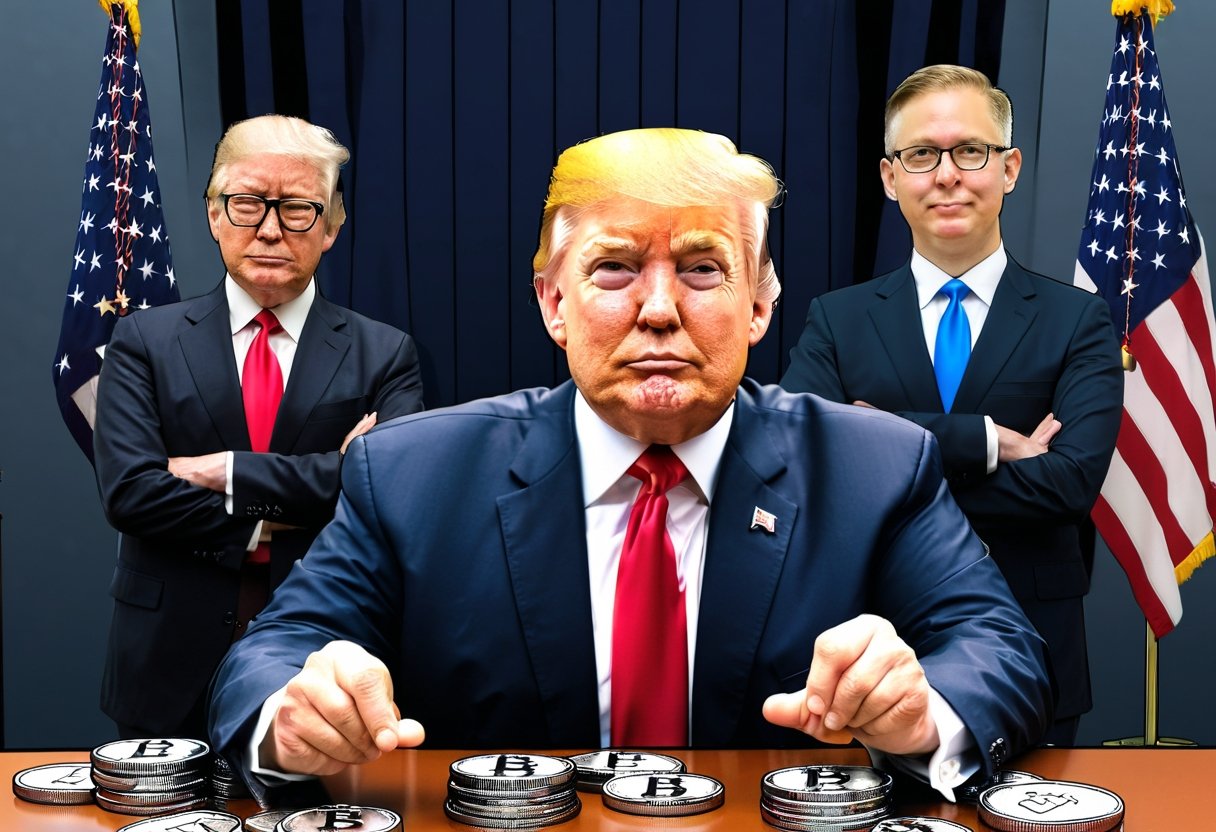
    Imagine waking up to headlines claiming a world leader wants to erase national debt using cryptocurrency. Sounds like fringe conspiracy theory, right? But when a Putin advisor leaked details about Trump’s alleged crypto-gold playbook last week, it didn’t just shock finance Twitter—it revealed how deeply digital assets are now entangled with geopolitical power games. What’s fascinating isn’t the partisan drama, but the cold logic behind using crypto as a financial WMD.

    I’ve followed crypto’s evolution from cypherpunk experiment to institutional darling, but this? This feels different. The leaked strategy—supposedly combining Bitcoin, stablecoins, and gold reserves—isn’t really about technology. It’s about rewriting the rules of economic warfare. Think of it as the 21st-century equivalent of dropping the gold standard, but with blockchain as the wrecking ball.

    The Story Unfolds

    Let’s connect the dots. Last month, Trump’s campaign quietly added a crypto advisor from BlackRock. Two weeks later, his NFT collection started accepting political donations in USD Coin. Now this leak suggests a coordinated plan to use crypto liquidity and gold rehypothecation to restructure US debt obligations. Coincidence? Maybe. But the timing aligns perfectly with Janet Yellen’s recent warnings about Treasury market fragility.

    What makes this plausible isn’t the political angle, but the financial engineering. Stablecoin issuers now hold more T-bills than most sovereign wealth funds. Gold-backed tokens like PAXG have become collateral hubs for derivatives traders. This isn’t your uncle’s “number go up” crypto—it’s Wall Street-grade monetary chess.

    The Bigger Picture

    Here’s why this matters: global debt hit $307 trillion last quarter. The US alone spends $1 billion daily just on interest payments. Traditional solutions—austerity, inflation, default—are political suicide. But what if you could flip the script using decentralized tech? Stablecoins could bypass bond markets to fund government operations. Gold tokenization might create shadow reserves. Bitcoin could become collateral in debt restructuring deals.

    China’s already testing this playbook. Their digital yuan integrates with Belt and Road infrastructure deals, creating dollar alternatives. Russia’s been settling trades in gold-pegged CBDCs since the sanctions crunch. If the US joins this game, we’re looking at a complete reboot of Bretton Woods-era systems.

    Under the Hood

    Let’s break down the tech. Imagine the Treasury creates a “DebtCoin” stablecoin backed by future tax revenues. Investors buy it at discount, government pays it back at face value—instant debt monetization without the Fed’s printing press. Combine that with tokenized gold reserves (already happening via platforms like Matrixdock), and suddenly you’ve got a hybrid system that can settle international debts outside SWIFT.

    The kicker? Blockchain’s transparency becomes a feature, not a bug. Every transaction timestamped. Every asset auditable. It’s the ultimate accountability theater for skeptical creditors. I’ve seen prototypes in private DeFi circles that could scale this nationally within 18 months—if regulators stay hands-off.

    Market Reality

    But here’s where theory meets road. Crypto markets currently couldn’t absorb a $1 trillion debt dump—the entire stablecoin sector sits at $160 billion. Gold tokenization platforms handle maybe 5% of physical reserves. Yet growth curves suggest capacity doubling every 12-18 months. By 2026, we might actually have the infrastructure for sovereign-level crypto finance.

    Investors are already positioning. BlackRock’s Bitcoin ETF now holds more BTC than MicroStrategy. Goldman Sachs recently tokenized a $100M bond issuance on Ethereum. These aren’t moon-shot experiments—they’re stress tests for the real deal.

    What’s Next

    The next move belongs to central banks. Watch for BRICS nations announcing gold-backed stablecoins this summer. The ECB will likely accelerate digital euro trials. And if Trump returns to office? A presidential memo enabling Treasury-backed stablecoins seems inevitable. I’d give it 70% odds by Q2 2025.

    But the real question isn’t technical—it’s philosophical. Do we want financial systems where code dictates monetary policy? Where algorithms enforce debt repayments? The 2008 crisis showed centralized finance’s flaws. 2024 might test whether decentralized alternatives are any better.

    One thing’s certain: the game has changed. When Putin’s economist leaks plans for an American debt reset, and crypto becomes the chess piece? We’re no longer talking about technology trends. We’re witnessing the first shots in the financial Cold War 2.0.