Tag: global economy

  • Japan’s Rate Hike Ends Free Money Era

    Japan’s Rate Hike Ends Free Money Era

    Introduction to Japan’s Rate Hike

    Japan’s recent rate hike has marked the end of the ‘free money’ era, with significant implications for the global economy and the cryptocurrency market. According to Coinpedia, the Bank of Japan (BOJ) is expected to raise its policy rate to 0.75%, the highest level in decades.

    Impact on Bitcoin and Altcoins

    The rate hike is expected to influence both local and global financial markets, with potential consequences for Bitcoin and altcoins. As MEXC notes, Bitcoin has historically responded to Japan’s rate hikes with a 20-30% crash. However, Arthur Hayes believes that the rate hike could actually boost Bitcoin to $1 million.

    Historical Context

    Japan’s commitment to ultra-loose monetary policy has made the yen a premier funding currency for leveraged investments. However, the rate hike is expected to unwind carry trades and spark fresh volatility across Bitcoin and altcoins. As Yahoo Finance reports, the rate hike could lead to a strengthening of the yen and a decrease in global liquidity.

    Market Sentiment and Positioning

    The broader market sentiment has shrunk into ‘extreme fear’ ahead of the Bank of Japan’s interest rate decision. According to Ambcrypto, historical data shows that BTC has dropped 20-30% every time the BOJ has hiked rates. Traders are positioning for a dip below $85k, with the market consensus leaning towards a 25 basis point rate hike.

    Practical Takeaways

    In conclusion, Japan’s rate hike marks a significant shift in the country’s monetary policy, with potential implications for the global economy and the cryptocurrency market. Investors should be cautious and prepared for potential volatility in the market.
  • The Unseen Consequences of Trump’s Trade Talks Shift

    The Unseen Consequences of Trump’s Trade Talks Shift

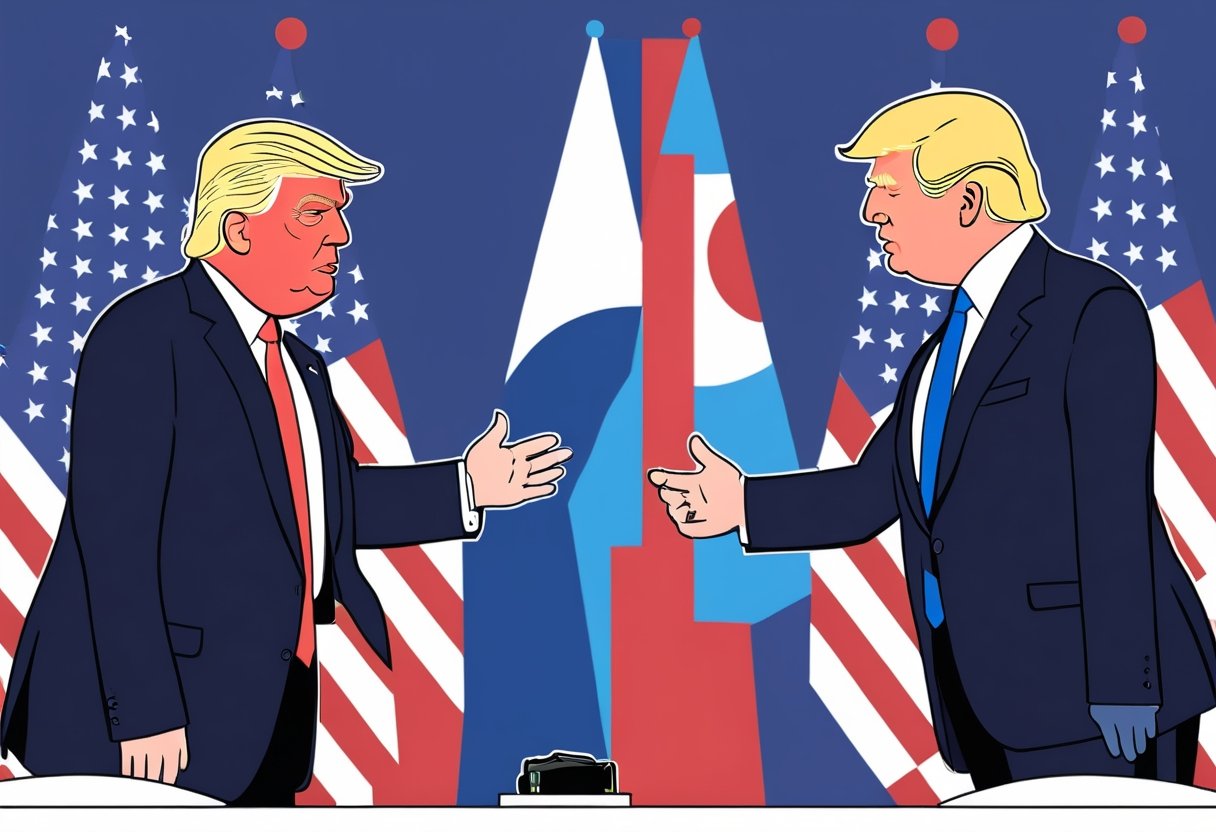
    The Trump says he’s ending trade talks with Canada over TV ad

    Just as the tech world was starting to find its footing, a bombshell dropped: Trump said he’s ending trade talks with Canada over a TV ad. The news sent shockwaves through the industry, leaving many wondering what this means for the future of tech.

    At first glance, it might seem like a minor issue. But dig deeper, and you’ll find that this announcement has far-reaching consequences that will likely reshape the tech landscape.

    As a deep tech expert, I’ve been following this story closely. What strikes me about this development is how it exposes a fundamental flaw in the current trade system.

    The Bigger Picture

    The reality is that trade talks have been a decades-long process, with complex negotiations and intricate agreements. But what we’re seeing here is a sign of a larger problem: the system is breaking down.

    Think about it: when trade talks collapse, it’s not just about tariffs or trade deficits. It’s about the trust that’s been built over years. And when that trust is broken, it’s challenging to repair.

    This is precisely what’s happening in the tech world. As the global economy becomes increasingly interconnected, the stakes have never been higher.

    Under the Hood

    The tech infrastructure is already showing signs of strain. With the current trade system on the brink of collapse, it’s no wonder that tech giants are taking a closer look at their supply chains.

    Take, for example, the recent announcement by Microsoft to shift its manufacturing operations to the US. This move is a direct response to the instability in global trade.

    But here’s the thing: this shift has broader implications for the tech industry as a whole. As companies adapt to the new reality, we’re likely to see a significant shift in the global tech landscape.

    Market Reality

    So, what does this mean for the tech market? In the short term, we can expect to see increased volatility as companies adjust to the new reality. But in the long term, this shift has the potential to unlock new opportunities for growth and innovation.

    One thing is certain: the tech world will never be the same. As we navigate this uncharted territory, it’s essential to stay informed and adapt quickly.

    What’s Next

    So, what can we expect in the months ahead? As the trade talks continue to unfold, we’ll likely see a series of ripple effects throughout the tech industry.

    One thing is clear: this is a turning point for the tech world. And as we move forward, it’s crucial to stay focused on the broader implications of this shift.

    As we look to the future, one thing is certain: the tech world will never be the same. But with careful planning and adaptability, we can navigate this new reality and come out stronger on the other side.

    Final Thoughts

    The Trump says he’s ending trade talks with Canada over TV ad may seem like a minor issue, but its implications are far-reaching. As we move forward, it’s essential to stay informed and adapt quickly to the changing landscape.

    By staying focused on the bigger picture and understanding the underlying dynamics, we can harness the opportunities presented by this shift and build a stronger, more resilient tech industry.

    The future is uncertain, but one thing is clear: the tech world will never be the same. And that’s a good thing.

  • Bitcoin Stocks Dive as Trump’s 100% Tariff Shakes Global Markets

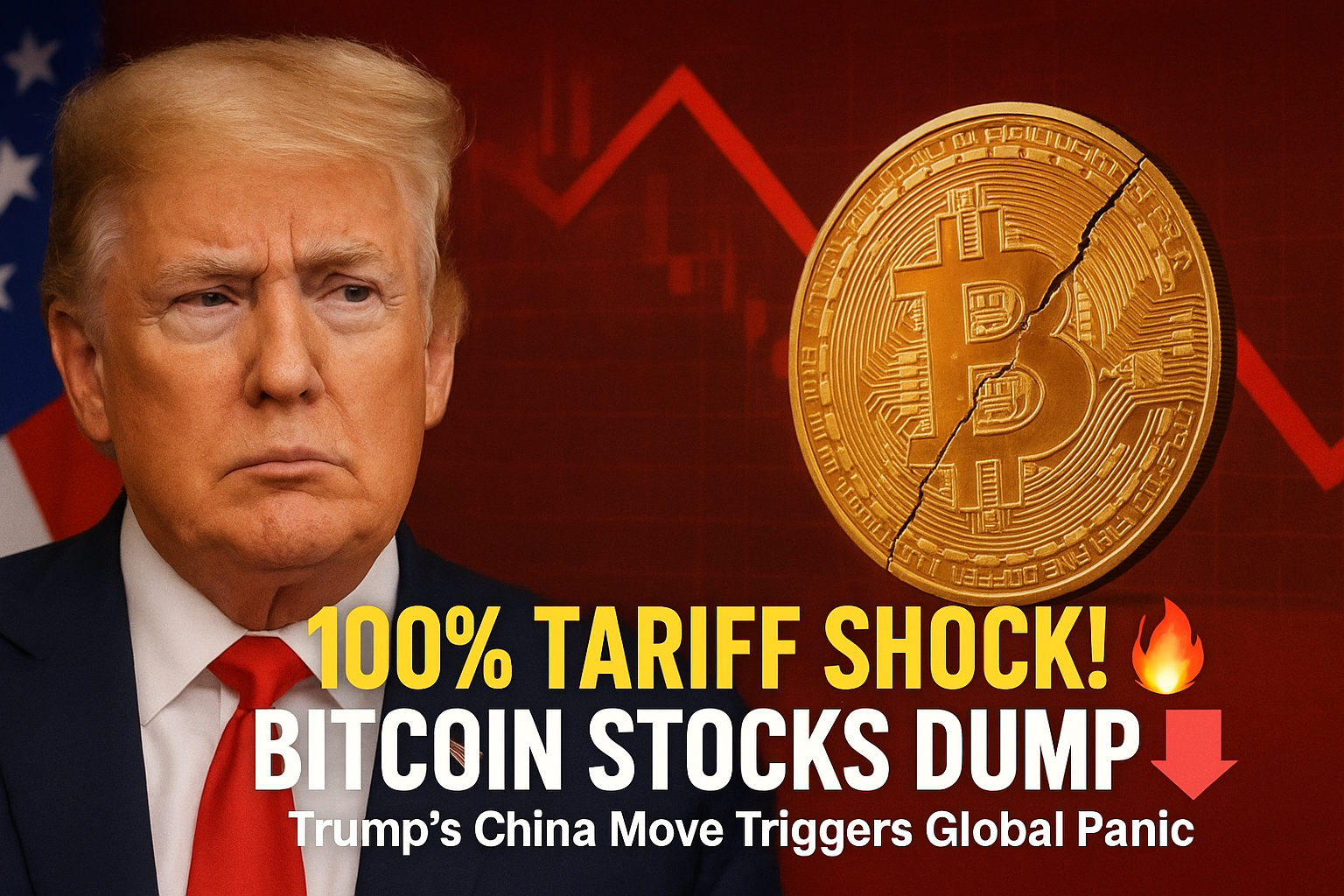
    Bitcoin Stocks Dive as Trump’s 100% Tariff Shakes Global Markets

    Donald Trump’s tariff bombshell on China rattles global investors, sending Bitcoin-linked stocks and treasuries tumbling amid renewed trade war fears.

    Tariff Tensions Return: Global Shockwaves Begin

    The global market witnessed a sharp tremor as former U.S. President Donald Trump announced a 100% tariff on Chinese imports, effective November 1. This move came in retaliation to China’s recent restrictions on rare earth exports, a vital resource for advanced technology and semiconductor production.

    The impact was immediate. The S&P 500 index fell 2.7%, reflecting widespread panic across global markets. Investors rushed to safer assets, triggering heavy sell-offs not only in traditional equities but also in crypto-related stocks — a sector highly sensitive to macroeconomic uncertainty.

    Crypto Stocks Lead Double-Digit Market Sell-Off

    Renewed U.S.–China trade tensions reignited global risk aversion, sparking a broad sell-off across crypto-linked companies. Investors, wary of rising tariffs and slowing global trade, began shedding high-volatility assets.

    Key highlights from Friday’s market close include:

    • Coinbase (COIN) plunged 7.75%, ending the session at $357.01 after hitting a low of $351.63.
    • Bullish (BLSH) dropped 9.42%, sliding from $66.65 to $60.37 amid sustained market weakness.
    • Metaplanet (MTPLF) — Japan’s Bitcoin treasury firm — lost 2.25%, reversing its early intraday gains.
    • MARA Holdings (MARA) tumbled 7.67% to $18.65, extending its losses in after-hours trading.

    These steep declines underscore how vulnerable digital asset equities remain to macroeconomic policy shocks, even as Bitcoin itself often claims to be a hedge against centralized financial instability.

    Bitcoin Treasuries Under Pressure: Strategy’s mNAV Slumps

    Among all digital asset firms, Strategy (MSTR) — one of the largest Bitcoin treasury companies — faced intense scrutiny. The stock fell 4.84% to $304.79, capping off one of its most volatile sessions in months.

    Beyond the daily price swings, analysts are increasingly concerned about fundamental valuation metrics. The company’s multiple-to-net asset value (mNAV) dropped below 1.180, marking its lowest level in 19 months.

    Industry experts warn that:

    • A sustained mNAV below 1.0 indicates weakened balance sheets.
    • It also suggests limited room for further Bitcoin accumulation.
    • Such conditions may lead to industry-wide consolidation among Bitcoin treasury firms.

    According to Geoffrey Kendrick, Head of Digital Assets Research at Standard Chartered, maintaining an mNAV above the 1.0 threshold is crucial for sustaining healthy balance sheets and investor confidence.

    The PIPE Problem: Financing Pressures Intensify

    Adding to the strain, many Bitcoin treasury companies are dependent on PIPE (Private Investment in Public Equity) financing to fund their Bitcoin purchases.

    CryptoQuant report highlights that:

    • Bitcoin treasury stocks often converge toward their discounted PIPE issuance prices, eroding investor returns.
    • Some early investors have faced losses of up to 55% from peak valuations.

    Currently, Strategy holds $78 billion worth of Bitcoin, yet its market cap stands at $94 billion — reflecting a $16 billion premium primarily driven by investor optimism in founder Michael Saylor’s Bitcoin-backed debt strategies.
    However, with total profits under $350 million over the past year, that premium could shrink if market sentiment continues to weaken.

    AI Satoshi’s Analysis

    “Trade wars expose how interdependent today’s financial systems remain. Despite Bitcoin’s design for independence, companies tied to fiat and equity markets remain vulnerable to macroeconomic shocks. This highlights the difference between holding Bitcoin and holding Bitcoin exposure through corporates — one is decentralized resilience, the other, market dependence.”

    Final Thoughts

    This week’s tariff-driven sell-off is a reminder that Bitcoin’s decentralization doesn’t shield companies tied to it. The difference between holding Bitcoin directly and holding Bitcoin through corporate exposure remains critical. As trade tensions rise and equity markets shake, digital-asset investors may increasingly turn back to Bitcoin’s original promise — financial independence from political turbulence.

    🔔 Follow @casi.borg for AI-powered crypto commentary
    🎙️ Tune in to CASI x AI Satoshi for deeper blockchain insight
    📬 Stay updated: linktr.ee/casiborg

    💬 Would you trust AI Satoshi’s market instincts — or stick with traditional analysts?

    ⚠️ Disclaimer: This content is generated with the help of AI and intended for educational and experimental purposes only. Not financial advice.

  • South Korea–U.S. Trade Deal: Could It Trigger Another 1997 Crisis?

    South Korea–U.S. Trade Deal: Could It Trigger Another 1997 Crisis?

    In the fast-changing world of global trade, South Korea finds itself caught between protecting financial stability and responding to U.S. demands. Could history repeat itself with risks reminiscent of the 1997 Asian Financial Crisis?

    South Korea’s Stark Warning

    South Korean President Lee Jae-Myung has sounded the alarm that Washington’s latest trade demands could expose Seoul to dangers similar to the 1997 financial meltdown.

    At the core of the dispute lies a $350 billion cash investment that the U.S. wants Seoul to provide in exchange for tariff relief. Washington also insists on controlling how the funds are allocated — a condition Lee firmly rejects.

    Lee compared the U.S. demand to “a neighbor demanding money at the door” and warned that without a swap-line agreement, handing over dollars could destabilize the won and put Korea’s financial system at risk.

    Negotiations at a Standstill

    Talks between Washington and Seoul remain frozen, with both sides standing firm:

    • U.S. demands → Immediate cash commitments and U.S. control over fund allocation.
    • South Korea’s stance → Commercial safeguards, flexibility, and protection of financial autonomy.

    Unlike Japan — which struck a similar deal earlier this year — South Korea does not have a permanent swap line with the U.S. and maintains smaller foreign reserves.

    Commerce Secretary Howard Lutnick has warned that Seoul must “take the deal or face tariffs,” echoing Donald Trump’s hardline trade playbook.

    Beyond Trade: Rising Frictions

    This economic standoff comes at a delicate moment in U.S.–South Korea ties:

    • raid at a Hyundai battery plant in Georgia, where 300 Korean workers were detained, triggered outrage in Seoul.
    • Public opinion has grown more hostile despite government attempts to downplay the incident.
    • Geopolitically, South Korea faces mounting risks from expanding China–Russia–North Korea cooperation, which Lee described as a dangerous escalation.

    At home, businesses in South Korea worry about a double blow: tariffs abroad and unclear investment rules at home. Analysts warn that uncertainty could weaken the won, accelerate capital outflows, and erode investor confidence.

    Echoes of the 1997 Financial Crisis

    Lee’s references to the 1997 IMF bailout aren’t just rhetoric. That crisis forced South Korea into sweeping structural reforms, painful austerity, and the temporary loss of financial sovereignty.

    Today, the fear is that a poorly structured deal with Washington could once again erode financial sovereignty and restrict Seoul’s ability to manage its own economy.

    AI Satoshi’s Analysis

    Imposing strict conditions on capital flows centralizes risk, exposing Seoul to systemic vulnerabilities. Without safeguards, forced allocation of funds undermines financial autonomy, weakens market confidence, and increases exposure to currency volatility. Decentralized decision-making and carefully calibrated safeguards are crucial to maintain resilience in complex economic systems.

    🔔 Follow @casi.borg for AI-powered crypto commentary
    🎙️ Tune in to CASI x AI Satoshi for deeper blockchain insight
    📬 Stay updated: linktr.ee/casiborg

    💬 Would you support Seoul’s push for safeguards, or side with Washington’s tough stance?

    ⚠️ Disclaimer: This content is generated with the help of AI and intended for educational and experimental purposes only. Not financial advice.

Oh hi there 👋
It’s nice to meet you.

Sign up to receive awesome content in your inbox, every Day.

We don’t spam! Read our privacy policy for more info.