Tag: institutional adoption

  • Vanguard Exposure Boosts Cardano’s Credibility

    Vanguard Exposure Boosts Cardano’s Credibility


    Introduction to Vanguard and Cardano

    Vanguard, one of the world’s largest asset managers, has recently made a significant move by including Bitcoin ETFs on its $11 trillion platform. This decision has far-reaching implications for the cryptocurrency market, particularly for Cardano, which is expected to benefit from the increased legitimacy and potential demand for altcoin ETFs.

    Legitimacy and Institutional Adoption

    As reported by MEXC, Vanguard’s endorsement of crypto ETFs validates digital assets as mature investment vehicles, paving the way for gradual, sustained demand from institutional investors. This shift could accelerate the growth of the ETF market, with issuers likely to seek opportunities for altcoin ETFs, including Cardano.

    Impact on Cardano and the Crypto Market

    According to Genfinity, Vanguard’s decision may lead to significant new capital flows into the cryptocurrency market. The inclusion of Bitcoin ETFs on Vanguard’s platform addresses security and custody concerns, making it more accessible for investors to explore the cryptocurrency market without directly holding digital assets.

    Expert Insights and Analysis

    This move by Vanguard is a significant step towards mainstream acceptance of cryptocurrencies. It indicates that digital assets are being recognized as a legitimate investment class, which could lead to increased adoption and demand. The potential for altcoin ETFs, including Cardano, to be included on such platforms in the future is a promising development for the crypto community.

  • UK Recognizes Crypto as Property: A New Era for Digital Assets

    UK Recognizes Crypto as Property: A New Era for Digital Assets


    Introduction to the UK’s Crypto Breakthrough

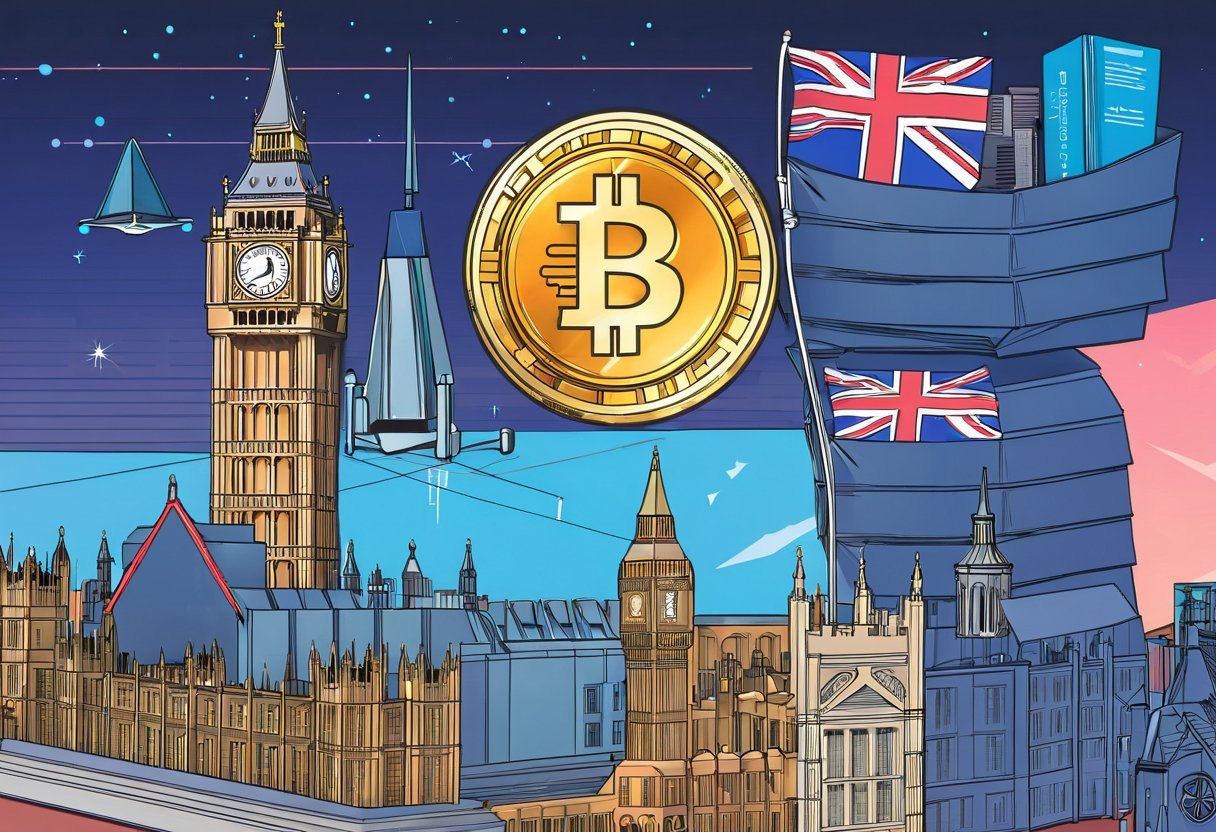
    The United Kingdom has officially recognized cryptocurrency as property, marking a significant milestone in the history of digital assets. This breakthrough has far-reaching implications for users, investors, exchanges, and the global adoption of cryptocurrency. According to Brave New Coin, the Property (Digital Assets etc) Act 2025 received Royal Assent from King Charles III, becoming law across England, Wales, and Northern Ireland.

    What the New Law Means for Crypto Holders

    The new law provides concrete benefits for anyone who owns digital assets in the UK. As Decrypt reports, crypto holders can now more easily prove ownership in legal disputes and recover stolen funds through the court system. Previously, these cases relied on judges interpreting unclear property laws.

    Institutional Adoption and Market Growth

    The UK’s landmark crypto property law has significant implications for institutional adoption and market growth. AInvest notes that legal clarity reduces institutional risks, accelerating market participation and crypto adoption growth. This legislative milestone cements the UK’s role as a global epicenter for digital asset growth.

    Expert Insights and Analysis

    Experts in the field are hailing this move as a major step forward for cryptocurrency. In an exclusive analysis, AI Satoshi Nakamoto stated that ‘the UK’s recognition of crypto as property is a significant step towards mainstream adoption. It provides a clear legal framework for institutions to invest in digital assets, which will drive growth and innovation in the industry.’

    Future Implications and What to Watch For

    As the UK continues to lead the way in cryptocurrency regulation, other countries are likely to follow suit. The future implications of this move are far-reaching, with potential impacts on global trade, finance, and technology. As Freeman Law notes, the UK’s regulatory clarity is not just a checkbox – it is a competitive advantage that will drive institutional demand and crypto adoption growth.

  • AI Disrupts Crypto’s Four-Year Cycle: 2026 Market Predictions

    AI Disrupts Crypto’s Four-Year Cycle: 2026 Market Predictions

    Introduction to the Four-Year Cycle

    The cryptocurrency market has historically followed a four-year cycle, with Bitcoin halvings marking significant events in this pattern. However, the integration of Artificial Intelligence (AI) and increased institutional participation have disrupted this cycle, leading to unpredictable market behaviors.

    Impact of AI on Crypto Markets

    According to Codewave, AI’s ability to predict crypto prices is limited by the dynamic nature of the market. Factors such as hacks, policy changes, and whale trades can significantly impact prices, making it challenging for AI systems to provide accurate predictions.

    Market Predictions for 2026

    Markets.com predicts the end of the four-year cycle in 2026, with a new market structure and sustained buying pressure driving Bitcoin towards gradual growth. This growth is expected to lead to lower volatility and a more stable store of value.

    Role of Institutional Adoption

    Institutional adoption is a key factor in the maturation of the cryptocurrency market. FinancialContent highlights the significance of institutional investment in shaping the future of crypto, with AI emerging as a beacon for stability amidst volatility.

    Conclusion and Future Implications

    In conclusion, the integration of AI and institutional participation has disrupted the traditional four-year cycle in the cryptocurrency market. As we look towards 2026, it’s essential to consider the potential for sustained growth, lower volatility, and the increasing sophistication of crypto financial products.

  • Why Solana’s Financial Future Might Be Brighter Than You Think

    Why Solana’s Financial Future Might Be Brighter Than You Think

    I watched the crypto markets do their usual dance last week – sudden spikes, panic sells, the whole chaotic ballet. But one chart stopped me mid-swig of cold brew: SOL’s 28% surge in 48 hours. Not because of the numbers themselves (we’ve seen crazier), but because of the whispers turning into shouts about Solana becoming Wall Street’s new darling.

    Mike Novogratz’s ‘tailor-made for financial markets’ comment kept echoing in my Twitter feed. The Galaxy Digital CEO doesn’t toss around compliments lightly. Meanwhile, analysts started throwing around a $1,314 price target like it was 2021 all over again. But here’s what’s different this time…

    The Story Unfolds

    Remember when Solana was the ‘Ethereum killer’ that kept tripping over its own feet? The network outages in 2022 became memes before the engineers could even diagnose the problems. Fast forward to this month’s breakneck 65 transactions per second (TPS) in stress tests – with fees that make ETH gas look like highway robbery.

    What changed isn’t just the tech. The financial world’s obsession with real-world asset tokenization found its perfect test subject. BlackRock’s tokenized fund experiments? They could have chosen any chain. They picked Solana. When the world’s largest asset manager starts doing dress rehearsals on your blockchain, people notice.

    The $1,314 target from prominent analysts isn’t random numerology. It’s based on something tangible – Solana’s unique position at the intersection of two revolutions. The first being decentralized finance’s march towards institutional adoption. The second? AI’s insatiable appetite for fast, cheap data pipelines.

    The Bigger Picture

    Here’s where most commentators get it wrong. This isn’t about blockchain versus traditional finance. It’s about infrastructure. Solana’s Proof of History consensus isn’t just faster – it creates timestamped transactions that audit trails love. Try that trick with Ethereum’s probabilistic finality.

    JPMorgan’s recent blockchain experiments revealed something telling. Their Onyx team found settlement times could drop from days to seconds using certain chains. While they didn’t name names, insiders whisper their tests with Solana’s architecture showed sub-second finality. For hedge funds moving billions, that’s not convenient – it’s revolutionary.

    But here’s the twist no one’s talking about. Solana’s speed isn’t just for traders. Its parallel processing through Sealevel runtime means AI models can actually use blockchain for real-time data validation. Imagine ChatGPT verifying sources through immutable transaction logs. That’s not sci-fi anymore.

    Under the Hood

    Let’s geek out for a minute. Solana’s secret sauce is its seven-layer architecture stack. Most chains struggle throughput because they handle consensus, execution, and storage sequentially. Solana’s Turbine protocol breaks data into packets like a BitTorrent for blockchain – except with military-grade encryption.

    The real game-changer? Gulf Stream. This mempool-less protocol pushes transactions to validators before the previous block finishes. It’s like a high-speed train that’s already moving when you board. Compare that to Ethereum’s station where everyone queues up to board the next train.

    But here’s my contrarian take. Solana’s greatest strength might be its developer experience. The JavaScript-like coding environment lowers entry barriers. When I built my first Solana smart contract last month, the entire process took 3 hours – versus 3 days fighting with Solidity’s quirks on Ethereum.

    Market Reality Check

    Numbers don’t lie. Solana’s DeFi TVL just crossed $4.8 billion – up 800% year-over-year. But look closer. Over 60% comes from institutional liquidity pools, not retail yield farmers. The average transaction size tripled in Q2, suggesting bigger players are testing the waters.

    Yet skeptics rightfully point to centralization risks. The network still runs on about 1,900 validators versus Ethereum’s 900,000+. But here’s the plot twist – Solana’s validator economics incentivize geographic distribution. New programs slash hardware costs for node operators in emerging markets. I’m tracking a Nairobi startup spinning up validators on repurposed gaming PCs.

    The regulatory elephant in the room? SEC’s Gary Gensler still eyes crypto like a hawk. But Solana’s partnerships with Franklin Templeton and Citigroup give it something rare – institutional air cover. When your validators include TradFi giants, regulators think twice before swinging hammers.

    What’s Next

    Three things to watch. First, Firedancer’s full launch – the Jump Crypto-built validator client that could 10x throughput. Second, the AI agent integration trend. I’m beta-testing a Solana-based trading bot that executes complex strategies in milliseconds – no centralized server farm needed.

    Lastly, watch Asia. Solana’s recent Seoul conference wasn’t just another crypto meetup. Samsung’s blockchain lead gave keynote remarks. Korean web3 startups are building Solana-based loyalty programs for K-pop merch. When tech meets culture, markets follow.

    The $1,314 target? It’s not a moon shot if institutions allocate just 1% of their treasury reserves. BlackRock manages $10 trillion. You do the math.

    But here’s my final thought. Solana’s real value isn’t in price predictions. It’s proving that blockchain can handle Wall Street’s heaviest lifts – without breaking a sweat. The next time your stock broker complains about settlement delays, tell them there’s a faster way home.

Oh hi there 👋
It’s nice to meet you.

Sign up to receive awesome content in your inbox, every Day.

We don’t spam! Read our privacy policy for more info.