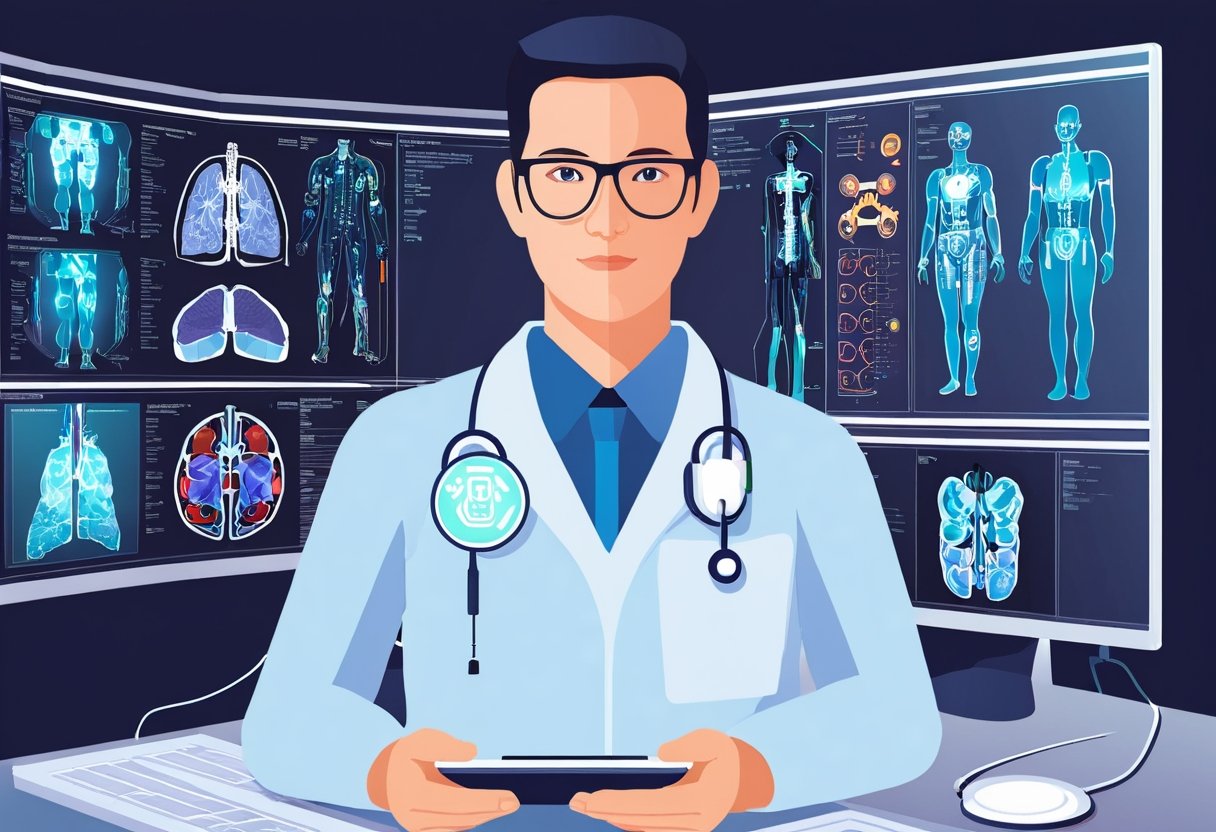
Introduction to AI in Disease Diagnosis
Artificial intelligence (AI) is transforming the field of healthcare, particularly in disease diagnosis. According to Spectral-ai, AI technologies, especially in medical diagnostics, are revolutionizing how diseases are detected, analyzed, and treated. By leveraging machine learning and deep learning algorithms, AI can process vast amounts of data swiftly and accurately, providing healthcare providers with invaluable insights.
Applications and Benefits of AI in Medical Diagnostics
As noted by Medinform, current AI developments have achieved comparable performance with medical experts in specific fields. Their predictive performance and streamlined efficiency pertaining to disease diagnoses, particularly in medical imaging tasks, have transcended that of clinicians. A study published in the UK, mentioned in BMC Medical Education, showed that utilizing an AI system to interpret mammograms had an absolute reduction in false positives and false negatives by 5.7% and 9.4%, respectively.
Challenges and Future Directions
Despite the advancements, there are challenges in integrating AI into clinical practice. The quality and quantity of input data significantly affect the accuracy of AI tools. Moreover, there is a need for further studies to explore the application of AI in other medical imaging tasks and image-unrelated medical practices. As AI continues to evolve, it is expected to support medical decisions by providing clinicians with real-time assistance and insights, potentially reducing the risk of human errors and improving patient outcomes.
Conclusion and Practical Takeaways
In conclusion, AI is revolutionizing disease diagnosis, offering new levels of accuracy and efficiency. Healthcare providers, researchers, and patients must work together to address the challenges and ensure the effective integration of AI into clinical practice. Practical takeaways include the importance of high-quality data, the need for continuous training and validation of AI models, and the potential for AI to enhance patient care and outcomes.