Tag: nasdaq

  • Bitcoin’s 9-Day Absorption into Traditional Finance

    Bitcoin’s 9-Day Absorption into Traditional Finance

    Introduction to Bitcoin’s Mainstream Move

    Between November 24 and December 2, 2025, the landscape of Bitcoin and traditional finance underwent a significant shift. Three major moves by JPMorgan, Nasdaq, and Vanguard marked Bitcoin’s absorption into the traditional financial system. This article delves into the specifics of these moves and their implications for the future of cryptocurrency and finance.

    JPMorgan’s Leveraged Notes

    JPMorgan filed to launch leveraged structured notes tied to BlackRock’s iShares Bitcoin Trust ETF, as reported by TradingView. These notes offer up to 1.5x returns on the ETF through 2028, targeting sophisticated investors seeking amplified exposure to Bitcoin while retaining legal protections. However, investors are also exposed to significant downside risk, including potential principal loss if the ETF declines by roughly 40% or more.

    Nasdaq’s Proposal to Quadruple Limits

    Nasdaq proposed to raise the position limit on BlackRock’s iShares Bitcoin Trust (IBIT) options from 250,000 contracts to 1 million, as detailed in Decrypt and Yahoo Finance. This move would place IBIT options in the same tier as major equities and ETFs, signaling the growing demand for Bitcoin derivatives among institutional investors. The increased limit would enable dealers to hedge their exposures more effectively, facilitating the creation of more complex financial products tied to Bitcoin.

    Vanguard’s Reversal on Crypto

    Vanguard, known for its cautious approach to cryptocurrency, reversed its stance, as noted by Coinpedia. This shift, combined with the moves by JPMorgan and Nasdaq, completes the mainstream funnel for Bitcoin, integrating it deeper into traditional financial structures. The implications of these moves are multifaceted, affecting not only the cryptocurrency market but also the broader financial landscape.

    Implications for the Market and Users

    The absorption of Bitcoin into traditional finance has several key implications. Firstly, it underscores the growing acceptance of cryptocurrency as a legitimate asset class. Secondly, it opens up new avenues for investment and risk management, potentially attracting more institutional capital into the space. However, it also introduces new regulatory challenges and risks, particularly for retail investors who may not fully understand the complexities of leveraged financial products.

    Conclusion and Future Outlook

    The nine-day period between November 24 and December 2, 2025, will be remembered as a pivotal moment in the history of Bitcoin and its relationship with traditional finance. As the cryptocurrency market continues to evolve, it’s essential for investors, regulators, and market participants to stay informed about these developments and their potential impacts on the financial system.
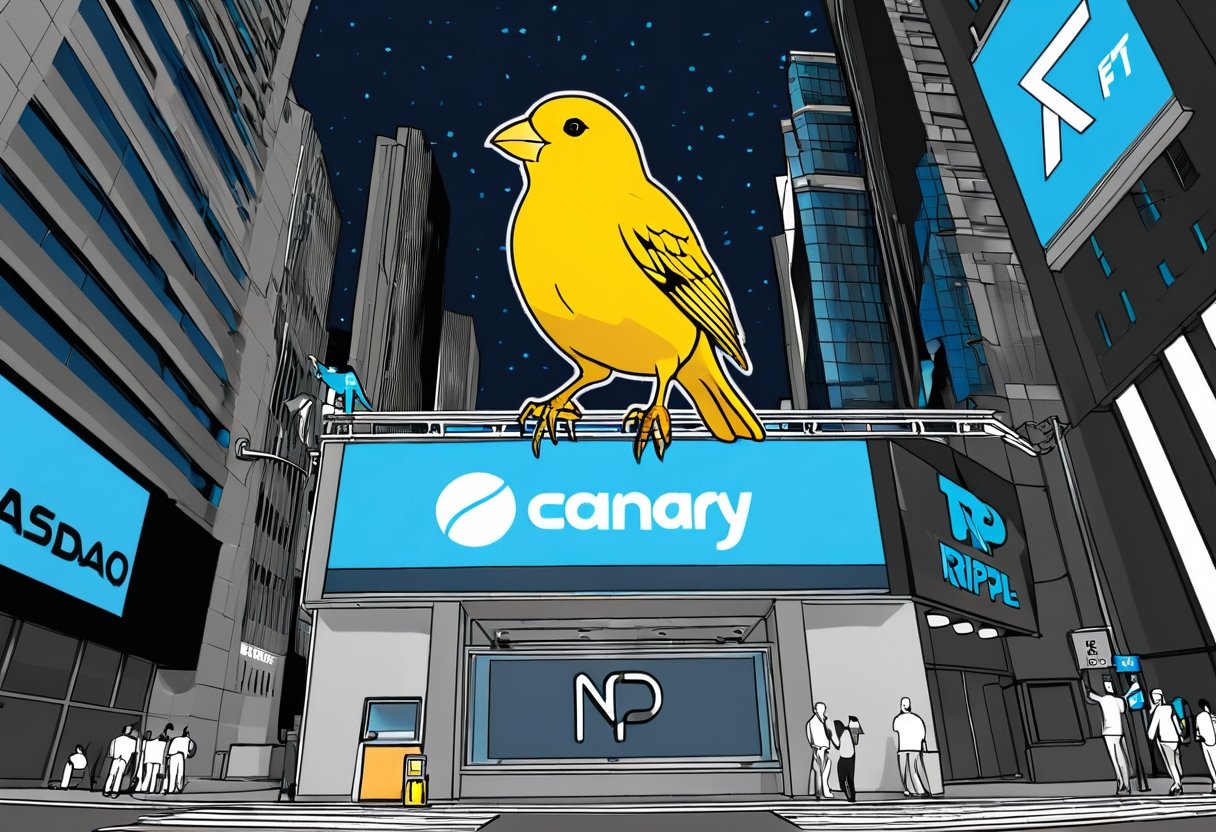

  • Canary XRP ETF Debuts on Nasdaq: Ripple’s Big Moment

    Canary XRP ETF Debuts on Nasdaq: Ripple’s Big Moment


    Introduction to the Canary XRP ETF

    The crypto market is bracing for a major move, with XRP at the center. As Canary Capital readies the first U.S. spot XRP ETF, investors are eyeing whether this Nasdaq debut could ignite the next altcoin rally. According to Source 1, the launch of the first exchange-traded fund (ETF) built around the token appears to be imminent.

    XRP ETF Launch Details

    The Canary XRP ETF has received approval for listing on the Nasdaq under the ticker symbol ‘XRPC’, as reported by Source 2. This development marks a significant milestone for the asset and its growing investor base. Source 3 highlights that the fund will offer investors direct exposure to XRP through a regulated market structure, with a management fee projected at 0.50% annually.

    Market Impact and Future Implications

    The launch of XRP ETFs could broaden the reach of the token and accelerate adoption trends, notes Source 1. With the ETF set to begin trading on the Nasdaq, investors are anticipating a potential surge in XRP’s market activity. As Source 5 points out, the end of the U.S. government shutdown has opened the door for a wave of crypto ETF approvals, and the Canary Capital Spot XRP ETF is among the first to launch.

    Expert Insights and Analysis

    Experts believe that the launch of the XRP ETF could be a major turning point for the asset. As Source 4 suggests, the long-awaited arrival of a US-based exchange-traded fund directly holding XRP may finally become a reality. Our analysis indicates that the ETF’s approval and upcoming launch are significant developments in the crypto space, with potential implications for the broader market.

  • Can Solana Become the Catalyst for a $500 Target? Exploring the Bigger Picture

    Can Solana Become the Catalyst for a $500 Target? Exploring the Bigger Picture

    What caught my attention wasn’t the announcement itself, but the timing. Nasdaq firm going all in on Solana (SOL) has sparked a frenzy of interest in the cryptocurrency space. But here’s the real question: can this be the catalyst for a $500 target?

    The reality is, Solana has been gaining traction in recent months, with its price surging by over 50%. This has led many to speculate about its potential to reach a $500 target, a milestone that would make it one of the top-performing cryptocurrencies in the market.

    But what’s driving this surge in interest? One reason is the growing recognition of Solana’s potential in the decentralized finance (DeFi) space. With its high-speed transactions and low fees, Solana is becoming an attractive option for developers looking to build decentralized applications (dApps).

    The numbers tell a fascinating story. According to data from CryptoSlate, Solana’s total value locked (TVL) in DeFi has risen by over 200% in the past month alone. This is a clear indication of the growing demand for Solana’s infrastructure and services.

    What strikes me about this trend is the potential for Solana to become a major player in the DeFi space. With its high-speed transactions and low fees, Solana is well-positioned to disrupt traditional financial systems and become a major force in the world of decentralized finance.

    But here’s where it gets interesting. The Nasdaq firm’s decision to go all in on Solana has created a sense of FOMO (fear of missing out) in the market. Many investors are now scrambling to get in on the action, driving up the price of Solana and creating a sense of momentum around the cryptocurrency.

    The Bigger Picture

    I think what’s fascinating about this trend is the potential for Solana to become a major catalyst for growth in the cryptocurrency space. With its high-speed transactions and low fees, Solana is well-positioned to disrupt traditional financial systems and become a major force in the world of decentralized finance.

    The reality is, Solana’s potential goes far beyond its price. With its growing recognition in the DeFi space, Solana is becoming an attractive option for developers looking to build decentralized applications (dApps). This has the potential to create a new wave of innovation and growth in the cryptocurrency space.

    Under the Hood

    So, what’s happening under the hood to drive this trend? One reason is the growing recognition of Solana’s potential in the DeFi space. With its high-speed transactions and low fees, Solana is becoming an attractive option for developers looking to build decentralized applications (dApps). But there’s a deeper game being played here.

    The numbers tell a fascinating story. According to data from CryptoSlate, Solana’s total value locked (TVL) in DeFi has risen by over 200% in the past month alone. This is a clear indication of the growing demand for Solana’s infrastructure and services.

    What strikes me about this trend is the potential for Solana to become a major player in the DeFi space. With its high-speed transactions and low fees, Solana is well-positioned to disrupt traditional financial systems and become a major force in the world of decentralized finance.

    Market Reality

    The reality is, Solana’s price is being driven by a combination of factors, including its growing recognition in the DeFi space and the Nasdaq firm’s decision to go all in on the cryptocurrency. But what’s driving this trend? One reason is the growing demand for Solana’s infrastructure and services.

    The numbers tell a fascinating story. According to data from CryptoSlate, Solana’s total value locked (TVL) in DeFi has risen by over 200% in the past month alone. This is a clear indication of the growing demand for Solana’s infrastructure and services.

    What strikes me about this trend is the potential for Solana to become a major player in the DeFi space. With its high-speed transactions and low fees, Solana is well-positioned to disrupt traditional financial systems and become a major force in the world of decentralized finance.

    What’s Next

    I think what’s fascinating about this trend is the potential for Solana to become a major catalyst for growth in the cryptocurrency space. With its high-speed transactions and low fees, Solana is well-positioned to disrupt traditional financial systems and become a major force in the world of decentralized finance.

    The reality is, Solana’s potential goes far beyond its price. With its growing recognition in the DeFi space, Solana is becoming an attractive option for developers looking to build decentralized applications (dApps). This has the potential to create a new wave of innovation and growth in the cryptocurrency space.

    Final Thoughts

    What struck me about this trend is the potential for Solana to become a major player in the DeFi space. With its high-speed transactions and low fees, Solana is well-positioned to disrupt traditional financial systems and become a major force in the world of decentralized finance.

  • When Politics Meets Crypto: The Real Story Behind Trump’s Nasdaq Bitcoin Play

    When Politics Meets Crypto: The Real Story Behind Trump’s Nasdaq Bitcoin Play

    I was scrolling through crypto Twitter when the headline hit like a lightning bolt: ‘Trump Family’s American Bitcoin Goes Public on Nasdaq.’ My first thought? This isn’t just another crypto ETF listing. We’re witnessing something fundamentally different – a political dynasty diving headfirst into digital assets through traditional markets. But here’s what’s really interesting: this move comes exactly as Bitcoin struggles to reclaim its all-time high while Washington debates crypto regulation.

    What caught my attention wasn’t the $27.50 opening price or the modest 8% first-day pop. It was the timing. Three weeks after President Biden vetoed legislation that could have shaped crypto regulations, and two days before the SEC’s deadline to approve Ethereum ETFs. This isn’t just financial engineering – it’s political theater meets blockchain innovation.

    The Story Unfolds

    The Trump Organization’s crypto pivot actually began quietly in 2021. While the former president famously called Bitcoin ‘a scam,’ financial disclosures later revealed family offices had been accumulating BTC through OTC desks. Now, with this Nasdaq listing, they’ve essentially created a quasi-ETF with a MAGA twist – complete with patriotic branding and promises of ‘America First’ node operations.

    But here’s where it gets clever: Unlike traditional Bitcoin funds, American Bitcoin Incorporated (ticker: ABTC) claims to maintain its own blockchain nodes across U.S. military bases. Whether that’s technically feasible matters less than the political message it sends. They’re framing crypto custody as a national security issue, a brilliant maneuver in today’s polarized climate.

    The Bigger Picture

    What’s fascinating isn’t just the Trump connection, but what this reveals about crypto’s path to legitimacy. Traditional finance has spent years trying to force blockchain into existing frameworks. This playbook flips the script – using crypto’s inherent political dimensions as a selling point. Suddenly, buying Bitcoin becomes an act of patriotism rather than rebellion.

    CoinDesk’s latest blockchain updates show why this matters. While developers focus on technical upgrades like Taproot and zero-knowledge proofs, mainstream adoption is being driven by cultural narratives. The Trump team understands this better than most – they’re not just selling an asset, but an ideology wrapped in cryptographic promises.

    Under the Hood

    Technically, ABTC’s structure raises eyebrows. Their white paper mixes legitimate blockchain infrastructure with unproven claims about ‘military-grade validation.’ From what I can parse, they’re using a modified version of Bitcoin Core with additional AML layers – essentially creating a KYC-friendly fork that still interacts with the main chain.

    DeFi Pulse’s protocol analytics suggest they’re bridging traditional custody solutions with decentralized elements. It’s a Frankenstein approach: Coinbase-style compliance married to political messaging. Whether this hybrid model can scale remains unclear, but it’s precisely this ambiguity that’s driving both interest and skepticism.

    Market Reality

    The numbers tell two stories. On paper, ABTC’s $420 million debut valuation seems modest compared to crypto unicorns. But look at the options chain – institutional investors are betting big on volatility. The 30-day implied volatility sits at 85%, higher than MicroStrategy’s wildest swings. This isn’t a play on Bitcoin’s price; it’s a leveraged bet on crypto becoming a political football in the 2024 elections.

    Yet for all the hype, remember the crypto graveyard. Remember Bitwise’s ‘patriotic coin’ debacle in 2018? Or FTX’s Super Bowl ads? What makes this different is the Nasdaq platform. By entering traditional markets, ABTC forces institutional investors to engage with crypto politics whether they want to or not.

    What’s Next

    Watch the regulatory dominoes. If ABTC avoids SEC scrutiny despite its unorthodox structure, it could open floodgates for politically-aligned crypto products. Imagine AOC-branded climate tokens or Musk Mars coins trading alongside Apple and Tesla. The line between asset and meme would blur beyond recognition.

    But here’s my contrarian take: The real impact might be technical. To satisfy Nasdaq’s listing requirements, ABTC had to implement enterprise-grade auditing trails – potentially creating new blockchain standards. What if their KYC modifications become the template for future SEC-approved crypto assets? We might look back at this as the moment crypto compliance went mainstream.

    As I write this, ABTC is swinging wildly in after-hours trading. Some call it a gimmick, others a revolution. But the truth? It’s both. In crypto’s messy adolescence, every breakthrough looks like a stunt until it becomes status quo. What matters isn’t whether this particular venture succeeds, but that it forces us to confront crypto’s unavoidable future – where code, capital, and politics become permanently intertwined.

Oh hi there 👋
It’s nice to meet you.

Sign up to receive awesome content in your inbox, every Day.

We don’t spam! Read our privacy policy for more info.