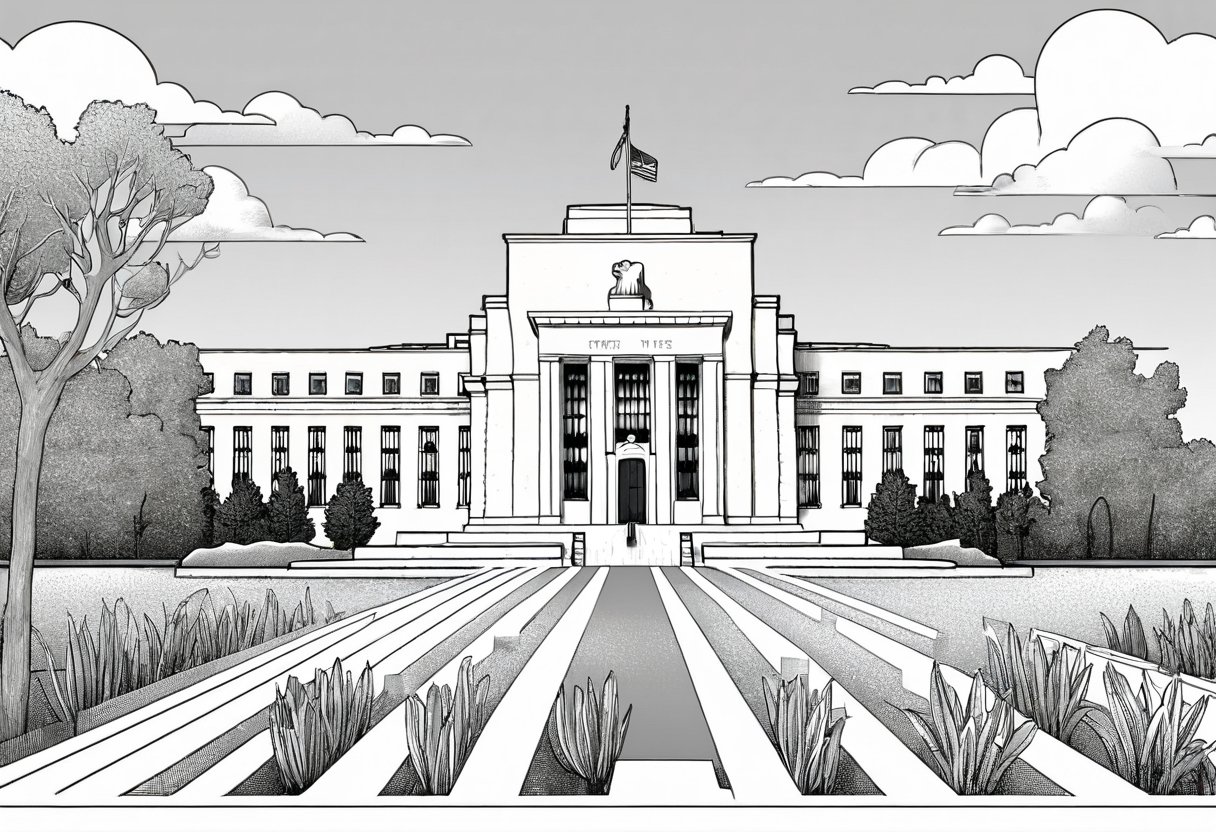
I was making coffee when the Fed announcement hit. Like most tech workers, I nearly scrolled past the ’25 basis points’ headline – until I noticed semiconductor futures twitching in the background of my trading app. Since when do rate cuts make Nvidia’s stock dance before earnings? That’s when it clicked: we’re not just talking macroeconomics anymore. The Fed’s lever-pulling just became Silicon Valley’s secret hardware accelerator.
What’s fascinating is how few people connect monetary policy to the physical guts of our AI-driven world. Those AWS data centers guzzling power? The TSMC factories stamping out 2nm chips? The autonomous trucking fleets needing 5G towers? Every byte of our digital future gets built with borrowed billions. And suddenly, the cost of that money just got cheaper.
The Story Unfolds
The 25bps cut itself feels almost quaint – a relic from an era when central banking moved in quarter-point increments. But watch the spread between 10-year Treasuries and tech corporate bonds tighten by 18 basis points within hours. That’s the market whispering what startups are shouting: deep tech’s capital winter just got a surprise thaw.
Take ComputeNorth’s abandoned Wyoming data center project – mothballed last fall when rates hit 5.5%. At 4.75% financing? Suddenly those 100MW of GPU-ready capacity look resurrectable. Or consider the MIT spinout working on photonic chips – their Series C just became 30% less dilutive thanks to debt financing options. This isn’t theoretical. It’s concrete pours and cleanroom construction schedules accelerating.
The Bigger Picture
Here’s why this matters more than the financial headlines suggest: we’re witnessing the Great Reindustrialization of Tech. When money was free during ZIRP years, VCs funded apps and algorithms. Now, with physical infrastructure ROI improving, the smart money’s building literal foundries – the 21st century equivalents of Carnegie’s steel mills.
Intel’s Ohio fab complex tells the story. Originally budgeted at $20B before rate hikes, construction slowed as financing costs ballooned. Two more cuts this year could shave $800M in interest payments – enough to add a whole new chip testing wing. That’s not corporate finance. That’s geopolitical strategy in an era where TSMC owns 60% of advanced semiconductor production.
Under the Hood
Let’s break this down technically. Every 25bps cut reduces annual interest on tech infrastructure debt by $2.5M per billion borrowed. For a $500M quantum computing lab financing, that’s $12.5M yearly savings – enough to hire 50 top physicists. But the real magic happens in discounted cash flow models. Suddenly, those 10-year AI server farm projections get 14% NPV bumps, turning ‘maybe’ projects into green lights.
The solar-powered data center play makes this concrete. At 5% rates, operators needed $0.03/kWh power costs to break even. At 4.25%, that threshold drops to $0.027 – making Wyoming wind and Texas sun farms viable. This isn’t spreadsheets – it’s actual switch flips in substations from Nevada to New Delhi.
Yet there’s a catch hiding in the yield curves. While the Fed eases, 30-year TIPS spreads suggest inflation expectations rising. Translation: that cheap hardware financing today could mean screaming matches over GPU procurement costs tomorrow. It’s a time-bomb calculus every CTO is now running.
What’s Next
Watch the supply chain dominos. Cheaper dollars flowing into fabs mean more ASML EUV machines ordered – currently backlogged until 2026. But each $200M lithography tool requires 100,000 specialized components. Suddenly, the Fed’s policy is rippling out to German lens manufacturers and South Korean robotics suppliers. Modern monetary mechanics meet 21st-century mercantilism.
I’m tracking three signals in coming months: NVIDIA’s data center bookings, Schlumberger’s geothermal drilling contracts (for clean-powered server farms), and TSMC’s capacity allocation to US clients. Together, they’ll reveal whether this rate cut truly sparks a hardware renaissance – or just papers over structural shortages.
The reality is, we’re all passengers on a skyscraper elevator designed by economists, built by engineers, and funded by pension funds chasing yield. As the Fed nudges rates downward, that elevator’s heading straight for the cloud – the literal kind, humming in Virginia server farms and Taiwanese cleanrooms. And whether we’re ready or not, the infrastructure of tomorrow just got a multi-billion dollar tailwind.