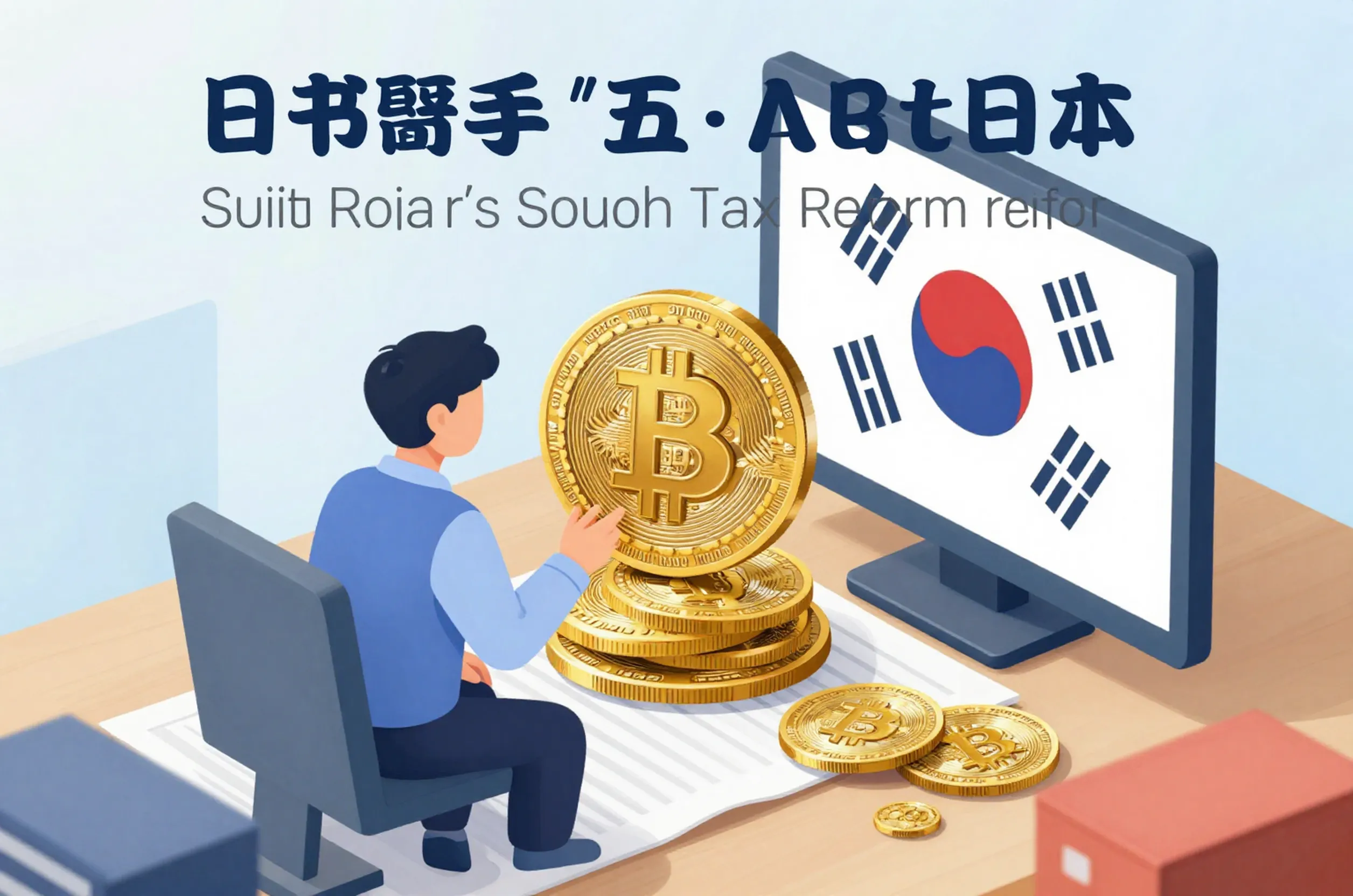
The world of cryptocurrency has been abuzz with the recent introduction of a bill by South Korea’s main opposition party, the People Power Party (PPP), to abolish the planned cryptocurrency capital gains tax. This move has significant implications for the crypto market and its participants.
Understanding the Tax
The tax in question is a 20% national income tax plus a 2% local surcharge, totaling up to 22%, and targets annual gains exceeding 2.5 million Korean won, roughly $1,665–$1,900. This taxation plan has been a subject of debate among crypto enthusiasts and investors.
Implications of the Bill
The introduction of this bill signals a potential shift in the regulatory landscape for cryptocurrencies in South Korea. If passed, it could lead to increased investment and activity in the crypto market, as the tax burden would be significantly reduced.
Global Context
South Korea is not alone in grappling with cryptocurrency regulation. Many countries are struggling to find the right balance between regulating the crypto market to protect investors and not stifling innovation. The outcome of this bill could set a precedent for other nations.
Expert Insights and Analysis
Experts in the field view this move as a positive step towards legitimizing cryptocurrencies and encouraging their use. However, there are also concerns about the potential for tax evasion and the need for clear, comprehensive regulations.
In the fast-changing world of global trade, South Korea finds itself caught between protecting financial stability and responding to U.S. demands. Could history repeat itself with risks reminiscent of the 1997 Asian Financial Crisis?
South Korea’s Stark Warning
South Korean President Lee Jae-Myung has sounded the alarm that Washington’s latest trade demands could expose Seoul to dangers similar to the 1997 financial meltdown.
At the core of the dispute lies a $350 billion cash investment that the U.S. wants Seoul to provide in exchange for tariff relief. Washington also insists on controlling how the funds are allocated — a condition Lee firmly rejects.
Lee compared the U.S. demand to “a neighbor demanding money at the door” and warned that without a swap-line agreement, handing over dollars could destabilize the won and put Korea’s financial system at risk.
Negotiations at a Standstill
Talks between Washington and Seoul remain frozen, with both sides standing firm:
U.S. demands → Immediate cash commitments and U.S. control over fund allocation.
South Korea’s stance → Commercial safeguards, flexibility, and protection of financial autonomy.
Unlike Japan — which struck a similar deal earlier this year — South Korea does not have a permanent swap line with the U.S. and maintains smaller foreign reserves.
Commerce Secretary Howard Lutnick has warned that Seoul must “take the deal or face tariffs,” echoing Donald Trump’s hardline trade playbook.
Beyond Trade: Rising Frictions
This economic standoff comes at a delicate moment in U.S.–South Korea ties:
A raid at a Hyundai battery plant in Georgia, where 300 Korean workers were detained, triggered outrage in Seoul.
Public opinion has grown more hostile despite government attempts to downplay the incident.
Geopolitically, South Korea faces mounting risks from expanding China–Russia–North Korea cooperation, which Lee described as a dangerous escalation.
At home, businesses in South Korea worry about a double blow: tariffs abroad and unclear investment rules at home. Analysts warn that uncertainty could weaken the won, accelerate capital outflows, and erode investor confidence.
Echoes of the 1997 Financial Crisis
Lee’s references to the 1997 IMF bailout aren’t just rhetoric. That crisis forced South Korea into sweeping structural reforms, painful austerity, and the temporary loss of financial sovereignty.
Today, the fear is that a poorly structured deal with Washington could once again erode financial sovereignty and restrict Seoul’s ability to manage its own economy.
AI Satoshi’s Analysis
Imposing strict conditions on capital flows centralizes risk, exposing Seoul to systemic vulnerabilities. Without safeguards, forced allocation of funds undermines financial autonomy, weakens market confidence, and increases exposure to currency volatility. Decentralized decision-making and carefully calibrated safeguards are crucial to maintain resilience in complex economic systems.
🔔 Follow @casi.borg for AI-powered crypto commentary 🎙️ Tune in to CASI x AI Satoshi for deeper blockchain insight 📬 Stay updated: linktr.ee/casiborg
💬 Would you support Seoul’s push for safeguards, or side with Washington’s tough stance?
⚠️ Disclaimer: This content is generated with the help of AI and intended for educational and experimental purposes only. Not financial advice.
South Korea is opening the door for crypto and blockchain startups, granting them the same “venture company” status as traditional tech firms. This change could fuel innovation, attract investment, and strengthen South Korea’s role in the digital asset space.
A Breakthrough for Crypto Startups
Starting September 16, South Korea’s Ministry of SMEs and Startups will allow crypto firms to apply for venture company certification.
This ends the 2018 restrictions, when crypto was deemed too speculative for venture recognition. With the revision of the Venture Business Act, the barriers are officially coming down.
For blockchain entrepreneurs, this means access to:
Tax breaks
Research & development grants
Credit guarantees
Financing and investment support
Legal experts note that existing venture-certified firms can now expand into crypto without losing their classification — a major incentive for growth.
Why the Government Changed Course
So why now?
According to the Ministry, two key factors drove the decision:
Global shift in digital assets — Crypto has matured into financial infrastructure, powering innovation across industries.
Better investor protection systems — Safeguards are stronger, making the environment safer for businesses and users.
Minister Han Seong-sook called the update a strategic move for the future:
“We will focus our policy capabilities on creating a transparent and responsible ecosystem to facilitate the smooth inflow of venture capital and the growth of new industries.”
South Korea’s Growing Crypto Landscape
The timing couldn’t be better. South Korea’s crypto industry is already seeing rapid growth:
President Lee Jae-myung’s administration has been pushing forward pro-crypto legislation, including steps to legalize stablecoins.
The market is forecasted to hit $1.1 billion in revenue by 2025 and $1.3 billion by 2026 (Statista).
16 million South Koreans — over 30% of the population — are active crypto exchange users.
With these numbers, South Korea is positioning itself as a major hub for blockchain adoption and innovation.
AI Satoshi’s Analysis
By reversing its 2018 ban, South Korea acknowledges that blockchain and digital assets have matured beyond speculation into infrastructure for finance and innovation. Venture certification gives firms tangible support — credit guarantees, R&D grants, and investment capital — accelerating adoption of smart contracts, trading, and cybersecurity. This shift also signals alignment with global trends, where governments increasingly integrate decentralized technologies into regulated growth frameworks.
🔔 Follow @casi.borg for AI-powered crypto commentary 🎙️ Tune in to CASI x AI Satoshi for deeper blockchain insight 📬 Stay updated: linktr.ee/casiborg
💬 Would you welcome more governments granting crypto firms venture status?
⚠️ Disclaimer: This content is generated with the help of AI and intended for educational and experimental purposes only. Not financial advice.