Tag: Tech Policy

  • Trump’s 2025 Deal Sparks Controversy Over AI Chip Sales to China

    Trump’s 2025 Deal Sparks Controversy Over AI Chip Sales to China

    Introduction to the Controversy

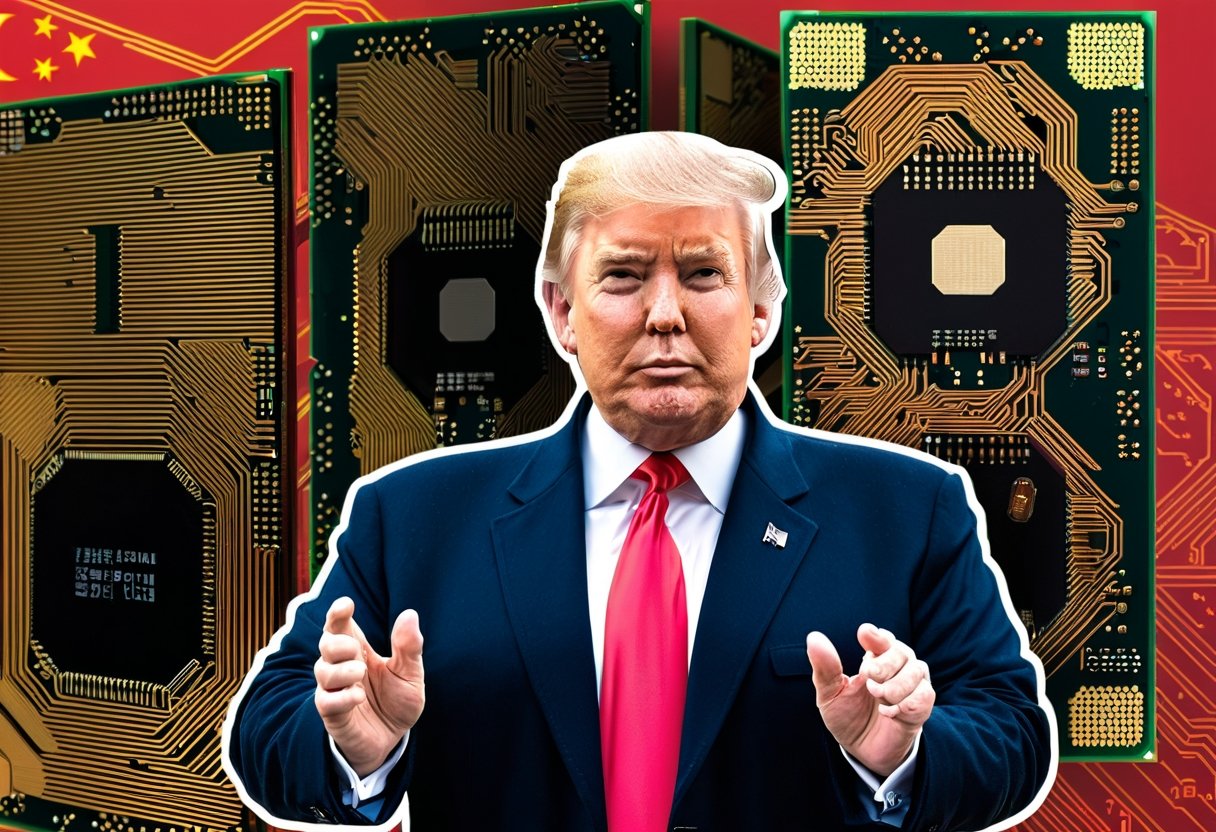
    President Trump’s 2025 deal allowing Nvidia and AMD to sell AI chips to China has sparked intense controversy. The arrangement, which promises a 15-25% U.S. revenue share, has been touted as a means to fund innovation but criticized for potential security risks. As reported by WebProNews and CNBC, this move has significant implications for U.S.-China tech relations.

    Details of the Deal

    According to CNBC, Nvidia and AMD agreed to share 15% of the revenue from China chip sales with the U.S. government. However, President Trump later announced that Nvidia would be allowed to ship its H200 artificial intelligence chips to ‘approved customers’ in China, with the U.S. receiving a 25% cut. This inconsistency has fueled criticism from lawmakers and experts, as highlighted by Bloomberg.

    Implications and Criticisms

    The deal has been criticized for its potential to undermine U.S. national security. As Reuters reports, the U.S. administration has launched a review that could result in the first shipments to China of Nvidia’s second-most powerful AI chips. This has raised concerns among China hawks across the U.S. political spectrum, who fear that the chips could supercharge Beijing’s military and erode the U.S. advantage in artificial intelligence.

    Expert Insights and Analysis

    Experts argue that shipping advanced AI chips to China could have significant implications for the future of U.S.-China relations and the global tech industry. As PBS notes, there are concerns about allowing advanced computer chips to be sold to China, as it could help the country better compete against the U.S. in building out AI capabilities.

    Conclusion and Future Implications

    In conclusion, Trump’s 2025 deal allowing Nvidia and AMD to sell AI chips to China has sparked controversy and raised significant questions about the implications for U.S. national security and the global tech industry. As the situation continues to unfold, it is essential to consider the potential long-term consequences of this decision and the future of U.S.-China tech relations.

  • EU Delays AI Act Implementation: What It Means

    EU Delays AI Act Implementation: What It Means

    Introduction to the AI Act Delay

    The European Union has decided to postpone the implementation of the AI Act, a regulatory framework aimed at governing the development and deployment of artificial intelligence in the EU. This decision comes after significant pushback from Big Tech companies and concerns about the EU’s competitiveness in the global AI landscape.

    Reasons Behind the Delay

    According to Reuters, the European Commission proposed streamlining and easing tech regulations, including delaying some provisions of the AI Act, to cut red tape and boost Europe’s competitiveness. The Commission wants to avoid a scenario where the rules start to apply before standards, common specifications, and supervisory structures are ready, which would lead to high costs and difficulties for companies.

    Impact on Businesses and Innovation

    The delay is expected to give businesses more time to prepare for the new regulations and to allow for the development of necessary technical standards and guidance. As noted by the Carnegie Endowment, the EU needs to balance regulation, competitiveness, and strategic autonomy to thrive in the global AI race.

    Expert Insights and Analysis

    Experts believe that the delay is a pragmatic decision, considering the complexity of the AI Act and the need for clear guidance and standards. However, it also raises concerns about the EU’s ability to regulate AI effectively and to protect citizens’ rights.

    Future Implications

    The postponement of the AI Act implementation has significant implications for the future of AI regulation in the EU. It may lead to a more nuanced and effective regulatory framework, but it also risks undermining the EU’s position as a leader in AI governance.

Oh hi there 👋
It’s nice to meet you.

Sign up to receive awesome content in your inbox, every Day.

We don’t spam! Read our privacy policy for more info.