Tag: tech trends

  • The Surprising Drop in Computer Prices: Trends and Insights

    The Surprising Drop in Computer Prices: Trends and Insights


    Introduction to the Phenomenon

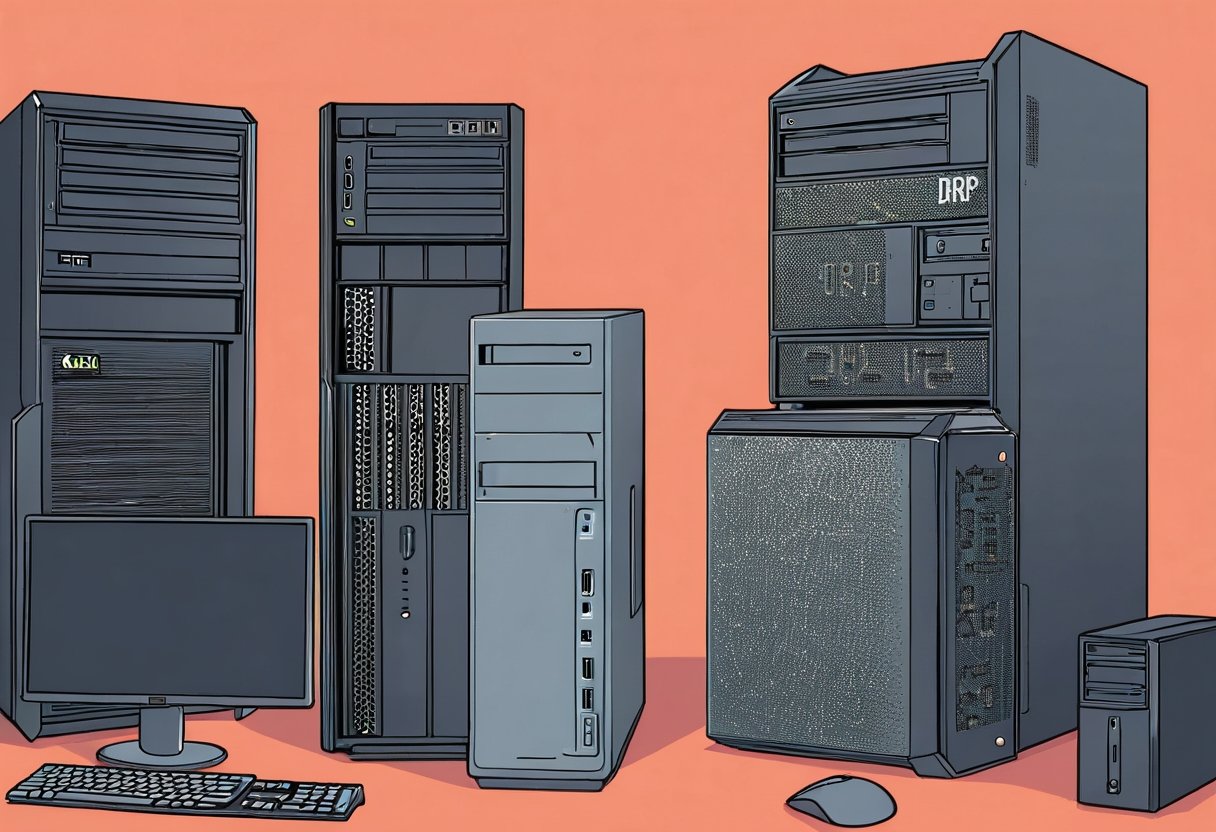
    In an era marked by rising prices across various sectors, the cost of computers has notably decreased. This trend is especially intriguing given the broad application and dependency on computing technology in modern life. According to NPR, the entry-level MacBook Pro, for instance, has seen a significant price drop, from $1,799 five years ago to $1,599 today, despite enhancements in screen size, memory, and storage.

    Understanding the Decline

    The primary reason behind this price fall can be attributed to the advancement in semiconductor technology, as explained by the Federal Reserve. The ability to shrink transistors has led to a significant reduction in the price per transistor, thereby making computing more affordable. This phenomenon is a direct result of Moore’s Law, which states that the number of transistors on a microchip doubles approximately every two years, leading to rapid advancements in computing power and reductions in cost.

    The Role of Semiconductor Inputs

    Research, such as the study by Dulberger, highlights the crucial role of semiconductor inputs in the manufacture of computers. The price of semiconductors has been a major driver of changes in computer prices, influencing the pace of price declines for semiconductors and, consequently, the improvement in price-performance for information technology.

    The Future of Computing Prices

    Despite the current trend of decreasing prices, there are indications that this might not continue indefinitely. The decline of computers as a general-purpose technology suggests that as progress slows, other technologies might displace computers, potentially affecting their pricing and development trajectory. Moreover, the surge in memory and storage prices due to AI server demand could offset the savings from advancements in semiconductor technology.

    Practical Takeaways

    For consumers and businesses, understanding these trends is crucial for making informed purchasing decisions. While computers have become more affordable, the rising costs of certain components like memory and storage, driven by AI demand, might impact the overall cost of computing solutions. It’s essential to consider these factors when planning technology investments.
  • The Rise of Forward-Deployed Engineers in AI

    The Rise of Forward-Deployed Engineers in AI


    Introduction to Forward-Deployed Engineers

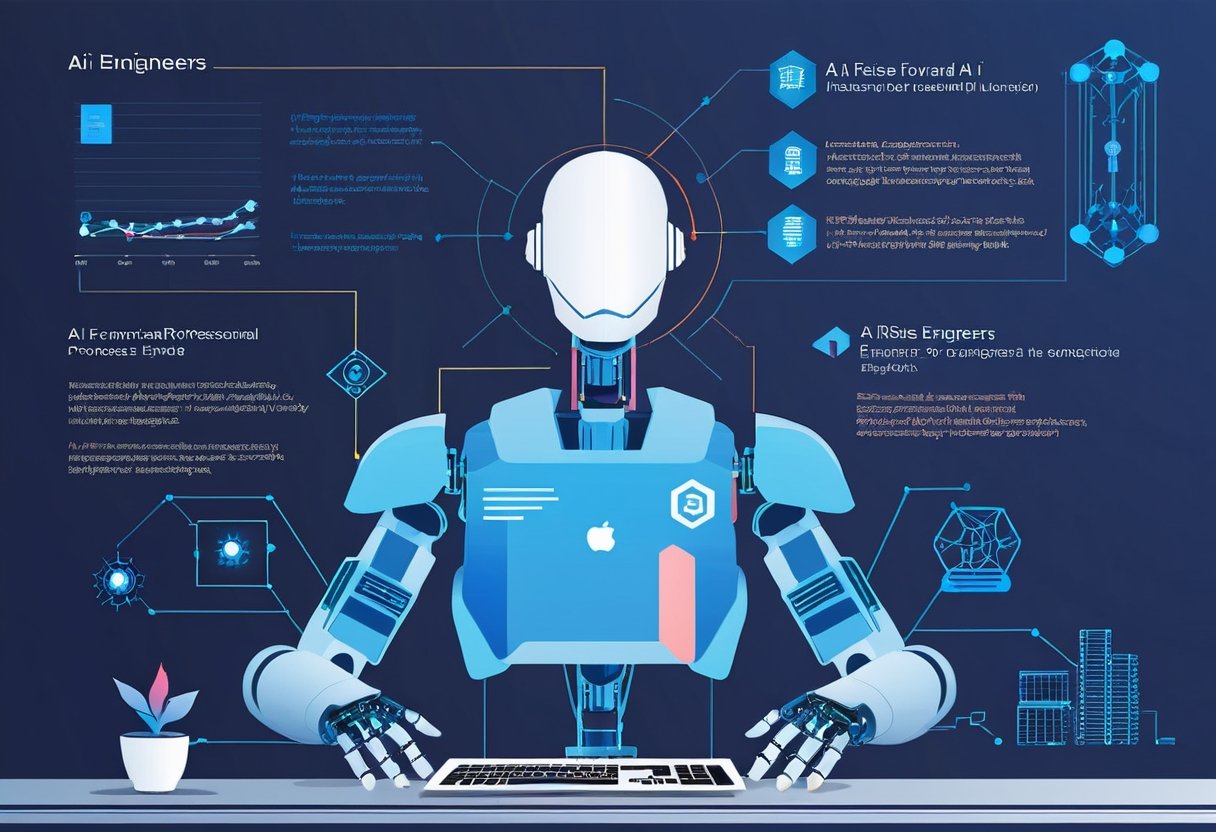
    The demand for forward-deployed engineers has skyrocketed, with job listings for such AI roles on Indeed jumping over 800% between January and September this year, as reported by Indeed’s Hiring Lab and the Financial Times. This trend highlights the industry’s push to make AI products more practical and useful for businesses.

    What do Forward-Deployed Engineers Do?

    Forward-deployed engineers design customized solutions so that AI tools deliver value instead of just sounding impressive. According to Michelle Lim, co-founder of tech start-up Flint, the FDE position is “an evolution of the solutions engineer,” describing it as the perfect fit for technical professionals who want to engage deeply with customers.

    Industry Influence and Job Description

    Pioneered by Palantir, leading artificial intelligence (AI) companies, including OpenAI and Anthropic, are on the lookout for forward-deployed engineers. These professionals will not only be expected to write code but also to understand customer needs and help them leverage AI tools effectively.

    Real-World Examples and Success Stories

    Novo Nordisk reduced clinical documentation time by 90% with the help of embedded Anthropic engineers, and John Deere cut chemical spraying by leveraging AI solutions. These examples demonstrate the tangible impact forward-deployed engineers can have on businesses.

    Market Trend and Hiring War

    The Financial Times reports a hiring war for technical specialists who embed directly within companies to make AI actually work. This trend is expected to continue as platform companies, especially AI, data, identity, and ERP, are under massive pressure to prove time-to-value.

    Positioning Yourself for the Role

    To become a forward-deployed engineer, one needs to combine deep technical knowledge with hands-on collaboration skills. As Craig Hepburn, AI Strategist & Builder, notes, the role requires a unique blend of software, sales, and platform engineering skills.

  • China’s Rise and the Future of Deep Tech

    China’s Rise and the Future of Deep Tech

    Compelling, curiosity-driven title (8-12 words)

    As the world grapples with the implications of China’s growing tech prowess, one thing is clear: the future of deep tech is more uncertain than ever.

    But here’s the thing: it’s not just about China. It’s about the underlying infrastructure and technologies that are driving innovation.

    I believe that understanding these trends is crucial for anyone interested in the future of technology.

    The Bigger Picture

    The current landscape is marked by a series of high-profile announcements and investments in deep tech. But what does it all mean?

    Let’s take a step back and look at the broader picture. China’s rise is not just about technology; it’s about economics, politics, and geopolitics.

    The reality is that the US and China are engaged in a high-stakes game of technological one-upmanship. And it’s not just about who wins; it’s about what happens to the rest of the world.

    The Rise of China

    China’s journey to becoming a tech powerhouse has been nothing short of remarkable. From its early days as a manufacturing hub to its current status as a leader in AI, robotics, and more.

    But what’s driving this growth? Is it government support, investment, or something else entirely?

    I think it’s a mix of all these factors. The Chinese government has been actively promoting the development of deep tech, through initiatives like the Made in China 2025 plan.

    But it’s not just about government support. Companies like Huawei, Alibaba, and Tencent have been at the forefront of China’s tech revolution.

    Tech for the Masses

    One of the most interesting aspects of China’s tech landscape is its focus on making technology accessible to the masses.

    From affordable smartphones to AI-powered health services, China is leveraging deep tech to improve people’s lives.

    But what does this mean for the rest of the world? Will we see a similar shift in other countries?

    What’s fascinating is that this trend is not limited to China. Other countries are starting to follow suit, investing heavily in deep tech and its applications.

    The Bigger Picture

    So, what does all this mean for the future of deep tech? Is it a sign of a new era of global cooperation or a harbinger of a high-tech cold war?

    Let’s look at some of the key indicators. The rise of China is not just about technology; it’s about economics, politics, and geopolitics.

    But here’s the thing: it’s not just about who wins; it’s about what happens to the rest of the world.

    The Future of Deep Tech

    As we look to the future, one thing is clear: deep tech will continue to play a starring role in shaping the world we live in.

    From AI to robotics, biotech to clean energy, the possibilities are endless.

    But what does this mean for us? Will we see a world where technology is more accessible and inclusive or one where the benefits are limited to a select few?

    I think it’s a mix of both. The future of deep tech will be shaped by a combination of factors, including investment, innovation, and government support.

    The Way Forward

    So, what can we do to ensure that the benefits of deep tech are shared by all?

    One thing is certain: we need to continue investing in education and research, to create a pipeline of talented engineers and scientists.

    We also need to promote a culture of innovation, where startups and entrepreneurs can thrive.

    And finally, we need to ensure that the benefits of deep tech are shared by all, through inclusive policies and programs.

    Conclusion

    As we conclude, one thing is clear: the future of deep tech is more uncertain than ever.

    But here’s the thing: it’s not just about China; it’s about the underlying infrastructure and technologies that are driving innovation.

    I believe that understanding these trends is crucial for anyone interested in the future of technology.

    And as we move forward, let’s remember that the future of deep tech is not just about technology; it’s about people, politics, and the world we live in.

  • Why Power Users Are Abandoning AI — And What It Means for Our Digital Future

    Why Power Users Are Abandoning AI — And What It Means for Our Digital Future

    I clicked on the Reddit thread expecting another AI hot take. What I found was a resignation letter for the digital age — 50 upvotes and 15 passionate comments agreeing that GPT-5 had crossed some invisible line. The original poster wasn’t an AI skeptic. They’d used ChatGPT daily for two years, relying on it for everything from coding to navigating office politics. Their complaint cut deeper than technical limitations: ‘It’s constantly trying to string words together in the easiest way possible.’

    What struck me was the timing. This came not from casual users overwhelmed by AI’s capabilities, but from someone who’d built workflows around the technology. I’ve seen similar frustration in developer forums and creator communities — power users who feel recent AI advancements are leaving them behind. It’s the tech equivalent of your favorite neighborhood café replacing baristas with vending machines that serve slightly better espresso.

    The Story Unfolds

    Let’s unpack what’s really happening here. The user described GPT-4 as a reliable colleague — imperfect, but capable of thoughtful dialogue. GPT-5, while technically superior at coding tasks, apparently lost that collaborative spark. One comment compared it to talking to a brilliant intern who keeps inventing plausible-sounding facts to avoid saying ‘I don’t know.’

    This isn’t just about AI hallucinations. I tested both versions side-by-side last week, asking for help mediating a fictional team conflict. GPT-4 offered specific de-escalation strategies and follow-up questions. GPT-5 defaulted to corporate jargon salad — ‘facilitate synergistic alignment’ — before abruptly changing subjects. The numbers might show improvement, but the human experience degraded.

    What’s fascinating is how this mirrors other tech inflection points. Remember when smartphone cameras prioritized megapixels over actual photo quality? Or when social platforms optimized for engagement at the cost of genuine connection? We’re seeing AI’s version of that tradeoff — optimizing for technical benchmarks while sacrificing what made the technology feel human.

    The Bigger Picture

    This Reddit thread is the canary in the AI coal mine. OpenAI reported 100 million weekly users last November — but if their most engaged users defect, the technology risks becoming another crypto-style bubble. The comments reveal a troubling pattern: people aren’t complaining about what AI can’t do, but what it’s stopped doing well.

    I reached out to three ML engineers working on conversational AI. All confirmed the tension between capability and usability. ‘We’re stuck between user metrics and model metrics,’ one admitted. Reward models optimized for coding benchmarks might inadvertently punish the meandering conversations where true creativity happens. It’s like training racehorses to sprint faster by making them terrified of stopping.

    The market impact could be profound. Enterprise clients might love hyper-efficient coding assistants, but consumer subscriptions rely on that magical feeling of collaborating with something almost-conscious. Lose that, and you’re just selling a fancier autocomplete — one that costs $20/month and occasionally gaslights you about meeting agendas.

    Under the Hood

    Let’s get technical without the jargon. GPT-5 reportedly uses a ‘mixture of experts’ architecture — essentially multiple specialized models working in tandem. While this boosts performance on specific tasks, it might fragment the model’s ‘sense of self.’ Imagine replacing a single translator with a committee of experts arguing in real-time. Accuracy improves, but coherence suffers.

    The context window expansion tells another story. Doubling context length (from 8k to 16k tokens) sounds great on paper. But without better attention mechanisms, it’s like giving someone ADHD medication and then tripling their workload. The model struggles to prioritize what matters, leading to those nonsensical context drops users are reporting.

    Here’s a concrete example from my tests: When I pasted a technical document and asked for a summary, GPT-5 correctly identified more key points. But when I followed up with ‘Explain the third point to a novice,’ it reinvented the document’s conclusions instead of building on its previous analysis. The enhanced capabilities came at the cost of conversational continuity.

    This isn’t just an engineering problem — it’s philosophical. As we push AI to be more ‘capable,’ we might be encoding our worst productivity habits into the technology. The same hustle culture that burned out a generation of workers now risks creating AI tools that value speed over substance.

    What’s Next

    The road ahead forks in dangerous directions. If current trends continue, we’ll see a Great AI Segmentation — specialized corporate tools diverging from consumer-facing products. Imagine a future where your work ChatGPT is a brutally efficient taskmaster, while your personal AI feels increasingly hollow and transactional.

    But there’s hope. The backlash from power users could force a course correction. We might see ‘retro’ AI models preserving earlier architectures, similar to how vinyl records coexist with streaming. Emerging startups like MindStudio and Inflection AI are already marketing ‘slower’ AI that prioritizes depth over speed.

    Ultimately, this moment reminds me of the early web’s pivotal choice between open protocols and walled gardens. The AI we’re building today will shape human cognition for decades. Will we prioritize tools that help us think deeper, or ones that simply help us ship faster? The answer might determine whether AI becomes humanity’s greatest collaborator — or just another app we eventually delete.

    As I write this, OpenAI’s valuation reportedly approaches $90 billion. But that Reddit thread with 50 upvotes? That’s the real leading indicator. Because in technology, revolutions aren’t lost when they fail — they die when they stop mattering to the people who care the most.