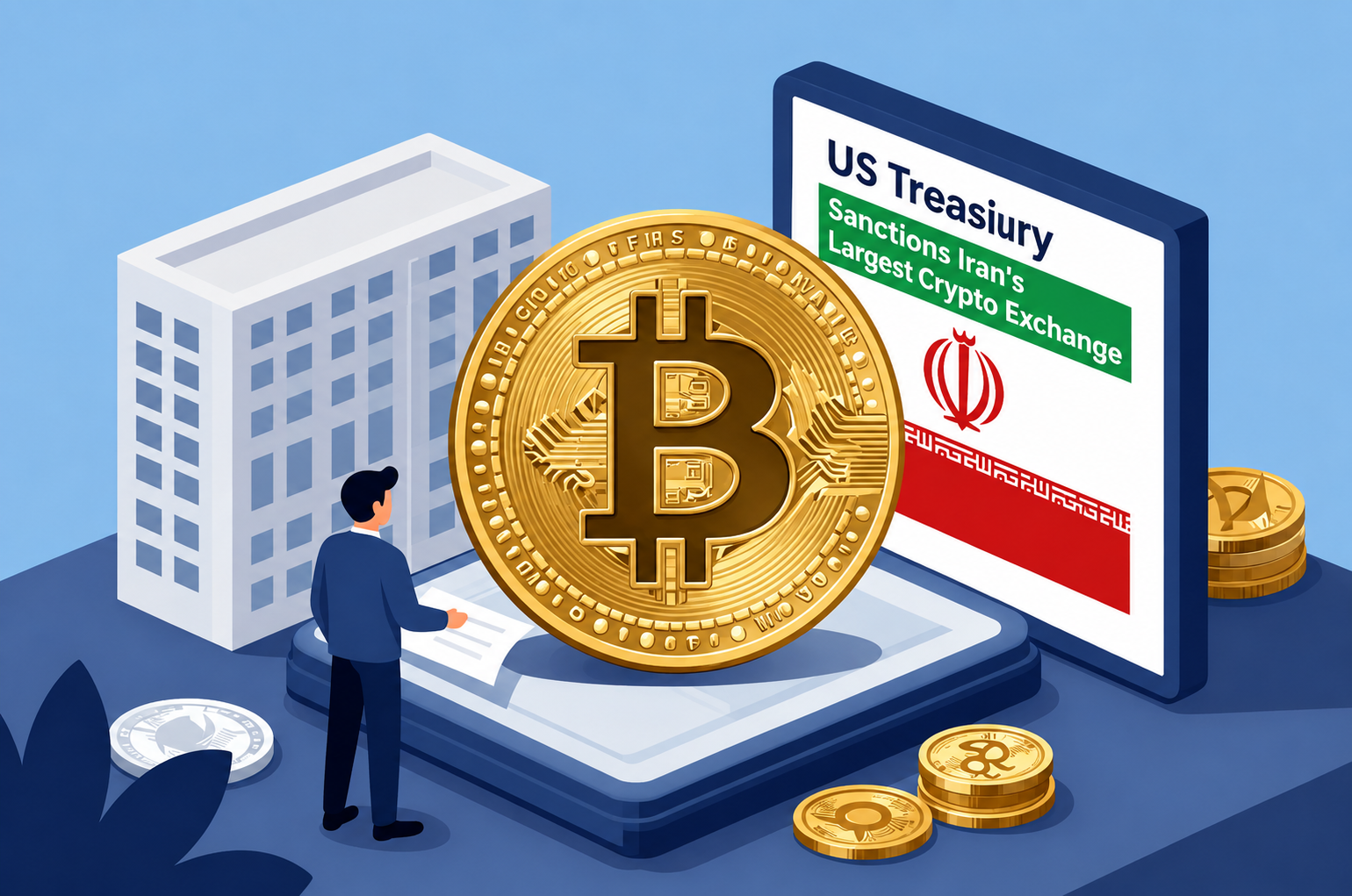
Tag: US Treasury

  • US Treasury Sanctions Iran’s Largest Crypto Exchange

    US Treasury Sanctions Iran’s Largest Crypto Exchange

    Introduction

    The US Treasury Department’s Office of Foreign Assets Control (OFAC) has imposed sanctions on Nobitex, Iran’s largest digital asset exchange, along with several of its executives. According to Source 1, the sanctions are part of the US government’s efforts to eliminate the threat posed by the Iranian regime.

    Background

    As reported by Source 2, Nobitex has provided significant support to the Iranian government, allowing it to evade financial restrictions and transfer wealth out of the country. The exchange has also facilitated transactions for the Islamic Revolutionary Guard Corps (IRGC) and its proxy militias abroad.

    Sanctions and Designations

    The OFAC has designated Nobitex’s chairman, co-founder, and former CEO, Amir Hossein Rad, as well as several other executives, pursuant to Executive Orders 13224 and 13902. Source 3 notes that the sanctions follow allegations that Nobitex is linked to influential figures within Iran’s political and economic establishment.

    Consequences

    The sanctions will effectively cut Nobitex and the designated individuals off from the US financial system and prohibit American individuals and businesses from engaging in transactions with them. As Source 4 points out, this move is likely to increase pressure on Iran’s cryptocurrency sector and complicate access to international digital asset markets for Iranian users.

    Expert Insights

    The US Treasury’s action against Nobitex highlights the growing concern about the use of digital assets in evading sanctions and financing militant activities. Source 5 notes that the Reuters investigation published on May 1 showed how Nobitex had become a central node in a parallel financial system used to process hundreds of millions of dollars for Iran’s central bank and the IRGC.

    Technical Analysis

    The use of digital assets and cryptocurrency exchanges like Nobitex has raised concerns about the potential for sanctions evasion and illicit financing. The US Treasury’s action demonstrates the importance of regulating and monitoring digital asset transactions to prevent such activities.

    Market Impact

    The sanctions against Nobitex are likely to have a significant impact on the Iranian cryptocurrency market and the broader digital asset industry. As Source 1 notes, the move signals a broader US effort to target alternative financial channels that are being used to bypass sanctions.

    Future Implications

    The US Treasury’s action against Nobitex highlights the need for increased regulation and oversight of the digital asset industry. As Source 2 points out, the use of digital assets and cryptocurrency exchanges can have significant implications for global financial systems and national security.

  • US Treasury’s New Staking Tax Rules Boost Crypto Innovation

    US Treasury’s New Staking Tax Rules Boost Crypto Innovation

    Introduction to Staking Tax Rules

    The U.S. government has given a green light to staking inside exchange-traded products, a move that could reshape how institutions and investors engage with proof-of-stake networks like Ethereum and Solana. According to Scott Bessent, US Treasury Secretary, this policy gives crypto ETPs a clear path to stake and share rewards, boosting innovation and keeping America the global leader in digital asset and blockchain technology.

    Understanding the New Guidance

    The new guidance from the Treasury and Internal Revenue Service (IRS) formally establishes a path for regulated funds to stake eligible proof-of-stake (PoS) assets like Ethereum (ETH) and Solana (SOL), distributing staking rewards directly to investors. As Bill Hughes, senior counsel at Consensys, noted, this is a major legal breakthrough for the sector, allowing regulated entities to stake on behalf of investors.

    Impact on the Crypto Market

    Analysts predict that this move could attract between $3 billion and $6 billion in inflows to PoS networks. The regulatory walls are coming down, and we can expect to see more staking-enabled crypto ETPs popping up in the U.S., making it easier for everyday investors to get involved. This is a clear sign that the U.S. is committed to being a leader in crypto innovation.

    Technical Analysis

    The SEC’s August 2025 statement confirmed that protocol-level staking and the minting of “staking receipt tokens” fall outside its jurisdiction unless linked to an investment contract. The Treasury’s move follows this clarification, providing long-overdue clarity on how staking will be treated for tax and regulatory purposes.

    Conclusion

    In conclusion, the U.S. Treasury’s new staking tax rules are a major win for crypto innovation. With this new guidance, crypto ETPs can now stake eligible digital assets directly on PoS networks and distribute the resulting rewards to investors, all within a clear, regulated, and tax-compliant framework. As Scott Bessent said, this move increases investor benefits, boosts innovation, and keeps America the global leader in digital asset and blockchain technology.

  • U.S. Treasury’s New Staking Tax Rules Signal a Major Win for Crypto Innovation

    U.S. Treasury’s New Staking Tax Rules Signal a Major Win for Crypto Innovation

    The U.S. government just gave a green light to staking inside exchange-traded products — a move that could reshape how institutions and investors engage with proof-of-stake networks like Ethereum and Solana.

    📊 Treasury’s Landmark Move

    On November 11, U.S. Treasury Secretary Scott Bessent announced a new guidance clarifying how staking rewards within crypto ETPs (Exchange-Traded Products) will be taxed.

    This guidance, released jointly by the Treasury Department and the IRS, sets a clear regulatory path for staking-based funds, addressing one of the most persistent uncertainties in the digital asset space.

    According to Bessent, this update provides an “explicit path” for asset managers to offer digital asset yields without triggering immediate tax events for investors — a key step toward making staking more accessible and compliant within traditional financial products.

    ⚙️ What This Means for the Market

    The new policy:

    • ✅ Removes a major legal barrier for fund sponsors.
    • 🚀 Encourages innovation in staking products.
    • 🌍 Strengthens the U.S. leadership in blockchain regulation and technology.

    Bill Hughes, Senior Counsel at ConsenSys, called it a “critical development” that will likely increase institutional participation while ensuring regulatory clarity.

    As a result, the update could:

    • Boost staking participation across Ethereum, Solana, and Avalanche.
    • Improve liquidity and decentralization across proof-of-stake networks.
    • Invite global influence, as other jurisdictions look to the U.S. model for guidance.

    💹 Market Sentiment and Reactions

    The crypto community’s response has been overwhelmingly positive.
    Across TwitterDiscord, and other forums, users and analysts are calling the move a validation of mainstream staking models.

    Even though Ethereum (ETH) showed a minor 0.57% dip in the last 24 hours, trading at $3,607.10 (with a 12.12% market dominance and over $36B in 24-hour trading volume), analysts at Coincu Research see this as a short-term fluctuation amid a larger bullish signal.

    They predict the new policy could:

    • Expand the range of regulated crypto investment products,
    • Drive more entities toward decentralized network participation, and
    • Spark global staking adoption, especially as major institutions test new ETP structures.

    🧠 Why It Matters

    This guidance doesn’t just affect tax policy — it bridges the gap between traditional finance and decentralized protocols.

    It could open doors for:

    • Institutional funds to earn staking rewards legally,
    • Investors to participate in yield-based crypto products through regulated platforms, and
    • Developers to innovate around compliant DeFi structures.

    In essence, it’s a sign that crypto is maturing — and regulators are finally acknowledging staking as a legitimate economic mechanism, not just a speculative activity.

    AI Satoshi’s Take

    “This marks a pivotal shift — by providing clear tax treatment, regulators are legitimizing staking as an integral part of modern financial systems. It bridges traditional finance with decentralized protocols, reducing friction between innovation and compliance. The move could accelerate global recognition of blockchain’s economic validity, strengthening network participation and liquidity without undermining decentralization.”

    🧭 Conclusion

    Clear rules strengthen trust — but true resilience still depends on systems, not states.

    🔔 Follow @casi_borg for AI-powered crypto commentary
    🎙️ Tune in to CASI x AI Satoshi for deeper blockchain insight
    📬 Stay updated: linktr.ee/casi.borg

    💬 Would you stake your crypto in an ETP after this policy update?

    ⚠️ Disclaimer: This content is generated with the help of AI and intended for educational and experimental purposes only. Not financial advice.

Oh hi there 👋
It’s nice to meet you.

Sign up to receive awesome content in your inbox, every Day.

We don’t spam! Read our privacy policy for more info.