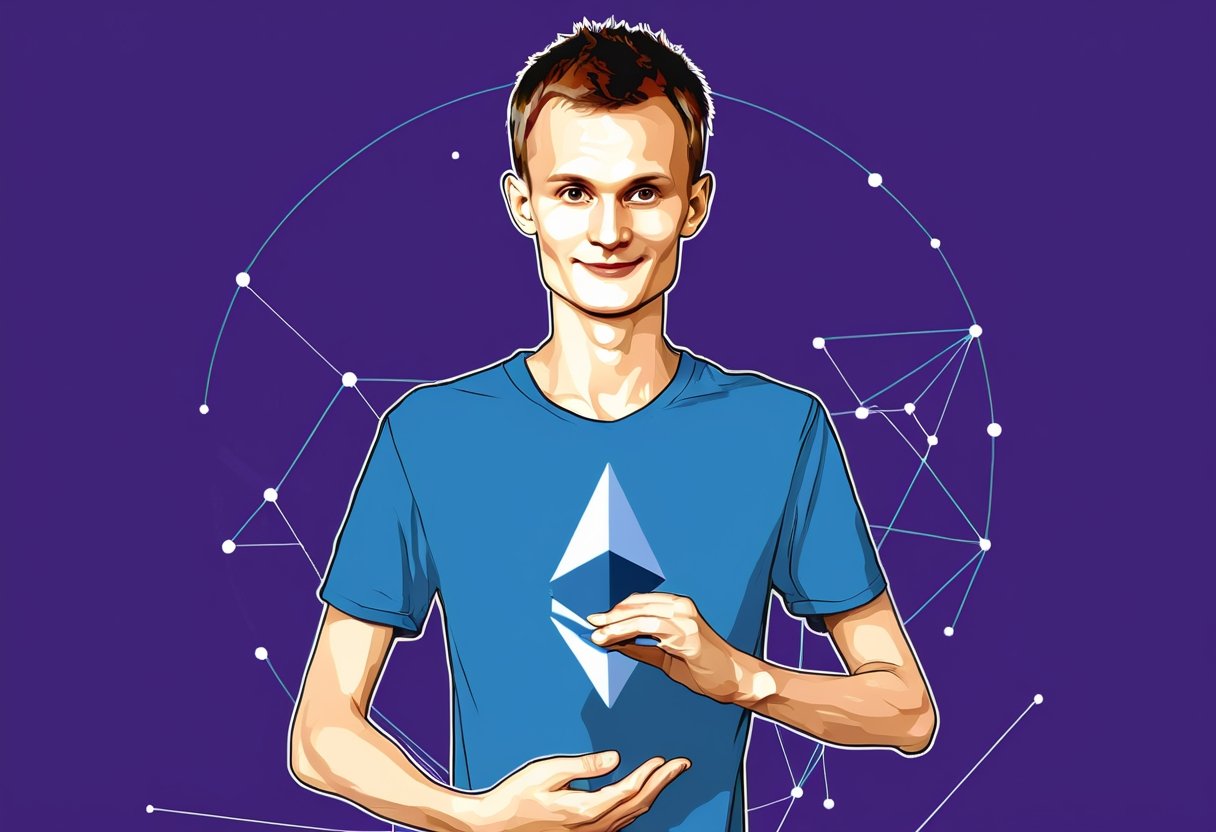
Tag: Vitalik Buterin

  • Vitalik Buterin: Prediction Markets as Social Media Antidote

    Vitalik Buterin: Prediction Markets as Social Media Antidote


    Vitalik Buterin on Prediction Markets

    Vitalik Buterin, the co-founder of Ethereum, has been vocal about the potential of prediction markets to act as an antidote to the hype and misinformation often spread on social media. In a recent statement, Buterin noted that prediction markets, such as Polymarket, offer a more rational way to assess public sentiment than mainstream or social media.

    Accountability and Accuracy

    Buterin argued that social media lacks accountability, with users often making bold predictions without facing consequences when these predictions prove incorrect. In contrast, prediction markets use real money to incentivize accuracy, with participants betting on the outcome of events. This approach, Buterin believes, leads to more informed and nuanced discussions.

    Prediction Markets vs. Traditional Markets

    Buterin also highlighted the structural advantages of prediction markets over traditional equity markets. He noted that prices in prediction markets are bounded between 0 and 1, reducing the potential for pump-and-dump dynamics and reflexivity effects. This, he argued, makes prediction markets a healthier alternative to traditional investing and social media discourse on emotionally charged topics.

    Addressing Criticisms

    Buterin’s defense of prediction markets has sparked a fierce ethical debate, with some critics arguing that betting on real-world events is morally questionable. However, Buterin maintains that prediction markets offer superior truth-seeking mechanisms to social media, while also addressing concerns about their potential to incentivize harm.

    As Buterin stated, ‘The thing to compare them to is social media,’ where sensationalism often outweighs accuracy. In contrast, prediction markets provide a more rational and accountable approach to discussing and predicting real-world events.

    Expert Insights and Analysis

    Experts in the field have weighed in on the debate, with some arguing that prediction markets have the potential to revolutionize the way we approach forecasting and decision-making. Others have raised concerns about the potential risks and challenges associated with these markets.

    Market Impact and Future Implications

    The growth of prediction markets has significant implications for the future of social media, traditional investing, and our approach to forecasting and decision-making. As these markets continue to evolve, it will be important to address the challenges and concerns associated with them, while also harnessing their potential to promote more informed and nuanced discussions.

  • Vitalik Buterin’s Vision for a Trustless Gas Futures Market

    Vitalik Buterin’s Vision for a Trustless Gas Futures Market

    Introduction to Gas Futures Market

    Vitalik Buterin, the co-founder of Ethereum, has proposed the creation of a trustless on-chain gas futures market. This system would allow users to buy gas today for future consumption at a fixed price, directly on the blockchain. As Buterin explained, this would provide a clear signal of people’s expectations of future gas fees and allow participants to pre-purchase gas for defined time intervals.

    Benefits of a Gas Futures Market

    A gas futures market would offer several benefits to Ethereum users and developers. Firstly, it would provide a way to hedge against potential fee increases, giving users more control over their transaction costs. Secondly, it would allow for more predictable costs, making it easier for developers to plan and budget for their projects. As reported by ForkLog, Buterin believes that a decentralized gas futures market would be a key component of a healthy and stable Ethereum ecosystem.

    How a Gas Futures Market Would Work

    A gas futures market would function similarly to traditional futures markets, such as those for commodities. Buyers and sellers would agree on a fixed price for a future date, allowing users to lock in their gas prices for future time windows. This would provide greater certainty as Ethereum scales, making it easier for users to plan and budget for their transactions. As reported by Yahoo Finance, Buterin’s proposal has sparked a debate over the feasibility of a trustless gas futures market.

    Challenges and Limitations

    While a gas futures market has the potential to provide several benefits, there are also challenges and limitations to consider. One of the main challenges would be ensuring the security and stability of the market, as well as preventing manipulation and abuse. Additionally, there may be technical difficulties in implementing such a system, particularly in terms of scalability and usability. As reported by Incrypted, Buterin’s proposal has sparked a debate over the technical feasibility of a trustless gas futures market.

    Conclusion

    In conclusion, Vitalik Buterin’s proposal for a trustless on-chain gas futures market has the potential to provide several benefits to Ethereum users and developers. While there are challenges and limitations to consider, the potential benefits of such a system make it an interesting and worthwhile idea to explore further. As the Ethereum ecosystem continues to evolve and grow, a gas futures market could play a key role in providing more predictable and stable transaction costs.

  • Vitalik Buterin’s 256 ETH Donation Sparks Privacy Revolution

    Vitalik Buterin’s 256 ETH Donation Sparks Privacy Revolution

    Vitalik Buterin’s Recent Move

    Vitalik Buterin, the founder of Ethereum, has made a significant move by donating 256 ETH to two privacy-focused messaging platforms, Session and SimpleX Chat. This donation, valued at approximately $800,000, highlights Buterin’s commitment to advancing privacy-preserving communication.

    Why Privacy Matters

    As Cryptodaily notes, Buterin’s action could signal the start of a new trend in the crypto space, with a focus on privacy and security. With regulatory efforts like the EU’s Chat Control proposal on the rise, the need for private messaging solutions has never been more pressing.

    The Projects Behind the Donation

    Session and SimpleX Chat are two decentralized messaging platforms that prioritize privacy by removing common identifiers like phone numbers and user IDs from messaging services. As Bitcoinist reports, these platforms are working towards permissionless account creation and metadata privacy, two critical areas of focus for Buterin.

    Technical Challenges Ahead

    Despite the progress made by these platforms, technical hurdles like decentralization, multi-device security, and resilience against cyberattacks still need to be addressed. As Cryptorank explains, the donation will provide significant resources for both projects to accelerate development and tackle these core challenges.

    Market Impact and Future Implications

    The donation has sparked curiosity and speculation within the crypto community, with many investors and enthusiasts seeing this as a precursor to new trends in the crypto space. As Cryptopotato notes, Buterin’s backing comes at a time when regulatory efforts have raised concerns over the future of private messaging.

  • Vitalik Buterin’s Decentralization Defense: What Does It Mean for Crypto?

    Vitalik Buterin’s Decentralization Defense: What Does It Mean for Crypto?

    What caught my attention wasn’t the announcement itself, but the timing. Vitalik Buterin, the co-founder of Ethereum, recently defended Base’s decentralization, saying that the Layer 2 network ‘cannot steal funds.’ But here’s the real question: what does this mean for the future of cryptocurrency?

    As I delved deeper into the topic, I realized that this wasn’t just about one network or protocol. It was about the fundamental principles that underpin the entire crypto space. You see, decentralization is what makes cryptocurrency valuable in the first place. It’s what allows for true peer-to-peer transactions, without the need for intermediaries like banks or governments.

    But what happens when we start layering on other technologies, like Layer 2 networks? Suddenly, we’ve got a whole new set of questions. Can we still trust the network to be decentralized, or are we just creating a new form of centralization in disguise? These are the kinds of questions that Vitalik’s defense raises.

    I think what’s fascinating is that this isn’t just a debate for crypto enthusiasts. It’s a debate that has far-reaching implications for the entire tech industry. As we move further into the era of blockchain and decentralized systems, we’re going to have to grapple with these questions more and more. And that’s what makes this conversation so essential.

    The Bigger Picture

    So, what does this mean for the future of cryptocurrency? In a nutshell, it means that we’re going to have to be more intentional about our design choices. We can’t just layer on new technologies without thinking about the implications for decentralization. We need to be more thoughtful about how we’re building these systems, and how they’re going to impact the users.

    The reality is that decentralization isn’t just a feature – it’s a core aspect of what makes cryptocurrency valuable. And if we’re not careful, we could end up losing that very thing. That’s what makes Vitalik’s defense so important.

    But here’s the thing: this isn’t just a debate about crypto. It’s a debate about the future of the internet itself. As we move further into the era of decentralized systems, we’re going to have to grapple with these questions more and more.

    Under the Hood

    So, let’s take a step back and look at what’s happening under the hood. Base’s Layer 2 network, in particular, is an interesting case study. On the surface, it seems like a great way to improve scalability and speed. But as we dig deeper, we start to see some nuances.

    For example, the network still relies on a central authority to validate transactions. That may seem like a minor point, but it’s actually a major issue. If we’re not careful, we could end up creating a new form of centralization that undermines the very principles of decentralization.

    And that’s what makes Vitalik’s defense so crucial. He’s not just arguing for the merits of Base’s technology – he’s making a broader argument about the importance of decentralization.

    The Reality on the Ground

    So, what’s the reality on the ground? In short, it’s messy. We’ve got a variety of different protocols and networks, each with their own strengths and weaknesses. And as we move forward, we’re going to have to navigate this complex landscape with care.

    I think what’s fascinating is that this isn’t just a debate for crypto enthusiasts. It’s a debate that has far-reaching implications for the entire tech industry. As we move further into the era of blockchain and decentralized systems, we’re going to have to grapple with these questions more and more.

    The numbers tell a fascinating story. According to a recent report, the global blockchain market is expected to grow to $39.7 billion by 2025. That’s a staggering number, and it speaks to the growing importance of decentralized systems.

    What’s Next

    So, what’s next? In short, we’ve got a lot of work to do. We need to be more intentional about our design choices, and more thoughtful about how we’re building these systems. We need to prioritize decentralization, and not just talk about it.

    The reality is that decentralization isn’t just a feature – it’s a core aspect of what makes cryptocurrency valuable. And if we’re not careful, we could end up losing that very thing. That’s what makes Vitalik’s defense so important.

    But here’s the thing: this isn’t just a debate about crypto. It’s a debate about the future of the internet itself. As we move further into the era of decentralized systems, we’re going to have to grapple with these questions more and more.

    I think what’s fascinating is that this isn’t just a debate for crypto enthusiasts. It’s a debate that has far-reaching implications for the entire tech industry. As we move further into the era of blockchain and decentralized systems, we’re going to have to grapple with these questions more and more.

    As I see it, the future of cryptocurrency is closely tied to the future of the internet itself. And that’s what makes this conversation so essential.

  • The Next Chapter in Blockchain: Unpacking Vitalik Buterin’s ‘Google Moment’

    The Next Chapter in Blockchain: Unpacking Vitalik Buterin’s ‘Google Moment’

    As I watched the recent Ethereum announcement, I couldn’t help but feel a sense of nostalgia for the early days of the web. It’s been over two decades since Google’s search engine revolutionized the way we access information, and now Vitalik Buterin, the co-founder of Ethereum, has hinted at a similar ‘Google moment’ for blockchain technology. But what does this mean, and why should we care?

    The timing of Buterin’s statement couldn’t be more perfect. As the blockchain landscape continues to evolve, with new use cases and innovations emerging every day, it’s clear that we’re on the cusp of something big. The question is, what exactly is this ‘next big step’ for blockchain, and how will it impact the industry as a whole?

    What caught my attention wasn’t the announcement itself, but the timing and the implications it has for the future of blockchain. The analogy to Google’s ‘Google moment’ is more than just a clever phrase; it highlights the potential for blockchain to become a fundamental building block of the internet.

    But here’s the real question: can we replicate the same level of innovation and disruption that Google achieved with its search engine? And what exactly would this ‘Google moment’ for blockchain look like? As we delve deeper into this topic, it’s essential to understand the context and the players involved.

    Vitalik Buterin has been vocal about the need for blockchain to become more user-friendly and accessible. He believes that the next big step for blockchain is to create a more intuitive and seamless experience for users, much like the early days of the internet. To achieve this, Buterin is advocating for a more modular and composable approach to blockchain development, where different components can be easily integrated and reused.

    The Bigger Picture

    The implications of Buterin’s statement are far-reaching and have significant consequences for the future of blockchain. If we can create a more user-friendly and accessible blockchain experience, it could lead to widespread adoption and a new era of innovation. But what does this mean for the industry as a whole? Will it lead to a new wave of startups and entrepreneurs, or will it simply create a more entrenched and complex ecosystem?

    The numbers tell a fascinating story. According to a recent report by Coindesk, the global blockchain market is expected to reach $39.7 billion by 2025. But what’s driving this growth, and how will it impact the industry in the long term? As we explore the technical aspects of Buterin’s proposal, it’s essential to keep these questions in mind.

    Under the Hood

    So, what exactly does Buterin’s proposal entail? At its core, it’s about creating a more modular and composable approach to blockchain development. This would involve breaking down complex smart contracts into smaller, reusable components that can be easily integrated and reused. Sounds simple, but trust me, it’s not. The implications for scalability, security, and usability are profound.

    To understand the technical details, let’s take a step back and look at the current state of blockchain development. Most smart contracts are custom-built and specific to a particular use case, which makes them difficult to reuse and integrate with other applications. Buterin’s proposal aims to change this by creating a more standardized and modular approach to smart contract development.

    The benefits of this approach are clear. With a more modular and composable blockchain ecosystem, developers can focus on building specific components and integrating them with other applications. This would lead to a more efficient and scalable development process, with fewer errors and improved security.

    The Market Reality

    So, what does this mean for the market? Will it lead to a new wave of startups and entrepreneurs, or will it simply create a more entrenched and complex ecosystem? As we explore the market implications of Buterin’s proposal, it’s essential to keep in mind the current state of the industry.

    The current landscape is dominated by a handful of large players, including Ethereum, Bitcoin, and Ripple. Buterin’s proposal has the potential to disrupt this status quo and create new opportunities for smaller players. As we look at the market, it’s essential to consider the pros and cons of this approach.

    On the one hand, a more modular and composable blockchain ecosystem could lead to increased innovation and adoption. On the other hand, it could create a more complex and fragmented market, making it difficult for new players to enter.

    What’s Next

    As we look to the future, it’s essential to consider the potential implications of Buterin’s proposal. Will it lead to a new era of innovation and adoption, or will it simply create a more entrenched and complex ecosystem? The answer is unclear, but one thing is certain: the future of blockchain is bright, and the next chapter is just beginning.

    The reality is that we’re on the cusp of something big. The next chapter in blockchain is going to be shaped by a combination of technological advancements, market forces, and regulatory frameworks. As we look to the future, it’s essential to keep in mind the potential implications of Buterin’s proposal.

    The future implications of Buterin’s proposal are far-reaching and have significant consequences for the industry as a whole. If we can create a more user-friendly and accessible blockchain experience, it could lead to widespread adoption and a new era of innovation. But what does this mean for the industry as a whole? Will it lead to a new wave of startups and entrepreneurs, or will it simply create a more entrenched and complex ecosystem?

    As we wrap up this article, I want to leave you with a final thought. The future of blockchain is not just about the technology; it’s about the people and the communities that will shape its development. As we look to the future, it’s essential to consider the potential implications of Buterin’s proposal and the role we can play in shaping the next chapter in blockchain.


  • Ethereum’s Next Big Leap: Unpacking Vitalik Buterin’s Vision

    Ethereum’s Next Big Leap: Unpacking Vitalik Buterin’s Vision

    The blockchain space has long been abuzz with the news of Ethereum’s upcoming upgrade, and the implications it holds for the entire ecosystem. At the heart of this revolution is the vision of Vitalik Buterin, the enigmatic co-founder of Ethereum. What struck me about his recent statements was the echoes of history, specifically the parallels with Google’s monumental impact on the internet.

    For those who may be unfamiliar, Google’s ‘Google Moment’ referred to the moment when the search engine finally cracked the code on user experience, catapulting the internet to mass adoption. Similarly, Vitalik’s words suggest that Ethereum is poised to do the same for blockchain. He spoke about a ‘next big step’ that would bring significant improvements in scalability and usability, effectively bridging the gap between the current state of blockchain and mainstream acceptance.

    What caught my attention wasn’t the announcement itself, but the timing. The cryptocurrency market has been under intense scrutiny in recent times, with regulatory pressures and market volatility casting a shadow of doubt over the sector’s future. Yet, here is Vitalik outlining a grand vision that seems to defy the odds, a testament to the resilience and determination of the blockchain community.

    I think it’s essential to contextualize this moment within the broader landscape of blockchain innovation. We’ve seen significant strides in scalability with the likes of Polkadot and Cosmos, but Ethereum remains the most widely adopted and recognized platform. Its potential impact, therefore, cannot be overstated. The Bigger Picture

  • Why Ethereum’s 43-Day Waiting Period Is Actually Genius (And Painful)

    Why Ethereum’s 43-Day Waiting Period Is Actually Genius (And Painful)

    I nearly spilled my coffee when I saw the Reddit thread – ‘ETH staking is worse than a bad relationship. You can’t leave when you want to.’ The post had 2.3k upvotes before lunch. But what stopped me mid-sip wasn’t the frustration, but Vitalik Buterin’s calm response defending the 43-day unstaking delay. In crypto’s instant-gratification culture, this felt like finding a zen master in a mosh pit.

    We’ve all felt that itch to exit positions quickly – whether dodging a crashing token or chasing the next big thing. But Ethereum’s design forces us to sit with our decisions longer than most modern relationships last. The network now holds $48 billion in staked ETH through its proof-of-stake system, making this waiting game a billion-dollar conversation.

    The Bigger Picture

    What struck me digging into the code isn’t the delay itself, but what it prevents. During the 2020 Medalla testnet crisis, a sudden validator exodus nearly collapsed the network. That 43-day buffer acts like a circuit breaker – it’s not about controlling your funds, but protecting the entire system from bank-run psychology.

    Traditional finance has FDIC insurance. Crypto has carefully engineered friction. The same mechanism that makes unstaking feel cumbersome prevents flash crashes when markets panic. I’ve watched traders curse the delay during the FTX collapse, only to later realize it protected their ETH from becoming fire-sale fodder.

    But here’s where it gets personal – this design fundamentally changes how we interact with money. My cousin recently liquidated her ETH position to pay medical bills, only to realize she needed to wait six weeks. That human cost reveals crypto’s growing pains as it balances decentralization with real-world practicality.

    Under the Hood

    Let’s break this down like a mechanic explaining a timing belt. Ethereum’s validator queues work on a rotating exit system – only X validators can leave per epoch (6.4 minutes). With 800,000+ validators currently active, simple math creates that 43-day worst-case scenario. It’s not arbitrary bureaucracy – it’s physics for blockchain.

    The system prioritizes network health over individual convenience. Each exiting validator must complete 4 checkpoint epochs (about 27 hours) before funds begin unlocking. Layer on top the 36-day ‘cool down’ period where their stake remains slashable for bad behavior. This multi-stage exit prevents malicious actors from rug-pulling then vanishing.

    Compare this to Solana’s staking model where unstaking takes 2-3 days. Faster? Absolutely. But during September’s network halt, that speed became a liability as panicked unstaking could’ve amplified downtime. Different chains, different risk appetites – Ethereum chooses marathon stability over sprint speed.

    The numbers reveal fascinating patterns. Since the Merge, average unstaking time hovers around 5 days thanks to dynamic queue adjustments. That 43-day figure is like hurricane insurance – you’re glad it’s there even if you never use it. The protocol automatically scales exit rates based on total validators, creating organic pressure valves.

    What’s Next

    Here’s what keeps me up at night – as LSD protocols like Lido control 32% of staked ETH, could coordinated unstaking create systemic risk? The protocol’s design assumes decentralized participation, but market realities might demand new safeguards. We’re entering uncharted territory where financial engineering meets game theory.

    The upcoming Prague upgrade hints at partial withdrawals to ease liquidity pressures. Imagine earning staking rewards while accessing portions of your stake – like dividends from crypto bonds. This could reshape ETH’s role from speculative asset to yield-bearing reserve currency.

    But watch the regulatory shadows. The SEC recently subpoenaed staking providers, and that 43-day lockup might look suspiciously like a security’s vesting period to regulators. How Ethereum navigates this could set precedents for the entire proof-of-stake ecosystem.

    What fascinates me most is watching financial behaviors evolve. Traders are developing ‘staking ladder’ strategies – staggering validator entries to ensure weekly liquidity access. Others use Layer 2 solutions as liquidity bridges. Necessity breeds innovation, even in waiting rooms.

    As I write this, over 26 million ETH remains securely staked despite the delays. That’s $78 billion dollars voluntarily locked in a system that says ‘slow down.’ Maybe in our hyper-liquid crypto world, a little friction isn’t the enemy – it’s the price of building something that lasts.

Oh hi there 👋
It’s nice to meet you.

Sign up to receive awesome content in your inbox, every Day.

We don’t spam! Read our privacy policy for more info.