Author: qloud-tech

  • 💍 Gender-Neutral Jewelry Trend: How Style Is Breaking Binary Boundaries

    💍 Gender-Neutral Jewelry Trend: How Style Is Breaking Binary Boundaries

    Once defined by rigid norms, jewelry is now the language of self-expression — fluid, inclusive, and unbound by gender.

    From red carpets to everyday street style, gender-neutral jewelry is redefining what it means to wear confidence. In 2025, this trend is not just fashion — it’s a reflection of a broader cultural shift toward individuality and identity freedom.

    ⚡ The Rise of Genderless Fashion

    Fashion has always mirrored society — and today, society is rewriting the rules.
    Over the past few years, we’ve seen gender fluidity move from niche to mainstream. Clothing lines, fragrances, and now jewelry collections are embracing a universal appeal that transcends male-female binaries.

    For Gen Z and Millennials, style is self-expression, not social expectation. Jewelry — one of the oldest forms of adornment — has become the most powerful medium for expressing that belief.

    💫 Why Gender-Neutral Jewelry Is Booming

    The rise of this trend stems from a mix of cultural, social, and commercial factors. Here’s why it’s taking over the global fashion scene:

    1. Cultural Shift Toward Inclusivity
      Society is embracing authenticity and identity freedom. People want pieces that tell their story, not one dictated by gender norms.
    2. Celebrity Influence
      Stars like Harry StylesBad BunnyTimothée Chalamet, and Billie Eilish have blurred gender lines through jewelry — from pearls and brooches to bold silver chains.
    3. Fashion Houses Leading Change
      Luxury brands like GucciCartier, and Tiffany & Co. have launched unisex collections, redefining luxury through inclusivity and versatility.
    4. Social Media as a Catalyst
      TikTok and Instagram creators are showcasing “fluid styling” — stacking rings, mixing metals, and pairing traditionally feminine or masculine pieces without labels.
    5. The Power of Personalization
      Custom jewelry and DIY creations allow wearers to design what resonates with their personal identity, not society’s boxes.

    💎 The Look: Defining Elements of Gender-Neutral Jewelry

    Gender-neutral jewelry is not about simplicity — it’s about balance.
    Designs blend bold and delicate, structure and softness, modernity and nostalgia.

    Here are the defining traits:

    • Mixed Metals: Gold, silver, and rose tones used interchangeably.
    • Geometric Shapes: Circles, bars, and minimalist forms dominate.
    • Symbolic Motifs: Stars, hearts, and initials that transcend gender cues.
    • Layered Styling: Rings, chains, and earrings stacked creatively by personal taste.
    • Material Innovation: Titanium, recycled silver, and lab-grown diamonds appeal to eco-conscious consumers.

    This aesthetic doesn’t erase identity — it celebrates fluid individuality.

    🌍 A Global Movement of Redefining Expression

    Jewelry brands worldwide are embracing the shift.

    • Cartier’s “Clash de Cartier” blurs sharp and soft design languages.
    • Tiffany’s “Lock Collection” symbolizes unity and equality, regardless of gender.
    • Pandora ME campaigns spotlight creators who reinterpret jewelry freely.
    • Local indie brands like Bleue Burnham and Justine Clenquet focus on unisex artistry and sustainability.

    This global momentum shows how gender-neutral jewelry isn’t a passing phase — it’s a design philosophy of the future.

    💬 What It Means for Gen Z and Millennials

    To younger generations, jewelry is more than an accessory — it’s identity armor.

    They see it as:

    • Freedom of Expression: Breaking the binary in everyday fashion.
    • Empowerment: Wearing what feels right, not what’s expected.
    • Artistic Connection: Jewelry becomes wearable emotion, not gender code.

    For Gen Z, mixing pearls with denim or a silver chain with eyeliner is no longer a statement — it’s normal.

    🌈 Beyond Gender: Toward Emotional Design

    The next evolution of jewelry isn’t just gender-neutral — it’s emotionally intelligent.
    Designers are moving toward pieces that evoke feeling — love, resilience, nostalgia — transcending all categories of gender or trend.

    In this sense, jewelry becomes a storyteller, not a separator. It invites wearers to participate in its meaning.

    ✨ The Future of Jewelry Is Fluid

    As culture embraces identity fluidity, fashion will follow. Jewelry, the most personal form of adornment, will continue to lead the charge.

    Expect to see:

    • Inclusive Campaigns that celebrate all forms of beauty.
    • Tech-Integrated Pieces that combine design with digital identity.
    • Eco-Friendly Materials shaping the ethical future of accessories.

    The future isn’t pink or blue — it’s gold, silver, and everything in between.

    The gender-neutral jewelry movement represents more than just a fashion statement — it’s a symbol of progress.
    In breaking binaries, it creates something more meaningful: freedom, creativity, and authenticity in every shimmer.

    🌐 Connect with Casi Borg

    📸 Instagram: @casi_borg
    🦋 BlueSky: 
    casi-borg.bsky.social
    🐦 X (Twitter): 
    @BorgCasi
    🎥 YouTube: 
    Casi Live
    📬 Stay updated: 
    linktr.ee/casi.borg

  • Hong Kong’s Fintech 2030: Tokenized Bonds Take Center Stage

    Hong Kong’s Fintech 2030: Tokenized Bonds Take Center Stage

    As global finance embraces digital transformation, Hong Kong steps forward with a bold blueprint — one that redefines how nations blend blockchain with traditional finance.

    Hong Kong’s Fintech 2030 Vision Unveiled

    During Hong Kong Fintech Week 2025Eddie Yue, Chief Executive of the Hong Kong Monetary Authority (HKMA), unveiled the Fintech 2030 Vision — a roadmap designed to position Hong Kong as a leading global fintech hub.

    The initiative places financial tokenization and government bond innovation at its core, marking a shift from theoretical blockchain talk to applied, regulated finance.

    Key highlights include:

    • Launching government bond tokenization pilots to modernize issuance and settlement.
    • Expanding blockchain infrastructure integration for secure digital asset management.
    • Encouraging industry collaboration through public-private partnerships and sandbox testing.
    • Advancing the Ensemble Project, supporting real-world tokenized transactions.

    Why Tokenization Matters

    Tokenization — the process of turning real-world assets into digital tokens on blockchain networks — has become one of the most transformative trends in finance.

    Hong Kong’s tokenization strategy aims to:

    • Boost transparency and efficiency in financial markets.
    • Enable fractional ownership of high-value assets like bonds and real estate.
    • Cut cross-border settlement delays and operational costs.

    By embedding tokenization into state-backed instruments, Hong Kong is bridging traditional finance with decentralized infrastructure, setting the foundation for programmable, transparent capital markets.

    Industry Reaction: Cautious Optimism

    The fintech community has responded with measured enthusiasm. Analysts view the HKMA’s Fintech 2030 plan as a potential benchmark for global regulatory adoption — one that could inspire similar frameworks in Singapore, London, and Dubai.

    However, experts caution that success depends on:

    • Regulatory clarity and international coordination.
    • Interoperability between legacy systems and new blockchain layers.
    • Institutional trust in the security and scalability of tokenized assets.

    Eddie Yue reaffirmed the central bank’s vision:

    “We believe this new fintech strategy would provide the shot in the arm to elevate the banking industry to new heights and catalyse the growth of a healthy fintech ecosystem that benefits both banks and customers.”

    Market Snapshot: Ethereum and Tokenization Momentum

    As of November 3, 2025Ethereum (ETH) — the backbone of many tokenization projects — trades at $3,736.96, with a market cap of $451.04 billion and 12.5% market dominance.

    Although its price dipped 3.78% in the last 24 hours, Ethereum’s $29.07 billion trading volume reflects sustained investor confidence in blockchain infrastructure.

    Analysts believe Hong Kong’s fintech initiatives could further validate Ethereum’s institutional use cases, potentially boosting adoption of tokenization protocols and on-chain finance tools.

    From Vision to Infrastructure

    Hong Kong’s digital finance journey began in 2021, when the HKMA initiated early blockchain pilots aimed at modernizing the banking ecosystem.
    With Fintech 2030, those early experiments have matured into a national strategy focused on scalability, compliance, and innovation.

    The city’s fintech evolution reflects a global trend: shifting from crypto speculation to regulated implementation, where blockchain serves as financial infrastructure rather than a disruptive novelty.

    By nurturing this balance, Hong Kong positions itself as a testbed for secure, government-backed tokenization, potentially influencing global policy directions.

    AI Satoshi’s Analysis

    By embedding tokenization into state-backed instruments like government bonds, Hong Kong is transitioning from theoretical blockchain use to applied, regulated finance. This signifies the merging of traditional monetary systems with decentralized infrastructure — a cautious yet decisive step toward transparent, programmable assets. The initiative reflects a shift from speculative crypto adoption to institutional utility, setting a precedent for other financial hubs.

    🔔 Follow @casi_borg for AI-powered crypto commentary
    🎙️ Tune in to CASI x AI Satoshi for deeper blockchain insight
    📬 Stay updated: linktr.ee/casi.borg

    💬 Would you invest in tokenized government bonds if they became available?

    ⚠️ Disclaimer: This content is generated with the help of AI and intended for educational and experimental purposes only. Not financial advice.

  • AI’s Impact on Junior Developers: Challenges and Opportunities

    Introduction to the Challenge

    The rise of Artificial Intelligence (AI) in the tech industry has sparked a heated debate about its impact on junior developers. According to a post on Reddit’s r/programming, AWS CEO Adam Selipsky stated that replacing junior developers with AI is the dumbest thing he’s ever heard. This sentiment is echoed by many in the industry, who believe that AI is not a replacement for human developers, but rather a tool to augment their work.

    The Current State of Junior Developer Roles

    A recent YouTube video, The Junior Dev Role Will Look Different With AI, highlights the changing landscape of junior developer roles. The video suggests that AI will handle mundane tasks, freeing up junior developers to focus on more complex and interesting problems. This shift will require junior developers to have a stronger foundation in programming fundamentals, as well as the ability to work alongside AI tools.

    Expert Insights and Analysis

    Industry leaders, such as Nicholas Ma, Staff Machine Learning Engineer at Iterable, believe that junior developers with strong fundamentals will remain in demand. Ma comments that AI is just a tool and should be considered as such. Junior developers who can’t do their tasks without AI won’t last long, emphasizing the need for a strong foundation in programming.

    Market Impact and Future Implications

    The job market for junior developers is becoming increasingly competitive, with software job postings for entry-level roles dropping since 2022. According to Code Conductor, unemployment rates for computer science graduates have risen to around 6-7%. This trend is largely due to economic uncertainty and AI efficiency gains, making it essential for junior developers to adapt and learn to work with AI tools.

    Practical Takeaways

    For junior developers to succeed in this new landscape, they must focus on building a strong foundation in programming fundamentals, as well as learning to work alongside AI tools. Employers should also redefine tech jobs and set clear expectations for the use of AI in the development process. By doing so, junior developers can focus on solving complex problems and driving innovation in the industry.

  • Solana’s Path to $300: Expert Insights and Analysis


    Introduction to Solana and Its Potential

    Solana, a high-speed smart-contract platform, has been gaining significant attention from analysts and investors alike. With its growing adoption in DeFi, NFTs, and cross-chain infrastructure, Solana has the fundamentals to support a major move. According to Digital Journal, some analysts expect SOL to challenge the $300 area by 2026, supported by institutional interest, its low-fee/high-throughput network, and increased memecoin activity on the Solana platform.

    Solana’s Technical Performance and Ecosystem Expansion

    Solana’s technical performance and ecosystem expansion are often cited as the key reasons for bullish forecasts. Brave New Coin notes that from a structural standpoint, Solana price continues to build higher lows while consolidating beneath the critical $200 to $220 resistance zone. A confirmed breakout above this level, ideally supported by increasing volume and ETF-related inflows, could trigger a fast extension towards $260 to $290, bringing Solana within striking distance of its $300+ all-time highs.

    Fibonacci Confluence and Bullish Case

    Solana’s weekly chart shows a textbook retest of the 0.886 Fibonacci retracement, precisely at the $174–$176 range, while maintaining position above the Bull Market Support Band. This combination often signals the end of corrective phases and the beginning of a new expansion leg. The Motley Fool predicts that Solana could reach $300 by 2026, driven by its strong, established platform with use-cases in DeFi, NFTs, and institutional adoption.

    Practical Takeaways and Future Implications

    Investors should keep a close eye on Solana’s technical performance and ecosystem expansion, as these factors will play a crucial role in determining the cryptocurrency’s future price. With the launch of new Solana ETFs, such as the Bitwise Solana Staking ETF, institutional adoption is expected to increase, driving up demand and potentially pushing the price towards $300.

  • Rethinking Education: Palantir’s Bold Move to Hire High School Grads

    Rethinking Education: Palantir’s Bold Move to Hire High School Grads

    Introduction

    Palantir, a renowned tech company, has launched an experiment that challenges traditional college pathways. The company’s Meritocracy Fellowship offers high school graduates a chance to skip college and work alongside Palantir teams on real-world technical problems. This move has sparked a debate about the value of a college education in the tech industry.

    The Meritocracy Fellowship

    The fellowship, which includes a four-week seminar on Western civilization, provides an opportunity for exceptional high school seniors to demonstrate their problem-solving skills and technical aptitude. According to Palantir’s website, the program is open to graduating high school seniors who show a strong aptitude for problem-solving and technical skills. Upon successful completion of the program, fellows who excel will be given the opportunity to interview for full-time employment at Palantir.

    Key Facts and Figures

    More than 500 high school graduates applied for the Meritocracy Fellowship, with 22 teens being offered a chance to participate. The program’s duration is four months, and it provides a unique opportunity for high school graduates to gain work experience and potentially land a full-time job at Palantir. As reported by The Wall Street Journal, this initiative is part of Palantir’s effort to challenge traditional college pathways and provide an alternative route for talented individuals to enter the tech industry.

    Analysis and Insights

    This move by Palantir raises important questions about the value of a college education in the tech industry. With the rising cost of tuition and the increasing demand for skilled tech professionals, companies like Palantir are exploring alternative ways to attract and develop talent. As Seeking Alpha reports, Palantir’s CEO Alex Karp believes that the traditional college system may not be the best way to identify and develop talented individuals.

    Expert Insights and Technical Analysis

    Experts in the field agree that the tech industry is evolving rapidly, and companies need to adapt their recruitment strategies to stay competitive. The Meritocracy Fellowship is an innovative approach that allows Palantir to identify and develop talented individuals who may not have followed the traditional college pathway. From a technical perspective, the fellowship provides an opportunity for high school graduates to work on real-world technical problems, which can help them develop the skills and knowledge required to succeed in the tech industry.

    Conclusion and Future Implications

    In conclusion, Palantir’s Meritocracy Fellowship is a bold experiment that challenges traditional college pathways and provides an alternative route for talented individuals to enter the tech industry. As the tech industry continues to evolve, it will be interesting to see how this initiative impacts the way companies approach recruitment and talent development. The future implications of this move are significant, and it may pave the way for other companies to explore alternative recruitment strategies.

  • Cardano Moonshot: $1 ADA Target in Sight

    Cardano Moonshot: $1 ADA Target in Sight


    Introduction to Cardano’s Potential

    Cardano, with its native cryptocurrency ADA, has been making waves in the crypto space with its potential for significant growth. According to recent news, ADA is in a pivotal accumulation phase, hinting at an impending breakout. This phase is characterized by balanced buying and selling, which often precedes a major price movement.

    Hoskinson’s Endorsement of the New CFTC Chair

    Charles Hoskinson, the founder of Cardano, has expressed his confidence in the newly nominated CFTC Chair, Michael Selig. On X, formerly Twitter, Hoskinson stated, “Chairman Selig is going to do a great job at the CFTC. I have full confidence in his ability and leadership.” This endorsement is significant, given Selig’s pro-crypto track record and deep digital asset expertise, which could lead to more balanced and innovation-friendly regulations in the U.S.

    Technical Analysis and Price Predictions

    From a technical standpoint, market analyst The Crypto Lark has pointed out that ADA is on the verge of a rare MACD golden cross below the zero line. Historically, this signal has preceded a 60% surge in ADA’s price. Furthermore, price predictions for 2025 suggest that ADA could range from $0.66 to $1.88, with a stretched bullish target of $2.36. The predicted average price for 2025 is $1.21, indicating potential for significant growth.

    Implications and Future Outlook

    The potential growth of ADA and the broader implications of regulatory changes under Selig’s leadership could mark a significant turning point for the blockchain industry. As regulations become more favorable, we could see increased adoption and investment in cryptocurrencies like ADA. The future outlook is promising, with peak price predictions suggesting ADA could reach new heights, potentially hitting $3.33 or more if key resistance levels are surpassed.

  • Biden Administration’s Alleged Influence on YouTube

    Biden Administration’s Alleged Influence on YouTube

    The recent allegations that the Biden administration tried to influence YouTube’s content moderation policies have sparked a heated debate. According to a letter sent by lawyers for Alphabet, YouTube’s parent company, the administration attempted to pressure the company into removing certain content related to COVID-19 misinformation.

    Background

    The controversy began when Republicans claimed that the Biden administration was censoring YouTube. However, interviews with 20 Alphabet employees seem to contradict this claim. As reported by WIRED, the employees stated that they were not pressured to suppress or remove content at the behest of the Biden administration.

    Investigation and Findings

    The House Judiciary Committee, led by Chairman Rep. Jim Jordan, conducted an investigation into the allegations. The committee’s ranking member, Jamie Raskin, shared excerpts of transcripts from interviews with the 20 Alphabet employees, which appear to debunk the claims of censorship. As Raskin stated, the interviews show that the Biden administration did not pressure Alphabet or YouTube to remove any content.

    Analysis and Implications

    The allegations and subsequent investigation have significant implications for the tech industry and online content moderation. As CNN reported, YouTube’s decision to reinstate banned accounts that were previously removed for posting false claims about COVID-19 and the 2020 election may be seen as a victory for free speech advocates. However, it also raises concerns about the spread of misinformation online.

    Expert Insights

    Experts argue that the Biden administration’s alleged influence on YouTube highlights the need for greater transparency and accountability in online content moderation. As CNBC noted, Alphabet’s commitment to freedom of expression is unwavering, but the company must balance this commitment with the need to protect users from harmful content.

    In conclusion, the allegations of Biden administration influence on YouTube are complex and multifaceted. While the investigation and findings suggest that the claims of censorship may be overstated, the controversy highlights the ongoing challenges of online content moderation and the need for greater transparency and accountability.

  • Tom Lee’s Bitmine Invests $29 Million in Ethereum

    Tom Lee’s Bitmine Invests $29 Million in Ethereum

    Introduction to Tom Lee’s Bitmine Investment

    Tom Lee’s Bitmine has made a significant investment in Ethereum, purchasing 7,660 ETH worth approximately $29.28 million from Galaxy Digital. This move is part of Bitmine’s goal to accumulate up to 5% of Ethereum’s entire circulating supply, which is roughly 120 million tokens.

    Understanding the Investment

    According to Arkham Intelligence data, the purchase was made 24 hours ago through Galaxy Digital’s over-the-counter (OTC) trading desk, which allowed for a private transaction to avoid large price changes on public exchanges. This investment brings Bitmine’s total Ethereum holdings to about 2.8% of the total ETH in circulation, valued at around $12.24 billion, making it the largest corporate holder of Ethereum in the world.

    Expert Insights and Analysis

    Crypto analyst Ted Pillows believes that the cryptocurrency could surge again if a few more buyers like Bitmine come in. As reported by Cryptotimes.io, Pillows stated, ‘Bitmine bought $29,280,000 in $ETH today. They are consistently buying $200M-$300M in Ethereum each week. We need a few more buyers like that, and ETH reversal could happen.’

    Market Impact and Future Implications

    This investment by Tom Lee’s Bitmine is a huge move to boost increasing institutional confidence in Ethereum, particularly when the market begins to trend upwards towards the end of 2025. As Coinfomania reports, the purchase price, which is at $3,823 on average per ETH, is very close to the current trading value of Ethereum, which is $3,800-$3,900 on average. Analysts consider this move as an indication that institutional buyers regard Ethereum as underestimated before it runs another significant time.

    Conclusion and Takeaways

    In conclusion, Tom Lee’s Bitmine has made a significant investment in Ethereum, demonstrating the company’s confidence in the cryptocurrency’s potential. As the largest corporate holder of Ethereum, Bitmine’s investments will likely have a substantial impact on the market. It is essential for investors and market watchers to keep a close eye on Bitmine’s future investments and the overall performance of Ethereum.

  • The New SEO Frontier: Top 10 AI Tools Revolutionizing Search

    The New SEO Frontier: Top 10 AI Tools Revolutionizing Search

    Introduction to AI in SEO

    The world of Search Engine Optimization (SEO) has undergone a significant transformation with the integration of Artificial Intelligence (AI). AI-powered tools are now revolutionizing the way we approach SEO, making it easier to optimize content, analyze performance, and predict trends. According to Exploding Topics, AI SEO tools like Semrush, Exploding Topics, and ChatGPT are leading the charge in this new frontier.

    Top AI SEO Tools

    There are numerous AI SEO tools available, each with its unique features and capabilities. Surfer SEO highlights the importance of comprehensive AI visibility tracking, which includes monitoring performance across major Large Language Models (LLMs) and AI search features. Some of the top AI SEO tools include:

    • Ahrefs Keyword Explorer: Offers search intent classification and detailed keyword insights with AI.
    • Exploding Topics: Helps discover emerging topic trends before they’re detected by other tools.
    • RankIQ: Provides access to a curated database of low-competition keywords for niche blogging.
    • ChatGPT: An AI language model that uses prompts for content creation, ideation, and analysis.
    • MarketMuse: Uses AI to help create SEO-optimized blog posts and analyze competitors.
    • Semrush: Offers a built-in assistant, Semrush Copilot, that makes common SEO tasks easier to handle.
    • Writesonic: An all-in-one content creation and AI SEO platform that lets you research, write, optimize, and publish blog posts.
    • AirOps: A customizable AI content operations platform that helps agencies automate SEO and content workflows at scale.

    Impact of AI on SEO

    AI has significantly impacted the SEO landscape, changing how users interact with search results. Ninepeaks notes that AI-generated summaries have changed the way users interact with search results, with AI Overviews appearing in 13.14% of all queries as of March 2025. This shift has led to a decrease in website traffic, as users get answers directly on search results pages without visiting websites.

    Future of SEO

    The future of SEO is closely tied to the development and integration of AI technologies. As AI continues to evolve, we can expect to see more advanced SEO tools that can analyze complex data, predict trends, and optimize content in real-time. Zapier highlights the importance of staying up-to-date with the latest SEO tools and trends to remain competitive in the market.

    Practical Takeaways

    To stay ahead in the SEO game, it’s essential to leverage AI-powered tools and strategies. Here are some practical takeaways:

    • Invest in AI SEO tools that offer comprehensive visibility tracking and analysis.
    • Use AI-powered content creation tools to optimize and publish high-quality content.
    • Stay up-to-date with the latest SEO trends and best practices.
    • Monitor and adjust your SEO strategy based on AI-generated insights and predictions.
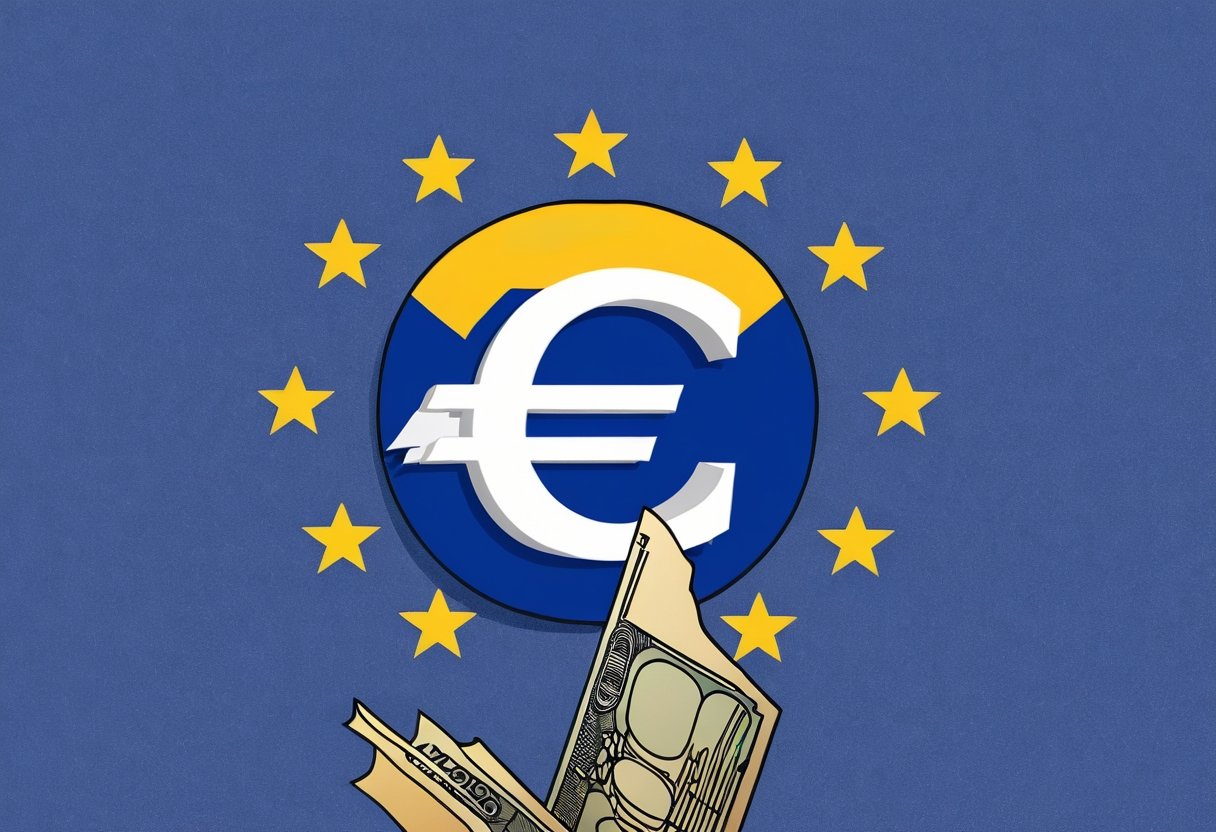
  • Europe Aims for 2029 Digital Euro Launch

    Europe Aims for 2029 Digital Euro Launch

    Introduction to the Digital Euro

    The European Central Bank (ECB) has announced its plan to launch the digital euro by 2029, marking a significant step towards a more digital and integrated European economy. According to Ledger Insights, the ECB will start pilots in 2027 and aims to go live in 2029, subject to legislative approval and technical readiness.

    Key Facts and Figures

    The decision to move to the next phase of the digital euro project follows the successful completion of the preparation phase, which was launched in November 2023. As reported by the ECB, the estimated costs for the development and issuance of the digital euro are around €1.3 billion until the first issuance, with subsequent annual operating costs projected to be approximately €320 million per year from 2029.

    Market Impact and Future Implications

    The digital euro is expected to reduce the European Union’s reliance on payment service providers from outside the bloc. As The Register notes, European banks currently represent only a third of digital payments activities within the Eurozone, with two-thirds of digital payments intermediated by non-European companies. The digital euro could change this landscape and promote greater financial integration and independence.

    Technical Analysis and Expert Insights

    From a technical standpoint, the digital euro will be a central bank digital currency (CBDC), which has been explored by many countries around the world. As Bloomberg reports, the ECB will decide to push on with preparatory work, aiming to issue the currency in 2029, provided there’s a legal framework in place. Capco highlights that 134 countries, representing 98% of global GDP, are exploring CBDCs, with 11 countries having already launched their own CBDC.

    Conclusion and Practical Takeaways

    In conclusion, the launch of the digital euro in 2029 marks an important milestone in the development of a more digital and integrated European economy. As the ECB continues to lay the groundwork for the digital euro, it’s essential for businesses, policymakers, and individuals to stay informed and adapt to the changing landscape.