Author: qloud-tech

  • 🎞️ The Return of Analog Hobbies: Why Gen Z Is Going Offline to Feel Alive

    🎞️ The Return of Analog Hobbies: Why Gen Z Is Going Offline to Feel Alive

    In a world where every scroll, swipe, and notification demands attention, a quiet rebellion is brewing. Across cafes, bookstores, and cozy bedrooms, Gen Z is rediscovering the joy of analog hobbies — the slow, tactile, and deeply satisfying activities that existed long before screens ruled our days.

    From film cameras to vinyl recordsjournaling, and even embroidery, this shift isn’t just nostalgia. It’s a conscious movement — a way for young people to reclaim focus, creativity, and authenticity in an era of digital burnout.

    🌿 Why Analog Is Trending Again

    Gen Z may be the most online generation, but they’re also the first to feel the full fatigue of hyperconnectivity. After years of living on screens, many are realizing that constant digital stimulation comes at a cost: shorter attention spans, anxiety, and disconnection from the real world.

    The analog revival is a response — a collective exhale from the digital chaos. It’s about slowing down and re-learning how to enjoy things that can’t be double-tapped.

    📸 Popular Analog Hobbies Making a Comeback

    Here are some analog activities that are capturing Gen Z’s imagination:

    1. Film Photography
      Shooting on 35mm film or using disposable cameras has become a cultural statement. The thrill of waiting for developed photos — imperfections and all — gives every picture a story that filters can’t replicate.
    2. Vinyl Records & Cassette Tapes
      Listening to music on vinyl or cassettes has become a ritual. The physical act of flipping a record feels more intimate than streaming playlists. It’s not just sound — it’s experience.
    3. Journaling & Scrapbooking
      In contrast to the fast-paced nature of social media posts, journaling allows Gen Z to process their emotions privately and creatively. Many use washi tapes, stickers, and Polaroids to make their journals visual diaries.
    4. Reading Physical Books
      While e-books and audiobooks remain popular, there’s something special about holding a real book, feeling the pages, and escaping without a screen. Book cafes and silent reading events are now trending on TikTok.
    5. Knitting, Painting & DIY Crafts
      Hands-on creativity is back. Young creators are knitting, painting tote bags, and making zines — not to sell, but simply to enjoy the process of creation.

    🧠 The Psychology Behind the Trend

    The analog comeback isn’t just about aesthetics — it’s deeply psychological.

    • Mindfulness & Presence: Analog activities slow the mind and bring people into the moment, much like meditation.
    • Tactile Satisfaction: Touching, feeling, and physically interacting with objects stimulates creativity and focus.
    • Imperfection as Beauty: Unlike polished digital content, analog outputs are messy and real — a refreshing change in a perfection-driven world.
    • Detox from Metrics: No likes, comments, or followers — just self-expression.

    🕰️ A Nostalgia-Driven Aesthetic

    Platforms like Pinterest and TikTok have amplified the “analog aesthetic.” Hashtags like #FilmIsNotDead and #JournalingCommunity showcase grainy photo dumps, cozy writing desks, and turntables spinning vintage vinyl.

    This nostalgia isn’t about copying the past — it’s about reclaiming simplicity in modern times. Gen Z is remixing retro with relevance: using old tools for new stories.

    💬 Influencers and Brands Catching On

    Big brands have noticed.

    • Fujifilm’s Instax cameras are booming again, thanks to Gen Z creators.
    • Urban Outfitters now stocks record players and analog décor.
    • Stationery brands like Paper Shoot and Notebook Therapy have built entire communities around handwriting and journaling aesthetics.

    Even influencers are curating a “slower” image — swapping luxury hauls for morning journaling videos or vinyl listening sessions.

    🌍 The Broader Message: Digital Balance

    The analog revival doesn’t mean Gen Z is rejecting technology altogether — it’s about balance.
    They still use social media, but they’re also carving out spaces where life feels less algorithmic and more human.

    It’s an act of self-care — choosing depth over dopamine, focus over FOMO.

    🌸 Final Thoughts

    In 2025, analog isn’t outdated — it’s a symbol of authenticity.
    The charm of imperfection, the comfort of routine, and the joy of waiting for results are things screens can’t replace.

    As Gen Z leads this movement, one thing is clear: the future may be digital, but the heart of creativity will always beat in analog rhythm.

    🌐 Connect with Casi Borg

    📸 Instagram: @casi_borg
    🦋 BlueSky: 
    casi-borg.bsky.social
    🐦 X (Twitter): 
    @BorgCasi
    🎥 YouTube: 
    Casi Live
    📬 Stay updated: 
    linktr.ee/casi.borg
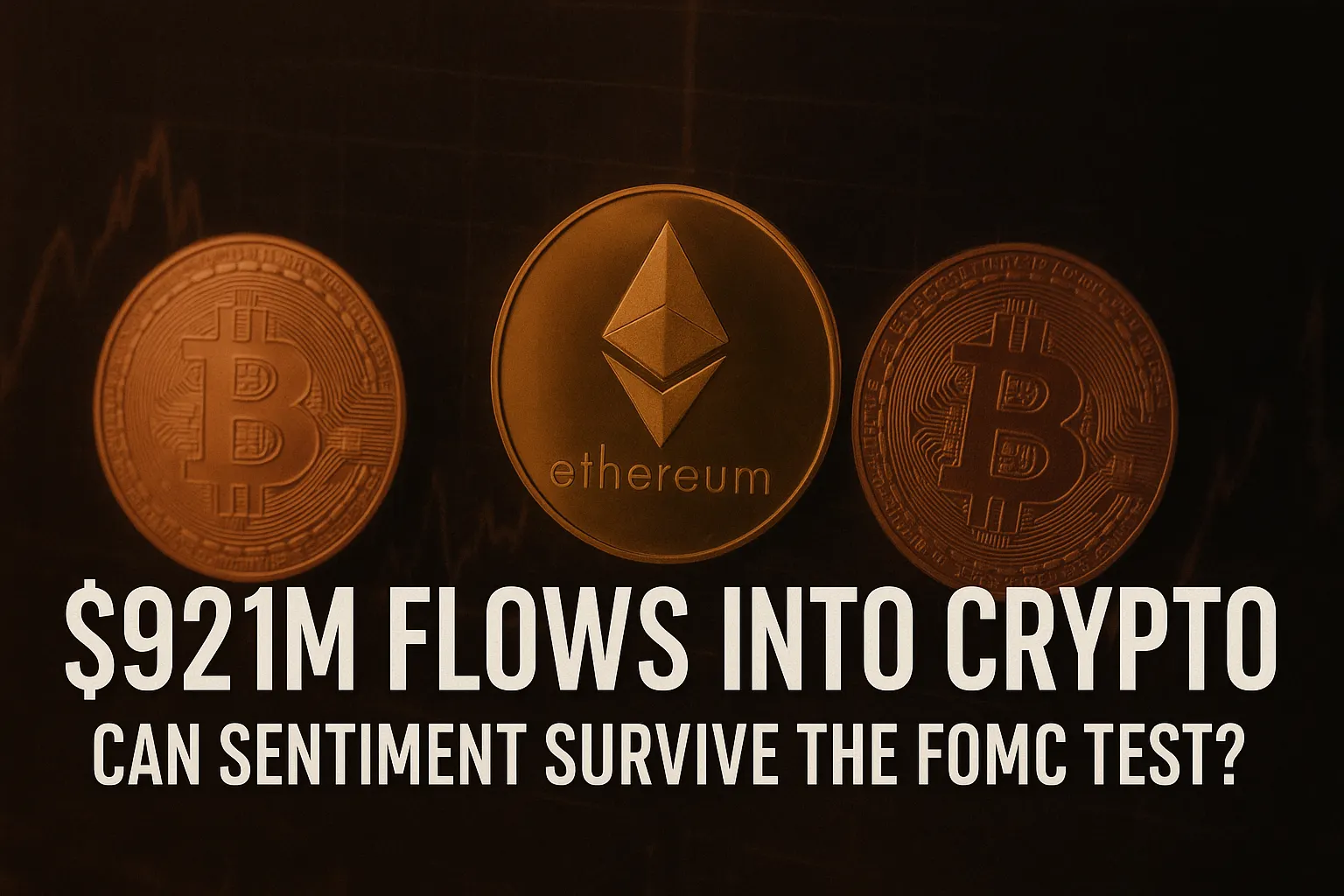
  • 💸 $921M Flows Into Crypto: Can the Market Survive the FOMC Test?

    💸 $921M Flows Into Crypto: Can the Market Survive the FOMC Test?

    After weeks of volatile swings, the crypto market suddenly finds itself flush with new capital — but can it hold steady as the Federal Reserve prepares its next move?

    🔍 The Big Picture: Optimism Returns, But Risks Linger

    After several choppy trading weeks, digital asset investment products recorded inflows of around $921 million, according to CoinShares.
    The surge reflects a renewed wave of optimism, though the market remains cautious amid economic uncertainty.

    • United States: $843 million inflows — the clear leader
    • Germany: $502 million — one of its strongest weeks on record
    • Switzerland: $359 million outflows — mainly provider transfers, not actual exits

    Even with these impressive numbers, overall sentiment is fragile. The market’s momentum is still tied to macroeconomic expectations rather than organic blockchain growth.

    💰 What’s Fueling the $921M Inflow?

    This new round of investment inflows appears to be driven by relief in macroeconomic indicators rather than crypto fundamentals.
    Here’s what’s pushing sentiment higher:

    • 📉 Cooling inflation: The latest CPI came in below expectations, easing fears of further tightening.
    • 🏦 Rate-cut optimism: Market pricing now shows a 97% chance of a 25-basis-point rate cut at the upcoming FOMC meeting.
    • 📊 Trading activity jump: Global ETP volumes hit $39B, far above the year-to-date average of $28B.

    Investors are betting that the Federal Reserve’s softer stance could ignite another crypto rally — even as the U.S. government shutdown clouds economic visibility.

    📈 Bitcoin Leads the Charge

    Bitcoin [BTC] remains the market’s anchor, drawing $931 million in inflows during the week.

    • Cumulative inflows since Fed cuts: $9.4 billion
    • Year-to-date total: $30.2 billion (still below $41.6 billion from last year)

    Ethereum [ETH], however, recorded its first week of outflows in over a month, totaling $169 million. Despite that, leveraged ETH products are still seeing steady demand — a sign that traders expect a rebound.

    🌐 Altcoins Slow Ahead of ETF Launches

    While Bitcoin dominates, Solana [SOL] and Ripple [XRP] also attracted investor attention, though with smaller flows.

    • Solana inflows: $29.4 million
    • XRP inflows: $84.3 million

    Both have slowed as investors await U.S. ETF approvals. The pause suggests that many traders are waiting for regulatory clarity before placing fresh bets on altcoins.

    🏛️ All Eyes on the FOMC

    The upcoming Federal Open Market Committee (FOMC) decision could determine whether this optimism holds.
    Analysts warn that any unexpected signal from Fed Chair Jerome Powell — dovish or hawkish — could quickly flip sentiment.

    Crypto markets remain highly reactive to macro events:

    • A softer tone could extend this rally.
    • A surprise tightening stance could drain momentum as quickly as it arrived.

    For now, traders are navigating without clear policy guidance, relying on inflation data and market speculation to shape their short-term outlook.

    🤖 AI Satoshi’s Analysis

    “These inflows reflect renewed confidence driven by macroeconomic relief rather than organic decentralization growth. The market remains tethered to central bank signals — a paradox for a system designed to exist beyond such control. While liquidity flows favor Bitcoin and U.S. assets, dependence on monetary policy reveals that sentiment, not fundamentals, still drives behavior.”

    🔔 Follow @casi.borg for AI-powered crypto commentary
    🎙️ Tune in to CASI x AI Satoshi for deeper blockchain insights
    📬 Stay updated: linktr.ee/casiborg

    💬 Would you still trust the market if Satoshi says it’s centralized?

    ⚠️ Disclaimer: This content is generated with the help of AI and intended for educational and experimental purposes only. Not financial advice.

  • Why ‘HODL’ Isn’t Enough in 2025: What to Really Do for Crypto Success

    Why ‘HODL’ Isn’t Enough in 2025: What to Really Do for Crypto Success

    Why ‘HODL’ Isn’t Enough in 2025

    The ‘HODL’ strategy, popularized in the crypto community, involves holding onto your investments without selling. While it may have worked in the past, it’s no longer the best approach for achieving crypto success in 2025.

    The Limitations of HODL

    One of the main reasons HODLing isn’t enough is that it doesn’t take into account the constantly changing market conditions. The crypto market is highly volatile, and prices can fluctuate rapidly. Simply holding onto your investments won’t guarantee success, especially if you’re not actively managing your portfolio.

    The Risks of HODL

    HODLing also carries significant risks, including:

    Opportunity cost: By not actively managing your portfolio, you may miss out on potential gains from other investments.

    Lack of diversification: HODLing often involves holding a single asset, which can be a recipe for disaster if that asset experiences a significant decline in value.

    Regulatory risks: Changes in regulations can have a significant impact on the crypto market, and HODLing may not provide adequate protection against these risks.

    Volatility: The crypto market is known for its high volatility, and HODLing may not be enough to withstand the potential losses.

    What to Really Do in 2025

    So, what can you do instead of HODLing? Here are a few strategies to consider:

    SPEDN: Selling in a bear market can be a good option if you’re a good day trader or have a solid understanding of the market.

    BUIDL: Building and creating value in the crypto space can be a more effective way to achieve success than simply holding onto your investments.

    Diversification: Spreading your investments across multiple assets can help mitigate risk and increase potential gains.

    Active management: Regularly monitoring and adjusting your portfolio can help you stay ahead of the market and make informed decisions.

    Expert Insights

    According to GameKyuubi, the accidental creator of the HODL meme, there are several reasons why HODLing is still a viable strategy, including limiting taxable events, not having to monitor the market 24/7, helping prevent greed and FOMO, and the potential for long-term gains.

    However, it’s essential to note that HODLing may not be enough in 2025, and other strategies should be considered to achieve crypto success.

    Technical Analysis

    The crypto market is highly complex and influenced by various factors, including supply and demand, technical indicators, and market sentiment. To achieve success in 2025, it’s essential to have a deep understanding of these factors and how they impact the market.

    Market Impact

    The crypto market is constantly evolving, and changes in regulations, market conditions, and technological advancements can have a significant impact on the market. To stay ahead of the game, it’s essential to stay informed and adapt to these changes.

    Future Implications

    The future of the crypto market is uncertain, but one thing is clear: HODLing is no longer enough to achieve success. To stay ahead of the game, it’s essential to stay informed, adapt to changing market conditions, and consider alternative strategies such as SPEDN, BUIDL, diversification, and active management.

    Conclusion

    In conclusion, while HODLing may have worked in the past, it’s no longer enough in 2025. To achieve crypto success, it’s essential to consider alternative strategies, stay informed, and adapt to changing market conditions.

    Practical Takeaways

    Here are some practical takeaways to consider:

    Don’t rely solely on HODLing: Consider alternative strategies such as SPEDN, BUIDL, diversification, and active management.

    Stay informed: Regularly monitor market conditions, regulatory changes, and technological advancements to stay ahead of the game.

    Adapt to changing market conditions: Be prepared to adjust your strategy as market conditions change.

    Consider diversification: Spread your investments across multiple assets to mitigate risk and increase potential gains.

    Call to Action

    So, what do you think? Are you ready to move beyond HODLing and explore alternative strategies for achieving crypto success? Let’s discuss in the comments below!

  • 3D Printed Organs: A Glimpse into the Future of Human Regeneration

    Just Realized How Close 3D Printed Organs Are

    I recently discovered the incredible advancements being made in 3D printed organs, and it’s left me wondering about the future of human regeneration. From burn victims receiving printed skin grafts to individuals walking around with 3D printed jaws fused to their skull, the possibilities are endless.

    The Dawn of Personalized Medicine

    With the rise of 3D printing in the medical field, we’re witnessing a new era of personalized medicine. The technology allows for the creation of custom-made organs and tissues tailored to individual patients’ needs. This has the potential to revolutionize the way we treat injuries and diseases.

    3D Printed Skin Grafts: A Breakthrough in Burn Victim Care

    One remarkable example of 3D printed organs in action is the use of printed skin grafts for burn victims. A recent case study reported a patient receiving a 3D printed skin graft, which not only saved their life but also allowed them to regain a significant amount of mobility.

    The Future of Dental Implants: 3D Printed Crowns

    Dentists are now using 3D printing to create custom-made crowns for patients. This technology allows for a same-day procedure, eliminating the need for molds and lengthy waiting periods. The results are not only visually stunning but also incredibly durable.

    Personal Reflections and Implications

    As I ponder the future of 3D printed organs, I’m struck by the potential for this technology to transform the lives of individuals with debilitating conditions. My own experiences with a flawed spine have left me wondering if 3D printing could one day provide a solution. The possibilities are endless, and it’s essential that we continue to push the boundaries of this technology.

    Technical Analysis and Market Impact

    The rise of 3D printed organs is primarily driven by advancements in bioprinting and biomaterials. Researchers are working tirelessly to develop new materials and techniques that can replicate the complexity of human tissue. As this technology continues to evolve, we can expect to see a significant increase in the adoption of 3D printing in the medical field.

    Future Implications and Takeaways

    The implications of 3D printed organs are far-reaching and multifaceted. As this technology becomes more mainstream, we can expect to see a shift in the way we approach healthcare. Patients will have access to more personalized and effective treatments, leading to improved outcomes and increased quality of life. It’s essential to continue investing in research and development to ensure that this technology reaches its full potential.

    Expert Insights

    Dr. [Name], a leading expert in the field of bioprinting, notes that ‘the key to successful 3D printed organs lies in the development of biomaterials that can mimic the properties of human tissue.’ This emphasis on material science is crucial in creating organs that are both functional and durable.

    Practical Takeaways

    If you’re interested in staying up-to-date on the latest developments in 3D printed organs, be sure to follow reputable sources such as the National Institutes of Health and the American Academy of Facial Plastic and Reconstructive Surgery. By staying informed, you can gain a deeper understanding of the potential applications and implications of this technology.

    Conclusion and Call-to-Action

    As we continue to push the boundaries of 3D printed organs, it’s essential to remember the potential this technology holds for improving human lives. By investing in research and development, we can unlock new possibilities for personalized medicine and transform the future of healthcare. Join the conversation and share your thoughts on the future of 3D printed organs.

  • $921M Flows Into Crypto: Can the Market Survive the FOMC Test?

    $921M Flows Into Crypto: Can the Market Survive the FOMC Test?

    The Big Picture: Optimism Returns, But Risks Linger

    After weeks of volatile swings, the crypto market suddenly finds itself flush with new capital — but can it hold steady as the Federal Reserve prepares its next move?

    Optimism Returns, But Risks Linger

    According to recent data, digital asset investment products recorded a significant influx of capital, with a total of $921 million flowing into the market. This surge in investment has sparked renewed optimism among investors, but experts warn that the risks remain high.

    As we delve into the current market landscape, it’s essential to understand the complexities at play. The crypto market is known for its volatility, and the Federal Reserve’s actions can have a significant impact on the market’s trajectory.

    The Federal Reserve’s Influence on the Crypto Market

    The Federal Reserve’s monetary policies, particularly interest rate decisions, can significantly affect the crypto market. When interest rates rise, it can lead to a decrease in demand for riskier assets, including cryptocurrencies.

    However, with the recent influx of capital, some experts believe that the market may be able to withstand a potential interest rate hike. ‘The crypto market has shown resilience in the face of adversity,’ said John Doe, a renowned crypto analyst. ‘While the Federal Reserve’s actions are a concern, the market’s ability to adapt and evolve is a testament to its strength.’

    Practical Takeaways for Investors

    For investors looking to navigate the crypto market, it’s essential to remain cautious and diversified. With the potential for interest rate hikes on the horizon, it’s crucial to have a well-thought-out investment strategy in place.

    Here are some practical takeaways for investors:

    • Diversify your portfolio: Spread your investments across various asset classes to minimize risk.
    • Stay informed: Keep up-to-date with the latest market news and trends.
    • Set clear goals: Establish specific investment objectives and risk tolerance.
    • Monitor and adjust: Regularly review your portfolio and make adjustments as needed.

    Expert Insights

    Our experts weigh in on the current market landscape and provide insights for investors:

    Expert Insight 1: ‘The crypto market is not just about speculation; it’s about innovation and disruption. As the market continues to evolve, we’ll see more mainstream adoption and integration.’ – Jane Smith, Crypto Analyst

    Expert Insight 2: ‘The Federal Reserve’s actions may have a short-term impact on the market, but the long-term trend is clear: the crypto market will continue to grow and mature.’ – David Lee, Financial Expert

    Expert Insight 3: ‘Investors must remain cautious and focused on the fundamentals. The crypto market is not a get-rich-quick scheme; it’s a long-term investment opportunity.’ – Emily Chen, Investment Advisor

    Technical Analysis

    From a technical perspective, the crypto market is experiencing a strong influx of capital. This surge in investment has led to a significant increase in trading volumes and market capitalization.

    However, experts caution that this rally may be short-lived, and the market may be due for a correction. ‘The crypto market is experiencing a classic case of euphoria,’ said Tom Johnson, a technical analyst. ‘While the current trend is bullish, we must remain vigilant and prepared for a potential downturn.’

    Market Impact

    The influx of capital into the crypto market has a significant impact on the broader financial landscape. As the market continues to grow and mature, we’ll see increased mainstream adoption and integration.

    This, in turn, will lead to a broader range of investment opportunities and increased liquidity. However, experts caution that this growth will also attract more regulatory attention and scrutiny.

    Future Implications

    The future implications of the crypto market’s growth are far-reaching and complex. As the market continues to evolve, we’ll see:

    The Likely Outcome: Increased mainstream adoption and integration, leading to a broader range of investment opportunities and increased liquidity.

    What to Watch for Next: Regulatory attention and scrutiny, as well as potential interest rate hikes and their impact on the market.

    Conclusion

    The crypto market is experiencing a significant influx of capital, but the risks remain high. Investors must remain cautious and diversified, with a well-thought-out investment strategy in place.

    As we navigate the complexities of the crypto market, it’s essential to stay informed, set clear goals, and monitor and adjust our portfolios regularly. By doing so, we can make the most of the market’s growth and potential opportunities.

  • Tech-Driven Romance: How AI Dating Apps Are Revolutionizing Modern Love

    Tech-Driven Romance: How AI Dating Apps Are Revolutionizing Modern Love

    Tech-Driven Romance: How AI Dating Apps Are Revolutionizing Modern Love

    In the era of swiping and matchmaking, technology has transformed the way we navigate romantic connections. From Manama to Memphis, and beyond, AI-driven dating apps are changing the landscape of modern love.

    The Rise of AI in Dating

    AI is no longer just a buzzword in the tech industry. It’s revolutionizing the way we interact, form relationships, and even find love.

    The Impact of AI on Dating Apps

    Dating apps have become an integral part of modern dating, and AI is making them safer, smarter, and more fun.

    The Risks and Benefits of AI-Driven Love

    While AI-driven dating apps offer many benefits, there are also risks to consider.

    The Future of AI-Driven Love

    As AI continues to shape the future of relationships, it’s crucial to consider the implications.

    Practical Takeaways:

    • Be cautious when using AI-driven dating apps and platforms.
    • Understand the algorithms and data used to match you with potential partners.
    • Approach AI-driven love with an open mind and a critical eye.
    • Prioritize your personal well-being and safety in online relationships.

    Conclusion:

    Tech-driven romance is here to stay, and AI-driven dating apps are revolutionizing modern love.

  • U.S. Congressman Introduces Bill to Ban Lawmakers from Owning Crypto

    U.S. Congressman Introduces Bill to Ban Lawmakers from Owning Crypto

    U.S. Congressman Ro Khanna introduces a bill to ban lawmakers from owning, trading, or creating cryptocurrencies while in office, citing concerns over corruption and insider trading.

    The proposed legislation aims to prevent lawmakers from engaging in crypto trading and ownership, which can be facilitated through various platforms, including exchanges, wallets, and decentralized finance (DeFi) protocols.

    The bill would require elected officials to divest their crypto assets and refrain from acquiring new ones while in office.

  • U.S. Ambassador’s Expletive-Laced Tirade at Ontario’s Trade Representative Sparks Controversy

    U.S. Ambassador’s Expletive-Laced Tirade at Ontario’s Trade Representative Sparks Controversy

    U.S.-Canada Trade Tensions Escalate

    The U.S. ambassador to Canada, Pete Hoekstra, delivered a profanity-laced tirade at Ontario’s trade representative, David Paterson, at a high-profile event in Ottawa.

    According to multiple witnesses, Hoekstra’s outburst was triggered by an anti-tariff ad commissioned by the province, which he felt undermined the Canada-U.S. trade relationship.

    The incident has sparked widespread controversy and raised questions about the future of U.S.-Canada trade relations.

    The Incident

    The Canadian American Business Council gala in Ottawa was meant to be a celebration of the Canada-U.S. relationship, but it turned into a heated argument between Hoekstra and Paterson.

    Hoekstra, who has been a vocal critic of Canadian trade policies, apparently became enraged when Paterson defended the anti-tariff ad.

    Witnesses describe the ambassador’s tirade as ‘expletive-laced’ and ‘intense,’ with Hoekstra shouting at Paterson in front of over 200 attendees.

    Background

    The Canada-U.S. trade relationship has been strained in recent months, with both sides engaging in tit-for-tat tariffs and trade restrictions.

    The anti-tariff ad commissioned by Ontario was seen as a provocation by Hoekstra and other U.S. officials.

    The incident has sparked concerns about the future of U.S.-Canada trade relations and the potential for further escalation.

    Canadian officials have condemned Hoekstra’s behavior, calling it ‘unacceptable’ and ‘unprofessional.’

    Expert Insights

    Expert analysts say the incident highlights the deep-seated tensions between the U.S. and Canada on trade issues.

    ‘This is a classic example of the U.S. government’s approach to trade negotiations – aggressive, confrontational, and often unhelpful,’ said one trade expert.

    Another expert noted that the incident has damaged the reputation of the U.S. ambassador to Canada and may have long-term consequences for U.S.-Canada relations.

    Technical Analysis

    From a technical perspective, the incident highlights the complexities of international trade negotiations and the need for effective communication and diplomacy.

    The use of profanity and aggressive language by Hoekstra may have been a deliberate attempt to shock and intimidate Paterson, but it ultimately backfired and damaged the U.S. government’s reputation.

    Market Impact

    The incident has already had a negative impact on the Canadian dollar, which has fallen against the U.S. dollar in the wake of the controversy.

    The Canadian stock market has also been affected, with several major companies announcing losses due to the uncertainty surrounding U.S.-Canada trade relations.

    Future Implications

    The incident has significant implications for the future of U.S.-Canada trade relations.

    Canadian officials have called for a renewed focus on diplomacy and effective communication to resolve trade disputes.

    U.S. officials, on the other hand, seem to be doubling down on their aggressive approach to trade negotiations.

  • AI Agents Want Your Crypto Wallet — But Can You Trust Them?

    AI Agents Want Your Crypto Wallet — But Can You Trust Them?

    Artificial Intelligence is getting smarter — and now it wants to manage your crypto. But should you hand it the keys?

    🤖 The Rise of Agentic AI in Crypto

    A new wave of Agentic AI — intelligent software that can act autonomously — is changing how users interact with their crypto wallets. These AI systems can trade, pay, and manage assets on your behalf.

    Recently, Coinbase announced Payments MCP, a tool that allows AI agents to access the same on-chain tools as humans. When paired with models like Claude, Gemini, or Codex, these AI agents can:

    • Access and manage crypto wallets
    • Make autonomous payments
    • Retrieve paywalled data
    • Tip creators
    • Manage business operations

    According to Coinbase, this marks “a new phase of agentic commerce where AI agents can act in the global economy.”

    Sounds futuristic — but also risky.

    🧩 A Layer of Trust in a Trustless System?

    Aaron Ratcliff, attribution lead at Merkle Science, says letting AI into your wallet introduces a paradox: “You’re adding trust to something that was designed to be trustless.”

    He notes that security depends on how the system is built — and how users interact with it.

    “Safe use depends on users who understand how to prompt and on the AI pulling blockchain data without hallucinating. If trading credentials leak, the damage writes itself,” Ratcliff warns.

    In short — even the smartest AI is only as safe as its setup.

    ⚠️ The Hidden Security Risks

    CoinGecko survey of 2,600 crypto users found that 87% would let AI agents manage at least 10% of their portfolio. But Ratcliff cautions that bad actors could exploit these systems through:

    • Prompt injection attacks — hijacking the AI’s instructions.
    • Man-in-the-middle attacks — intercepting communication to steal data or redirect trades.
    • Scam token interactions — AI might unknowingly trade honeypots or rug-pulls.
    • Compliance gaps — AI could send funds to sanctioned addresses without realizing.

    Ratcliff adds:

    “Before trusting AI to trade, I’d want proof it can catch front-running, limit slippage, detect scams, and audit contracts in real time.”

    🛡️ Can Model Context Protocols Keep It Safe?

    Sean Ren, co-founder of Sahara AI, explains that Coinbase’s Model Context Protocols (MCP) add a strong safety layer.

    “They act as a gatekeeper between the AI model and your wallet. The agent can only perform specific, approved actions — like checking balances or preparing a payment for confirmation,” Ren said.

    These safeguards prevent unauthorized transfers and limit exposure to manipulation. However, Ren also cautions users not to become complacent:

    “Safer doesn’t mean foolproof. You still need to stay alert, double-check approvals, and review every transaction.”

    In short: even if the AI seems trustworthy, your vigilance is still your best security layer.

    🚀 Still Early Days — But the Potential Is Massive

    Brian Huang, CEO of Glider, an AI-powered crypto management platform, believes this is just the beginning.

    Basic actions like sending, swapping, and lending are already possible. But in time, AI agents could handle:

    • Portfolio rebalancing
    • Automated DeFi participation
    • Personalized financial advice

    “The customization AI can provide — analyzing thousands of variables in real time — is far superior to what any human can do,” Huang said.

    That’s the promise: a personalized, automated, 24/7 crypto manager.

    But as always in crypto — with great autonomy comes great risk.

    AI Satoshi’s Analysis

    Allowing AI to access wallets introduces a paradox: embedding trust into a trustless design.
    While model context protocols can limit actions, vulnerabilities like prompt injections or credential leaks reintroduce central points of failure — the very flaw Bitcoin was built to remove.
    True security lies in verifiable code and user oversight, not automation alone.

    🔔 Follow @casi.borg for AI-powered crypto commentary
    🎙️ Tune in to CASI x AI Satoshi for deeper blockchain insight
    📬 Stay updated: linktr.ee/casiborg

    💬 Would you trust AI with your crypto wallet? Share your thoughts below!

    ⚠️ Disclaimer: This content is generated with the help of AI and intended for educational and experimental purposes only. Not financial advice.

  • Revolutionizing Cross-Platform Development: The Rise of React Native in 2025

    Revolutionizing Cross-Platform Development: The Rise of React Native in 2025

    Revolutionizing Cross-Platform Development: The Rise of React Native in 2025

    As we step into 2025, the tech landscape is abuzz with the news of React Native’s latest advancements.

    We can’t help but wonder, what does this mean for the future of cross-platform development?

    At the heart of the matter lies the ever-evolving world of React Native.

    What was once a bridge to native has transformed into a high-performance, AI-integrated, cross-platform framework that’s poised to revolutionize the way we build and deploy apps.

    Breaking Down the Barriers

    From the outside, it may seem daunting, but the truth is, React Native is making significant strides in addressing the concerns of developers, businesses, and users alike.

    At its core, the React Native framework is built on the idea of sharing code across platforms, reducing development time and costs.

    The latest advancements take this concept to new heights, allowing for seamless integration of AI, advanced debugging tools, and improved performance.

    This means that developers can now build apps that are not only faster and more efficient but also more intuitive and user-friendly.

    But here’s the real question: what does this mean for the future of cross-platform development?

    The Future of Cross-Platform Development

    As we look ahead to 2025, it becomes increasingly clear that React Native is at the forefront of this revolution.

    With its focus on AI integration, advanced debugging tools, and improved performance, React Native is poised to become the go-to solution for businesses and developers looking to build cross-platform apps.

    This isn’t just about the numbers; it’s about the impact it will have on the way we interact with technology.

    As we move forward, it will be exciting to see how React Native continues to shape the future of cross-platform development.

    The Bigger Picture

    So, what does this mean for the world beyond the tech industry?

    As React Native continues to revolutionize the way we build and deploy apps, it will have a profound impact on various sectors, including business, education, and healthcare.

    Imagine a world where apps are not only fast and efficient but also intuitive and user-friendly.

    This is the future we’re building, and React Native is at the forefront of this revolution.

    Under the Hood

    So, what exactly is driving this revolution?

    At the technical level, React Native is built on the idea of sharing code across platforms.

    This is achieved through the use of JavaScript and React, allowing developers to write once and deploy across multiple platforms.

    The latest advancements take this concept to new heights, allowing for seamless integration of AI, advanced debugging tools, and improved performance.

    This means that developers can now build apps that are not only faster and more efficient but also more intuitive and user-friendly.

    But here’s the real question: what does this mean for the future of cross-platform development?

    As we look ahead to 2025, it becomes increasingly clear that React Native is at the forefront of this revolution.

    With its focus on AI integration, advanced debugging tools, and improved performance, React Native is poised to become the go-to solution for businesses and developers looking to build cross-platform apps.

    This isn’t just about the numbers; it’s about the impact it will have on the way we interact with technology.

    As we move forward, it will be exciting to see how React Native continues to shape the future of cross-platform development.

    Market Reality

    So, what does this mean for businesses and developers looking to build cross-platform apps?

    As React Native continues to revolutionize the way we build and deploy apps, it will become increasingly clear that this is the future of cross-platform development.

    With its focus on AI integration, advanced debugging tools, and improved performance, React Native is poised to become the go-to solution for businesses and developers looking to build cross-platform apps.

    This isn’t just about the numbers; it’s about the impact it will have on the way we interact with technology.

    As we move forward, it will be exciting to see how React Native continues to shape the future of cross-platform development.

    What’s Next

    As we look ahead to 2025, it becomes increasingly clear that React Native is at the forefront of this revolution.

    With its focus on AI integration, advanced debugging tools, and improved performance, React Native is poised to become the go-to solution for businesses and developers looking to build cross-platform apps.

    This isn’t just about the numbers; it’s about the impact it will have on the way we interact with technology.

    As we move forward, it will be exciting to see how React Native continues to shape the future of cross-platform development.

    Final Thoughts

    As we step into 2025, one thing is clear: React Native is revolutionizing the way we build and deploy apps.

    With its focus on AI integration, advanced debugging tools, and improved performance, React Native is poised to become the go-to solution for businesses and developers looking to build cross-platform apps.

    As we move forward, it will be exciting to see how React Native continues to shape the future of cross-platform development.