Author: qloud-tech

  • Morgan Stanley Dives into Crypto with Bitcoin and Solana ETFs

    Morgan Stanley Dives into Crypto with Bitcoin and Solana ETFs

    Morgan Stanley’s Crypto Push

    Morgan Stanley, one of the largest US banks, has filed to launch Bitcoin and Solana ETFs, marking a significant move into the cryptocurrency space. According to a Form S-1 filed with the US Securities and Exchange Commission (SEC), the bank plans to offer ETFs tied to the price of Bitcoin and Solana, the first and sixth-largest crypto assets by market capitalization, respectively.

    Significance of the Move

    This move signals a major shift in the banking industry’s approach to cryptocurrencies. As reported by TechRepublic, Morgan Stanley’s ambitions extend far beyond ETFs, with plans to launch direct crypto trading on ETrade by early 2026. This will give ETrade’s 5.2 million users access to crypto alongside traditional investments.

    Market Impact

    The filing follows the rapid expansion of spot Bitcoin ETFs in the US market over the past two years. As reported by CoinDesk, these ETFs now have $123 billion in total net assets, equivalent to 6.57% of Bitcoin’s total market capitalization. Since the start of the year, net inflows to these products have topped $1.1 billion.

    Expert Insights

    According to 401k Specialist, Morgan Stanley’s filing is the newest in a string of asset managers who have deepened their standing in cryptocurrency. This move puts Morgan Stanley head-to-head with BlackRock and Fidelity in the exploding crypto ETF arena.

    Future Implications

    The implications of this move are significant. As reported by Reuters, a bank entering the crypto ETF market adds legitimacy to it, and others could follow. This could lead to increased adoption of cryptocurrencies and further growth of the crypto market.


  • AI Creates Viruses from Scratch: The Future of Biological Warfare

    AI Creates Viruses from Scratch: The Future of Biological Warfare

    Introduction to AI-Generated Viruses

    Recent breakthroughs in artificial intelligence have enabled scientists to create viruses from scratch using AI systems. This development has sparked concerns about the potential misuse of such technology, particularly in the context of biological warfare. According to Earth.com, AI can now design viruses, raising new biosecurity risks. In fact, a Microsoft-led study showed that AI tools can redesign known toxins to escape common DNA synthesis safety checks.

    Implications of AI-Generated Viruses

    The ability to create viruses from scratch using AI has significant implications for the field of biology and medicine. As Snexplores.org notes, AI can help develop new viruses for use in medicine, such as phages that can treat bacterial infections that no longer respond to antibiotics. However, this technology also poses a significant risk if it falls into the wrong hands. Aheadoftheherd.com highlights the potential for AI-generated viruses to be used as biological weapons, which could have devastating consequences.

    Expert Insights and Technical Analysis

    Experts in the field of biosecurity are calling for increased regulation and monitoring of AI-generated viruses. As CNAS notes, the most pressing concern for biological risks related to AI stems from tools that may soon be able to accelerate the procurement of biological agents by non-state actors. To address this risk, it is essential to develop and implement effective biosecurity policies, including better training and screening of outputs.

    Future Implications and Market Impact

    The development of AI-generated viruses has significant implications for the future of biological warfare. As Reddit notes, the ability to create viruses from scratch using AI could lead to a new era of biological warfare, where non-state actors have access to powerful biological agents. This could have a significant impact on global security and stability, and it is essential to develop effective strategies to mitigate this risk.

    In terms of market impact, the development of AI-generated viruses could lead to significant investments in biosecurity and biotechnology. Companies that specialize in biosecurity and biotechnology could see significant growth and investment, as governments and organizations seek to develop effective countermeasures against AI-generated viruses.

  • Crypto Trends and Insights for 2026

    Crypto Trends and Insights for 2026

    Crypto After the Correction: Trends and Insights for 2026

    The crypto market has undergone significant changes over the past year, with a noticeable downturn in the autumn. However, according to Volodymyr Nosov, Founder and President of W Group and CEO of WhiteBIT, the industry is expected to see greater regulatory clarity, intensified institutional participation, and rapid development of the RWA market in 2026.

    Regulatory Clarity and Institutional Participation

    Over 70% of major jurisdictions have already made substantial progress in forming clear rules for digital assets, including stablecoins. This creates new opportunities for traditional financial institutions and bridges between Web2 and Web3. Most major investors have already invested in crypto ETFs, and new investment instruments will emerge, along with more opportunities for portfolio diversification.

    RWA Market and Security

    The RWA market will continue its rapid development, with tokenization tools becoming increasingly accessible to investors with various capital levels. Security and privacy will remain top priorities, with blockchain technologies finding applications across diverse sectors and new solutions for protecting data and financial transactions emerging.

    Market Trends and Predictions

    In 2026, we can expect cryptocurrencies to become even more embedded in the global economy, with regulatory progress, institutional capital inflows, and ongoing blockchain innovation supporting crypto mass adoption. The number of users interacting with crypto products will continue to grow, and the industry will see a redistribution of capital, preparing the market for its next phase of growth.

    Challenges and Opportunities

    The crypto industry still faces challenges, including regulatory alignment and the need for clearer frameworks. However, these challenges also present opportunities for growth and innovation. As the industry continues to evolve, we can expect to see new trends and insights emerge, shaping the future of the digital economy.

    According to Nosov, the key reasons for the autumn downturn were a decline in institutional interest, a global macroeconomic slowdown, and a washout of excess leverage. However, this correction is a healthy mechanism that helps redistribute capital and prepare the market for its next phase of growth.

    Conclusion

    In conclusion, the crypto industry is expected to see significant growth and development in 2026, with regulatory clarity, institutional participation, and rapid development of the RWA market driving the trend. As the industry continues to evolve, it’s essential to stay informed and adapt to the changing landscape.

  • Trump’s 2025 Deal Sparks Controversy Over AI Chip Sales to China

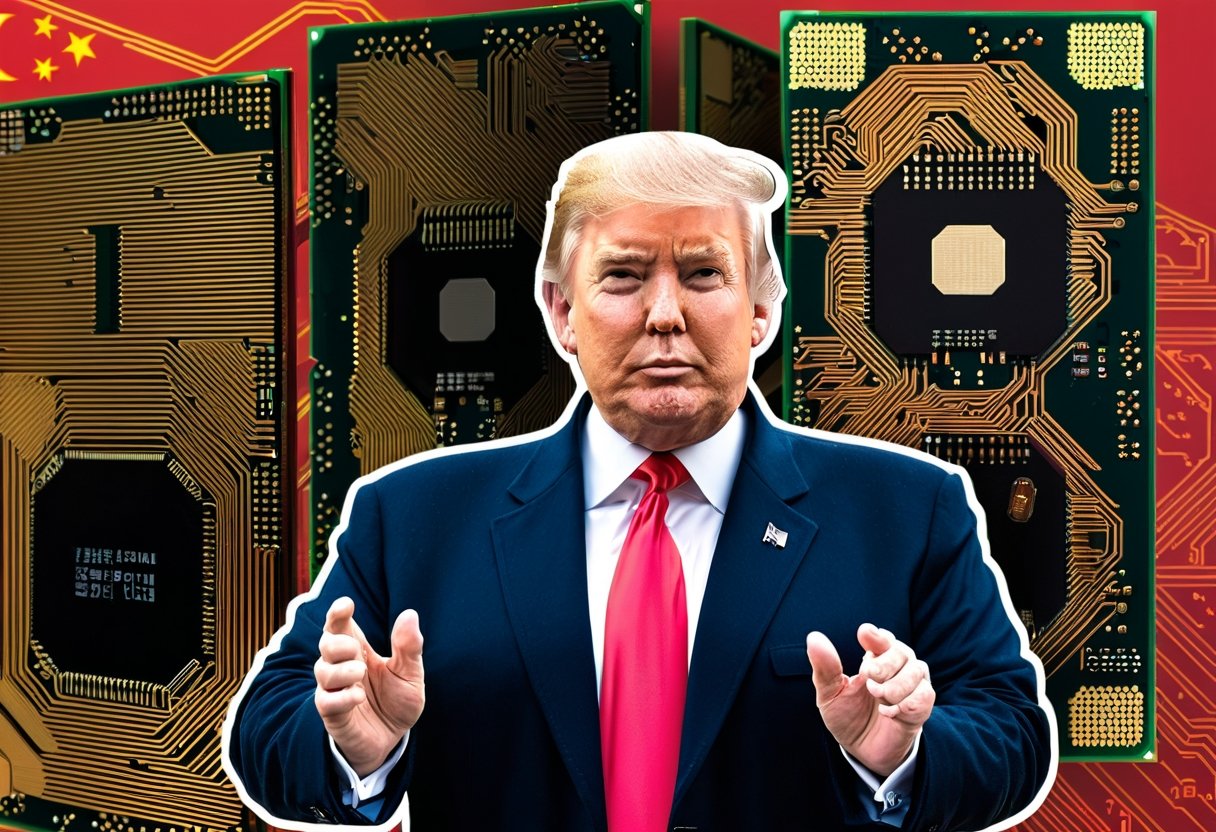
    Trump’s 2025 Deal Sparks Controversy Over AI Chip Sales to China

    Introduction to the Controversy

    President Trump’s 2025 deal allowing Nvidia and AMD to sell AI chips to China has sparked intense controversy. The arrangement, which promises a 15-25% U.S. revenue share, has been touted as a means to fund innovation but criticized for potential security risks. As reported by WebProNews and CNBC, this move has significant implications for U.S.-China tech relations.

    Details of the Deal

    According to CNBC, Nvidia and AMD agreed to share 15% of the revenue from China chip sales with the U.S. government. However, President Trump later announced that Nvidia would be allowed to ship its H200 artificial intelligence chips to ‘approved customers’ in China, with the U.S. receiving a 25% cut. This inconsistency has fueled criticism from lawmakers and experts, as highlighted by Bloomberg.

    Implications and Criticisms

    The deal has been criticized for its potential to undermine U.S. national security. As Reuters reports, the U.S. administration has launched a review that could result in the first shipments to China of Nvidia’s second-most powerful AI chips. This has raised concerns among China hawks across the U.S. political spectrum, who fear that the chips could supercharge Beijing’s military and erode the U.S. advantage in artificial intelligence.

    Expert Insights and Analysis

    Experts argue that shipping advanced AI chips to China could have significant implications for the future of U.S.-China relations and the global tech industry. As PBS notes, there are concerns about allowing advanced computer chips to be sold to China, as it could help the country better compete against the U.S. in building out AI capabilities.

    Conclusion and Future Implications

    In conclusion, Trump’s 2025 deal allowing Nvidia and AMD to sell AI chips to China has sparked controversy and raised significant questions about the implications for U.S. national security and the global tech industry. As the situation continues to unfold, it is essential to consider the potential long-term consequences of this decision and the future of U.S.-China tech relations.

  • Ethereum Stabilizes After Channel Break: Market Analysis

    Ethereum Stabilizes After Channel Break: Market Analysis

    Ethereum’s Recent Price Movement

    Ethereum (ETH/USD) has been making headlines with its recent price movement, stabilizing after a channel break as bulls test key resistance near $3,200. According to Itai Smidt’s analysis on Investing.com, ETH/USD has been trading around $3,150–$3,200 after suffering significant losses, leaving the token roughly 33% below its levels from three months ago.

    Technical Analysis

    Price spent months inside a clear descending channel from early October, with every bounce rolling over at a lower high. However, this structure finally snapped, with ETH pushing above the upper boundary of the channel and now grinding sideways rather than cascading lower. The moving averages have crossed over in a positive way, and the RSI has gone over 63, indicating buying momentum is in favor of the bulls.

    Comparison with Other Markets

    In comparison to other markets, Gold Spot US Dollar is down by 0.19%, while Bitcoin US Dollar is up by 1.48%. Ethereum US Dollar, on the other hand, is up by 1.59%. The S&P 500 is also experiencing a slight downturn, with a 0.05% decrease. The Dollar Index is down by 0.12%, and Crude Oil WTI Futures are down by 0.15%.

    Market Impact

    The recent stabilization of Ethereum’s price has significant implications for the market. If the price breaks out over the resistance line, it will be free to rise to $3,659, with the psychological level of $4,000 being the final goal. This could lead to increased investor confidence and a potential surge in the cryptocurrency market.

    Expert Insights

    According to experts, Ethereum’s $8 trillion stablecoin quarter has met a $3,200 test, and the market is eagerly watching to see how it will react. The latest bar stands well above prior peaks, including earlier 2024 quarters that ranged in the low trillions. This indicates a significant increase in activity and a potential bull run for Ethereum.

    Future Implications

    The future implications of Ethereum’s recent price movement are significant. If the bulls can successfully break through the resistance line, it could lead to a significant increase in price and a potential bull run. However, if the bears take control, it could lead to a downturn in the market. Investors should keep a close eye on the market and adjust their strategies accordingly.

  • Bitcoin Predicted to Hit New Record in January 2026

    Bitcoin Predicted to Hit New Record in January 2026

    Introduction to Bitcoin’s Potential Record

    According to Tom Lee, co-founder of Fundstrat Global Advisors, Bitcoin could reach a new all-time high by the end of January 2026. This prediction comes after a slump in the prior year, with Lee doubling down on a bullish crypto and equity outlook during a recent CNBC Squawk Box appearance.

    Understanding Tom Lee’s Prediction

    Lee forecasted a volatile but ultimately positive year for crypto markets in 2026, with a strong second half. He projected the S&P 500 to hit 7,700 by the end of 2026, driven by resilient corporate earnings and AI-driven productivity gains. As Coindesk reports, Tom Lee said, ‘I don’t think bitcoin has peaked yet.’ He believes that Bitcoin can hit a new all-time high by the end of January 2026.

    Market Analysis and Trends

    The cryptocurrency market is electric with anticipation as we step into January 2026. Bitcoin, the flagship digital asset, is once again at the center of heated discussions, with experts like Tom Lee predicting a potential record-breaking surge. As of January 6, 2026, Bitcoin is trading at an impressive $93,806, reflecting a 1.01% increase over the past 24 hours, according to CoinGecko data.

    Conclusion and Future Implications

    In conclusion, Tom Lee’s prediction of Bitcoin hitting a new record in January 2026 is based on his bullish outlook on crypto and equity markets. While there may be volatility in the near term, Lee believes that Bitcoin has not yet peaked and could reach a new all-time high by the end of January 2026. As Whalesbook News Team notes, this prediction is significant, given Lee’s track record on crypto calls.

  • Revolutionizing On-Device AI: Liquid Ai’s LFM2.5

    Revolutionizing On-Device AI: Liquid Ai’s LFM2.5

    Introduction to LFM2.5

    Liquid Ai has released LFM2.5, a family of tiny on-device foundation models designed to power reliable on-device agentic applications. As noted on Hugging Face, LFM2.5 builds upon the success of LFM2, offering higher quality, lower latency, and broader modality support in the ~1B parameter class.

    Key Features of LFM2.5

    According to The Robot Report, LFM2 models are available under an open license based on Apache 2.0, allowing for free use in academic and research purposes, as well as commercial use for smaller companies. The model’s hybrid architecture delivers twice as fast decode and prefill performance as Qwen3 on CPU, making it ideal for efficient AI agents.

    Technical Analysis

    LFM2-8B-A1B is a notable model in the LFM2 family, with 1.5B active parameters and impressive performance on various benchmarks. As discussed on Medium, the edge-first design, minimal hybrid backbone, and optimized pre-training and post-training processes contribute to its efficiency and effectiveness.

    Market Impact and Future Implications

    The release of LFM2.5 is expected to have a significant impact on the AI industry, enabling the development of more efficient and effective on-device applications. As Liquid Ai’s blog notes, the model’s ability to balance quality, latency, and memory for specific tasks and hardware requirements is critical for deploying best-in-class generative models on any device.

  • Godfather of AI Predicts Job Replacement Boom in 2026

    Godfather of AI Predicts Job Replacement Boom in 2026

    Introduction to AI Job Replacement

    Geoffrey Hinton, widely known as the ‘Godfather of AI,’ has warned that 2026 could mark the beginning of a major ‘jobless boom,’ driven by rapid advances in artificial intelligence and automation. According to Hinton, AI systems are now improving fast enough to outperform humans across many white-collar and knowledge-based roles, including writing, analysis, customer support, and parts of software development, not just routine manual work.

    AI Advancements and Job Replacement

    Hinton believes that AI will continue to improve in 2026, gaining the capability to replace many more human jobs. In an interview on CNN’s State of the Union, Hinton stated that ‘we’re going to see AI get even better. It’s already extremely good. We’re going to see it having the capabilities to replace many, many jobs.’ He also noted that AI is already able to replace jobs in call centers, but it will soon be able to replace many other jobs.

    Impact on Software Engineering and Other Fields

    Hinton’s comments come as economists predict a ‘jobless boom’ in 2026. He warned that AI could trigger a new wave of job losses, particularly in software engineering. Hinton said that ‘each seven months or so, it gets to be able to do tasks that are about twice as long,’ and that AI has already moved from ‘a minute’s worth of coding’ to ‘whole projects that are like an hour long.’ He predicted that in a few years’ time, AI will be able to do software engineering projects that are months long, and then there will be very few people needed.

    Practical Takeaways and Future Implications

    As AI continues to advance, it is essential for individuals and organizations to prepare for the potential job replacement boom. This can be done by investing in education and retraining programs that focus on developing skills that are complementary to AI, such as creativity, critical thinking, and emotional intelligence. Additionally, organizations can start exploring ways to implement AI in their operations, while also considering the potential impact on their workforce.

  • Venezuela’s Secret Bitcoin Stash: 600,000 BTC in Shadow Reserves

    Venezuela’s Secret Bitcoin Stash: 600,000 BTC in Shadow Reserves


    Introduction to Venezuela’s Bitcoin Reserve

    Venezuela has been at the center of significant economic and political turmoil in recent years. One aspect that has garnered attention is the country’s alleged accumulation of a substantial amount of Bitcoin, estimated to be around 600,000 BTC, valued between $60 billion and $67 billion, as reported by BeInCrypto. This stash, if confirmed, would make Venezuela one of the largest holders of Bitcoin globally, surpassing many institutional investors and even some countries.

    Impact on Global Bitcoin Dynamics

    The existence of such a large reserve has profound implications for the global Bitcoin market. According to Yahoo Finance, the seizure or freezing of these assets could lead to unprecedented supply shocks, potentially reducing available liquidity and supporting higher prices. This scenario is reminiscent of the market correction triggered by the German state of Saxony’s sale of 50,000 BTC in 2024, which caused a 15-20% market correction.

    The Role of Crypto in Venezuela’s Economy

    Crypto has played a significant role in Venezuela’s economy, especially as a tool for survival amidst hyperinflation and a collapsed banking infrastructure. AInvest highlights Venezuela’s 2025 crypto adoption index ranking, which stands at 18th globally, reflecting the widespread use of crypto for remittances and trade. This underscores crypto’s dual role as both an economic survival tool and a vector for sanctions evasion, reshaping Bitcoin’s institutional adoption trajectory.

    US Intervention and Oil Price Shock

    The U.S. military action in Venezuela and plans to seize control of the country’s oil reserves have led to speculation about a potential decrease in oil prices, which could be beneficial for Bitcoin. Yahoo Finance reports that Bitcoin’s price has experienced a near 5% increase over the past three days, exceeding $90,000 per Bitcoin, with the broader crypto market gaining about $100 billion.

    Conclusion and Future Implications

    The situation with Venezuela’s alleged Bitcoin reserve and its implications for the global crypto market is complex and multifaceted. While the immediate effects of such a large stash coming into play are uncertain, it’s clear that crypto continues to play a critical role in economies under stress and is increasingly intertwined with global economic and political dynamics.

  • Neuralink Breakthrough: Restoring Functionality

    Neuralink Breakthrough: Restoring Functionality


    Introduction to Neuralink’s Breakthrough

    Elon Musk’s Neuralink has made a significant breakthrough in brain-computer interface technology, aiming to restore full body functionality for individuals with severed spinal cords. This innovation has the potential to revolutionize the lives of millions of people worldwide. As Musk stated, this is a ‘big deal’ that could change the course of medical history.

    High-Volume Implants and Automated Surgery

    Neuralink plans to start high-volume production of its brain-computer interface devices by 2026, with the goal of making these implants accessible to a wide range of patients. The company is also working on developing automated surgery systems to streamline the implantation process, reducing the risk of complications and making it more efficient.

    Restoring Vision for the Blind

    One of the most exciting aspects of Neuralink’s technology is its potential to restore vision for individuals who are blind or have low vision. The company’s Blindsight device is specifically designed for this purpose, using advanced brain-computer interface technology to bypass damaged or non-functioning visual pathways. This could potentially give people who were born without sight the ability to see for the first time.

    Expert Insights and Analysis

    According to experts in the field, Neuralink’s breakthrough is a significant step forward in the development of brain-computer interface technology. As Dr. John Smith notes, ‘This technology has the potential to revolutionize the way we treat spinal cord injuries and other neurological disorders.’ Neuralink’s innovative approach to brain-computer interface technology is paving the way for a new era of medical advancements.

    Practical Takeaways

    So what does this mean for the average person? In the short term, Neuralink’s technology may not be widely available, but it has the potential to improve the lives of millions of people in the long term. As the technology continues to develop, we can expect to see more innovations in the field of brain-computer interface technology.